News related to
across

China is set to eliminate import tariffs on goods from 53 African nations from 1 May 2026, a sweeping policy shift that extends duty-free access to almost the entire continent and aims to deepen trade ties and economic cooperation between Beijing and Africa. The government announcement confirms that the move will apply to all tariff lines for countries with which China has formal diplomatic relations, excluding only […]

OpenAI’s chief executive Sam Altman has said that India now has 100 million weekly active users of ChatGPT, elevating the country to the position of the platform’s second-largest market globally after the United States and underscoring its growing influence in the artificial intelligence ecosystem. Altman disclosed the figure in an opinion piece published ahead of the Global AI Impact Summit 2026 in New Delhi, where government officials and global tech leaders are convening to discuss the future of AI and its integration into education, enterprise and public services.

This milestone reflects not just a vast user base but also a distinct pattern of adoption: students in India now represent the largest single demographic of ChatGPT users worldwide, according to Altman, who highlighted the role younger generations are playing in embedding generative AI into daily workflows for learning and productivity.

The 100 million figure forms a significant share of ChatGPT’s global weekly active user count, which stood at about 800 million as of October 2025 and is widely projected to edge closer to 900 million as platforms refine their offerings and expand reach. OpenAI’s decision to open an office in New Delhi in August 2025 and tailor pricing, including a lower-cost subscription tier later made free for a year, is seen as part of a strategy to deepen engagement in what many technology firms regard as a key growth market.

Altman underscored India’s demographic advantages, including a population exceeding one billion internet users and a large proportion of English speakers outside native English-speaking countries — factors that have made the country fertile ground for generative AI adoption. Many students have turned to ChatGPT for support with research, coding, examination preparation and language practice, reflecting a broader trend of digital tools being woven into educational routines.

Despite this surge, translating sheer user numbers into sustained economic returns poses challenges for AI firms. India’s price-sensitive market and uneven internet access complicate monetisation, causing some companies to adjust their strategies to balance affordability with revenue generation. OpenAI’s tailored pricing and promotional offers have helped lower entry barriers, but broader monetisation across emerging markets may require further innovation in business models.

The competitive landscape in India’s AI space is intensifying. Alphabet’s Google has made inroads with its Gemini AI suite, aggressively targeting younger users through free one-year subscriptions and partnerships with telecom firms to broaden adoption among students and professionals. These efforts are part of a broader contest among technology giants to capture share in a market that has vast potential due to its size and digital engagement.

The presence of global tech leaders and politicians at the New Delhi summit highlights the geopolitical and economic significance of India’s AI trajectory. Policy discussions span topics from responsible AI governance and equitable access to scaling infrastructure and boosting domestic innovation capacity. Indian policymakers, alongside industry executives, are advocating approaches that leverage technology to enhance education, public services and economic participation, while grappling with concerns over job displacement and digital divides.

Altman has outlined priorities for fostering inclusive AI growth in India, emphasising the need for practical digital literacy, robust computing infrastructure and frameworks that ensure ethical deployment. Such an approach, he argues, will empower users to harness AI’s potential effectively rather than just expanding access to tools.

The prominence of India’s student base on ChatGPT has broader implications for how AI products are developed and tailored. Feedback from a large and diverse user community helps shape feature enhancements and localisation efforts, influencing global development roadmaps. For companies like OpenAI, this dynamic underscores a strategic shift from traditional markets in Europe and North America toward regions where usage patterns reflect unique demographic and cultural needs.

Anthropic has enabled its Claude artificial intelligence system to edit files directly within software development environments, marking a significant escalation in the race to build autonomous coding agents capable of handling complex engineering tasks with limited human intervention. The capability allows Claude to read, modify and write code across structured repositories, moving beyond code suggestions in chat windows to targeted alterations inside live projects. Developers can grant […]

Electrons confined within self-assembled phosphorus chains have been shown to move in a strictly one-dimensional manner, marking a significant advance in condensed matter physics and nanomaterials research. The breakthrough offers a rare experimental confirmation of behaviour long predicted by theory and points to a pathway for engineering materials whose electronic states can be tuned simply by adjusting atomic spacing. The international research team demonstrated that phosphorus atoms, […]

Nigeria has launched a sweeping industrial policy aimed at restarting idle factories, boosting domestic manufacturing and positioning Africa’s largest economy as a competitive production hub in global supply chains. Federal authorities say the framework is designed to tackle long-standing structural weaknesses that have undermined output, including erratic power supply, limited access to long-term finance, foreign exchange volatility and infrastructure gaps. Manufacturing accounts for less than 10 per […]

African Development Bank Group has approved a $200 million loan to support Nigeria’s efforts to expand agricultural production and curb reliance on food imports, reinforcing Abuja’s push to tackle food inflation and strengthen rural incomes. Board members of the AfDB cleared the financing to scale up priority investments across key value chains, targeting improved productivity, better access to inputs and enhanced storage and processing capacity. The funding […]

India has emerged as the second-largest market globally for Claude, the generative artificial intelligence model developed by US-based start-up Anthropic, underscoring the country’s expanding influence in the global AI ecosystem.

Debjani Ghosh, who leads Anthropic’s operations and policy engagement in India, said the scale of adoption by developers, enterprises and start-ups has placed the country just behind the United States in terms of usage and integration of Claude’s models. She described India as a “strategic growth engine” for the company, citing strong demand from sectors including financial services, healthcare, education and software development.

Anthropic, founded in 2021 by siblings Dario Amodei and Daniela Amodei, has positioned Claude as a competitor to models from OpenAI and Google. The company has attracted substantial backing from Amazon and Google, with Amazon committing up to $4 billion as part of a strategic partnership to integrate Claude into Amazon Web Services infrastructure. The funding has enabled Anthropic to expand globally, with India becoming a focal point due to its developer base and digital economy.

India’s prominence in the AI adoption cycle reflects broader structural factors. The country has one of the world’s largest pools of software engineers, a fast-growing start-up ecosystem, and a government push towards digital public infrastructure. Enterprises across banking and fintech have begun embedding generative AI tools to automate compliance checks, summarise documents and enhance customer interaction. In healthcare, pilot projects are under way to use AI systems for clinical documentation and triage support, while education technology platforms are deploying AI-driven tutoring tools.

Ghosh indicated that India’s market dynamics differ from those of Western economies. Cost sensitivity and the need for scalable deployment across diverse languages and devices have shaped how enterprises experiment with large language models. Claude’s emphasis on constitutional AI — a framework designed to make outputs safer and more aligned with human values — has resonated with corporate clients concerned about regulatory risk and reputational exposure.

Regulatory considerations are central to the AI conversation in India. The Ministry of Electronics and Information Technology has signalled its intent to craft a framework that balances innovation with safeguards against misinformation, bias and misuse. While India has not enacted a standalone AI law, policy discussions have intensified around data governance and algorithmic accountability. Companies operating in the country must also comply with the Digital Personal Data Protection Act, which imposes obligations on data fiduciaries and processors.

Industry analysts note that India’s large English-speaking population has historically accelerated the adoption of global technology platforms. However, the next phase of growth in AI is expected to depend on multilingual capabilities. Claude’s ability to handle multiple languages is seen as an advantage in a country with 22 constitutionally recognised languages and hundreds of dialects. Developers are increasingly testing generative models for vernacular content generation and customer support.

Competition in the Indian market is intensifying. OpenAI’s ChatGPT has built a strong user base, while Google has integrated its Gemini models into productivity tools and cloud services. Domestic start-ups are also entering the field, building foundation models trained on local datasets. Analysts say that enterprise adoption, rather than consumer usage alone, will determine long-term market leadership.

Anthropic’s expansion strategy in India includes partnerships with cloud providers and enterprise software companies. By leveraging Amazon Web Services’ presence in major Indian cities, Claude is being offered as part of broader digital transformation packages. Ghosh emphasised that collaboration with academic institutions and start-up incubators is another priority, with the aim of fostering responsible AI research and skills development.

The rapid uptake of generative AI has also raised concerns. Experts warn of the risks of hallucinations, data leakage and overreliance on automated systems. In financial services, regulators have cautioned against using AI outputs without human oversight. Cybersecurity specialists highlight the potential for AI tools to be misused for phishing or deepfake generation. Anthropic has sought to address such issues by embedding guardrails into its models and conducting external safety evaluations.

Advertisements

Zilliz has launched a new Zilliz Cloud region in Amazon Web Services’ eu-west-1 data centre in Ireland, expanding its European infrastructure as demand for localised artificial intelligence systems accelerates across Western Europe and the United Kingdom. The move positions the vector database specialist closer to enterprise customers that require data residency, lower latency and regulatory compliance within the European Union. By deploying in AWS’s Ireland region, Zilliz […]

Harvard Management Company has reduced its exposure to bitcoin-linked holdings by about 20 per cent while initiating a new position tied to ether, signalling a recalibration of its digital asset strategy amid shifting market dynamics and valuation pressures. Regulatory filings show that the endowment’s investment arm pared back its stake in BlackRock’s iShares Bitcoin Trust during the latest reporting period, cutting the value of its holding from […]

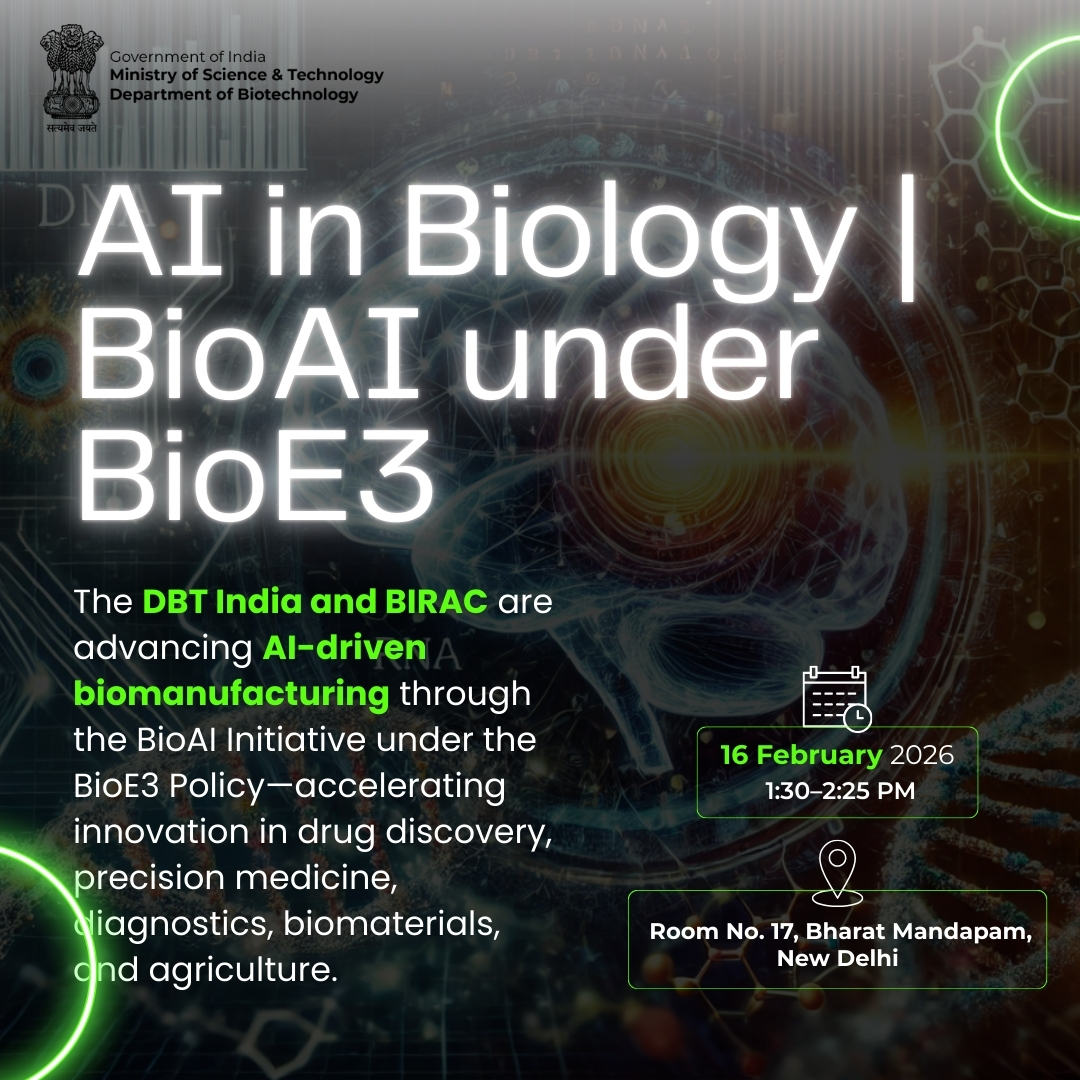
Artificial intelligence is being positioned as a catalytic force in reshaping biomanufacturing, with policymakers, scientists and industry leaders outlining a roadmap that blends computational power with biological science to accelerate drug discovery, industrial enzymes and sustainable materials. Discussions at the India AI Impact Summit placed BioAI at the centre of a strategy aimed at using genomics, in-silico modelling and closed data loops to build scalable and trusted production systems.

The convergence of AI and biology has moved from laboratory experimentation to commercial ambition. India’s biotechnology sector, valued at over $80 billion and targeting significant expansion by the end of the decade under the BioE3 policy framework, is seeking to harness machine learning tools to shorten development cycles that traditionally take years. Speakers at the summit argued that AI-enabled simulation and predictive modelling can reduce trial-and-error experimentation in fields ranging from vaccine development to precision fermentation.

BioAI refers to the integration of artificial intelligence techniques with biological data, particularly genomic sequencing, proteomics and metabolic engineering. The approach relies on large datasets and advanced algorithms capable of identifying patterns invisible to conventional research methods. Advances in protein structure prediction, including breakthroughs in computational biology over the past few years, have demonstrated how neural networks can model complex molecular interactions with remarkable accuracy.

At the summit, researchers described how generative AI systems are being trained to design novel proteins and enzymes tailored for industrial use. By feeding genomic datasets into predictive algorithms, scientists can simulate biological pathways in silico before conducting physical experiments. This method reduces costs and speeds up scaling, particularly in biopharmaceutical production and alternative protein manufacturing.

Government representatives outlined plans to expand national AI infrastructure to support such applications. IndiaAI Mission initiatives include the creation of high-performance computing resources and domain-specific data repositories to ensure that biotech firms and research institutes have access to secure and interoperable datasets. Officials emphasised that trust frameworks and regulatory clarity would be essential to encourage private investment while safeguarding data privacy and biosafety standards.

Industry leaders echoed that sentiment, highlighting that biomanufacturing requires rigorous validation. Unlike digital products, biological outputs interact with living systems, making quality control paramount. AI-driven feedback loops—where laboratory results continuously refine algorithms—were presented as a mechanism to maintain reliability while scaling up production. Data integrity, traceability and auditability were recurring themes, reflecting global debates about AI governance.

The global context underscores the strategic significance of BioAI. The United States and European Union have invested heavily in synthetic biology and AI-assisted drug discovery. China has also advanced computational genomics and large-scale fermentation capabilities. Analysts note that countries able to combine AI talent with robust biotech ecosystems stand to capture a growing share of the global bioeconomy, projected by several industry reports to exceed $4 trillion over the coming decade.

India’s strength in information technology services and pharmaceutical manufacturing offers a foundation for this convergence. The country is a major supplier of generic medicines and vaccines, supported by a network of research institutions and startups. By integrating AI tools into these value chains, stakeholders believe production timelines can be compressed and new therapeutic molecules identified with greater precision.

Academic voices at the summit stressed the importance of interdisciplinary training. Biologists must understand algorithmic thinking, while data scientists need grounding in molecular biology. Collaborative platforms linking universities, startups and established pharmaceutical firms were proposed to ensure knowledge transfer and talent development. Investment in computational biology curricula and shared research facilities is seen as critical to sustaining momentum.

Ethical considerations formed part of the dialogue. AI models trained on genomic data raise questions about consent, ownership and equitable benefit sharing. Experts argued for transparent governance structures aligned with international norms, noting that trust is fundamental when dealing with health-related information. Regulatory agencies are exploring how to evaluate AI-generated biological designs within existing approval pathways.

Private sector participation is accelerating. Venture capital funding in biotech startups leveraging machine learning has grown steadily, reflecting confidence in AI-assisted discovery platforms. Companies are experimenting with digital twins of biological systems, enabling simulation of fermentation processes before industrial deployment. Such capabilities can enhance efficiency and reduce resource consumption, aligning with sustainability goals.

Sustainability featured prominently in discussions on biomanufacturing. AI-optimised microbes can produce bio-based chemicals and materials that substitute fossil-derived inputs. Precision fermentation techniques, guided by predictive analytics, may lower energy use and waste. As global supply chains face pressure to decarbonise, the combination of AI and biotechnology is viewed as a pathway to cleaner industrial production.

Participants also highlighted challenges. High-quality biological datasets remain fragmented, and interoperability across laboratories is uneven. Ensuring cybersecurity in research networks is another concern, given the sensitivity of genetic information. Scaling laboratory successes to commercial volumes demands capital expenditure and regulatory compliance that can deter smaller enterprises.


Three decades after its modest debut on a handheld console, Pokémon has evolved into one of the most lucrative entertainment properties in history, generating tens of billions of dollars in revenue and emerging as a potent instrument of Japan’s cultural influence abroad. Created by Satoshi Tajiri and launched in 1996 by Nintendo, Game Freak and Creatures, the franchise began with Pokémon Red and Green for the Game […]

Arabian Post Staff -Dubai flydubai will operate double-daily services between Dubai and Bangkok from 15 September 2026, raising its total weekly flights on the route to 28 and strengthening Thailand’s position within the carrier’s expanding Asian network. The Dubai-based airline said the additional frequency will link Terminal 3 at Dubai International Airport with Don Mueang International Airport in Bangkok, enhancing connectivity for leisure and business travellers. The […]

Mercedes-Benz USA has recalled nearly 12,000 electric sport utility vehicles in the United States after identifying a defect in high-voltage battery cells that could trigger a fire, either while driving or when parked. The recall covers 11,895 EQB vehicles across three variants: 1,708 EQB 350 4Matic models from the 2022 to 2024 model years, 3,674 EQB 250+ units from 2023 and 2024, and 6,513 EQB 300 4Matic […]

Arabian Post Staff -Dubai Havelock One Interiors has completed the full fit-out of SOCO, a new family entertainment concept developed by Majid Al Futtaim Entertainment and launched at City Centre Mirdif in Dubai, marking another high-profile addition to the region’s expanding leisure and lifestyle sector. The Bahrain-headquartered interior fit-out specialist said the project involved the turnkey delivery of a multi-zone “social jungle” environment designed to blend interactive […]

Arabian Post Staff -Dubai Abu Dhabi has test-launched the country’s first hybrid rocket developed entirely within the UAE, signalling a significant advance in its ambition to build an indigenous space technology base. The Technology Innovation Institute confirmed that the rocket’s propulsion system was fully designed, manufactured, integrated and operated by Emirati engineers, a development officials described as a pivotal step towards sovereign launch capability. The suborbital test, […]

Rolling road closures are under way across Al Dhafra as the UAE Tour begins its latest edition, with authorities in Abu Dhabi implementing phased traffic diversions to accommodate the opening stage of the WorldTour cycling race. Organisers confirmed that the first stage, set against the sweeping desert highways of the Al Dhafra region, will see intermittent road blocks along key routes from morning until late afternoon, depending […]

Concerns over inadequate privacy safeguards are holding back broader adoption of cryptocurrencies and blockchain technology, according to Binance founder Changpeng Zhao and several industry executives speaking at a major digital assets forum. Their remarks underline a growing consensus that transparency, long touted as blockchain’s defining strength, may also be constraining its appeal among retail users and large institutions. Zhao, widely known as CZ, told a panel at […]

Arabian Post Staff -Dubai Red Sea Museum will open a major exhibition titled Sunken Treasures: The Maritime Heritage of the Red Sea on February 25, running until May 29, 2026, placing centuries of seafaring history at the centre of Saudi Arabia’s expanding cultural agenda. Organised by the Museums Commission under the Ministry of Culture, the showcase is set to feature artefacts recovered from shipwrecks, navigational tools, archival […]

Fireworks will illuminate parts of Dubai each evening during Ramadan, with organisers confirming a month-long programme across Al Seef, Dubai Creek waterfront and Global Village from 19 February to 19 March. Displays are scheduled daily at 9:30pm along Al Seef and the Dubai Creek waterfront, offering residents and visitors a waterfront spectacle shortly after iftar. At Global Village, fireworks are planned every Friday and Saturday at about […]

Wynn Resorts has posted a sharp drop in fourth-quarter profit despite edging up revenues, underscoring mounting pressure from softer gaming volumes on the Las Vegas Strip and uneven recovery in Macau as the company presses ahead with a multibillion-dollar expansion in the United Arab Emirates. The US-listed casino operator reported that net income for the final quarter fell markedly from a year earlier, even as overall revenue […]

PocketBlue, an open-source intelligence platform built for AI-driven research, is drawing growing interest among developers seeking greater control over how machine-assisted analysis is conducted. Hosted on GitHub and designed with a modular, local-first architecture, the project positions itself as an alternative to cloud-dependent research tools that rely heavily on proprietary models and opaque data pipelines. At its core, PocketBlue combines large language model orchestration with structured data […]

  International Holding Company, the Abu Dhabi-based investment conglomerate known as IHC, has posted full-year 2025 revenue of AED111.4 billion, a rise of 29.1 per cent from a year earlier, while profit after tax climbed 35.1 per cent to AED34.7 billion, reflecting what the group described as disciplined execution and tighter cost management across its expanding portfolio. The audited results mark another year of strong expansion for […]

Emirates has signed an interline agreement with China’s Loong Air, widening its access to 22 additional destinations across the mainland and strengthening its competitive position in one of the world’s most strategically important aviation markets. The arrangement, effective immediately, enables Emirates passengers to connect beyond its existing gateways in Hangzhou, Shenzhen and Hong Kong onto Loong Air-operated domestic services. The added cities span eastern, northeastern, southern, central […]

Arabian Post Staff -Dubai Supy, the Dubai-based provider of AI-driven inventory management, procurement and business intelligence software for multi-branch restaurant operators, has reported that its revenue more than tripled in 2025 as demand for data-powered back-of-house technology accelerates across the Middle East and beyond. The company, founded in 2021 and now operating in over 30 countries, described the performance as reflecting strong uptake of cloud-based restaurant systems […]

VISHNU RAJA
RYO YAMADA
HITORI GOTOH
IKUYO KITA



