By K Raveendran As 2026 approaches, the global oil market is heading into a year that could decisively reshape price dynamics, fiscal planning in producing states, and energy security calculations for importing economies. The defining feature of the coming year is not demand destruction or geopolitical shock, but the growing weight of surplus supply. Market […]
Japan’s MONJI+—A WebOps Enablement Platform Inspired by Voices from 77 Countries—Launches Its English Edition
OSAKA, JAPAN – Media OutReach Newswire – 24 December 2025 – ALAKI Inc., celebrating its 15th anniversary, has officially launched the English edition of MONJI+, an evolution of its 2018-born feedback tool MONJI β, now reimagined as a comprehensive WebOps Enablement Platform.
Alongside its free plan, available indefinitely, MONJI+ begins its full-scale expansion into the ASEAN market, helping teams elevate their website operations. In addition, a free Academic Edition is now offered to educational institutions to foster the next generation of web and IT talent.
A Platform Born from 77 Countries of Real-World Insight
Since its launch in Japan in 2018, MONJI β has been adopted by web agencies, corporations, and advertising firms worldwide—across 77 countries and regions—streamlining feedback workflows for website management and development.
In everyday website operations, teams often face:
Feedback scattered across tools and channels
Miscommunication between internal teams and agencies
Unclear priorities that fail to drive results
Knowledge loss when members change
Valuable learnings buried and forgotten
MONJI+ connects creation, publishing, maintenance, and optimization into a single workflow—eliminating silos and enabling all members to move forward toward shared goals.
Since its official launch in Japan in January 2025, MONJI+ has rapidly spread among enterprises and educational institutions. It is increasingly adopted as a practical standard among agencies and in-house teams, improving productivity and measurable outcomes.
Responding to Global Voices – Official Launch of the English Edition
During forums and seminars held alongside the Expo 2025 Osaka, Kansai, Japan, ALAKI engaged with government representatives and industry leaders from around the world.
The feedback was clear: inefficiencies in website operations, lack of improvement cycles, and a shortage of web marketing expertise are universal challenges. But one issue stood out above all—the shortage of skilled web and IT professionals.
Some governments even requested that MONJI+ contribute to national web/IT talent development, not just productivity gains. Following the Expo, inquiries from multiple countries confirmed the demand, prompting the official release of the English edition of MONJI+.
Confidence from SWITCH 2025, and a Vision for What’s Next
As part of its ASEAN expansion, ALAKI visited SWITCH 2025 (Singapore Week of Innovation & Technology), held from October 29–31. Through dialogues with government agencies, corporations, startups, and academic institutions, the importance of website operations productivity and digital talent development was reaffirmed.
Insights from leading ASEAN web and IT innovators will continue to shape the evolution of MONJI+.
Key Benefits of MONJI+
Eliminate inefficiencies and dependency on individuals—enhancing both productivity and performance in website operations.
Workflow Efficiency: Centralize feedback and progress tracking to prevent oversights
Error Reduction: Detect typos automatically with AI proofreading
Results-Oriented: Integration with analytics tools helps identify improvement areas instantly
Team Collaboration: Share real-time updates across internal and external members
Knowledge Building: Use the Wiki feature to retain expertise and reduce training costs
The Future of “Agentic WebOps” — Powered by Data and AI
MONJI+ evolves beyond a simple management tool—it becomes an AI-driven partner that learns from operational data to support human decision-making and creativity.
Our vision: a human-in-the-loop “Agentic WebOps” environment that helps teams achieve outcomes with AI-assisted decision support.
Available AI Features:
AI typo and error detection for feedback
AI chatbot assistance
Upcoming AI Features (Examples):
Content suggestion and creation
Feedback trend analysis and improvement recommendations
Design assistance
Webpage performance analysis and enhancement
Customer Success Stories
Global Marketing Agency (Singapore): “Sharing the same interface greatly improved collaboration across our international offices.”
Web Production Agency (Japan): “Centralized feedback management accelerated delivery times by roughly 30%.”
E-commerce Company (Japan): “By linking with an analytics tool, we identified key improvement areas instantly—our conversion rate increased by over 20%.”
Recruitment Platform (Japan): “With AI detecting typos automatically, our job listing checks became faster and more reliable.”
Vision Video – ‘Pride and Hope for the Web Industry’
Discover how MONJI+ envisions the future of website operations.
“Website operations shouldn’t be about chasing scattered messages—it should be about generating results that matter. With MONJI+, we unify feedback, workflow, and analytics, while AI suggests the next strategic move. Our mission is to help ASEAN teams reach outcomes faster and more reliably.”
— Yuji Yamauchi, Founder & CEO, ALAKI Inc.
Getting Started
Getting started is easy, with no credit card required. MONJI+ aims to be the shared foundation for website operations, accessible to everyone.
Forever-Free Plan: Access essential functions without time limits
30-Day Free Trial: Experience all features in a live environment
Free “Academic Edition” for Educational Institutions
To empower the next generation of web and IT professionals, MONJI+ offers an Academic Edition free of charge to universities, vocational schools, and online programs. Students and educators can experience real-world website operations, gain practical skills, and collaborate through shared projects.
Dubai’s hospitality sector is gearing up for one of its busiest periods as year-end celebrations converge with large-scale retail promotions, major events and a packed tourism calendar, pushing hotels to prepare for near-capacity occupancy and heightened guest expectations across all segments. Advance bookings across prime locations have surged as visitors plan stays around fireworks displays along the coastline and landmarks, extended shopping hours, concerts and family attractions […]
Emaar, the Economic City has secured board approval for a sweeping balance-sheet overhaul that will lift its share capital by nearly 69 per cent through the conversion of debt owed to the kingdom’s Public Investment Fund, a move aimed at strengthening liquidity and reshaping the Tadawul-listed developer’s financial structure. The company disclosed that its board has authorised an increase in paid-up capital to 8.83 billion Saudi Arabian […]
Stricter municipal requirements for private schools and learning facilities across Saudi Arabia have been issued by the Ministry of Municipalities and Housing, widening oversight of environmental quality, safety standards and urban planning as the kingdom continues to reshape its education landscape.
The updated framework applies to nurseries, kindergartens, schools and large educational complexes, covering private educational buildings established on land zoned for education as well as facilities built on government land leased to the private sector. It also extends to education facilities developed on plots allocated for commercial use, bringing a broader range of premises under a single municipal rulebook.
These revised rules aim to raise school standards, officials familiar with the changes say, by aligning environmental and safety benchmarks with national urban development goals. Municipal authorities will now assess new and existing private education facilities against clearer criteria for site suitability, building design, infrastructure access and community impact, with the stated objective of improving learning environments while reducing planning conflicts in fast-growing urban areas.
Environmental quality features prominently in the requirements. Schools and learning centres must meet stricter controls on waste management, ventilation, natural lighting and noise mitigation, particularly in densely populated districts. Municipal inspectors are expected to pay closer attention to how campuses manage traffic flow during peak hours and how outdoor spaces are designed to minimise heat exposure, reflecting broader sustainability priorities embedded in local planning codes.
Safety standards have also been expanded, with new specifications for emergency exits, fire prevention systems, accessibility for students with disabilities and safe pedestrian access. Facilities operating on leased government land will be subject to the same technical checks as those on privately owned plots, removing earlier ambiguities over compliance responsibilities between landlords and operators.
Urban planning considerations mark a significant shift in how private education projects are approved. The requirements link school licensing more tightly to neighbourhood zoning plans, population density and existing public services. Education facilities built on commercially zoned land must now demonstrate compatibility with surrounding uses, including retail and office developments, and show how student movement will be separated from heavy traffic and delivery routes.
Education sector specialists note that the changes reflect a growing emphasis on coordinated urban growth rather than piecemeal approvals. Private schooling has expanded rapidly over the past decade, particularly in major cities such as Riyadh and Jeddah, driven by demographic growth and rising demand for international curricula. Municipal authorities have faced mounting pressure to ensure that this expansion does not strain infrastructure or compromise safety.
Operators are being given clearer guidance on minimum plot sizes, building heights and setbacks, as well as requirements for green spaces and recreational areas. While the rules do not prescribe specific architectural styles, they emphasise functional design and durability, encouraging materials and layouts that support long-term use and lower maintenance costs.
For existing schools, the requirements introduce a phased compliance approach. Facilities already in operation will be required to align with the new standards within defined timeframes, with municipalities expected to prioritise critical safety and environmental upgrades. Education providers that fail to meet key benchmarks could face restrictions on licence renewals or limits on student capacity until deficiencies are addressed.
Private education investors and school operators are assessing the commercial implications. Some developers see higher upfront costs, particularly for projects planned on commercial land where redesigns may be needed to meet zoning compatibility rules. Others argue that clearer standards reduce regulatory uncertainty and improve asset quality over time, making compliant schools more attractive to parents and financiers.
The rules also intersect with broader national reforms aimed at improving quality of life and diversifying the economy under long-term development strategies. By tightening oversight of private education facilities, authorities are signalling that growth in the sector must be matched by higher standards of safety, sustainability and urban integration.
Municipal officials say enforcement will rely on closer coordination with education regulators to avoid duplication and ensure consistent interpretation of requirements. Digital permitting systems are expected to play a larger role in tracking compliance and scheduling inspections, although detailed implementation guidance is still being rolled out at the local level.
Arabian Post Staff -Dubai Qatar Investment Authority has joined a consortium of global investors backing a move to take Janus Henderson Group private, marking one of the largest asset-management buyouts announced this year and underlining sovereign interest in long-term financial services platforms. The all-cash transaction values the New York-listed firm at about USD 7.4 billion and is being led by Trian Fund Management alongside General Catalyst. Qatar’s […]
By Umesh Sangaralingam The influx of private capital into Middle East markets is securing the region’s place as an evolving global investment hub. With sovereign wealth funds, institutional investors, family offices, and fund managers all increasing allocations, capital commitments are increasing at scale—but it’s not an equal field of opportunity for private investment firms in the region. Capital isn’t the sole defining factor that’s separating private […]
Thailand is moving quickly to reshape the digital map of Southeast Asia, with a surge in data centre construction and artificial intelligence investment shifting the country from a long-standing data transit role to a regional convergence point. New facilities clustered around Bangkok, Chonburi and the Eastern Economic Corridor are altering traffic flows, shortening latency across borders and drawing cloud, AI and content providers seeking scale outside established hubs.
The expansion reflects a change in how data moves across the region. Historically, much east-west traffic between South Asia, Greater China and the Pacific routed through Singapore before fanning out. With hyperscale campuses multiplying in Thailand, workloads are increasingly being processed and stored closer to end users, easing congestion and improving resilience. Network operators say the shift is visible in peering arrangements and cross-border fibre utilisation, with Bangkok emerging as a preferred interconnection point.
Policy has been a key driver. Authorities have offered investment incentives, fast-tracked permits and clarified power and land-use rules to attract large campuses. Grid upgrades and new renewable capacity have been prioritised to address the energy intensity of AI-ready facilities. The strategy aligns with a broader push to anchor higher-value digital services domestically, from cloud platforms and analytics to language models and industry-specific AI tools.
Global technology firms are responding. Cloud providers including Google, Microsoft and Amazon Web Services have expanded or announced investments to serve regional customers from Thai infrastructure, while chipmakers and systems integrators are working with local partners to deploy accelerated computing suited to AI training and inference. Industry executives cite Thailand’s central geography, improving power availability and maturing regulatory environment as decisive factors.
Domestic players are also scaling up. Telecom operators and property developers have formed joint ventures to build carrier-neutral sites, while energy companies are pairing data centres with solar and gas assets to stabilise supply. Universities and research institutes are increasing AI programmes to address talent gaps, with a focus on data engineering, cybersecurity and model governance. The goal is to ensure that infrastructure growth translates into local capability rather than pass-through capacity.
Competition across the region remains intense. Singapore retains strengths in finance, regulation and dense interconnection, but land and power constraints have pushed expansion elsewhere. Malaysia and Indonesia are adding capacity to serve fast-growing domestic markets, while Vietnam is drawing manufacturing-linked digital workloads. Against that backdrop, Thailand is positioning itself as a neutral aggregation point serving multiple neighbours within ASEAN, balancing scale with proximity.
Connectivity improvements underpin the shift. New submarine cable routes landing on both coasts, alongside terrestrial links to neighbouring countries, are diversifying paths and reducing dependence on a single choke point. Operators say this redundancy matters as enterprises distribute AI workloads across regions for cost, performance and regulatory reasons. Financial services, e-commerce and media firms are increasingly adopting multi-cloud strategies that favour locations offering reliable interconnection.
AI demand is shaping design choices. Facilities are being built with higher power densities, advanced cooling and space for accelerated hardware to support model training, while edge nodes closer to population centres handle inference and latency-sensitive tasks. This layered approach is changing how content delivery, language services and real-time analytics are deployed across Southeast Asia.
SINGAPORE – Media OutReach Newswire – 24 December 2025 – Woodfibre LNG recently marked 2025 as a year of significant progress across construction, environmental protection and community partnerships, as the project moved deeper into its development phase toward delivering responsibly produced Canadian liquefied natural gas to global markets.
Over the past year, the project advanced from planning into visible, on-the-ground execution. Major construction milestones included the pouring of foundations for key modules, continued progress on marine piling, and further implementation of modular construction techniques designed to reduce on-site footprint while accelerating delivery timelines.
These advancements were achieved through close collaboration with project partners, suppliers and contractors, and in partnership with the Sḵwx̱wú7mesh Úxwumixw (Squamish Nation).
In 2025, Woodfibre LNG, a member of the RGE group of companies founded by Sukanto Tanoto, continued to operate its floatel workforce accommodation solution, designed to minimise pressure on local housing and community services. As of November, two floatels were in active operation, providing high-quality, safe and comfortable living conditions for the project workforce while supporting construction efficiency.
Environmental protection remained a central focus throughout the year. The project’s Marine Mammal Monitoring Programme, which includes hydroacoustic monitoring, exclusion zones and shore-based observation posts, delivered measurable outcomes by enabling real-time operational decisions, including pauses to marine activities when marine mammals entered exclusion areas.
In parallel, remediation of legacy materials from the former pulp mill site continued, with hundreds of thousands of tonnes of historical waste removed. These efforts have contributed to improving site conditions for both local communities and marine and terrestrial ecosystems in Howe Sound.
Woodfibre LNG’s Operator Training Programme, delivered in partnership with the Squamish Nation Training and Trades Centre and the British Columbia Institute of Technology (BCIT), progressed throughout the year. The programme’s first cohort of graduates transitioned into full-time roles, supporting the development of long-term, skilled local employment opportunities linked to the project.
Through its Community Partnership Programme (CPP), Woodfibre LNG continued to invest in local communities across the Sea-to-Sky corridor. In 2025, the programme surpassed $1 million in total grants since its inception, supporting initiatives in sports, healthcare, emergency services, arts and culture, and youth development.
Luke Schauerte, CEO of Woodfibre LNG, said, “2025 has been a year of significant progress for Woodfibre LNG. We are proud of what our team and partners have accomplished together and look forward to building on this momentum in the year ahead.”
With more than half of the project’s development now complete, Woodfibre LNG remains focused on advancing construction safely and responsibly, while maintaining strong partnerships with Indigenous communities, local stakeholders and regulators.
As the project looks ahead to 2026, Woodfibre LNG continues its work toward delivering lower-carbon, responsibly produced Canadian energy to international markets.
The issuer is solely responsible for the content of this announcement.
About Woodfibre LNG
The Woodfibre LNG Project is owned by Woodfibre LNG Limited Partnership, owned 70 per cent by Pacific Energy Corporation (Canada) Limited and 30 per cent by Enbridge Inc. The Woodfibre LNG facility is being built on the site of the former Woodfibre pulp mill site, which is located about seven kilometres southwest of Squamish, B.C. Woodfibre LNG will source its natural gas from Pacific Canbriam Energy, a Canadian company with operations in Northeastern British Columbia. Pacific Canbriam is an industry leader in sustainable natural gas production. Woodfibre LNG and Pacific Canbriam Energy are subsidiaries of Pacific Energy Corporation Limited. Woodfibre LNG is the first industrial project in Canada to recognise a non-treaty Indigenous government, Sḵwx̱wú7mesh Úxwumixw (Squamish Nation), as a full environmental regulator.
The food-surplus app returned more than HKD 20 million to partner businesses while making meals more affordable for consumers
HONG KONG SAR – Media OutReach Newswire – 23 December 2025 – As Southeast Asia grapples with growing food waste and rising living costs, Yindii, Asia’s number 1 food‑surplus marketplace, celebrates a year of remarkable growth and impact. Co-founded in 2020 by Louis‑Alban Batard‑Dupré and Mahima Rajangam Natarajan, Yindii connects restaurants, bakeries, grocers and hotels with diners who collect “Surprise Bags” of unsold food at 50-80% off the usual price. By turning what would otherwise become waste into affordable meals, Yindii offers a simple, scalable solution that benefits consumers, businesses and the environment.
One meal rescued every minute. In 2025, the Yindii community saved over 500,000 meals across the region, helped Hong Kong users save more than HK$10 million, and kept surplus food out of landfills.
In 2025 alone, the Yindii community across the region saved over half a million meals from going to waste. That is roughly one meal rescued every single minute, equivalent to offsetting over 1,375 tonnes of CO₂. To put this into perspective, that saving is comparable to driving an average petrol-powered car for about 6.9 million miles, or around 277 trips around the world. It is also on par with the emissions from burning around 154,000 gallons of petrol, or roughly 575 one-way passenger flights from Paris to New York.
Elaborating on the ethos that drives Yindii’s growth, Co‑Founder and Chief Marketing Officer, Mahima Rajangam Natarajan, shared, “Every meal rescued is a step toward making high-quality food accessible and affordable for everyone. We’re proving that sustainability and affordability can go hand in hand with social equity. What excites us most is seeing families, students and office workers discover new neighbourhood favourites while knowing they are doing something tangible to help the planet. We are also watching our partners turn what used to be an end-of-day loss into a new source of loyalty, revenue and pride for their teams. Thousands of F&B brands are now transforming surplus into a meaningful new revenue stream, with more than US$2.5 million (HKD 19.45 million) flowing back into their businesses instead of into the bin.”
Across the region, the numbers tell an even richer story at the market level. In Hong Kong, diners using Yindii rescued over 250,000 meals in 2025. Flagship partners such as Saint Honore Cake Shop, Circle K and Pret A Manger have turned surplus into real value, with Saint Honore alone saving over 75,000 meals or 187 tonnes of CO₂. Other partners, including Rosewood Hong Kong, Little Mermaid, NOC Coffee Co and Pacific Coffee, all managed to clear an impressive 85-95% of their surplus on the app. In Hong Kong, Yindii has more than tripled in size since last year and reached profitability, strengthening partner confidence in a model especially popular with women, who make up around two-thirds of users.
In Singapore, diners using Yindii rescued over 300,000 meals in 2025. Since launching in 2024, the app has helped partners achieve a nationwide saved ratio of around 75%. Popular brands such as Paul, Baker & Cook and SaladStop, alongside hotel buffets and neighbourhood grocers, are using “Surprise Bags” to move premium food at accessible prices while cutting waste. Altogether, Singapore partners have already recovered more than SGD1.5 million in avoided food losses, underscoring Yindii’s role in helping diners stretch their budgets while giving the F&B industry a powerful new way to protect profitability.
“Looking ahead to 2026, we are focused on building on this momentum by bringing Yindii to more cities, including South Korea, and deepening our partnerships where we are already present. Our goal is to make it easier for people to save great food rather than see it go to waste, and for businesses to treat surplus as an opportunity rather than a loss. At the heart of all this, our mission goes far beyond transactions. It is about building a community where strangers become food heroes and where food that once represented loss becomes a source of joy and connection. We have seen that spirit take root in Thailand, Hong Kong and Singapore, and we cannot wait to grow new communities of local food heroes in the years ahead,” Mahima concluded.
Throughout the year, Yindii’s success also earned recognition beyond the dining table. In October, it was named a finalist in the Spirit of Hong Kong Awards for its creative approach to tackling food waste. During Impact Week at ONE in Singapore, the company hosted the Yindii Eco‑Brand Awards 2025, celebrating 25 leading brands and media partners. Guest of Honour Poh Li San, Chair of Singapore’s Parliamentary Environment Committee, highlighted that Singapore wastes 800,000 tonnes of food annually and noted that fighting waste is essential not just for the planet but for national food security.
Since launching in 2020, Yindii has registered more than 700,000 food heroes, rescued over 900,000 meals and prevented more than 2,250 tonnes of carbon dioxide emissions. For more information, visit www.yindii.co or follow Yindii on Instagram, Facebook, and LinkedIn. Hashtag: #Yindii #SaveFoodWithYindii #YindiiHK
The issuer is solely responsible for the content of this announcement.
About Yindii
Yindii is Asia’s #1 sustainable food app, connecting people with surplus meals from restaurants, bakeries, grocers, and hotels at a fraction of the price. Operating in Singapore, Hong Kong, Thailand and South Korea, Yindii empowers communities to rescue food, save money, and fight climate change — one meal at a time.
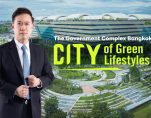
BANGKOK, THAILAND – Media OutReach Newswire – 23 December 2025 – Dhanarak Asset Development Co., Ltd. (DAD), the state-owned enterprise responsible for managing Thailand’s Government Complex, has announced the successful transformation of the site into a pioneering green and walkable urban prototype, positioning it as a model for sustainable government-led city development.
City of Green Lifestyles by Dr. Nalikatibhag Sangsnit
Under the leadership of Dr. Nalikatibhag Sangsnit, President of DAD, the multi-year redevelopment program reimagines state-owned land, one that treats public land not as a bureaucratic perimeter, but as shared civic infrastructure that prioritizes people, health, and nature.
Dr. Nalikatibhag Sangsnit, DAD’s President
“For decades, government districts in Thailand were designed to manage paperwork, not people,” Nalikatibhag said. “We wanted to reverse that logic. A city, especially a city owned by the state, must first work for human life: how people walk, how they rest, how they breathe, and how they coexist with nature in their daily routines.”
Before-and-after comparison of Government Complex Bangkok after its green redevelopment
From Bureaucratic Grey to Green Living
The centrepiece of the initiative is the newly opened 5.1-rai landscaped connector between Buildings B and C, a site that once functioned primarily as a traffic corridor and noise buffer. The area has been transformed into a pedestrian-friendly green passage linking offices, transit access points and communal spaces within the Government Complex.
Designed as urban infrastructure, a climate buffer reduces heat, improves water absorption and supports daily movement across the site. It also opens previously restricted government land to wider public use, blurring the boundary between administrative space and the city around it.
The project aligns with Thailand’s broader sustainability frameworks, including environmental, social and governance (ESG) principles and the government’s bio-circular-green (BCG) economic model. Design features focus on expanding tree canopy, increasing permeable surfaces and creating flexible areas that can support exercise, informal gatherings and community activity.
A Scalable Blueprint for State-Led Urban Transformation
Over the past six years, DAD has increased green spaces within the Government Complex by more than 47 rai, and when combined with adjacent landscaped zones, the total reaches over 138 rai, creating one of northern Bangkok’s largest continuous public green areas.
Nalikatibhag describes the City of Green Lifestyles concept not as a one-off redevelopment, but as a template for future public-sector land use, particularly in rapidly urbanising Asian cities where governments remain among the largest landowners.
“This is about proving that sustainability is not an added cost or a branding exercise,” he said. “When green infrastructure is designed as part of the system, when it improves health, reduces stress, lowers energy demand and invites public use, it becomes economically rational and socially inevitable. The role of the state is not only to regulate cities, but to set an example of how cities should be lived in.”
Global Recognition for Innovation
DAD’s sustainability efforts have earned international acclaim. In 2025, the company became the only public-sector organisation to win the Asia-level International Innovation Awards for two consecutive years, recognising its Government Complex Smart City initiative and the GCC Super Application, a digital platform integrating transport, navigation, and public services within the complex.
The awards, selected from more than 160 entries across 30 countries, underscore Thailand’s growing leadership in sustainable and technology-driven public sector transformation.
Redefining the Role of the State in City-Making
Unlike large-scale urban megaprojects, the Government Complex Bangkok initiative relies on system-based, incremental transformation, repurposing existing assets instead of acquiring new land. Urban policy analysts note that this approach provides a scalable blueprint for other governments managing extensive real estate portfolios.
“A government city should not feel separate from everyday life,” Dr. Nalikatibhag said. “If public space eases the intensity of daily life, improves health and restores a sense of balance between people and nature, then governance itself becomes more humane.”
The issuer is solely responsible for the content of this announcement.
Dhanarak Asset Development Co., Ltd.
Dhanarak Asset Development Co., Ltd. is a state-owned enterprise under Thailand’s Ministry of Finance, responsible for managing and developing the Government Complex and related assets. DAD is committed to advancing sustainable, human-centered urban development and creating models for environmentally and socially responsible government infrastructure.
Japan has taken a decisive step towards restarting the Kashiwazaki-Kariwa nuclear power station, the largest such facility in the world by capacity, marking a pivotal moment in the country’s post-Fukushima energy policy. The move follows regulatory clearance and political backing after more than a decade of safety reviews, legal scrutiny and local opposition stemming from the 2011 nuclear disaster. The plant, located in Niigata prefecture on the […]
HONG KONG SAR – Media OutReach Newswire – 22 December 2025 –As Christmas and New Year holiday draw near, UnionPay International has launched a promotional campaign spanning 26 countries and regions, which includes over 170 marketing activities across more than 100,000 merchant stores, with selected offers providing discounts of up to 33%.
Aligned with the travel peak season at the end of the year, the campaign covers key destinations including Hong Kong SAR, Macau SAR, South Korea, Southeast Asia, Europe, North America and Oceania. Offline promotions extend to 30 major international airports, 65 premium shopping districts, 40 leading department stores, 15 outlet villages, as well as duty-free shops and luxury boutiques within 30 major global airports. The initiatives also encompass daily consumption, such as supermarkets, cosmeceutical retailers, dining spots, tourist attractions, entertainment, accommodation, local transportation and telecommunication services.
UnionPay has also customized activities for mobile payment methods, including UnionPay mobile QuickPass and UnionPay QR code payment, which are accepted in more than 100 countries and regions. For instance, in Australia and New Zealand, UnionPay cardholders can enjoy instant discounts when using UnionPay mobile QuickPass at participating merchants nationwide.
The year-end incentives have been further expanded to online scenarios. UnionPay has collaborated with digital entertainment platforms to accommodate the high-frequency online spending during the holiday, such as Hoyoverse Honkai: Star Rail top-up promotion, Apple Services promotion. In Australia, UnionPay has launched an online tuition payment promotion for students.
In select markets, UnionPay has partnered with local issuing banks to provide exclusive privileges for cardholders. For example, DBS Bank in Singapore offers UnionPay Platinum debit cardholders value-added benefits, such as cashback, fee waivers, airport lounge access and other travel-related perks.
UnionPay has built up a global payment network covering 183 countries and regions, providing stable and convenient payment support for cross-border travel and holiday consumption. Through in-depth cooperation with issuing banks, financial institutions and merchants, UnionPay has provided diverse holiday discounts and supporting services to optimize the consumption experience for cardholders.
Hashtag: #UnionPay
The issuer is solely responsible for the content of this announcement.
Boeing has appointed Omar Arekat as vice-president for the Middle East, Gulf and North Africa, a senior leadership move that places a long-serving regional executive at the helm of one of the company’s most strategically important markets. The appointment comes as aircraft demand across the region continues to be shaped by fleet expansion, widebody replacement cycles and sustained defence procurement.
Arekat, who will be based in Dubai, takes charge of Boeing’s commercial and defence engagement across a region where the aerospace group employs more than 700 people and supports over 30 commercial airline customers alongside 12 armed forces. His remit covers government relations, industrial partnerships, customer support and business strategy across markets ranging from the Gulf to North Africa.
The leadership change underscores Boeing’s intention to maintain continuity in a region that has long been central to its widebody sales, particularly for long-haul aircraft. Airlines in the Gulf operate some of the world’s largest fleets of twin-aisle jets, while carriers in North Africa are increasingly modernising fleets to support tourism recovery and regional connectivity. Defence ties, including fighter aircraft, rotorcraft, training systems and sustainment contracts, also form a significant pillar of Boeing’s regional presence.
Arekat is widely regarded within the industry as a seasoned regional hand. Before taking on the vice-presidential role, he held senior commercial positions within Boeing’s Middle East operations, working closely with airline leadership teams, civil aviation authorities and defence ministries. His career has been closely tied to the region’s aviation growth story, particularly the expansion of hub-based carriers and the emergence of maintenance, repair and overhaul ecosystems in the Gulf.
Boeing’s Middle East footprint extends beyond sales offices. The company has invested heavily in training, engineering and supply-chain partnerships, working with local firms on aerostructures, composites and advanced manufacturing. These initiatives are often framed as part of national industrial diversification strategies pursued by several Gulf states, where aerospace has been identified as a priority sector.
The appointment takes place against a complex commercial backdrop for Boeing globally. The manufacturer continues to navigate production stabilisation, regulatory scrutiny and supply-chain constraints, particularly in its narrowbody programmes. While these issues have been most visible in North America, their implications are closely watched by Middle East carriers, many of which have large order backlogs and tightly planned delivery schedules.
Industry analysts note that leadership continuity and strong regional relationships are especially important for Boeing in this market. Gulf airlines tend to place large, long-term orders, often timed around major fleet renewals or network expansion phases. Any disruption to deliveries can have cascading effects on capacity planning, route launches and leasing strategies, making senior-level engagement critical.
Defence remains another key dimension of Boeing’s regional strategy. Several armed forces across the Middle East and North Africa operate Boeing platforms, including fighter aircraft, transport planes, helicopters and surveillance systems. The company’s regional leadership is typically involved in government-to-government frameworks, offset arrangements and long-term sustainment planning, areas that require deep familiarity with local regulatory and security environments.
Arekat’s appointment also reflects a broader trend among global aerospace firms to elevate executives with strong regional expertise rather than rotating leadership from headquarters. This approach is seen as a way to navigate increasingly complex geopolitical, regulatory and industrial landscapes, particularly in regions where aviation policy, defence procurement and industrial strategy are closely intertwined.
Boeing has indicated that the Middle East and North Africa will remain a growth priority over the coming decade, driven by air traffic growth above the global average and continued investment in defence modernisation. The company’s market outlooks have consistently pointed to strong demand for both single-aisle aircraft, supporting intra-regional travel, and widebodies for long-haul connectivity linking the region to Asia, Europe and the Americas.
The accolade marks another major milestone for the reimagined Dusit Thani Bangkok
BANGKOK, THAILAND – Media OutReach Newswire – 22 December 2025 – Cannubi by Umberto Bombana at Dusit International’s reimagined flagship hotel, Dusit Thani Bangkok, has been awarded One Michelin Star in The Michelin Guide Thailand 2026 – the first time an Italian restaurant in Thailand has received the distinction.
Curated by renowned chef Umberto Bombana (right), Cannubi by Umberto Bombana at Dusit Thani Bangkok has made history as the first Italian restaurant in Thailand to receive one Michelin star. His vision is brought to life in Bangkok by Executive Italian Chef Andrea Susto (left).
Curated by the renowned Chef Umberto Bombana – best known for his Hong Kong flagship, 8½ Otto e Mezzo Bombana, the world’s only three-Michelin-starred Italian restaurant outside Italy – Cannubi by Umberto Bombana reflects the chef’s lifelong dedication to exceptional produce, terroir, and refined Italian cooking.
His philosophy is brought to life in Bangkok by his longtime protégé, Executive Italian Chef Andrea Susto, who works with the finest locally sourced and imported ingredients to craft classically rooted dishes refined with contemporary technique. Seasonal à la carte offerings, tasting menus, a set lunch experience, and a celebrated white truffle menu – honouring Bombana’s reputation as The King of White Truffles – are complemented by a thoughtfully curated wine list of more than 350 labels chosen for their heritage, character, and quality.
Cannubi by Umberto Bombana’s design plays an equal role in shaping the dining experience. Situated on the lobby level of the reimagined Dusit Thani Bangkok, the two-level space looks out over the hotel’s dramatic nine-storey waterfall. Inside, the main dining room is crowned with intricately carved golden teakwood panels preserved and meticulously restored from the original hotel’s Benjarong restaurant. These heritage teak elements, combined with flowing lines and atmospheric lighting, create a warmly intimate setting, complemented by private dining rooms accommodating six and twelve guests.
“To be recognised as the first Italian restaurant in Thailand to receive a Michelin Star is a tremendous honour,” said Chef Umberto Bombana. “Cannubi by Umberto Bombana is a project very close to my heart, created to express the truth and soul of Italian cuisine through integrity, passion, and respect for exceptional ingredients. Seeing this spirit recognised in Bangkok means the world to me. I am incredibly proud of Chef Andrea Susto and our entire team. This accolade also reflects the vision of the new Dusit Thani Bangkok, where craftsmanship and creativity shape every detail.”
Cannubi by Umberto Bombana’s Michelin Star adds to a remarkable year for Dusit Thani Bangkok, which, since reopening in September 2024, has received one Michelin Key and earned its place among the world’s top 100 hotels, ranking #60 on the inaugural extended list of The World’s 50 Best Hotels 2025. The restaurant’s achievement further strengthens the hotel’s emergence as one of the region’s most compelling new dining destinations, with Pavilion, Dusit Gourmet, 1970 Bar, and the dramatic rooftop venue, Spire Rooftop Bar, among the other standout options.
Cannubi by Umberto Bombana is open for lunch and dinner from Tuesday to Sunday. For more information, please visit dusit.com/dusitthani-bangkok.
Hashtag: #DusitHotels
The issuer is solely responsible for the content of this announcement.
About Dusit Thani Bangkok
Part of the landmark Dusit Central Park development, Dusit Thani Bangkok is a reimagined icon that blends timeless Thai elegance with contemporary sophistication. With a prime location overlooking Lumpini Park in the heart of the city, the 257-key property redefines luxury with all park-view accommodations and sets the scene for unforgettable experiences with world-class dining and peerless event venues.
More than just a hotel, Dusit Thani Bangkok brings classic grandeur to life and invites discerning travellers to experience a vibrant blend of modern elegance and timeless charm inspired by the original hotel’s rich heritage and Dusit’s unique brand of gracious Thai hospitality.
Dusit Hotels and Resorts is the hotel arm of Dusit International, one of Thailand’s leading hotel and property development companies. With a heartfelt belief and commitment to introducing Thai-inspired gracious hospitality to the world, Dusit Hotels and Resorts offers guests a uniquely special stay in high-style surroundings and a personalised approach to service. The group’s portfolio of hotels, resorts and luxury villas includes close to 300 properties operating under a total of nine brands (Devarana – Dusit Retreats, Dusit Thani, Dusit Suites, Dusit Collection, Dusit Hotels, dusitD2, Dusit Princess, ASAI Hotels, and Elite Havens) across 18 countries worldwide.
President His Highness Sheikh Mohamed bin Zayed Al Nahyan held talks with American entrepreneur Elon Musk, focusing on advances in artificial intelligence and emerging technologies and how cross-border collaboration can accelerate innovation with practical benefits for societies and economies. The meeting underscored Abu Dhabi’s ambition to position itself as a global hub for advanced technology while engaging with influential private-sector leaders shaping the future of AI, […]
United Arab Emirates policy makers are accelerating the shift towards a technology-driven economic model, placing innovation, advanced industries and the knowledge economy at the centre of long-term growth as the country seeks to reduce reliance on hydrocarbons and strengthen competitiveness across global markets. Federal strategies over the past decade have converged around building a diversified economy anchored in artificial intelligence, financial technology, clean energy and advanced manufacturing. […]
Arabian Post Staff -Dubai Abu Dhabi-based Modon Holding PSC has entered the United States residential property market through a new joint venture to build a 54-storey tower on the Hudson waterfront, marking a strategic push by the developer to diversify earnings and deepen exposure to mature, dollar-denominated real estate markets. The company said it has partnered with US developer Related Companies and Jersey City firm Panepinto […]
Arabian Post Staff -Dubai Italy’s Saipem has clinched a multi-billion-dollar offshore engineering, procurement, construction and installation contract from QatarEnergy LNG, marking one of the largest project awards in the global energy services sector and reinforcing Doha’s long-term expansion plans for liquefied natural gas production. The Milan-based engineering group said the overall value of the contract is about $4 billion, with Saipem’s share estimated at roughly $3.1 billion. […]
KUALA LUMPUR, MALAYSIA – Media OutReach Newswire – 22 December 2025 – Although wellness conversations are rising, many Malaysians still struggle with consistent daily self-care. According to the National Health and Morbidity Survey (NHMS) 2019, 54.4% of Malaysian adults are overweight or obese, highlighting widespread lifestyle-related health risks linked to poor diet, inactivity, and inconsistent preventive care. As healthcare costs continue to increase and lifestyle-driven diseases become more common, practical and preventive self-care at home has never been more crucial.
In response to this growing need, Alpro Group Malaysia (parent company of Alpro Pharmacy, Malaysia’s largest prescription pharmacy chain) today launched the 2026 Health & Habit Calendar, a nationwide self-care education initiative developed to bring simple, credible, and actionable health guidance into Malaysian households throughout the year.
Drawing from daily patient engagements across Alpro’s nationwide network, this calendar compiles real-world self-care gaps frequently observed by pharmacists. It further includes insights curated together with family doctors, nutritionists, and dietitians to ensure each habit is both practical and medically credible.
The 2026 Health & Habit Calendar covers five key foundations of daily wellbeing like nutrition: healthier everyday food choices; rest: better sleep routines and fatigue reduction; movement: simple physical activities suitable for all ages; emotional Wellbeing: stress management and mindful practices; preventive care: small reminders that reduce long-term health risks.
The cover of the calendar presents easy-to-follow habits designed to support gradual, sustainable lifestyle improvement, making self-care more achievable for Malaysian families.
“Most people only start thinking about their health after something goes wrong, and as pharmacists, we see this every day,” said Pharmacist Lim En Ni, Chief Pharmacist and Engagement Director of Alpro Group. “This calendar brings self-care earlier into daily life. When families practice small habits consistently, it can significantly reduce long-term health risks.”
Beyond health education, the initiative also embodies a strong social mission. 100% of proceeds from the 2026 Health & Habit Calendar will be donated to the Alpro Foundation’s Growing Stars Project, providing educational opportunities for underprivileged children nationwide. Each calendar purchased directly contributes to improving both community health and children’s access to education.
The 2026 Health & Habit Calendar is now available for purchase online via Alpro OneClick: https://bit.ly/Alpro-2026-HealthandHabitCalendar . Customers may also receive the calendar with a minimum spend of RM288 at any Alpro subsidiary, including Alpro Pharmacy, Alpro Sugi Pharmacy, Alpro OptiSaver, and Alpro Baby. Members of the public, organisations, and corporate partners are encouraged to support this initiative and help make preventive self-care a visible, daily habit in Malaysian homes.
Hashtag: #Alpro
The issuer is solely responsible for the content of this announcement.
Alpro Group
Founded in 2002, Alpro Group’s ecosystem has grown to include Alpro Pharmacy, Apotek Alpro, Alpro スギ (Sugi) Pharmacy, Alpro Physio, Alpro Clinic, Alpro Baby, Alpro OptiSaver, Alpro Audiology, and Alpro Health. Supported by a team of more than 1,000 healthcare professionals, including doctors, pharmacists, nutritionists, dietitians, physiotherapists, optometrist and many others, Alpro serves over 5 million families in Malaysia and Indonesia through its extensive network of 500 physical outlets.
Alpro Pharmacy is the first and only community pharmacy in the region to offer product liability insurance of MYR 1 million in Malaysia and IDR 3 billion in Indonesia, ensuring the supply of genuine medications and enhancing consumer trust.
With the vision of a healthy and vibrant world, Alpro Group aims to become the No. 1 prescription pharmacy chain in Southeast Asia.
Google has committed USD 8 million to support a network of artificial intelligence Centres of Excellence in India, signalling a deeper push into applied AI for public services, health care and local-language technologies while tying the investment to a parallel clean-energy partnership aimed at powering digital infrastructure sustainably.
The funding, announced by Google, is designed to accelerate research, product development and deployment across priority areas that include healthcare delivery, Indic language models and urban governance tools. The company said the centres will work with academic institutions, startups and public-sector bodies to translate laboratory advances into systems that can be deployed at scale, reflecting a broader shift among global technology firms towards mission-oriented AI programmes.
The allocation targets three primary domains. In healthcare, the centres are expected to focus on AI-assisted diagnostics, disease surveillance and workflow automation to reduce administrative burdens on clinicians. Google has previously tested AI models for medical imaging and population health analytics, and the new funding is intended to localise such tools for regional health systems, with attention to data privacy and clinical validation. Researchers involved in early-stage planning say the emphasis will be on interoperable platforms rather than standalone pilots, a response to criticism that many AI health projects fail to move beyond proof of concept.
Language technology forms the second pillar of the initiative. India’s linguistic diversity has long posed challenges for digital inclusion, and the centres are tasked with advancing large language models and speech systems that perform reliably across Indic languages and dialects. Google has already released open datasets and models for low-resource languages; the new programme seeks to improve accuracy, reduce bias and expand access for education, e-governance and small businesses. Industry observers note that competition in multilingual AI has intensified as regional startups and global rivals race to build models that can handle code-switching and local context.
Urban governance rounds out the focus areas, with planned projects covering traffic management, air-quality monitoring and municipal service delivery. Smart-city programmes have generated mixed results over the past decade, often constrained by fragmented data and procurement hurdles. By situating research within Centres of Excellence, Google aims to create replicable frameworks that cities can adapt, rather than bespoke systems tied to individual vendors.
Beyond the AI investment, Google has paired the announcement with a new solar partnership intended to support the energy needs of data centres and AI workloads. The company has pledged to match growth in computing capacity with clean-energy procurement, aligning with its global goal to operate on carbon-free energy around the clock. Analysts say the coupling of AI funding with renewable energy reflects mounting scrutiny of the environmental costs of large-scale computing, particularly as generative AI drives higher power demand.
The USD 8 million commitment is modest compared with Google’s global AI spend, yet its targeted design has drawn attention from policymakers and researchers. Government officials involved in discussions around the Centres of Excellence say the model allows for shared governance, with academic rigour balanced against industry deployment expertise. The approach also aligns with national ambitions to position the country as a hub for responsible AI development, emphasising safety, transparency and societal benefit.
Competition among technology firms has sharpened as Microsoft, Amazon and others expand partnerships with universities and public agencies across the Global South. In this context, Google’s move is seen as both a strategic investment and a reputational play, aimed at demonstrating that advanced AI can address public-interest challenges rather than solely commercial applications. Startups working in health tech and language processing expect spillover benefits through access to datasets, compute resources and mentorship.
MAURITIUS – Media OutReach Newswire – 22 December 2025 – UMSOCIAL, the social trading ecosystem powered by Ultima Markets, continues to empower traders with a transparent and secure way to share strategies, watch real market activity and copy trades in real time. Ultima Markets is an award-winning CFD broker and the first multi-asset trading broker to join the United Nations Global Compact.
UMSOCIAL has grown steadily over the past two years. Today, UMSOCIAL offers over 2,000 live strategies, with more than 10,000 trading accounts actively copying trades on the platform. This growth shows that traders are looking for a place where learning and trading can happen together.
“UMSOCIAL is not just about copying trades. It’s about learning, growing, and sharing success together,” said Jack Li, Regional Business Director at Ultima Markets. “Every Follower has the potential to become a Master. That’s the spirit behind our message: Follow Today, Master Tomorrow.”
A Connected Experience for Both Beginners and Skilled Traders
For beginners, UMSOCIAL provides an accessible way to learn from real-time market activity and trading strategies. New users can review verified performance records, understand trading styles, and mirror strategies from skilled traders in real time. As a social trading app, UMSOCIAL fosters a supportive learning experience for those who are new to markets.
At the same time, seasoned traders gain a structured platform to share their expertise, build credibility within the community, and earn performance-based fees tied to their strategy outcomes.
UMSOCIAL brings both beginner and skilled traders into one cohesive environment. This unified ecosystem supports education, transparency, and professional recognition, enabling every participant to engage with markets at their own pace while benefiting from clear and data-driven insights.
Powered by State-of-the-art Technology and Full Transparency
UMSOCIAL is built on Ultima Markets’ advanced technology infrastructure and strong focus on visibility, ensuring a secure and consistent experience across all user interactions. Every transaction is processed with fast order matching, stable connectivity, and full visibility. Traders can manage their accounts, monitor performance, or switch strategies at any time with just a few clicks.
The platform continues to evolve as one of today’s leading copy trading platforms, offering faster trade execution, real-time insights, and user-friendly tools. Ultima Markets remains focused on building a reliable, fair, and engaging environment where traders can grow and succeed together.
Start your journey with UMSOCIAL by Ultima Markets and trade smarter together.
The issuer is solely responsible for the content of this announcement.
About Ultima Markets
Ultima Markets is a licensed, award-winning, multi-asset broker offering access to over 250 CFD instruments across forex, commodities, indices and shares. The company was recently awarded Most Advanced Multi-Asset Trading Platform Europe 2025 and is the first CFD broker to join the UN Global Compact.
CFDs are complex instruments and involve a high risk of losing money rapidly due to leverage. Ensure you fully understand the risks before trading.
Disclaimer
CFDs are complex instruments and come with a high risk of losing money rapidly due to leverage. You should consider whether you understand how CFDs work and whether you can afford to take the high risk of losing your money. Past performance of Masters on UMSOCIAL does not guarantee future results. Trading involves risk, and you are fully responsible for your own trading decisions.
Seef Properties has signed a lease agreement with UAE-based D’lish Café to open the brand’s first outlet in Bahrain at Al Liwan, adding a new premium food and beverage concept to the mixed-use destination in the Seef District of Manama. The deal underscores continued demand for curated dining experiences within lifestyle-led developments and reflects a broader push by property owners to anchor retail assets with recognisable regional brands.
The café, known for its contemporary menu and design-led spaces, is expected to occupy a prominent location within Al Liwan, a development that blends retail, leisure, dining, and community spaces. Executives involved in the agreement said the move aligns with Al Liwan’s positioning as a social hub rather than a conventional shopping centre, where food-led concepts play a central role in footfall generation and dwell time.
Seef Properties described the agreement as part of a wider strategy to deepen its portfolio of lifestyle tenants that appeal to both residents and visitors. The company has been recalibrating its leasing mix across assets to prioritise experiential retail, particularly dining formats that combine casual accessibility with premium presentation. Al Liwan, which hosts a range of cafés, restaurants, and entertainment offerings, has emerged as a flagship for that approach.
For D’lish Café, the Bahrain opening marks its first international expansion, signalling confidence in the kingdom’s dining market and its ability to support differentiated concepts. The brand has built a following in the UAE by focusing on high-quality ingredients, visually distinctive interiors, and menus designed to cater to breakfast, lunch, and evening socialising. Industry observers note that such all-day dining formats have gained traction across Gulf cities as consumer preferences shift towards flexible, experience-driven venues.
Executives familiar with the project said the Bahrain outlet will mirror the brand’s core identity while incorporating local design cues to resonate with the Al Liwan setting. Fit-out work is expected to proceed in line with Seef Properties’ guidelines for sustainability, accessibility, and integration with surrounding public spaces. While an opening date has not been formally announced, preparations are under way to align the launch with peak seasonal footfall at the destination.
The agreement comes at a time when Bahrain’s retail real estate sector is navigating structural changes driven by evolving consumer behaviour. Traditional mall formats have faced pressure from e-commerce and shifting spending patterns, prompting developers to emphasise food, leisure, and community experiences that cannot be replicated online. Analysts tracking the sector say developments that successfully curate strong dining line-ups are better positioned to maintain occupancy levels and rental stability.
Al Liwan’s tenant mix reflects that strategy, with food and beverage outlets accounting for a significant share of leasable space. The addition of D’lish Café is expected to complement existing concepts by targeting a demographic that values premium yet approachable dining. Seef Properties executives have previously indicated that tenant selection is guided by brand strength, operational track record, and the ability to contribute to a cohesive destination experience rather than standalone retail performance.
For D’lish Café, the Bahrain market offers exposure to a consumer base known for high per-capita spending on dining and a strong café culture. Manama’s Seef District, in particular, attracts a mix of residents, office workers, and visitors, providing a diversified customer base. Market analysts note that UAE-based brands expanding into Bahrain often view the kingdom as a strategic entry point for broader regional growth due to regulatory familiarity and cultural alignment.
The partnership also highlights increasing cross-border collaboration within the Gulf’s retail and hospitality sectors. As regional brands mature, developers are leveraging these names to differentiate projects and reinforce destination branding. At the same time, café and restaurant operators are seeking locations that offer built-in footfall and a lifestyle context aligned with their brand positioning.
A dramatic concept video portraying a proposed “Dubai Air Hotel” by Emirates has ignited global attention, depicting a full-scale Airbus A380 mounted atop a 580-metre, 125-storey tower in Dubai. The vision, priced at an estimated $3 billion, imagines an aviation-themed landmark that would combine ultra-luxury hospitality with a striking architectural statement, reinforcing the city’s reputation for headline-grabbing development. The footage shows the double-deck superjumbo positioned like a […]



 By K Raveendran As 2026 approaches, the global oil market is heading into a year that could decisively reshape price dynamics, fiscal planning in producing states, and energy security calculations for importing economies. The defining feature of the coming year is not demand destruction or geopolitical shock, but the growing weight of surplus supply. Market […]



 https://www.woodfibrelng.ca



 https://www.linkedin.com/company/yindii/



 https://www.facebook.com/DhanarakAssetDevelopment/