News related to
climbs

Arabian Post Staff -Dubai Orient Insurance posted a net profit of AED 836 million for 2025, marking a 14.4 per cent rise from the previous year, as the Dubai-based insurer strengthened underwriting performance and investment income amid steady demand across the UAE and Gulf markets. The company, part of the Al-Futtaim Group, said its annual financial results reflected disciplined risk management, prudent reserving and a diversified portfolio […]

  Bitcoin surged past 69,000 dollars on major exchanges on Tuesday, regaining a price level that has carried both symbolic and technical weight since the previous market cycle. The move marks a rebound from a bout of volatility that had pulled the world’s largest cryptocurrency below key support zones earlier this quarter, drawing renewed attention from institutional investors and retail traders alike. Data from leading trading platforms […]

Emirates NBD, Dubai’s largest bank by assets, posted a four per cent rise in full-year net profit on Monday, underpinned by record lending growth as borrowing demand strengthened across domestic and international markets. The lender said net profit reached 24 billion dirhams for the year, surpassing market expectations of about 22.8 billion dirhams based on analyst estimates tracked by LSEG. The performance was driven by what the […]

South Africa’s currency advanced to its strongest level in roughly three years as a softer US dollar, firm commodity prices and cautious optimism about domestic reforms combined to lift investor appetite for emerging-market assets. The rand strengthened through the week against the greenback and traded at levels last seen before the global tightening cycle gathered pace, reflecting both external tailwinds and renewed focus on policy signals from […]

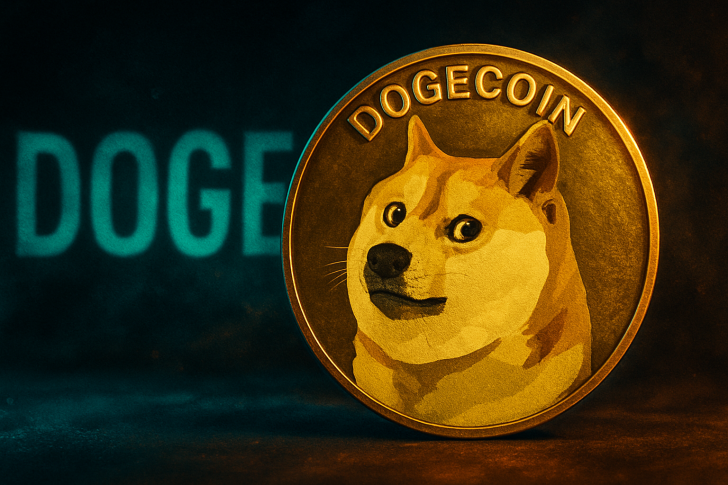
Dogecoin advanced about 4% during early trading on Wednesday, outperforming several large-cap digital assets as speculative interest returned to the memecoin segment and a short-term “golden cross” signal emerged on technical charts. The move followed a broader rally across smaller tokens, driven by renewed retail participation and heavier trading volumes that analysts said could sustain gains if key price levels hold. The token, created as a parody […]

Bitcoin surged beyond the $91,000 mark as a broader rally lifted ether and dogecoin, with traders pointing to political developments tied to Venezuela and signals of possible United States involvement as catalysts for volatility across digital asset markets. The move underscored how geopolitical risk, alongside liquidity conditions and investor positioning, continues to shape price action in cryptocurrencies that are increasingly sensitive to macro and political cues. The […]

XRP has moved back into the top tier of digital assets by market value, overtaking Binance-linked BNB to reclaim fourth place among cryptocurrencies as trading momentum gathered pace and regulatory signals from Washington shifted. Data from major market trackers show the token’s market capitalisation pushing past that of BNB, leaving only Bitcoin and Ethereum ahead when stablecoins are excluded. The advance follows a sharp rally that lifted […]

Advertisements

According to Dubai People magazine, Mr. Thank You has officially surpassed 50 million followers on Instagram and secured the 135th position in the global ranking of the most popular accounts. This milestone places him among the key digital figures shaping a new era of motivational and emotional content. https://www.instagram.com/mr.thank.you   A new format of positive storytelling Today, Mr. Thank You is viewed as one of the most […]

Gold prices escalated early on Saturday, drawing fresh investor interest as the U. S. Federal Reserve’s quarter-point rate reduction to the 3.75 %-4.00 % range reinforced the appeal of non-yielding assets. Spot gold edged up 0.3 % to US$4,034 an ounce, and bullion is positioned to record a third consecutive monthly gain driven by both bargain buying and institutional demand. The backdrop includes a sharp rise in […]

Gold regained momentum as the US dollar’s slide and expectations of a shift in Federal Reserve policy helped lift the metal above the psychologically important $4,000-per-ounce mark. Spot gold rose around 0.7 % to $4,009.39 per ounce, while US gold futures for December delivery edged up to $4,022.10. At the same time, broader factors have introduced both bullish and cautionary signals to the market.

Investor interest is rekindled by the weaker dollar, which makes gold relatively cheaper for buyers holding other currencies, and by widespread anticipation that the Fed will adopt a more dovish stance. The dollar index fell roughly 0.1 % as markets weighed the possibility of rate cuts. At the same time, certain easing in trade-tensions between the US and China has slightly reduced gold’s role as a safe-haven asset. The confluence of these opposing forces has begun to shape a more nuanced outlook for the metal.

Analysts say that the rebound above $4,000 should not be taken as a strong bullish assurance yet. While the technical bounce signals renewed buying interest, momentum must be supported by fundamentals. One market commentator observed that “buyers who were waiting on the sidelines for gold are now being tempted into taking positions at these price levels. Also, we are seeing a bit of softness from the dollar, which is giving gold a reprieve”.

The wider context shows that gold has already surged markedly this year, up more than 50 % in 2025, and reached a record high near $4,381.21 in mid-October. The rally has been fuelled by a combination of geopolitical anxiety, central-bank buying and expectations of monetary easing. But the pull-back seen earlier this week underscores that investor discipline and macro clarity are still required for any sustained rise.

Emerging trends in the market reveal more structural undercurrents. Research from noted finance academics suggests that gold’s role is evolving: it may increasingly function as a high-quality liquid asset, competing with traditional safe-havens and benefiting from de-dollarisation in global reserves. But at the same time, some firms argue the rally may be overstretched: one analysis warned that with gold already up so sharply this year, its next move could be a “mini-bust,” with projections that prices might fall toward $3,500 by 2026 if support from central-bank demand weakens.

Forecasts for 2026 have also shifted. A poll of analysts and traders indicates a median expectation that average gold prices will exceed $4,000 per ounce next year – a milestone in itself – although forecasts vary widely, reflecting both optimism and caution. On the upside, institutions such as Goldman Sachs remain bullish, pointing to potential further gains on the back of monetary accommodation and geopolitical risk. On the downside, if trade tensions ease and inflation moderates, some believe gold could correct.

The interplay between stimulus expectations and dollar dynamics remains crucial. A softer dollar supports gold, but if authorities signal confidence in economic recovery and maintain higher interest rates, gold’s appeal could diminish because it offers no yield. Additionally, the safe-haven narrative is under pressure as expectations of improved US-China relations gain traction, which may lower investors’ impetus to hold gold purely for risk hedging.

Strength in demand from global central banks has supported prices thus far, but market watchers caution that this may face constraints as gold holdings rise and incremental purchases become harder. For now, the up-move above $4,000 may signal a tentative buying opportunity for traders who believe a rate-cut cycle is on the horizon. For longer-term investors though, vigilance remains essential, as valuations are elevated and market dynamics could shift rapidly.

HANGZHOU, CHINA – Media OutReach Newswire – 3 October 2025 – Geely Riddara launches the RD6 Econ all-electric pickup in Laos and the Philippines, with rollouts to Thailand, Malaysia, and Pakistan—Positioned as an economical, dual-use pickup for commercial and personal needs, the RD6 Econ combines outstanding cost efficiency with optimized energy consumption to offer global markets a more sustainable, value-driven choice. Geely Riddara Launches RD6 Econ All-electric […]

Helldivers 2 surged to fourth place on Newzoo’s August revenue charts following its launch on Xbox platforms on 26 August, fuelled by strong sales and heightened player engagement across the US, UK, Germany, France, Spain, and Italy. Data shows that before its Xbox debut the game occupied the 37th position in the same rankings; its dramatic jump reflects what Newzoo describes as a “substantial uplift” in revenue. […]

Arabian Post Staff -Dubai Deal volumes across the Middle East hit 271 in the first half of 2025, up from 228 a year earlier, defying a 9 per cent contraction in global M&A activity. The region owes this strong performance to sovereign capital, regulatory reforms, and strategic investments in high-growth sectors. Middle East M&A Volume Climbs Amid Global Decline now captures the robust upswing. Driving this growth […]

OPEC’s oil output rose further in August, hitting 27.84 million barrels per day—a gain of 360,000 bpd over July’s revised total. The rise was driven chiefly by expanded production from Saudi Arabia and the United Arab Emirates under an OPEC+ agreement to gradually reverse output curbs.

The production boost stemmed from an agreement by eight OPEC+ countries for August output, under which five OPEC members—Algeria, Iraq, Kuwait, Saudi Arabia and the UAE—were to raise output by 416,000 bpd, before accounting for compensation cuts totalling 178,000 bpd imposed due to earlier overproduction. In practice, those five delivered a net increase of 310,000 bpd.

This escalation forms part of OPEC+’s accelerated effort to dismantle its most recent output cuts. Simultaneously, some members continue to implement additional cuts to offset previous excesses, theoretically capping the effect of these increases.

This latest surge underlines OPEC+’s strategy of reclaiming market share through coordinated rollback of production restraints, even as the group attempts to preserve price stability by enforcing compliance and offset mechanisms.

Falcon Finance has reached a new milestone as the circulating supply of its decentralized stablecoin, USDf, climbs to an all-time high of $1.5 billion, signalling sharply increased adoption and confidence in its DeFi infrastructure. The expansion tracks a surge from $1.12 billion over approximately one month, a performance driven by a blend of yield innovation, enhanced transparency, and risk-mitigation frameworks.

The $10 million on-chain insurance fund plays a pivotal role in strengthening institutional trust. Seeded initially with USD1 and replenished via protocol fees, the fund is structured to act as a financial buffer during market stress—supporting yield commitments, offsetting rare instances of negative returns, and serving as a fallback bidder for USDf to uphold its peg. Premium collateral strategies further bolster systemic resilience.

Yield generation remains a cornerstone: the yield-bearing counterpart of USDf, sUSDf, has delivered a standout 30-day APY of 9.30 per cent as of 30 August, outperforming notable competitors such as Ethena’s sUSDe, Maple’s SyrupUSDC, Sky’s sUSDS, Ondo’s OUSG, and BlackRock’s BUIDL.

To deepen engagement and expand utility, Falcon Finance launched the frxUSD–USDf Curve liquidity pool, which offers participants more than 20 per cent APR and rewards denominated as “40× Miles.” The community-oriented Yap2Fly campaign—run in partnership with Kaito—distributed $50,000 in rewards to its top 50 users in August, further stimulating active participation.

Transparency remains central to the protocol’s ethos. Falcon now publishes full reserve breakdowns and supports these with weekly third-party attestations. As per the latest reporting, USDf reserves amount to $1.29 billion—comprising $640.16 million in bitcoin, $375.65 million in stablecoins, with remaining allocation across Dogecoin, Fetch. ai, TRON, TON, and Ethereum. Custody spreads across Fireblocks, Ceffu, and multisignature setups, with 72.2 per cent held under multisig, fostering verifiable security.

These developments are underpinned by earlier strategic investments and roadmap expansions. A $10 million funding from World Liberty Financial in July accelerated technical integration with the fiat-backed USD1 stablecoin, facilitating liquidity sharing and conversion infrastructure. By mid-2025, USDf had already breached the $1 billion supply threshold, demonstrating steady growth ahead of its latest benchmark.

Falcon portrays USDf as more than a synthetic dollar; it is positioned as a global liquidity solution. The protocol’s architecture permits any custody-ready asset—including crypto, stablecoins, and real-world tokenised assets—to be turned into USD-pegged on-chain liquidity. This dual-token model is geared towards unlocking yield while safeguarding against volatility, effectively merging traditional risk frameworks with DeFi innovation.

Market observers note that USDf’s climb to $1.5 billion is emblematic of a broader shift in DeFi: users and institutions are increasingly seeking stable, yield-bearing alternatives to both fiat and traditional stablecoins. Falcon’s layered risk-management systems, institutional-grade safeguards, and developer partnerships appear to answer that demand with growing credibility.

A sharp rebound in the Taiwan dollar has intensified financial pressure on exporters, undermining earnings and dampening competitiveness in overseas markets. The appreciation, driven by a blend of strong trade inflows, hedging activities, and speculative pressures, has prompted swift policy attention and heightened concern among industry observers.

Taiwan’s currency surged to its highest level since early 2022—landing near NT$29 per U. S. dollar—amid a weakening U. S. dollar and heightened equity inflows. The rally, measuring around 12 per cent so far this year, has inflicted renewed strain on leading exporters, including Taiwan Semiconductor Manufacturing Company and Foxconn, which report substantial margin erosion when the Taiwan dollar strengthens.

Exporters are finding that every one‑unit appreciation of the currency can slash revenue by roughly 3 per cent and chip away at gross margins—Foxconn estimates its margins dip by 0.1 percentage point per NT$1 gain. Smaller, traditional manufacturers—especially machinery producers—are even more exposed, with limited hedging capacity and tighter operating margins.

Life insurers are not spared. Many hold a sizable portion of assets in U. S. dollars—Fubon Financial, for example, has about 70 per cent of its portfolio in foreign holdings—and face amplified foreign‑exchange losses as the local currency climbs.

Regulators are treading a delicate line. Taiwan’s central bank has urged restraint, discouraging speculative trades through vehicles such as ETFs, and cautioning against exaggerated market commentary. It has also issued warnings to foreign investors who may be circumventing capital controls by not deploying inflows into domestic securities—a move intended to curb volatility without triggering accusations of currency manipulation from Washington.

Policy shifts and trade developments elsewhere may be compounding the pressures. Analysts observe that rapid appreciation could weaken Taiwan’s offerings amid looming U. S. tariffs and a lack of definitive agreements with Washington. Others point to structural shifts: Asian economies, Taiwan included, are unwinding dollar‑heavy positions amid growing concern over U. S. policy and economic fragility. One commentator dubbed this a “reverse Asian crisis,” pointing to a regional transfer of purchasing power back to local currencies.

Reactions continue to unfold across sectors. The logistics industry, for instance, is grappling with imbalances in shipping flows and heightened forex risk; yet it also sees potential growth through import logistics and value‑added FX‑savvy services for clients.

Altogether, Taiwan confronts a complex convergence of forces: strong export volumes feeding currency strength, speculators and hedgers accelerating the appreciation, and policy efforts seeking to stabilise markets without undermining global credibility. With export earnings vulnerable, insurers weighed down by FX losses, and the broader economy exposed to tariff dynamics, the coming months could heighten the stakes if the exchange rate remains elevated, especially in the absence of agreements that mitigate trade frictions.

Journalistic due diligence underscores that the data and figures—such as the currency’s 12 per cent gain, margin impacts for Foxconn and others, and the insurers’ USD-exposure ratios—have been corroborated across reputable sources. Reporting maintains a balanced perspective, acknowledging both the financial risks and policy responses shaping Taiwan’s export-heavy economy.

The third edition of the AlUla Desert Blaze concluded on Saturday night, with more than 500 runners from Saudi Arabia and across the globe competing in one of the most gruelling desert races in the region. Held at the UNESCO World Heritage site of Hegra, the event offered a choice of four race categories: 5 km, 10 km, 21.1 km, and 42.2 km. Starting early at 8:00 […]

The United Arab Emirates has reached a significant milestone, securing the 16th position globally in the 2025 Government Support Index, as outlined in the IMD World Competitiveness Yearbook. This index evaluates how effectively governments foster the conditions needed for businesses to thrive, measuring factors such as infrastructure, regulatory environment, and public sector efficiency. With this advancement, the UAE solidifies its standing as a global leader in creating […]

Dogecoin has experienced an 8% surge, marking a significant price rally as whale activity indicates a potential bullish breakout. The cryptocurrency, a popular memecoin, saw its price rise to 22 cents, driven by a trading volume surpassing 1 billion DOGE. The surge has sparked discussions about institutional interest and the growing potential of DOGE as an asset class.

A sudden uptick in whale activity has drawn attention in the crypto market, as large transactions have been observed over the past few days. These whales, often large investors or institutions, have historically been key drivers in the price movements of cryptocurrencies, and their recent actions suggest confidence in the token’s future price performance. DOGE’s price has fluctuated over the past several months, but this latest rally stands out as one of the most significant in recent times.

The substantial trading volume of over 1 billion DOGE indicates that the recent spike isn’t just a flash in the pan but a substantial market event that could signal further upward momentum. Cryptocurrencies, particularly memecoins like DOGE, often rely on viral moments or sudden shifts in investor sentiment. However, DOGE’s increasing institutional interest suggests that its trajectory may now be shifting towards more long-term viability as a store of value or speculative asset.

The role of institutional investors in this shift cannot be understated. While Dogecoin’s initial rise was largely driven by retail investors and online communities, institutional interest has been gradually increasing, with some financial analysts suggesting that this could stabilize its price fluctuations. This surge in institutional interest could lead to more sustainable growth for DOGE, positioning it as a more prominent asset in the broader cryptocurrency market.

Market analysts suggest that Dogecoin’s recent performance could also be reflective of broader trends in the cryptocurrency space. While Bitcoin and Ethereum continue to dominate the market, memecoins have been gaining traction as part of a growing interest in alternative digital assets. The surge in DOGE’s value is happening amid a wider rally in smaller cryptocurrencies, which are attracting more mainstream investors looking for opportunities beyond the two leading coins.

However, DOGE’s volatility remains a significant factor. Despite the positive momentum, memecoins are notorious for their sharp price swings, and many traders are wary of potential corrections. Still, the ongoing whale movements suggest that DOGE could continue to experience periods of significant growth, with potential for even higher highs if the market sentiment continues to improve.

The latest surge also highlights the changing landscape of cryptocurrency trading, where social media, community-driven movements, and institutional capital increasingly intertwine. DOGE has long been a symbol of internet-driven hype, but with the growing institutional interest, it may be gradually shedding its reputation as just a speculative token.

The price rise has also raised questions about the sustainability of such a rally. While some experts are cautious about the potential for a market correction, others believe that DOGE’s growing adoption could support its price in the long term. With increased exposure from larger market players and retail interest remaining strong, the token could become a more integral part of the crypto ecosystem moving forward.

President Trump has sharply shortened his own deadline for punishing buyers of Russian oil, catching markets off guard and forcing investors to price in a risk that had previously been dismissed.  On Monday, standing beside UK Prime Minister Keir Starmer in Scotland, Trump announced that Moscow now has only 10 to 12 days to secure a peace deal over Ukraine.   If it doesn’t, he says he will […]

Decentralised exchanges now account for 27.92% of global spot trading volume compared with centralised exchanges, marking a sharp rise from just 0.36% in June 2020.

Trading platforms operating without intermediaries have attracted a growing user base. The surge is primarily driven by rapid token listings, enhanced accessibility, and traders seeking autonomy over assets.

Crypto‑analytics firm CryptoRank reports the 27.92% figure as of 27 June 2025. On the same date, CoinStats and Cointelegraph confirmed that DEX activity has surpassed one quarter of combined CEX volumes.

Market analysts say this shift reflects a fundamental change in how users approach crypto. DEXs often offer immediate listing for new tokens, while CEXs enforce extensive vetting, delaying token debut. This gives DEXs an edge for traders looking to seize early opportunities.

Industry professionals highlight improved user interfaces, multi‑chain support, and deep wallet integration—such as MetaMask and Coinbase Wallet—as key enablers reducing friction for users.

At the same time, spot volume on CEXs has declined, reverting to levels last seen in 2020, according to CryptoQuant data. This drop has fed into the rising share of DEXs even if total trading volumes remain flat.

Numerous industry insiders emphasise that long‑term holders, or ‘HODLers’, are withdrawing assets from centralised platforms to personal wallets. This trend has further depressed CEX volumes and benefited decentralized trading.

Beyond token listings, privacy and transparency concerns have played a role. Faced with heightened scrutiny of centralised platforms and regulatory pressures, users often gravitate towards DEXs that allow control over private keys and transaction traceability.

The market has witnessed high‑value token offerings, including memecoins and Web3 project tokens, debuting exclusively on DEXs where speculative interest is strong. These listings typically bypass CEX vetting procedures, reinforcing DEX popularity among investors seeking first‑mover advantage.

Despite DEX progress, CEXs still dominate overall trading: the remaining 72.08% of spot volume remains on centralised systems. Their robust liquidity, institutional investor access, and features like leverage trading continue to appeal to many investors.

Analysts caution that DEX market share gains may plateau unless total trading activity grows or CEX volume drops further. However, if DEX share surpasses 30%—a threshold some industry observers regard as a tipping point—it could reshape how trading infrastructure evolves.

Technological strides are helping drive DEX adoption. Layer‑2 rollout, smart-contract efficiency, and multisignature governance have reduced fees and slippage. Cross‑chain bridges further improve functionality, with networks like Ethereum, Solana, and Polygon enabling seamless movement across blockchains.

Security remains a concern, however. DEX platforms, while reducing risks associated with central custodians, expose users to smart‑contract vulnerabilities. High‑profile exploits continue to underscore these weaknesses. That said, liquidity protocols such as Uniswap v3 and LayerZero have incorporated rigorous audits, bug‑bounty programmes, and verifiable codebases to bolster confidence.

Regulation continues to loom over both exchange types. Centralised platforms must comply with KYC/AML rules and are vigilant following recent regulatory crackdowns. DEXs operate in a more decentralised fashion but may face scrutiny for permitting unvetted tokens. Some global jurisdictions are investigating DEX platforms for facilitating illicit finance.

Emerging market participants – from speculative traders to institutional investors – are now evaluating DEXs as viable alternatives. These platforms support algorithmic trading bots, liquidity pools, yield‑farming incentives, and governance staking. Both market segments are adapting to a blended ecosystem.

Looking ahead, analysts are watching developments in decentralised autonomous organisations and algorithmic market‑making, which may reshape trading dynamics. Advances in privacy protocols, like zero‑knowledge rollups, could further catalyse DEX appeal by enhancing user confidentiality.

Institutional adoption remains cautious. Regulatory clarity, custody solutions, and conventional compliance standards are still being developed. Yet a growing cohort of fintech firms are exploring hybrid DEX‑CEX offerings, combining institutional-grade services with decentralised execution.

While DEX market share has reached unprecedented levels, it remains uncertain whether this marks a permanent realignment. The next pivotal indicator will be whether DEXs can sustain growth in a stable or expanding market, rather than merely displace CEX volume amid stagnation.


Dubai’s iconic Palazzo Versace Hotel is being offered at auction with an opening bid of approximately $163 million, a sharp reduction from its last estimated value above $380 million, signalling a major shift in the fortunes of the luxury hospitality landmark. A Swiss‑Italian financier, Christopher Aleo, is among a select group of potential buyers believed to be evaluating the purchase as online bidding gets underway. Union Properties, the Dubai‑based developer […]

XINJIANG, CHINA – Media OutReach Newswire – 1 June 2025 – As engines roared across the vast desert skies, the 2025 Taklimakan Rally—dubbed the “Asian Dakar”—roared to life in China’s largest desert. This FIA-certified premier event stretches 4,500 kilometers across Xinjiang, including 2,350 kilometers of grueling special stages through the infamous “Sea of Death,” Gobi deserts, and dramatic Yardang landforms—terrain long revered as the ultimate test of […]

Worldcoin’s native token, WLD, experienced a significant surge in value, climbing over 10% following a substantial $135 million fundraising round led by prominent venture capital firms Andreessen Horowitz and Bain Capital Crypto. This influx of capital underscores growing investor confidence in the project’s vision of establishing a global, decentralised identity verification system.

The fundraising success coincides with Worldcoin’s strategic expansion into new markets. Notably, the introduction of its World ID verification system in Poland has garnered attention. Residents in Warsaw can now utilise the project’s ‘Orb’ biometric device to verify their identities, a move aimed at enhancing digital interactions and privacy. This development aligns with Worldcoin’s broader mission to differentiate humans from AI bots in the digital realm.

Market analysts attribute the token’s price surge to a combination of factors, including the successful fundraising, the expansion into Poland, and the broader adoption of Worldcoin’s technologies. The token’s trading volume also saw a notable increase, reflecting heightened investor interest.

However, the project’s rapid growth has not been without scrutiny. Regulatory bodies in various countries have raised concerns about privacy and data protection, leading to investigations and, in some cases, suspension of operations. Despite these challenges, Worldcoin continues to pursue its goal of creating a universal digital identity system, leveraging biometric technology and blockchain infrastructure.

VISHNU RAJA
RYO YAMADA
HITORI GOTOH
IKUYO KITA