News related to
digital

eToro Group Ltd delivered a stronger-than-expected set of financial results for the full year and fourth quarter of 2025, reporting record yearly profits and bolstering its multi-asset trading platform even as the cryptocurrency market faced sustained volatility. The trading and investment platform posted a net contribution of $868 million for the full year, up about 10 per cent on 2024, and net income under generally accepted accounting principles climbed […]

Arabian Post Staff -Dubai Smart Accommodation for Residential Complexes Company, a subsidiary of the Public Investment Fund, has signed a non-binding Heads of Terms agreement with Tamimi Group to develop a 4,000-bed staff accommodation complex in Riyadh, marking one of the larger purpose-built housing projects aimed at supporting the kingdom’s expanding workforce. The proposed development, announced on 17 February, will be located in the capital and is […]

Financial markets are moving at unprecedented speed. AI and tech stocks surge on earnings momentum, then retrace on valuation concerns. Oil whipsaws on geopolitical complexities. Crypto rallies sharply on liquidity optimism, only to correct just as quickly. Currency markets adjust in real time to growth differentials and fiscal developments. There’s no doubt that investors are trying to protect and grow their wealth in an environment defined by […]

Europe has strengthened its push for technological sovereignty with the launch of the Euro Q Exa quantum computing system in Munich, marking a significant addition to the continent’s developing high-performance computing network. Unveiled on 12 February at the Leibniz Supercomputing Centre, part of the Bavarian Academy of Sciences and Humanities, Euro Q Exa is designed to integrate quantum processors into Europe’s broader supercomputing ecosystem. The system forms […]

Dragonfly Capital has secured $650 million for its fourth investment vehicle, pressing ahead with fresh commitments to digital asset infrastructure even as senior partners describe the current venture climate in crypto as a “mass extinction event”. The San Francisco and Singapore-based firm said the new capital will be directed towards foundational blockchain systems, stablecoins, on-chain financial services and tokenised real-world assets, signalling a long-term strategy despite persistent […]

Abu Dhabi University has surpassed 5,000 research papers indexed in Scopus, marking a significant milestone in its academic development and signalling the institution’s expanding footprint in global scholarship. The university confirmed that the achievement was recorded through its Office of Research and Sponsored Programmes, which oversees research strategy, funding partnerships and publication performance. Scopus, operated by Elsevier, is among the world’s largest abstract and citation databases of […]

Arabian Post Staff -Dubai Abu Dhabi Judicial Department has begun rolling out facial recognition technology for notary transactions, marking a significant shift in how legal documents are verified and authenticated in the emirate. The first phase of the initiative, announced by the department, integrates biometric identification into selected notary services, enabling clients to complete procedures through digital platforms without the need for physical attendance. Officials describe the […]

Advertisements

Arabian Post Staff -Dubai Yango Group says its artificial intelligence-driven routing system saved users more than five million hours in 2025, with riders in Dubai and Abu Dhabi alone reclaiming over 34,000 hours through dynamic route optimisation. The mobility and technology company, which operates ride-hailing and delivery services across the Middle East, Africa, Europe and Latin America, reported that its AI models analysed billions of data points […]

Arabian Post Staff -Dubai SHIFT has entered a strategic partnership with Amber Connect to roll out an advanced telematics platform across its fleet operations in the United Arab Emirates, marking a significant push towards data-driven mobility management in the region. Under the agreement, SHIFT will integrate Amber Connect’s real-time vehicle tracking and analytics system into its operational infrastructure, enabling comprehensive monitoring of vehicle performance, driver behaviour and […]

Singapore’s drive to harness artificial intelligence as an engine of economic growth is entering a decisive phase marked by abundant ambition and clear signs of strain across company ranks. Government fiscal policy and private-sector deployment are converging on AI, but weak data infrastructure, skills gaps and uneven returns are tempering expectations even as enterprises escalate investments and policy support grows.

Last week, the nation’s Budget for the 2026 fiscal year unveiled a suite of measures aimed at elevating AI adoption across multiple industries. Prime Minister and Finance Minister Lawrence Wong confirmed the establishment of a National AI Council, to be chaired by himself, tasked with coordinating research, regulation and investment to align public and private interests in developing AI capability. The plan also includes National AI Missions focused on advanced manufacturing, connectivity and logistics, finance and healthcare, sectoral areas where government and business leaders see the most potential for productivity gains and value creation. The budget expands fiscal incentives with enhanced tax deductions for AI-related expenditures over the next two assessment years and widened grant schemes to support adoption, workforce training and enterprise transformation. Leaders of major consultancies said these measures signal a shift from experimentation to enterprise-scale adoption and give firms a clearer pathway to embed AI into core operations.

Despite this policy momentum, data from industry surveys and corporate research paint a more nuanced picture of utilisation and outcomes. Adoption of AI tools in Singapore is now near universal among larger firms, with about 96 per cent reporting some level of use. But a significant gap remains between deployment and measurable returns on investment. Only a minority of organisations consider themselves leaders in achieving strong, sustained ROI, indicating an emerging disconnect between AI deployment at scale and operational readiness to turn it into business value. Executives widely acknowledge that sprawling and complex data environments, coupled with cybersecurity concerns, are contributing to operational friction and risks that constrain potential gains.

Private forecasts and vendor research suggest that enterprises are committed to accelerating AI spending even as returns lag. Surveys of business leaders show average investments in AI of around SG$18.9 million, with expectations for investment growth of roughly 38 per cent over the next two years and ROI projections rising to an average of 29 per cent during the same period. Yet analysts note that these returns will depend significantly on firms’ ability to bridge gaps in data readiness and workforce capability. Many Singapore companies acknowledge limited internal training, fragmented data integration and widespread informal use of ungoverned AI tools, all of which undermine robust enterprise-level strategy and governance structures.

Structural issues are as salient as technical ones. Industry leaders point to weaknesses in reliable data foundations and the need for stronger leadership alignment to embed AI into strategic operations rather than relegated to pilot projects or isolated business functions. Senior executives contend that competitive advantage over the coming decade will be determined less by technology choice and more by how effectively organisations build hybrid human-AI teams and integrate AI into everyday workflows.

Talent acquisition and retention also feature prominently in conversations around Singapore’s AI trajectory. Advanced AI, cloud and cybersecurity skills are in high demand globally and Singapore is no exception, with firms reporting difficulty scaling teams with the specialised expertise needed to support complex AI systems. This talent shortage both drives up costs and slows the pace at which organisations can absorb and leverage new technologies.

Cloud infrastructure and advanced digital foundations are another determinant of success. Financial services institutions in Singapore, for example, are among the most advanced globally in cloud adoption, with a majority running core workloads in cloud or hybrid environments that facilitate large-scale AI deployment. This infrastructure supports use cases ranging from compliance and risk management to fraud detection and transaction monitoring. However, budget constraints, talent gaps and integration challenges remain headwinds even in these relatively strong pockets of adoption.

Commentators outside the corporate sphere emphasize the importance of inclusive growth, noting that small- and medium-sized enterprises must not be left behind in the national AI push. Business federation and consultancy leaders warn that without targeted support for smaller firms to sustain, not just adopt, AI technologies, widening capability divides could undermine broader economic innovation and productivity goals.

Sega Sammy Holdings announced a substantial impairment charge against Finnish studio Rovio Entertainment as part of its financial results for the nine months ended 31 December 2025, underscoring challenges in its bid to expand mobile gaming revenue and prompting strategic shifts in its broader gaming portfolio. The company recorded an impairment loss close to US $200 million linked to Rovio’s performance, coinciding with a sharp fall in […]

Standard Chartered has slashed its forecast for the digital asset XRP by about 65%, lowering the anticipated year-end 2026 price to around $2.80 from a previous projection above $8, underscoring deepening stress across broader cryptocurrency markets. That adjustment, communicated in an investor note led by Geoffrey Kendrick, the bank’s global head of digital assets research, reflects enduring selling pressure and fading liquidity that have weighed on XRP […]

OpenAI’s chief executive Sam Altman has said that India now has 100 million weekly active users of ChatGPT, elevating the country to the position of the platform’s second-largest market globally after the United States and underscoring its growing influence in the artificial intelligence ecosystem. Altman disclosed the figure in an opinion piece published ahead of the Global AI Impact Summit 2026 in New Delhi, where government officials and global tech leaders are convening to discuss the future of AI and its integration into education, enterprise and public services.

This milestone reflects not just a vast user base but also a distinct pattern of adoption: students in India now represent the largest single demographic of ChatGPT users worldwide, according to Altman, who highlighted the role younger generations are playing in embedding generative AI into daily workflows for learning and productivity.

The 100 million figure forms a significant share of ChatGPT’s global weekly active user count, which stood at about 800 million as of October 2025 and is widely projected to edge closer to 900 million as platforms refine their offerings and expand reach. OpenAI’s decision to open an office in New Delhi in August 2025 and tailor pricing, including a lower-cost subscription tier later made free for a year, is seen as part of a strategy to deepen engagement in what many technology firms regard as a key growth market.

Altman underscored India’s demographic advantages, including a population exceeding one billion internet users and a large proportion of English speakers outside native English-speaking countries — factors that have made the country fertile ground for generative AI adoption. Many students have turned to ChatGPT for support with research, coding, examination preparation and language practice, reflecting a broader trend of digital tools being woven into educational routines.

Despite this surge, translating sheer user numbers into sustained economic returns poses challenges for AI firms. India’s price-sensitive market and uneven internet access complicate monetisation, causing some companies to adjust their strategies to balance affordability with revenue generation. OpenAI’s tailored pricing and promotional offers have helped lower entry barriers, but broader monetisation across emerging markets may require further innovation in business models.

The competitive landscape in India’s AI space is intensifying. Alphabet’s Google has made inroads with its Gemini AI suite, aggressively targeting younger users through free one-year subscriptions and partnerships with telecom firms to broaden adoption among students and professionals. These efforts are part of a broader contest among technology giants to capture share in a market that has vast potential due to its size and digital engagement.

The presence of global tech leaders and politicians at the New Delhi summit highlights the geopolitical and economic significance of India’s AI trajectory. Policy discussions span topics from responsible AI governance and equitable access to scaling infrastructure and boosting domestic innovation capacity. Indian policymakers, alongside industry executives, are advocating approaches that leverage technology to enhance education, public services and economic participation, while grappling with concerns over job displacement and digital divides.

Altman has outlined priorities for fostering inclusive AI growth in India, emphasising the need for practical digital literacy, robust computing infrastructure and frameworks that ensure ethical deployment. Such an approach, he argues, will empower users to harness AI’s potential effectively rather than just expanding access to tools.

The prominence of India’s student base on ChatGPT has broader implications for how AI products are developed and tailored. Feedback from a large and diverse user community helps shape feature enhancements and localisation efforts, influencing global development roadmaps. For companies like OpenAI, this dynamic underscores a strategic shift from traditional markets in Europe and North America toward regions where usage patterns reflect unique demographic and cultural needs.

Anthropic has enabled its Claude artificial intelligence system to edit files directly within software development environments, marking a significant escalation in the race to build autonomous coding agents capable of handling complex engineering tasks with limited human intervention. The capability allows Claude to read, modify and write code across structured repositories, moving beyond code suggestions in chat windows to targeted alterations inside live projects. Developers can grant […]

Nigeria has launched a sweeping industrial policy aimed at restarting idle factories, boosting domestic manufacturing and positioning Africa’s largest economy as a competitive production hub in global supply chains. Federal authorities say the framework is designed to tackle long-standing structural weaknesses that have undermined output, including erratic power supply, limited access to long-term finance, foreign exchange volatility and infrastructure gaps. Manufacturing accounts for less than 10 per […]

Metaplanet has reported a dramatic acceleration in earnings, posting a 738 per cent year-on-year rise in revenue and a 1,700 per cent jump in operating profit, underscoring the impact of its aggressive digital asset strategy and restructuring drive. The Tokyo-listed company, which has repositioned itself as a corporate holder of bitcoin, disclosed the figures in its latest financial update, signalling a sharp turnaround from its earlier years […]

India has emerged as the second-largest market globally for Claude, the generative artificial intelligence model developed by US-based start-up Anthropic, underscoring the country’s expanding influence in the global AI ecosystem.

Debjani Ghosh, who leads Anthropic’s operations and policy engagement in India, said the scale of adoption by developers, enterprises and start-ups has placed the country just behind the United States in terms of usage and integration of Claude’s models. She described India as a “strategic growth engine” for the company, citing strong demand from sectors including financial services, healthcare, education and software development.

Anthropic, founded in 2021 by siblings Dario Amodei and Daniela Amodei, has positioned Claude as a competitor to models from OpenAI and Google. The company has attracted substantial backing from Amazon and Google, with Amazon committing up to $4 billion as part of a strategic partnership to integrate Claude into Amazon Web Services infrastructure. The funding has enabled Anthropic to expand globally, with India becoming a focal point due to its developer base and digital economy.

India’s prominence in the AI adoption cycle reflects broader structural factors. The country has one of the world’s largest pools of software engineers, a fast-growing start-up ecosystem, and a government push towards digital public infrastructure. Enterprises across banking and fintech have begun embedding generative AI tools to automate compliance checks, summarise documents and enhance customer interaction. In healthcare, pilot projects are under way to use AI systems for clinical documentation and triage support, while education technology platforms are deploying AI-driven tutoring tools.

Ghosh indicated that India’s market dynamics differ from those of Western economies. Cost sensitivity and the need for scalable deployment across diverse languages and devices have shaped how enterprises experiment with large language models. Claude’s emphasis on constitutional AI — a framework designed to make outputs safer and more aligned with human values — has resonated with corporate clients concerned about regulatory risk and reputational exposure.

Regulatory considerations are central to the AI conversation in India. The Ministry of Electronics and Information Technology has signalled its intent to craft a framework that balances innovation with safeguards against misinformation, bias and misuse. While India has not enacted a standalone AI law, policy discussions have intensified around data governance and algorithmic accountability. Companies operating in the country must also comply with the Digital Personal Data Protection Act, which imposes obligations on data fiduciaries and processors.

Industry analysts note that India’s large English-speaking population has historically accelerated the adoption of global technology platforms. However, the next phase of growth in AI is expected to depend on multilingual capabilities. Claude’s ability to handle multiple languages is seen as an advantage in a country with 22 constitutionally recognised languages and hundreds of dialects. Developers are increasingly testing generative models for vernacular content generation and customer support.

Competition in the Indian market is intensifying. OpenAI’s ChatGPT has built a strong user base, while Google has integrated its Gemini models into productivity tools and cloud services. Domestic start-ups are also entering the field, building foundation models trained on local datasets. Analysts say that enterprise adoption, rather than consumer usage alone, will determine long-term market leadership.

Anthropic’s expansion strategy in India includes partnerships with cloud providers and enterprise software companies. By leveraging Amazon Web Services’ presence in major Indian cities, Claude is being offered as part of broader digital transformation packages. Ghosh emphasised that collaboration with academic institutions and start-up incubators is another priority, with the aim of fostering responsible AI research and skills development.

The rapid uptake of generative AI has also raised concerns. Experts warn of the risks of hallucinations, data leakage and overreliance on automated systems. In financial services, regulators have cautioned against using AI outputs without human oversight. Cybersecurity specialists highlight the potential for AI tools to be misused for phishing or deepfake generation. Anthropic has sought to address such issues by embedding guardrails into its models and conducting external safety evaluations.

Harvard Management Company has reduced its exposure to bitcoin-linked holdings by about 20 per cent while initiating a new position tied to ether, signalling a recalibration of its digital asset strategy amid shifting market dynamics and valuation pressures. Regulatory filings show that the endowment’s investment arm pared back its stake in BlackRock’s iShares Bitcoin Trust during the latest reporting period, cutting the value of its holding from […]

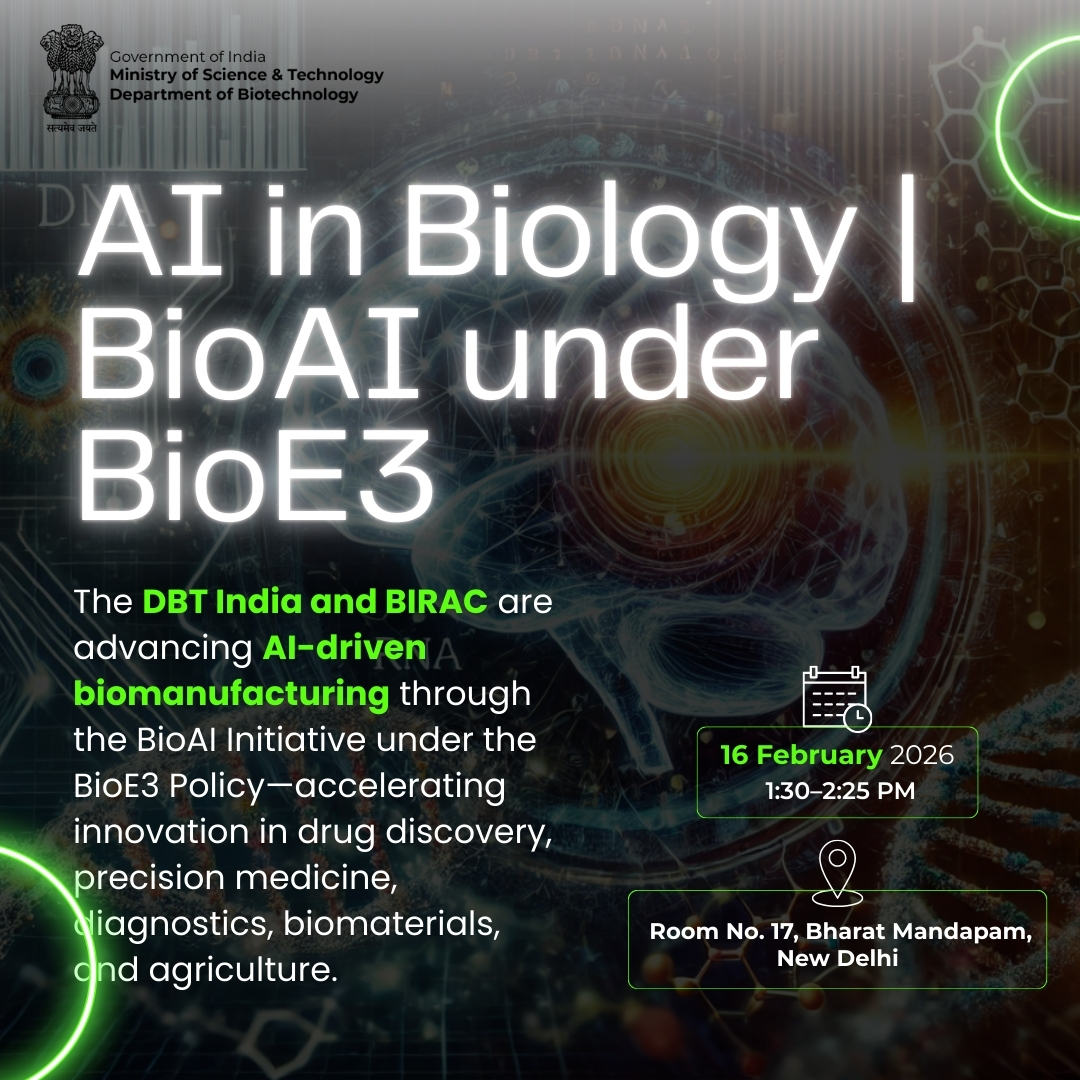
Artificial intelligence is being positioned as a catalytic force in reshaping biomanufacturing, with policymakers, scientists and industry leaders outlining a roadmap that blends computational power with biological science to accelerate drug discovery, industrial enzymes and sustainable materials. Discussions at the India AI Impact Summit placed BioAI at the centre of a strategy aimed at using genomics, in-silico modelling and closed data loops to build scalable and trusted production systems.

The convergence of AI and biology has moved from laboratory experimentation to commercial ambition. India’s biotechnology sector, valued at over $80 billion and targeting significant expansion by the end of the decade under the BioE3 policy framework, is seeking to harness machine learning tools to shorten development cycles that traditionally take years. Speakers at the summit argued that AI-enabled simulation and predictive modelling can reduce trial-and-error experimentation in fields ranging from vaccine development to precision fermentation.

BioAI refers to the integration of artificial intelligence techniques with biological data, particularly genomic sequencing, proteomics and metabolic engineering. The approach relies on large datasets and advanced algorithms capable of identifying patterns invisible to conventional research methods. Advances in protein structure prediction, including breakthroughs in computational biology over the past few years, have demonstrated how neural networks can model complex molecular interactions with remarkable accuracy.

At the summit, researchers described how generative AI systems are being trained to design novel proteins and enzymes tailored for industrial use. By feeding genomic datasets into predictive algorithms, scientists can simulate biological pathways in silico before conducting physical experiments. This method reduces costs and speeds up scaling, particularly in biopharmaceutical production and alternative protein manufacturing.

Government representatives outlined plans to expand national AI infrastructure to support such applications. IndiaAI Mission initiatives include the creation of high-performance computing resources and domain-specific data repositories to ensure that biotech firms and research institutes have access to secure and interoperable datasets. Officials emphasised that trust frameworks and regulatory clarity would be essential to encourage private investment while safeguarding data privacy and biosafety standards.

Industry leaders echoed that sentiment, highlighting that biomanufacturing requires rigorous validation. Unlike digital products, biological outputs interact with living systems, making quality control paramount. AI-driven feedback loops—where laboratory results continuously refine algorithms—were presented as a mechanism to maintain reliability while scaling up production. Data integrity, traceability and auditability were recurring themes, reflecting global debates about AI governance.

The global context underscores the strategic significance of BioAI. The United States and European Union have invested heavily in synthetic biology and AI-assisted drug discovery. China has also advanced computational genomics and large-scale fermentation capabilities. Analysts note that countries able to combine AI talent with robust biotech ecosystems stand to capture a growing share of the global bioeconomy, projected by several industry reports to exceed $4 trillion over the coming decade.

India’s strength in information technology services and pharmaceutical manufacturing offers a foundation for this convergence. The country is a major supplier of generic medicines and vaccines, supported by a network of research institutions and startups. By integrating AI tools into these value chains, stakeholders believe production timelines can be compressed and new therapeutic molecules identified with greater precision.

Academic voices at the summit stressed the importance of interdisciplinary training. Biologists must understand algorithmic thinking, while data scientists need grounding in molecular biology. Collaborative platforms linking universities, startups and established pharmaceutical firms were proposed to ensure knowledge transfer and talent development. Investment in computational biology curricula and shared research facilities is seen as critical to sustaining momentum.

Ethical considerations formed part of the dialogue. AI models trained on genomic data raise questions about consent, ownership and equitable benefit sharing. Experts argued for transparent governance structures aligned with international norms, noting that trust is fundamental when dealing with health-related information. Regulatory agencies are exploring how to evaluate AI-generated biological designs within existing approval pathways.

Private sector participation is accelerating. Venture capital funding in biotech startups leveraging machine learning has grown steadily, reflecting confidence in AI-assisted discovery platforms. Companies are experimenting with digital twins of biological systems, enabling simulation of fermentation processes before industrial deployment. Such capabilities can enhance efficiency and reduce resource consumption, aligning with sustainability goals.

Sustainability featured prominently in discussions on biomanufacturing. AI-optimised microbes can produce bio-based chemicals and materials that substitute fossil-derived inputs. Precision fermentation techniques, guided by predictive analytics, may lower energy use and waste. As global supply chains face pressure to decarbonise, the combination of AI and biotechnology is viewed as a pathway to cleaner industrial production.

Participants also highlighted challenges. High-quality biological datasets remain fragmented, and interoperability across laboratories is uneven. Ensuring cybersecurity in research networks is another concern, given the sensitivity of genetic information. Scaling laboratory successes to commercial volumes demands capital expenditure and regulatory compliance that can deter smaller enterprises.


Three decades after its modest debut on a handheld console, Pokémon has evolved into one of the most lucrative entertainment properties in history, generating tens of billions of dollars in revenue and emerging as a potent instrument of Japan’s cultural influence abroad. Created by Satoshi Tajiri and launched in 1996 by Nintendo, Game Freak and Creatures, the franchise began with Pokémon Red and Green for the Game […]

Galaxy Digital’s head of asset management, Steve Kurz, is projecting a structural shift in the cryptocurrency market as the industry grapples with price volatility and evolving investor behaviour. Speaking publicly this week, Kurz said the downturn in digital-asset prices is better understood as healthy deleveraging rather than evidence of systemic failure, and described a deepening integration between traditional financial systems and digital-asset infrastructure that he believes underpins […]

Arabian Post Staff -Dubai Havelock One Interiors has completed the full fit-out of SOCO, a new family entertainment concept developed by Majid Al Futtaim Entertainment and launched at City Centre Mirdif in Dubai, marking another high-profile addition to the region’s expanding leisure and lifestyle sector. The Bahrain-headquartered interior fit-out specialist said the project involved the turnkey delivery of a multi-zone “social jungle” environment designed to blend interactive […]

Strategy has said it could withstand a collapse in bitcoin’s price to $8,000 and still service its roughly $6 billion in net debt, outlining contingency plans that include converting portions of its borrowings into equity if market conditions deteriorate sharply. The Virginia-based software company, formerly known as MicroStrategy, has become one of the largest corporate holders of bitcoin under executive chairman Michael Saylor. Its balance sheet is […]

Concerns over inadequate privacy safeguards are holding back broader adoption of cryptocurrencies and blockchain technology, according to Binance founder Changpeng Zhao and several industry executives speaking at a major digital assets forum. Their remarks underline a growing consensus that transparency, long touted as blockchain’s defining strength, may also be constraining its appeal among retail users and large institutions. Zhao, widely known as CZ, told a panel at […]

VISHNU RAJA
RYO YAMADA
HITORI GOTOH
IKUYO KITA




