News related to
opportunities

A new maritime alliance took shape on 12 June 2025 as AD Ports Group and the Arab Shipbuilding & Repair Yard Company signed three Heads of Terms, solidifying their collaboration in marine services across Bahrain, in a ceremony attended by H.H. Shaikh Nasser bin Hamad Al Khalifa, His Majesty’s Representative for Humanitarian Works and Youth Affairs and Chairman of Bapco Energies. The agreements build upon the operational success of ASRY Marine, […]

All countries under DHL Supply Chain APAC are now certified DHL Supply Chain Japan becomes the newest office to achieve certification SINGAPORE – Media OutReach Newswire – 13 June 2025 – DHL Supply Chain, the global leader in contract logistics, has been certified as a Great Place to Work® across Asia Pacific. DHL Supply Chain Japan is the latest country office to achieve this certification, bringing the […]

The newly announced trade agreement between the United States and China offers temporary relief from economic tensions, but it does not resolve the deep strategic rift between the world’s two largest economies. For investors, I believe, this is a short-term fix within a long-term rivalry, and portfolios must be positioned accordingly. President Donald Trump’s statement that a deal is “done” follows two days of talks in London. […]

Africa’s ageing oilfields are undergoing a transformation as artificial intelligence technologies unlock new opportunities for enhanced oil recovery. Operators across the continent are leveraging data-driven systems, machine‑learning and regional policy incentives to revive mature reservoirs, boost output and improve efficiency. Major energy firms have spearheaded this push. SLB opened a 3,200 sq ft Africa Performance Centre in Luanda, Angola on 28 January 2025, designed to offer a collaborative platform for digital […]

HONG KONG SAR – Media OutReach Newswire – 12 June 2025 – The Hong Kong Polytechnic University (PolyU) took part in the world-renowned London Tech Week 2025 held from 9 to 11 June in London, UK, as the only participating university from Hong Kong. Four PolyU startups showcased their ground-breaking innovations in artificial intelligence (AI), advanced manufacturing technologies and healthcare solutions. The event attracted business leaders, industry […]

By Nitya Chakraborty The high level delegations of United States of America and China concluded their two day trade talks in London on Tuesday agreeing to take forward the course of negotiations for further promoting steady and healthy development of economic and trade ties between the two largest economies of the world. Both Chinese and […]

Applications from African professionals to American MBA programmes are climbing sharply, driven by robust scholarship support, evolving diversity strategies, and a post-pandemic appetite for international career mobility. African candidates are finding new momentum in American business schools thanks to generous funding sources such as the TY Danjuma MBA Scholarship, established in 2011. The fund supports admissions at top‑ranked global institutions, awarding 64 students from nations including Nigeria, […]

Advertisements

Some 2,400 stem cell and regenerative medicine pioneers convene to chart new frontiers, resulting from bidding efforts of Hong Kong Convention Ambassadors of the Hong Kong Tourism Board HONG KONG SAR – Media OutReach Newswire – 11 June 2025 – Reputed to be a leading research and development (R&D) hub for medical sciences, Hong Kong hosts the world’s largest and most significant gathering of stem cell research […]

High‑velocity charged particles unleashed by the Sun have sparked a full‑scale geomagnetic alert, prompting global advisories for potential disruptions to satellites, power grids, and communications. The alert stems from a coronal mass ejection on 31 May, which pushed through space at nearly 1,950 km/s and reached Earth’s magnetic field on 1 June. National space weather agencies called for a G4-level “severe” condition after initial impacts registered a geomagnetic […]

KUALA LUMPUR, MALAYSIA – Media OutReach Newswire – 11 June 2025 – Bitcoin keeps reaching new ATHs (All-Time Highs) in 2025 and fosters bullish market sentiments, yet volatility remains significant. This ramps up the risks for crypto traders, who use traditional spot trading tools. Experts at Octa Broker explain how CFDs—Contracts for Difference—allow traders to decrease risk exposure while offering more trading opportunities. The majority of crypto […]

Business registration has officially opened for retail and food outlets wishing to participate in Season 30 of Global Village, with organisers announcing that entrepreneurs can now apply for stalls across a wide range of high-traffic zones, including the vibrant Road of Asia and the buzzing Global Bazaar. Global Village, one of Dubai’s most prominent cultural and commercial attractions, is preparing for its 30th season by calling on […]

Wipro has officially transferred its Middle East regional headquarters from Al Khobar to a new, upgraded facility in Riyadh, signalling an intensified drive to anchor itself in the Kingdom’s digital economy. Mohamed Mousa has been appointed Managing Director and Regional Head for the Middle East, steering Wipro’s regional operations from the new Riyadh base.

Vinay Firake, CEO for Asia Pacific, India, Middle East and Africa, described the move as a “reaffirmation of commitment to supporting the dynamic business landscape in the Kingdom of Saudi Arabia.” He added that Mousa’s leadership will “further advance our decades-long presence in the Middle East.”

The office, inaugurated during a high-profile ceremony attended by senior Wipro executives, staff, and clients, is part of an expanding regional footprint that already includes offices in Jeddah, Jubail, and Al Khobar.

Mohammed AlRobayan, Deputy Minister for Technology at the Ministry of Communications and Information Technology, highlighted the Riyadh move as a pivotal moment for the Kingdom’s digital ambitions, saying it “accelerates the growth of the Kingdom’s digital economy” and underlines Saudi Arabia’s appeal as a tech destination.

Furthering its strategic investment in Saudi human capital, Wipro signed a Memorandum of Understanding with Prince Mohammad Bin Fahd University to create a Centre of Excellence in Riyadh. This initiative targets hands‑on training in advanced technologies for Saudi nationals, promoting workforce readiness and helping bridge the gap between academic learning and industry demand.

Financial analysts note that the relocation aligns with Saudi Vision 2030’s objective to diversify the Kingdom’s GDP beyond oil revenues, with global tech firms increasingly anchoring themselves in Riyadh. The new headquarters offers both symbolic and practical leverage: proximity to major government stakeholders, enhanced networking opportunities, and the ability to attract public–private partnerships focused on digital transformation.

Experts acknowledge, however, that this strategy is not without challenges. Wipro must navigate intense competition from both global rivals and agile regional players, maintain cost competitiveness, and ensure the newly hired Saudi talent is integrated effectively into its global delivery model. A report by an independent business intelligence provider recently flagged uncertainties such as fluctuating revenue streams and the rigours of managing a complex international footprint.

Mousa succeeds Dalveer Kaur, who transitioned to Wipro’s global capability centre practice. Mousa’s track record includes leadership roles in regional IT consulting and digital services, with a specific focus on scaling operations and aligning with government-led digital ecosystems. His appointment is a strategic fit for Wipro’s goal of deepening ties with local institutions and sovereign-backed tech initiatives.

The Riyadh office, equipped with advanced infrastructure, is expected to house regional delivery centres and client‑management teams specialising in cloud, AI, digital engineering, cybersecurity and consulting services. These capabilities align with Wipro’s broader portfolio, which spans consulting, design, engineering and operations in both the public and private sectors.

Looking ahead, Wipro is expected to pursue further partnerships with Saudi universities and training institutions, potentially expanding the Centre of Excellence model to other al‑Majlis campuses. The company will also likely collaborate with government-backed innovation hubs and sovereign wealth funds eager to foster digital lanes within finance, healthcare, logistics, and energy sectors.

While Wipro optimises its capacity to support client transformation in the region, industry observers will monitor its ability to sustain growth amid macroeconomic volatility, emergent technologies and evolving client expectations. With Mousa at the frontline, the company aims to leverage its regional assets, integrated innovation initiatives and talent development programmes to embed deeper into the Kingdom’s digital ecosystem.

Amid global tensions and shifting supply‑chain dynamics, Wipro is banking on its regional pivot and local leadership to consolidate both government and enterprise relationships. Riyadh is increasingly viewed not only as a political capital but also as a digital-tech hub. Wipro’s investments in infrastructure, talent and strategic partnerships reflect that shift, aiming to position the firm at the centre of the Kingdom’s transformation agenda.

Harrison Street, a US-headquartered real assets investment firm with over $56 billion in assets under management, has formally expanded into the Middle East by establishing an office within the Abu Dhabi Global Market, after receiving regulatory approval from the Financial Services Regulatory Authority. The move is being viewed as a strategic step to tap into the region’s institutional capital base and aligns with Abu Dhabi’s ambitions to attract global investment managers.

The firm’s new office, located at ADGM’s Al Sila Tower, is expected to anchor its regional operations and serve as a platform for growth across the Gulf and wider MENA region. Harrison Street becomes the latest in a line of global asset managers to choose Abu Dhabi as a regional headquarters, following similar moves by BlackRock, Brevan Howard, and Apollo Global Management. The announcement underscores the appeal of ADGM as a regulated environment that offers tax benefits, legal certainty, and direct access to sovereign wealth and pension funds.

Christopher Merrill, co-founder and CEO of Harrison Street, described the expansion as a natural extension of the firm’s long-term growth strategy. He emphasised that the company is aiming to offer institutional investors across the Middle East access to thematic investment opportunities in alternative real assets, including student housing, senior living, healthcare infrastructure, and digital assets. Merrill said the firm sees “substantial appetite among Gulf-based investors for exposure to long-duration, inflation-protected assets with stable yield profiles.”

While Harrison Street has traditionally focused on North America and Europe, its new ADGM base signals an intention to deepen partnerships with investors in the Gulf region. The decision is also part of a broader effort to diversify funding sources and tailor strategies that align with regional priorities such as healthcare expansion, demographic shifts, and digital infrastructure.

The ADGM licence will enable Harrison Street to carry out regulated investment activities and offer tailored asset management services to qualified investors in the UAE and beyond. According to the firm’s regional head, who is set to be announced in the coming weeks, the Abu Dhabi office will focus on both capital raising and direct investment origination, particularly in sectors aligned with government-backed development goals across the Gulf.

Industry observers say Abu Dhabi’s financial centre has matured into a viable launchpad for international firms targeting sovereign and institutional capital. With assets under management in ADGM growing to over $1 trillion this year, the financial centre is increasingly positioning itself as a global hub for private equity, venture capital, and asset management. Harrison Street’s entry follows a regulatory trend where ADGM has been accelerating approvals for asset managers, family offices, and hedge funds in a bid to rival more established global centres.

Global interest in Middle East capital pools has surged, with firms across Europe and the US actively seeking to establish an on-the-ground presence. Harrison Street’s thematic investment strategy, focused on secular trends such as ageing populations and technological adoption, is seen to resonate well with Gulf investors pursuing diversification beyond traditional energy-linked assets.

Merrill indicated that the firm will look to build co-investment partnerships and joint ventures with local institutions, leveraging its experience in structuring real estate and infrastructure funds across developed markets. He also hinted at the possibility of localised strategies that may include greenfield development and operating partnerships in sectors like education and senior care, particularly in markets undergoing demographic transition such as Saudi Arabia and the UAE.

ADGM authorities welcomed the firm’s entry as further validation of Abu Dhabi’s rising influence in the global investment ecosystem. The financial centre has actively courted global asset managers through a mixture of regulatory reforms, dual licensing frameworks, and strategic partnerships with Abu Dhabi Investment Office and Mubadala.

Arqaam Capital is stepping up its equity capital markets, debt capital markets, and loan syndication operations in response to an upswing in transaction volume across Saudi Arabia and the UAE, positioning itself as a more prominent regional player. The Dubai‑based financial services firm, with licenced offices in the UAE, Saudi Arabia, Egypt and Lebanon, has secured permissions in the Kingdom of Saudi Arabia to advise on ECM […]

Societe Generale‑Forge has introduced USD CoinVertible, a fully backed US dollar stablecoin launching on Ethereum and Solana, with BNY Mellon named as reserve custodian.

USDCV is the second stablecoin by Societe Generale‑Forge following its euro-pegged EURCV. This institutional-grade token, compliant with MiCA and issued under Societe Generale‑Forge’s EMI licence from France’s ACPR, will offer 24/7 fiat-to-crypto conversion and multi-currency utility for institutional, corporate, and retail clients—excluding US Persons. Trading is set to commence in early July.

Jean‑Marc Stenger, CEO of Societe Generale‑Forge, framed USDCV as the logical progression from EURCV: “market adoption of stablecoins is growing exponentially,” and the dollar-based token meets clients’ demands for institutional-grade stablecoin services. The token is designed to underpin a wide range of on-chain activities, including crypto trading, FX transactions, cross-border payments, and collateral or cash management—supporting seamless settlement across USD and EUR.

BNY Mellon will hold the reserves backing USDCV, reinforcing the stablecoin’s institutional foundation. Carolyn Weinberg, Chief Product & Innovation Officer at BNY Mellon, emphasised that 24/7 stablecoin capabilities could enhance operational resilience, generate efficiencies, and unlock novel opportunities across cash, collateral, investment management, and payments.

Both USDCV and its predecessor, EURCV, are categorised as Electronic‑Money Tokens, fully regulated under Europe’s Markets in Crypto‑assets regulation. Societe Generale‑Forge maintains public transparency on collateral composition, which adheres to high credit and liquidity standards and is updated daily on its website.

The MiCA-compliant tokens are poised for distribution through institutional trading venues and exchanges. Demand for fiat-backed digital assets backed by traditional financial institutions is gaining momentum across crypto, with market makers ensuring liquidity, brokers bringing user access, and payment service providers facilitating integration.

The move signifies broader momentum in the stablecoin market. Dollar-pegged stablecoins account for the bulk of the industry, with global market capitalisation in the hundreds of billions, dwarfing euro-pegged variants. Societe Generale‑Forge’s expansion into USD addresses this scale, positioning the bank as a bridge between traditional finance and decentralised finance.

Institutional stablecoins face a competitive landscape. Non-bank issuers such as Circle and Tether dominate the public blockchain scene, while banks like JPMorgan have previously issued tokens like JPM Coin on private networks. USDCV, on a public chain, allows Societe Generale to directly compete as a regulated, EU-licensed stablecoin provider.

Expanding beyond Ethereum to Solana adds a strategic dimension: offering cost-effective, diverse blockchain infrastructure to institutional clients and capitalising on Solana’s growing ecosystem.

Societe Generale‑Forge’s regulatory positioning is central. The subsidiary holds licences as an Electronic Money Institution and Digital Asset Service Provider under France’s financial regulators, aligned with MiCA’s requirements. Both tokens are not registered under the U.S. Securities Act and will only be offered to non-US persons under Regulation S.

The broader context sees European institutions cautiously entering the competitive stablecoin space. Euro-denominated tokens like EURCV remain niche, often hindered by stringent reserve rules and slower Euro adoption. Regulatory oversight via MiCA, while enhancing legal clarity, restricts operational flexibility, as highlighted by the delisting of Tether from EU platforms.

Societe Generale‑Forge’s strategic approach reflects this landscape: build on on-chain euro demand, then expand into the US dollar space where scale and liquidity are strongest. The move supports Europe’s ambitions to reduce dependency on US-dollar stablecoins and foster a regulated fiat token ecosystem.

Market reaction will hinge on liquidity, brokerage integration, and clearing mechanisms. Partnerships with market makers and payment service providers will shape adoption, alongside listings on crypto exchanges. The involvement of BNY Mellon bolsters institutional trust, signalling that banking-grade reserve practices can coexist with blockchain settlement.

Meanwhile, global payment players are integrating stablecoins into mainstream rails. Stripe’s stablecoin accounts, Visa and Mastercard’s pilot programs, and renewed interest among banks show momentum. These initiatives reflect a broader shift to tokenised fiat as infrastructure rather than niche innovation.

As USDCV enters trading next month, key questions remain: will its regulated status prompt flight from unregistered stablecoins? Can it deliver on liquidity and operational efficiency? And does it set a template for future bank-issued tokens within stringent frameworks like MiCA?


Etihad Airways and Ethiopian Airlines have launched a strategic codeshare partnership designed to broaden travel options and enhance connectivity across their global networks. This collaboration enables passengers to access a wider array of destinations with seamless transfer options, utilising the complementary routes of the two carriers. The agreement allows Etihad, based in Abu Dhabi, and Ethiopian Airlines, headquartered in Addis Ababa, to offer joint flight services where […]

Red Bull is staging a groundbreaking multiplayer gaming finale in Dubai this December, where elite competitors will face off in Tetris on a dramatic canvas: the 150‑metre Dubai Frame, illuminated by more than 2,000 drones. The spectacle promises to be the largest live playable Tetris game ever, combining digital skill with live drone artistry. Red Bull’s global tournament roll‑out kicked off on World Tetris Day, drawing an […]

Ethiopia has surged ahead to become Africa’s largest wheat producer, with output surpassing that of Egypt by a factor of three, according to Prime Minister Abiy Ahmed. This achievement marks a significant milestone in Ethiopia’s agricultural sector, underscoring its rising role in continental food security and economic development. Prime Minister Abiy announced this development during a national address, highlighting the government’s concerted efforts to boost domestic wheat […]

HONG KONG SAR – Media OutReach Newswire – 9 June 2025 – The Chinese University of Hong Kong (CUHK) continues to attract exceptional international talent, as demonstrated by the success story of Sansita DEWANI, a second-year Integrated Bachelor of Business Administration (IBBAC) student from India. Her journey highlights CUHK’s growing appeal among South Asian students seeking world-class education in Asia. CUHK full scholarship awardee Sansita DEWANI (second […]

MEXC, a prominent digital asset exchange, has accelerated its stablecoin expansion strategy after acquiring $20 million worth of USDe tokens, marking a notable milestone as its stablecoin ecosystem surpasses a $100 million total value locked . This move signals a determined push by MEXC to strengthen its position in the increasingly competitive stablecoin market and further diversify its crypto offerings.

The $20 million USDe acquisition represents a calculated effort to bolster liquidity and adoption of stablecoins pegged to the US dollar, which have become vital in reducing volatility within the cryptocurrency sector. Stablecoins like USDe offer users a more reliable medium of exchange and store of value compared to traditional cryptocurrencies, which can experience dramatic price swings. MEXC’s increasing focus on stablecoins aligns with global trends where institutional and retail investors seek safer avenues for digital asset investment amid regulatory uncertainties and market fluctuations.

Beyond the recent purchase of USDe, MEXC’s stablecoin portfolio has seen sustained growth, pushing the platform’s total stablecoin value locked to exceed $100 million. This figure reflects the combined assets users have committed within MEXC’s stablecoin ecosystem, encompassing liquidity pools, staking, and yield farming products. The growing TVL not only underscores user confidence but also enhances the exchange’s capacity to support high-volume trading and DeFi activities anchored by stablecoins.

MEXC’s engagement in the stablecoin space builds upon its earlier strategic $16 million investment in Ethena, a notable innovator specialising in stablecoin technology and ecosystem development. Ethena’s platform focuses on creating programmable, algorithmic stablecoins that aim to maintain price stability through decentralised governance and dynamic supply adjustments. By backing Ethena, MEXC has positioned itself at the forefront of stablecoin innovation, tapping into emerging technologies that could redefine how digital currencies achieve and sustain their peg.

The decision to invest heavily in USDe and Ethena also comes amid rising competition among exchanges and financial platforms seeking to capture market share in stablecoin issuance and trading. Major players like Tether , USD Coin , and Binance USD dominate market capitalization, but newer tokens like USDe have gained traction through enhanced transparency, regulatory compliance, and blockchain interoperability. MEXC’s adoption of USDe highlights its intent to diversify beyond the dominant incumbents, offering users alternatives that may align better with evolving regulatory frameworks.

Industry experts note that the integration of stablecoins into broader financial systems remains a critical driver for crypto adoption. Stablecoins facilitate cross-border payments, remittances, and decentralised finance applications with reduced friction and costs compared to fiat-based mechanisms. MEXC’s strategy of expanding its stablecoin offerings enhances its utility as a hub for such financial activities, making it attractive to a wider range of traders and developers.

Regulatory clarity surrounding stablecoins has varied globally, with some jurisdictions imposing stringent requirements while others promote innovation-friendly policies. MEXC, headquartered in Seychelles with a growing international presence, has adapted to this shifting landscape by aligning its stablecoin partnerships with platforms like Ethena that emphasise compliance and governance transparency. This approach aims to pre-empt potential regulatory hurdles and establish MEXC as a responsible player in the digital currency ecosystem.

The growth in MEXC’s TVL also corresponds with increased user engagement in decentralised finance products facilitated by stablecoins. Yield farming and staking opportunities offered on the platform encourage users to lock their assets in exchange for rewards, helping to boost liquidity and network activity. These products often depend on stablecoins to mitigate risk, offering participants a balance between yield generation and capital preservation.

Market analysts observe that the stablecoin sector is poised for further expansion as demand for digital dollar substitutes rises. Factors such as increasing institutional interest, the rise of central bank digital currencies , and the ongoing integration of blockchain technology into mainstream finance all contribute to stablecoins becoming indispensable in the crypto landscape. MEXC’s proactive steps to expand its stablecoin infrastructure may provide a competitive advantage as these trends accelerate.

The $100 million TVL milestone not only demonstrates MEXC’s capability to attract substantial user funds but also reflects confidence in the exchange’s technical infrastructure and security protocols. Ensuring safe custody and seamless transactions is crucial for stablecoin platforms, given the heightened regulatory scrutiny and user concerns over fraud and hacking incidents in the sector.

MEXC’s roadmap indicates continued efforts to broaden its stablecoin offerings, with potential plans to incorporate additional tokens and enhance cross-chain compatibility. This would enable users to transact stablecoins across multiple blockchain networks, facilitating greater interoperability and expanding MEXC’s reach within the decentralised finance space.

The exchange also plans to deepen its collaboration with DeFi projects and developers, positioning stablecoins as a foundational component for innovative financial products. This aligns with broader industry movements where stablecoins serve as the backbone for lending protocols, decentralised exchanges, and payment solutions.

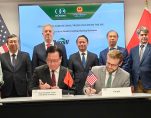
WASHINGTON D.C, US – Media OutReach Newswire – 7 June 2025 – Vietnam’s Minister of Agriculture and Environment Do Duc Duy led a delegation of nearly 50 agencies, agribusinesses, and associations to the United States from June 2–6, 2025, to promote trade and increase imports of agricultural and timber products. The delegation held business dialogues in Iowa, Ohio, Maryland and Washington, D.C. MoU signing to purchase US […]

DP World Trade Finance and JP Morgan have entered into a strategic partnership aimed at enhancing access to working capital in emerging markets. This collaboration seeks to address the estimated $2.5 trillion global trade finance gap that disproportionately affects small and medium-sized enterprises in developing economies.

The alliance’s inaugural transaction facilitated the procurement of cocoa from Ivory Coast by a leading global food company, unlocking over $70 million in annual procurement opportunities. This deal not only provided significant value to the Ivorian economy but also demonstrated the potential of combining logistics and financial services to mitigate credit risks in supply chains.

Raj Jit Singh Wallia, Board Member at DP World Trade Finance, emphasized the importance of integrating logistics and finance to reduce credit risk profiles and enhance liquidity in emerging markets. He noted that this transaction is one of many anticipated through the partnership, especially as trade expands in regions like Central Asia and Sub-Saharan Africa.

James Fraser, Global Head of Trade & Working Capital at JP Morgan, highlighted the bank’s commitment to supporting global trade through innovative financing solutions. He expressed enthusiasm about working together to broaden access to structured trade finance in pivotal markets via innovative financial frameworks.

The partnership aims to leverage risk-sharing mechanisms and combine them with logistics expertise to reduce the overall credit risk profile, thereby enhancing liquidity in markets where traditional lenders are hesitant due to limited credit data. By co-managing trade finance transactions, DP World and JP Morgan intend to provide more inclusive trade participation opportunities for businesses in developing economies.

Deutsche Bank is actively assessing the viability of stablecoins and tokenized deposits, signalling a strategic shift towards digital finance. Sabih Behzad, the bank’s Head of Digital Assets and Currencies Transformation, confirmed that the institution is considering issuing its own stablecoin or participating in a broader industry initiative.

This exploration aligns with the bank’s broader efforts to modernize its payment systems and embrace blockchain technology. Behzad noted the increasing momentum of stablecoins, particularly within regulatory environments that are becoming more supportive, especially in the United States. He outlined that banks have various options in engaging with the stablecoin industry, ranging from acting as reserve managers to issuing their own stablecoins, either independently or as part of a consortium.

In addition to stablecoins, Deutsche Bank is delving into tokenized deposit solutions aimed at enhancing payment use cases. These solutions involve digitizing traditional bank deposits using blockchain technology, potentially streamlining transactions and reducing costs. The bank has already conducted experiments in this domain, collaborating with UBS to simulate tokenized deposit payments. These trials utilized the Bundesbank’s Trigger Solution, enabling blockchain-based systems to link to the central bank’s payment infrastructure, facilitating seamless interbank settlements.

Deutsche Bank’s initiatives are part of a broader industry trend toward embracing digital assets and blockchain technology. The bank is participating in various projects, including Project Agorá, which aims to improve cross-border payments using tokenized assets. These efforts reflect a growing recognition among financial institutions of the potential benefits of digital currencies and tokenization in enhancing efficiency and creating new business models.

The bank’s exploration of stablecoins and tokenized deposits also coincides with evolving regulatory landscapes. In the European Union, the Markets in Crypto-Assets regulation is shaping the framework for digital assets, while in the United States, proposed legislation like the STABLE Act and the GENIUS Act are focusing on transparency, fully backed reserves, and anti-money laundering compliance. These regulatory developments are influencing how banks approach digital currencies and related technologies.

Behzad emphasized the importance of a comprehensive approach to digital asset integration, highlighting the need for robust infrastructure encompassing issuance, trading, settlement, and custody. He pointed out that while tokenization offers significant opportunities, successful adoption requires 24/7 operations and advanced risk management, leveraging programmability and composability for maximum potential.

Vietnam’s Vingroup and Gulf states are both rewriting their growth playbooks through state-led sustainability drives, forging a parallel transformation from legacy empires into green innovation hubs. HANOI, VIETNAM – Media OutReach Newswire – 6 June 2025 – Vietnam’s Vingroup and Gulf nations share parallel journeys of strategic reinvention, as the old playbooks that delivered decades of growth are showing their limits. While Gulf countries built wealth on […]

VISHNU RAJA
RYO YAMADA
HITORI GOTOH
IKUYO KITA
Just in:
Bail refused to 17-year old in Abhiram murder // Sabarimala booking discrepancies prompt sabotage angle probe // Thailand’s Most Iconic New Year’s Celebration Returns: ICONSIAM Unveils “Amazing Thailand Countdown 2027” // Dubai Introduces SHARH, an AI-Powered Platform Helping Entrepreneurs Buy, Sell and Manage Businesses in the UAE // European Commission takes systems offline after AI cyberattack //
Rahul addresses League’s INDIA bloc grievances
// Crypto market loses $150 billion amid broad sell-off // 2026 Tropical Rainforest Ecosystem Partners Conference Kicks off in Hainan // Technology at Work, Heritage for All: The “Chinese Approach” to Safeguarding the Leshan Giant Buddha // Promoting Common Human Development Through Exchanges and Mutual Learning Among Civilizations // Yeebo Announces Interim Results for FY26/27 Revenue Increases by 45.5% to HK$806.7 Million Profit Attributable to Owners Surges 87.6% to HK$2,284.7 Million // Padmini follows Padmaja for ‘ghar vapsi’ // Phancy Announces Business Performance for the Nine Months Ended September 30, 2026 // Dalilk Academy reaches 27 million, targets 100 million by 2030 // Workday targets Honeydew purchase to unify AI metrics // Coinbase targets 2027 launch amid state gambling lawsuits // PayerMax and ShopeePay Strengthen Strategic Partnership to Advance Digital Payment Collaboration in Southeast Asia // Ex-minister named accused in Messi visit fraud case // Sui activates Hashi Bitcoin lending across partner network // Toward a Shared Future for Humanity: Rethinking Civilizational Exchange //