Just in:
US military rebuts Iran’s Gulf F-16 strike allegation // Coinbase targets 2027 launch amid state gambling lawsuits // Diabetes Malaysia And Alpro Pharmacy Set National Record With 11,007 Most Blood Glucose Screenings Conducted Across Malaysia In Just 48 Hours // Dalilk Academy reaches 27 million, targets 100 million by 2030 // Workday targets Honeydew purchase to unify AI metrics // PayerMax and ShopeePay Strengthen Strategic Partnership to Advance Digital Payment Collaboration in Southeast Asia // Jaiedco and Golden Bridge Announce Strategic Collaboration for a New Dubai Islands Development // Saudi Arabia schedules multinational top-up tax for 2027 // Crypto market loses $150 billion amid broad sell-off // Sui activates Hashi Bitcoin lending across partner network // Balagopal challenges CM over tax revenue // Padmini follows Padmaja for ‘ghar vapsi’ // Ex-minister named accused in Messi visit fraud case // Technology at Work, Heritage for All: The “Chinese Approach” to Safeguarding the Leshan Giant Buddha // Toward a Shared Future for Humanity: Rethinking Civilizational Exchange // 2026 Tropical Rainforest Ecosystem Partners Conference Kicks off in Hainan //
Rahul addresses League’s INDIA bloc grievances
// Sabarimala booking discrepancies prompt sabotage angle probe // Phancy Announces Business Performance for the Nine Months Ended September 30, 2026 // Yeebo Announces Interim Results for FY26/27 Revenue Increases by 45.5% to HK$806.7 Million Profit Attributable to Owners Surges 87.6% to HK$2,284.7 Million //

News related to
opportunities

SINGAPORE – Media OutReach Newswire – 28 May 2025 – Alcatel-Lucent Enterprise, a leading provider of secure networking and communications solutions that enable organizations and industries to accelerate their operational efficiencies and competitiveness, is pleased to announce the appointment of Sandrine El Khodry as the new Executive Vice President of Global Sales & Marketing, reporting directly to the company CEO, Yann Zhang. From her extensive roles within […]

Demonstrating Financial Stability, Proposed Final Dividend of HK$0.81 cents per share, Exploring Overseas Market to Diversify Income Source HONG KONG SAR – Media OutReach Newswire – 27 May 2025 – The board of directors of Oi Wah Pawnshop Credit Holdings Limited (HKEx stock code: 1319.HK, the “Group” or “Oi Wah”) announced its annual results and its financial position. For the year ended 28 February 2025 (“FY2025”), the […]

Thailand has initiated a pilot programme enabling foreign tourists to make purchases using cryptocurrencies in Phuket, marking a significant step in integrating digital assets into the nation’s tourism sector. The initiative, announced by Deputy Prime Minister and Finance Minister Pichai Chunhavajira, allows visitors to register their Bitcoin through Thai exchanges and verify their identities before transacting. A designated clearinghouse will convert these digital payments into Thai baht, ensuring that local merchants receive funds in the national currency and are insulated from cryptocurrency price volatility.

This pilot operates within Thailand’s existing legal frameworks, requiring no amendments to current laws. The government aims to enhance convenience for tourists and expand business opportunities in the tourism sector, a critical driver of the nation’s economy. Phuket, attracting up to 14 million tourists annually, serves as an ideal location for this trial.

The programme builds upon Thailand’s growing acceptance of cryptocurrency. In Kalasin’s Huay Phueng district, dubbed “Bitcoin Town,” over 80 businesses, including noodle vendors and tuk-tuk services, accept Bitcoin payments. This grassroots adoption demonstrates the potential for broader cryptocurrency integration across the country.

Former Prime Minister Thaksin Shinawatra has advocated for using Phuket as a “Bitcoin sandbox” for tourism, suggesting that Thailand is well-prepared to advance cryptocurrency initiatives compared to other Southeast Asian nations. He also proposed the issuance of a government-guaranteed stablecoin to increase economic liquidity and potentially boost GDP growth.

Despite these advancements, challenges remain. The Bank of Thailand has previously expressed concerns about the use of cryptocurrencies for payments, citing potential threats to financial stability. However, proponents argue that a carefully controlled pilot could attract new capital inflows and liquidity into Thailand’s economy.

Airbus and Tata Advanced Systems Limited have confirmed plans to establish a Final Assembly Line for the Airbus H125 helicopter in Kolar, Karnataka, marking the first privately-led helicopter manufacturing facility in India. This facility will become the fourth global production site for the H125, joining existing operations in France, the United States, and Brazil.

The H125, renowned for its versatility and performance, is expected to play a pivotal role in enhancing India’s civil aviation capabilities. With applications ranging from emergency medical services and disaster management to law enforcement and tourism, the helicopter is poised to address diverse operational needs. Its ability to operate in high-altitude and extreme environments, including a notable landing on Mount Everest, underscores its adaptability.

The decision to locate the assembly line in Karnataka was influenced by the state’s robust industrial infrastructure, skilled workforce, and supportive policies. The facility is anticipated to commence operations in 2026, with an initial production capacity of 10 helicopters annually, scalable based on demand.

This initiative aligns with the ‘Make in India’ programme, aiming to bolster domestic manufacturing and reduce reliance on imports. By producing the H125 locally, India seeks to meet its growing demand for helicopters, projected at 500 units over the next two decades, and position itself as a regional hub for aerospace manufacturing.

The collaboration between Airbus and TASL extends beyond this project, building on their partnership in the C295 military transport aircraft programme in Vadodara, Gujarat. This continued cooperation reflects a strategic commitment to developing a comprehensive aerospace ecosystem in India.

The H125 assembly line is expected to contribute significantly to the regional economy, creating employment opportunities and fostering technological advancements. It also represents a step forward in India’s efforts to enhance its capabilities in the aerospace and defence sectors through public-private partnerships.

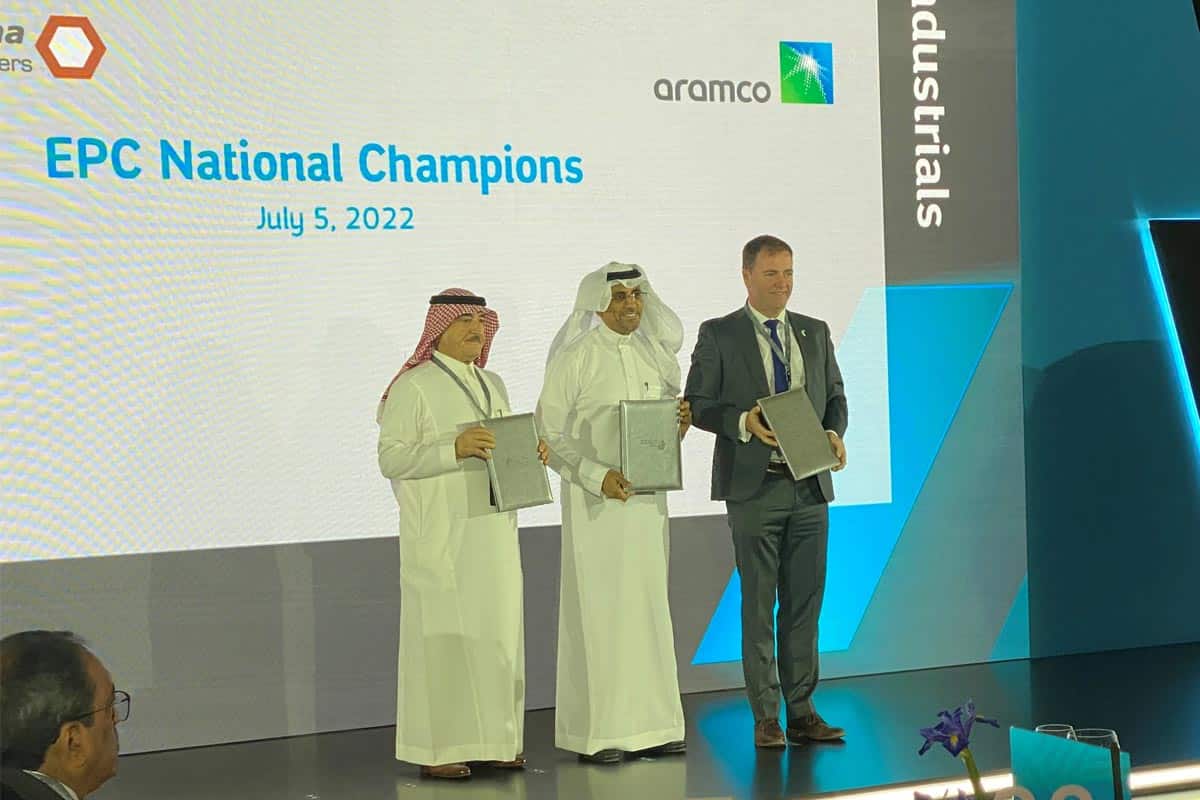
NesmaKent Energy Company , the joint venture between Saudi Arabia’s Nesma & Partners and the international engineering firm Kent, has secured a significant project management consultancy contract with Saudi Aramco. This contract marks a milestone for NKJV, positioning the partnership as a crucial player in the kingdom’s energy infrastructure development amid expanding ambitions in the energy sector.

The PMC contract involves comprehensive project oversight and management services for one of Saudi Aramco’s large-scale energy initiatives. NKJV’s responsibilities will span across planning, execution monitoring, quality control, cost management, and ensuring adherence to safety and environmental standards. This contract is part of Aramco’s broader strategy to engage specialised joint ventures that combine local expertise with international engineering standards, reinforcing Saudi Arabia’s Vision 2030 objectives to diversify and modernise its energy sector.

Nesma & Partners, well-established for its construction and engineering projects within the kingdom and region, has brought extensive local market knowledge and regulatory experience to the partnership. Kent, recognised for its global engineering and project consultancy portfolio, contributes advanced technical capabilities and international project management best practices. Together, the joint venture is expected to deliver high-quality consultancy services that meet Aramco’s stringent operational and environmental benchmarks.

The contract signals the growing trend among Saudi energy entities to engage collaborative partnerships that marry domestic strengths with foreign technological expertise. This aligns with the kingdom’s policy to increase localisation and private sector participation in mega projects. NKJV’s role as a PMC will extend beyond traditional supervisory functions, encompassing risk mitigation, technical advisory, and integration of innovative engineering solutions aimed at optimising project delivery and operational efficiency.

Saudi Aramco’s selection of NKJV follows a competitive tender process where multiple firms vied for the contract. The award underscores Aramco’s confidence in NKJV’s combined capabilities and track record. The project itself forms part of a wider portfolio of energy infrastructure investments by Aramco, which include enhancements in oil production facilities, downstream expansions, and renewable energy projects as the company transitions towards sustainable energy sources.

NesmaKent Energy’s contract exemplifies the shifting dynamics within the Saudi energy sector, where engineering consultancy and project management are gaining prominence as critical factors in successful project execution. The emphasis on specialised joint ventures highlights the kingdom’s commitment to leveraging cross-border partnerships to accelerate technological transfer and capacity building.

Industry experts note that the contract reinforces the strategic positioning of Nesma & Partners and Kent in the Middle East’s energy market. Nesma’s long-standing presence in Saudi Arabia has enabled it to navigate complex regulatory environments and develop robust relationships with government entities and private sector clients. Kent’s engineering pedigree, with a portfolio spanning oil and gas, petrochemicals, and infrastructure, complements Nesma’s regional experience with global standards.

The joint venture’s involvement in this Aramco project is expected to generate significant employment opportunities and skill development programmes in line with Saudi Arabia’s localisation agenda, known as Saudisation. NKJV plans to incorporate training modules and knowledge transfer frameworks to build local competencies in project management and engineering consultancy.

The energy project under NKJV’s management consultancy contract is critical to Aramco’s operational goals, encompassing upgrades to production capacity and the integration of advanced monitoring and control technologies. These developments are part of Aramco’s efforts to maintain its position as the world’s leading energy producer while adapting to evolving global energy demands and environmental regulations.

The scope of NKJV’s mandate also includes coordinating with multiple contractors, subcontractors, and regulatory bodies to ensure seamless execution. This requires a high level of technical expertise, project coordination skills, and compliance with international safety and quality certifications. NKJV’s approach reportedly emphasises sustainability and innovation, incorporating digital tools such as Building Information Modelling and real-time project analytics to enhance transparency and decision-making.

As Saudi Arabia intensifies its focus on energy diversification, including the expansion of renewable energy projects alongside traditional hydrocarbon investments, the expertise of joint ventures like NKJV will be crucial. Their ability to deliver complex projects efficiently and within budget will be pivotal in meeting the kingdom’s long-term strategic targets.

NesmaKent Energy’s success in securing this contract may open doors for further collaborations between Saudi and international firms in the energy consultancy sector. This contract reflects a broader trend of joint ventures becoming key conduits for technology transfer and knowledge exchange in the Gulf’s infrastructure and energy projects.

The UAE’s real estate sector recorded transactions exceeding AED239 billion in the first quarter of 2025, driven by investor confidence, regulatory reforms, and a robust pipeline of developments. A total of 94,719 sales, purchase, and mortgage deals were registered across Abu Dhabi, Dubai, Sharjah, Ajman, and Ras Al Khaimah, signalling a strong start to the year for the property market.

Dubai led the surge with 45,474 transactions valued at AED142.7 billion, marking a 22% increase in volume and a 30% rise in value compared to the same period in 2024. The ready property segment achieved its highest quarterly performance in over a decade, with 20,034 transactions worth AED87.5 billion. Off-plan sales also remained robust, accounting for 25,440 transactions valued at AED55.2 billion. This growth reflects sustained demand from both end-users and investors, supported by a shift from renting to owning amid rising rental prices.

Abu Dhabi’s real estate market also demonstrated significant growth, with transaction values increasing by 34.5% to AED25.3 billion across 6,896 deals. Saadiyat Island emerged as the leading area for real estate transactions, recording deals amounting to AED5.6 billion, followed by Yas Island with AED3.6 billion and Mohammed Bin Zayed City with AED2.1 billion. The emirate’s focus on high-value existing homes indicates a maturing and strategic market movement.

Sharjah reported a 31.9% increase in real estate transactions, totaling AED13.2 billion across 24,597 deals. Muwailih Commercial led the sales with 1,787 transactions worth AED1.9 billion. The growth is attributed to legislative changes allowing foreign ownership in specific areas, enhancing the emirate’s position on the global real estate investment map.

Ajman recorded 15,125 real estate transactions in 2024, with a value totaling AED20.5 billion, marking a 21% growth compared to 2023. The numbers indicate the emirate’s upward trajectory in real estate, supported by modern infrastructure and a wide array of investment opportunities.

Talal Al Dhiyebi, Group Chief Executive Officer at Aldar Properties, noted that the UAE’s real estate boom is fuelled by the country’s broader economic and cultural progress, making it one of the world’s most attractive destinations for living, working, and investing. He highlighted that 40% of property buyers are international, reflecting the growing interest in the region.

PHNOM PENH, CAMBODIA – Media OutReach Newswire – 26 May 2025 – Prince Holding Group’s Chairman Neak Oknha Chen Zhi has been named Entrepreneur of the Year in Cambodia 2025 by the World Business Outlook Awards. Additionally, the Group’s Chen Zhi Scholarship has received the Best Overall CSR Excellence in Cambodia 2025 award. Chairman Neak Oknha Chen Zhi, honored as “Entrepreneur of the Year in Cambodia 2025” […]

Advertisements

Dubai has introduced the Middle East and North Africa’s first tokenised real estate investment platform, Prypco Mint, enabling individuals to invest in fractional shares of ready-to-own properties starting from AED 2,000. This initiative, spearheaded by the Dubai Land Department in collaboration with Prypco and Ctrl Alt Solutions, aims to democratise access to the emirate’s property market.

Currently, the platform is accessible exclusively to holders of UAE Emirates IDs, with plans for global expansion in subsequent phases. Transactions are conducted solely in UAE Dirhams, and cryptocurrencies are not utilised during the pilot stage. Investors can access comprehensive property details, including pricing, risk factors, and technical specifications, ensuring transparency and informed decision-making.

The project aligns with the Dubai Real Estate Sector Strategy 2033 and the Dubai Economic Agenda D33, which seek to position Dubai as a hub for smart real estate investment. Projections estimate that tokenised assets could account for up to 7% of Dubai’s real estate market by 2033, equivalent to AED 60 billion .

Regulatory oversight is provided by the DLD for physical real estate and the Virtual Assets Regulatory Authority for digital assets, ensuring an integrated and transparent approach. The Central Bank of the United Arab Emirates plays a pivotal role in overseeing the opening of corporate accounts linked to real estate tokenisation through the Client Money Account system, safeguarding investor funds until the purchase process is fully completed.

Industry stakeholders have welcomed the initiative, viewing it as a significant step towards enhancing liquidity and accessibility in the property market. By enabling fractional ownership, the platform opens up investment opportunities to a broader base of investors, particularly those seeking smaller-scale investments.

The allure of meme coins like Shiba Inu and Dogecoin has cooled, prompting investors and crypto enthusiasts to seek fresh opportunities beyond the fleeting hype. As these once high-flying tokens show patterns of price consolidation and reduced volatility, attention is increasingly shifting towards emerging decentralised finance projects, notably the Mantix decentralized exchange currently in its presale phase.

Mantix represents a new wave of crypto innovation aiming to capitalise on the growing demand for decentralised trading platforms with enhanced utility and community governance. Unlike meme coins, which primarily rely on social media buzz and speculative trading, Mantix offers a structured ecosystem designed to attract long-term participants. The project’s native token, $MTX, has garnered significant interest in crypto circles for its potential to integrate scalable blockchain solutions with user-driven decentralisation.

Market data indicates that meme coins, while maintaining a loyal base, have witnessed substantial corrections from their peak valuations over the past year. Shiba Inu, which surged into mainstream attention through aggressive marketing and celebrity endorsements, now faces resistance levels that limit further upward momentum. Dogecoin, originally launched as a parody cryptocurrency, similarly exhibits less price movement and trading volume than during its initial frenzy. This maturation phase has naturally led traders to explore De-Fi projects that promise utility beyond mere token speculation.

Mantix’s presale has emerged as one of the more watched events in the De-Fi space due to its approach of combining tokenomics with a robust decentralized exchange infrastructure. The platform is being built on a Layer 2 blockchain solution aimed at reducing transaction costs and enhancing speed, a crucial improvement over congested Layer 1 blockchains like Ethereum. By addressing scalability, Mantix hopes to attract users frustrated with high fees and slow confirmations, common complaints in existing DEX platforms.

Further intrigue surrounds Mantix’s governance model, which incorporates a decentralised autonomous organisation structure. Token holders of $MTX will have voting rights on key platform decisions, ranging from protocol upgrades to fee distribution. This democratic approach to platform management has resonated with investors seeking a voice in project development rather than passive holding.

Industry experts highlight that the shift from meme coins to utility-driven De-Fi projects reflects the broader evolution of the cryptocurrency market. Initial phases of crypto adoption were fuelled by hype and speculative mania, but the sector is now progressing toward maturity, where sustainable growth depends on practical applications and network effects. Mantix’s emphasis on building a scalable DEX aligns with this trajectory, placing it among a competitive set of projects trying to capture the next generation of crypto users.

Despite the buzz, experts caution that presale participation entails risks, including regulatory uncertainty and project execution challenges. De-Fi platforms often face complex security audits and require rigorous testing before launching fully. However, the team behind Mantix claims to have secured partnerships with established blockchain developers and auditors to mitigate vulnerabilities, although independent verification remains pending.

Investor enthusiasm around $MTX is also driven by the projected token supply model, which aims to incentivise early participants while avoiding excessive inflation. Unlike meme coins, where large token supplies have often led to price manipulation concerns, Mantix’s controlled issuance framework is designed to foster stability and gradual appreciation. Early investors see this as a key differentiator, especially as the crypto market enters a phase prioritising long-term viability over rapid gains.

Global crypto exchanges and wallets have reportedly begun integrating $MTX to facilitate seamless token distribution once Mantix transitions from presale to public trading. This integration plan underscores the project’s ambition to establish liquidity and market presence quickly. The initial roadmap also outlines plans for additional De-Fi features such as yield farming, staking, and cross-chain interoperability, which could position Mantix as a comprehensive platform for decentralized finance activities.

The shift in investor sentiment away from meme coins coincides with broader regulatory scrutiny across major markets, where authorities are increasing oversight of speculative tokens and trading platforms. This environment favors projects like Mantix that demonstrate transparent governance and clear utility. Regulatory compliance will likely remain a pivotal factor shaping the competitive landscape among De-Fi exchanges, with platforms adopting robust protocols gaining trust from institutional and retail investors alike.

Market analysts note that while Shiba Inu and Dogecoin have established themselves as cultural icons within the crypto space, their futures hinge largely on community support rather than fundamental technological advances. Conversely, De-Fi platforms like Mantix seek to blend technology innovation with community governance to drive adoption. This fundamental difference may influence which assets retain relevance as the market consolidates and matures.

Technical analysis of SHIB and DOGE price trends points to a phase of reduced volatility, marked by trading within defined ranges after sharp declines from all-time highs. Such patterns typically suggest accumulation phases or potential repositioning by holders. Meanwhile, Mantix’s presale momentum suggests a growing appetite for new projects with practical use cases, especially those tackling scalability and user empowerment issues prevalent in the crypto ecosystem.

The crypto market’s cyclical nature often sees hype-driven assets give way to infrastructure-focused projects. Mantix’s presale success could signal the start of such a rotation, as traders move capital into platforms offering tangible functionality. Nevertheless, the highly speculative environment demands due diligence, and investors are advised to assess project whitepapers, development progress, and team credentials before committing funds.

HONG KONG SAR – Media OutReach Newswire – 24 May 2025 – Chief Executive of the Hong Kong Special Administrative Region (HKSAR), John Lee, hailed as a “success” his recent visit to the Middle East (May 10-15), where he led a delegation of more than 50 business leaders and entrepreneurs from Hong Kong and Mainland China on a visit to Qatar and Kuwait. “This Middle East visit […]

SINGAPORE – Media OutReach Newswire – 24 May 2025 – GoodCool Pte Ltd, an aircon contractor in Singapore, is marking its second anniversary with the launch of a new community engagement initiative. As part of its corporate social responsibility (CSR) initiatives, the company will provide volunteer-based air-conditioning services for selected households across Singapore. GoodCool Introduces CSR Initiative to Support Households in Singapore Community-Focused Support through Volunteer Service […]

Billionaire investor Bill Ackman has taken a substantial position in Uber Technologies by investing $2.8 billion, marking one of the most significant recent moves by a major hedge fund into the ride-hailing giant. This sizeable commitment comes as Uber navigates an increasingly competitive and evolving landscape in mobility, delivery, and autonomous vehicle development. Ackman’s Pershing Square Capital Management purchased approximately 36.4 million shares, representing nearly 8% of […]

A Strategic Partnership Accelerate New Industralisation and Microelectronics Development HONG KONG SAR – Media OutReach Newswire – 23 May 2025 – Hong Kong’s advanced manufacturing and microelectronics sector received a significant boost today with a three-year strategic partnership between Hong Kong Science and Technology Parks Corporation (HKSTP) and Würth Elektronik. Under this collaboration, Würth Elektronik —a global premier electronic components manufacturer with a R&D base at Hong […]

New York-based consulting firm Elevate has acquired RISE Group, a marketing and commercial services consultancy headquartered in Riyadh and Dubai. The acquisition, for an undisclosed amount, is pending customary regulatory approvals. This move marks Elevate’s strategic entry into the Middle East and North Africa region, aiming to capitalise on the burgeoning sports and entertainment sectors. As part of the agreement, RISE co-founders Seth Holmes and Tom Berrington […]

The Commodity Futures Trading Commission has affirmed that crypto perpetual futures are allowed for trading within the United States, providing much-needed regulatory clarity to market participants and investors in the digital asset space. This confirmation signals a significant development in the regulation of cryptocurrency derivatives, which have previously operated in a somewhat ambiguous legal environment. The CFTC’s explicit stance is expected to bring greater legitimacy and stability to an increasingly popular segment of the crypto market, while also setting the tone for future regulatory frameworks.

Crypto perpetual futures, a type of derivative contract that allows traders to speculate on the price movements of cryptocurrencies without an expiry date, have gained widespread traction globally. Unlike traditional futures contracts with fixed settlement dates, perpetual futures enable continuous trading, providing liquidity and hedging opportunities that attract institutional and retail investors alike. However, their regulatory status has often been unclear, causing uncertainty among exchanges and traders, especially in the US, where regulatory agencies tend to apply stringent oversight to financial instruments.

The CFTC’s confirmation comes amid growing scrutiny of the broader cryptocurrency ecosystem, which has faced regulatory challenges regarding investor protection, market manipulation, and systemic risks. The agency clarified that perpetual futures on cryptocurrencies fall under its jurisdiction as derivatives products, which means platforms offering these contracts must comply with relevant CFTC rules and regulations. This includes registration requirements for exchanges, adherence to anti-fraud measures, and maintaining transparent market practices.

Market leaders in crypto derivatives, such as Binance.US, FTX , and CME Group, have actively developed or listed perpetual futures contracts, but the lack of a formal regulatory framework had limited broader institutional adoption. The CFTC’s clear position may pave the way for more exchanges to offer these products, potentially increasing market liquidity and fostering innovation. The move also aligns with the agency’s broader approach to fostering responsible innovation in the derivatives market while safeguarding investor interests.

Industry experts note that the CFTC’s position contrasts with the Securities and Exchange Commission’s approach toward cryptocurrencies, which is generally more cautious, particularly regarding spot trading and certain crypto tokens. The delineation between the two agencies’ jurisdictions has been a subject of ongoing debate, especially since the SEC considers many digital assets as securities, thus subject to more stringent rules. The CFTC’s focus on futures and derivatives, rather than spot trading, offers a clearer regulatory path for these instruments.

This clarification from the CFTC also coincides with increased legislative and policy interest in digital assets at both federal and state levels. Lawmakers have debated comprehensive crypto regulatory frameworks to unify the patchwork of existing rules and provide consistency for market players. The CFTC’s explicit statement on perpetual futures could serve as a foundation for such legislative efforts, informing standards that balance innovation with risk management.

The implications of this regulatory clarity extend beyond the immediate crypto derivatives market. Institutional investors, including hedge funds, asset managers, and pension funds, have expressed cautious interest in digital asset products but often cite regulatory uncertainty as a key barrier. With perpetual futures formally recognised by the CFTC, these market participants may feel more confident engaging in cryptocurrency markets, potentially unlocking fresh capital inflows.

At the same time, consumer advocates and regulatory observers remain watchful. The high leverage and volatility inherent in perpetual futures trading can pose significant risks to less experienced traders, raising concerns about potential losses and market manipulation. The CFTC’s mandate includes protecting market integrity and consumer interests, so its enforcement actions and rulemaking around these contracts will likely intensify to address these risks effectively.

Cryptocurrency exchanges operating within the US have welcomed the announcement, viewing it as a step toward harmonising regulatory oversight and reducing operational uncertainty. Many platforms have invested heavily in compliance infrastructure, knowing that robust regulatory approval is crucial for long-term sustainability and growth. The clear jurisdictional guidance from the CFTC provides a framework for exchanges to innovate within established legal boundaries.

Internationally, regulatory bodies are also grappling with the rapid evolution of crypto derivatives. Countries such as Singapore, Switzerland, and the United Kingdom have developed varying approaches to the supervision of perpetual futures and similar instruments. The US’s decision to permit these contracts under the CFTC’s regulatory umbrella could influence global standards, encouraging a more coherent international regulatory environment.

Financial analysts highlight that the integration of crypto perpetual futures into regulated markets may increase price transparency and reduce volatility over time. By bringing these products under official oversight, the CFTC enables enhanced surveillance tools and risk controls, potentially deterring manipulative trading practices that have plagued the crypto space.

This regulatory clarity comes as decentralised finance platforms continue to explore perpetual futures through automated protocols. While the CFTC’s ruling primarily affects centralised exchanges and traditional trading venues, it sets a precedent that could influence regulatory approaches to DeFi derivatives as well. Authorities are closely monitoring DeFi developments, which challenge conventional frameworks due to their borderless and algorithm-driven nature.

Industry voices underscore the importance of balancing innovation with prudent oversight. The CFTC’s confirmation reflects a broader shift towards integrating cryptocurrency markets into the mainstream financial system while managing systemic risks. The move is likely to spur further collaboration between regulators, industry stakeholders, and market participants to develop standards that protect users without stifling technological advancement.

This regulatory milestone arrives amid a period of consolidation and maturation in the crypto market. After years of rapid growth, speculative excesses, and high-profile failures, the sector is increasingly focused on compliance, institutionalisation, and sustainable development. The CFTC’s stance on perpetual futures underlines the evolving recognition that digital assets and their derivatives require clear, enforceable rules tailored to their unique characteristics.


Abu Dhabi National Oil Company has entered into framework agreements valued at Dhs6 billion with 12 UAE-based manufacturers to produce critical industrial equipment locally. This initiative, part of the “Make it in the Emirates” programme, aims to enhance the resilience of the nation’s supply chain and create up to 1,300 skilled private-sector jobs.

The agreements focus on the domestic production of cables and pressure vessels, essential components in ADNOC’s operations. By localising the manufacturing of these items, ADNOC seeks to ensure timely availability, reduce dependency on international suppliers, and mitigate global supply chain disruptions.

The signing took place during the “Make it in the Emirates” forum in Abu Dhabi, attended by Dr Sultan Ahmed Al Jaber, Minister of Industry and Advanced Technology and ADNOC’s Managing Director and Group CEO. Dr Al Jaber emphasised the importance of strengthening local manufacturing capabilities to support the UAE’s industrial growth and economic diversification.

This move aligns with ADNOC’s broader strategy to stimulate domestic manufacturing. Previously, the company announced agreements with over 60 companies to locally produce critical non-oil products, aiming to manufacture AED70 billion worth of products in its procurement pipeline by 2027. These efforts are expected to create thousands of job opportunities and enhance the resilience of the local supply chain.

In addition to the current agreements, ADNOC has committed over AED20 billion for the procurement of structures and metal products from national companies. This commitment is part of a broader initiative to stimulate industrial growth and create more private-sector jobs for UAE nationals.

The “Make it in the Emirates” initiative, led by the Ministry of Industry and Advanced Technology, aims to position the UAE as a global hub for advanced industry and innovation. The programme encourages local manufacturing, supports the development of national talent, and promotes sustainable industrial practices.

ADNOC’s investment in local manufacturing is complemented by its focus on sustainability and technological innovation. The company has been leveraging artificial intelligence and advanced technologies to optimise operations and reduce emissions. Facilities like the Habshan 5 gas processing plant and Zirku Island offshore operations have been at the forefront of deploying such technologies, contributing to ADNOC’s goal of becoming a low-carbon energy leader.

ADNOC’s In-Country Value programme incentivises suppliers to adopt clean technologies and establish new manufacturing facilities in the UAE. Since its inception, the ICV programme has driven significant investment back into the UAE economy, supporting the nation’s Net Zero by 2050 Strategic Initiative.

The “Make it in the Emirates” forum serves as a platform for collaboration between government entities, industry leaders, and investors. It showcases the UAE’s commitment to fostering a robust industrial sector, enhancing economic resilience, and achieving sustainable growth.

KUALA LUMPUR, MALAYSIA – Media OutReach Newswire – 22 May 2025 – A global broker deeply involved in implementing social initiatives worldwide, Octa, recently received an award for one of its CSR (corporate social responsibility) projects. Given by Global Banking and Finance Review, the ‘Best CSR program by CFD broker Asia 2025’ award reflects Octa’s commitment to bringing long-lasting change to local communities. Octa broker’s charity focus […]

OSAKA, JAPAN – Media OutReach Newswire – 21 May 2025 – Tenchijin Inc., a space-tech innovator, showcased its innovative solutions at “TECHNOMART Malaysia-Japan: B2B Session on the Space Industry” (“TECHNOMART Malaysia”) held at the Malaysia Pavilion of EXPO 2025 Osaka-Kansai on May 15. Organized by the Malaysia External Trade Development Corporation (MATRADE), this event was part of “Creating a Sustainable Future: Malaysia-Japan Innovation Technology Seminar.” The strategic […]

Cryptocurrency exchange Kraken has secured a Markets in Financial Instruments Directive licence in the European Union by acquiring Cypriot investment firm Greenfields Wealth, formerly known as Pacific Union Group. The acquisition, approved by the Cyprus Securities and Exchange Commission , enables Kraken to offer regulated crypto derivatives to advanced traders across selected EU markets.

This strategic move allows Kraken to operate under the EU’s MiFID framework, facilitating the provision of over-the-counter derivatives, including contracts for differences , to retail clients within the European Economic Area. The licence also permits Kraken to passport its services across other EU member states, potentially reaching a broader base of European traders and investors.

Shannon Kurtas, Kraken’s Co-General Manager of Pro & Exchange, stated that the acquisition reflects the company’s commitment to providing a trusted, regulated environment for advanced crypto traders and investors. She emphasized that the European market remains a top priority for Kraken as it continues to expand its services globally.

Kraken plans to introduce a range of derivatives products, including regulated futures and options, designed to meet the needs of sophisticated crypto investors in Europe. These offerings will enable traders to gain exposure to various digital assets in a capital-efficient and flexible manner, using a variety of collateral currencies to back their positions.

The acquisition of Greenfields Wealth provides Kraken with a strategic entry point into the European derivatives market. Cyprus has emerged as a hub for financial services firms seeking to operate across the EU, thanks to its regulatory framework and MiFID passport capabilities. The approval from CySEC enables Kraken to compete more effectively in the European crypto derivatives market.

Kraken has a history of pursuing regulated derivatives trading opportunities. In 2019, the company acquired Crypto Facilities, a UK-based crypto futures platform regulated by the Financial Conduct Authority , enhancing its presence in the UK market. This acquisition made Kraken the first licensed crypto futures provider in the United Kingdom.

The European crypto derivatives market is experiencing significant growth, with projections indicating a 15% growth rate until 2030. Kraken’s entry into this market positions the company to capitalize on the increasing demand for secure and regulated crypto derivatives trading in the EU.

Kraken’s approach to regulatory compliance has been systematic, with the exchange working to secure necessary approvals across different jurisdictions. This strategy helps ensure that its services meet local regulatory standards while providing users with access to advanced trading options.

The company’s expansion into the European market aligns with the EU’s Markets in Crypto-Assets regulation, which aims to address issues related to anti-money laundering, token issuance, and stablecoin-specific rules. Kraken’s acquisition of the MiFID licence represents a strategic move to capture opportunities in Europe’s expanding derivatives market.

The United Arab Emirates has unveiled a Dh40 billion financing initiative aimed at accelerating the growth of its industrial sector over the next five years. Announced by Dr Sultan Al Jaber, Minister of Industry and Advanced Technology, during the Make it in the Emirates forum in Abu Dhabi, the plan seeks to enhance the nation’s manufacturing capabilities and diversify its economy.

The financing will be facilitated through a consortium of major banks, including Emirates Development Bank , First Abu Dhabi Bank, Mashreq, Emirates NBD, Abu Dhabi Commercial Bank, Abu Dhabi Islamic Bank, and Wio Bank. These institutions will offer competitive loans to industrial companies, supporting projects that align with the UAE’s strategic economic objectives.

Dr Al Jaber emphasized the multiplier effect of industrial investments, stating that each investment stimulates growth in related sectors. He highlighted that the initiative is part of the broader Operation 300bn strategy, which aims to increase the industrial sector’s contribution to the UAE’s GDP to Dh300 billion by 2031.

The Make it in the Emirates forum also saw the announcement of additional incentives, including Dh23 billion in guaranteed offtake agreements, bringing the total value of captive procurement opportunities to Dh143 billion. These agreements are designed to encourage local manufacturing of over 2,000 products, with significant procurement commitments from entities like ADNOC and Pure Health.

New industrial projects and investments worth Dh20 billion were unveiled, alongside co-lending financial solutions of Dh1 billion to empower small and medium enterprises . The government also introduced comparative electricity tariffs in the northern Emirates and launched an AI innovation programme providing Dh370 million to targeted technology startups.

Emirates Development Bank has played a pivotal role in supporting the UAE’s industrial sector. Since the launch of its strategy in 2021, EDB’s financing has reached Dh15.7 billion, contributing Dh7.4 billion to the industrial GDP by the end of 2024. The bank has also facilitated Dh50.2 billion in capital expenditure financing, supported Dh15 billion in greenfield projects, and attracted Dh7 billion in foreign direct investment.

In 2024 alone, EDB provided Dh8.7 billion in financing, marking a 222% increase from the previous year. This financing supported the creation of over 14,000 industrial jobs and contributed Dh4.1 billion to the UAE’s industrial GDP. The manufacturing sector received the largest share, with Dh4.23 billion, accounting for 49% of total disbursements.

The bank’s focus on key sectors includes advanced technology, which received Dh3 billion in financing, and renewable energy projects, which secured Dh1.2 billion. Additionally, the food security and healthcare sectors received Dh1.22 billion and Dh1.14 billion, respectively.

EDB’s support for micro, small, and medium enterprises remained a core priority, with total financing reaching Dh3 billion in 2024. This includes Dh758 million through the bank’s Credit Guarantee Scheme in partnership with 11 commercial banks, Dh2.1 billion in direct financing to mSMEs, and Dh107 million to SME-Micro projects.

The bank’s strong financial performance and strategic focus have been recognized by S&P Global, which upgraded EDB’s credit rating to AA, the highest among financial institutions in the UAE and MENA region. This milestone underscores the bank’s robust financial profile and alignment with national development priorities.

A group of prominent Senate Democrats, led by Elizabeth Warren and Minority Leader Chuck Schumer, has urged the Trump administration to reconsider newly announced artificial intelligence chip agreements with Saudi Arabia and the United Arab Emirates . The lawmakers argue that these deals could compromise U.S. national security by potentially exposing advanced technology to adversaries like China and Russia, while also limiting the availability of critical components for American companies.

The agreements, unveiled during President Donald Trump’s recent trip to the Middle East, involve major U.S. tech firms such as Nvidia Corp. and Advanced Micro Devices Inc. selling tens of thousands of advanced semiconductors to the Gulf nations. These deals could pave the way for the sale of over a million more chips, coinciding with the administration’s plans to rescind and rewrite Biden-era rules that had capped the access of these countries to such technology.

Critics within the Senate express concern that these moves could inadvertently aid China’s technological advancement, given the close ties between the Gulf states and Beijing. They also warn that the agreements might strain the domestic supply of AI chips, potentially hindering the growth of U.S. companies reliant on these components.

OpenAI CEO Sam Altman has defended the administration’s decisions, dismissing critics as “naïve” and emphasizing the strategic benefits of the deals. Altman, along with White House AI advisor David Sacks, argues that the agreements shift the technological balance in favor of the U.S. against China. Despite these assurances, concerns persist among lawmakers and national security experts about the potential risks associated with the export of sensitive technology to the Gulf region.

The deals have also sparked debate within the tech industry, with some companies eager to pursue opportunities in the Gulf, while others express apprehension regarding security and geopolitical implications. The collaborations highlight a divide in the industry and raise broader questions about the global strategic direction of emerging technologies.

Mrs Nana Shettima, spouse of Vice President Kashim Shettima, joined Senator Rochas Okorocha, Deputy Speaker Benjamin Kalu, and other prominent figures in calling on Nigerian women to assert themselves confidently in all spheres of life. Their appeal came during a gathering focused on advancing women’s empowerment, where speakers highlighted the need for greater female participation in politics, business, and social leadership. The event underscored the critical role […]

Thailand and Indonesia have formally upgraded their bilateral relationship to a strategic partnership, committing to enhanced cooperation in trade, investment, and regional security. The agreement was solidified during Indonesian President Prabowo Subianto’s state visit to Bangkok, marking the first such visit by an Indonesian leader in two decades and coinciding with the 75th anniversary of diplomatic relations between the two nations.

President Subianto and Thai Prime Minister Paetongtarn Shinawatra underscored their mutual intent to deepen collaboration across multiple sectors. The leaders agreed to bolster economic ties, focusing on expanding trade and investment opportunities, particularly in agriculture, fisheries, and small and medium-sized enterprises. They also signed a memorandum of understanding on health cooperation, aiming to enhance collaboration in communicable disease prevention and medical tourism.

In the realm of security, both countries pledged to intensify efforts against transnational crimes, including online scams, human trafficking, and drug trafficking. This commitment follows the rescue of Indonesian nationals from scam operations in Myanmar, highlighting the urgency of addressing such issues. The leaders emphasized the importance of joint military exercises and defense industry partnerships to strengthen their defense capabilities.

Abu Dhabi National Oil Company has granted contracts totaling Dh65.7 billion to nearly 400 local suppliers, contractors, and service providers during the first half of 2025. This extensive award reflects ADNOC’s ongoing commitment to strengthening the United Arab Emirates’ economy through its In-Country Value programme, which aims to bolster domestic industries and national supply chains. The contracts cover a diverse range of sectors vital to ADNOC’s operations, […]

VISHNU RAJA
RYO YAMADA
HITORI GOTOH
IKUYO KITA