Europe’s leading naval powers have concluded that reopening the Strait of Hormuz to commercial shipping is unlikely while hostilities involving Iran persist, underscoring mounting risks to global energy flows and maritime security in one of the world’s most critical chokepoints. Military planners across allied countries indicate that even a limited conflict scenario would render the narrow waterway effectively inaccessible for sustained civilian navigation, given the high probability […]
Arabian Post Staff -Dubai Casio’s G-Shock has introduced a new iteration of its widely recognised GA-2100 line, drawing design cues from the pulse and visual intensity of urban nightlife, as the brand seeks to strengthen its position among younger consumers and lifestyle-driven watch buyers. The GA-2100K series builds on the enduring popularity of the “CasiOak” silhouette, a model known for its octagonal bezel and lightweight carbon core […]
Large bitcoin holders widely regarded as early adopters have sold more than $100 million worth of the cryptocurrency, reflecting a shift in sentiment as expectations of prolonged high interest rates ripple across global markets. Blockchain tracking data indicates that several long-dormant wallets moved substantial volumes of bitcoin to exchanges over a short period, triggering speculation about coordinated selling by so-called “OG” investors. Market analysts say such movements […]
Oil prices surged sharply as attacks on key energy facilities across the Middle East intensified fears of supply disruption, pushing markets to price in a broader geopolitical risk premium tied to an escalating conflict now stretching into its third week. Brent crude climbed by as much as 5.1 per cent to approach $113 a barrel during trading, while the most-active West Texas Intermediate contract traded near $96. […]
Bitcoin dropped below the $70,000 threshold, signalling renewed volatility in the cryptocurrency market as traders reacted to shifting macroeconomic signals and a wave of profit-taking following a sustained rally earlier in the year. The world’s largest digital asset fell sharply during active trading hours, breaching a level that had been viewed as a psychological support zone. Market participants pointed to a combination of factors, including tightening liquidity […]
Arabian Post Staff -Dubai Donald Trump has called on Israel and Iran to cease targeting energy infrastructure, warning that continued strikes on gas facilities risk escalating tensions across West Asia and disrupting global energy markets. The former US president’s remarks come amid heightened hostilities between Israel and Iran-linked forces, where attacks on gas and energy installations have emerged as a new flashpoint. Trump framed the issue as […]
Arabian Post Staff -Dubai Jasem Mohamed Albudaiwi, Secretary-General of the Gulf Cooperation Council, issued a forceful denunciation of what he described as Iran’s targeting of Ras Laffan Industrial City in Qatar, calling it a grave escalation that threatens regional stability and global energy security. The remarks followed reports of a strike affecting the strategic energy complex, one of the world’s largest liquefied natural gas hubs. The facility […]
Asian equities fell sharply while oil prices surged beyond $111 a barrel, intensifying concerns over inflationary pressures and slowing global growth as Wall Street extended its decline.
Trading across major Asian markets reflected a cautious tone, with benchmark indices in Tokyo, Hong Kong, Seoul and Shanghai posting losses amid persistent volatility in energy markets. Investors reacted to the sustained rise in crude prices, which has added to worries about input costs, supply disruptions and the potential for central banks to maintain tighter monetary policies for longer than anticipated.
Brent crude climbed above $111 a barrel, driven by a combination of constrained supply and geopolitical tensions affecting key energy-producing regions. Analysts noted that limited spare capacity among major producers and continued uncertainty around output from certain exporting nations have kept oil markets tight. West Texas Intermediate also traded at elevated levels, reinforcing concerns that energy inflation could remain entrenched.
The sharp move in oil has had a ripple effect across equities, particularly in Asia where many economies are heavily dependent on imported energy. Airlines, manufacturing firms and transport companies bore the brunt of selling pressure as investors reassessed earnings prospects under a higher-cost environment. Export-oriented sectors, which typically benefit from stable input prices, faced additional headwinds.
Market sentiment was further dampened by declines on Wall Street, where major indices closed lower amid renewed concerns about inflation and interest rates. Technology stocks, which are sensitive to borrowing costs, continued to underperform, dragging broader markets down. The negative momentum from the United States spilled over into Asian trading hours, reinforcing risk aversion among investors.
Currency markets reflected the shift towards caution, with the US dollar strengthening against several Asian currencies. A stronger dollar typically tightens financial conditions globally, particularly for emerging markets with significant dollar-denominated debt. Economists warned that sustained currency pressure could complicate policy decisions for central banks across the region, which are already balancing growth concerns against inflation risks.
Energy producers were among the few bright spots in Asian trading, with shares in oil and gas companies posting gains as higher crude prices improved revenue outlooks. However, the broader market impact remained negative, as rising energy costs tend to weigh on consumption and corporate margins.
Central banks are facing a complex policy environment shaped by persistent inflation and uneven economic recovery. While some policymakers have signalled a willingness to pause rate hikes if growth weakens, elevated oil prices could limit that flexibility. Higher fuel costs feed directly into headline inflation and indirectly affect food prices and transportation costs, raising the risk of prolonged price pressures.
Economic data from several Asian economies has shown mixed signals, with manufacturing activity slowing in some regions while services sectors demonstrate resilience. Analysts suggest that the trajectory of energy prices will play a crucial role in determining whether growth can stabilise or faces further downside risks.
Geopolitical factors continue to influence oil markets, with supply disruptions and production decisions by major exporters remaining key variables. Traders are also monitoring inventory levels and demand trends, particularly in large consuming nations, to gauge the sustainability of current price levels.
Investor positioning indicates a shift towards defensive assets, including commodities and safe-haven currencies, as uncertainty persists. Portfolio managers are increasingly cautious about exposure to sectors vulnerable to cost pressures, while seeking opportunities in areas that can benefit from elevated commodity prices.
By K Raveendran Energy markets are entering a phase where the traditional assumptions underpinning pricing models are being fundamentally reshaped by the evolving nature of conflict, with the Iran war serving as a critical inflection point. For decades, oil prices have largely responded to state-driven variables such as production quotas, formal sanctions regimes, and large-scale […]
Inviting visitors to Hong Kong Art Month for a cultural journey connecting art and the city
HONG KONG SAR – Media OutReach Newswire – 18 March 2026 – Art Central, in collaboration with the Hong Kong Tourism Board, is launching a digital Hong Kong Art Month Discovery Guide alongside a series of travel and experience packages for the Fair’s eleventh edition. These offerings bring visitors from the Greater Bay Area and overseas a seamless art travel experience, allowing them to enjoy Hong Kong’s diverse hotels, dining, attractions, and transport networks alongside their visit to the Fair.
As a cornerstone event of Hong Kong Art Month, Art Central returns to the iconic Central Harbourfront from 25 to 29 March 2026. The Fair brings together contemporary art, curated programmes, and a vibrant community of galleries, artists, collectors, overseas visitors, and local audiences to build a dynamic platform for artistic exchange. Art Central 2026 is financially supported by the Mega Arts and Cultural Events Fund under the Culture, Sports and Tourism Bureau of the Hong Kong Special Administrative Region Government.
Entering its second decade, Art Central 2026 will assemble 117 galleries and 500 artists from Hong Kong, Asia, and around the world, further reinforcing its position as an integral platform for discovery and exchange among collectors and curators. Co-curated by Enoch Cheng and Zoie Yung, the Fair’s eleventh edition will present a series of artistic programmes—including performances, video art, large-scale installations, and talks—examining the frictions and intimacies that shape contemporary social and virtual life, foregrounding emergent Asian voices.
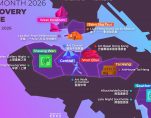
To enrich the artistic journey for visitors, Art Central, in partnership with the Hong Kong Tourism Board, proudly presents the digital Hong Kong Art Month Discovery Guide. The guide compiles exciting events across the city’s art districts, covering gallery exhibitions, special museum showcases, and performing arts programmes across Central, Sheung Wan, Wan Chai, Tai Hang, the Southern District, Tsim Sha Tsui, and the West Kowloon Cultural District. Beyond visual arts, the guide offers detailed dining recommendations in the vicinity, perfectly illustrating Hong Kong’s diverse culinary culture. The curated selections range from local street food and refined Cantonese cuisine to Michelin-starred contemporary European dining. Featured establishments include MIAN, Amber, Belon, L’Atelier de Joël Robuchon, Chinesology, Gu Liang Cai, and the historic Luk Yu Tea House. Through this comprehensive guide, visitors can easily navigate the city’s streets and alleys alongside their visit to Art Central, seamlessly transitioning from visual arts to culinary delights while deeply experiencing Hong Kong’s unique charm as Asia’s events capital. Explore more in the Hong Kong Art Month Discovery Guide.
To allow visitors to incorporate the Fair into their broader Hong Kong itineraries with ease, Art Central has introduced a brand-new Flexible Date Ticket, available in limited quantities exclusively during the advance sale period. Holders of the Flexible Date Ticket may select any single day between 25 and 29 March 2026 for entry during general admission hours without the need for advance date selection.
Art Central has also launched comprehensive packages on various travel platforms covering accommodation, attractions, and transportation for the convenience of visitors. For example, through Ctrip, visitors can book curated packages combining Fair admission with selected offers and enjoy a HK$50 no-minimum-spend Uber Taxi promo code with the purchase of any ticket, easily charting a cultural journey connecting art and city life.
Ctrip’s accommodation bundles span top-tier five-star luxury properties such as Four Seasons Hotel Hong Kong, Mandarin Oriental Hong Kong, and The Murray, Hong Kong, as well as boutique options including The Pottinger Hong Kong, offering convenient and elevated choices for cultural getaways and weekend itineraries.
Additionally, attraction bundles will extend the Fair experience to multiple transportation options and popular leisure destinations, including the Peak Tram, the Hong Kong Observation Wheel, the Star Ferry, and the Airport Express. This allows visitors to integrate transportation, accommodation, and urban cultural experiences, extending their exhibition visit into a city journey exploring Hong Kong’s art and lifestyle.
Furthermore, Art Central has launched combo packages on Klook, pairing the Flexible Date Ticket with admission to the Hong Kong Observation Wheel at the Central Harbourfront (HK$302) or a Cupping Room coffee e-voucher (HK$314). These allow visitors to take in the spectacular views of Victoria Harbour or take a relaxing coffee break following their visit to the Fair. After viewing the exhibition, visitors can also take the “WestK Ferry” from Central Pier 9—a short eight-minute ferry ride—to effortlessly reach the West Kowloon Cultural District and continue their exploration at M+, the Hong Kong Palace Museum, and the WestK FunFest.
Package offers are exclusively available for purchase via Ctrip and Klook. For more details regarding participating hotels, dining, attractions, and transport partners, please visit artcentralhongkong.com/tickets. Ticket Packages might be subject to change without prior notice and are available in limited quantities while stocks last.
Hong Kong Observation Wheel Ticket + Uber Taxi HK$50 Promo Code
Adult: HK$164 Child: HK$54
Ctrip
Experience
Art Central Advance Ticket + Star Ferry World Star / Shining Star Water Tour Ticket + Uber Taxi HK$50 Promo Code
Adult: HK$351 Child: HK$188
Ctrip
Transport
Art Central Advance Ticket +
Airport Express Ticket to/from Central (Hong Kong Station) + Uber Taxi HK$50 Promo Code
Child: HK$89
Ctrip
F&B
Art Central Advance Flexible Date Ticket +
Cupping Room HK$50 Coffee E-Voucher
HK$314
Klook
Experience
Art Central Advance Flexible Date Ticket +
Hong Kong Observation Wheel Ticket
HK$302
Klook
Hotel
Art Central Advance Ticket + Hotel Bundle
RMB ¥581+
Ctrip
Options include: Four Seasons Hotel Hong Kong / The Upper House / Mandarin Oriental Hong Kong / Island Shangri-La, Hong Kong / The Murray, Hong Kong, a Niccolo Hotel / JW Marriott Hotel Hong Kong / The Pottinger Hong Kong / Two MacDonnell Road, Hong Kong / Lan Kwai Fong Hotel @ Kau U Fong / Bishop Lei International House
Opening Dates and Hours Tuesday 24 March VIP Preview (by invitation)
Wednesday 25 March Fair Hours 12 pm – 5 pm Night Central 5 pm – 9 pm
Thursday 26 March Fair Hours 12 pm – 7 pm
Friday 27 March Fair Hours 12pm – 7 pm
Saturday 28 March Fair Hours 11 am – 7 pm
Sunday 29 March Fair Hours 11 am – 5 pm
Venue Central Harbourfront Hong Kong, 9 Lung Wo Road Hashtag: #ArtCentralHK #ArtCentralUOB #HongKongArtWeek
The issuer is solely responsible for the content of this announcement.
About Art Central
Art Central, a cornerstone event of Hong Kong Art Week, presents the next generation of talent from Asia’s most forward-thinking galleries alongside celebrated artists from across the globe. Since its inaugural edition in 2015, Art Central has established itself as a leading platform for innovation in contemporary art, advancing the profiles of artists and galleries and reinforcing their presence within the international art landscape. Today, the Fair is recognised for the strength of its curatorial programming and as a vital meeting point for discovery and exchange among collectors and curators representing private, corporate, and institutional collections worldwide.
Fair Director Corey Andrew Barr joined Art Central as Fair Director in 2019. A champion of Hong Kong artists, Barr has expanded the Fair’s platform to highlight local talent and underscore its position as a benchmark for aspiring galleries from around the world. He was formerly the director of a prominent Hong Kong- and London-based gallery focusing on contemporary Asian art, and prior to that, served as Specialist and Head of Sales for Phillips in New York, where he also organised exhibitions of contemporary art, photography, and design by leading international artists.
Curator Enoch Cheng is an artist-curator whose work spans curation, moving image, installation, performance, dance, and fashion. His cross-disciplinary multimedia practice reinterprets norms, stories, and myths through contemporary lenses, drawing on a range of creative practices and engaging audiences through diverse cultural traditions. Cheng was awarded the Asian Cultural Council Fellowship (2020) and held artist residencies at the Museum of Arts and Design, New York (2022), and the American Museum of Natural History, New York (2020). He was most recently named Artist of the Year (Visual Arts) at the 2025 Hong Kong Arts Development Awards, recognising his contributions to the arts, including his role at Art Central since 2024.
Curator Zoie Yung, currently based in Hong Kong, is an independent exhibition consultant and curator, and former exhibition manager of chi K11 art museum in Shanghai. She provides a unique approach to exhibition production by combining practice in exhibition spatial arrangement and her knowledge of Chinese Xuanxue as well as Western astrology. Selected recent exhibitions include Wonder-verse (chi K11 art space, Hong Kong, 2022) and Curve of Buoyancy (Duddell’s, Hong Kong, 2021). She also actively organises public education campaigns; she has collaborated with local organisations, including Tai Kwun Contemporary, Para Site, 1a Space, and Hong Kong Visual Arts Centre.
About UOB UOB is a leading bank in Asia. Operating through its head office in Singapore and banking subsidiaries in China, Indonesia, Malaysia, Thailand and Vietnam, UOB has a global network of more than 470 branches and offices in 19 markets in Asia Pacific, Europe and North America. Since its incorporation in 1935, UOB has grown organically and through a series of strategic acquisitions. Today, UOB is rated among the world’s top banks: Aa1 by Moody’s Investors Service and AA- by both S&P Global Ratings and Fitch Ratings.
For nine decades, UOB has adopted a customer-centric approach to create long-term value by staying relevant through its enterprising spirit and doing right by its customers. UOB is focused on building the future of ASEAN – for the people and businesses within, and connecting with, ASEAN.
The Bank connects businesses to opportunities in the region with its unparalleled regional footprint and leverages data and insights to innovate and create personalised banking experiences and solutions catering to each customer’s unique needs and evolving preferences. UOB is also committed to helping businesses forge a sustainable future, by fostering social inclusiveness, creating positive environmental impact and pursuing economic progress. UOB believes in being a responsible financial services provider and is steadfast in its support of art, social development of children and education, doing right by its communities and stakeholders.
About Mega Arts and Cultural Events (ACE) Fund The Culture, Sports and Tourism Bureau of the Hong Kong Special Administrative Region Government sets up the Mega ACE Fund to attract and support international or large-scale arts and cultural events which bring significant arts, cultural or economic values and can be recurrent and anchored in Hong Kong, or events which can bring exceptionally significant arts or cultural merit, as well as publicity and image building values to Hong Kong as an arts and cultural hub with a view to contributing to Hong Kong’s development into an arts and cultural metropolis as well as a tourist destination, providing development opportunities for the arts, cultural and creative sectors, and facilitating arts and cultural exchange.
Italy’s annual inflation rate accelerated to 1.5 per cent in February, marking a modest rebound from January’s 1.0 per cent and signalling a gradual shift in price dynamics across the eurozone’s third-largest economy. Data released by the national statistics agency Istat showed consumer prices rising by 0.7 per cent on a month-on-month basis, reflecting a combination of seasonal adjustments and renewed upward pressure in selected sectors, particularly […]
Starlink has begun offering satellite-based internet services in the United Arab Emirates, marking a significant expansion of low-Earth orbit connectivity into one of the Gulf’s most advanced digital markets. The rollout introduces a new alternative to established telecom operators, with residential plans starting from Dhs230 per month alongside a required upfront hardware purchase. The service, operated by Elon Musk’s SpaceX, relies on a constellation of low-Earth orbit […]
Arabian Post Staff -Dubai Saudi Arabia’s state energy giant Saudi Aramco has restarted operations at its Ras Tanura refinery, marking a significant step in stabilising crude processing capacity at one of the world’s most strategically important oil hubs. The resumption follows a disruption that had drawn attention across global energy markets already sensitive to supply risks and geopolitical tensions. Ras Tanura, located on the kingdom’s eastern coast […]
Open interest on Hyperliquid’s HIP-3 permissionless derivatives market has climbed past $1.43 billion, underscoring intensifying appetite among traders for decentralised perpetual futures and signalling a shift in how digital asset markets are evolving beyond traditional crypto pairs. The milestone reflects a rapid expansion in activity on the decentralised exchange, where traders can create and trade perpetual contracts without centralised oversight. Market participants have been drawn to the […]
China is preparing to draw on its extensive commercial crude stockpiles as instability linked to Iran threatens to tighten global supply, signalling a shift in how the world’s largest oil importer manages energy security under geopolitical strain.
Energy consultancy FGE NexantECA indicates that Beijing is nearing a decision to utilise privately held and state-influenced reserves to cushion domestic markets against potential disruptions from escalating conflict in the Middle East. The move reflects growing concern that sustained tensions involving Iran could constrain exports through critical shipping routes, including the Strait of Hormuz, a chokepoint for a significant share of global oil flows.
China has accumulated vast inventories over the past decade, combining strategic petroleum reserves with commercial storage held by state-owned refiners and independent operators. Analysts estimate that total holdings run into hundreds of millions of barrels, giving authorities a substantial buffer to stabilise supply without immediately increasing imports at elevated prices.
The prospect of tapping these reserves comes as benchmark crude prices show heightened volatility, driven by fears of supply interruptions and insurance risks for tankers navigating Gulf waters. Traders have been pricing in the possibility of reduced Iranian exports, either through direct disruption or tighter enforcement of sanctions amid shifting geopolitical alignments.
Officials in Beijing have not publicly confirmed any imminent release, but market signals suggest preparatory steps are under way. Refining margins in Asia have narrowed, while import patterns indicate a degree of caution, with some buyers delaying cargoes or seeking alternative suppliers outside the Middle East. The strategic calculus appears focused on avoiding panic buying that could exacerbate price spikes.
China’s approach differs from coordinated releases led by the International Energy Agency, which typically involve government-controlled reserves. Instead, the country has increasingly relied on a hybrid system where commercial inventories can be mobilised through administrative guidance. This model allows for flexibility while maintaining a degree of opacity, limiting the market impact of official announcements.
Industry experts note that the scale of China’s stockpiles gives it a unique capacity to influence regional demand dynamics. A measured release could dampen immediate import requirements, easing pressure on global benchmarks. At the same time, sustained withdrawals would need to be balanced against the need to rebuild inventories, particularly if geopolitical risks persist.
The Iran factor remains central to the outlook. Despite sanctions, China has continued to import significant volumes of Iranian crude, often through indirect channels. Any escalation that disrupts these flows would force refiners to seek replacements from other producers, including Russia, Saudi Arabia and Iraq, potentially reshaping trade patterns across Asia.
Shipping constraints add another layer of complexity. Insurers have raised premiums for vessels operating in high-risk zones, while some operators are reconsidering routes to minimise exposure. These developments could tighten effective supply even if production levels remain unchanged, reinforcing the rationale for drawing on stored barrels.
Domestic considerations also play a role. China’s economic recovery has been uneven, with industrial activity and transport demand fluctuating. Authorities are keen to prevent energy costs from becoming a drag on growth, particularly as policymakers navigate broader challenges in the property sector and export markets. Using reserves offers a tool to smooth price shocks without resorting to aggressive monetary or fiscal measures.
The move aligns with a broader trend among major economies to reassess energy security strategies in an era of heightened geopolitical risk. Strategic stockpiles, once seen primarily as emergency buffers, are increasingly being deployed as active instruments of market management. China’s large-scale storage capacity positions it at the forefront of this shift.
Market participants are closely watching for signs of implementation. A sustained drawdown could influence price expectations, especially if combined with policy signals discouraging speculative buying. Conversely, a limited or symbolic release may have only a modest effect, serving more as a reassurance to domestic consumers than a decisive intervention.
Producers in the Middle East are also monitoring developments. Any reduction in Chinese import demand could affect export volumes and pricing strategies, particularly for grades competing directly with Iranian crude. At the same time, alternative suppliers may see opportunities to capture market share if disruptions intensify.
Arabian Post Staff -Dubai Apple is weighing the introduction of its high-refresh-rate ProMotion display technology to a future entry-level iPhone, with industry leaks pointing to a potential debut around 2028 in what is tentatively described as the iPhone 19e. The move, if confirmed, would mark a notable shift in the company’s long-standing strategy of reserving advanced display features for its premium Pro models. Details emerging from supply […]
Global aviation networks faced sustained disruption as conflict involving Iran triggered widespread airspace closures across major Gulf transit hubs, grounding flights and stranding tens of thousands of passengers in one of the most severe interruptions to international travel in years. Airlines halted or diverted services across a corridor that typically handles a significant share of long-haul traffic between Europe, Asia and Africa. Airports in Dubai, Doha and […]
Arabian Post Staff -Dubai Qatar Development Bank has launched a package of emergency financing measures aimed at stabilising supply chains and supporting businesses in food and healthcare sectors as geopolitical tensions in the Middle East strain trade flows and drive up costs. The state-backed lender is introducing targeted programmes to ease access to credit for wholesalers, retailers and manufacturers grappling with inventory shortages and rising input prices. […]
Arabian Post Staff -Dubai UAE’s central bank has approved a sweeping package aimed at strengthening financial institutions against mounting global and regional pressures, signalling a calibrated shift from precaution to structured resilience in one of the Gulf’s largest banking systems. The move, endorsed by the Board under the direction of the Chairman, introduces a Financial Institution Resilience Package designed to safeguard liquidity, enhance capital buffers and reinforce […]
South Africa’s long-term inflation expectations have fallen to their lowest level on record, signalling a shift in sentiment among households, businesses and financial analysts as price pressures ease and monetary policy credibility strengthens. The Bureau for Economic Research’s latest quarterly inflation expectations survey, covering the first three months of the year, shows average expectations for inflation over the next five years declining notably compared with previous readings. […]
Supply chains across the Gulf are under mounting strain as escalating conflict in the Middle East disrupts shipping lanes and drives a sharp rise in insurance premiums, with business leaders warning of wider economic fallout and higher consumer prices. The Federation of GCC Chambers said companies across member states were facing severe logistical bottlenecks after maritime risks intensified in key transit routes, including the Strait of Hormuz […]
Escalating hostilities involving Iran have entered a third week, prompting growing unease across financial markets in the Gulf as investors recalibrate risk exposure amid fears of a prolonged conflict and wider regional spillover. Equity markets in the UAE have shown heightened volatility over the past several trading sessions, reflecting a cautious shift in sentiment as geopolitical uncertainty intensifies. Analysts say the sustained confrontation is beginning to influence […]
Zimbabwe’s abrupt ban on the export of unprocessed lithium has sent ripples through global battery supply chains, triggering uncertainty among miners, refiners and manufacturers while intensifying competition for alternative sources of the critical mineral. The government’s move, aimed at forcing local beneficiation and boosting domestic value addition, has effectively halted shipments of lithium ore to key overseas buyers. The policy has disrupted established trade flows, particularly those […]
Greenlogue/AP Escalating conflict involving Iran has triggered sharp volatility across global energy markets, prompting a stark warning from the United Nations’ climate leadership that the turmoil exposes structural dependence on fossil fuels and reinforces the urgency of transitioning to cleaner energy systems. Simon Stiell, executive secretary of the United Nations Framework Convention on Climate Change, described the disruption as a clear demonstration of how geopolitical shocks tied […]





 https://artcentralhongkong.com/
 https://www.facebook.com/artcentralhk

 https://www.instagram.com/artcentralhk/





