News related to
price

Abu Dhabi-based International Holding Company has increased its ownership in Invictus Investment Company to about 40 per cent after acquiring an additional 17.5 per cent stake in a transaction valued at roughly Dhs420m, signalling a deeper strategic alignment between one of the region’s largest conglomerates and a global commodities trading platform. The investment was executed through the purchase of about 196 million shares in a major block […]

Dubai-based Binghatti has completed what it describes as the most expensive residential penthouse transaction ever recorded in the Middle East, selling a single ultra-luxury home for AED550 million at its Bugatti Residences development in Business Bay, underlining the depth of demand for trophy assets in the emirate’s high-end property market.

The sale centres on a 47,200-square-foot penthouse within Bugatti Residences by Binghatti, the world’s first residential project branded by the French luxury marque. The developer said the transaction reflects sustained appetite from global ultra-high-net-worth buyers seeking rare, branded homes in prime Dubai locations, even as other global luxury markets face slower momentum.

Dubai lands a record luxury penthouse deal has become the shorthand among brokers for the transaction, which eclipses earlier benchmark sales in the region and places Dubai among a small group of global cities capable of sustaining nine-figure residential deals. Industry executives say the scale of the sale reinforces the city’s shift from being a regional wealth hub to a global destination for capital preservation and lifestyle-driven investment.

Bugatti Residences, located along the Dubai Water Canal in Business Bay, has been positioned as a statement project blending automotive-inspired design with high-end residential living. The penthouse includes multiple private terraces, bespoke interiors, and exclusive amenities tailored to the Bugatti brand ethos, according to details released by the developer. Residents are offered services and facilities that mirror ultra-luxury hospitality standards rather than conventional apartment living.

Property consultants tracking prime residential markets say such sales are no longer isolated events in Dubai. Over the past few years, the city has recorded a rising number of transactions above AED100 million, driven by buyers from Europe, Asia, and the Middle East, as well as family offices and entrepreneurs relocating operations or assets to the UAE. The combination of regulatory clarity, long-term residency pathways, and the absence of personal income tax continues to weigh heavily in purchasing decisions.

Binghatti has emerged as a prominent player in this segment by pairing architecture-led developments with globally recognised brands. The Bugatti partnership followed earlier branded collaborations and marked a strategic shift towards ultra-premium projects aimed at a narrow but financially powerful buyer base. Executives close to the company say the strategy is designed to differentiate its portfolio in a market that has become increasingly competitive at the luxury end.

Business Bay itself has evolved from a primarily commercial district into a mixed-use zone attracting high-end residential investment. Proximity to Downtown Dubai, waterfront views, and improved infrastructure have supported pricing growth, with branded residences commanding a significant premium over non-branded counterparts. Analysts note that buyers at this level are less sensitive to price cycles and more focused on exclusivity, security, and global status.

The penthouse sale also reflects a broader trend of branded residences outperforming traditional luxury housing in Dubai. International fashion houses, automotive brands, and hospitality groups have increasingly licensed their names and design philosophies to residential projects, tapping into buyer loyalty and global recognition. Developers argue that branding provides assurance on quality and long-term value, while buyers view such homes as collectible assets rather than purely functional residences.

Market data compiled by leading consultancies shows that Dubai has consistently ranked among the world’s most active markets for luxury home sales above $10 million, often rivaling London, New York, and Hong Kong in transaction volumes. While macroeconomic uncertainty persists globally, the UAE’s positioning as a politically stable, business-friendly jurisdiction has insulated its top-tier property segment from sharper corrections seen elsewhere.

For Binghatti, the transaction serves both as a financial milestone and a branding exercise. Selling a single residence at AED550 million places the developer in a rare category and strengthens its negotiating position for future collaborations and land acquisitions. Company officials have signalled that demand for Bugatti Residences remains strong, with several units already allocated to international buyers seeking full-floor or customised layouts.

Arabian Post Staff -Dubai Middle Eastern crude markets are showing growing signs of strain as supply from the region appears set to exceed demand, reinforcing a broader softening trend in global oil fundamentals that has pressured benchmark futures and physical differentials. One of the clearest indicators has been the steady erosion in the premium of Abu Dhabi’s Murban crude over Brent. That spread, closely tracked by traders […]

Quality of life has emerged as the defining differentiator in Dubai’s luxury real estate market, overtaking the earlier emphasis on global brand names as affluent buyers continue to flow into the emirate, according to senior industry voices tracking buying behaviour at the top end of the sector.

Developers and brokers say high-net-worth individuals are no longer drawn solely by branded residences, waterfront addresses or headline prices. Instead, purchasing decisions are increasingly shaped by liveability factors such as community design, access to green space, wellness infrastructure, privacy, security, and the integration of daily services within residential districts. This shift reflects the changing profile of buyers, many of whom are relocating families or establishing long-term bases rather than acquiring purely investment assets.

Dubai’s luxury segment has expanded sharply over the past few years, with prime residential areas such as Palm Jumeirah, Emirates Hills, Jumeirah Bay Island and Dubai Hills Estate recording strong demand across villas and high-end apartments. Transaction values at the upper end of the market have risen, supported by sustained interest from buyers based in Europe, the Middle East, East Asia and parts of Africa. Market participants note that this demand has remained resilient despite global economic uncertainty, underpinned by Dubai’s status as a low-tax jurisdiction, political stability and international connectivity.

Industry executives argue that the maturation of buyer expectations is a sign of a more sophisticated market. Luxury purchasers are placing greater weight on neighbourhood planning, walkability, schools, healthcare access and leisure amenities, alongside the quality of construction and long-term maintenance standards. Smart home technology, energy efficiency, noise management and private outdoor space have become standard expectations rather than premium add-ons.

Wellness has become a particularly influential theme. Developers are incorporating features such as landscaped parks, jogging tracks, cycling paths, spa facilities and air-quality controls into master-planned communities. Water access, whether through beachfront living, marinas or canal-side developments, remains a powerful draw, but buyers are increasingly scrutinising how these elements support daily living rather than visual appeal alone.

The rise of liveability as a core selling point has altered developer strategies. Several major players are prioritising mixed-use developments that blend residential, retail, hospitality and office components into self-contained ecosystems. This approach is designed to reduce commuting times and create neighbourhoods where residents can live, work and socialise within a short radius, aligning with broader urban planning goals set out by Dubai authorities.

Pricing dynamics also reflect the shift. Properties that combine prime locations with strong community features have outperformed standalone luxury units that rely mainly on branding or architectural statement. Analysts observe that buyers are willing to pay premiums for homes that offer privacy, low density and access to well-managed communal spaces, while overly dense developments face greater scrutiny.

Rental demand in the luxury segment has mirrored these trends. Executive tenants and relocating families are seeking properties that provide stability and lifestyle benefits, driving demand for villas and larger apartments in established communities. This has supported yields in select areas, reinforcing the appeal of liveability-focused developments to both end users and long-term investors.

Dubai’s regulatory environment has also played a role in shaping buyer confidence. Clear property ownership rules, long-term residency options linked to investment, and transparent transaction processes have helped position the city as a secure destination for capital. Market participants say this framework encourages buyers to consider lifestyle factors, confident that their legal and financial interests are protected.

Competition among developers has intensified as a result. Rather than competing solely on scale or brand partnerships, firms are differentiating through design quality, community management and post-handover services. Some developers have expanded in-house property management and concierge offerings to ensure consistent standards after completion, addressing a long-standing concern among luxury buyers.


The United States government’s approval for Nvidia to export its powerful H200 artificial intelligence chips to China has upended expectations across global technology markets and deepened debate over export controls and strategic competitiveness. President Donald Trump confirmed that U. S. authorities will permit sales of Nvidia’s H200 processors to approved Chinese customers under a regime that levies a 25 per cent levy on such transactions, a policy […]

SpaceX has signalled a major shift in its financial strategy by setting internal share prices that imply a valuation of about $800 billion and signalling plans for an initial public offering in 2026, according to communication to investors and financial institutions. The insider share sale, priced at roughly $421 per share, more than doubles the company’s valuation from mid-year levels and comes as SpaceX lays the groundwork for what could become one of the largest public market debuts ever.

Chief Financial Officer Bret Johnsen communicated to employees that the rocket and satellite operator founded by Elon Musk is preparing for a potential flotation in 2026, though the precise timing and structure remain contingent on market conditions and business milestones. SpaceX’s statement highlights that the internal valuation proposition is part of broader fundraising and liquidity arrangements rather than a definitive IPO roadmap.

Starlink, SpaceX’s satellite internet arm, underpins much of the valuation optimism. The constellation of thousands of low-Earth orbit satellites has expanded its service footprint significantly, adding millions of users globally and pushing the company’s revenue trajectory upward. Analysts say that this growth, alongside Starlink’s planned expansion into direct-to-mobile services and other connectivity niches, is central to investor enthusiasm for a public listing.

The valuation implied by the secondary offering eclipses previous private market benchmarks. SpaceX had been valued at about $400 billion earlier in 2025, and the $800-billion marker would place it among the most valuable pre-IPO companies globally. OpenAI’s valuation peak of $500 billion has been surpassed by this internal pricing, although that figure is not a public market price. SpaceX remains the second-most valuable private startup after OpenAI.

Despite speculation over the $800 billion figure, Musk has publicly questioned such valuation assertions, describing some of the media characterisations as inaccurate and emphasising the company’s strong cash flow and internal liquidity mechanisms. Musk’s comments reflect the tension between private market hype and management’s more cautious public posture on valuation and IPO timing.

SpaceX’s broader IPO strategy appears to be evolving. Reports indicate that the company has held discussions with investment banks about potentially raising over $25 billion in a 2026 offering, which could value SpaceX at more than $1 trillion. Multiple sources familiar with the talks suggest that a mid- to late-2026 timetable is under consideration, though this could shift depending on market conditions and regulatory factors.

Market participants are weighing the implications of a SpaceX public listing against broader trends in the US equity markets, which are exhibiting renewed IPO activity after a period of subdued issuance. A successful SpaceX listing at the projected scale would not only set new records in terms of funds raised but also provide a benchmark for other high-growth private companies that have been delaying public offerings.

Investors and analysts have reacted to the buildup in valuations with a mix of enthusiasm and caution. EchoStar, a significant stakeholder in SpaceX’s satellite ventures, saw its shares rise on increased IPO chatter, reflecting broader investor appetite for exposure to the commercial space sector. But concerns linger around execution risk and the technical challenges inherent in SpaceX’s ambitious projects, including the Starship launch vehicle and long-term goals such as lunar and Martian missions.

Critics of the current valuation narrative highlight that private share prices do not always translate into market realities once a company lists publicly. They note that factors such as regulatory scrutiny, evolving market sentiment and the inherent risks of aerospace and satellite operations could temper the ultimate IPO trajectory. Nonetheless, the expanded focus on Starlink’s recurring revenue streams and SpaceX’s diversified business portfolio underlines investor interest in the company’s long-term growth potential.

Chinese autonomous driving companies are accelerating plans to deploy self-driving taxi fleets across the Middle East, betting on strong government backing, advanced urban infrastructure and public openness to new mobility technologies to turn pilot projects into commercial services. Dubai has emerged as a key entry point. The Roads and Transport Authority issued its first autonomous driving trial permits in September, allowing Pony. ai, WeRide and Baidu’s Apollo […]

Advertisements

Warnings that Japanese companies face existential risks if supply chains linked to China are disrupted are sharpening the debate in Tokyo over economic security, diversification and the costs of geopolitical strain in East Asia. Hidetoshi Tashiro, chief economist at Infinity LLC and chief executive of Terra Nexus Project Management Services, said the most serious danger from worsening Japan–China relations lies not in tariffs or diplomacy but in […]

Market speculation around XRP has intensified after a well-known digital asset commentator argued that the token could climb from around $2 to $10 in less than a year, reigniting debate over whether structural shifts in payments, regulation and market plumbing could support such a move. XRP, the token associated with Ripple’s cross-border payments network, has spent much of its existence oscillating between bouts of optimism and prolonged […]

Bhutan has entered the digital asset arena with the rollout of a sovereign gold-backed token built on the Solana blockchain, marking a cautious but notable step by the Himalayan kingdom into tokenised finance. The initiative, unveiled on Thursday, aligns with Bhutan’s long-standing emphasis on economic stability and social well-being, while testing how blockchain technology can be used to modernise public finance without undermining monetary discipline. The token […]

Global oil supply is likely to align closely with demand through 2026, according to fresh projections from the Organization of the Petroleum Exporting Countries, setting up a clear divergence with forecasts from other major agencies that warn of a sizeable surplus building in the same period. OPEC’s latest monthly assessment indicates that the OPEC+ alliance, which brings together OPEC members, Russia and other producing partners, expects market […]

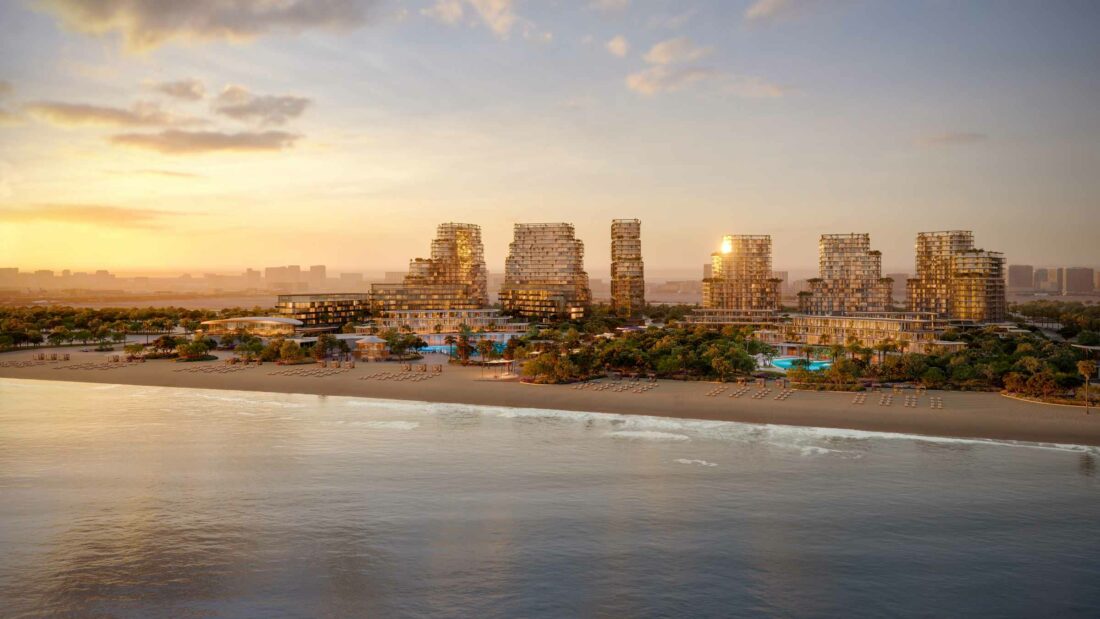
Beyond Developments has launched SIORA, its first beachfront masterplan on Dubai Islands, marking a significant step in the design-led developer’s expansion and reinforcing its alignment with Dubai’s long-term urban development strategy. The project becomes Beyond’s second large-scale community introduced within a year, underscoring the pace at which the company is scaling operations in a competitive real estate market shaped by strong demand for lifestyle-driven coastal living.

Planned across more than two million square feet, SIORA is positioned as a low-density waterfront enclave that blends residential, leisure and public-realm spaces. The development is conceived as a coastal sanctuary, with design cues drawn from Japanese garden philosophies and the concept of Ikigai, which centres on balance, purpose and fulfilment in everyday life. Beyond has said the masterplan aims to integrate natural elements, walkable environments and tranquil waterfront vistas to support wellness-focused living rather than high-intensity urban density.

Dubai Islands, formerly known as Deira Islands, has been earmarked by city planners as a key growth corridor for tourism, hospitality and mixed-use communities. The location offers direct coastal access while remaining closely connected to established commercial districts, ports and transport infrastructure. Authorities have promoted the area as part of a broader effort to diversify beachfront destinations beyond traditional luxury zones, combining residential neighbourhoods with cultural, retail and recreational assets. SIORA is expected to contribute to this repositioning by introducing a master-planned community rather than a standalone residential cluster.

Beyond Developments has framed the launch as part of a wider strategy to deliver future-ready communities that respond to evolving buyer preferences. Demand across Dubai’s residential market has increasingly tilted towards integrated developments that prioritise open space, sustainability and lifestyle amenities, particularly among long-term residents and international buyers seeking primary homes rather than short-stay investments. Waterfront projects, in particular, have continued to command price premiums, driven by limited supply and consistent global interest.

The company’s emphasis on Japanese-inspired design sets SIORA apart from conventional beachfront schemes dominated by high-rise towers and resort-style branding. Landscape-led planning, curated sightlines and quiet communal areas are intended to foster a sense of retreat within an urban context. Developers and architects working on similar concepts have pointed to growing interest in biophilic design and wellness-oriented planning, trends that gained traction as residents placed greater value on liveability, privacy and access to nature.

Beyond’s accelerated project pipeline also reflects confidence in Dubai’s regulatory environment and long-term population growth projections. Government initiatives supporting foreign ownership, long-term residency visas and infrastructure investment have underpinned sustained real estate activity across multiple price segments. Analysts tracking the market note that while transaction volumes have moderated from peak surges, end-user demand for well-located, thoughtfully designed communities remains resilient, particularly in waterfront and master-planned districts.

The launch of SIORA follows Beyond’s earlier community introduction within the same year, signalling a deliberate move to establish brand presence through scale rather than isolated developments. Industry observers note that new entrants adopting a design-led positioning often seek differentiation through master planning, architectural identity and curated amenities to compete with established developers. Delivering multiple large communities in quick succession also places emphasis on execution, construction timelines and long-term community management, factors that influence buyer confidence.

Nairobi — Kenya’s commercial banks have begun to implement a revised risk-based credit pricing framework that standardises how loan interest rates are set, driven by directives from the Central Bank of Kenya aimed at enhancing transparency and aligning borrowing costs with market conditions. Banks are now required to price variable-rate, Kenya-Shilling loans using a common reference rate plus a risk-adjusted premium, a shift designed to tighten the […]

Global development officials are assessing faltering progress on sustainable development targets as the United Nations Development Programme warns that economies and communities face mounting pressures from climate shocks, widening inequality, and geopolitical instability. The review comes at a time when the Global Environment Outlook 7 underscores the scale of environmental disruption, projecting that unchecked climate change could shave about 4 per cent off annual global GDP by […]

Google has unveiled its most affordable artificial intelligence subscription in India, aiming to challenge OpenAI’s popular ChatGPT Go service and expand the reach of its AI ecosystem. The new Google AI Plus plan is priced at ₹399 per month, with a special introductory offer of ₹199 for the first six months for new subscribers, a strategy clearly designed to attract price-sensitive users in one of the world’s fastest-growing digital markets.

The launch places Google directly in competition with OpenAI’s ChatGPT Go subscription, which has gained traction by offering enhanced features at a similar price point and, in some cases, bundled free access through promotions. Both plans now sit at roughly the same monthly cost, but key differences in features and ecosystem integration could shape consumer choice.

Google’s AI Plus plan gives subscribers expanded access to Gemini 3 Pro, the company’s most capable AI model yet, enabling advanced natural language understanding, coding assistance, creative tasks and complex research queries. It also includes Nano Banana Pro, Google’s latest image-generation and editing model, and enables video generation through tools such as Flow and Veo 3.1—features that aim to broaden appeal among creators and professionals alike.

Beyond generative capabilities, the plan bundles 200GB of cloud storage shared across Gmail, Google Drive and Photos, and allows users to share privileges with up to five family members, a benefit absent in many direct AI chatbot subscriptions. The integration of AI tools into everyday applications like Gmail and Docs is also a distinguishing factor for Google, tying advanced AI functionality directly into widely used productivity platforms.

Market analysts say the move reflects tech giants’ broader strategy to embed AI deeper into consumer ecosystems. By offering storage and productivity enhancements alongside generative AI, Google appears to be positioning AI as an everyday utility rather than a standalone service, contrasting with ChatGPT Go’s focus on conversational and research use cases.

OpenAI’s ChatGPT Go has been offered free for a year in various markets, including India under promotional deals, increasing its adoption among students, freelancers and casual users. Google’s decision to counter with a low-entry price signals recognition of the importance of competitive pricing in winning market share in regions where cost is a significant adoption factor.

Industry observers note that India has become a key battleground for generative AI services. The country’s large English-speaking population, burgeoning digital user base, and rapid uptake of smartphones have made it one of the most contested markets for AI subscriptions globally. This push comes amid substantial investment flows from global tech firms into the Indian AI and cloud sectors, including commitments from Microsoft and Amazon to expand infrastructure and services locally, underscoring broader confidence in the region’s long-term growth potential.

Despite aggressive pricing, some experts caution that affordability alone may not secure dominance. “Value for users increasingly depends on how AI integrates with everyday workflows,” said an independent technology analyst, pointing to the added utility of cloud storage and productivity enhancements in Google’s offer. “These extras could tip the balance for professionals and households in choosing one platform over another.” This assessment reflects growing sentiment that seamless application integration, rather than raw AI prowess alone, will be a key differentiator in consumer choices.

The launch also comes against a backdrop of regulatory and competitive developments in the AI landscape. Governments worldwide, including a policy proposal in India to impose royalties on AI firms that train on copyrighted local content, are scrutinising how large models are developed and monetised. Such regulatory pressure could shape how global AI companies price and deliver services in key markets.

Google’s broader AI strategy continues to evolve, with investments in advanced models and partnerships aimed at pushing generative AI beyond chat interfaces into practical, everyday tools. The company has also recently bolstered its AI collaborations, such as integrating advanced coding tools and developer platforms, and its executives have signalled an intensified focus on next-generation models and applications capable of supporting complex tasks.

Sharjah’s real estate market achieved an unprecedented milestone in November 2025, with transaction values soaring to AED 9.5 billion — the highest monthly figure in the emirate’s history. This performance highlights a powerful upswing in property demand and transaction activity, according to data from the Sharjah Real Estate Registration Department.

The surge was driven by a total of 15,131 individual real estate transactions completed across residential, commercial and land sectors, with the cumulative traded area in sales transactions reaching about 34.9 million square feet. Market dynamics showed robust participation from both end-users and investors, signalling sustained confidence in the emirate’s property market fundamentals.

Sales transactions contributed significantly to this total, accounting for 2,126 deals — around 14 per cent of all transactions — demonstrating heightened buyer activity. Mortgage deals also featured prominently, with 698 recorded transactions valued at approximately AED 1.6 billion. The volume and value of these mortgages reflect strong backing from financial institutions and growing investor confidence amid a favourable credit environment.

Analysts note that the November outcome builds on the emirate’s broader market momentum through 2025. Year-to-date figures indicate that property transactions in Sharjah have risen sharply compared with the previous year. Data from a Savills report show that the first nine months of 2025 saw total sales reach around AED 44.3 billion, up by more than half relative to the same period in 2024.

The jump in monthly and cumulative annual activity reflects several intersecting trends shaping Sharjah’s property landscape. Developers across the emirate have accelerated new project launches and master-planned communities that appeal to both domestic and international buyers. Villa and townhouse segments have been particularly active, buoyed by strong demand from families and investors seeking space outside the ultra-premium segments found in neighbouring markets.

Macro-economic factors also play a role. Sharjah’s broader economic ecosystem has recorded steady expansion, with diversification efforts in sectors such as logistics, education, and tourism underpinning population growth and boosting housing demand. Property professionals point to these structural drivers as crucial to the market’s resilience and robust performance.

Regional comparisons further contextualise Sharjah’s achievement. Across the United Arab Emirates, major property markets have posted strong results throughout 2025, with Dubai and Abu Dhabi also reporting significant upticks in transaction volumes and values. In Dubai, for example, transaction figures remained elevated in both off-plan and secondary markets, while Abu Dhabi logged increased activity linked to lifestyle-oriented developments and foreign investment.

Despite these broader national trends, Sharjah’s November figure stands out for its magnitude relative to the emirate’s historical performance. Prior monthly totals in 2025 — including around AED 7 billion in October — already pointed to accelerated momentum, but November’s record haul marks a pronounced inflection point.

Market insiders attribute part of this growth to flexible regulatory frameworks and proactive initiatives introduced by local authorities aimed at stimulating property sector participation. Enhanced transparency in transaction processes and targeted incentives for first-time buyers and investors have helped attract a more diverse buyer base.

Despite the strong upswing, industry observers caution that sustained growth will require continued alignment of supply with demand, particularly in mid-income and affordable housing segments. Robust demand could exert upward pressure on prices if not matched by commensurate increases in new deliveries. Developers and policymakers will need to address these dynamics to maintain market stability over the medium term.

Senegal is moving to start construction of a domestic gas pipeline network before the end of 2025, marking a decisive step in its strategy to channel offshore gas discoveries into power generation and industrial development. The announcement from Petroleum and Energies Minister Birame Soulèye Diop signals that the government aims to accelerate the transition from planning to execution as major gas projects come onstream. The minister confirmed […]

Shares of the national carrier InterGlobe Aviation — operator of IndiGo — have tumbled over the last week after the airline cancelled thousands of flights following implementation of stricter pilot-duty regulations. Regulatory pressure and mounting costs have weighed on sentiment, yet several brokerages are urging investors to stay the course, citing the airline’s cost advantages and long-term dominance in the domestic market.

The aviation watchdog Directorate General of Civil Aviation has ordered IndiGo to slash its winter schedule ― first by 5 per cent, then escalating to a 10 per cent reduction ― in response to widespread cancellations and what regulators described as the carrier’s inability to manage the higher demands of new Flight Duty Time Limitations norms.

Operationally, the carrier flagged fatigue-rule compliance, crew scheduling bottlenecks and minor technical issues as reasons for the cancellations. It said a full root-cause analysis is underway.

Despite forecasting that IndiGo might cancel as many as 11,000 flights overall — incurring revenue losses of roughly ₹12–14 billion and reducing net profits by ₹3–5 billion — global banking major HSBC has retained a “Buy” rating for InterGlobe, while trimming its price target for FY26–27. Analysts say the airline’s unit cost per seat-kilometre might rise only around 1 per cent even after additional pilot hires.

Supporters of the airline point out that IndiGo remains the only Indian carrier ramping up capacity by roughly 50 aircraft each year — a growth rate unmatched by competitors such as Air India, SpiceJet or Akasa Air. This expansion underlines its dominant market share and suggests that regulatory interest in capping capacity is unlikely, even amid the crisis.

Not all are convinced. Credit-rating agency Moody’s flagged the flight disruptions as “credit negative,” pointing to potential long-term damage from compensation claims, refunds, potential DGCA penalties and erosion of customer trust. The agency also downgraded IndiGo’s human-capital score — citing slower hiring and inability to scale crew strength for its expanding fleet.

Market technicians have sounded alarms, noting that the share price has broken key support levels and fallen below major moving averages, a trend that could continue if recoveries don’t materialise.

Within the company, top leadership has attempted to calm nerves. IndiGo’s CEO has acknowledged the disruptions, termed the episode a “network reboot” and said flights are being progressively restored. The airline also disclosed that refunds for stranded passengers have been processed, luggage backlog cleared for most, and on-time performance is edging back towards normal.

Amid this turbulence, investors and regulators alike will watch closely whether IndiGo can restore operational stability in the coming weeks, and whether its long-term advantages in scale and cost can withstand the upheaval sparked by regulation and mis-management.

A newly announced strategic alliance between Ford and Renault will yield two new affordable Ford-badged electric vehicles for the European market, with the first expected to arrive in early 2028. The announcement marks a decisive move by both automakers to regain competitiveness amid mounting pressure from lower-cost electric vehicles flooding in from Chinese manufacturers. Under the agreement, Renault will provide its Ampere EV platform — already used […]

Google has rolled out a major update to its AI fashion experiment Doppl, introducing a “shoppable discovery feed” that blends virtual try-ons with direct-to-merchant shopping. The new feed displays AI-generated videos of real clothing items tailored to users’ style preferences, enabling a seamless path from browsing to purchase. This marks a distinct step from the original “virtual dressing room” concept: now shoppers can scroll, preview outfits virtually, […]

Figma chief executive Dylan Field admitted he struggled as a manager during the company’s formative years but has since used those shortcomings to forge a leadership style rooted in clarity, feedback and self-improvement — a transformation that comes at a critical time as the company navigates public markets, AI-led expansion and investor scrutiny. Field told the “First Time Founders” podcast that when he launched Figma with co-founder […]

A token linked to the brand of popular creator-entrepreneur Jimmy Donaldson — known globally as MrBeast — saw price gains of nearly 900 per cent in 24 hours, reflecting growing investor speculation around the newly filed fintech trademark by his corporate group. The rally has thrust the unofficial memecoin spotlit by social-media buzz, despite clear warnings that the currency remains unauthorised and unconnected to any official launch.

The underlying spark appeared after his firm, Beast Holdings, submitted a trademark application in October 2025 for a brand called MrBeast Financial. The filing outlines services ranging from mobile banking, crypto payment processing, exchange and decentralized-trading tools to loans, credit cards and financial-education offerings.

Soon after media and investor attention picked up, the BEAST token’s trading volume soared — a pattern analysts attribute to a mix of hype, confusion with other meme coins referencing MrBeast, and overbought technical indicators that often precede sharp reversals.

Insiders at Beast Industries, including CEO Jeffrey Housenbold, have confirmed that financial-services expansion is part of a broader diversification strategy. At the summit event where the plan was publicly discussed, Housenbold said the company aims to package banking, fintech and creator economy functions under one umbrella — potentially offering fans access to financial services via a recognised brand.

Beast Industries’ market valuation has reportedly reached around US $5 billion. That, combined with MrBeast’s social-media reach, fuels investor optimism that “MrBeast Financial” — if realised — might attract millions of users instantly. This visibility helps explain why speculative investors clung to BEAST token amid the buzz.

Yet experts caution over regulatory and structural hurdles before any fintech project materialises. A US trademark filing does not equate to regulatory clearance; launching banking or crypto-exchange services would require compliance with complex licensing regimes, including money-transmitter permits, anti-money-laundering protocols and possibly oversight by financial authorities.

This is not the first time the MrBeast brand has floated multiple trademarks without launching full-fledged products. Past filings — ranging from burgers to gaming to snacks — have produced mixed results, with some evolving into real ventures and others quietly fading. That casts ambiguity over whether “MrBeast Financial” will ever become a functioning platform.

Despite that, investor appetite for BEAST appears to remain driven by two forces: the fear of missing out characteristic of crypto cycles, and hope that a fintech rollout tied to a globally recognised creator could upend traditional financial models. Until regulators weigh in or Beast Industries announces concrete partnerships, however, BEAST remains a speculative asset — its value tied more to branding buzz than fundamentals.

Matein Khalid When the rats scramble to escape a sinking ship as hungry sharks circle the blood red water, the end is near. 100 insider Johnnies sold $6.5 billion in OpenAI shares in a recent employee tender. Why bailout now at $500 billion if OpenAI is a slam dunk for a trillion dollar IPO next year? Simp​le. The 100 newly minted decamillionaires know that OpenAI can no […]

Alpha Dhabi Holding PJSC has unveiled a three-year dividend policy offering annual payouts of AED 2 billion, with a built-in 5 per cent increase each year starting from the 2025 financial year. The Abu Dhabi–listed investment house also proposed a share buyback scheme of up to AED 1 billion, capped at 10 per cent of its issued share capital. The dividend plan is subject to approval by […]

VISHNU RAJA
RYO YAMADA
HITORI GOTOH
IKUYO KITA