News related to
price

Macau’s cornerstone culinary event brings the region’s top talents to Galaxy Macau from November 14 to 15 with early-bird ticketing by October 26. MACAU SAR – Media OutReach Newswire – 15 October 2025 – Galaxy Macau Presents Tatler Off Menu returns to Galaxy Macau from November 14 to 15, once again celebrating the extraordinary artistry of gastronomy with a meticulously curated international ensemble of award-winning chefs recognised […]

By K Raveendran Oil prices fell to their lowest level in five months on Tuesday, continuing a slide that has gathered pace over the past several weeks. The benchmark Brent and West Texas Intermediate crude futures have both dipped significantly, erasing much of the year’s earlier gains. In stark contrast, gold has soared to an […]

The article Gold Feeds On Oil’s Misfortune; One Hits The Roof, The Other Down In The Dumps appeared first on Latest India news, analysis and reports on Newspack by India Press Agency).

BANGKOK, THAILAND – Media OutReach Newswire – 15 October 2025 – Proud Real Estate Public Company Limited (PROUD) announces the launch of The Residences at InterContinental Phuket Resort, a prestigious development with an investment exceeding THB 2.5 billion (around $77 million USD). This is the company’s second Branded Residences project in Thailand under the globally renowned InterContinental brand, introducing a transformative concept of residential living themed ‘Live […]

Traders on the U. S. prediction market Kalshi are assigning a 55 percent chance that Bitcoin will exceed $130,000 by the end of 2025, with probabilities of 34 percent for surpassing $140,000 and 24 percent for topping $150,000. That places the market’s expected annual high at roughly $132,000.

Those figures reflect a steadily intensifying optimism about Bitcoin’s trajectory, drawing attention from institutional and retail participants alike. Kalshi’s “How high will Bitcoin get this year?” market is driving price discovery around extreme outcomes for the cryptocurrency.

That optimism today sits alongside growing institutional flows into related assets. Bitcoin spot ETF issuers have been attracting multi-billion dollar inflows across several jurisdictions; analysts view that as a cornerstone of structural demand, tightening supply in spot markets. At the same time, the derivatives market is registering sharply skewed positioning in favour of upside moves, especially in out-of-the-money call options.

Crypto research platforms note that exchange reserves of Bitcoin are at multi-year lows, meaning a smaller buffer for large sell orders to exert downward pressure. Some large holders are moving coins to cold storage or long-term custody, reducing the circulating float further. That dynamic can magnify even moderate inflows into a pronounced price rise.

Macroeconomic factors are reinforcing these tailwinds. Markets broadly expect the U. S. Federal Reserve to shift toward a less restrictive stance in the months ahead, which would lower the opportunity cost of holding a risk asset like Bitcoin. Inflation pressures, geopolitical uncertainty, and currency devaluation narratives have been pushing capital toward non-sovereign stores of value — a trend some asset allocators perceive as supportive for digital assets.

Kalshi itself has expanded rapidly. In October 2025, the company announced growth into over 140 countries following a $300 million funding round that values it at $5 billion. This capital boost is intended to improve infrastructure, broaden partnerships, and scale its product stack beyond simple yes/no event contracts. The valuation surge underscores confidence in prediction markets as a means of tapping collective foresight.

Kalshi is currently viewed as a leader in the prediction-market space, outpacing rivals like Polymarket. As of mid-October, Kalshi’s valuation exceeds that of Polymarket by a wide margin, though the latter retains star appeal in crypto circles.

BlackRock chief executive Larry Fink asserted that cryptocurrencies carry a role akin to gold in investment portfolios, calling Bitcoin “a decent tool for diversification” while warning that it should not form a major slice of one’s holdings.

Speaking on 60 Minutes on CBS, Fink said: “There is a role for crypto in the same way there is a role for gold … For those looking to diversify, it is not a bad asset, but I don’t believe that it should be a large component of your portfolio.”

Fink’s remarks mark a notable shift from earlier positions. In the past, he dismissed Bitcoin as a facilitator of money laundering, stating that none of his clients expressed interest in crypto. The evolution of his thought underscores how digital assets have moved further into mainstream investment discourse.

His comments come amid rising institutional engagement with digital asset markets, with BlackRock among firms championing the development of spot Bitcoin ETFs. The firm has also begun pushing into tokenization, envisioning the conversion of traditional financial products such as equities, bonds or real estate into digital token formats. Fink described tokenization of all assets as “the next wave of opportunity” over the coming decades.

Analysts view Fink’s balanced tone—acknowledging both potential and restraint—as calibrated for the climate of heightened volatility and regulatory uncertainty in crypto markets. He is signalling openness without forfeiting caution.

Some investors welcomed the endorsement as validation from one of finance’s most influential figures, though sceptics note that Fink’s insistence on limiting crypto to a small portfolio slice reflects enduring reservations.

Crypto proponents point out that Bitcoin’s often low correlation with equities or bonds—and its non-sovereign character—make it attractive as a diversification instrument. BlackRock itself in earlier internal research has characterised Bitcoin as a “unique diversifier,” citing its tendency to behave differently from traditional assets during episodes of macro stress.

Yet the environment remains fraught. Price swings, regulatory fragmentation across jurisdictions, and infrastructure challenges continue to deter widespread adoption. For instance, debates persist around how to regulate digital assets, custody risks, taxation, and classification.

OwlTing, a Taiwan-based fintech focussed on stablecoin infrastructure, is set to begin trading its Class A common shares on the Nasdaq via direct listing on 16 October under the ticker “OWLS”. The move marks what the company calls a milestone in its evolution from hospitality and e-commerce into a compliance–led blockchain payments firm.

In its public filings, OwlTing reported revenue of US 7.6 million in 2024 and a payment volume across its platforms of approximately US 218 million. Though still unprofitable, the listing underscores growing confidence in the fragmented stablecoin infrastructure space.

The listing comes at a moment when several high-profile developments are shaping the stablecoin and payments ecosystem. Stripe’s Bridge unit is reportedly preparing to apply for a federal banking charter, aiming to navigate evolving U. S. stablecoin regulation. Meanwhile, major financial and technology firms are said to be in advanced talks to acquire BVNK, a London-based stablecoin platform.

OwlTing’s pivot from hospitality and blockchain traceability to payments and stablecoin services has been underway for some years. Its OwlPay platform enables businesses to accept stablecoins or fiat and settle globally. The company has obtained money transmitter licences in multiple U. S. states and holds themselves out as a “compliance-first” operator in a space that often struggles with regulatory uncertainty.

By listing via direct listing rather than a traditional IPO, OwlTing seeks to avoid dilution of existing shares and allow market-based price discovery. The company will ring the Nasdaq opening bell on 16 October to commemorate the debut. Analysts view the listing as Asia’s first fintech with a pure direct listing on Nasdaq, positioning OwlTing as a regional trailblazer in blockchain payments.

In parallel, Stripe’s ambitions in stablecoin continue to intensify. Its Bridge arm, acquired earlier this year, is now seeking a national trust charter to get ahead of U. S. regulation on digital assets and stablecoins. The charter would permit holding deposits and issuing stablecoins more directly under U. S. oversight.

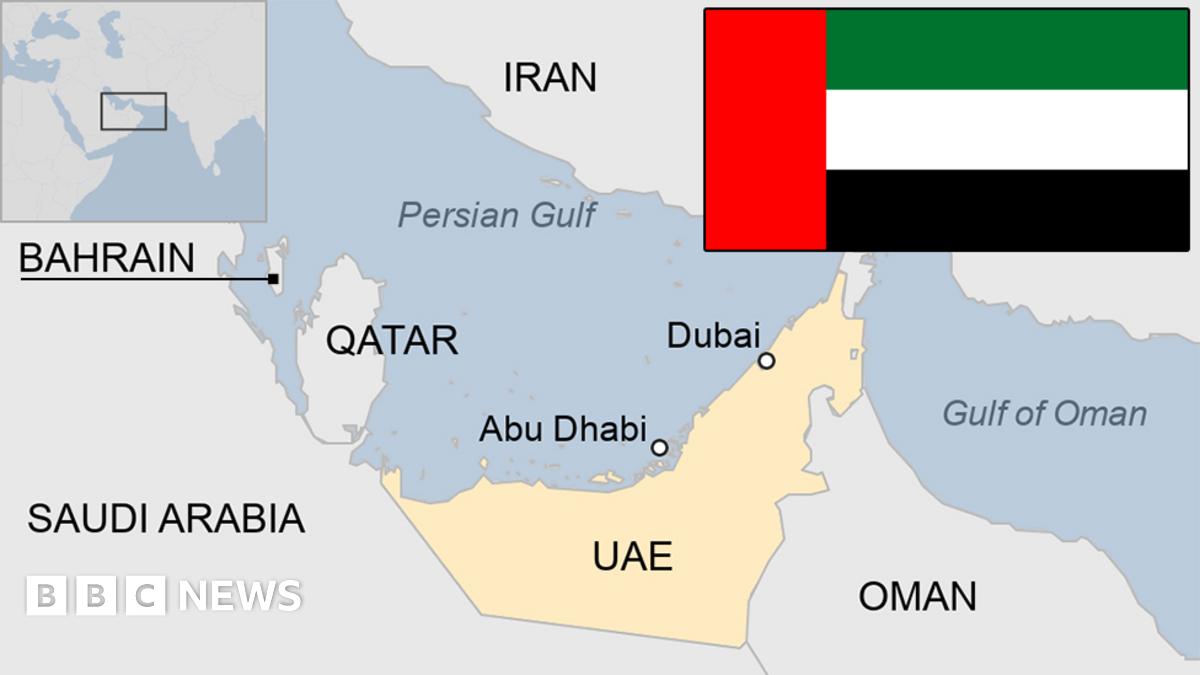
The International Monetary Fund has lifted its projection for the United Arab Emirates’ economic expansion to 4.8 per cent in 2025 and sees 5.0 per cent growth in 2026, citing accelerating non-hydrocarbon activity and a rebound in oil output.

Stronger-than-expected performance in tourism, construction, trade and financial services is underpinning the upward revision. The IMF attributes resilience to the country’s diversified strategy and structural reforms such as enhanced trade agreements and sustained investment in infrastructure.

Analysts say the revision contrasts sharply with broader regional downgrades. The IMF now expects growth across the Middle East and North Africa to expand by only 2.6 per cent in 2025, constrained by policy uncertainty, volatile energy markets and geopolitical tensions.

Within the UAE, central bank data reinforce the narrative of dual expansion. The non-hydrocarbon sector is forecast to grow by around 4.5 per cent annually in both 2025 and 2026, while the hydrocarbon segment is expected to rebound more sharply—by 5.8 per cent in 2025 and 6.5 per cent in 2026—on increased output as OPEC+ quotas are relaxed.

When IMF staff visited the UAE in January 2025, they noted that domestic demand remained robust amid modest oil production, forecasting real GDP growth at about 4 per cent for the year. They projected that fiscal and external surpluses would remain comfortable, helped by elevated non-oil revenues and cautious fiscal management.

Still, risks linger. The UAE’s banking sector, while well capitalised, faces exposure to real estate, and high house prices pose concerns for asset quality. In mid-2025, exposure to property in banks’ portfolios stood at around 18 to 19 per cent of risk-weighted assets. A sudden shift in investor sentiment or capital flows could test the stability of credit markets.

On the external front, the current account surplus is projected at about 7.5 per cent of GDP, supported by stronger non-oil exports and moderating import growth. Liquidity buffers remain healthy, with international reserves covering more than eight months of imports.

Advertisements

Greenlogue/AP The global green hydrogen market, valued at roughly USD 7.98 billion in 2024, is on track to grow to about USD 60.6 billion by 2030, propelled by steep declines in renewable energy costs, advances in electrolysis technologies and intensifying decarbonisation efforts across industry and transport. Projections indicate a compound annual growth rate of approximately 38.5 percent through 2030. This forecast assumes that many announced projects will […]

Crude futures are signaling a shift towards contango as market participants brace for an oversupply wave in 2026, driven by aggressive production from OPEC+ and non-OPEC players and uncertain demand growth. U. S. oil futures are showing the narrowest backwardation since early 2024, with the November 2025 WTI contract trading at a slim premium over May 2026—a structure ill-suited to limits on physical demand. This flattening of […]

HONG KONG SAR – Media OutReach Newswire – 14 October 2025 – During the National Day holiday, the Hong Kong SAR Government partnered with various sectors to launch a series of cultural and leisure initiatives aimed at celebrating the festive season with the public. Among these, the “Half-Price Movie Day” campaign, organized by commercial cinemas citywide on October 1, sparked a surge in demand. Several cinema ticketing […]

By Nantoo Banerjee There is little to be excited about the recent inauguration of predominantly mountainous Arunachal Pradesh’s first commercial coal mine at Namchik-Namphuk in the Changlang district jointly by Union Coal & Mines Minister G Kishan Reddy and Arunachal Chief Minister Pema Khandu, marking the state’s first coal mine project. With an officially estimated […]

The article India Must Cut Down Coal Consumption appeared first on Latest India news, analysis and reports on Newspack by India Press Agency).

Dubai-based Dubizzle Group Holdings has unveiled plans to float about 30.34 % of its share capital via an initial public offering on the Dubai Financial Market. The offer comprises 1.25 billion ordinary shares, of which 196.1 million are fresh issues from the company and 1.05 billion are existing shares sold by current shareholders. Subscription will be open from 23 to 29 October, the price will be fixed on 30 October, and trading is expected to begin on 6 November 2025.

The firm has appointed Rothschild & Co. as Independent Financial Advisor and Emirates NBD Capital as Listing Advisor. The IPO will be co-managed by banks including Abu Dhabi Commercial Bank, Barclays, EFG-Hermes UAE, Emirates NBD, Goldman Sachs International, HSBC Middle East and Morgan Stanley. Dubizzle’s largest shareholder, Prosus N. V., is committing USD 100 million to the issuance, signaling continued backing after initially investing in 2011.

Dubizzle operates across two main platforms: dubizzle, which handles automotive and general classifieds, and Bayut, focused on real estate. In the 18 months leading up to the IPO, the group pursued strategic acquisitions such as Drive Arabia, Hatla2ee, and most recently Property Monitor, a UAE real estate data and analytics provider. The acquisition of Property Monitor, which delivered a revenue CAGR of 55 % from 2022 to 2024, is expected to deepen Dubizzle’s insight offering in its property vertical.

Financially, the group has improved its performance. In 2024, revenues reached USD 222 million, with the net loss narrowing. For the first half of 2025, revenue rose to USD 133 million, while adjusted profit stood at USD 14 million. The more constrained net loss of USD 8.9 million in H1 2025 marks further progress in reducing deficits.

Market conditions have played in Dubizzle’s favour. Dubai’s real estate market has surged, with prices climbing over 70 % over four years, boosting transaction activity and demand for online classifieds. Analysts view the Dubizzle IPO as one of the largest tech offerings this year in the UAE, designed to attract capital inflows into the growing digital marketplace sector.

Yet challenges lie ahead. Investor scrutiny of valuations and corporate transparency will intensify, and Dubizzle must show sustainable path to profitability beyond growth. Some analysts estimate the IPO value in the USD 500 million to USD 1 billion range, consistent with its fundraising and valuation aspirations. Liquidity and free float requirements—especially for inclusion in indices like MSCI—may pressure the group to deliver consistent operational metrics.

In preparing for the public listing, Dubizzle has restructured its syndicate. It previously engaged banks such as Emirates NBD, Goldman Sachs, HSBC, and now rotated in Morgan Stanley, replacing former links to Citigroup. The reconfiguration suggests an adaptive approach designed to secure stronger placement and institutional interest.

Dubizzle and many other UAE firms are benefiting from momentum in the IPO pipeline. According to regional capital markets observers, between 25 IPOs were recorded in the first half of 2025, generating about USD 4.5 billion. Brokers like Citi assert that the pipeline remains healthy, even amid macro and geopolitical headwinds, and highlight investor demand for exposure to unlisted technology, fintech, and real estate-adjacent sectors.

SYDNEY, AUSTRALIA – Media OutReach Newswire – 13 October 2025 – Faraj Defence Lawyers has released new research highlighting the sharp rise in retail theft across Sydney and its connection to the city’s worsening cost-of-living crisis. The report finds that while financial strain is driving theft in some suburbs, in others the surge is driven more by opportunity within busy retail zones. Rising Cost-of-Living Pressures Sydney households […]

A team from the International Monetary Fund has secured a staff-level agreement with Somali authorities to complete the fourth review under the Extended Credit Facility arrangement. The agreement, pending approval by the IMF’s Executive Board, unlocks a portion of additional funding and reaffirms commitments to macroeconomic reform. The mission, led by IMF representative Ran Bi, conducted talks with Somali officials between 16 September and 8 October, resulting […]

Binance has pledged $283 million in compensation for users whose holdings suffered from token de-pegging during Friday’s extreme market turmoil. The capital injection is aimed at covering verifiable losses directly caused by platform anomalies.

The move follows a dramatic period of volatility that triggered sharp deviations in stablecoins and staking tokens, with some altcoins registering drastic steep declines or even temporary zero valuations on Binance. Analysts and insiders view the compensation effort as a critical test of the exchange’s stewardship and resilience.

Between 20:50 and 22:00 UTC on Friday, intense selling pressure and slumping liquidity pushed multiple tokens away from their pegged values, according to Binance’s internal timeline. The tokens most affected included USDE, BNSOL, and WBETH. Binance said the de-pegging began around 21:36 UTC and bottomed shortly thereafter.

The exchange insists that all compensations will be limited to losses traceable to system errors or platform shortcomings—not losses deriving from normal market fluctuations or unrealised price shifts. Users must substantiate their claims with transaction records and proof that the losses stemmed from mispricing on Binance.

During the crash, some tokens on Binance appeared to hit “zero” for brief moments. But that zero pricing was largely a display artifact linked to system overload and liquidity gaps, rather than reflecting true value collapse. In parallel, those same tokens maintained nonzero trading levels on other exchanges, underscoring that Binance’s internal issues amplified the anomaly.

To explain the phenomenon, Binance managers pointed to cascading liquidations. As prices dropped, collateralised altcoins were automatically sold to cover leveraged positions, feeding further selling pressure. That mechanism, combined with display parameter issues in decimal configuration, led to mispricing events.

Binance executive Richard Teng issued a public apology, stating: “I’m truly sorry to everyone who was impacted. We don’t make excuses — we listen closely, learn from what happened, and are committed to doing better.” Meanwhile, Binance co-founder Yi He reaffirmed that the firm sees this as a responsibility to its user community, pledging to examine each claim thoroughly.

Crypto markets were hit hard across the board. Over $20 billion in leveraged positions were liquidated industry-wide, with Bitcoin plunging from over $124,000 to lows near $105,000, while altcoins exposed to margin stress plunged further. The market contraction erased nearly $850 billion in market capitalisation within hours.

Intercontinental Exchange, which owns the New York Stock Exchange, is committing up to $2 billion in Polymarket, valuing the event-prediction platform at about $8 billion before the investment. ICE will serve as a global distributor of Polymarket’s event-driven data and will collaborate on tokenisation and related infrastructure.

Polymarket is gearing up for its return to U. S. markets following a multi-year regulatory hiatus. The firm acquired QCEX, a derivatives exchange and clearinghouse with CFTC licensure, for $112 million, enabling it to operate under U. S. regulation. The Commodity Futures Trading Commission has granted a no-action letter for event contracts, clearing a path for U. S. users to trade again.

Born in 2020 under the leadership of CEO Shayne Coplan, Polymarket permits users to wager on outcomes by purchasing “Yes” or “No” tokens. The market price implies a probability. Winning tokens settle at $1, while losing ones expire worthless. All trades occur via peer-to-peer smart contracts built on the Polygon blockchain.

Polymarket saw a surge in profile during the 2024 U. S. presidential campaign, when trading volume on election markets surpassed $3 billion. Its probability signals have since been picked up by mainstream outlets and financial analysts as indicators of public sentiment and forecasting.

ICE’s strategic investment reflects growing institutional interest in prediction markets. With control over NYSE infrastructure and deep data capabilities, ICE aims to monetise sentiment analytics and integrate such signals alongside traditional financial indicators. ICE has maintained that the investment will not materially affect its 2025 financials.

Coplan has acknowledged the significance of the tie-up, saying the partnership “marks a major step in bringing prediction markets into the financial mainstream.” Jeffrey Sprecher, ICE’s CEO, praised the union as an alignment between legacy market infrastructure and next-generation decentralised finance innovation.

Observers suggest that navigating regulatory risk is central to Polymarket’s success. Its three-year exit from U. S. users followed a 2022 settlement with the CFTC over unregistered derivatives operations. That settlement barred U. S. users from accessing the platform, and investigations into U. S. usage had been a cloud over the company. With the regulatory clearance and ICE backing, Polymarket is now executing a comeback in the U. S. domain.

Polymarket also attracted backing from 1789 Capital, a venture fund backed by Donald Trump Jr., which joined its advisory board earlier this year. Kalshi, a peer prediction market, won a favorable court ruling against the CFTC last year, setting precedents that influence Polymarket’s legal and operational landscape. The broader industry is watching closely, as the success or failure of this bet by ICE may signal whether prediction markets can transition from niche crypto tools to mainstream financial instruments.

Shayne Coplan, born in 1998 and a former dropout from New York University, is now recognised as the youngest self-made billionaire under the Bloomberg index following the deal. His trajectory illustrates the accelerating nexus among finance, tech and speculative market platforms.

Dubai has launched a new permit scheme that enables free-zone companies to conduct business within its mainland, a move designed to dismantle long-standing regulatory barriers between jurisdictions and unlock new commercial opportunities.

Under Executive Council Decision No. 11 of 2025, the “Free Zone Mainland Operating Permit” allows companies already holding a Dubai Unified Licence to apply for mainland access digitally via the Invest in Dubai platform. The permit spans six months, priced at AED 5,000, and may be renewed under the same terms. The scheme applies initially to non-regulated sectors such as technology, consulting, design, professional services and trading. Companies granted the permit must maintain distinct financial records for mainland operations and will incur a 9 per cent corporate tax on revenues generated onshore.

Dubai Business Registration and Licensing Corporation, part of the Dubai Department of Economy and Tourism, has partnered with the Dubai Free Zone Council to administer the framework. Ahmad Khalifa Al Qaizi Al Falasi, CEO of DBLC, described the initiative as a step toward “regulatory modernisation” and a more seamless investor experience. Dr Juma Al Matrooshi, Assistant Secretary-General at the Free Zones Council, said the permit enhances Dubai’s competitiveness by combining the flexibility of free zones with access to domestic markets.

Authorities expect the permit to benefit over 10,000 existing free-zone firms, adding 15–20 per cent to cross-jurisdiction business activity in its first year. Businesses can now tap domestic trading avenues and contend for government tenders previously off-limits to entities without a mainland presence. Existing free-zone staff may serve mainland operations, eliminating the need for new hiring under those permits.

Though the permit removes many structural hurdles, certain limitations and compliance obligations remain. Firms dealing in regulated activities—such as banking, healthcare, education or financial services—must still secure approvals from relevant regulators. The new scheme prohibits its use for entities within the Dubai International Financial Centre, which remains under a distinct legal regime.

The resolution introduces three permitted pathways: establishing a branch physically in the mainland, setting up a branch that operates out of the free zone, or obtaining a temporary permit for limited operations. All applications require consent from both DET and the corresponding free-zone authority. The permit regime mirrors the requirements of Resolution No. 11, which mandates separate bookkeeping and compliance under federal and local laws.

Dubai’s regulatory architecture has evolved in recent years: free zones traditionally offered full foreign ownership and streamlined processes, but lacked direct access to local markets. To counter that gap, companies often had to replicate operations via separate mainland entities or dual licences—a burden that increased costs and administrative duplication.

The new permit scheme thus signals a strategic pivot toward harmonising the city’s jurisdictional divide. Corporate law specialists note that simpler structures reduce overhead, ease governance challenges and mitigate tax or substance-test scrutiny. As one regional legal adviser put it, “Businesses can now use a single platform to expand rather than duplicating corporate filings.”

The pricing and validity terms are notable. The six-month, AED 5,000 permit is significantly more affordable and flexible than establishing a full mainland company, lowering the threshold for smaller firms and startups to experiment with onshore operations. The 9 per cent tax rate aligns with federal rules that apply to mainland income, while free-zone revenues remain eligible for preferential regimes.

Cryptocurrency markets endured a historic collapse as leveraged positions were liquidated en masse – over 1.6 million traders wiped out $19.13 billion in bets within 24 hours, data from Coinglass shows.

The crash accelerated sharply after U. S. President Donald Trump announced an additional 100 per cent tariff on Chinese imports and threatened export controls on critical software, heightening fears of a full-blown trade war. Bitcoin plunged more than 12 per cent from its recent highs, briefly sliding below $102,000 before rebounding above $113,000.

Before the sell-off, Bitcoin had breached a new all-time peak above $125,000, buoyed by institutional inflows into crypto exchange-traded funds. Governments and institutional investors had viewed digital assets as a hedge amid macroeconomic uncertainty.

Today’s market rout, however, exposed the fragility of overleveraged positions in a thinly capitalised market. In a single hour on Friday, more than $7 billion of liquidations occurred. The top losses were seen among long positions, particularly in Bitcoin and Ethereum derivatives, which accounted for a substantial share of the forced unwinds.

Institutional players and high-net-worth traders were swept up in the cascade. Market watchers noted that order books lacked the depth to absorb such a severe shock, triggering knock-on effects through futures and perpetual swap markets.

Beyond crypto, equity indices faltered under the weight of renewed global risk aversion. The S&P 500 dropped 2.7 percent, while tech stocks, sensitive to trade tensions, bore steep losses.

Some analysts likened the event to a “black swan” moment for crypto markets — a sudden shock revealing systemic vulnerabilities in a still nascent asset class. Traders operating with high leverage, little hedging, and aggressive margin policies found themselves particularly exposed.

Efforts to assess contagion effects to traditional finance are underway. Banks offering crypto derivatives and prime brokers are now scrutinising counterparty risks. Regulators in several jurisdictions may use today’s crash to justify stricter margin and leverage rules for crypto trading.

Reviewing policy implications, the tariff escalation marks a sharp pivot in U. S.–China trade strategy. Trump framed the measures as retaliation for China’s export curbs on rare earth metals, which are critical for tech manufacturing. The move signals willingness to escalate economic confrontation, with markets already pricing in broader disruption to global supply chains.

Despite the volatility, some investors are still betting on long-term resilience of digital assets. The week before the crash saw a record $5.95 billion flow into global crypto ETFs, led by U. S. allocations, suggesting that capital rotation into crypto remains strong over medium timeframes.

Liquidity providers and market makers face fresh trials. Some have temporarily withdrawn from funding markets or widened spreads to mitigate risk exposure. In highly volatile hours, arbitrage desks and algorithmic liquidity engines contributed to exaggerated price swings.

Wider sentiment has turned cautious: on-chain analytics show a rise in stablecoin inflows to exchanges, possibly reflecting flight from risk. Options markets registered growing demand for deep out-of-the-money puts, as traders brace for further downside.

Ethereum’s value slipped beneath the psychologically and technically significant $4,000 mark today, intensifying fears that the second-largest cryptocurrency may be entering a deeper correction. On Binance, ETH dipped to $3,988.89, down almost 8 per cent in 24 hours.

The abrupt drop triggered widespread liquidations, especially among leveraged positions. On-chain liquidation trackers show nearly $188 million in crypto was liquidated in just one hour during the sharp move.

Persistent macroeconomic headwinds, alongside renewed U. S.–China trade tensions, appear to have compounded selling pressure. The Nasdaq and other equity benchmarks also suffered, amplifying risk aversion among crypto investors.

Technical analysts now view the breakdown below $4,000 as a turning point. From a charting perspective, the fall invalidated previously bullish setups such as bull flags, leaving Ethereum exposed to further downside. One analyst cautioned that extended weakness could push ETH toward the $3,750 to $3,500 zone if pivotal support fails.

Support between $4,200 and $4,300 had held in recent sessions, but now that zone is under siege. Should it collapse, the stage may be set for a retest of $3,900 or lower. Traders are watching whether buyers will defend this corridor or capitulate.

Despite today’s plunge, some investors see accumulation underway. Ethereum’s total on-exchange supply has declined to a nine-year low, with large holders withdrawing ETH from exchanges—an indicator that long-term confidence may still remain intact.

Longer term, expectations remain cautiously optimistic. Standard Chartered recently raised its year-end target for ETH to $7,500, citing heightened institutional adoption and increasing use of the Ethereum network in stablecoin and DeFi infrastructures. Meanwhile, Citigroup offers a more conservative forecast of $4,300 by end-2025, warning that current prices may be more sentiment-driven than fundamentals-rooted.

Major upgrades on Ethereum’s roadmap could yet shift sentiment. Among them: the Glamsterdam upgrade, which integrates enhanced proposer-builder separation. However, a fresh academic study warns of a “free option” risk under high volatility, whereby builders may cancel committed payloads without penalty—posing challenges to network liveness during stress.

In the short term, analysts are split. Some argue that the slide is a healthy reset before ETH resumes an uptrend, provided support zones hold. Others say the breach of $4,000 suggests a loss of momentum strong enough to spark a deeper correction.

Crypto markets are already exhibiting signs of strain beyond Ethereum. Bitcoin is under pressure as well, and risk assets broadly are being squeezed by mixed macro data and higher real-interest rates. Some strategists say the crypto pullback could morph into a broader derisking wave unless fresh catalysts emerge.

Looking ahead, observers point to a few key variables: whether ETH can reclaim and sustain above $4,500; whether buyers will step in at $4,200–$4,300; and whether the network upgrades can deliver tangible improvements to gas, scalability, and decentralisation.


Matein Khalid Private equity and money center banks on Wall Street are in free fall even as the private credit market is in classic contagion mode, without a lender of the last resort for overleveraged shadow banks/hedge funds whose illiquid assets now disappear into Wall Street’s structured vehicles blackholes. Peekaboo Finance 101! When Citigroup and Brent crude both fall 8% in a synchronized bearish death dive, I […]

HANOI, VIETNAM – Media OutReach Newswire – 10 October 2025 – The Vietnamese music scene is experiencing an unprecedented seismic event: G-DRAGON has assented to fan demands, officially announcing a second performance for his highly anticipated G-DRAGON 2025 WORLD TOUR [Übermensch] IN HANOI. The decision to add a second show on Sunday, November 9, at the 8Wonder Ocean City follows a ticket phenomenon that has redefined the […]

By Girish Linganna In a move that would have seemed unthinkable just a few years ago, Taliban Foreign Minister Amir Khan Muttaqi arrived in New Delhi on October 9 for an eight-day official visit that marks a watershed moment in India’s foreign policy. His meetings with External Affairs Minister S. Jaishankar, followed by visits to […]


The article The Price Of Pragmatism: What India Gains (And Loses) By Courting The Taliban appeared first on Latest India news, analysis and reports on Newspack by India Press Agency).

Saudi Arabia’s sovereign wealth fund, the Public Investment Fund, has scaled back work on a number of planned share sales inside the kingdom, people with knowledge of the matter said, indicating shifting strategy amid weak valuations and soft investor appetite. Bloomberg first reported the development, and its reporting aligns with assessments in market commentary. Executives and advisers close to the red-sea fund say that a subdued climate […]

Matein Khalid Gold is in its most spectacular bull run since 1976-1980, when prices rocketed from $91 to over $800 an ounce. The current cycle found its floor near $1,800 in late 2022, as the Powell Fed’s rate-hike campaign peaked and Washington froze $300 billion in Russian reserves in response to the invasion of Ukraine. “Dr Auric” now trades at just over $4,000 an ounce – a perfect vindication of […]

VISHNU RAJA
RYO YAMADA
HITORI GOTOH
IKUYO KITA