News related to
price

Abu Dhabi-listed investment firm Waha Capital has confirmed that its subsidiary, Waha VAS Limited, has completed its divestment from the AI-fintech group Optasia following the latter’s listing on the Johannesburg Stock Exchange. The firm reported proceeds of US$119 million, an internal rate of return of 25 per cent, and a multiple on invested capital of four times. Waha VAS initially acquired a 20 per cent stake in […]

The Abu Dhabi Investment Authority has secured a 4.7 per cent stake in the initial public offering of India’s investment-platform operator Groww, acquiring approximately 14 million shares via its India subsidiary Monsoon for 1.4 billion rupees. The investment was made through two separate transactions ahead of Groww’s IPO, in which 298.45 million equity shares were earmarked for institutional investors.

Groww’s anchor book raised 29.8 billion rupees from 102 institutional investors ahead of its public offer, which opens on 4 November and aims for a valuation of around US$754 million. The Government of Singapore committed 1.39 billion rupees in the anchor round for a 4.68 per cent stake.

The depth of anchor demand underlines strong institutional confidence in the Bengaluru-based company. The anchor tranche accounted for five out of the six largest global sovereign-wealth funds involved, and domestic mutual funds took nearly half of the allotted 29.84 million shares in the anchor raise at a unit price of ₹100. Groww’s parent, Billionbrains Garage Ventures, will deploy fresh issue proceeds for cloud-infrastructure upgrades, brand building and margin-trading facility expansion.

Groww faces a turning point as it transitions beyond core broking. In the quarter ended June 2025, broking revenue accounted for 79.5 per cent of total revenues, down from 87.4 per cent a year earlier, as the company ramps enrollment in commodities, bonds and margin-trading services. With strong backing from marquee institutional players, Groww appears to be counting on growth in wealth-management, lending and derivatives to justify its IPO valuation.

The involvement of ADIA gives Groww not only capital but credibility in the public markets. For the Abu Dhabi fund, the deal provides further exposure to India’s dynamic fintech ecosystem as it continues to expand its footprint through Asia-focused growth equity deals. The participation of the Government of Singapore and multiple global asset managers reinforces the message that the Indian retail-investment rally still commands global attention.

Crypto markets experienced a sharp upheaval as the price of Bitcoin slid below the US $100,000 mark for the first time in approximately six months, while Ethereum plunged to levels near US $3,000. As a result, leveraged positions totalling around US $2 billion were liquidated within a 24-hour period.

The downturn began when Bitcoin fell to about US $99,000, triggering a cascade of forced unwinds in futures and perpetual contracts. According to data providers, more than 80 per cent of these losses stemmed from long bets, amounting to approximately US $1.6 billion. Ethereum’s drop—exceeding 20 per cent over two days—added nearly US $1 billion in liquidations in the same timeframe. The broader crypto market capitalisation slipped to roughly US $3.4 trillion, marking its lowest level in four months.

Analysts point to a confluence of factors driving the sell-off. The Federal Reserve’s cautious comments about future policy signalled the end of easy money for risk assets and prompted a rise in the US dollar index and treasury yields—both typically adverse for cryptocurrencies. Weakening institutional demand compounded the problem, as cumulative outflows from spot Bitcoin exchange-traded funds and related vehicles exceeded US $1.3 billion in the days leading to the crash. Algorithm-driven trades amplified the move: Bitcoin breached its 200-day exponential moving average near US $109,800 and touched technical support around US $100,000, triggering automated sell orders.

The liquidation event has wider implications for investor sentiment and the structure of the crypto market. The so-called Fear & Greed index plunged into the “extreme fear” zone, while open interest in perpetual futures contracts dropped as many leveraged players exited. On-chain metrics show historic wallets transferring tens of thousands of Bitcoin to exchanges, signalling profit taking by long-term holders. Yet some argue the correction could serve as a cleansing phase for the market: by flushing out excessive leverage, the environment may become healthier for the next leg of the cycle.

Despite the turbulence, there are signs that structural demand remains intact. Large-scale buyers such as MicroStrategy continue to accumulate Bitcoin—its holdings now exceed 641,000 BTC. Meanwhile, infrastructure-oriented developments in decentralised physical infrastructure networks and the convergence of blockchain with artificial intelligence are still attracting investor interest. Nevertheless, the immediate path forward is fraught. Analysts now identify a failure to hold US $100,000 for Bitcoin as potentially opening a decline toward the US $92,000–US $94,000 range. For Ethereum, a slide toward US $2,700–US $2,800 is on the radar if momentum fails to stabilise around current levels.

The Czech-based registry operator CZ. NIC has launched its new second-generation router, the Turris Omnia NG, which incorporates swappable Wi-Fi and cellular modules alongside a lifetime automatic update policy, signalling a push towards longer-term home network hardware. At its core the Turris Omnia NG runs a quad-core ARMv8 64-bit processor clocked at 2.2 GHz and features a passively-cooled design to deliver silent operation under heavy load. The […]

DÜSSELDORF, GERMANY – Media OutReach Newswire – 4 November 2025 – Global AI energy brand Conow has officially launched the next-generation home micro-energy storage system, CBE2000 Pro, priced at €1099. Combining a powerful inverter, AI-driven energy management, and modular storage design, the new model delivers an efficient, intelligent, and plug-and-play energy solution for modern households. Guided by its vision of “Bringing smart energy to every home,” Conow […]

Matein Khalid Jay Powell has put cold water on a December FOMC rate cut as inflation risk triggers dissent at the Fed. Yet Uncle Jay is now a lame duck and the world awaits his first MAGA Fed Chairman. My bet is on Kevin H as I doubt if even a supine Senate will confirm yes man – Stephen Miran. Why even bother to hold the FOMC […]

Nasdaq has issued a formal letter of reprimand to TON Strategy, citing a breach of listing rules after the company raised equity and used nearly half its privately raised funds to acquire a large holding in Toncoin without obtaining required shareholder approval. According to the regulatory filing, the company’s issuance of new common stock and warrants during a private investment in public equity transaction in August exceeded the 20 per cent threshold of outstanding shares that triggers an approval requirement.

The issuer, formerly known as Verb Technology and re-branded earlier this year to become a listed vehicle focused on digital asset treasury strategy, announced a $558 million PIPE closed on 7 August. The company disclosed that approximately 48.78 per cent of those proceeds were used to purchase Toncoin.

Nasdaq’s notice pointed out the omission of shareholder approval, which is required when share issuances exceed thresholds designed to protect existing investors and maintain transparency. The exchange concluded that while the misstep was a violation, it did not appear to reflect intentional avoidance of rules and therefore did not recommend delisting the company’s securities.

Toncoin’s market price reacted sharply, declining more than 5 per cent to around $2.165 following the notice, and trading volumes surged, which analysts interpreted as heightened investor concern about governance risks in crypto-linked public-company structures.

In a briefing, TON Strategy CEO Veronika Kapustina had warned that the nascent model of publicly traded cryptocurrency treasury firms could be showing “early indications of a bubble”, pointing to rising valuation and risk of complacency in transparency.

The leadership change within TON Strategy also drew attention: on the closing date of the PIPE, the firm appointed Manuel Stotz, former president of the TON Foundation, as Executive Chairman. The combination of leadership transition, major token purchase, and share issuance without vote has raised questions around alignment of interests and governance framework.

Market observers say the incident underscores a broader trend where public companies are adapting treasury models that hold large cryptocurrency positions, creating novel intersections of asset-class risk, corporate finance and regulatory oversight. Each of these linkages raises fresh scrutiny as traditional exchanges apply inspection regimes developed for conventional equity markets. One analyst commented that “crypto treasury firms now face the same listing rigour as any industrial company, but with far less precedent to guide them”.

For TON Strategy and its shareholders, immediate focus will be on how the company responds within the 45-day window typically afforded by Nasdaq to submit a corrective plan. The notice does not affect the company’s listing status so long as it meets other requirements, but revisions may include retroactive shareholder approval or altered future financing protocols.

Advertisements

The dominance of the Magnificent 7 now defines the shape of global markets. Apple, Microsoft, Alphabet, Amazon, Meta, Nvidia, and Tesla account for more than a third of the S&P 500’s total value, up from about 12% a decade ago. Their performance has lifted the index even as most of the remaining companies have moved sideways. The question for investors is whether these firms are overvalued or […]

The rupee edged towards a sharp low as the central bank escalated its defence of the currency amid growing external headwinds. The domestic currency traded around 88.80 to the U. S. dollar, nearing its record low despite official efforts to stem the slide.

The Reserve Bank of India expanded its short-dollar forward positions by about US$6 billion in September, bringing the total to roughly US$59.4 billion, signalling increased dollar sales to defend the rupee.
The rupee had already recorded five straight months of decline before stabilising briefly in October, only to come under renewed pressure. Analysts point to surging gold imports, foreign-portfolio investor withdrawals and uncertainty around U. S. tariffs as key drivers of dollar outflows.

Market participants note that the rupee’s ability to hold above the 88.80 mark depends heavily on the central bank’s resolve. One currency strategist at the Australia and New Zealand Banking Group remarked that the central bank may not allow a significant breach of the 89-per-dollar level unless India’s economic fundamentals deteriorate further.

The rupee’s slide contrasts with other emerging-Asian peers, most of which posted gains of over 3 per cent this year while India’s currency was down about 3.6 per cent. Importer demand for dollars and robust non-deliverable-forward flows remain persistent drags. The central bank made small daily interventions via state-run banks, but these were smaller in scale than the large dollar sales seen in the prior month.

In one high-impact intervention, the Reserve Bank of India sold between US$3 billion to US$5 billion across spot and offshore markets, according to trade-desk estimates. That move pushed the rupee up by nearly 1 per cent on the day, its largest single-day gain in four months. The central bank has declined to comment publicly on the precise quantum of intervention.

The central bank is also placing a premium on managing volatility. Despite the dollar’s global strength and broader weakness in Asian currencies, the rupee has been constrained to a narrow trading band around the 88.80 level. Its ten-day realised volatility has fallen beneath 2 per cent and implied volatilities through one month are near their yearly lows. Some market participants caution that this subdued volatility could undermine hedging activity and leave firms vulnerable if a shock hits.

The rupee’s vulnerability arises in part because the U. S. dollar remains elevated, and the Federal Reserve has signalled that it does not expect to cut interest rates as soon as markets hoped, strengthening the greenback and reducing relief for the rupee. At the same time, India’s trade position remains under pressure as high gold-import volumes and elevated oil prices increase dollar demand.

Against this backdrop, India’s sovereign-bond market is showing signs of life. Foreign investors have ramped up purchases of long-dated government debt following the central bank’s display of defensive resolve. Some analysts suggest that migration back into Indian bonds reflects renewed confidence in rupee-denominated assets. Yet this hope is tempered by the possibility that tighter liquidity—stemming in part from currency-market interventions—could weigh on bond markets and corporate funding costs.

A sweeping seven-year agreement valued at some US$38 billion has been struck between OpenAI and Amazon. com Inc.’s cloud arm Amazon Web Services, granting OpenAI access to hundreds of thousands of next-generation GPUs to fuel its artificial-intelligence models. The deal marks a significant shift in the cloud-computing landscape as OpenAI broadens its infrastructure base beyond longstanding relationships. OpenAI said it will begin deploying AWS’ compute capacity immediately, […]

Where beauty met the forbidden, and the night remembered every name. The Night That Redefined Halloween MACAU SAR – Media OutReach Newswire – 3 November 2025 – Halloween in Asia had never looked this extraordinary. On October 30, 2025, BXG (Beauty Express Group), the creative powerhouse behind leading beauty brands including Telosin, A80 Paris, The Mineral Boutique, Apeiro, and 24 Auro, unveiled “Beautiful Nightmare”, an electrifying Halloween […]

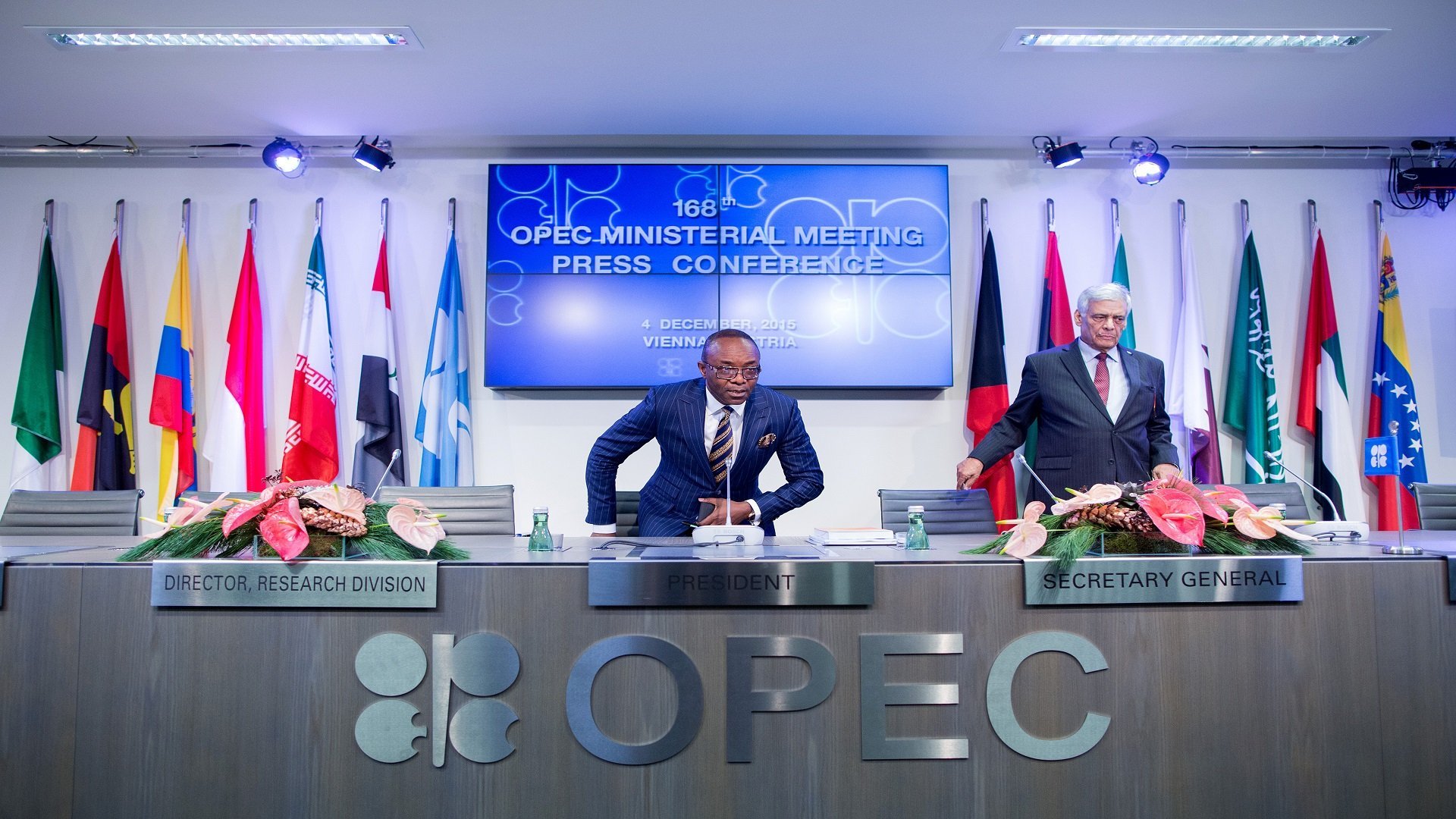
The production-alliance led by OPEC+ has agreed to raise crude oil output by 137 000 barrels per day for December, but will refrain from further increases during the first quarter of 2026. The decision reflects mounting concerns about global oil supply exceeding demand and comes amid sanctions on Russia and anticipated seasonal weakness in demand. The eight-member subgroup comprising Saudi Arabia, Russia, the United Arab Emirates, Iraq, […]

Beijing’s decision to eliminate a longstanding value-added tax offset for gold retailers marks a significant shift in policy, poised to raise domestic prices and influence global supply dynamics. From November 1 the Ministry of Finance announced that firms selling gold acquired from the Shanghai Gold Exchange or processed from it may no longer deduct VAT when disposing of the metal, whether in raw bars, coins or jewellery. […]

Dubai telecom operator du has launched a new cloud-mining subscription service named “Cloud Miner” offering residents in the UAE access to cryptocurrency mining without the need to purchase or operate hardware. The offering was introduced at a launch event held at the Burj Khalifa and will be managed under du’s B2B sub-brand du Tech. Customers will be able to lease 250 terahashes per second of mining capacity […]

Producers grouped under OPEC+ are preparing to approve a modest rise in oil‐production targets for December, in an effort to balance market share ambitions against signals of oversupply and constrained output growth. Three delegates familiar with the discussions indicated the increase is expected to amount to roughly 137,000 barrels per day, mirroring the size of the hikes seen in both October and November.

The key players in the alliance include Saudi Arabia, Russia, the United Arab Emirates, Iraq, Kuwait, Oman, Kazakhstan and Algeria. The group’s online meeting scheduled for Sunday is expected to formalise the decision.

The incremental increase is part of a broader strategy underway since April, in which OPEC+ has raised output targets by more than 2.7 million barrels per day, amounting to about 2.5 per cent of global supply. However, the pace has been deliberately slowed from earlier months as signs emerge of an excess in global supply pools, including a forecasted surplus of over 3 million barrels per day in the current quarter.

Market analysts, including those at RBC and Rystad, anticipate the 137,000 bpd figure to represent the baseline scenario. Some delegates are also said to be weighing a pause on further hikes if supply conditions deteriorate.

Russia faces particular hurdles in supporting the quota rise, as Western sanctions limit the capacity of the Russian oil sector to boost output rapidly. That constraint is factoring into OPEC+ calculations as it debates whether to add more barrels to the market. Meanwhile, the UAE has been granted a higher production quota through to September 2026, enabling a phased increase of up to 300,000 bpd in its case.

Oil‐price behaviour reflects the tension between supply ambitions and demand concerns. Brent crude dropped to around US$60 a barrel in late October amid oversupply fears and sluggish demand from Asia, but has since climbed back toward the mid‐US$60s on the back of sanctions on Russia and trade optimism.

OPEC+’s cautious approach is informed by concerns about a supply‐demand mismatch next year. The International Energy Agency has flagged that world supplies could outstrip demand by over 3 million bpd in the current quarter, with an even larger gap potentially forming in 2026.

One industry commentator noted that unless there is clear evidence of a disruption to supply, the group is unlikely to commit to a large output hike. That view underscores the balancing act between protecting market share and avoiding a price collapse driven by oversupply.

Compliance remains another pressure point for the alliance. Some OPEC+ members have struggled to lift production to their quotas due to infrastructure, regulatory or investment constraints, diluting the impact of nominal target rises. This has helped temper the immediate effect of output increases even as quotas climb.

A further consideration is the shale oil sector in the United States, where producers are ready to capitalise on any loosening of supply discipline. OPEC+ therefore faces a strategic dilemma: raise output and risk reigniting competition, or hold back and cede ground to non-OPEC supply growth.

For December the decision appears modest, signalling a move to restore barrels cautiously rather than aggressively. The virtual meeting on Sunday will thus act as a critical test of the alliance’s ability to calibrate policy around shifting global demand patterns and geopolitical risk.


Seventeen years after the publication of the nine-page document titled “Bitcoin: A Peer-to-Peer Electronic Cash System,” authored under the pseudonym Satoshi Nakamoto on 31 October 2008, the digital asset known as Bitcoin has evolved from an experimental peer-to-peer payment proposal into a multi-trillion-dollar fixture of global finance.

At its launch, the paper proposed a decentralised network free of financial-institution intermediaries, aiming to avoid double-spending through a proof-of-work mechanism. Over the years the network has grown into a dominant cryptocurrency, and observers say that Bitcoin’s role in financial markets has shifted markedly. A study examining institutional adoption found that Bitcoin’s correlation with major equity indices — once low — rose to as high as 0.87 in 2024, signalling growing integration with mainstream markets.

Institutional interest forms a central pillar of this transformation. Following the approval of spot Bitcoin exchange-traded funds in the United States in January 2024, which drew in more than $50 billion in inflows, traditional asset managers such as BlackRock and Fidelity Investments gained routes for mainstream investors to access Bitcoin. Some corporations have adopted Bitcoin as part of corporate treasury strategy: around 80 companies now hold approximately 3.4 per cent of total Bitcoin supply.

Despite this ascent, some early proponents of Bitcoin’s original vision — that of a decentralised digital cash usable for everyday transactions — argue that the current model leans more toward its status as “digital gold” than as peer-to-peer money. Payment-system advances like the Lightning Network seek to restore that vision, enabling faster and cheaper transactions on-chain. Meanwhile, critics highlight that energy consumption and regulatory uncertainty continue to pose risks to Bitcoin’s wider adoption.

Regulatory momentum also remains uneven. While the United States moves closer to clearer rules through legislation such as the proposed Clarity Act — which analysts estimate has an 80 per cent chance of passing by early 2026 — global approaches vary significantly. Some jurisdictions have embraced crypto frameworks, while others maintain prohibitive stances. The potential for banks and custodial institutions to operate more directly with digital assets is gaining attention.

Technologically, Bitcoin remains foundational. The original protocol, unchanged at its core since its launch, still underpins a thriving ecosystem of wallets, exchanges and blockchain analytics. That continuity has contributed to its brand as the ‘first mover’ in the cryptocurrency space. At the same time, ecosystem participants are attending to scalability challenges, security risks tied to quantum computing and ecosystem fragmentation through forks.

On the macro-economic front, Bitcoin is increasingly viewed as a hedge or alternative asset, though its extreme price volatility continues to limit its suitability for everyday payments for most users. A survey found 63 per cent of Americans did not feel confident investing in or using cryptoassets, and among adults aged 50 or over that figure rose to 71 per cent. At the same time, the asset’s market cap has situationally breached the $2 trillion mark, reflecting its material scale within finance.

The evolution of Bitcoin also reflects a broader shift in financial architecture: decentralised networks and tokenised assets are increasingly challenging traditional models of money, payment and settlement. Analysts argue that the next phase of Bitcoin’s maturation will hinge on regulatory clarity, technological scalability and an enhanced role in everyday commerce, rather than only institutional accumulation.

US retail giant Walmart has chosen the upper-level of Clearwater Mall in the Strubens Valley area of Roodepoort, Johannesburg, as the site for its first branded store on the African continent. The cornerstone agreement was confirmed by mall owner Hyprop Investments and partner retailer Massmart, signalling a strategic push by Walmart into the broader Africa market. The move brings the hallmark “Every Day Low Prices” shopping model […]

HONG KONG SAR – Media OutReach Newswire – 31 October 2025 – The local online pharmacy platform “FastMed HK” is actively advancing smart healthcare development in Hong Kong. Through its innovative online consultation and dispensing model, it provides the public with convenient and professional medical services. The platform integrates a comprehensive electronic distribution system to deliver a seamless medication experience: “online consultation, same-day medication delivery.” Professional Consultations: […]

Chicago futures for soybeans surged as trade diplomacy between the United States and China paved the way for a revival of American oilseed exports. The most-active contract on the Chicago Board of Trade reached the highest level in 15 months and is on track for its largest monthly gain in nearly four years. China’s state-owned enterprise COFCO confirmed the purchase of three cargoes of U. S. soybeans […]

BYD Co. has reported another significant dip in its quarterly profit, a trend that highlights growing challenges for the Chinese electric vehicle manufacturer. The company’s financial struggles are attributed to increasing domestic competition and intensified scrutiny within the rapidly expanding electric vehicle market.

The latest figures reveal a sharp drop in profit, signalling a tough period for BYD as it grapples with shifting market dynamics. The EV giant, which has long been a leader in China’s electric car market, is now confronting a series of pressures that have raised questions about its ability to maintain its leading position in the industry.

BYD’s financial results for the latest quarter show a marked decline compared to previous years. While the company has seen significant sales growth, the rapid expansion of competitors and the tightening regulatory environment have severely impacted its profitability. Analysts point to these factors as the key contributors to the company’s poor performance, with increasing competition from both domestic and international manufacturers.

Several key rivals in the Chinese market have ramped up their EV production, offering more affordable models and aggressively targeting a broader consumer base. This surge in competition has intensified the pressure on BYD, forcing it to lower prices and increase marketing efforts to retain market share. However, such strategies have led to reduced margins, contributing to the company’s profitability issues.

Meanwhile, the regulatory landscape for EV manufacturers in China has become more stringent. The government has introduced new policies aimed at tightening emissions standards and ensuring greater transparency in the EV supply chain. These regulations, while necessary for the long-term sustainability of the sector, have added another layer of complexity for companies like BYD, which are already grappling with increasing competition.

Despite these challenges, BYD has maintained its status as one of China’s largest producers of electric vehicles. The company’s leadership has made efforts to pivot and adapt to changing conditions by focusing on new technology and improving vehicle quality. However, analysts suggest that its ability to sustain growth at its current pace may be compromised unless it can effectively manage both competition and regulatory pressures in the coming months.

The company’s performance also highlights a broader trend in the Chinese EV market, where competition is becoming fiercer as both established players and new entrants seek to capitalise on the booming demand for electric cars. International brands are also increasing their presence in the market, further intensifying the competitive pressure on domestic companies like BYD.

The global economic environment is adding to the uncertainty, as supply chain disruptions and fluctuating material costs affect car manufacturers worldwide. For BYD, the cost of raw materials, including lithium, a crucial component for batteries, has surged, further eroding its profitability.

BYD’s management is reportedly focusing on cutting operational costs, improving manufacturing efficiency, and exploring new international markets to counter the pressure it faces at home. The company has already made moves to expand its footprint in Europe, where demand for electric vehicles is steadily increasing. However, this shift to international markets will require significant investment in infrastructure and brand development, which may take time to yield results.

OPEC+ has defied expectations, continuing its strategy of increasing oil output despite a weaker global oil market and growing concerns that prices could slide further. The cartel’s resolve to raise production reflects its broader strategic priorities, which remain largely unchanged even in the face of declining prices. Oil prices, which are hovering in the mid-$60s per barrel, are still far from triggering a shift in OPEC+ policy. […]

BEIJING, CHINA- Media OutReach Newswire – 31 October 2025 – The Annual Conference of Financial Street Forum 2025 was held in Beijing from October 27 to 30. During the four-day agenda, over 400 financial leaders, policymakers and industry experts from more than 30 countries and regions around the world gathered in Beijing’s Financial Street. The core area of Beijing’s Financial Street, covering an area of 2.59 square […]

Gold prices escalated early on Saturday, drawing fresh investor interest as the U. S. Federal Reserve’s quarter-point rate reduction to the 3.75 %-4.00 % range reinforced the appeal of non-yielding assets. Spot gold edged up 0.3 % to US$4,034 an ounce, and bullion is positioned to record a third consecutive monthly gain driven by both bargain buying and institutional demand. The backdrop includes a sharp rise in […]

Net Profit Surges over 25%, Proposed an Interim Dividend of HK 1.0 cent per share Financial Highlights For the six months ended 31 Aug HK$’000 2025 2024 Change Profit before taxation 44,696 35,962 +24.3% Profit for the period attributable to shareholders 38,381 30,535 +25.7% Net profit margin 46.8% 35.1% +11.7 p.p Basic earnings per share (HK cents) 2.0 1.6 +25.0% HONG KONG SAR – Media OutReach Newswire […]

VISHNU RAJA
RYO YAMADA
HITORI GOTOH
IKUYO KITA