News related to
price

Real estate developers are increasingly adopting modern technologies, including CRM for property developers, to enhance efficiency and improve customer interactions. According to a study by CSO Insights, 80% of surveyed companies in the real estate sector already utilize customer relationship management tools, highlighting a global shift toward digitalization. The Dubai and UAE real estate market continues to set global benchmarks, attracting developers, brokers, and investors with its record-breaking property sales and ambitious […]

Detroit’s legacy automakers are poised to reap enormous financial benefits under federal rollback of emissions rules and EV incentives. General Motors, Ford Motor Company, and Stellantis are redirecting billions of dollars previously earmarked for electric-vehicle development and regulatory compliance back into production of internal combustion engine vehicles and hybrids. Ford, for example, has already saved approximately $1.5 billion in regulatory credits this year alone, a sum that […]

Bitcoin whales appear poised for a dramatic ascent in the weeks ahead, with some expecting the cryptocurrency to crest $190,000 this December—a target that has drawn both excitement and caution among market observers.

Whales, or large holders of Bitcoin, have been signalling confidence through increasing accumulation. On-chain data indicates sustained purchasing patterns and institutions continuing to funnel capital into Bitcoin, supporting forecasts like the $190,000 December rally that some market models envision.

For instance, Tiger Research cites growing institutional inflows—including spot-Bitcoin ETF demand and new crypto allocations in retirement plans such as US 401s—as key drivers behind a projected price ceiling of $190,000. They argue that surging liquidity and tightened supply dynamics could push Bitcoin to that level by the close of Q3 or early Q4 2025.

Yet other analysts strike a more measured tone. Crypto economist Willy Woo warns that long-standing whales, many of whom acquired Bitcoin at below $10, now control large portions of the supply. He explains that each Bitcoin they opt to sell requires over $110,000 of fresh demand to absorb it—creating a de facto resistance level that complicates momentum.

Oil prices edged higher after OPEC+ approved a modest production increase of 137,000 barrels per day from October, signalling a deliberate shift from propping up prices to recapturing market share even as the possibility of oversupply looms.

A rapid, 11-minute virtual meeting resulted in the decision by eight key alliance members to introduce a restrained output lift, clearly OPEC+ inches production upward amid surplus risk. That modest hike marks the start of unwinding an additional tranche of voluntary cuts—around 1.65 million barrels per day—that were originally scheduled to remain in place until the end of 2026.

Brent crude gained approximately 34 cents to trade at $65.84 per barrel, while U. S. West Texas Intermediate rose about 30 cents to $62.17 a barrel, trimming losses incurred last week following a soft U. S. jobs report. Analysts see the price rebound as partly driven by relief over the modest hike and technical factors, alongside concerns that looming U. S. sanctions on Russian oil may curb supply.

OPEC+ members—including Saudi Arabia, Russia and several Gulf producers—have been gradually rolling back earlier cuts since April, with previous monthly increases topping 550,000 barrels. This latest move, while smaller in volume, is seen as a strategic signal that the group is prioritising global market positioning over immediate price support. Jorge Leon of Rystad Energy commented, “The barrels may be small, but the message is big,” underscoring the symbolic weight of the alliance’s decision.

Not all members can raise output equally—only Saudi Arabia and the United Arab Emirates have sufficient spare capacity to make notable additions. Others face physical and contractual limitations to boost deliveries.

Despite the gradual rollback of cuts, analysts warn that the ramp-up, combined with rising non-OPEC+ output, could push the oil market into surplus territory by early 2026. Goldman Sachs, while holding its 2025 price forecast steady, flagged muted price risks for 2026, with expected average Brent and WTI prices in the mid-$50s.

The alliance has reaffirmed its flexibility to adjust future output, including the ability to accelerate, pause or even reverse course as market conditions evolve. Members will meet again on 5 October to review developments and determine whether to extend or amend the output ramp.

Dubai is witnessing a sharp rise in gold-driven fortunes as long-established Indian entrepreneurs reshape its jewellery sector. Titan Company, known for its Tanishq brand, will acquire 67 per cent of Damas, a leading luxury jewellery retailer with some 146 outlets across the Gulf, for 1.04 billion dirhams, in a deal expected to close by 31 January 2026. This bold expansion markedly strengthens Titan’s foothold under its emerging […]

European regulators have slapped Google with a €2.95 billion fine for leveraging its dominance in ad-tech to favour its own services, while President Trump has launched warnings of retaliatory trade measures—even as the €2.95 billion ad-tech sanction on Google marks the latest escalation in transatlantic friction. The European Commission’s investigation, which began in mid-2021, concluded that Google distorted competition across the 27-member bloc by prioritising its AdX […]

By Anjan Roy The GST reforms introduced by the GST council at its September 4 meeting is a mega budget for the entire country. It will be the determining factor for the budgets of the central government as well as those of the states. The goods and services tax, shorter form GST, had consolidated all […]
Advertisements

African Rainbow Minerals has suspended all mining activity at its unprofitable Bokoni platinum mine while it refines a scaled-down development proposal. The decision comes amid sharply declining earnings and a substantial impairment charge, underscoring the mine’s failure to deliver expected returns. ARM announced a 2.2-billion-rand impairment for Bokoni, attributing the write-down to delays in ramping up operations and a shift in mining methodology. This loss dragged the […]

A Reuters-compiled survey reveals that OPEC’s oil output climbed in August following a coordinated decision to raise production, with the United Arab Emirates and Saudi Arabia driving the increase. The group lifted August output by approximately 400,000 barrels per day to reach 28.55 million bpd, according to a Bloomberg-based survey cited by Commerzbank. Saudi Arabia accounted for roughly 230,000 bpd of that surge, raising its production to […]

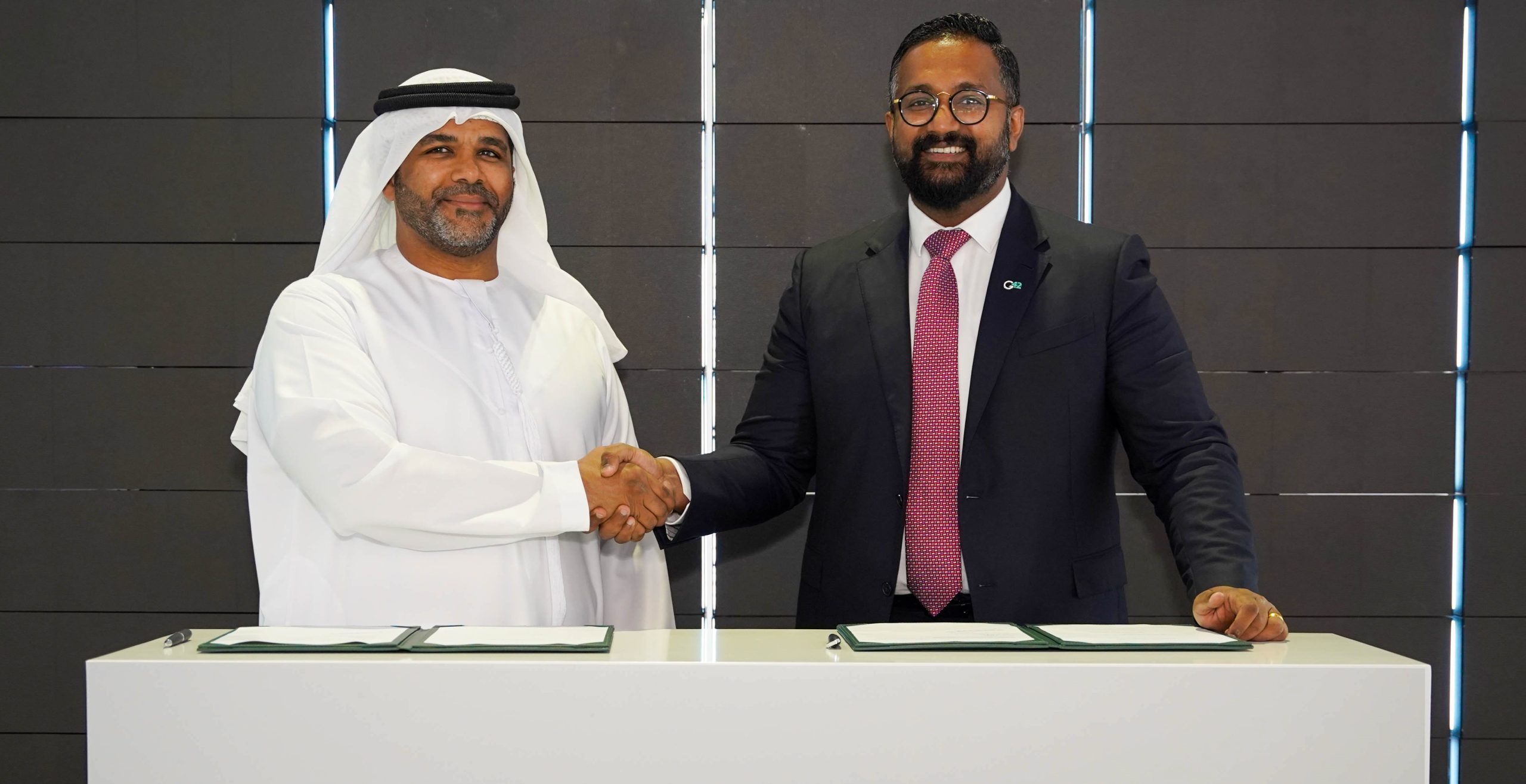
Abu Dhabi’s G42 is offering 2 % of its shareholding in its subsidiary, Presight AI, to institutional investors through an accelerated book-build, aiming to raise slightly more than $100 million. The transaction will reduce G42’s holding in the analytics group from 70.5 % to 68.5 %, while retaining majority control. First Abu Dhabi Bank and Jefferies are acting as joint global coordinators and joint bookrunners, with International Securities serving as joint bookrunner.

Demand for the placement has been strong, with books reportedly fully covered ahead of finalisation. Settlement is expected around 10 September 2025, following final terms being set by 4 September. G42 has also committed to a 180-day lock-up period before any further sale of its Presight shares.

The strategic purpose behind G42 lowers Presight AI stake via ABB is to broaden and institutionalise Presight’s investor base, enhance liquidity, and strengthen its case for inclusion in the FTSE Emerging Market Index. Greater free float and international institutional ownership would increase trading activity and appeal to passive investment funds.

Presight AI, which listed on the Abu Dhabi Securities Exchange in 2023, has posted strong financials through 2025. Its share price has risen by approximately 67 % year-to-date, closing recently at AED 3.47. In the first half of 2025, organic revenue grew by 33.5 %, supported by new domestic contracts. In the second quarter, group net profit rose by nearly 8 % to Dh77 million, with revenue up by over 53 % to Dh523.9 million. International markets now contribute 26.8 % of revenue, up from just 4.9 % a year earlier.

G42 group CFO Ricky Thirion described Presight as “a critical pillar of the G42 ecosystem and a cornerstone of our Intelligence Grid offering,” noting that its performance reflects consistent growth and strong leadership.

Regionally, secondary offerings like this one are gaining traction. In 2025, follow-on sales across the Middle East have raised roughly $3.7 billion, surpassing IPO proceeds—a sign of deepening market maturity.

The placement’s proceeds will go entirely to G42, with no dilution or impact on other shareholders or Presight’s operations.

Abu Dhabi’s G42 has therefore engineered a measured recalibration of its ownership in Presight AI—G42 lowers Presight AI stake via ABB—while securing capital, expanding its shareholder base, and positioning the company for broader market inclusion and visibility.

BERLIN, GERMANY – Media OutReach Newswire – 6 September 2025 – Hohem, a global innovator in AI gimbal technology, officially debuted at IFA this year, showcasing a powerful lineup that solidifies its dominant position in the consumer market. By pioneering innovations like edge AI tracking and the world’s first detachable touchscreen remote, Hohem has reshaped the smartphone content creation experience. This strategic foundation now signals the company’s […]

BERLIN, GERMANY – Media OutReach Newswire – 5 September 2025 – Global lighting innovator Olight is making a bold statement at IFA 2025 in Berlin with the launch of its new ArkPro Series. The slogan of this series is “Rethink Light, Reimagine Style” This series of advanced portable flashlights includes ArkPro, ArkPro Ultra and ArkPro Lite, and integrates multiple functions into one, redefining the performance and design […]

OPEC’s oil output rose further in August, hitting 27.84 million barrels per day—a gain of 360,000 bpd over July’s revised total. The rise was driven chiefly by expanded production from Saudi Arabia and the United Arab Emirates under an OPEC+ agreement to gradually reverse output curbs.

The production boost stemmed from an agreement by eight OPEC+ countries for August output, under which five OPEC members—Algeria, Iraq, Kuwait, Saudi Arabia and the UAE—were to raise output by 416,000 bpd, before accounting for compensation cuts totalling 178,000 bpd imposed due to earlier overproduction. In practice, those five delivered a net increase of 310,000 bpd.

This escalation forms part of OPEC+’s accelerated effort to dismantle its most recent output cuts. Simultaneously, some members continue to implement additional cuts to offset previous excesses, theoretically capping the effect of these increases.

This latest surge underlines OPEC+’s strategy of reclaiming market share through coordinated rollback of production restraints, even as the group attempts to preserve price stability by enforcing compliance and offset mechanisms.

Samsung has introduced its newest Galaxy S25 FE handset and Tab S11 tablet series, underlining an ambition to deliver flagship-level features to a broader audience. The Galaxy S25 FE arrives at around $650, equipped with a 6.7-inch AMOLED display, Exynos 2400 chipset, 8GB of RAM, and a 4,900 mAh battery—paired with Galaxy AI enhancements such as Instant Slow-Mo, Generative Edit, and Audio Eraser. The Tab S11 models—the 11-inch base and the 14.6-inch Ultra—feature One UI 8, Android 16, S Pen support, 120Hz AMOLED screens, MediaTek Dimensity 9400+ chips, and AI-enabled enhancements including Samsung DeX’s new Extended Mode.

At the event held alongside IFA 2025, Jay Kim, one of Samsung’s corporate executive vice-presidents, noted that Galaxy AI is now live on more than 200 million devices, and the company expects to double that by year’s end. The Galaxy S25 FE delivers the longest battery life yet for an FE phone and debuts with improved cooling via a larger vapour-chamber system, alongside a build featuring Armor Aluminium and Gorilla Glass Victus+, with IP68 dust and water resistance.

The Tab S11 Ultra matches the iPad Pro’s 5.1 mm thinness and brings Wi-Fi 7 support, anti-reflective coating, enhanced DeX features, and promising multitasking capabilities. Together, these devices reflect Samsung’s approach to combine premium hardware with smart, AI-powered functionality at competitive prices.

Samsung’s announcement suggests a deliberate strategy: expanding access to its AI ecosystem, offering extended software support—seven years of OS and security updates for the S25 FE—and positioning these devices ahead of major rival launches.

The Galaxy S25 FE is now available and begins around $650 in the US, while the Galaxy Tab S11 line starts from $799 for the base model and $1,199 for the Ultra.

Samsung’s timing—introducing value-oriented yet AI-driven phones and tablets just before its biggest mobile competitor’s next launch—signals a sharp push to attract consumers with strong hardware, intelligent software, and long-term support.

In Bangalore and beyond, industry observers note that the S25 FE’s offering of Galaxy AI tools, robust support lifespan, and competitive price point could challenge rivals in emerging markets. The Tab S11 series, with its stylus-enabled productivity enhancements and tablet-as-laptop flair, appears aimed at professionals and creatives seeking seamless workflows on Android.

Echoing its messaging, Samsung is enhancing its Galaxy ecosystem, aiming to envelop users in its AI capabilities—whether through smartphones or tablets—while ensuring that cutting-edge features are no longer confined to its flagship devices alone.


Apple shares rallied following a pivotal ruling from U. S. District Judge Amit Mehta, who allowed the technology giant to continue receiving payments—estimated at around $20 billion annually—for default search placement in Safari, while imposing targeted restrictions on exclusivity and data practices. The verdict, delivered on 2 September 2025, represents a significant reprieve for Apple amid ongoing antitrust scrutiny. The ruling bars Google from enforcing exclusive distribution […]

A bitcoin wallet, untouched since 2012, has activated and realised a windfall worth $53 million from an initial investment of just $4,400 after nearly 13 years of dormancy. The wallet remained idle through multiple eras of bitcoin’s volatility before movement on 4 September 2025 triggered fresh attention.

The activation points to the investor’s decision to hold steadfast—“…patently holding their BTC holdings for over 12 years,”—a remarkable example of long-term strategic patience in the notoriously volatile cryptocurrency space.

Blockchain tracking services and on-chain analysts, while not identifying the holder, confirm that the bitcoin moved from a cold storage wallet first funded around 2012 has now matured into a substantial fortune thanks to the soaring bitcoin price. Historical price data indicates that the $4,400 stake likely purchased the bitcoin when its value was in the low-hundreds of dollars or even under $100 per coin.

This event occurs amid renewed upward momentum in bitcoin markets, where price action above the $111,000 level hints at a potential breakout to surpass $112,500. Analysts caution that maintaining momentum will be key, noting that the current ascent could falter under resistance.

While stories of dormant wallets awakening to deliver vast profits are not unprecedented, this case underscores the dramatic impact of time in cryptocurrency investing. Earlier this year, another long-term bitcoin holder netted nearly $30 million in profit after liquidating 300 BTC originally acquired in 2013 for around $60,000—a 496-fold return after more than a decade. In August 2025, yet another investor moved 300 BTC mined in 2013, transforming a $50 valuation per coin into a $30 million gain.

These developments highlight three evolving trends:

Firstly, long-term holding remains a potent strategy. The volatility of crypto is tempered by the compounding power of holding through cycles when the asset appreciates significantly over time.

Secondly, dormant wallets serve as markers of early adoption, especially during bitcoin’s infancy around 2010–2013. Their reactivation often signals profound gains to long-forgotten investors.

Thirdly, current market dynamics favour such histories. With bitcoin approaching and testing six-figure levels, such reawakenings may become more visible as early investors reclaim their positions.

The ethics of reporting such cases demand sensitivity. Without identifying individuals, disclosures should remain factual and avoid speculation about motives. What matters most is the concrete data: time-stamped transactions, verified wallet histories, and precise investment-to-return comparisons.

Matein Khalid Gold’s 38% surge in 2025 to as high as 3570 an ounce in the New York spot market is not just about central bank anti-dollar reserve accumulation, expectations of a Fed rate cut at the September FOMC or inflation/deficit angst but also a very rational response to President Trump’s repeated assaults on the political independence of the Federal Reserve, which raises the likelihood of deliberate […]

Financial management is certainly an ordeal for any business, be it a massive corporation or a small company that is just starting out. To some extent, with practical knowledge and math skills it is possible to do accounting even in Google Sheets. Still, modern software with automation functions accelerates this process by a considerable amount. More and more accounting solutions are making their appearance on the market, […]

Central bankers rarely admit defeat. But Jerome Powell’s latest remarks left little doubt: the Federal Reserve now sees the labour market faltering before inflation is fully tamed. This shift in focus – from bringing down prices to protecting jobs – marks a profound change in the policy backdrop. For investors, it is a wake-up call. For two years, the dominant story was inflation. Central banks tightened aggressively […]

A surge in players has lifted Hollow Knight to an unprecedented level: on 3 September 2025, the game recorded an all-time high of 72,916 concurrent users on Steam, more than tripling its previous benchmark and underscoring an extraordinary revival in interest. This spike follows the official announcement of Hollow Knight’s sequel, Silksong, scheduled to launch on 4 September 2025. The announcement has ignited widespread anticipation, drawing both […]

ADNOC Logistics and Services plc has secured strong institutional backing through a $317 million placement of approximately 222 million shares—equivalent to about 3 percent of its issued capital—with demand reaching seven times the offering, ranking among the region’s most heavily oversubscribed secondary share sales. The transaction lifts ADNOC L&S’s free float from 19 percent to 22 percent, significantly enhancing trading liquidity and widening its appeal to institutional […]

A pivotal online gathering on Sunday will determine whether the Organisation of the Petroleum Exporting Countries and its allies proceed with further oil production increases or hold current levels. The group has already rolled back its earlier cuts by 2.5 million barrels per day, equivalent to around 2.4 per cent of global demand, and is now assessing whether to unwind the next 1.65 million bpd tranche ahead of schedule.

Markets responded to the impending meeting with cautious anticipation. Brent crude fell modestly, trading near $67 a barrel, while U. S. West Texas Intermediate hovered around $63–$64. Analysts, including those at ANZ, flagged that any additional supply could deepen the surplus during a typically weak demand season. The softening outlook has already rippled through equity markets: major oil producers and service firms such as APA, Occidental, Halliburton and Schlumberger saw their shares slip between 3 and 5 per cent.

Since April, OPEC+ has pursued an aggressive unwind of output curbs. Initial increases began with modest tranches but have since accelerated: April saw the first rise, followed by consistent monthly boosts—from 411,000 bpd in May, June and July to 548,000 bpd for August and 547,000 bpd for September. These decisions reflect strategic moves to regain market share amidst growing competition, especially from U. S. shale producers, and external pressures, including public calls from the U. S. administration to increase global supply.

Despite these ramped-up supplies, prices have retained considerable strength—hovering around the $70 mark—bolstered by low inventory levels and geopolitical constraints, particularly sanctions on Russia and Iran. Analysts at the Commonwealth Bank of Australia observe that OPEC+ now appears comfortable with Brent trading in the $60–$65 range, a level that could pressure U. S. shale operations by narrowing profit margins.

Meanwhile, data from the American Petroleum Institute indicated an unexpected rise of 622,000 barrels in U. S. crude stocks, counter to forecasts, adding another layer of downward pressure on prices. The situation reflects a delicate balance: rising supply meets lukewarm demand, particularly as global economic growth shows signs of softening in key regions like China, India and Brazil.

Executive voices within OPEC+ remain tight-lipped. No official statements were forthcoming from Riyadh or other capitals prior to the weekend meeting. Analysts remain split: some believe the group will maintain its current stance through October, exercising caution amid market saturation concerns. Others argue that continued increases are part of a calculated strategy to defend or expand market share well into next year.

Saudi Aramco is poised to issue U. S.‑dollar denominated sukuk within September in a bid to fortify its financial position amid subdued oil prices. The company aims to raise between $3 billion and $4 billion through Shariah‑compliant bonds, according to insiders familiar with the matter.

Aramco’s timing underscores a strategic response to heightened volatility in oil markets. The company’s dividend payouts remain intact—$21.1 billion in Q2 and still on track for an $85.4 billion annual total—demonstrating a commitment to returns despite pressure on profit margins. The sukuk issuance follows a $5 billion conventional bond sale in May, as indicated by Aramco’s sukuk prospectus filing with the London Stock Exchange on 30 May. That filing allows up to one year for issuance, signalling flexibility in debt deployment.

Despite the fall in crude prices, Aramco’s gearing remains among the lowest in the global oil industry—a point highlighted during the company’s August earnings call. That financial cushion gives it room to tap capital markets when conditions are favourable.

The sukuk issuance aligns with broader Kingdom‑level bond activity. Saudi Arabia has raised $5.5 billion through a dual‑tranche sukuk offering, comprising a $2.25 billion five‑year tranche and a $3.25 billion ten‑year tranche—sold at spreads of 65 bps and 75 bps over U. S. Treasuries respectively, substantially tighter than initial guidance. Investor demand exceeded $17 billion.

Aramco’s anticipated issuance would tap into the same deep liquidity pool, appealing to Islamic finance and ESG‑oriented investors while preserving fiscal discipline. This approach mirrors the Kingdom’s strategy to diversify its funding base and reduce reliance on hydrocarbons. The proceeds are likely to support refinancing, cost‑management efforts, and strategic asset redeployment.

In parallel, measures such as an $11 billion lease‑and‑leaseback deal for Jafurah gas processing assets with a BlackRock‑led consortium, reflect efforts to raise liquidity without reducing shareholder returns. CFO Ziad Al‑Murshed emphasised the aim to “redirect capital away from low‑return assets to core operations” during the earnings briefing.

This financial planning arrives at a time when Aramco continues to face earnings pressure—second‑quarter profit fell by 22 per cent—but the dividend pledge remains firm, maintaining investor confidence.

China’s solar industry, particularly its polysilicon segment, is experiencing a defining shift. Six leading solar makers reported a combined loss of Rmb20.2 billion during the first half of 2025, prompting regulatory intervention to stem overcapacity and destructive price competition.

In early September, GCL Technology Holdings confirmed that investors can anticipate clarity soon on a plan to restructure the polysilicon industry—potentially this year. Chief Financial Officer Yang Wenzhong indicated that GCL may invest its own capital into the effort but is proceeding with caution amid financial uncertainty.

The core of this restructuring lies in a proposed RMB50 billion pooling of funds by top producers like GCL and Tongwei. The aim is to acquire and retire roughly one-third of existing production capacity, targeting approximately one million metric tonnes of lower-quality output. This supply reduction could help raise prices and restore downstream solar panel maker profitability.

Government authorities are reinforcing this market realignment through direct meetings with industry representatives. In August, China’s Industry Ministry held its second session in two months, urging the sector to eliminate outdated manufacturing capacity and curb “low-price disorderly competition” as part of a broader effort to reverse deflationary trends.

The policy response reflects concern over global glut: in 2024, China produced 588 GW of solar capacity while global demand stood at 451 GW, leaving utilisation at just 54%. Analysts estimate that up to 20–30% or more of solar manufacturing capacity must exit the market to reestablish profitability.

This state-guided consolidation faces substantial obstacles. Local governments that have boosted regional development through subsidies, tax breaks and favourable land deals for solar manufacturers may resist decommissioning facilities tied to local GDP and employment. Even if a cartel is formed, analysts warn that members might sneak back into production once prices rebound.

While the outlook remains complex, sentiment among investors appears cautiously optimistic. Markets showed tentative improvement after reports of progress in industry coordination and price gains surfaced. Trina’s commentary on earnings, describing polysilicon as “the first step of anti-involution,” hints at broader hopes for a turnaround.

Global attention is intensifying. Successful restructuring could reinforce China’s dominance—already controlling around 90% of global solar cell capacity—while disrupting cheap exports that have pressured international markets. But a failed effort could compound challenges in other overcapacity-prone sectors such as electric vehicles or shipbuilding.

Longi, another solar powerhouse, is also adapting. Its founder, Li Zhenguo, has relinquished daily management to focus on R&D, including back‑contact cell and green hydrogen technology. The shift comes amid sustained losses and an 80% decline in its share price since 2021, as analysts predict that overcapacity will persist through 2028.

China’s solar supply chain—from polysilicon to panels—is at an industrial crossroads. The restructuring effort is perhaps the boldest policy move yet to recalibrate supply with demand. But its success hinges on overcoming entrenched regional interests, ensuring disciplined industry behaviour, and catalysing sustainable demand growth.

VISHNU RAJA
RYO YAMADA
HITORI GOTOH
IKUYO KITA