Vermont farmer Anne O’Connor expected two lambs from Teemu, a Finnsheep at Clover & Bee Farm in Underhill. Instead, the ewe delivered six healthy lambs, turning an ordinary spring lambing into an unusually large birth for the small wool-focused farm. The sextuplets arrived earlier this month after a check-up had suggested Teemu was carrying twins. O’Connor, who runs the farm with her husband, Gunnar, had suspected the […]
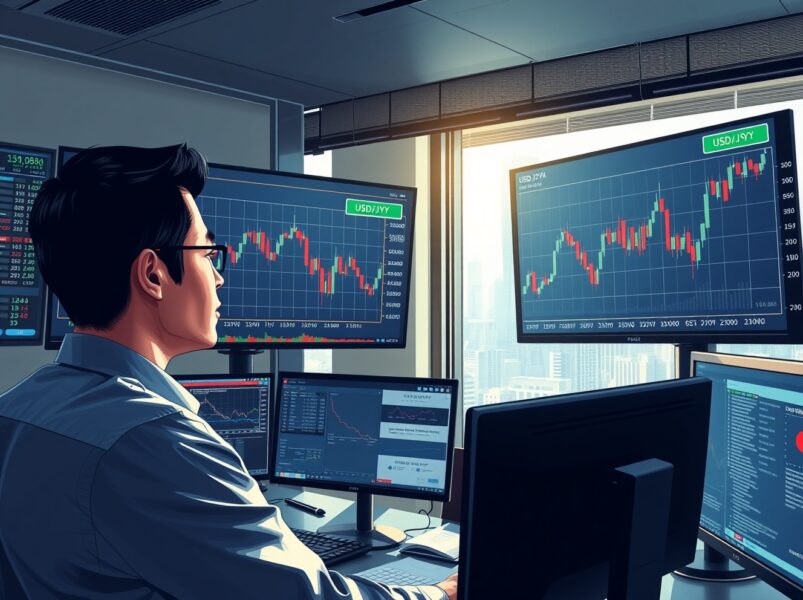
Japan’s yen rallied sharply against the dollar on Friday as traders braced for further official action from Tokyo after suspected currency intervention jolted global markets during a packed week of central bank decisions.
The dollar fell to around 155.60 yen at one point in London trading, before recovering part of the move to trade near 156.40. The rebound in the yen followed a dramatic reversal on Thursday, when the Japanese currency strengthened by about 3 per cent after the dollar briefly climbed above 160 yen, a level widely viewed in markets as politically sensitive for Tokyo.
Japan’s top currency official Atsushi Mimura said authorities remained concerned about speculative moves and were watching markets closely. Finance Minister Satsuki Katayama had already warned that Tokyo was ready to take decisive action if currency movements became disorderly. The comments reinforced market expectations that further intervention could follow, particularly during Japan’s Golden Week holiday period, when thinner trading conditions can magnify exchange-rate swings.
Bank of Japan money-market data suggested authorities may have spent about 5.48 trillion yen, or roughly $35 billion, to support the currency on Thursday. The scale would be close to the size of Japan’s July 2024 intervention, when authorities moved after the yen weakened to a 38-year low near 162 per dollar. Tokyo typically does not confirm intervention immediately, preferring to disclose monthly figures later, but unusually large projected fund flows at the central bank often provide an early signal of official activity.
The pressure on the yen has been building for months as the interest-rate gap between Japan and the United States remains wide. The Bank of Japan kept its policy rate at around 0.75 per cent this week, although three board members dissented and argued for a rise to 1 per cent. That split underlined growing concern inside the central bank that imported inflation, higher energy costs and yen weakness could feed into domestic prices.
The Federal Reserve also left rates unchanged, keeping its target range at 3.5 to 3.75 per cent. The gap between US and Japanese yields continues to encourage carry trades, in which investors borrow cheaply in yen and invest in higher-yielding dollar assets. Such positioning has made the yen vulnerable whenever markets believe Tokyo’s warnings lack force.
The intervention threat gained urgency after oil prices climbed on concerns over disruption linked to the Iran conflict and risks around the Strait of Hormuz. Japan, heavily dependent on imported energy, faces a double blow from higher crude prices and a weaker currency, which raises the local cost of fuel, food and raw materials. That dynamic complicates the Bank of Japan’s effort to normalise policy gradually without damaging a fragile recovery.
The broader central bank backdrop added to volatility. The European Central Bank kept its deposit rate at 2 per cent while signalling that inflation risks had intensified. The Bank of England held Bank Rate at 3.75 per cent in an 8-1 vote, with one policymaker favouring an increase. Across major economies, policymakers are balancing weaker growth signals against renewed price pressures from energy and supply disruptions.
Currency traders said Japan’s challenge is that intervention can slow a slide but rarely reverses a trend unless supported by monetary policy or a shift in global rates. A one-off operation may force investors to cut speculative positions, but renewed dollar strength can quickly restore pressure on the yen if US yields remain elevated and the Bank of Japan moves cautiously.
The timing of the suspected intervention was also significant. With European markets partly thinned by the May Day holiday and Japan heading into an extended holiday stretch, liquidity conditions were expected to remain fragile. Authorities have often chosen moments of thin trading to maximise the impact of currency operations, but such moves also increase the risk of sudden reversals when full market participation returns.
For households and companies in Japan, the exchange-rate battle has direct economic consequences. A weaker yen benefits exporters by raising the value of overseas earnings, but it also lifts import bills and squeezes consumers through higher costs. Large manufacturers have been able to absorb some of the pressure, while smaller businesses reliant on imported inputs face tighter margins.
By Dr. Gyan Pathak The theme of May Day 2026 focuses on “Ensuring a Healthy Psychosocial Working Environment” which reminds us how the working environment has deteriorated in recent times. In India, the recent workers unrests in April in Noida and the states in the National Capital Regions, show it. Protesting workers demanded chiefly two […]
America’s four largest AI spenders are pushing capital outlays towards a record level this year, betting that demand for computing power will justify one of the most expensive investment cycles in corporate history. Microsoft, Amazon, Alphabet and Meta are preparing to spend roughly $680 billion to more than $700 billion on data centres, chips, servers, networking equipment and related infrastructure in 2026, after quarterly earnings showed […]
Australia’s data centre industry is moving from rapid expansion to sharper scrutiny as new forecasting shows a widening gap between announced projects and capacity likely to be delivered by 2030. A joint market intelligence initiative by Data Centres Australia and DC Byte has put operational IT capacity at about 1.4 gigawatts at the end of 2025, with the market projected to reach 3.1GW to 3.2GW by 2030. […]
Arabian Post Staff -Dubai US President Donald Trump urged Iran to “get smart soon” and agree to a deal as Washington weighed a longer blockade of Iranian ports, raising the stakes in a confrontation that has already unsettled energy markets, shipping routes and diplomacy across the Gulf. Trump’s message on Truth Social followed several days of stalled contacts aimed at ending the conflict and securing restrictions on […]
Arabian Post Staff -Dubai Samsung Electronics has signalled plans to expand its wearable device ambitions into AI glasses, even as it warned that a deepening global memory shortage could intensify through 2027 and raise costs across consumer electronics, servers and mobile devices. The remarks came during the company’s first-quarter 2026 earnings call, where executives linked the squeeze in RAM and storage supply to the rapid build-out of […]
With Leisure Plus, Redefining Hong Kong’s Bathroom Experience Through AI Smart Toilets and Bathroom Cabinets for a New Era of Intelligent Living
HONG KONG SAR – Media OutReach Newswire – 30 April 2026 – As urban life in Hong Kong places growing emphasis on efficiency, health and space utilisation, a truly future-facing bathroom brand has officially arrived. Leisure Plus Building Products Company Limited, which has been rooted in Hong Kong for nearly three decades, has officially announced its appointment as the Hong Kong sole agent for global bathroom leader JOMOO. Together, the two companies are bringing world-renowned premium smart bathroom products to the Hong Kong market, using JOMOO’s leading AI-powered digital technology to deliver innovative bathroom solutions tailored to the city’s unique living environment. This partnership not only marks the arrival of a heavyweight international brand in Hong Kong’s bathroom market, but also signals a new AI-driven era for local homes and commercial spaces.
For Hong Kong people, the bathroom has never been a purely functional space. Within a limited footprint, it carries cleansing, grooming, care, storage, and the rhythm of how each day begins and ends. Space is compact, humidity is high, storage must be efficient, and expectations for the user experience keep rising. JOMOO’s arrival in Hong Kong answers the city’s pursuit of efficiency, comfort, health and aesthetics with world-leading AI bathroom technology. The brand is also introducing several smart toilets and innovative bathroom mirror cabinets for their Hong Kong debut, showing how bathroom AI can move from concept into daily life and become a real part of improving everyday living.
Leisure Plus Building Products said: “Bringing JOMOO to Hong Kong reflects Leisure Plus’s deep insight into the future of living. We see Hong Kong’s premium bathroom market moving beyond traditional hardware into a new stage that combines smart technology, health management, space integration and sensory experience. By partnering with JOMOO, Leisure Plus is bringing globally leading AI smart bathroom technology to Hong Kong, not only adding an international-calibre brand to the market, but also redefining daily life through technology, enabling the bathroom to evolve from a single-function space into a core living space that delivers comfort, efficiency and wellness value.”
JOMOO: Reshaping the Bathroom Experience with AI and Unrivalled Global Leadership
Founded in 1990, JOMOO has long ranked No.1 in China’s bathroom industry and among the world’s top three. With technology-driven bathroom living at its core, the brand combines R&D, intelligent manufacturing and innovative design, and is committed to redefining premium living through AI. As the pioneer behind the “AI BATH” scene-based brand, JOMOO breaks away from conventional product thinking with pioneering motorised flip-and-discharge cleansing technology that significantly improves performance while achieving library-level quietness. Combined with AI robotic self-cleaning and contact-free health sensing technologies, it deeply integrates artificial intelligence, biosensing and everyday bathroom use, delivering more proactive and thoughtful health support for users.
In this high-profile move into Hong Kong, JOMOO is guided by the strategy “Tech Bathroom, Global JOMOO”, bringing not only products but also a lifestyle upgrade powered by AI. Tailored to Hong Kong’s compact and humid living environment, the brand offers smart, space-saving and health-enhancing bathroom solutions, helping lift the overall standard of bathroom living in the city.
From Smart Toilets to Bathroom Cabinets: A Powerful New AI Bathroom Lineup Arrives in Hong Kong
G06 and G08 Smart Digital Toilets
In Hong Kong’s space-constrained homes, bathroom spaces often face multiple challenges, including limited room, humidity and restricted functionality. Tailored specifically for Hong Kong homes, JOMOO is introducing two flagship smart toilets and one smart bathroom cabinet that use AI-powered digital technology to resolve the tension between space and functionality in one stroke, bringing consumers a world-leading premium smart bathroom experience. The G06 Smart Digital Toilet is an entry choice that balances intelligence, comfort and practicality, while the G08 Smart Digital Toilet comes with an upgraded digital display and a more comprehensive smart feature set, taking comfort, convenience and technology to a new level.
To address the common problem of compact bathrooms in Hong Kong, both products are equipped with features such as “triple foot-sensing control”, “smart wireless control” and “auto-flush on departure”. Users do not need to twist sideways or make unnecessary movements, and can enjoy a freer, smoother toilet experience even in narrower bathroom spaces. With an IPX4 water-resistance rating, the products also handle Hong Kong’s humid environment with ease, delivering reassurance and durability in everyday use.
Product highlights: – Triple foot-sensing control with automatic lid opening for elegant use even in narrow spaces – AI smart temperature sensing and adjustment for lasting comfort – High-definition digital display showing water and seat temperature at a glance – Multiple cleansing modes with antibacterial nozzle and warm-air drying system – Soft-glow night light and backup flushing during power outages – IPX4 high-efficiency water resistance for humid environments
Pricing: – G06 Smart Digital Toilet: Original price HK$5,980; promotional price HK$4,980
– G08 Smart Digital Toilet: Original price HK$8,580; promotional price HK$5,980
Revolutionary Smart Bathroom Cabinet: VERA Jinci Series
Addressing the core issue of limited bathroom space in Hong Kong’s mainstream residential developments, JOMOO will soon launch the suspended VERA Jinci Series Smart Bathroom Cabinet. Powered by AI technology, it integrates three major functions – beauty-product preservation, dedicated wash care, and smart mirror features – so that every inch of space delivers greater value and daily routines become more precise, smoother and more relaxed, completely reinventing the bathroom experience.
Product highlights: – 998x532x1900mm suspended golden-ratio structure with zero hygiene blind spots – Built-in cosmetics fridge with AI-controlled constant temperature and humidity for skincare freshness – Built-in 0.8kg mini drum washer with six cleansing modes tailored for small items – Mirror with touch-control natural-light ambience and one-touch defogging – High colour-rendering mirror for true-to-tone makeup application – Moisture-resistant eco solid-wood body suited to Hong Kong’s maritime climate
The VERA Jinci Series Smart Bathroom Cabinet is scheduled to officially launch in Hong Kong in mid-2026. Consumers will be able to experience its intelligent features firsthand at JOMOO’s Hong Kong experience store. (Price to be announced)
The issuer is solely responsible for the content of this announcement.
About Leisure Plus Building Products Company Limited
Established in 1997, Leisure Plus specialises in building products and design solutions for developers, architects and designers. Its services cover the supply of bathroom and kitchen equipment, design consultancy, logistics, technical support and installation. Since entering Mainland China in 2003, the company has established subsidiaries in Shanghai and Hubei and participated in a number of landmark projects, including Vanke Zhongxing Road No.1, Shanghai Sheshan Shimao InterContinental Hotel and Wuhan Tianhe Airport Terminal 3. This sole-agency partnership with JOMOO reflects Leisure Plus’s forward-looking vision: embracing the smart home wave, understanding Hong Kong people’s living needs, and combining its extensive project experience with world-class smart bathroom technology to further enhance living quality and health experiences. (Website: https://leisureplushk.com/)
About JOMOO
Founded in 1990, JOMOO is an international fully integrated enterprise centred on smart digital bathroom solutions, firmly holding a leading global position as “No.1 in China, Top 3 in the World”. The brand has been jointly certified by Frost & Sullivan and Euromonitor as both the “World’s No.1 Smart Toilet Brand by Sales Volume” and the “No.1 Smart Toilet Brand in China”. It operates 16 R&D centres and 15 green lights-out factories worldwide, has accumulated more than 20,000 patents, and invests over 10% of annual sales revenue in R&D, continuously driving the intelligent transformation of the global bathroom industry. Its design strength has earned repeated international recognition, including the Red Dot: Best of the Best and the iF Design Award. JOMOO products are sold in more than 120 countries and regions and are installed in over 300 global landmark projects, including Emirates Palace Abu Dhabi, Burj Al Arab Dubai, The Peninsula Hong Kong and Beijing National Stadium (Bird’s Nest). JOMOO’s arrival in Hong Kong not only expands its global footprint, but also brings the market a new bathroom benchmark defined by technology, scenario-driven design and premium lifestyle quality. (Website: https://www.ejomoo.com.hk/)
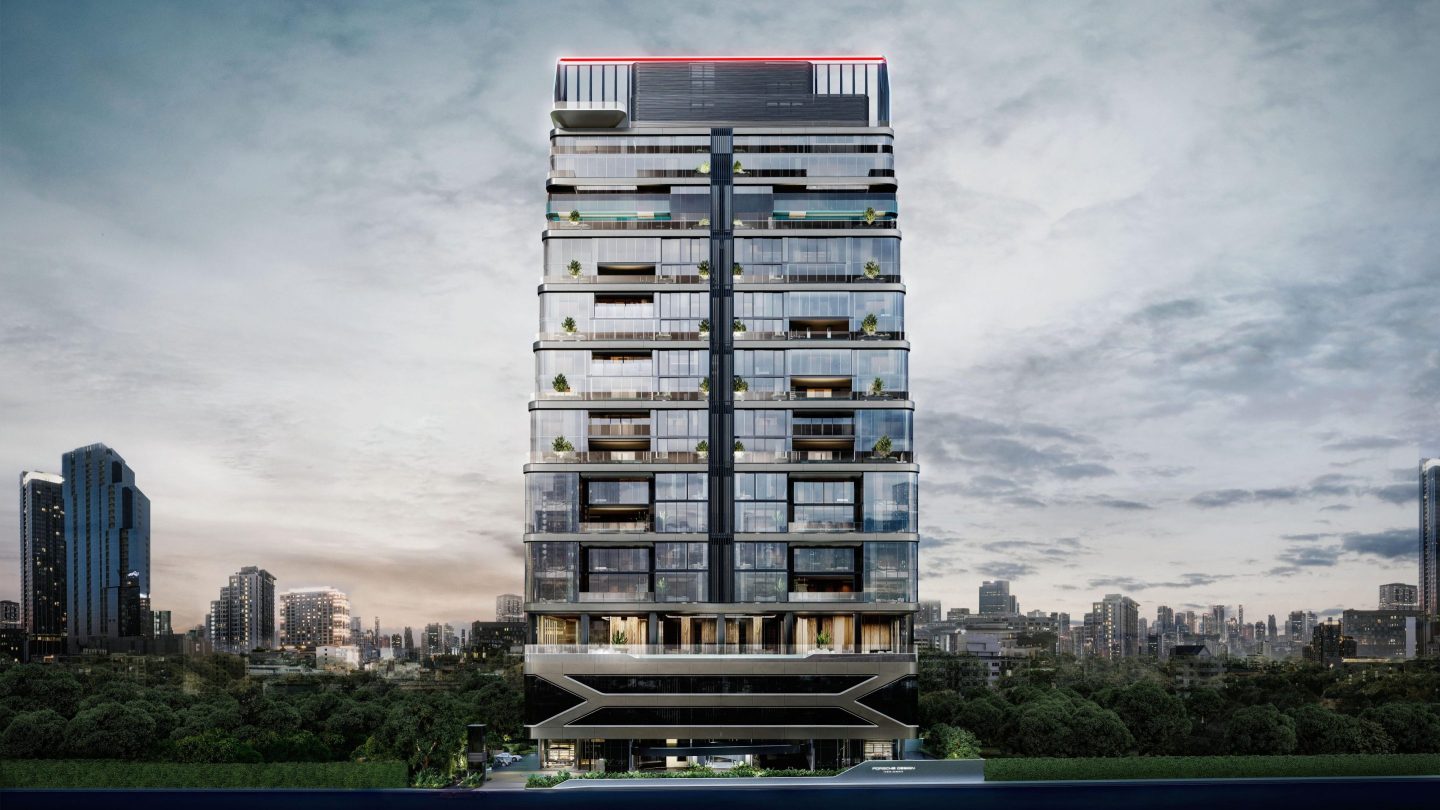
Porsche Design Tower Bangkok has intensified competition in Southeast Asia’s branded residence market after being presented to global yacht collectors at the Singapore Yachting Festival 2026 as a limited-edition property aimed at ultra-high-net-worth buyers seeking design pedigree, privacy and collectible real estate.
The 21-storey tower, rising 95 metres on Sukhumvit 38 in Bangkok’s Thonglor district, is being developed through a collaboration between Porsche Design and Ananda Development. It is the first Porsche Design Tower in Asia and the third worldwide after projects linked to Miami and Stuttgart, placing Bangkok within a small group of cities being used by luxury lifestyle brands to extend their reach beyond products and into residential property.
The project will comprise only 22 duplex and quadplex Sky Villas, with residences ranging from about 525 to 1,135 square metres. Prices have been positioned from about $15 million to $40 million, making the development one of the most expensive residential offerings in Thailand’s capital. Construction is scheduled to begin before completion targeted for the end of 2028, while the show suite in Bangkok is available by private appointment.
The presentation in Singapore marked a sharper effort to reach buyers whose interests overlap with luxury mobility, yachting, design and private collections. Rather than selling the tower as a conventional condominium, the marketing places it in the category of a scarce lifestyle asset. That approach reflects a wider shift in luxury property, where affluent buyers are increasingly drawn to homes that combine brand identity, service standards, security and membership-like exclusivity.
A defining feature of the Bangkok tower is the “Passion Space” concept, a private garage and display area attached to each residence. These spaces are designed for car collections, private gatherings or personal pursuits, and are accessed through a central spiral car ramp known as “The Loop”. The arrangement gives the building its most distinctive automotive link, turning the owner’s vehicle collection into part of the residential experience rather than a separate amenity.
The tower’s design also draws on Porsche cues. Its automated terrace system is inspired by the movement of the Porsche 911 Targa roof, while the exposed “X-Frame” structure takes references from the Mission R concept car. A lit crown at the top of the building is intended to create a night-time signature on Bangkok’s skyline. The interior proposition includes private lifts, large entertainment areas, wellness zones, pools and high-end kitchen and bathroom fittings.
Chanond Ruangkritya, president and chief executive of Ananda Development, has positioned the tower as a project that embeds Porsche’s design language into the structure rather than merely attaching a name to a luxury address. The developer is betting that a small pool of regional and international buyers will pay a premium for scarcity, brand association and the ability to personalise large-scale residences in a prime district.
Bangkok provides a strong setting for that strategy. Thonglor remains one of the capital’s most established luxury neighbourhoods, with restaurants, retail, wellness services and transport links that appeal to wealthy local residents, expatriates and regional buyers. The city has also become an important hub for branded residences, helped by tourism, medical services, international schools and its role as a base for high-net-worth families across Asia.
The project arrives as Thailand’s luxury property market shows a split trend. Mass-market condominium developers have faced weaker purchasing power, tighter lending and slower absorption, while the highest end of the market has remained more resilient because buyers are less dependent on mortgages. Limited freehold land in central Bangkok, rising construction costs and demand for larger, service-rich homes have supported pricing in prime locations.
The ultra-luxury segment, however, is not without risk. A 22-unit tower reduces supply pressure but also narrows the buyer base sharply. Sales depend on a small number of wealthy purchasers who must accept not only high upfront prices but also long-term maintenance costs associated with specialised amenities, private garages and brand-level service expectations. Foreign ownership limits for condominiums in Thailand also restrict the share available to non-Thai buyers.
US President Donald Trump has urged Iran to “get smart soon” and sign a deal, sharpening pressure on Tehran as efforts to end the conflict remain stalled and Washington weighs keeping a naval blockade of Iranian ports in place for months. Trump used a Truth Social post on Wednesday to accuse Iran of failing to reach what he called a “non-nuclear deal”, saying Tehran “couldn’t get its […]
Arabian Post Staff -Dubai Dubai has lowered a key entry barrier for property-linked residency, allowing sole owners of completed real estate to apply for a two-year visa without meeting the previous Dh750,000 minimum property value threshold. The revised criteria, published through the Dubai Land Department’s Cube platform, shift the visa framework away from a single asset-value test and towards ownership structure. Sole owners can now seek the […]
By K Raveendran Abu Dhabi’s decision to walk away from OPEC marks more than a dispute over barrels. It signals a recalibration of Gulf power, energy strategy and security alignments at a moment when the Iran war has exposed the limits of regional consensus. For decades, the UAE operated inside a cartel system dominated by […]
Blockchain investigator ZachXBT has sharpened scrutiny of Sam Altman-linked World, accusing the biometric identity and crypto project of using a low-float token structure and incentives that placed poorer users at the centre of a controversial data-gathering model. The criticism, posted on X and amplified across crypto markets, focused on Worldcoin’s WLD token distribution, its iris-scanning sign-up system and the risk that verified accounts could be traded through […]
XRP has failed to convert its strongest exchange-traded fund inflows of 2026 into a meaningful price rally, leaving traders questioning whether institutional demand is strong enough to absorb persistent selling pressure across the token’s spot market. The token has slipped from about $1.51 to the $1.37-$1.40 range over the past two weeks, even as US-listed spot XRP ETFs drew about $81.6 million in net inflows in April […]
Hong Kong recorded its widest visible trade deficit since comparable records began in 1952, as imports outpaced a powerful export rebound driven by demand for artificial intelligence-related electronics and high-value technology goods.
The city’s merchandise trade gap widened to HK$89.1 billion in March 2026, equal to 12.6 per cent of the value of imports. Total exports rose 35.8 per cent year on year to HK$618.4 billion, while imports jumped 41.2 per cent to HK$707.5 billion, underscoring the unusual scale of the surge in cross-border goods flows through one of Asia’s main trading hubs.
The figures point to a mixed signal for Hong Kong’s externally oriented economy. Export growth was the strongest since early 2021, reflecting robust global demand for electronic components, telecommunications equipment, semiconductors and related supply-chain goods. Yet the sharper rise in imports left the city with a deficit larger than any monthly gap recorded over more than seven decades, highlighting the pressure created by front-loaded purchases, supply-chain repositioning and higher input costs.
For the first quarter of 2026, total exports climbed 32 per cent from a year earlier, while imports increased 37 per cent. The visible trade deficit for the quarter reached HK$168.4 billion, equivalent to 9.8 per cent of imports. On a seasonally adjusted basis, exports rose 18.4 per cent from the previous quarter, while imports advanced 20 per cent.
The most striking gains came from technology-linked categories. Exports of electrical machinery, apparatus, appliances and related parts rose by HK$99.8 billion, or 47.9 per cent, in March from a year earlier. Telecommunications and sound recording equipment exports increased by HK$40.2 billion, or 94.7 per cent, while non-ferrous metals shipments rose by HK$10.2 billion, or 175.9 per cent.
Imports showed a similar pattern, but with larger absolute increases in several categories. Purchases of electrical machinery and related parts grew by HK$106.2 billion, or 49.5 per cent. Telecommunications and sound recording equipment imports rose by HK$45.3 billion, or 93 per cent. Non-ferrous metals imports surged by HK$30.4 billion, a rise of more than 400 per cent, suggesting strong demand for materials used in electronics, data-centre infrastructure and advanced manufacturing supply chains.
The widening deficit also reflects Hong Kong’s role as a re-export centre rather than a conventional manufacturing economy. Goods imported into the city often move onwards to mainland China, Southeast Asia, the United States and Europe after financing, logistics, testing, repackaging or redistribution. During periods of strong global technology demand, import values can rise faster than exports if companies build inventories, reroute shipments or accelerate procurement to avoid transport delays.
Geopolitical tensions have added another layer of volatility. The war in the Middle East has pushed up energy prices, raised shipping risks and complicated trade routes linking Asia with Europe and the Gulf. Higher freight and insurance costs can lift the recorded value of imports, while uncertainty over maritime routes may encourage companies to bring forward shipments or diversify logistics channels. Hong Kong, with its deep financial links and dense regional supply-chain networks, is exposed to those shifts even when final demand originates elsewhere.
The export destination data showed broad-based strength across Asia and beyond. Shipments to Singapore more than doubled, while exports to Malaysia, Thailand, Taiwan and mainland China recorded strong gains. Exports to the United States also rose sharply, reflecting resilient demand for electronics and technology-linked goods despite continuing trade friction and tariff risks. Shipments to the United Kingdom declined, indicating uneven demand across advanced markets.
On the import side, increases were recorded from most major suppliers. Purchases from the United Kingdom, Korea, India, Vietnam, the United States and mainland China all rose substantially, underlining the geographically diverse nature of the procurement surge. Mainland China remained central to the city’s trade flows, both as a supplier and destination, while Southeast Asian economies continued to gain prominence in electronics and component supply chains.
The data suggest that Hong Kong is benefiting from the global investment race in artificial intelligence, cloud computing and advanced electronics, but the gains come with greater exposure to external shocks. Demand for AI servers, chips, networking equipment and related components has lifted trade volumes across Asia, while higher energy prices and shipping uncertainty are adding costs and complicating timing decisions for importers.
Arabian Post Staff -Dubai Abu Dhabi’s Modon has sold out Tara Park on Reem Island, generating about AED 2 billion in sales and underscoring the depth of buyer appetite for well-located residential projects in the capital. The sell-out followed strong demand for the development, which is positioned as a freehold residential community connected to Reem Mall and close to Abu Dhabi Global Market, Al Maryah Island, Downtown […]
Abu Dhabi’s decision to leave OPEC and the wider OPEC+ alliance from May 2026 is set to redraw the balance of influence inside the oil producers’ bloc, with the first market impact likely to be muted while Gulf export routes remain constrained by the war around Iran. The move removes one of OPEC’s biggest producers from a system built on coordinated supply limits, voluntary cuts and quota […]
Arabian Post Staff -Dubai Abu Dhabi’s decision to leave OPEC and the wider OPEC+ framework from May 1, 2026 has introduced a new fault line in global oil diplomacy, raising questions over the future discipline of a producer alliance that has shaped crude supply policy for decades. The move ends nearly six decades of UAE participation in OPEC and removes one of the group’s most important Gulf […]
France has set deadlines to end the use of coal, oil and fossil gas for energy, placing itself among the first major economies to publish a full fossil-fuel exit timetable as governments debate how to turn climate pledges into enforceable national plans. The roadmap, presented at the international talks in Santa Marta, Colombia, commits France to phasing out coal by 2030, oil by 2045 and fossil gas […]
US Energy Secretary Chris Wright has said ships could resume passage through the Strait of Hormuz without every mine being removed, raising hopes of a faster reopening of one of the world’s most important energy corridors while leaving unresolved questions over risk, insurance and maritime security. Wright said a workable channel could be created for vessels moving in and out of the Gulf, rather than waiting for […]
Arabian Post Staff -Dubai Emerging-market assets came under pressure as investors moved towards the dollar, cutting exposure to riskier currencies and equities before the Federal Reserve’s policy decision and amid rising doubts over artificial intelligence spending and stalled Middle East peace efforts. MSCI’s emerging-market currency gauge fell 0.3 per cent, with most major developing-economy currencies weakening against the greenback. The Philippine peso, the rupee and the Thai […]
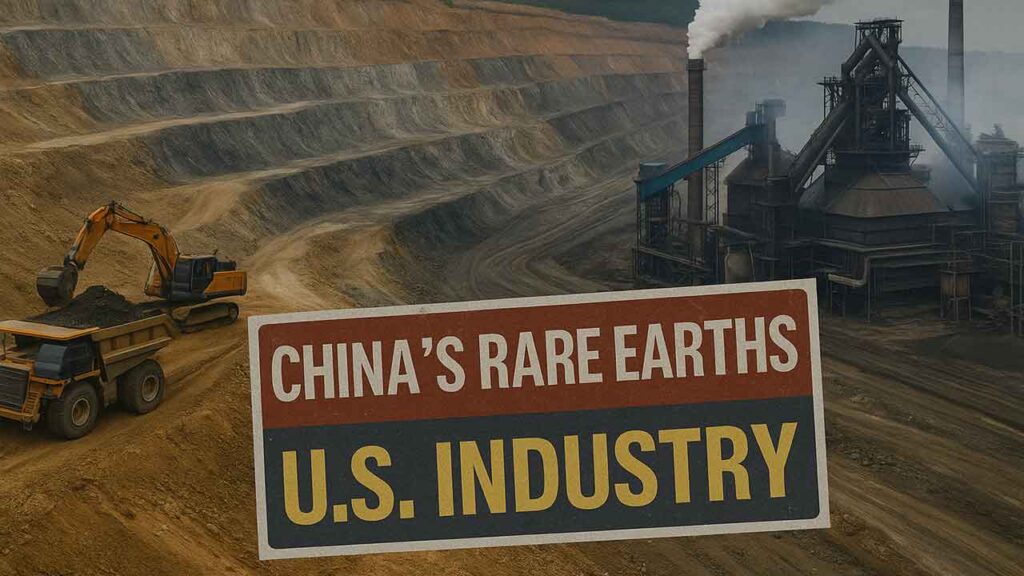
Beijing’s move to sharpen penalties for unauthorised rare earth production sent shares of major producers higher, as investors assessed a tougher enforcement regime that could curb illegal supply and reinforce China’s control over a sector central to clean energy, defence and advanced manufacturing.
China’s Ministry of Industry and Information Technology has opened public consultation on detailed penalty benchmarks under the Rare Earth Management Regulations, setting out how authorities should punish breaches involving mining, smelting, separation, product circulation and data reporting. The draft rules target companies and individuals that exceed state production quotas, operate without approval, process illicit raw materials, falsify traceability data or obstruct inspections.
The consultation runs until 28 May, adding another layer to a regulatory structure that took effect on 1 October 2024. The framework places rare earth mining, smelting and separation under a “total control” system, giving Beijing formal authority to set production limits and police flows across the supply chain. The new penalty table is designed to narrow discretion in enforcement by grading violations according to value, volume, frequency and consequences.
Rare earth-linked equities climbed in Shanghai and Shenzhen after the announcement. China Northern Rare Earth, China Rare Earth Resources and Technology, Huahong Technology and other names tied to mining, processing and permanent magnets moved sharply higher during Wednesday trading. The rare earth permanent magnet segment also advanced, helped by firmer prices for praseodymium-neodymium products and stronger first-quarter earnings from leading producers.
Investors read the draft as a supply-side signal. Stricter penalties could reduce unapproved output that has historically weighed on pricing during periods of weak demand. For larger quota-holding groups, tighter enforcement may support margins by giving compliant producers a stronger position in pricing and procurement. China Northern Rare Earth reported a first-quarter net profit of about 918 million yuan, more than double the level a year earlier, helped by higher average prices for core rare earth products. China Rare Earth Resources and Technology also posted a sharp rise in quarterly profit as prices for selected products improved.
The proposed penalties are substantial. Unauthorised smelting and separation, misuse of rare earth mineral products by recycling or comprehensive utilisation companies, and trading in illegal rare earth products can lead to confiscation of products, unlawful income and related equipment. Fines may reach five to 10 times unlawful gains, while cases with no gain or gains below defined thresholds can still attract penalties running into millions of yuan. Serious breaches can result in business licence revocation.
Traceability is a central element of the enforcement push. Companies that fail to record, upload or maintain data on product flows face fines and possible suspension if they refuse to rectify violations. The system is intended to make it harder for illegal ore, semi-processed products or recycled materials to enter formal supply chains undetected. It also strengthens the state’s ability to align domestic output with industrial policy, export controls and strategic stockpiling objectives.
Rare earths comprise 17 elements used in permanent magnets, electric vehicles, wind turbines, smartphones, robotics, missile guidance systems, radar, drones and precision equipment. China accounts for roughly 70 per cent of global rare earth mining and an even larger share of processing, refining and magnet manufacturing. That position gives Beijing significant influence over a supply chain that remains difficult and costly for other economies to replicate.
The policy shift comes against a backdrop of heightened competition over critical minerals. Export controls introduced in 2025 placed rare earth materials and related technologies at the centre of trade negotiations and industrial security planning. Licensing delays and tighter availability of high-performance magnets have already affected downstream manufacturers, particularly in automotive, electronics and defence-linked industries.
Western governments and companies are trying to build alternative supply chains, but progress remains uneven. Mining projects in the United States, Brazil, Australia, Greenland and parts of Africa have attracted capital, while magnet-making and separation capacity outside China remains limited. Processing is the central bottleneck, requiring specialised technology, environmental safeguards and long approval timelines. New ventures can take years to move from exploration to commercial output, leaving buyers exposed to Chinese policy decisions.
Environmental enforcement is also part of the equation. Illegal mining and poorly controlled processing have caused soil, water and radioactive waste concerns in several producing regions. Tougher penalties can be framed not only as an industrial strategy but also as an attempt to reduce pollution, consolidate smaller operators and push production towards state-backed or better-capitalised firms.
Annual Linkflow Capital research finds SME credit conditions thawed modestly in 2025, with SME borrowing rate declining to an average of 8.18% from a high of 8.47% the preceding year. Bank disbursement times stretched to 33 days on average, against just 7 days for non-bank funders, reshaping where SMEs source credit.
SINGAPORE – Media Outreach Newswire – 29 April 2026 – Singapore’s SMEs experienced their first easing in borrowing costs in three years, with average unsecured lending rates falling to 8.18% per annum in 2025 from a multi-year high of 8.47% in 2024, according to Linkflow Capital’s latest SME Financing Accessibility Survey. Larger loan approvals above $500,000, which had disappeared entirely in 2024, also returned to form 5% of approvals in 2025.
The recovery, however, was uneven. Bank loan processing times stretched to 33 days on average, up from 22 days in 2024, while non-bank funders disbursed approved cases in just 7 days. The widening gap reshaped lender competition through the year.
Key findings from the 2025 survey:
Borrowing costs eased modestly: Average SME loan interest rate fell 29 basis points to 8.18% per annum but remain stubbornly high against the backdrop of a significant decline in benchmark 3-month SORA rate throughout 2025.
Larger loans returned: Approvals above $500K returned to 5% of approved loan dollar volume in 2025 after disappearing entirely in 2024. Loans in the $300K–$500K bracket also expanded from 3% to 7%.
Loan approval rate recovered to 74%, up from 70% in 2024 (a 5-year low).
Foreign banks extended their market share of loan origination within our platform: Foreign lenders grew their share of approved loan dollar volume to 38% in 2025, up from 26% in 2024 and 19% in 2023, while local banks fell to 46% (from 59%). Digital banks recovered modestly to 11% (from 8%).
Credit-related rejections nearly tripled: Among unsuccessful applicants, those rejected due to adverse personal credit records jumped from 3% in 2024 to 11% in 2025, signalling rising personal credit stress among SME owners.
“2025 was the year SME credit conditions began to thaw after the 2024 squeeze, but the recovery was uneven,” said Benjamin Teo, spokesperson for Linkflow Capital. “Banks gradually reopened to larger loans, yet took meaningfully longer to process applications. Some SMEs facing immediate cash flow pressure turned to non-bank funders for speed, even at higher costs.”
A new and more severe headwind for 2026
Linkflow Capital flagged the Middle East conflict which began in February 2026 as the most consequential macroeconomic event facing Singapore SMEs in the year ahead. The conflict has elevated freight, energy and shipping costs through Iran’s intermittent disruption of the Strait of Hormuz.
“Singapore SMEs entered 2026 facing a potential macro shock with the Middle East conflict,” Teo said. “The inflationary price pressures feed directly into SME operating costs through fuel, freight, and energy. We expect credit conditions to re-tighten, and the modest 2025 thaw could partially reverse if the conflict escalates.”
The issuer is solely responsible for the content of this announcement.
Linkflow Capital
Founded in 2012, Linkflow Capital is a leading SME loan consultancy in Singapore. Through its loan comparison portal and advisory services, Linkflow Capital assists SMEs in navigating the financing landscape and securing funding solutions from an extensive network of banks and financial institutions.
Arabian Post Staff -Dubai Abu Dhabi has moved to leave OPEC and OPEC+, ending nearly six decades inside the producers’ group and sending a sharp signal through an oil market already strained by geopolitical risk, supply disruption and shifting energy strategies. The decision, announced on Tuesday and set to take effect on May 1, marks one of the most consequential breaks inside the oil-exporting bloc since Qatar’s […]





 https://leisureplushk.com/



 https://sg.linkedin.com/company/linkflow-capital-pte-ltd
 https://www.facebook.com/LinkflowSG/
 https://www.instagram.com/linkflow_capital/





