The head of the International Monetary Fund on Monday defined the direction of glbal economic travel with unusual clarity. “All roads now lead to higher prices and slower growth,” said managing director Kristalina Georgieva in an interview. The IMF had expected global growth of 3.3% in 2026. Six weeks of war centred on Iran and the disruption of the Strait of Hormuz have already forced a rethink. […]
Complementing an orchard-themed dreamy tea set by two master pâtissiers, a series of fascinating delicacies is presented by Galaxy Macau in April
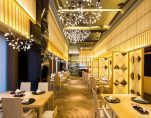
MACAU SAR – Media OutReach Newswire – 7 April 2026 -In celebration of its ascent to One Diamond status in China’s prestigious Black Pearl Restaurant Guide, Galaxy Macau’s Japanese fine‑dining destination Yamazato proudly unveils the Black Pearl Tasting Kaiseki — a refined and contemplative culinary expression that honours seasonality, precision and the quiet elegance intrinsic to Japanese haute cuisine. Framed by sweeping panoramic views across Galaxy Macau landscape, the experience captures the fleeting beauty of nature through an artful and disciplined gastronomic lens.
Yamazato celebrates its Black Pearl One Diamond distinction with a contemplative kaiseki by Executive Chef Hideaki Hayashi, where seasonal purity, meticulous craftsmanship, and serene vistas converge to distil the quiet poetry of Japanese haute cuisine.
At the helm, Executive Chef Hideaki Hayashi and his culinary team invite guests on a pristine gastronomic journey shaped by meticulous craftsmanship and profound reverence for ingredients. Each kaiseki course is composed with thoughtful intentions, drawing upon the season’s finest offerings, be it produce from the sky, the sea and the land. Every detail — subtle aroma, layered texture, nuanced flavours, and elegant presentation — is harmoniously orchestrated to awaken the senses and express the restrained poetry at the heart of Japanese culinary artistry.
The Black Pearl Tasting Kaiseki is priced at MOP 1,980+ per guest and is available Tuesday to Sunday, from 5:30 pm to 10:00 pm.
Floral Tea Set in the Orchard Setting of CHA BEI
This spring and summer, Galaxy Macau unveils an enchanting new afternoon tea experience at CHA BEI, co‑created by Executive Pastry Chef Yam Lok Hin and internationally revered Meilleur Ouvrier de France Pâtissier 2023 Pierre‑Henri Roullard. Inspired by a radiant garden in full bloom, the Orchard in Bloom afternoon tea invites guests on a refined journey through delicately balanced savoury and sweet creations, infused with flowers, fruits and tea leaves. Within the serene surroundings of CHA BEI, the brilliance of the spring and summer season is reimagined as a tranquil, storybook orchard, where flavour and artistry flourish in harmony.
Galaxy Macau’s Orchard in Bloom at CHA BEI is a poetic afternoon tea by Lok Hin Yam and Pierre‑Henri Roullard, where florals, fruits and tea leaves coalesce in refined seasonal harmony.
The experience opens with Lavender Breeze, a graceful floral welcome that sets the tone for a series of garden‑inspired delights, where seasonal ingredients are transformed into elegant edible jewels. Bright citrus notes, sun‑ripened fruits and fragrant botanicals come together across exquisite pastries and artfully crafted savouries, each reflecting meticulous craftsmanship and creative imagination. Available throughout spring and summer, this inspired collaboration blossoms as a celebration of colour, texture and taste — where two distinct pastry visions unite in a symphony of refined indulgence.
Priced at MOP598+ for two, “Orchard in Bloom” afternoon tea will be available between 2:30pm and 5:30pm every day, from now until August 31.
Alongside these sumptuous delicacies, Galaxy Macau has prepared a series of fascinating dining promotions this April and beyond:
• April 9
Blossom Palaces –
“Huaiyang Spring Feast: A Symphony of Two Masters” Four-hands Gala
The refined artistry of Huaiyang cuisine takes centre stage as Blossom Palaces Founder Bobby Lo and Macau Chef de Cuisine Ricky Wu unite for an elegant spring dinner. From tea‑infused starters to signature wood‑fired Peking duck, the evening is elevated by a live tea‑frying performance celebrating tradition, aroma and seasonal finesse.
Time: 6pm – 9pm
Price: MOP1,088/person
Huaiyang cuisine takes the spotlight as Blossom Palaces Founder Bobby Lo joins Macau Chef de Cuisine Ricky Wu for a refined spring dinner, featuring tea‑infused starters, signature wood‑fired Peking duck and a live tea‑frying performance celebrating tradition and seasonal grace.
• April 10 & 11
Saffron –
“A Royal Symphony of Thai Cuisine”
Saffron marks Songkran Festival with an elegant celebration of Thai New Year, featuring a rare collaboration between Executive Chef Jan Ruangnukulkit and Chef Chumpol Jangpra, the brain behind Bangkok’s two-Michelin-starred R‑HAAN. The immersive experience blends ceremonial rituals, cultural performances and a masterfully curated tasting menu honouring tradition, artistry and renewal.
Price: MOP1,688/person (additional MOP300 for wine pairing)
Saffron marks Songkran Festival with an elegant celebration that seamlessly blends ceremonial rituals, cultural performances and a masterfully curated tasting menu – honouring Thai tradition, culinary artistry and the spirit of renewal.
• April 18 & 19
8½ Otto e Mezzo BOMBANA –
The Grand Bombana Feast
In celebration of Italian cuisine’s recognition as UNESCO Intangible Cultural Heritage, Chef Umberto Bombana unites his protégés from Michelin‑starred kitchens across Asia for an unprecedented gastronomic gathering. Each chef presents a personal interpretation shaped by heritage and mentorship, creating an elegant dialogue between timeless Italian tradition and contemporary global expression—an exceptional feast and a living culinary legacy.
Date: April 18, 2026 (dinner)│ April 19, 2026 (lunch and dinner)
Price: Lunch Tasting Menu MOP1,680/person (additional MOP980 for wine pairing)
Dinner Tasting Menu MOP3,280/person (wine-pairing for an additional MOP1,880)
In celebration of Italian cuisine’s recognition as UNESCO Intangible Cultural Heritage, Chef Umberto Bombana unites his protégés from Michelin‑starred kitchens across Asia for an unprecedented gastronomic gathering at 8½ Otto e Mezzo BOMBANA at Galaxy Macau.
• April 25 & 26
Andaz Kitchen –
Chinese-Portuguese Master Chefs Four-Hands Dinner Series · Chapter 2
Andaz Macau’s Executive Chef André Lai joins hands with Chef Larry Liu of Shenzhen’s Black Pearl One-Diamond restaurant, CHINA LODGE, for a refined culinary exchange celebrating the dialogue between Chinese tradition and Portuguese heritage. Guided by the Cantonese principles of seasonality and purity of flavours, Chef Liu brings his thoughtful craftsmanship and contemporary interpretation of Cantonese cuisine – deeply rooted in respect for ingredients and culinary legacy – resulting in an inspired collaboration that bridges cultures through taste.
Price: MOP1,088/person (wine pairing included)
• Daily
Kyo Watami –
Triple Don Indulgence
Kyo Watami’s seafood don trio invites diners to savour three bowls of Japanese favourites, each layered with seasonal seafood over steamed rice. From luxurious sea urchin and tuna, to salmon roe with sashimi, and sweet soy‑glazed grilled eel with omelette, the set is completed with a light salad and comforting soup.
Price: MOP128/set
Date: Daily during lunch hours
A Month of Global Mixology Encounters at Galaxy Macau
International symphonies of mixology continue at Galaxy Macau’s three acclaimed venues – Pony & Plume, Long Bar and Ritz-Carlton Bar & Lounge.
On April 9, Capella at Galaxy Macau’s Pony & Plume will welcome star mixologist KT Lam for the second chapter of “The Finest Pour” series. Leader of the bars at Rosewood Bangkok and having led DarkSide at Rosewood Hong Kong to No. 9 on Asia’s 50 Best Bars in 2023, KT will present four cocktails at Macau’s newest must-visit bar—each a distillation of his decade-long journey in mixology, inspired by the cities that have shaped him, capturing their energy, harmony, and contrasts.
On April 9, Capella at Galaxy Macau’s Pony & Plume will welcome star mixologist KT Lam who will shine with the distillation of his decade-long journey in mixology.
On April 11, the Ritz-Carlton Bar and Lounge at The Ritz-Carlton, Macau anticipates guests to savour an evening of “The Alchemist Flair: A Global Mixology Experience with Chase White”, as founder of Bar Blanc in Shanghai, and botanical spirits label OFBT, mixologist Chase White instils his passion and adventurous spirit into his creations, which champion a philosophy of “restrained creativity” and celebrate balance, quality, and simplicity—without sacrificing intrigue.
Long Bar at Raffles at Galaxy Macau welcomes Jo Lo and Birstacla Wong, co‑owners of Hong Kong’s acclaimed cocktail bar Bar Mind, for the April edition of Adventures in the Cavern. The award‑winning mixology duo—both past recipients of Diageo World Class Hong Kong & Macau Bartender of the Year—will present an evening of innovative cocktails that blend heritage flavours with contemporary techniques. The guest shift takes place on April 25, offering guests an inspired journey into modern mixology.
The issuer is solely responsible for the content of this announcement.
ABOUT GALAXY MACAU INTEGRATED RESORT
Galaxy Macau, The World-class Luxury Integrated Resort delivers the “Most Spectacular Entertainment and Leisure Destination in the World”. Developed at an investment of HK$43 billion, the property covers 1.1 million-square-meter of unique entertainment and leisure attractions that are unlike anything else in Macau. Nine award-winning world-class luxury hotels provide close to 5,000 rooms, suites and villas. They include Banyan Tree Macau, Galaxy Hotel, Hotel Okura Macau, JW Marriott Hotel Macau, The Ritz-Carlton, Macau, Broadway Hotel, Raffles at Galaxy Macau, Andaz Macau, and Capella at Galaxy Macau. Unique to Galaxy Macau, the 75,000-square-meter Grand Resort Deck features the world’s longest Skytop Adventure Rapids at 575-meters, the largest Skytop Wave Pool with waves up to 1.5-meters high and 150-meters pristine white sand beach. Two five-star spas from Banyan Tree Spa Macau and The Ritz- Carlton Spa, Macau help guests relax and rejuvenate.
As the dining destination in Asia, Galaxy Macau offers a wide variety of gastronomic delights, exquisite experiences and ingredients of the finest quality with over 120 dining options from Michelin dining to authentic delicacies.
Embark on a delightful and rewarding journey at Galaxy Promenade, the one-stop shopping destination boasting some of the world’s most iconic luxury brands. Be the first to get the latest limited-edition items; explore fascinating pop-ups by coveted labels and revel in fabulous shopping rewards and privileges. Our VIPs are entitled to a highly-curated experience with dedicated personal shoppers at guests’ service, and be invited to exclusive luxury brand events. A different caliber of privileges and rewards also await. Discover the joys of fashion and stand at the forefront of style and sophistication—Galaxy Promenade has everything guests need to stay ahead of the style game.
Galaxy Cinemas takes immersive movie experiences to the next level with the latest audio-visual technology, ultra-luxurious facilities and bespoke services; CHINA ROUGE, one-of-a-kind cabaret lounge that evokes the glamor of Shanghai’s golden era with stylish entertainment and customizable surrounds; and Foot Hub, which presents the traditional art of reflexology for authentic relaxation and revitalization. For Authentic Macau Flavours and Vibrant Asian Experiences, Broadway Macau – just a 90-second walk via a bridge from Galaxy Macau, has over 35 Authentic Macau & Asian Flavours at Broadway Food Street. The 2,500-seat Broadway Theatre plays host to world-class entertainers and a diverse array of cultural events.
Meeting, incentive and banquet groups are also catered to with a portfolio of unique venues in Galaxy Macau and an expert service team. Galaxy International Convention Center (GICC) is the latest addition to the Group’s ever-expanding integrated resort precinct and will usher in a new era for the MICE industry in Macau. GICC is a world-class event venue featuring 40,000-square-meters of total flexible MICE, and the 16,000-seat Galaxy Arena – the largest indoor arena in Macau.
Strategy has bought another 4,871 Bitcoin for $329.9 million, extending the company’s long-running cryptocurrency accumulation plan and taking its total holdings to 766,970 BTC as of April 5, according to a regulatory filing released on April 6. The company said the latest purchases were made at an average price of $67,718 per Bitcoin, lifting its aggregate spend on the token to about $58.02 billion since it […]
China’s electric-arc furnace steelmakers are lifting output at the fastest pace in more than two years, helped by improving margins and a seasonal pickup in construction demand, giving the lower-carbon segment a rare competitive opening in a market still burdened by oversupply and weak property-linked consumption. Industry data showed average capacity utilisation among 94 independent EAF mills rose to 61.2% in the week of March 27 to April 2, the highest level since January 2024 and the fifth straight weekly increase.
The rebound matters because EAF steel has long struggled to gain ground in China despite official support for cleaner production. The route relies mainly on scrap rather than iron ore and coking coal, making it structurally less carbon intensive than the blast furnace-basic oxygen furnace model that still dominates the country’s steel industry. World Steel Association figures show the global production mix is far more tilted towards EAF than China’s, with electric-arc furnaces accounting for 28.6% of world crude steel output, while average carbon intensity for scrap-based EAF steelmaking is markedly below that of the conventional blast furnace route.
For Chinese mills, the immediate story is not only about decarbonisation but about economics. Higher finished-steel prices and steadier demand for construction steel have made it easier for some EAF operators to restart or raise run-rates after a prolonged spell in which many were squeezed by electricity bills, uneven scrap supply and patchy orders. Reuters reported in late February that warmer weather and the resumption of building activity typically support steel demand in March, while temporary production curbs in northern blast-furnace regions also helped firm futures prices. That backdrop has narrowed the gap between scrap-fed mills and traditional producers, even if the advantage remains fragile.
Yet the broader steel market in China remains difficult. Official and consultancy data cited by Reuters show crude steel output in 2025 fell to 960.1 million tonnes, down 4.4% from 2024 and below one billion tonnes for the first time since 2019. That decline reflected a managed effort by Beijing to address overcapacity, but it also underscored softer domestic demand and the long shadow cast by the property downturn. State-backed forecasts cited by Reuters indicate steel demand is expected to slip again in 2026 after contracting sharply in 2025, suggesting that EAF mills are recovering within a shrinking overall market rather than riding a broad-based industrial boom.
That tension helps explain why Beijing continues to press for structural change. The National Development and Reform Commission said in March that China would curb excess capacity in steel and other heavy industries in an orderly way, renewing a campaign that has featured repeatedly in official policy language. The cleaner EAF route fits that policy direction because it uses recycled feedstock and can reduce reliance on imported iron ore, but steelmakers still take their cues from margins first. When profits weaken, producers often retreat to whichever process best matches raw material costs, local power tariffs and available supply chains.
The environmental case for EAF expansion remains strong. Reuters reported last year that China had aimed to raise EAF steel’s share of crude steel production to 15% by 2025 and 20% by the end of the decade, but the actual share had been stuck around 10%. A 2025 review by the Centre for Research on Energy and Clean Air said missing the 15% milestone would add more than 160 million tonnes of carbon dioxide emissions compared with a stronger shift towards cleaner steelmaking, while high electricity costs, unreliable scrap flows and financial strain had kept many EAF operators on the back foot.
China’s steel industry also faces an external pressure point: trade. Even as domestic demand softened, exports climbed to a record 119.02 million tonnes in 2025, up 7.5% from a year earlier, according to Reuters. That export surge helped keep mills running, but it also intensified complaints abroad over cheap supply and raised the risk of more trade barriers. For EAF producers, this creates a mixed picture. Strong export channels can support domestic steel prices and improve mill economics, yet any escalation in trade restrictions would feed back into the entire sector, including the greener producers now regaining confidence.
Romania is poised to keep borrowing costs unchanged as a fresh oil shock clouds the inflation outlook and leaves policymakers wary of loosening monetary conditions too early. The National Bank of Romania is widely expected to leave its benchmark interest rate at 6.5 per cent, preserving one of the European Union’s highest policy rates while consumer prices remain far above target and fiscal strains continue to weigh […]
Oil prices pushed higher on Tuesday as Donald Trump intensified pressure on Iran, sharpening investor anxiety over the fate of the Strait of Hormuz and the risk of a wider supply shock across global energy markets. Brent crude traded above $110 a barrel and US West Texas Intermediate rose past $113, extending a rally driven by fears that a prolonged disruption in the Gulf could squeeze flows […]
DAMAC Properties said it led Dubai’s property market by transaction volume in March, reporting sales of 3.12 billion dirhams across 1,106 transactions, a performance that put it ahead of Emaar Properties on 795 deals and Binghatti Holding on 578, according to Property Monitor data cited by the developer. The figures place DAMAC at the front of one of the Gulf’s busiest real-estate markets at a time when […]
Arabian Post Staff -Dubai Mounting economic damage from the Middle East war is set to push inflation higher and global growth lower, IMF managing director Kristalina Georgieva has warned, as the fund prepares to cut its growth outlook and raise its inflation projections in its World Economic Outlook due on April 14. The warning comes as the conflict has triggered what the International Energy Agency has […]
Arabian Post Staff -Dubai Iran said on Monday it wanted a durable end to the war with the United States and Israel rather than a temporary truce, rejecting pressure to reopen the Strait of Hormuz on Washington’s timetable as President Donald Trump warned the country could be “taken out” if it failed to meet his Tuesday night deadline for a deal. Tehran’s stance underscored how far apart […]
Arabian Post Staff -Dubai Jazeera Airways has postponed a decision on its cash dividend for 2025, saying the move reflects caution rather than financial weakness as the Kuwait-based low-cost carrier responds to mounting regional disruption. In a board decision disclosed on 6 April, the airline said it had amended its recommendation to shareholders and would instead revisit the payout after first-quarter 2026 results, with the annual general […]
Arabian Post Staff -Dubai Dubai Precast has secured a contract to deliver a full precast building system for a residential scheme in Meydan, adding another marker to the steady use of factory-made concrete components in Dubai’s fast-moving housing market. The award covers the design, supply, delivery and installation of 93 G+2 townhouses and two villas, with completion of installation targeted for the fourth quarter of 2026. The […]
KUALA LUMPUR, MALAYSIA – Media OutReach Newswire – 7 April 2026 – The ACES Institute has officially released its latest comprehensive research publication titled “Doing Things Right, Doing the Right Things: The Scramble for the Soul of an Organisation.” The study provides a rigorous analysis of the modern corporate dilemma between operational efficiency and ethical conviction, introducing a leadership framework designed to help global organizations navigate increasingly fragmented stakeholder expectations.
Ren Li, Founder and CEO of Letright Industrial Corp., Ltd., whose commitment to ‘doing the right things’ led the company’s pivotal shift toward sustainable materials long before it became an industry standard.
The research, authored by Research Strategist Ager Freddy, Senior Researcher Timothy Benson, and ACES Institute President Dr. Shanggari Balakrishnan, argues that the phrase “doing the right thing” is frequently invoked in business discourse as a universal moral ideal, yet it is rarely examined through the lens of operational cost and strategic trade-offs. The study identifies that what is considered “right” varies significantly depending on the stakeholder ranging from regulatory compliance for governments and governance standards for investors to fair wages for employees and responsible resource use for environmental advocates.
The 4Cs Framework and Institutional Resilience
Central to the publication is the introduction of the 4Cs leadership framework: Creativity, Conscientiousness, Constancy, and Collaboration. According to the ACES Institute, these four pillars are essential for embedding ethical considerations directly into an organization’s product design, engineering processes, and corporate culture. The researchers suggest that by moving beyond surface-level corporate social responsibility and toward an institutionalized philosophy, companies can build a foundation for long-term differentiation and resilience.
The study acknowledges that this values-driven approach often necessitates difficult decisions that may carry significant short-term costs. Organizations pursuing deep sustainability or ethical strategies may face higher production expenses, skepticism from traditional market analysts, and resistance from consumers who express support for sustainability in theory but remain sensitive to price in practice. Furthermore, the research explores how global economic and political dynamics, such as shifting regulations and differing sustainability standards across international markets, complicate the efforts of leaders to maintain a consistent ethical stance.
Case Study Analysis: Letright Industrial Corp., Ltd.
To provide empirical evidence for these findings, the report examines the multi-decade journey of Letright Industrial Corp., Ltd., a manufacturer of premium outdoor living products. Under the leadership of founder and CEO Ren Li, the company made a pivotal decision in the early 2000s to abandon wood then the dominant material in the industry in favor of recyclable materials such as aluminum. This decision was driven by personal conviction regarding environmental impact rather than immediate market demand or regulatory requirements.
The case study illustrates the “Constancy” pillar of the ACES framework, noting that the move initially triggered significant resistance. During this period, customers continued to prefer traditional materials, employees questioned the strategic shift, and management warned of the financial consequences of declining orders. However, the research highlights that by persisting through this uncertainty, Letright successfully transitioned from an original equipment manufacturer (OEM) to an original design manufacturer (ODM). This shift allowed the company to build its own intellectual property, eventually leading to the development of the Ombra solar smart pergola, which integrates photovoltaic technology for renewable energy generation.
Executive Perspective on Global Leadership
“Organisations today operate in a landscape where expectations rarely align,” stated the authors of the study. “What appears responsible to one group may be viewed as inadequate or even harmful by another. Ultimately, ethical leadership does not mean achieving universal approval or avoiding difficult decisions. Instead, it requires organisations to define their own principles and align strategy, operations, and innovation around those values.”
The publication concludes that while “doing the right things” does not guarantee universal agreement, organizations that clearly define their values and consistently act on them are statistically more likely to build lasting relevance and resilience in an increasingly complex business environment. This research forms a key part of the ACES Institute’s ongoing mission to examine the intersection of leadership, sustainability, and responsible corporate transformation across global industries. Hashtag: #ACESInstitute #LetrightIndustrial
The issuer is solely responsible for the content of this announcement.
About ACES Institute
ACES Institute is a Kuala Lumpur-based research and thought leadership organisation focused on responsible leadership, sustainability, and organisational transformation. Through industry research, case studies, and strategic insights, the institute works with global companies and experts to explore how organisations can create long-term value while addressing complex economic, social, and environmental challenges.
About Letright Industrial Corp., Ltd. | Ombra Brand
Letright Industrial Corp., Ltd. is a global manufacturer of premium outdoor living solutions, specialising in innovative pergolas, outdoor furniture, and lifestyle products. Headquartered in Hangzhou, China, the company combines design innovation, advanced engineering, and environmentally responsible materials to deliver sustainable outdoor experiences for residential and commercial markets worldwide.
Bitcoin pushed back above the $70,000 mark on Monday, offering a measure of relief to a market that has been battered by volatility, geopolitical tension and doubts over whether institutional buying is strong enough to absorb selling by large holders. The move was modest rather than decisive, with live pricing showing bitcoin at about $69,728 on Tuesday in Asia after an intraday high of $70,240, underscoring […]
Tokenisation of financial assets could pull some of the crypto market’s most destabilising traits into mainstream finance, the International Monetary Fund has warned, saying the same technology that promises faster settlement and lower costs may also magnify volatility, fragment liquidity and leave regulators with less time to respond in a crisis. The IMF set out the warning in an April note by Tobias Adrian, its financial counsellor, […]
Polymarket has unveiled what it calls a full exchange upgrade, setting out plans to rebuild the core plumbing of its prediction market, launch a native collateral token and strengthen the systems it uses to turn disputed outcomes into settled trades. The move comes as the company, widely discussed at a roughly $20 billion valuation, positions itself for a broader push into the United States and for a […]
Arabian Post Staff -Dubai Donald Trump has said a Tuesday deadline for Iran to accept a deal remains final, sharpening a crisis that has already pushed energy markets higher, intensified diplomatic pressure and raised fresh concern over the risk of a broader Middle East conflict. Speaking on April 6 at the White House, the US president said Tehran had made what he described as a significant move […]
Singapore’s parliament is set to turn its attention on Tuesday to the economic and security consequences of the war involving Iran, with lawmakers filing 62 questions and three ministers due to deliver statements on how the conflict could affect energy supplies, inflation, transport costs and broader national resilience. The questions, lodged by 32 members from both the ruling People’s Action Party and the opposition, underline growing concern in the trade-dependent city-state over the fallout from turmoil in the Middle East.
The scale of parliamentary scrutiny is notable even by Singapore’s standards. According to the order paper for the 7 April sitting, Deputy Prime Minister and Minister for Trade and Industry Gan Kim Yong, Coordinating Minister for National Security K. Shanmugam, and Acting Transport Minister and Senior Minister of State for Finance Jeffrey Siow are scheduled to address the chamber. The questions range from the immediate effect of higher oil and gas prices to the security of liquefied natural gas supplies and the government’s plans to shield households and businesses from a prolonged external shock.
At the centre of concern is Singapore’s dependence on imported energy and its exposure to global shipping routes. The order paper shows MPs asking whether damage to Qatar’s Ras Laffan LNG facilities could materially affect short- and medium-term supply, whether alternative procurement arrangements would be enough to offset any shortfall, and whether disruption in the Middle East might accelerate efforts to diversify the energy mix, including greater investment in alternatives such as nuclear power. That line of questioning reflects a deeper vulnerability: Singapore generates most of its electricity from natural gas and has little room to escape sudden swings in international fuel markets.
Cost pressures are another major theme. Lawmakers have asked how rising fuel and electricity prices may feed through to household expenditure, transport operators and the wider cost of living. For a government already balancing inflation management with fiscal prudence, the debate offers an opportunity to show whether existing buffers are sufficient or whether targeted support may be needed if the conflict persists. Prime Minister Lawrence Wong, in a video message on 2 April, had already warned Singaporeans that instability in the Middle East could affect the economy through higher energy prices, supply chain disruption and weaker global confidence, signalling that the government was preparing the public for a potentially difficult external environment.
Singapore’s predicament is shaped by geography as much as policy. The republic sits far from the conflict zone, yet its economy is tied tightly to global trade, imported food and imported fuel. Any threat to Gulf energy production or maritime passage through strategic chokepoints can ripple quickly into Asian benchmark prices, freight costs and business sentiment. Questions filed for parliament suggest MPs are not only concerned about immediate supply disruption, but also about second-round effects on manufacturers, logistics firms, electricity generation and consumers already sensitive to living costs.
The breadth of the questions also points to a broader political calculation. Singapore’s leaders have long framed resilience as a whole-of-government and whole-of-society effort, particularly when external shocks threaten domestic stability. The debate now unfolding in parliament is likely to test how far that framework can stretch in the face of a conflict whose trajectory remains uncertain. Opposition members, including Workers’ Party figures, have pressed for details on fuel reserves, assistance for workers dependent on transport and the likely effect on household budgets, while ruling-party MPs have focused heavily on energy security, diversification and inflation spillovers.
Beyond energy, the parliamentary discussion may widen into questions of diplomacy, national security and public confidence. K. Shanmugam’s planned statement suggests the government sees the crisis as more than a commodity shock. Singapore has consistently sought to position itself as stable, rules-based and open to commerce, which means geopolitical conflict in a key producing region carries implications not only for prices but also for investor confidence and regional security calculations. Ministers will face pressure to reassure the public that contingency planning is in place, even as they acknowledge that a small open economy cannot fully insulate itself from a major war-driven disruption.
Arabian Post Staff -Dubai AirAsia X has raised ticket prices by between 31% and 40% and lifted fuel surcharges by as much as 20% after jet fuel costs surged following the Iran war, according to Group Chief Executive Officer Bo Lingam, underscoring how quickly conflict in the Middle East is feeding into Asian aviation costs and passenger fares. The Malaysia-based low-cost carrier said average jet fuel prices […]
India has moved to secure 2.5 million tonnes of imported urea ahead of the kharif sowing season, opening one of its largest buying exercises in months as the West Asia war squeezes gas availability, disrupts shipping routes and cuts domestic fertiliser output. State-run Indian Potash Ltd has invited bids for 1.5 million tonnes for west coast ports and 1 million tonnes for east coast ports, with vessels required to sail by 14 June and bids due on 15 April.
The timing reflects pressure building across the farm supply chain just before planting for rice, maize and soybean gathers pace in June. India is the world’s biggest urea importer and remains exposed not only to overseas fertiliser shipments but also to liquefied natural gas supplies from the Gulf, a key feedstock for domestic urea plants. Market disruption linked to the conflict has forced policymakers and import agencies to act earlier and at larger scale than usual to avoid a supply gap during the monsoon cropping cycle.
The tender itself underlines the urgency. Indian Potash’s notice, dated 4 April, shows the company is seeking granular or prilled urea in bulk for agriculture use, with separate pricing required for FOBT and C&FFO terms. The notice also sets the bid opening for 15 April and says offers must remain valid until 23 April. Those details matter because India’s tenders often serve as a benchmark for global trade, influencing price expectations far beyond its own market.
Supply stress has emerged on two fronts. First, disruption around the Gulf has affected fertiliser cargo movements through the Strait of Hormuz, one of the most sensitive trade chokepoints for both natural gas and finished fertiliser. Second, tighter LNG availability has curtailed feedstock for urea manufacturing at home. Reuters reported that the conflict had cut domestic output by about 600,000 to 700,000 tonnes a month, while other reports in the domestic press said production in one month had slipped to about 18 lakh tonnes from around 24 lakh tonnes.
That drop is striking because domestic capacity had been strengthened over the past decade. Official figures released last month said urea production in 2024-25 stood at 306.67 lakh metric tonnes, after touching a record 314.07 lakh metric tonnes in 2023-24. The broader policy effort has been to reduce import dependence through revived plants and brownfield additions, yet the present disruption shows that energy exposure still leaves the sector vulnerable when conflict hits upstream supply and freight corridors.
Trade data had already pointed to a more import-dependent year even before the latest escalation. Fertiliser Association of India data reported in January showed urea imports jumped 120.3 per cent year on year to 7.17 million tonnes in April-November 2024-25. That surge suggested domestic output and demand were already misaligned, leaving little buffer when the external shock arrived. The latest tender therefore looks less like a one-off emergency purchase and more like an attempt to rebuild a thinning pipeline before farm demand accelerates.
The price implications are equally important. Reuters said India’s previous tender had cleared at $418.40 a tonne, and traders now expect the new purchase to test higher levels because global availability has tightened. Argus reported that the war had effectively cut off exports from major Gulf producers including Qatar, Saudi Arabia, the UAE and Bahrain, which together usually account for roughly 1 million tonnes a month, or about a fifth of global urea trade. It also cited Kpler data showing more than 900,000 tonnes on stranded vessels beyond Hormuz.
Officials have also been working on contingency planning outside the tender route. Domestic reports said a task group had been formed to assess global urea sources and prepare import options, while gas supply to fertiliser units has been partially restored through spot purchases and reallocation. That may soften the production hit, but it does not fully remove the risk because any prolonged interruption in Gulf shipping or LNG flows would keep pressure on both landed prices and physical availability.
Saudi Arabia’s non-oil private sector slipped into contraction in March, with business conditions deteriorating for the first time since August 2020 as conflict across the Middle East disrupted supply chains, delayed exports and hit customer demand. The Riyad Bank Saudi Arabia Purchasing Managers’ Index fell to 48.8 in March from 56.1 in February, dropping below the 50-point threshold that separates growth from contraction. Data for the […]
By Nantoo Banerjee The Reserve Bank of India and the government may officially deny or even pretend to ignore the adverse impact of the continuous downhill journey of the Indian Rupee against the US Dollar on the economy, the disturbing trend, if not contained, is bound to lead the heavily import-reliant nation to high inflation […]
Gold prices extended their retreat as investors recalibrated expectations for US interest rates after stronger labour-market signals collided with a worsening conflict in the Middle East, a combination that lifted the dollar, pushed oil higher and revived concerns that inflation could stay stubborn for longer. Spot bullion has come under pressure even as geopolitical risk remains elevated, an unusual pattern that reflects how sharply energy costs and […]
Beijing HyperStrong Technology, one of the country’s biggest battery energy-storage system suppliers, expects shipments to more than double in 2026 as utilities, renewable developers and industrial customers accelerate orders at home and overseas. The company is projecting deliveries of about 70 gigawatt-hours this year, up from 26 gigawatt-hours in 2025, according to comments published on April 6, a jump that underscores how quickly large-scale storage is moving from a supporting technology to a central piece of power infrastructure.
The forecast places HyperStrong among the more aggressive corporate voices in a market that has expanded far beyond its earlier role of smoothing short bursts of solar and wind volatility. Storage is now being bought to stabilise grids, capture cheap midday renewable power, support evening peaks and back up electricity-hungry data centres. Global spending on batteries for power-sector storage is set to reach about $66 billion in 2025, reflecting the scale of investment now flowing into the sector.
HyperStrong’s position helps explain why its target is drawing attention. The company says it has been ranked among the top three global battery energy-storage system integrators and has held a Tier 1 standing with BloombergNEF since 2024. It also says it is the top integrator in China’s mainland market by cumulative installed and contracted project capacity. On its own figures, it has deployed more than 50GWh across more than 400 projects after being founded in 2011.
Demand inside China remains the first pillar of that growth story. The country’s clean-power build-out has been so rapid that storage is becoming essential to absorb output and protect grid reliability. Government data showed wind and solar capacity reached 1.84 billion kilowatts in 2025, accounting for 47.3% of total installed power capacity and overtaking thermal power for the first time. Separate official data showed installed new-type energy storage reached 136 million kilowatts in 2025, after already topping 70 million kilowatts in 2024.
Policy has also shifted in ways that improve the commercial case for storage. Earlier concerns that many projects were being built faster than they could be profitably used have given way to a more market-based system in which capacity payments, peak pricing and wider power-sector reforms are strengthening returns. Analysts have said those changes, combined with subsidies in some provinces, helped turn storage into a far more investable business. That domestic backdrop matters because it gives manufacturers and integrators a large home market from which to scale.
Overseas demand forms the second pillar. Chinese storage suppliers have benefited from orders tied to renewable expansion, ageing grids and the electricity needs of AI-linked data centres in North America, Europe and the Middle East. HyperStrong has been widening its footprint in Europe and said in March that it had projects across 15 countries there. The company has also been visibly pushing its international profile through industry events in Europe and the Americas, a sign that it sees export growth as more than a side business.
Competition, however, is unlikely to ease. China’s battery and clean-tech industries have shown how quickly rapid capacity growth can feed price wars and margin pressure. Rival suppliers ranging from CATL and BYD to other storage specialists are expanding at speed, while trade frictions and policy shifts abroad could complicate the export story. At the same time, technology is moving on: lithium-ion remains dominant for daily cycling, but sodium-ion and longer-duration storage systems are being pushed for specific use cases, especially where mineral costs, safety or duration become bigger factors.
Justin Bieber’s headline-grabbing purchase of a Bored Ape Yacht Club NFT for about $1.3 million in January 2022 has become one of the clearest symbols of how sharply the NFT market has deflated, with comparable pricing for the collection now hovering around $11,000 to $12,000. The singer bought Bored Ape #3001 for 500 ether at a time when digital collectibles were commanding extraordinary sums, fuelled by celebrity […]





 www.galaxymacau.com