Dubai-based developer Binghatti Properties has unveiled a Mercedes-Benz-branded residential mega project near Meydan in Nad Al Sheba, a move that highlights the growing pull of branded residences as a premium asset class within the emirate’s property market. The scheme, launched in partnership with Mercedes-Benz, reflects a broader recalibration in buyer preferences towards design-led, globally recognisable labels that promise both lifestyle cachet and investment appeal. Valued at about […]
Arabian Post Staff -Dubai Meraki Developers has launched Nirvana Residence 1, a 22-storey residential tower positioned in Me’aisem within Dubai Production City, marking the company’s latest entry into a competitive mid-market segment that blends lifestyle design with wellness-led planning. The project is being pitched as a calm, community-oriented development in an area that has emerged as a residential alternative for professionals working across Dubai’s southern business corridors. […]
Portugal’s gambling regulator has instructed crypto-based prediction market Polymarket to cease offering its services in the country within 48 hours, intensifying scrutiny of online platforms that allow users to wager on political and real-world outcomes without national authorisation. The Serviço de Regulação e Inspeção de Jogos, which oversees gambling activity under Portugal’s Tourism Authority, said the platform was operating illegally by facilitating bets without a licence and […]
The sharp fall in the dollar and the sudden sell-off in US equity futures this week are early signals of a deeper problem with President Donald Trump’s escalating confrontation over Greenland. What’s being framed by the White House as a strategic gambit risks becoming an economic and financial self-own, with consequences that undermine the very US interests the policy claims to defend. Markets react first not to […]
New York Stock Exchange plans to introduce continuous, 24-hour trading for United States equities through a newly designed on-chain, tokenised exchange, marking a structural shift in how shares could be issued, traded and settled across time zones. The proposal, disclosed by people familiar with the exchange’s roadmap and echoed in public briefings around digital market infrastructure, would extend trading beyond traditional hours while keeping securities within a […]
Markets has begun offering around-the-clock, on-chain trading of a synthetic version of Tesla stock, a move that sharpens the debate over how far crypto platforms can go in replicating traditional equities without triggering the full weight of securities regulation. The product, described by Markets as a tokenised representation of Tesla, allows traders to take leveraged positions of up to 12 times and to buy or sell at […]
Bitcoin has pushed through a stubborn price ceiling near $95,000, reviving bullish sentiment after weeks of consolidation, yet underlying data points to a phase of heightened risk as participation from smaller wallet holders continues to thin. The advance, driven largely by institutional flows and derivatives positioning, has brought the market back to levels that previously triggered sharp corrections, prompting analysts to warn that price strength may be […]
President Donald Trump has moved to reshape how the United States pays for the explosive growth in electricity demand driven by artificial intelligence, backing a plan to use 2026 capacity auctions in the PJM Interconnection to force large technology companies to shoulder a greater share of grid expansion costs. The proposal, framed as a way to protect households and small businesses from higher power bills, places AI […]
Allegations of labour exploitation have emerged at factories in China producing Labubu figurines, a globally popular designer toy line, prompting scrutiny of working conditions within a supply chain tied to one of the country’s fastest-growing collectibles businesses. Workers interviewed by labour rights groups and regional media describe shifts stretching well beyond legal limits, pay that barely meets local minimum standards, and employment practices that rely heavily on […]
India has overtaken most markets to become the world’s second-largest 5G network by user base, crossing an estimated 400 million subscribers as operators expand coverage and devices become more affordable. The scale of adoption places the country behind only China, underscoring the pace at which fifth-generation services have spread across cities, towns and large rural corridors.
Official tallies compiled from industry disclosures and regulatory filings show nationwide 5G availability across all states and union territories, with more than 450,000 base stations activated since commercial launch in October 2022. Data from the Telecom Regulatory Authority of India indicates that fifth-generation users now account for a substantial share of total mobile broadband connections, a shift that has occurred faster than earlier transitions from 2G to 3G and 4G.
India’s 5G surge reshapes global rankings as operators leveraged aggressive rollouts and introductory pricing to seed usage. The government’s early spectrum auctions, coupled with simplified right-of-way rules for fibre and towers, reduced deployment friction. Policymakers also pushed indigenous manufacturing through production-linked incentives, lowering equipment costs and shortening supply chains.
Market leaders have driven much of the momentum. Reliance Jio built a standalone 5G network using mid-band spectrum and dense fibre backhaul, prioritising urban clusters and industrial zones before pushing into smaller towns. Bharti Airtel opted for a non-standalone architecture initially, upgrading existing 4G sites to accelerate time-to-market while expanding capacity. Vodafone Idea has begun selective launches following capital infusions, focusing on circles with higher data demand.
Subscriber growth has been supported by falling handset prices and a rapid refresh cycle. Entry-level 5G smartphones from domestic and global brands now sit near mass-market price points, while older devices have been phased out as networks refarm spectrum. Analysts note that average data consumption per user has climbed as video streaming, cloud gaming and real-time navigation benefit from lower latency and higher throughput.
Enterprise use cases are also gaining ground. Private 5G deployments are being tested in ports, manufacturing plants and campuses to support automation, predictive maintenance and machine vision. The Department of Telecommunications has approved pilot licences for captive networks, enabling firms to experiment without relying solely on public networks. Healthcare applications such as remote diagnostics and education tools like immersive classrooms are being trialled in partnership with state governments.
The speed of expansion reflects a competitive pricing environment. Unlimited 5G plans bundled with 4G subscriptions reduced barriers to trial, while promotional offers encouraged device upgrades. Industry executives argue that scale efficiencies and declining network costs will support sustainable pricing even as data traffic rises.
Challenges persist. Monetisation remains uneven as consumers expect higher speeds at similar prices, pressuring average revenue per user. Network densification in dense urban areas requires continued capital expenditure, and power availability in remote regions complicates operations. Cybersecurity and data privacy frameworks must keep pace with new applications that rely on ultra-reliable connectivity.
Spectrum policy will shape the next phase. Operators are seeking clarity on millimetre-wave allocations to unlock ultra-high-capacity hotspots for campuses and stadiums. Backhaul capacity, particularly fibreisation of towers, is another bottleneck that policymakers are addressing through coordinated infrastructure planning.
Globally, India’s ascent alters competitive dynamics. Vendors see the market as a proving ground for large-scale deployments, while application developers view it as a launchpad for services that require millions of concurrent users. The country’s experience is being studied by emerging economies looking to leapfrog directly to advanced mobile broadband.
UAE’s federal utility Etihad Water and Electricity has invited eligible consulting firms to register interest in a tender for a techno-economic feasibility study on a proposed undersea power interconnector linking the Emirates with India, signalling a fresh push to test the commercial and technical case for cross-border electricity trade across the Arabian Sea. The utility said the study is intended to produce a comprehensive, bankable feasibility package […]
Goldman Sachs is examining whether to engage with the fast-growing prediction-markets sector, a move that could reshape how Wall Street views platforms long seen as niche or legally ambiguous. Chief executive David Solomon has confirmed that the bank has held discussions with executives from Polymarket and Kalshi, describing these venues as sophisticated markets that resemble derivatives trading more than online betting. The conversations underscore a strategic recalibration […]
Arabian Post Staff -Dubai Abu Dhabi-based clean energy company Masdar has reached financial close on the Ibri III Solar Independent Power Project in Oman, marking a milestone for the sultanate’s power sector as it brings together utility-scale solar generation with battery energy storage for the first time. The project is being developed by a consortium comprising Masdar, Al Khadra Partners, Korea Midland Power Co. and OQ Alternative […]
China’s market watchdog has ordered the removal of co-located trading servers from exchange data centres, a step that strikes at the core of high-frequency trading strategies by stripping away microsecond advantages and reshaping how orders reach the market.
The directive, conveyed to brokerages and proprietary trading firms over the past week, requires firms to relocate servers that sit inside or adjacent to exchange facilities, a practice that has allowed algorithmic traders to exploit ultra-low latency connections. By mandating physical separation, regulators aim to level access speeds across participants and curb behaviour blamed for sharp intraday swings.
Officials at the China Securities Regulatory Commission have framed the move as part of a broader effort to restore fairness and stability at a time when volatility has tested investor confidence. Exchanges have begun coordinating timelines with members, while technology vendors assess the operational impact of migrating equipment and reconfiguring networks.
At the heart of the change is co-location, a service long offered by major venues such as the Shanghai Stock Exchange and the Shenzhen Stock Exchange. By placing servers in the same buildings as matching engines, firms could shave milliseconds off order transmission, a decisive edge for strategies that depend on speed. The new rule eliminates that edge by forcing all traders to connect from outside facilities, effectively compressing the speed differential.
Market participants say the immediate effect will be uneven. Firms that rely heavily on latency-sensitive strategies face higher costs and potential revenue declines, while asset managers and retail-focused brokers expect fewer instances of sudden price dislocations triggered by rapid-fire trades. Some proprietary desks have already paused certain algorithms as engineers test alternative connectivity routes.
Regulators’ concerns extend beyond fairness. Officials have grown wary of feedback loops in which automated strategies amplify short-term moves, especially during thin liquidity. Episodes of abrupt swings in small- and mid-cap shares have sharpened scrutiny of trading practices that can overwhelm order books in fractions of a second. By slowing the fastest participants, authorities believe markets will better reflect underlying supply and demand.
The measure also aligns with a wider tightening of oversight on quantitative trading. Over the past year, exchanges have refined monitoring of order-to-trade ratios, imposed stricter reporting on algorithmic strategies, and increased penalties for disruptive behaviour. Server removal adds a structural constraint that complements those rules, shifting the emphasis from after-the-fact enforcement to preventative design.
Technology providers are bracing for a wave of changes. Data centre operators linked to exchanges will see reduced demand for premium co-location services, while telecom firms may benefit as traders invest in faster external links to mitigate latency losses. Network optimisation, time-synchronisation tools and smarter order-routing software are expected to attract investment as firms adapt.
There are risks of short-term disruption. Moving servers involves downtime, testing and regulatory approvals, raising the possibility of temporary liquidity dips in certain instruments. Exchanges have signalled flexibility on implementation schedules to avoid disorderly conditions, though the direction of policy is clear. Compliance teams are urging firms to prioritise stability over speed during the transition.
Internationally, the decision is being watched closely. Other jurisdictions have grappled with the balance between innovation and fairness, with mixed approaches ranging from speed bumps to transaction taxes. China’s choice to remove co-location altogether is among the most decisive interventions to date and could influence debates elsewhere, particularly in markets where retail participation is high.
Although Dubai’s property market is highly appealing to expats, its purchasing process has unique legal and financial differences compared to Europe, the UK, or North America. It’s important to find a RERA-certified agent and secure mortgage pre-approval, but it is even more essential not to overlook critical aspects of the documents you sign, which can lead to costly mistakes. This new property buying guide offers a step-by-step […]
Greenlogue/AP A consortium led by Abu Dhabi Future Energy Company Masdar has achieved financial close for Oman’s first utility-scale solar power project integrated with battery energy storage, marking a significant step in the Sultanate’s clean energy transition and long-term decarbonisation strategy. The project, located in the Wilayat of Manah in the Ad Dakhiliyah Governorate, is designed to supply enough electricity to power about 33,000 homes while avoiding […]
Copper prices slid in late morning trade on Tuesday as investors locked in profits after a strong run and renewed scrutiny fell on consumption prospects in China, the world’s largest user of the industrial metal. The pullback left the market near its lowest point in a week, underscoring how quickly sentiment can turn when demand signals soften. Benchmark three-month copper on the London Metal Exchange was down […]
Global investors are being urged to rethink long-held assumptions about United States stock market dominance after Goldman Sachs projected that emerging market equities and select European stocks are positioned to deliver stronger returns over the next five years. The investment bank’s outlook points to a combination of lower valuations, stronger economic growth prospects and a gradual narrowing of the earnings gap with the US, challenging strategies that […]
Arabian Post Staff -Dubai Abu Dhabi National Oil Company, the United Arab Emirates’s flagship petroleum producer, is evaluating options to enter Venezuela’s energy industry with a focus on gas projects, signalling a potential strategic pivot that could reshape international investment patterns in one of the world’s most under-utilised hydrocarbon reserves. This deliberation forms part of Adnoc’s broader international expansion plans via its overseas investment arm, XRG, and […]
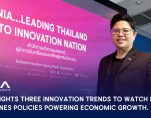
BANGKOK , THAILAND – Media OutReach Newswire – 16 January 2026 – The National Innovation Agency (Public Organization), or NIA, under the Ministry of Higher Education, Science, Research and Innovation (MHESI), is encouraging Thai entrepreneurs to keep a close eye on three key innovation trends for 2026: technology trends, market trends, and consumer trends. NIA also unveiled four major innovation policy directions: promoting investment in innovative businesses, strengthening innovation linkages across sectors, advancing regional innovation development, and enhancing national innovation competencies. These policies aim to accelerate the growth, capability development, and diffusion of innovative businesses, positioning them as key drivers of Thailand’s sustainable economic and social development.
Dr. Krithpaka Boonfueng, Executive Director of NIA
Dr. Krithpaka Boonfueng, Executive Director of NIA, said that rapid advances in artificial intelligence, escalating geopolitical tensions across multiple regions, trade decoupling and reciprocal tariff measures that create uncertainty in the global economy and value chains, as well as environmental issues and natural disasters, were major forces shaping change in 2025. ‘Innovation’ remains a critical tool for coping with these disruptions and uncertainties.
Looking ahead to 2026, Thai entrepreneurs will need to continue closely monitoring and adapting to change. Key innovation trends present both opportunities and challenges, starting with technology trends that help reduce costs and build long-term competitiveness. Notable technologies include Agentic AI, which can autonomously perform tasks such as customer chat responses, sales closure, order management, queue booking, price comparison, and automated purchasing; Hyper-Automation, which integrates bots and systems to reduce repetitive tasks, improve efficiency and accuracy, and enable real-time data-driven decision-making; and Carbon Accounting, which is becoming essential for SMEs involved in exports or global supply chains. Businesses are increasingly required to measure carbon footprints across energy use, production, logistics, and waste, in response to stricter global regulations such as the EU’s CBAM and Thailand’s forthcoming Climate Change Act.
Business trends highlight growth opportunities across several sectors. These include Health and Wellness, covering not only treatment but also prevention and therapy, particularly for working-age populations facing stress, office syndrome, and sleep disorders. Opportunities span physical therapy clinics, aromatherapy and sleep-aid products, herbal supplements, wellness tourism, yoga, and meditation. Another fast-growing area is the Pet Economy, as the Thai pet market continues to expand despite economic headwinds. This sector now includes holistic and organic pet food, fresh pet meals, fashion apparel, multifunctional pet furniture, and premium services such as pet spas, hotels, and condominiums. Additionally, Green and Circular Businesses are gaining traction, with upcycling and recycling ventures transforming waste and local materials into higher-value products. Although costs may be higher, sustainability-driven products can command premium prices, creating opportunities for community-based SMEs through innovative design aligned with environmental and fashion trends.
Consumer trends reveal a shift toward value-for-money and self-care. Hyper-Personalization is increasingly important, as consumers seek products tailored to individual needs, supported by advanced data analytics—such as supplements based on blood test results or skincare customized to personal skin conditions. Silver Solutions address the needs of Thailand’s aging society, with services focused on convenience, safety, and quality of life, including home modifications, slow-life travel programs, and assisted healthcare services. Meanwhile, Muketing or the Magic Economy reflects the enduring role of belief, spirituality, and cultural traditions in Thai society, creating economic value through religious tourism, spiritually inspired products, and design-driven items that blend art with faith.
Dr. Krithpaka added that NIA’s long-term mission is to transform Thailand into an innovation-driven economy, with startups and innovation-based entrepreneurs at its core. This requires the creation of new industries to drive growth and position Thailand as an “Innovation Nation” through three key objectives: developing innovations based on advanced and deep technologies that are difficult to replicate; creating high-value products and services rooted in creativity and cultural capital; and preparing a highly skilled workforcecapable of keeping pace with rapid technological change and evolving demographic and labor market structures.NIA works closely with domestic and international partners in its role as a Focal Conductor of Innovation, supporting innovative businesses through the 4G framework: Groom (incubation and capability building), Grant (funding support), Growth (market expansion and access to capital), and Global (international market entry).In 2026, NIA will drive Thailand’s economy and society through four key innovation policy pillars.
The first focuses on promoting investment in innovative businesses, offering a range of financial mechanisms including grants for early-stage ventures and co-investment schemes for growth-stage firms, such as corporate co-funding, public venture mechanisms (NIA Venture), global investment link programs, and capital gains tax exemptions to support startup fundraising.The second pillar emphasizes innovation linkages, strengthening collaboration between academia and industry to translate research into real-world applications through acceleration programs, innovation hubs, ecosystem platforms, tax incentives, and future mechanisms such as intellectual property financing.The third pillar supports regional innovation development, enhancing local economies and quality of life through Social Innovation Driving units (SID), Open Innovation programs, City and Community Challenge, Social Innovation Villages, and Ninmungkornth The Reality, which inspires new or small entrepreneurs to become local economic champions.The final pillar aims to enhance national innovation competencies, cultivating innovation mindsets, technological and business skills, entrepreneurial thinking, and global readiness across youth, startups, SMEs, and organizations. Key initiatives include STEAM4INNOVATOR, Startup Thailand League, NIA Academy training programs, and productivity-focused projects such as INNOProductivity for SMEs, aligned with international innovation management standards like ISO 56001.
Through these integrated efforts, NIA seeks to strengthen Thailand’s innovation ecosystem and ensure that innovative businesses can grow resiliently and compete on the global stage.
Dubai has delivered its strongest residential performance on record in 2025, with total home sales valued at AED 547 billion, or about $149 billion, reflecting a 28% year-on-year rise and underscoring the emirate’s sustained appeal to investors and end users. Transaction volumes climbed to roughly 203,000 deals, marking a 20% increase and setting a new benchmark for market activity across the city. Data compiled by Betterhomes show […]
HONG KONG SAR – Media OutReach Newswire – 15 January 2026 – HKU Business School unveiled the “Hong Kong Economic Policy Green Paper 2026” (“Green Paper”). This comprehensive document delves into various facets of Hong Kong’s economic domain, covering everything from trade finance and Hong Kong’s role in the Greater Bay Area (GBA) startup ecosystem to green finance, the IP economy, social and shareholder value for Hong Kong-listed companies, and pressing social issues such as housing affordability and overcrowding in emergency departments. Moreover, with the emergence of AI, the Green Paper examines the impact of AI on the labour market, cybersecurity, and the development of a Web 3.0 ecosystem.
This is the fifth edition of the Hong Kong Economic Policy Green Paper, released by HKU Business School, with the aim of providing recommendations on how Hong Kong can effectively tackle these challenges.
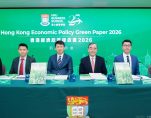
HKU Business School today unveils the Hong Kong Economic Policy Green Paper 2026. From left: Prof. Huiyin Ouyang, Associate Professor in Innovation and Information Management of HKU Business School, Prof. Dragon Tang, Professor in Finance in HKU Business School, Professor Hongbin CAI, Dean and Chair of Economics of HKU Business School, Prof. Richard Wong, Provost and Deputy Vice-Chancellor of The University of Hong Kong and Director, Hong Kong Institute of Economics and Business Strategy, Prof. Heiwai Tang, Associate Vice-President of The University of Hong Kong and Associate Dean of HKU Business School, and Dr. Tingting Fan, Principal Lecturer in Marketing of HKU Business School.
Prof. Richard Wong, Provost and Deputy Vice-Chancellor of The University of Hong Kong and Director, Hong Kong Institute of Economics and Business Strategy said, “This Green Paper was released after months of rigorous research by the scholars from HKU Business School. Grounded in an academic perspective and guided by a pragmatic, problem-solving approach, we have conducted objective analyses and in-depth investigations into core issues and real-world challenges currently facing Hong Kong’s development in political and economic operations, people’s livelihood, and industrial upgrading. Our aim is to provide the Government and relevant authorities with valuable insights and actionable policy recommendations.”
Professor Hongbin Cai, Dean and Chair of Economics of HKU Business School, said, “As a ‘super-connector’ bridging China and the world, Hong Kong’s unique role remains indispensable. Looking ahead, Hong Kong must deeply integrate into China’s national development plans, and also take a more prominent role on the international stage, with an in-depth understanding of the global market and active engagement with its international collaborators.
With campuses in Beijing, Shanghai, and Shenzhen, and an expanding presence in Vietnam and Europe, HKU Business School embodies our unique proposition: deeply rooted in Hong Kong, fully engaged with the Chinese Mainland, and truly international. This year’s Green Paper reflects our dedication to inspiring solutions based on rigorous research. As a world-class institute of higher education, we are committed to enabling Hong Kong to further unleash its core values and usher in a new era of high-quality development.”
Prof. Heiwai Tang, Associate Vice-President of The University of Hong Kong and Associate Dean of HKU Business School, added, “This Green Paper features research papers from ten teams of scholars with diverse backgrounds and varied expertise. Based on profound insights into Hong Kong’s development, they offer unique and targeted policy recommendations, building a rich and multifaceted framework of issues for the Green Paper. At the same time, behind these research achievements lies the scholars’ deep affection for and sense of responsibility toward Hong Kong.”
Regarding how digital technology can boost Hong Kong’s trade finance, he emphasised: “Both data and industry feedback clearly demonstrate the core value of trade finance. However, we need more synergy in the trade finance ecosystem and to catch up in digitisation. To address this, we must strengthen the governance and standard promotion of digital trade platforms and tools, deepen the cross-border interoperability of trade data, expand the functions of the Hong Kong Export Credit Insurance Corporation, focus on high-value-added trade enterprises, extend the coverage of Free Trade and Double Taxation Avoidance agreements, and promote responsible stablecoin adoption and Renminbi internationalisation.”
Prof. Dragon Tang, Professor in Finance at HKU Business School, stated, “Hong Kong is uniquely positioned to lead in the integration of blockchain technology within green finance, exemplified by our pioneering issuance of the world’s first tokenised green bonds, totalling HKD 6 billion in February 2024. With green finance representing a critical avenue for sustainable development, the global market is projected to grow significantly, emphasising the importance of transparency and trust. To capitalise on this opportunity, we must enhance our blockchain infrastructure, establish clear regulatory standards, and promote cross-border integration with initiatives like Core Climate. By leveraging blockchain’s capabilities, we can significantly reduce costs, improve transparency, and engage a broader investor base, ultimately driving our transition to a sustainable finance future.”
Prof. Huiyin Ouyang, Associate Professor in Innovation and Information Management, HKU Business School, commented on her study, saying, “Two weeks post-implementation of the hospital fee reform, the media reported no significant change in emergency department crowding, which aligns with what our analysis predicted. Overcrowding isn’t simply about patient behaviour – it’s a structural issue. Demographics are shifting, capacity is constrained, and alternative treatment options remain limited. What we now need is a careful, systematic evaluation of the fee changes. Where are vulnerable patients going for care? Are some patients delaying treatment? What unintended effects are emerging? Effective reform requires pairing fee adjustments with expanded primary care access. We can’t solve a capacity problem with pricing alone.”
Dr. Tingting Fan, Principal Lecturer in Marketing at HKU Business School, presented as well, spoke on her study and asked, “Why did Pop Mart go public in Hong Kong but register IP in Singapore? Or why was Molly ‘born’ in Hong Kong but did not go viral from Hong Kong? Why have local companies not managed to turn these homegrown IPs into major business triumphs? Learning from the past and looking forward, Hong Kong can leverage its financial market, legal system, as well as talents to build a comprehensive IP industry infrastructure and become an IP hub.”
The Green Paper includes ten articles; the key points are as follows:
Empowering Merchandise Trade Finance with Digital Technology in Hong Kong Author: Prof. Heiwai Tang, Associate Vice-President (Global), The University of Hong Kong; Associate Dean (External Relations), HKU Business School; Associate Director, Hong Kong Institute of Economics and Business Strategy; Victor and William Fung Professor in Economics
Trade is an essential lifeline for Hong Kong; its total merchandise trade was three times the city’s HKD3.2 trillion GDP in 2024. Trade finance is thus equally important, yet research shows that the total loans extended for trade finance have been declining.
As geopolitical and technological shifts reshape trade, Hong Kong must upgrade its trade finance services. With consumer-goods trade shifting to smaller, more frequent orders and shorter cycles, financial institutions need to streamline approvals and develop flexible products for e-commerce and logistics-driven cash cycles. Banks also need to digitise core processes in fund settlement. The article cautions that platforms directly connecting mainland manufacturers with overseas buyers disintermediate Hong Kong’s traditional hub-and-spoke role.
To address this, the article suggests the government leverage digital technologies to elevate the adoption of Hong Kong’s digital trade platforms through unifying core digital trade functions. Moreover, speeding up interoperability of trade data platforms with the Chinese Mainland and other economies will enable seamless data exchange.
Rebuilding Hong Kong as the Catalyst to the Greater Bay Area (GBA) Startup Ecosystem Prof. Alberto Moel, Professor of Practice in Finance, HKU Business School Prof. Joseph Chan, Associate Professor of Practice in Management and Strategy, HKU Business School; Associate Director, Centre for Innovation and Entrepreneurship
Offering a quantitative analysis of the evolution of Hong Kong’s startup landscape, the article found that post-2019 activity has slowed, mirroring global venture capital trends, with most failing to grow beyond 50 employees due to scarce late-stage capital despite early-stage availability. While fintech and logistics dominate and AI/blockchain grow quickly, deep tech lags—authors view this as temporary and highlight Hong Kong’s alignment in financial innovation, regtech, and GBA supply chains to attract investment and support corporate transformation.
To strengthen Hong Kong as the GBA’s premier startup hub and international financial centre, the article recommends nine policies—including fixing funding gaps, closing academia-market divides through industry-focused research for tech transfer, attracting/retaining talent, integrating Northern Metropolis with GBA supply chains, pivoting to high-value services, and drawing large tech platforms to incubate local startups.
The Applications of Blockchain in Green Finance: Hong Kong’s Experience and Opportunities Author: Prof. Dragon Tang, Professor in Finance, HKU Business School; Associate Director, Centre for Financial Innovation and Development
The green finance market has entered an important new phase. Hong Kong became the world’s first issuer of sovereign tokenised green bond when it priced an HKD800 million one-year note in February 2023. Despite this, Hong Kong faces several challenges in the practical implementation of using blockchain to advance green finance. This is due to the limited interoperability between blockchain platforms and existing financial infrastructure, which hinders cross-market transactions. Real-time settlement for tokenised assets is also difficult because of scalability constraints.
The article argues that the future success of blockchain development in green finance will depend on progress in three areas: standardisation, scalability, and security. Clear regulatory frameworks and common technical protocols are needed to provide legal certainty and interoperability across platforms. While collaboration among regulators, technology providers, and energy-market participants can align rules for tokenisation. Blockchain can also connect Hong Kong’s Core Climate platform with overseas counterparts, as cross-border integration is crucial to the inherently international nature of climate finance.
Can Hong Kong be an IP hub for Future Labubu? An Overview of Hong Kong’s IP Industry Dr. Tingting Fan, Principal Lecturer in Marketing, HKU Business School Prof. Heiwai Tang, Associate Vice-President (Global), The University of Hong Kong; Associate Dean (External Relations), HKU Business School; Associate Director, Hong Kong Institute of Economics and Business Strategy; Victor and William Fung Professor in Economics
As Labubu’s success turns the spotlight on the growing importance of the IP industry, the authors propose that this can inspire more creators and businesses to invest in branding, licensing, and cross-border collaborations. This can also attract policymakers’ attention to the emerging IP sector as a key driver of innovation and economic growth.
To position Hong Kong as a leading regional IP trading centre, the authors recommend that stakeholders—including IP developers, entrepreneurs, and government agencies—coordinate efforts across key areas. These include building a robust IP financing ecosystem, such as through government-issued IP bonds replicating the green finance model; enhancing infrastructure and platforms to support IP development; developing specialised talent and professional services in the IP sector; promoting IP initiatives throughout the Greater Bay Area; and strengthening IP protection alongside a solid legal framework.
Thematic Research: Maximisation of Social Value and Shareholder Value – Insights from Hong Kong-listed Companies Across Sectors Author: Prof. Sean Chang, Associate Professor of Practice in Finance, HKU Business School
Through a triangulation research approach, the article examines how social policies, international frameworks, and corporate social responsibility influence a company’s valuation and capital budgeting decisions. Using insights from major Hong Kong-listed companies across nine sectors—spanning transport, utilities, financials, banking, conglomerates, technology, real estate, consumer, and hotel servicing—the research highlights CSR’s role in enhancing long-term firm performance.
Key findings show that corporate risk assessment, company valuation, and stock performance are significantly influenced by CSR-linked socially responsible investing (SRI) factors. Hong Kong-specific social values, such as equality and sustainability, shape investor preferences, guiding finance managers to tailor solutions and adapt regulatory standards. While conventional metrics remain dominant, incorporating social value boosts long-term firm value by building shareholder trust and mitigating risks; companies can pursue CSR projects financed via SRI bonds to create dual economic and societal benefits.
The study recommends embedding core values like equality and sustainability into corporate strategies, aligning budgeting processes with social objectives to pinpoint investments yielding both returns and positive impacts, and urging Hong Kong-listed firms to sustain capital budgeting aligned with enduring societal values.
Housing Affordability and Homeownership in Hong Kong, 1985-2023 Mr. Allen W. Huang, Student Researcher, Hong Kong Future Economy Institute Mr. Alex Ngau, Research Associate, Hong Kong Future Economy Institute Prof. Michael B. Wong, Assistant Professor in Economics, Management and Strategy, HKU Business School
Hong Kong’s housing market has grown increasingly unaffordable, hindering upward mobility for younger generations. Main findings from the research reveal that since the 2002 suspension of the Home Ownership Scheme (HOS), homeownership has declined sharply, rendering private housing “impossibly unaffordable” for median-income households. A wide public-private rent gap drives young people to accept lower-paying or part-time jobs to qualify for public rental housing (PRH), distorting labour supply, stifling human capital investment, and fuelling a surge in adult co-living with parents; younger cohorts (born 1980-1999) face far lower access to public housing and ownership than prior generations at the same age.
Taking Hong Kong Island as an example, between 2003 and 2024, the rent-to-income ratio for a typical 400-sq-ft private unit jumped from 35% to 60% of median household income, peaking at 65% in 2015 and 2019—far exceeding the UN-Habitat and World Bank’s 30% affordability threshold. Public housing rents stayed dramatically lower at just 7%–11% of median household income from 1985 to 2024. For home purchases, it now takes 18.2 years of median income to buy a 500-sq-ft private unit (up from 7.4 years in 2003), placing it in the “impossibly unaffordable” zone per the Demographia International Housing Affordability report, where ≤3.0 years is considered affordable and 9.0+ years is impossibly unaffordable. After the 2002 Home Ownership Scheme suspension, even subsidised HOS units now require 15.8 years of income on Hong Kong Island (up from 7.4 years in 2007), shifting them from moderately unaffordable to severely or impossibly unaffordable in urban cores.
To reverse these trends, the authors recommend ramping up production of high-quality ownership units, easing resale and leasing restrictions on existing subsidised sale flats to boost residential mobility and enable “trading up” the housing ladder, setting housing price and affordability targets over mere supply goals, and adopting responsive mechanisms to balance demand and supply.
Beyond Crisis Management: Structural Reform for the Overcrowding in Hong Kong’s Emergency Departments Prof. Huiyin Ouyang, Associate Professor in Innovation and Information Management, HKU Business School Ms. Yiran Zhang, PhD student, HKU Business School
Hong Kong’s public emergency departments (EDs) handle over 2.14 million annual attendances. This crisis, exacerbated by an ageing population, results from a structural mismatch: the majority of the attendances are for non-emergency conditions, leading to staff burnout and compromised care.
The article proposes three comprehensive structural reforms. First, improving operational efficiency with accurate wait time information systems is crucial. Second, increasing the ED fee (categories III–V) aims to divert non-critical patients. Success for this hinges on assumptions about patient responses, particularly how varied population segments will react to the price signal. International evidence raises concerns, showing that higher ED fees can reduce overall utilisation, but with the decrease primarily occurring among price-sensitive groups who may risk delays in receiving serious care. Therefore, for this reform to succeed, the public must have genuine access to alternative care pathways that can accommodate acute but non-emergency needs outside regular business hours, with pricing acceptable to price-sensitive populations. Third, AI can augment the workforce and manage demand (e.g., through telemedicine).
Ultimately, sustainable reform demands robust evaluation, political courage, and a commitment to address root causes, not just symptoms.
Initial Efforts to Empirically Measure AI Activity and Its Impacts on Hong Kong’s Labour Market Prof. Alan Kwan, Associate Professor in Finance, HKU Business School Prof. Mingzhu Tai, Associate Professor in Finance, HKU Business School; Associate Director, Institute of Behavioural and Decision Science Mr. Zihan Wang, Master student, HKU Business School
In an effort to empirically measure the impact of AI on Hong Kong’s labour force, the researchers observe that firms with a higher adoption of AI experience lower headcount growth. However, the scale of impact appears small in the city, which could be due to several potential reasons. One of these is the different composition of Hong Kong’s labour force compared with other countries. For instance, Hong Kong has a high proportion of finance or managerial talent, which is harder to displace; the city also features older or more elite workers. On the other hand, much of the impact of AI, particularly generative AI, is on the less elite and younger populations.
As such, the authors recommend policymakers produce more labour market statistics that track the impact of AI, particularly by occupation. On the rate of AI adoption in Hong Kong through innovation, the authors find that the city is heavily skewed towards research, but not commercialisation. This means that the quality and quantity of academic research is not translating to commercial use. To address this decoupling, the authors propose that the government tweak its existing early-stage startup funding platforms to encourage streamlining and higher utilisation of existing government resources.
The Impact of Generative Artificial Intelligence on Cybersecurity in Hong Kong Author: Prof. Michael Chau, Professor in Innovation and Information Management, HKU Business School
As GenAI can produce human-like text, code, images, and audio, cybersecurity crimes have become easier and faster to perpetrate. Not only have data leaks and hacks into security systems led to significant financial losses in Hong Kong, but they also hurt confidence in the city’s digital infrastructure.
The article recommends using AI to fortify Hong Kong’s cyber defence, such as using biometric verification and deepfake detection technologies, especially in areas involving critical infrastructure and high financial stakes. It is also important to prevent data leakage and other threats in using GenAI.
Hong Kong’s Next Growth: Pioneering the Web 3.0 Ecosystem Prof. Yulin Fang, Professor in Innovation and Information Management, HKU Business School; Director, Institute of Digital Economy and Innovation Mr. Yangchen Mou, PhD student, HKU Business School
Given the inherent risks in Web 3.0 operational models—most notably within Decentralised Finance (DeFi) systems—striking a balance between fostering the development of the Web 3.0 ecosystem and implementing appropriate regulation to maintain financial stability is and should be a key priority for Hong Kong authorities. To support this, the article categorises the industry into three distinct systems—Centralised Finance (CeFi), the integration of Traditional Finance and Centralised Finance (TradFi-CeFi), and Decentralised Finance (DeFi)—and put forward targeted policy recommendations for each.
For the CeFi system, the authors recommend creating a more conducive environment for development by refining specialised auditing frameworks, promoting a local Web 3.0 talent certification system, and introducing global leading CeFi institutions to the local market. For the TradFi-CeFi system, they suggest upgrading audit standards for traditional firms holding digital assets and upskilling traditional finance professionals with Web 3.0 expertise. In contrast, for the DeFi system, which carries higher inherent risks and poses greater regulatory challenges, the authors advise authorities to adopt a prudent stance while keeping monitoring its latest technological developments.
The full version of the Green Paper can be accessed here. Hi-res photos are available here.
Hashtag: #HKUBS
The issuer is solely responsible for the content of this announcement.
About HKU Business School
Established in 2001, HKU Business School is one of the youngest and most dynamic members of The University of Hong Kong (HKU). The School strives to nurture first-class business leaders and foster academic and relevant research that serves the needs of Hong Kong, China and the rest of the world in the new Asia-led economy. As a top international business school, the School has established its place as a globally impactful institution that leads the way through timely thought leadership, pioneering research, and educational excellence. Deeply rooted in Hong Kong and fully engaged with China, the School’s world-class faculty equip students with global knowledge and perspectives.
HKU Business School offers business education across a full range of disciplines, while achieving remarkable growth in faculty strength and research capabilities. The School ranks Asia’s No.1 in Financial Times’ Aggregated Research Ranking for two consecutive years, 2024 and 2025, while the University of Hong Kong ranked 11th in the world and No. 1 in Asia according to the QS World University Rankings 2026. The School has strategic partnerships with world-renowned universities and corporate partners, providing market-oriented content, superior learning, and instrumental resources.
To better serve our students and alumni in various cities and regions, and to facilitate collaboration opportunities with business communities around the globe, HKU Business School has established a unique international network that extends to Beijing, Shanghai, Shenzhen and Ho Chi Minh City.
HKU Business School is fully accredited by the European Quality Improvement Systems (EQUIS) and the Association to Advance Collegiate Schools of Business (AACSB).
Matein Khalid The tragic images of the bloodbath in Iran, caused by the regime’s crackdown on protests have horrified the world and amplified the price surge in both oil and precious metal markets, with silver at $95 an ounce and tin up almost 30% in the first two weeks of 2026. Emerging markets will unquestionably be the dominant theme of 2026 now that the macro data suggests […]
By K Raveendran Oil prices have jumped roughly six percent in the span of a week, pushing benchmarks to around $63 a barrel and jolting a market that had grown accustomed to softer expectations closer to $50. The move has been swift enough to prompt talk of an over-reaction, not least because traders have already […]








 https://www.nia.or.th/




 By K Raveendran Oil prices have jumped roughly six percent in the span of a week, pushing benchmarks to around $63 a barrel and jolting a market that had grown accustomed to softer expectations closer to $50. The move has been swift enough to prompt talk of an over-reaction, not least because traders have already […]



