News related to
price

Ice Open Network has opened more of its codebase to public view as its ION token comes under acute market pressure, an awkward overlap that captures the project’s current predicament: visible engineering momentum on one side, collapsing market confidence on the other. The team has been publishing weekly development updates on its Online+ social app and ION framework, while public GitHub repositories now show active work on […]

Bitcoin and other major cryptocurrencies fell on Saturday after high-level talks between the United States and Iran in Islamabad ended without an agreement, puncturing a bout of market optimism that had followed a temporary ceasefire and hopes of a broader diplomatic settlement. U. S. Vice President J. D. Vance said the American delegation was leaving Pakistan after about 21 hours of negotiations without a breakthrough. Markets reacted […]

PEPE gave up ground after a sharp run-up ran into selling pressure near the $0.0000037-$0.0000038 range, with traders taking profits as excitement around a proposed US exchange-traded fund for the meme token failed to generate a lasting second leg higher. Market data on April 11 showed PEPE trading around $0.0000035, leaving it well below its 2024 peak and indicating that the latest burst of enthusiasm had not […]

S&P Global Ratings has lowered its growth expectations for both the UK and Egypt, saying the economic fallout from conflict-linked disruption across the Middle East is feeding through energy prices, trade routes and business confidence. For Egypt, S&P cut its forecast for real GDP growth in the 2025-2026 fiscal year to 4.7 per cent from 4.8 per cent, while also trimming the following year to 4.3 per […]

Michael Saylor has argued that Bitcoin may already have found a durable floor around $60,000, framing the slide earlier this year as a washout of forced sellers rather than a collapse in conviction. The Strategy executive chairman also pushed back against rising alarm over quantum computing, saying the threat to Bitcoin is overstated for now. His remarks landed as Bitcoin traded near $72,800 on April 11, showing […]

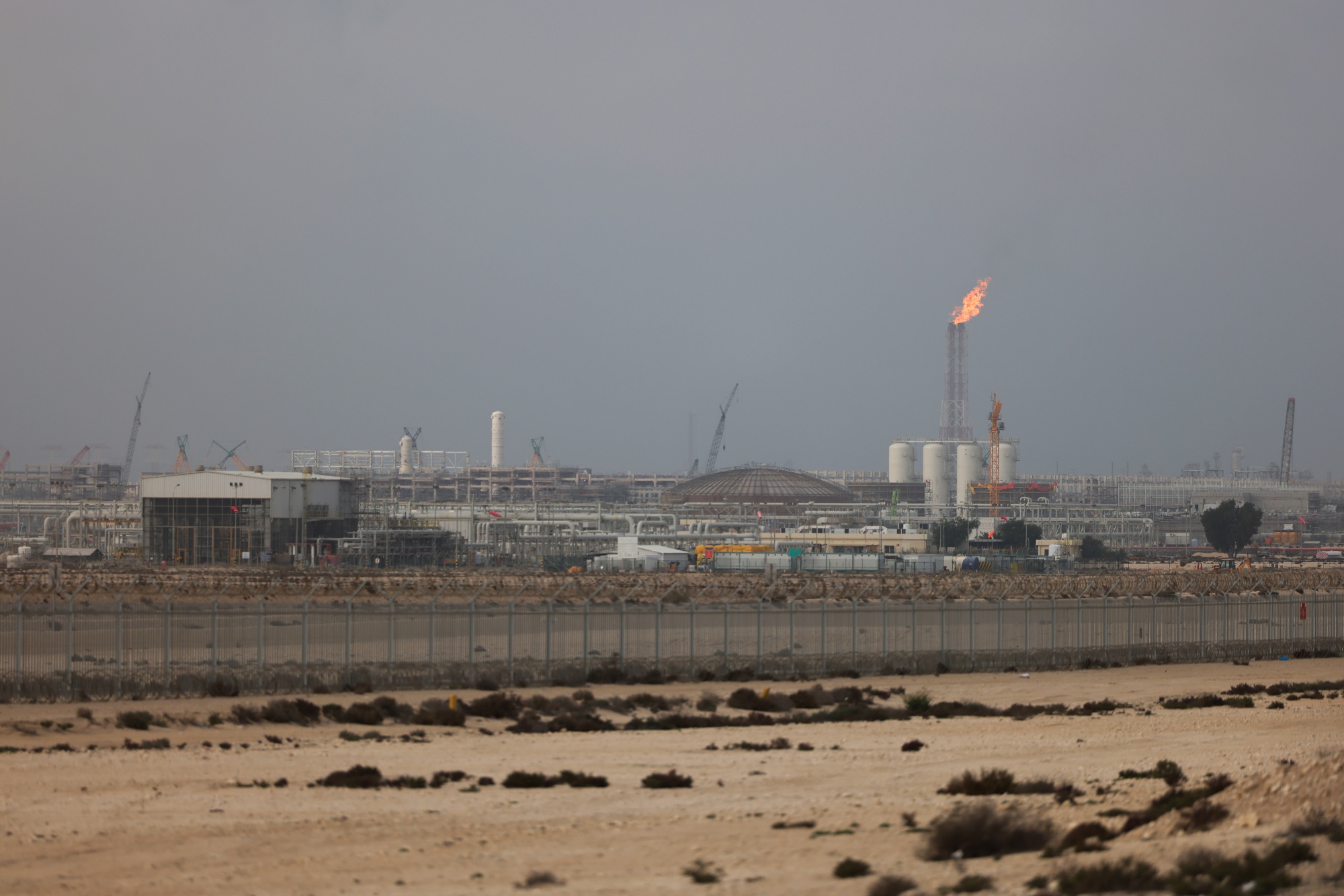
Qatar and India have moved to reinforce one of Asia’s most important energy relationships, with senior ministers in Doha pledging closer cooperation and calling for urgent protection of global supply chains as conflict-linked disruption continues to unsettle oil and gas markets. During talks on April 9 and 10, Qatar’s Minister of State for Energy Affairs and QatarEnergy chief executive Saad Sherida Al-Kaabi told India’s Minister of Petroleum and Natural Gas, Hardeep Singh Puri, that Doha would remain a reliable energy supplier, while both sides stressed the need for uninterrupted navigation and the free flow of commerce.

The meeting carried weight beyond bilateral symbolism. Qatar is India’s largest supplier of liquefied natural gas and a major source of liquefied petroleum gas, making the Gulf state central to India’s fuel security at a time when shipping risks and production interruptions have tightened markets. New Delhi’s outreach came as it sought assurances on supply after weeks of strain across West Asian energy routes and amid concern over the effect of regional instability on domestic fuel availability and industrial consumption.

Doha’s message was also framed by diplomacy. The official Indian statement said the ministers welcomed the two-week ceasefire agreed on April 8 and underlined the need for an early end to disruption in global energy supplies. It added that Puri conveyed greetings and a message of solidarity from Prime Minister Narendra Modi to Qatar’s leadership, reflecting how the energy relationship is now closely tied to broader strategic engagement covering trade, investment and regional stability.

For India, the stakes are immediate. The country depends on imports for about half of its natural gas needs, and the supply shock has already exposed vulnerabilities in infrastructure and procurement. GAIL’s finance director said this week that the Dabhol LNG terminal in Ratnagiri was operating at less than half its 5 million-tonnes-a-year capacity because of constrained global supplies. Hindustan Petroleum’s Chhara LNG terminal in Gujarat has also faced difficulties after missing two cargoes in March and April that were expected from Qatar via ADNOC Trading.

The background to the Doha talks is a sharp deterioration in regional energy logistics. Reuters reported on April 8 that QatarEnergy was preparing to restart LNG production after attacks in March forced stoppages at facilities in Ras Laffan and Mesaieed. Two of three trains at QELNG North 1 had been restarted, but a full return depended on vessels being able to pass safely through the Strait of Hormuz, one of the world’s most sensitive energy chokepoints. The same disruption has inflated spot prices and increased anxiety among large importers across Asia.

That makes Qatar’s long-term importance to India even clearer. In February 2024, QatarEnergy and Petronet LNG signed their largest single LNG supply agreement, under which Qatar will deliver 7.5 million metric tonnes a year from 2028 to 2048. Reuters reported at the time that Qatar planned to lift LNG liquefaction capacity to 126 million tonnes a year by 2027, up from 77 million, as it sought to strengthen its role in Asian and European markets. The scale of that agreement gives India a measure of stability, but it also underlines how deeply its gas strategy remains linked to a single Gulf supplier.

That dependence has advantages and risks. Qatar has earned a reputation for contractual reliability and remains among the lowest-cost LNG producers in the world, qualities prized by importers facing volatile spot markets. At the same time, the events of March and April have shown that even long-established energy corridors can be shaken by military escalation, damage to infrastructure and pressure on maritime routes. For policymakers in New Delhi, that is likely to sharpen interest in diversification through additional long-term contracts, more storage, broader sourcing and faster domestic gas infrastructure expansion.

India’s longer-term energy ambitions add another layer to the relationship. The government has repeatedly said it wants to raise the share of natural gas in the energy mix to 15 per cent by 2030, from just over 6 per cent at present. That target cannot be met without dependable imported LNG, even as the country pushes renewables, domestic gas output and cleaner urban fuels. Reliable Qatari supply therefore remains integral not only to short-term energy security, but also to India’s broader transition strategy and industrial planning.

Arabian Post Staff -Dubai RAK Ceramics has moved to reassure customers, contractors and distributors that its operations across the UAE and the wider region remain uninterrupted, saying access across its customer network is continuing without disruption across both retail and project channels. The statement comes at a time when businesses across the Gulf are paying closer attention to logistics resilience, input costs and delivery schedules amid wider […]

Advertisements

Jack Ma-backed Yunfeng Capital and Hillhouse Investment are among investors said to be planning to buy shares in Victory Giant Technology’s Hong Kong share sale, a deal that could raise about $2 billion and add fresh momentum to the city’s revival as a venue for large equity offerings. Bloomberg reported on Friday that the Guangdong-based company could begin taking investor orders as early as Monday, though the proposed allocations and timing were described as private and subject to change.

Victory Giant, formally known as Victory Giant Technology Co., Ltd., is already listed in Shenzhen and filed an application proof for a Hong Kong offering in February. The draft filing makes clear that the process was still incomplete at that stage and that no investment decision should be based on the draft document alone, a reminder that the final terms, investor line-up and valuation could still shift before launch. China’s securities regulator had already given the green light for the offering in early March, according to Bloomberg’s earlier reporting.

The company sits in a part of the technology supply chain that has drawn growing investor attention as spending on artificial intelligence infrastructure accelerates. Victory Giant makes printed circuit boards, including high-layer-count multilayer boards and high-build-up high-density interconnect boards used in AI accelerator cards, AI servers and high-speed networking equipment. In its Hong Kong filing, the company said such products are designed for high-frequency, high-speed and high-stability applications and are used in components including GPU accelerator modules, CPU motherboards and network interface cards for AI servers.

Its own figures point to a sharp improvement in financial performance as demand for those products strengthened. According to the application proof, revenue rose from RMB7.93 billion in 2023 to RMB10.73 billion in 2024. For the nine months to September 30, 2025, profit climbed to RMB3.24 billion from RMB764.6 million a year earlier, while the net profit margin rose to 23.0% from 9.9%. The filing attributes a large part of that jump to stronger demand for high-end HDI products used in AI-related applications, which command higher prices and fatter margins.

That performance helps explain why anchor demand matters. Cornerstone-style support from investors such as Yunfeng and Hillhouse would give the offering greater signalling power at a time when fund managers are trying to separate durable AI-linked manufacturers from companies benefiting only from short-lived enthusiasm. Neither investor had publicly confirmed participation at the time of Bloomberg’s report, so any description of their role remains conditional until final deal documents are published.

Victory Giant’s filing also underlines the industrial logic behind the listing. The company says it plans to use proceeds for capacity expansion, infrastructure enhancement and equipment purchases in Huizhou, Changsha and Yiyang, as well as investment in smart manufacturing. In Huizhou alone, it expects capacity additions for premium high-layer-count multilayer boards and high-build-up HDI products, reflecting management’s bet that demand tied to AI computing, data centres and advanced electronics will stay strong enough to justify further capital expenditure.

Industry data included in the filing suggest the company is positioning itself in one of the faster-growing corners of the electronics market. The application proof says the global PCB market grew to US$75.0 billion in 2024 and could reach US$93.7 billion by 2029. It estimates the PCB segment tied to AI and high-performance computing at US$6.0 billion in 2024, with that figure projected to rise to US$15.0 billion by 2029. The same filing says Victory Giant ranked first globally in the first half of 2025 for high-layer-count multilayer PCBs with 14 layers and above, and also first globally in high-build-up HDI PCB in that period. Those market-share claims are drawn from third-party industry research cited by the company and should be read in that context.

The backdrop in Hong Kong is supportive, though not uncomplicated. Reuters reported in late February that the city had its strongest start to a year since 2021, with IPOs and second listings raising about $5.5 billion in January. By March 18, LSEG data cited by Reuters showed Hong Kong’s IPO market had raised about $11.64 billion in the first quarter, up 385% from a year earlier. At the same time, Reuters also noted in March that worsening geopolitical tensions had begun to weigh on trading debuts, a sign that even a revived market remains vulnerable to shifts in sentiment.


Dubai’s Al Mamzar Corniche development has moved into its closing stretch, with construction reaching 88% completion as the emirate pushes ahead with one of its most closely watched public beach upgrades. Dubai Municipality said the scheme is progressing in line with delivery schedules and is intended to open as a new coastal destination combining leisure, sport and community facilities. The project has drawn particular attention for including […]

By Nitya Chakraborty After getting political and diplomatic advantage from the latest US-Iran ceasefire, China has started its preparation for hosting the U.S. President Donald Trump in its crucial summit in Beijing on May 14 and 15 this year. Earlier the summit was scheduled for March 31 and April 1 but Trump postponed that after […]

The article Chinese President Xi Jinping Launches Major Offensive On Taiwan Before May Summit With Trump appeared first on Latest India news, analysis and reports on Newspack by India Press Agency).

Arabian Post Staff -Dubai Saudi supply lines face deeper strain Attacks on Saudi energy facilities have knocked about 600,000 barrels per day from the kingdom’s oil production capacity and cut throughput on the East-West Pipeline by roughly 700,000 bpd, according to Saudi state media citing an Energy Ministry official, in a blow to the world’s top oil exporter at a time when its western pipeline route has […]

Arabian Post Staff -Dubai Sharjah has added another bet on family housing with the launch of Sukoon, a gated villa and townhouse community by Sanzen Developments that is being pitched less as a leisure-led estate and more as a neighbourhood built around daily wellbeing. Construction formally began on 7 April, with the developer saying the AED1.5 billion project will deliver 859 homes across four phases in a […]

Bank of Korea left its benchmark interest rate unchanged at 2.50 per cent on Friday, extending its policy pause to a seventh straight meeting as policymakers confronted a harder mix of rising price pressures, a weak won and a growth outlook darkened by higher energy costs and disruption linked to conflict in the Middle East.

The seven-member Monetary Policy Board said uncertainty had intensified and judged it appropriate to hold the base rate while assessing how the conflict, financial-market volatility and foreign-exchange swings feed through to the domestic economy. The central bank’s statement made clear that the policy dilemma has sharpened: inflation risks are moving up even as growth is expected to slow more than earlier forecast.

Governor Rhee Chang-yong, speaking after what Reuters reported was his final press conference before his term ends on April 20, said supply-side shocks from the Middle East were especially damaging for Asian economies reliant on imported energy. That matters acutely for South Korea, where policymakers are trying to prevent a renewed inflation cycle without choking activity at a time when sentiment has softened and some industries are already facing production constraints.

The rate hold had been widely anticipated. Reuters said all 31 economists in its poll expected no move at this meeting, reflecting a market consensus that the central bank had little room to ease and few grounds to tighten immediately. Instead, the decision underscored how monetary authorities in export-driven Asian economies are being forced to navigate a narrow path between external shocks and domestic fragilities.

At the centre of the debate is inflation. Official data showed consumer prices in March rose 2.2 per cent from a year earlier, up from 2.0 per cent in February, while core inflation, which excludes food and energy, also stood at 2.2 per cent. The Bank of Korea said petroleum prices had risen sharply and noted that short-term inflation expectations among the public edged up to 2.7 per cent. It now expects consumer inflation this year to exceed its February projection of 2.2 per cent by a meaningful margin, with core inflation also likely to come in above the earlier 2.1 per cent forecast.

That shift is important because the central bank had been able for months to argue that price growth was gradually stabilising near target. The worsening external backdrop has disrupted that narrative. The board said inflation is likely to move into the mid- to upper-2 per cent range as global oil prices and supply constraints lift import costs, though government price-stabilisation measures may soften part of the blow. Reuters reported that Seoul’s fuel-price caps, introduced last month for the first time in decades, helped restrain March inflation but are unlikely to provide a lasting shield if energy costs stay elevated.

Growth, meanwhile, is losing momentum. The central bank said the economy had been supported by strong exports, firmer consumption and continued job gains, but warned that downside pressure had increased since the outbreak of the Middle East conflict. It expects expansion this year to come in below the 2.0 per cent forecast issued in February, as higher energy prices and supply bottlenecks offset support from semiconductor exports and a supplementary budget. That combination leaves the Bank of Korea confronting an uncomfortable form of policy tension: weaker activity alongside stronger inflation.

The won has added to the pressure. The central bank said the currency weakened into the 1,500-won range against the US dollar as investors moved into safer assets and foreign investors sold domestic equities, before recovering some ground after a temporary ceasefire between the United States and Iran. A softer currency raises the local-currency cost of imported fuel and raw materials, complicating the inflation picture and limiting the case for any near-term rate cuts.

Financial markets reflected that cautious tone. Reuters reported that South Korea’s policy-sensitive three-year treasury bond futures erased early gains during the governor’s press conference, suggesting investors interpreted the message as more alert to inflation risks than to immediate growth support. Analysts cited by Reuters said the rebound in energy prices and the won’s weakness have narrowed the central bank’s room for manoeuvre, even if domestic demand still needs close watching.

XRP could reach $1,000 by 2030, according to EasyA co-founder Dom Kwok, who has repeated the forecast in public interviews and defended it when challenged on valuation grounds. The call has reignited a familiar argument in crypto markets: whether XRP should be judged as a conventional token priced by circulating supply, or as a payments rail whose future worth could expand far beyond today’s market-cap logic. For […]

Circle Internet Group shares slid nearly 10 per cent on Thursday, closing at $85.10, after a fresh Wall Street “sell” call added to investor unease over the stablecoin issuer’s margins and over criticism of its handling of funds tied to the Drift Protocol exploit. Market data showed the stock ended the session down 9.89 per cent, extending a volatile stretch for one of crypto’s most closely watched […]

Tesla is developing a smaller, lower-cost electric sport utility vehicle in a move that could reopen its path into the mass market after years of focusing investor attention on autonomy, robotics and premium technology bets. People familiar with the plan told Reuters the company has approached suppliers in the past few weeks to discuss a compact SUV that would sit below its current line-up on size and […]

China has authorised state oil refiners to draw on commercial crude reserves as the Middle East war enters its sixth week, a move that points to mounting concern in Beijing over supply security, refinery operations and fuel stability in the world’s biggest crude importer. The decision marks a notable shift after reporting in March indicated that access to such reserves had been denied, underscoring how sharply the market backdrop has changed.

The policy adjustment comes as the conflict centred on Iran has disrupted flows through the Strait of Hormuz, a route that handled about 20 million barrels a day of crude and oil products in 2025 and remains one of the most critical chokepoints in global energy trade. The International Energy Agency said in March that the war had created the biggest supply disruption in oil market history, with flows through Hormuz falling from around 20 million barrels a day before the war to only a trickle.

For China, the timing is especially sensitive. State refiners have already been grappling with higher feedstock costs, disrupted shipping routes and a scramble for replacement barrels from outside the Gulf. Reuters reported in late March that Sinopec, the country’s largest refiner by capacity, had sought access to state reserves after deciding against buying Iranian crude, while also trimming refinery runs. Earlier reporting in mid-March said China had been building inventories rather than drawing them down, suggesting Beijing initially preferred to preserve stocks.

That stance now appears to have softened. Bloomberg reported on April 10 that authorities had given state refiners the green light to tap commercial reserves. While the precise volume and duration were not publicly disclosed, the move is significant because it signals Beijing is willing to use part of the country’s stock cushion to smooth supplies for domestic processing rather than rely solely on the spot market at a time of exceptional volatility.

The wider market has been under intense pressure even as talk of a ceasefire has briefly cooled futures prices. Reuters reported that physical crude markets in Europe and Africa remained extremely tight despite a temporary truce, with buyers in Asia and Europe competing aggressively for non-Middle East barrels. Another Reuters report said U. S. crude premiums had surged to record highs as importers sought alternatives to Gulf supplies. That matters for China because replacing lost or delayed Middle East cargoes has become more expensive just as refining margins in parts of Asia remain fragile.

Supply conditions deteriorated further this week after attacks on Saudi energy infrastructure cut output capacity by around 600,000 barrels a day and reduced throughput on the East-West Pipeline by about 700,000 barrels a day, according to Saudi state media cited by Reuters. The pipeline is vital because it allows exports to bypass Hormuz via the Red Sea. Damage there narrowed one of the few remaining alternative routes for Gulf producers trying to keep oil moving to Asian customers.

Asian refiners have already felt the strain. Reuters reported that seaborne crude imports into Asia in April were estimated at 19.22 million barrels a day, sharply below the three-month average of 25 million barrels a day. Although refined fuel prices eased after hopes of a truce, the same report said the market was still stressed and that it could take months for normality to return even if shipping improves. For Beijing, releasing commercial stocks is therefore less a dramatic emergency measure than a tactical effort to bridge a period of dislocation.

The decision also reflects China’s domestic balancing act. Authorities have been trying to keep fuel output steady even as weak underlying demand and higher crude costs squeeze refiners. Reuters reported on April 2 that officials had pressed independent refiners to maintain production despite the surge in oil prices and wartime disruption. That suggests Beijing is seeking to avoid sharp swings in fuel availability or industrial costs while preserving broader economic stability.

There is also a geopolitical layer. China has opposed any overtly force-based international response around Hormuz and has pushed for de-escalation at the United Nations, according to Reuters reporting on Security Council negotiations. At the same time, the reserve release shows that Beijing is preparing for a conflict that may not be resolved quickly and for shipping conditions that may remain uncertain even if diplomatic language softens.

Ethereum hovered near the $2,000 mark on Thursday after a choppy stretch that left the world’s second-largest cryptocurrency caught between stronger long-term supply dynamics and a fresh wave of geopolitical and macroeconomic uncertainty. Ether was trading around $2,178 during the session, after moving within an intraday range of roughly $2,167 to $2,264, underscoring the tight consolidation that has kept traders focused on whether the token can build […]

Arabian Post Staff -Dubai Attacks tied to the widening confrontation with Iran could spill far beyond the battlefield and damage global health, food security and the environment, the UAE told an international summit in Lyon, urging governments and institutions to rally around a “One Health” strategy that treats human, animal and ecosystem health as inseparable. The intervention came at a high-level gathering hosted by France on 7 […]

US unemployment benefit claims rose last week but stayed at levels that still point to a labour market holding together, even as investors and policymakers brace for a March inflation reading that could complicate the Federal Reserve’s next move. Initial claims for state unemployment benefits increased by 16,000 to 219,000 in the week ended April 4, according to Labor Department data released on Thursday. The prior week’s […]

Polygon’s token remained under pressure on Thursday even as the network’s stablecoin business gathered pace, highlighting a widening gap between on-chain usage growth and investor sentiment around POL, the token that replaced MATIC on Polygon’s mainnet in September 2024. POL was down about 4.7% over seven days on CoinGecko as of April 9, while Polygon continued to market itself as infrastructure for global payments and stablecoin settlement. […]

Tokenised perpetual swaps tied to commodities and equities have surged into a new phase of growth, with weekly trading volume reaching about $31 billion as oil volatility and broader macro uncertainty pulled traders towards round-the-clock synthetic exposure. Oil contracts accounted for roughly $6.9 billion of that weekly turnover after geopolitical tensions rattled energy markets, while stock perpetual swaps climbed 908% to around $4.9 billion, underscoring how quickly […]

By Nitya Chakraborty All nations in the globe except perhaps Israel have welcomed the ceasefire agreement for two weeks between U.S. and Iran announced by President Donald Trump on April 7 evening US time and later endorsed by the Iranian government. The ceasefire is fragile – Israel has bombed Lebanon killing 254 persons on Wednesday […]

The article Ceasefire Agreement Is Fragile But Islamabad Talks Must Be Used For Stable Peace appeared first on Latest India news, analysis and reports on Newspack by India Press Agency).

Vertical villa-style condominium positioned to capture surging investor demand

PHUKET, THAILAND – Media OutReach Newswire – 9 April 2026 – Phuket, a world-class tourist destination, is emerging as one of Southeast Asia’s hottest residential and real estate investment hubs. In 2025, over 10 million international tourists visited Phuket, generating nearly 546 billion baht in tourism revenue.

Image Botanica Luxury Villas Rides Phuket's Rise as Global Luxury Property Hub with HYTHE by Botanica

The condominium market has seen significant growth. Colliers Thailand reports that in 2025, 23 new condominium projects launched in Phuket, totaling over 8,372 units worth more than 47.349 billion baht. A key driver keeping Phuket’s rental market buoyant is the attractive yield of 7–11% per year in prime locations.

Botanica Luxury Villas, a leader in Phuket’s luxury property market with over two decades of experience, has grown its portfolio to meet shifting demand, entering the condominium market for the first time with HYTHE by Botanica. Drawing on its pool villa expertise, Botanica has developed the project under the Vertical Villa concept—combining the privacy and generous space of a villa with the convenience of condo living. Prices start at 10.8 million baht*. The project occupies a prime position in the heart of Laguna Phuket, one of the most sought-after areas among investors, just 6 minutes from Layan Beach and 20 minutes from Phuket International Airport.

Mr. Attasit Intarachooti, Chief Executive Officer of Botanica Luxury Phuket Co., Ltd., said: “HYTHE by Botanica is built to meet the growing demand in Phuket as a global destination for long-term living and investment. The Vertical Villa concept delivers a living and investment experience unlike anything currently on the market. We project rental yield of 5–7%* per year in a location with consistent capital appreciation.”

HYTHE by Botanica comprises four six-story residential buildings with 276 units in total, plus a clubhouse, set across over 21 rai of lush greenery. Units start from 57 sq.m., with options ranging from one to three bedrooms, duplexes with pool access, and penthouses. HYTHE by Botanica is part of Botanica Grand Avenue, a mega project offering a full suite of on-site amenities.

For investors, the project comes with comprehensive after-sales support, including Botanica’s service and maintenance programs. Show units are now open for viewing at the sales gallery, Botanica Grand Avenue, Phuket. For more information, visit botanicaluxuryvilla.com, Facebook: BOTANICA Luxury Villa, or call +66 81 324 2999 and +66 94 636 2836.

Hashtag: #BotanicaLuxuryVillas

The issuer is solely responsible for the content of this announcement.

VISHNU RAJA
RYO YAMADA
HITORI GOTOH
IKUYO KITA