Singapore has launched an artificial intelligence application that examines incoming WhatsApp, Telegram and text messages for signs of fraud, warning users before suspicious conversations lead to financial losses.
The Government Technology Agency, GovTech, released AntiScam Pango in an open beta for Android phones on 4 November. The application analyses message notifications on the handset rather than transmitting private conversations to a government server, an approach intended to combine early scam detection with personal privacy.
Jasmin Lau, Acting Minister for Manpower, Senior Minister of State for Digital Development and Information and minister responsible for GovTech, announced the launch at the STACK Conference 2026. The application is available through Google’s Play Store, although eligibility depends on the phone’s specifications.
Unlike systems that identify suspicious telephone numbers or individual messages, Pango groups incoming notifications from the same sender into conversations. Its AI model looks for patterns developing across successive exchanges, potentially identifying attempts to establish trust before requesting money or sensitive information.
When the system detects suspicious behaviour, it issues a Scam Alert and explains why the conversation warrants attention. Users can examine the warning, report the exchange, mark it as safe or verify the sender independently. Pango neither deletes messages nor automatically blocks the people sending them.
GovTech developed the initiative with support from Google DeepMind, whose work focuses on improving lightweight AI models capable of operating directly on smartphones. The models use examples of scam tactics relevant to Singapore, including genuine and synthetic messages, rather than relying exclusively on previously reported telephone numbers.
Mark Chen, GovTech’s director of trust and safety, said the project sought to demonstrate that protecting users from scams need not require sacrificing the privacy of personal messages. He described the beta as an opportunity to learn from everyday use and improve detection as fraudsters change their methods.
The privacy arrangement has an important qualification. Pango needs permission to read incoming notifications, including their message content, to perform its checks. The agency says analysis and storage remain on the device, with information sent externally only when a user deliberately submits a scam report.
Reports can contain suspicious messages, timestamps, the originating platform and identifying details about the sender. Users are shown the material before confirming submission. The application also masks Singapore national registration identity card numbers appearing in messages included in reports.
The initial release supports Android 12 or later and requires at least 6GB of RAM. It is unavailable for iPhones because Apple’s operating system does not offer comparable access to notifications from other messaging applications. GovTech is examining alternatives for iOS without announcing a launch date.
The software currently recognises English-language scam patterns. Messages written in Chinese, Malay, Tamil or other languages may escape detection, a significant limitation in Singapore’s multilingual communications environment. GovTech says additional languages are being considered.
Detection also depends on whether an incoming message generates a notification. Muted conversations, or messages arriving while someone is already viewing a chat, may not be analysed. Background battery restrictions can interrupt monitoring, while unfamiliar fraud techniques can produce missed warnings or false alarms.
Pango covers WhatsApp, Telegram and the phone’s Messages application, but does not currently monitor Instagram, Facebook Messenger, Signal, WeChat or LINE. Users can enable or disable scanning separately for each supported service. Its notification permissions can also be withdrawn at any time through Android settings.
The application supplements ScamShield, Singapore’s existing service for blocking suspicious calls, filtering text messages and checking potentially fraudulent links or contacts. GovTech has indicated that some Pango capabilities could eventually be incorporated into ScamShield, although no timetable has been set.
Government figures displayed on Pango’s official website show 16,281 scam cases during the first half of 2026, with more than 4,000 involving contact through WhatsApp or Telegram. Those figures underline why the authorities are testing warnings inside messaging conversations rather than depending solely on established blacklists.
For more prominent warnings, users may optionally allow alerts to appear over other applications. The standard notification remains available without that permission. A conversation labelled safe is not a guarantee against fraud.
The installation package is approximately 300MB because it contains the AI model required for local processing. GovTech advises downloading the application through its verified Google Play listing and keeping automatic updates enabled. Users who remain uncertain about suspicious messages can contact the ScamShield helpline on 1799.
The Financial Action Task Force has urged governments to dismantle the financial networks supporting industrial-scale scam compounds, warning that criminal operations are adapting to enforcement pressure and spreading across continents. The Paris-based anti-money laundering watchdog published its findings on 5 November, outlining new principles for disrupting fraudulent payments, recruitment networks and the digital infrastructure used by organised crime groups. The report places scam compounds within a worldwide […]
By Dr. Gyan Pathak Industrial Development Bank of India (IDBI) will soon be placed in a foreign hand, which the nationalist prime minister Narendra Modi’s BJP led NDA government said doing it in the national interest of the country. Employees and officers of IDBI on the other hand went on two days nationwide strike on […]
Cybercriminals impersonating OpenAI are directing ChatGPT subscribers to fraudulent payment pages hosted on rotating WordPress websites, with operators able to demand bank verification codes after capturing card details. Cybersecurity company Fortra identified a reusable phishing kit behind the campaign, documenting identical malicious checkout forms on separate websites and a control panel that allows attackers to manage individual victims in real time. Its findings, published on 26 October, […]
Cybercriminals are exploiting Instagram advertisements and neglected website tracking code to infect vulnerable iPhones with powerful spyware, according to a joint investigation by cybersecurity firms iVerify and Report URI, tracing attacks across social media and retail websites. The researchers identified multiple delivery routes for Coruna and DarkSword, two exploit kits capable of compromising devices and extracting sensitive information. Their findings, published on 21 and 22 October, show […]
Cybersecurity researchers have identified more than 20,000 Cloudflare Pages subdomains used by a longstanding operation that redirects internet users to fraudulent technical support centres. Infoblox said its investigation, published on Thursday, linked the Help Traffic Distribution System, or Help TDS, to Hotejka, a Russian-language affiliate programme believed to be a successor to the previously exposed ROI777 network. The assessment rests on historical domain records, shared infrastructure, persistent […]
Google DeepMind and Singapore’s Government Technology Agency have developed an artificial intelligence system designed to identify scams within private smartphone conversations without sending messages to external servers.
The technology, announced on Wednesday at Singapore International Cyber Week, uses a customised version of Google’s Gemma model to recognise manipulation in conversations and warn users before they transfer money or disclose sensitive information.
The partners have not announced a public release date, named supported messaging applications or published independent accuracy figures. Their announcement describes a model that messaging platforms and operating system developers could integrate, rather than a scam detection application already available for general download.
The initiative forms part of the National AI Partnership between Google DeepMind and Singapore’s government. It addresses fraud schemes that unfold through extended conversations, rather than relying exclusively on suspicious links, keywords or individual messages.
Google DeepMind said the model had been adapted using examples of scams involving impersonation of banks, public institutions and prominent local figures. Its training also covered regional fraud patterns intended to make fraudulent exchanges appear credible to Singaporean users.
The system operates through two stages to limit the processing demands placed on smartphones. A lightweight classifier initially examines incoming messages for possible threats, consuming relatively little computing power. Messages considered suspicious then undergo a more detailed assessment using the fine tuned Gemma model.
During the second stage, the AI examines a broader section of the conversation to assess whether the exchange displays patterns of manipulation. This contextual approach is intended to distinguish ordinary conversations from attempts to build trust before requesting payments, passwords or other confidential details.
Where the model identifies potentially fraudulent behaviour, it generates a warning on the handset, encouraging the recipient to pause and exercise caution. The alert is designed to intervene before a person acts on a scammer’s instructions, although the organisations have not disclosed measured reductions in fraud losses from using the system.
A central feature is that the analysis takes place locally. Conversations do not need to be uploaded for cloud based examination, an important distinction for messaging services that use end to end encryption to prevent intermediaries from reading message contents.
Mark Chen, director of trust and safety at GovTech Singapore, said the collaboration sought to identify targeted local scams in real time while keeping personal communications private. The partners present local processing as a way of reconciling fraud prevention with confidentiality.
The privacy safeguards also extend to development. Google DeepMind said the model was fine tuned inside a government managed Google Cloud environment described as a sovereign sandbox, where training material remained isolated.
According to the company, private citizen conversations and personally identifiable information were excluded from training. Instead, developers used anonymised datasets derived from scam reports and intelligence feeds. Testing included synthetic conversations and local material covering different scam categories and changing impersonation methods.
Those measures describe the development process and proposed operation, rather than an independent assessment of the finished product. The partners have not released detailed public benchmarks showing false positive rates, missed scams, battery consumption or performance across different smartphone models.
Singapore has strong reasons to pursue additional protections. Google DeepMind said scams account for more than half of crimes reported in the country, while cumulative losses since 2019 exceed S$4 billion. It estimated that social engineering schemes account for as much as 80 per cent of scam losses.
Such schemes often depend on prolonged interaction, with perpetrators establishing apparent relationships or authority before introducing requests for money. Detecting suspicious intent across multiple messages therefore presents a different technical challenge from blocking known fraudulent websites or telephone numbers.
The announcement comes alongside separate Android security enhancements unveiled by Google, including optional cloud assisted analysis in Google Messages. That service uses a protected computing environment, whereas the Singapore collaboration specifically centres on keeping conversation analysis on the handset.
The distinction is significant because the two approaches involve different arrangements for processing private communications. The Singapore model is designed to assess message content without transmitting conversations externally, although its practical privacy protections will also depend on how individual applications implement the technology.
Google DeepMind said its model was optimised for smartphones commonly used in Singapore. It has not specified the minimum hardware requirements, participating mobile manufacturers or whether the technology will eventually support additional languages and markets.
Cybersecurity researchers have identified a text-message scam that places recipients’ names on fabricated Facebook Marketplace listings, encouraging them to respond to enquiries about goods they never offered for sale. The scheme, described by Malwarebytes researcher Pieter Arntz on 6 October, uses an apparently ordinary buyer enquiry accompanied by an image resembling a Marketplace advertisement. The message asks, “Is this still available for purchase?”, while the supposed seller […]
US$10 Billion in Venture Capital Convenes to Meet Hong Kong Start-ups; Government, Business and Young Professionals Explore Opportunities in the New Economy
HONG KONG SAR – Media OutReach Newswire – 7 October 2026 – The Global Youth Powerhouse Summit 2026, organised by Hong Kong Youth Professional Global Advocacy, was held on 5 October at the Conrad Hong Kong. Now in its third edition, the Summit coincides with the release of the Hong Kong Special Administrative Region’s First Five-Year Plan for Economic and Social Development (2026–2030) and the latest Policy Address, which together set a clear blueprint for the city’s future. Anchored on these core themes and conducted entirely in English, the full-day programme focused on artificial intelligence, geopolitics, Hong Kong as an education hub, capital markets, life and health technology, and start-up financing. Government and business leaders, corporate representatives and young professionals were invited to examine Hong Kong’s strategic opportunities in the new economic landscape.
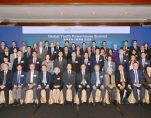
The Global Youth Powerhouse Summit 2026 brings together more than 600 young professionals, government and business leaders and corporate representatives
The Summit aims to connect young professionals with international resources, enabling participants to engage directly with industry leaders, grasp developments at the frontier of industry, and look ahead to the opportunities and challenges arising from artificial intelligence and Greater Bay Area integration. Previous editions have drawn a strong response. Across three editions, the Summit has attracted more than thousands of in-person participants and about 17,000 online participants from over 30 countries and regions, with social media reach exceeding 50 million.
This year’s Summit was the largest yet, bringing together more than 600 young professionals, government and business leaders and corporate representatives. Participants from over 60 countries and regions joined online. More than 30 distinguished speakers and moderators were invited, including officials of the Hong Kong Special Administrative Region Government and representatives of leading local and international organisations such as Huawei, the Alibaba Hong Kong Entrepreneurs Fund, Hong Kong Exchanges and Clearing Limited, Bullish and Endowus. In addition, consular representatives from up to 20 countries attended the Summit.
The Chief Executive of the Hong Kong Special Administrative Region, Mr John Lee, GBM, SBS, PDSM, PMSM, delivered a pre-recorded video speech, encouraging young professionals to seize the opportunities of the times and inject fresh momentum into Hong Kong’s high-quality development. He said: “For our young people, I firmly believe that your opportunities ahead outweigh the difficulties. The HKSAR Government will join hands with all sectors to build platforms for you to thrive in Hong Kong, in our country, and in the global arena.”
The Deputy Secretary for Justice of the Hong Kong Special Administrative Region, Dr Cheung Kwok-kwan, SBS, JP, delivered an opening keynote entitled “Opportunities for the Professional Development of Young People”, and stressed: “As the saying goes, ‘Change is the only constant’—or as our Cantopop classic famously put it, ‘變幻原是永恆’. Today, we no longer measure change in years or decades, but in months and days. For our young professionals, this fast-paced era unlocks unprecedented career horizons. By accelerating Greater Bay Area integration through our new GBA Task Force and empowering you to act as the ultimate ‘super-connectors’ and ‘super value-adders’ helping Mainland enterprises go global, we are turning rapid change into your greatest professional advantage.”
Dr Kevin Lau, MH, Founding Convenor of Hong Kong Youth Professional Global Advocacy, said: “This is more than a high-level forum. It marks a milestone in the maturing of our network of young professionals. This afternoon, venture funds managing an estimated US$10 billion in assets gathered in the room — and what they are looking at is Hong Kong’s next generation. In life and health technology, our core belief is clear: artificial intelligence can assist imaging and diagnosis, but a physician’s care, and the warmth of a human hand, can never be replaced by technology.”
Other distinguished guests included Mr Kevin Choi, JP, Permanent Secretary for Innovation, Technology and Industry; Professor Frederick Ma, GBS, JP, Chairman of the Hong Kong Trade Development Council; Ms Bonnie Y Chan, JP, Chief Executive Officer of Hong Kong Exchanges and Clearing Limited; and Mr James Chau, President of the China-United States Exchange Foundation and World Health Organization Goodwill Ambassador for Sustainable Development Goals. Mr Bryan Che, Chief Strategy Officer of Huawei, and Ms Cindy Chow, Executive Director and Chief Executive Officer of the Alibaba Hong Kong Entrepreneurs Fund, also attended in person to exchange views with young professionals.
Panel discussions
Artificial intelligence: from first-time users to advanced users The opening session began with remarks by Mr Kevin Choi, JP, Permanent Secretary for Innovation, Technology and Industry, and was moderated by Ms Stephaine Chan, Director of the Office of the Vice Chairman of Esquel Group. Panellists included Ms Ilaria Chan, Chair of the Tech For Good Institute; Mr Bryan Che, Chief Strategy Officer of Huawei; and Ms Cindy Chow, Executive Director and Chief Executive Officer of the Alibaba Hong Kong Entrepreneurs Fund. The discussion focused on whether small and medium-sized enterprises, non-governmental organisations and schools can genuinely put artificial intelligence to use, and on the talent, trust and practical-application issues Hong Kong faces in driving “AI for all”.
Mr Kevin Choi, JP mentioned: “Every major technology shift brings uncertainty. Our theme today from entry-level shock to AI-powered users building the next talent leader.”
Ms Stephaine Chan said: “Every AI conversation ends in the same place, right? More investment, better people, better models and stronger policy.”
Ms Ilaria Chan said: “These days, Al is so powerful that they can scan the Internet and social media and find vulnerable young people or old people. They can find it instantly and have a very sophisticated way to trick them and fraud them from scamming.”
Mr Bryan Che: “One of the opportunities of Al is because the interface is much more natural for most people to interact with. On one sense, it’s a lot easier for everyone to get started.”
Ms Cindy Chow said: “So I guess some of the most damaging thing is not allowing people to use or not, you know, really have the attitude to embrace all this new technology, what this new technology has to bring to you.”
Geopolitics: the super-connector This session was moderated by Mr James Chau, President of the China-United States Exchange Foundation and World Health Organization Goodwill Ambassador for Sustainable Development Goals. Speakers included Ms Ilaria Chan, Chair of the Tech For Good Institute; Ms Ellana Lee, Senior Vice President, Managing Editor, Asia Pacific, and Global Head of Productions at CNN; and Professor Frederick Ma, GBS, JP, Chairman of the Hong Kong Trade Development Council.
Mr James Chau said: “Against this backdrop, we often hear Hong Kong described as a super connector, typically framed in terms of trade volumes, capital markets and logistics but I think that these connections that we’re speaking of really only become very valuable and we understand and recognize the human bonds that pin these together.”
Professor Frederick Ma , GBS, JP said: “We are part of China. And yet we are under one country 2 systems connected to the rest of the world. That is the power of Hong Kong.”
Ms Ellana Lee said: “We made a very strategic decision when the times were tough to stay and remain in Hong Kong. I think that has and you know, we make these decisions not just out of a whim, but we are very calculative on why we need to stay. I have 8 cities across Asia Pacific. Hong Kong happens to be the hub for Asia Pacific. And there’s it boils down to four major reasons.”
Ms IIaria Chan: “Simple of how tech is helping people, there is an organization, WHO care for children that was founded 20 years ago that helps orphans in developing China back then Vietnam, Thailand now in Africa, Middle East to find loving permanent homes. But their bottleneck is how they train social workers and governments on how to take care of orphan welfare. Now this year we’ve actually been launching an online product that is able to scale these bottlenecks, especially in areas that are underfunded. This is a great example of Al tech.”
Education: Hong Kong as Asia’s education hub This session was co-moderated by Mrs Jennifer Yu Cheng, JP, Founder of the Future Leaders Foundation, and Ms Jennifer Ma, Founder of JM Edu Consulting. Speakers included Ms Maggie Chau, School Partnership Advisor at the Academy for Educational Development and Innovation of The Education University of Hong Kong; Mr Dion CHEN, MH, Vice-Chairman of the Hong Kong Direct Subsidy Scheme Schools Council; and Professor Charles Ng Wang-Wai, Vice-President for Institutional Advancement of The Hong Kong University of Science and Technology.
Mrs Jennifer Yu Cheng, JP said: “An education hub is more than a place with excellent institutions. It is a place that students and families choose, where young people flourish, and connects education with research, innovation, careers and a wider community.”
Professor Charles Ng said: “With our national policy. And I think we should do better to support this great initiatives and thinking back actually 2023 and home government already in in the government policy in October, if I remember correctly to start to increase the local student quota from 20% to 40%.”
Ms Jennifer Ma said: “As a consultant we need demand to meet supply and we are definitely seeing the demand for Hong Kong education at K12 level…….The advocacy for Hong Kong to be the gateway for China Resources and talents to leave China and go into international arenas. But at the same time, we also see a lot of international people interested in what’s happening in mainland, and therefore Hong Kong is a great gateway. So, with that global education, global education philosophy, that means they really appreciate Hong Kong trilingual education by cultural mindset.”
Mr Dion CHEN, MH mentioned: “In 2026, a lot of DSS schools will work very hard to try to welcome and also promote welcome to Hong Kong and also promote Hong Kong’s education to the students in different countries.”
Ms Maggie Chau said: “Maggie: I can see that all the universities are actually implementing AI in their curriculum. Talking about teacher education, the programs we offer, I mean, not just The Education University of Hong Kong, the programs we offer in all universities implement Al in the curriculum in a way that we draw attention to the use of Al is it has to be ethical.”
Capital markets: AI listings, asset tokenisation and the new economy This session was moderated by Ms Emily CHAN Tan, a former CNBC anchor. Speakers included Ms Bonnie Y Chan, JP; Ms Clara CHAN Ka Chai, Chief Executive Officer of the Hong Kong Investment Corporation Limited; Mr Michael Lau, Senior Vice President and Head of Group Business Development at Bullish and Chairman of Consensus; and Mr Samuel RHEE, Co-founder, Chairman and Group Chief Investment Officer of Endowus.
Ms Clara CHAN Ka Chai said: “We always say that from zero to 1 is the most challenging part. So, the patients in terms of having staying power is the core, but it has to go in hand with other qualities like being proactive, being professional.”
Mr Michael Lau said: “I think it’s an interesting proposition to consider that these types of companies that are so capital. I would start looking beyond the current horizon of where we are to see where it could go next. And so I do think that there is a demand looking to that future where this idea of a tokenized capital market could be quite interesting.”
Mr Samuel RHEE mentioned: “First of all, maybe we just take a step back and just try to understand all of the capital markets, not just equities.”
Ms Bonnie Y Chan, JP said: “I want to point out one thing. I mean, we are operating a stock exchange and I think capital markets at the end of the day, the basic function is to match capital with opportunity. So what I’m very focused on is that I’m not just focused on technology or AI.”
Ms Emily CHAN Tan said: “We are not just witnessing a cyclical recovery, but also some would call this the threshold of a capital markets renaissance.”
Life and health technology: building a health-industry hub This session was moderated by Professor Lo Yuk-lam, BBS, Founding President of the Hong Kong Biotechnology Organisation. Speakers included Professor LI King-Chuen, Founding Dean of the School of Medicine at The Hong Kong University of Science and Technology; Dr Sarah SALVILLA, Director of Health and Strategic Partnerships at FWD Group; and Professor Anthony Wu Ting-yuk, GBS, JP, former Chairman of the Hospital Authority and Non-executive Chairman of Trinity Medical Group. The discussion focused on how AI in healthcare can strengthen the competitiveness of Hong Kong’s health industry.
Professor Lo Yuk-lam, BBS said: “Building HK’s holistic wellness hub, this year marks a defining moment for HK. With the release of our first ever five year plan and their chief executive policy address just a few weeks ago, our city’s road map for healthcare and biotechnology knowledge has never been clearer or more ambitious.”
Professor Anthony Wu Ting-yuk, GBS, JP said: “Every country every city is trying to recruit more talent and I think Hong Kong is an ideal position to attract talents.”
Professor LI King-Chuen said: “Our education system will be individualized. And we will do the factual knowledge transfer through mostly self-directed learning. So we guide them, we build an AI system with prescribed information.”
Dr Sarah SALVILLA said: “Prevention for sure in terms of how do we educate people to be much more proactive in their everyday lives, yes you know, kind of the lifestyle things.”
Start-up pitching: connecting with capital The closing session was moderated by business journalist Ms Elaine Yu, with Mr LU Chin Yung, Senior Vice President (Start-ups) of the Sector Specialist Group at Invest Hong Kong. Representatives of 11 venture funds were present, including the Alibaba Hong Kong Entrepreneurs Fund, Clee Capital, Click Ventures, GT Healthcare Capital Partners, Gobi Partners GBA, HKSTP Ventures, MindWorks Capital, Ryoden Medical Holdings, Seveno Capital, Verge HealthTech Fund and W2 Venture Partners. Together, the funds manage an estimated US$10 billion, have invested in more than 600 start-ups across more than 30 economies, and have backed at least nine unicorns, including Airwallex, Animoca Brands, Prenetics and GoGoX. Start-ups taking part in the pitching session included CELLmeric, Entoptica, PointFit, Syngular, Kodifly, AilsynBio, EveryBaby, A-grade, Orimmune Biotech, Nordia Biotech, Oncolmmu Nostics Limited, The Harbour School (THS), VisionBridge, Eden’s Garden, and CARE CONNECT.
Ms Elaine Yu said: “We have 15 startups and I think a group of students as well, very precocious students WHO are already thinking of ideas, real businesses with commercial viability at the cutting edge of science, research, healthcare and so forth. So, this should be a fun dynamic session.”
Mr LU Chin Yung pointed out: “Hong Kong is great in a lot of rankings in the world and this is not given, this is hard earned by your parents, by some of you sitting here. But as a young founder in Hong Kong, if you come to Hong Kong, you get to enjoy all this very safe environment. You have efficiency and then you also have a very clean government. This one I can say for sure. Yeah. And and all this, it helps the the founders to focus on your business, focus on grow, growing instead of you have to deal with many, many things.”
The Summit closed amid lively exchange. Hong Kong Youth Professional Global Advocacy said it will continue to build the Summit into a platform for dialogue between young professionals and leading figures in government and business, helping Hong Kong’s young talent seize the opportunities of the new economy.
Vice-Chairman, Hong Kong Direct Subsidy Scheme Schools Council
Mrs Carrie Cheng, JP
Founder, Future Leaders Foundation
Dr Cheung Kwok-kwan, SBS, JP
Deputy Secretary for Justice, Hong Kong Special Administrative Region
Mr Kevin Choi, JP
Permanent Secretary for Innovation, Technology and Industry
Ms Cindy Chow
Executive Director and Chief Executive Officer, Alibaba Hong Kong Entrepreneurs Fund
Dr Kevin Lau, MH
Founding Convenor, Hong Kong Youth Professional Global Advocacy
Mr Lau Tak-ho
Senior Vice President and Head of Group Business Development, Bullish, and Chairman, Consensus
Ms Ellana Lee
Senior Vice President, Managing Editor, Asia Pacific, and Global Head of Productions, CNN
Professor King Li
Founding Dean, School of Medicine, The Hong Kong University of Science and Technology
Professor Lo Yuk-lam, BBS
Founding President, Hong Kong Biotechnology Organisation
Mr Raymond Lui
Senior Vice President (Start-ups), Sector Specialist Group, Invest Hong Kong
Ms Michelle Ma
Founder, JM Edu Consulting
Professor Frederick Ma, GBS, JP
Chairman, Hong Kong Trade Development Council
Professor Charles Ng
Vice-President for Institutional Advancement, The Hong Kong University of Science and Technology
Mr Samuel Rhee
Co-founder, Chairman and Group Chief Investment Officer, Endowus
Dr Sit Wai-nga
Director, Health and Strategic Partnerships, FWD Group
Professor Anthony Wu, GBS, JP
Former Chairman, Hospital Authority, and Non-executive Chairman, 全仁醫療集團
Ms Elaine Yu
Business Journalist
Ms Jeanne Cheng, JP
District Officer (Central and Western)
Dr Elsie Leung, GBM, JP
Former Secretary for Justice, Hong Kong Special Administrative Region
Professor Teresa Cheng, GBM, GBS, SC, JP
Secretary-General, International Organization for Mediation, and former Secretary for Justice
The Hon Tommy Cheung, GBM, GBS, JP
Non-official Member, Executive Council
The Hon Dr Lam Ching-choi, GBS, JP
Non-official Member, Executive Council
The Hon Chan Hoi-fung, BBS, MH, JP
Legislative Council Member
The Hon Chan Kin-por, GBM, GBS, JP
Non-official Member, Executive Council
The Hon Nixie Lam
Legislative Council Member
Mr Andrew Yao, SBS, JP
Hong Kong Deputy to the 14th National People’s Congress
Professor Herman Hu, GBS, JP
Hong Kong Deputy to the 14th National People’s Congress
Mr Gordon Lam
Hong Kong Deputy to the 14th National People’s Congress
Mr Chan Chung-ni, SBS, JP
Hong Kong Deputy to the 14th National People’s Congress
Mr Ho Hon-kuen, BBS, MH
Hong Kong Member, 14th National Committee of the Chinese People’s Political Consultative Conference
Mr Tu Haiming, BBS
Hong Kong Member, 14th National Committee of the Chinese People’s Political Consultative Conference
Mr Kung Wing-tak
Hong Kong Member, 14th National Committee of the Chinese People’s Political Consultative Conference
Dr Lo Kam-wing, BBS, JP
Hong Kong Member, 14th National Committee of the Chinese People’s Political Consultative Conference, and President, The Chinese Manufacturers’ Association of Hong Kong
Mr Li Tai-chong, SBS, OM, JP
Member, National Committee of the Chinese People’s Political Consultative Conference
The Hon Lam Wai-chuen
Legislative Council Member
The Hon Lau Man-kwan, JP
Legislative Council Member
The Hon Chong Ho-fung
Legislative Council Member
The Hon Lee Kwong-yu, MH
Legislative Council Member
The Hon Leung Tsz-wing, MH
Legislative Council Member
Mr Ng Yuk-yeung
Hong Kong Member, 14th National Committee of the Chinese People’s Political Consultative Conference
The Hon Fong Kwok-shan
Legislative Council Member
The Hon Lau Ka-keung, BBS, MH, JP
Legislative Council Member
The Hon Revd Canon Peter Koon, SBS, JP
Legislative Council Member
Mr Pablo Macedo Riba
Consul General of Mexico in Hong Kong
Dr Esteban Ramírez González
Consul General of Mexico in Hong Kong
Mr Alberto Martínez
Representative, Consulate General of Spain in Hong Kong
Ms Silvia Civera
Representative, Consulate General of Spain in Hong Kong
Mr Javier Sampedro
Commercial Representative, Consulate General of Spain in Hong Kong
Mr Juha Niemi
Consul General of Finland in Hong Kong and Macao
Mr O’Brien Ernesto Guerra Córdova
Consul General of Venezuela in Hong Kong
Mr Ammala Saenchonghack
Consul General of the Lao People’s Democratic Republic in Hong Kong
Mr Riaz Ahmed Shaikh
Consul General of Pakistan in Hong Kong
Mr Yos Sokhemrin
Consul General of Cambodia in Hong Kong
Mr Maurits Ter Kulve
Consul General of the Netherlands in Hong Kong
Ms Lim Kim Suan
Consul General of Brunei Darussalam in Hong Kong
Mr Hassan Doutaghi
Consul General of Iran in Hong Kong
Mr Ali Abdulla Al-Hitmi
Deputy Consul General of Qatar in Hong Kong
Ms Helen Silvester
British Council
Mr Wilhelm Brauner
Belgium-Luxembourg Chamber of Commerce
Professor Sin Kuen-fung, MH
Co-Executive Director, Academy for Educational Development and Innovation, The Education University of Hong Kong
Mr Lam Siu-hong, JP
Commissioner for Youth, Home and Youth Affairs Bureau
Mr Arnold Lau
Assistant Director-General, Invest Hong Kong
Professor James Dai
Associate Dean of Students, The Hong Kong Polytechnic University
Dr Chan Pui-yin
Vice-President, Hong Kong Medical Association
Ms Cecilia Ho
Chief Executive, Lee Hysan Foundation
Mr Quentin Merour
Consulate General of France in Hong Kong
Ms Christine Ma Lau
Founder and Principal, JEMS Character Academy
Ms Agnes Chan, BBS
Senior Advisor, Office of the Chairman, Greater China, EY
Ms Melissa Pang, BBS, MH, JP
Former President, The Law Society of Hong Kong, and Member, National Committee of the Chinese People’s Political Consultative Conference
Mr Patrick Yeung
Chief Executive Officer, Hong Kong General Chamber of Commerce
Ms Kimberly Kwok
Founder, Mighty Oaks
Mr Larry Chiang
Founder and Chief Executive Officer, International Finance Capital Group Limited
Ms Sophia Kao, GBS, JP
Former Chairperson, Women’s Commission, and founding Chairperson, Financial Reporting Council
Ms Marie Mercy
Consulate General of France in Hong Kong
Mr Peter Shum
Deputy Chairman of Federation of Hong Kong Industries
Mr Daryl Lin
JCI Hong Kong
Mr Jacky Chung
Hong Kong Trade Development Council (represented by Mr Andrew Chui)
Mr Silas Chu
Hong Kong Trade Development Council
Mr Lot Chan
Assistant Director of Health (Preparatory Office for Centre for Medical Products Regulation)
Dr Jeff Lee
Head of the Health Informatics and Technology Office
The issuer is solely responsible for the content of this announcement.
Hong Kong Youth Professional Global Advocacy
Hong Kong Youth Professional Global Advocacy is a community organisation founded in 2023 by young professionals in Hong Kong. It seeks to serve as a bridge between Hong Kong and the world, uniting Hong Kong young people globally through a range of exchange activities and cultivating an overseas youth network that supports “Hong Kong opportunities”. The organisation brings together more than 120 young professionals across finance, real estate, building surveying, manufacturing, environmental protection, healthcare, law, accounting and technology, and works closely with professional bodies, industry associations and the media. Through monthly salons and online exchanges with the Greater Bay Area, Southeast Asia and countries along the Belt and Road, it promotes understanding of the development of the Hong Kong Special Administrative Region and the Chinese Mainland, explores opportunities for collaboration, and ultimately aims to build a stronger network of professional youth and deepen exchange and cooperation with young people around the world.
Arabian Post Staff -Dubai Dubai Electronic Security Centre has unveiled SARAAB, an artificial intelligence model built to detect deepfake videos, presenting the Emirati-developed system at GISEC Global 2026 as authorities intensify efforts to counter AI-enabled cyber fraud and manipulation. The open-source model was developed entirely by a team at the Dubai Electronic Security Centre, or DESC, and is designed to analyse video frame by frame for signs […]
Matein Khalid I never thought a routine telegraphed 0.25% a rate hike at a FOMC conclave would make September 16, 2026 one of the scariest days in my investing career, right up there with September 15, 2008 (the Tuesday Lehman died), September 11, 2001 the day the WTC Feng Shui twin sentinels of Manhattan died or Black Wednesday September 15 1992, when my Magyar idol George Soros […]
By Arun Srivastava It would be politically naive to look at the decision of Trinamool Congress chief Mamata Banerjee to stay out of the Nandigram by-poll purely as a calculated move to avoid a trap set by her opponents. Yet another significant move Mamata has made is of a tactical outreach by offering the Nandigram […]
Five alleged leaders of the Cape Town branch of the Black Axe network have appeared in a New Jersey federal court after being extradited from South Africa to face charges over internet fraud and money laundering schemes that prosecutors say targeted victims in the United States. Perry Osagiede, 57, Franklyn Edosa Osagiede, 42, Osariemen Eric Clement, 40, Collins Owhofasa Otughwor, 42, and Musa Mudashiru, 38, were extradited […]
Calls by leading artificial intelligence executives to slow development of advanced models pressured Asian semiconductor shares on Monday, but investors and strategists said robust spending on computing infrastructure was likely to keep the longer-term AI investment cycle intact. Samsung Electronics fell as much as 4.1% in early trading, while South Korea’s SK Hynix dropped 5.8%. Japan’s Advantest declined 4.7% and Kioxia Holdings slid 9.3% as markets assessed […]
Revolut has disclosed that a limited number of customers had sensitive personal and financial information exposed after the fintech company responded to fraudulent requests sent from an unauthorised account operating within a legitimate government agency’s email domain. The company said the requests appeared authentic because they came from an official government domain and carried valid domain authentication credentials. Revolut later determined that the email account had been […]
The US Treasury has sanctioned Xinbi Guarantee, a Chinese-language illicit marketplace accused of connecting Southeast Asian scam centres and transnational crime groups with money launderers, technology providers and other criminal-service vendors. The Office of Foreign Assets Control designated Xinbi Guarantee on September 9 as a significant transnational criminal organisation, while also sanctioning Singapore-based SafeW Technology Co Ltd and Cambodia-based Anwen Technology Co Ltd for providing technological and […]
Malone Lam, a 22-year-old Singapore citizen and former Miami resident, has pleaded guilty in Washington to leading an international cybercrime enterprise that stole and laundered cryptocurrency worth more than $245 million.
Lam admitted one count of participating in a racketeering conspiracy before US District Judge Colleen Kollar-Kotelly on Tuesday, September 8. Prosecutors said he organised a network that targeted cryptocurrency holders through social engineering scams, online intrusions and, on some occasions, break-ins at victims’ homes.
The US Attorney’s Office for the District of Columbia said the criminal enterprise operated from at least October 2023 until May 2025 and included participants based in California, Connecticut, New York, Florida and overseas. Lam, who also used several online aliases, identified targets and coordinated roles among members of the group.
One of the organisation’s largest thefts occurred in August 2024, when Lam and associates obtained more than 4,100 bitcoin from a victim in Washington. Court records say conspirators impersonated representatives of trusted companies, including Google and cryptocurrency exchange Gemini, and persuaded the victim to provide access information and authentication codes.
Those details allowed the group to gain control of the victim’s cryptocurrency holdings and transfer the bitcoin. Prosecutors have placed the value of that theft at more than $245 million for the purposes of the case, while earlier court filings valued the same 4,100 bitcoin at about $263 million at the time of the alleged transaction.
The broader racketeering case involves 18 defendants, with Lam becoming the 11th to plead guilty. Prosecutors described him as an organiser who played several roles in the enterprise and directed associates involved in obtaining credentials, moving stolen assets and laundering cryptocurrency through exchanges and other channels.
The plea marks a step in the prosecution of a network that authorities say grew out of contacts made through online gaming communities. Investigators allege members specialised in different parts of the operation, including identifying wealthy holders, impersonating corporate security staff, gaining account access and converting stolen cryptocurrency into cash or goods.
Federal authorities have pursued the case under the Racketeer Influenced and Corrupt Organizations Act, a statute more commonly associated with organised criminal enterprises. The charge allows prosecutors to treat coordinated fraud, laundering and related acts as part of one conspiracy rather than as isolated offences.
Court documents also describe occasional home invasions or break-ins used to obtain information from cryptocurrency holders. The Justice Department said the group combined those physical intrusions with deceptive calls and other social engineering methods designed to gain passwords, seed phrases, security codes and related information needed to access digital wallets.
The stolen proceeds financed extensive spending by members of the group. Authorities said the conspiracy paid for private jets, rental properties in Miami, Los Angeles and the Hamptons, luxury clothing, handbags, watches, private security and a fleet of exotic cars. Some vehicles were valued at as much as $3.8 million.
Nightclub spending was another major outlet for the proceeds. Court records cited services costing as much as $500,000 per evening, while Lam was linked to a $569,000 bill during one night at a Los Angeles club. Luxury watches purchased by members of the group were valued from about $100,000 to more than $500,000.
Lam was arrested in Miami after the August 2024 bitcoin theft. The guilty plea followed months of negotiations over whether he would accept an agreement or proceed to trial. Several alleged co-conspirators had indicated they were prepared to testify if the case went before a jury.
At the plea hearing, Lam acknowledged the prosecution’s account and entered his guilty plea to the RICO conspiracy charge. The offence carries a maximum prison term of 20 years, although the sentence will be determined later under federal law and sentencing guidelines.
Judge Kollar-Kotelly scheduled a status hearing for December 8, when the court is expected to address the next steps towards sentencing. Lam and other participants have also been ordered to repay more than $245 million in stolen funds to victims.
Two Thai businessmen have sued stablecoin issuer Tether in a New York court, alleging it froze $42.4 million in USDT months before US authorities obtained a seizure warrant. Nutthawat Rukthammachalern and Natthawat Kasamvilas filed the complaint in the US District Court for the Southern District of New York on August 31, challenging Tether’s decision to blacklist 10 Ethereum addresses containing 42,417,785.62 USDT. The plaintiffs allege Tether acted […]
SafePal has warned nearly 40,000 customers that their personal information was exposed after attackers exploited a flaw in an order-tracking system, creating a heightened risk of targeted phishing and impersonation attacks against cryptocurrency holders. The cryptocurrency wallet provider said information belonging to approximately 39,798 customers was accessed without authorisation. The affected records covered purchases made between March 2, 2025 and April 11, 2026 and contained names, email […]
VINclarity has launched an investigation into what it says is a coordinated campaign aimed at damaging its reputation across Reddit, YouTube, search engines and artificial intelligence services. The vehicle-history platform said its review identified patterns linking negative Reddit posts, YouTube videos and entries on the Better Business Bureau’s Scam Tracker with searches containing phrases such as “VINclarity scam”, “VINclarity fraud” and “is VINclarity legit”. The company argues […]
SINGAPORE – Media OutReach Newswire – 12 August 2026 – Allianz Insurance Singapore Pte. Ltd. (“Allianz”) has renamed its personal cyber insurance product from Allianz Cyber360 Protect to Allianz Scam Protect, ensuring the product’s name immediately communicates what it does: protect Singaporeans financially when they fall victim to scams.
Earlier this year, Singaporean drivers crossing into Malaysia began receiving SMSes that appeared to come from a government transport agency, claiming they had outstanding road charges to settle. Those who clicked the link and entered their payment details had their banking credentials stolen — at least 10 victims lost a combined S$24,000. Around the same time, a separate wave of phishing messages impersonating a well-known delivery service tricked victims into making payments for fake parcel notifications, resulting in another S$22,000 in losses.
These are the kinds of everyday scams — a convincing text message, a familiar brand name, a moment of inattention — that Allianz Scam Protect is designed to cover. In the first three months of 2026 alone, more than 7,800 scam cases were reported in Singapore with losses exceeding S$144.4 million. Singapore has now lost more than S$4 billion to scams since 2019.
The name change reflects how Singaporeans actually talk about these incidents. When someone loses money after clicking a phishing link in an SMS, they don’t think of it as a “cyber incident” — they call it what it is: a scam. By renaming the product, Allianz ensures that every Singaporean searching for protection against scams can find it immediately. The coverage hasn’t changed — but the name now speaks the same language as the people it protects.
Allianz Scam Protect covers financial losses from phishing, smishing, stolen payment credentials, and unauthorised transactions (up to S$25,000 for Gold; up to S$60,000 for Platinum), as well as online shopping disputes involving undelivered, damaged, or incorrect items. Existing policyholders will see the updated name at their next renewal — no action is required.
Allianz Scam Protect is available from S$8.91 per month at www.allianz.sg and through Allianz’s network of authorised distribution partners. For enquiries, customers may contact the Allianz Customer Service Team at +65 6222 1919 (Monday to Friday, 9am–5pm, excluding public holidays).
Coverage is subject to the terms, conditions, and exclusions of the Allianz Scam Protect policy. Please refer to the Policy Wording for full details. This policy is protected under the Policy Owners’ Protection Scheme which is administered by the Singapore Deposit Insurance Corporation (SDIC). This advertisement has not been reviewed by the Monetary Authority of Singapore.
The issuer is solely responsible for the content of this announcement.
About Allianz Insurance Singapore Pte. Ltd.
At Allianz Insurance Singapore, we aim to secure the future and create a positive impact on society and the environment by leveraging our expertise in risk management. As we work toward strengthening our position as one of Singapore’s leading risk solutions providers, we deliver innovative and customer‑focused protection solutions for individuals, SMEs, and mid‑corporate clients – spanning Motor, Home Content, Travel, Personal Accident, Cancer, Hospital Income, and a comprehensive suite of commercial insurance offerings.
A WhatsApp account takeover scam is spreading through messages that ask users to vote for a friend or relative in an online competition, before covertly linking the victim’s account to a device controlled by criminals. The attack often begins with a message from a familiar contact whose account has already been compromised. The recipient is asked to support someone participating in a dance contest, school competition, pet […]
CareCloud has begun notifying about 345,000 people that hackers accessed and removed sensitive medical, financial and identity information from an electronic health record environment operated by its CareCloud Health division. The compromised information may include names, residential addresses, dates of birth, Social Security numbers, driving licence and passport details, medical record numbers and health insurance information. Clinical data such as diagnoses, treatment details, prescription information, laboratory results […]
Apple is facing a federal lawsuit from three investors who allege that a fraudulent cryptocurrency wallet distributed through its App Store enabled scammers to steal Bitcoin worth about $1.8 million. The complaint, filed on July 24 in the US District Court for the Northern District of California, accuses Apple of negligence, misrepresentation and failing to adequately review or monitor applications offered through its tightly controlled digital marketplace. […]




 https://hkypga.com/
 https://www.facebook.com/hkyproadvocacy?locale=sk_SK
 https://www.instagram.com/gypowerhouse/



 https://www.linkedin.com/company/allianzinsuressg




