Just in:
Sun World Ba Den Mountain marks Vietnam Culture Day, welcoming Cambodian visitors over Bon Om Touk // China Reconciled To U.S. Curbs On Chips Exports, Woos South Korea For Supply // China’s Taiwan warning tests Washington’s defence commitments // HKGSEO Launches New SEO×GEO Dual-Engine Optimization Monthly Plan // BJP-sponsored school exam approval revoked // US authorities dismantle North Korean cryptocurrency deception infrastructure // Bahrain broadcasts nationwide safety warnings amid aerial threats // EU levies definitive duties on five steel suppliers // IEA forecasts fourth-quarter oil surplus as Gulf shipments rebound // Thiruvambady Devaswom hails rejection of report // TORRAS Launches Two New iPhone Duo Cases from Its Popular Ostand Series, Addressing Foldable Phone Users’ Concerns About Difficult Stand Positioning and Scratches // Pink Economy report puts equal rights at the heart of Thailand’s road to Bangkok WorldPride 2030 // Danone expands consumer insight capabilities to accelerate nutrition innovation through Southeast Asia R&I Application Lab upgrade // Hong Kong International Airport Online Shop Winter Festive Offer // The Honey Trap Is The Headline, The Chip Pipeline Is The Story // Usha cleared for IOA voting // Microsoft restores services gradually but gives no recovery deadline // Govt rejects SIT Pooram report, orders new probe // Fitch maintains UAE rating as 2026 growth persists // Salik posts Dhs1.045bn profit despite lower toll traffic //

News related to
study

Labour demand across the United Arab Emirates is on course to rise by more than one million roles by the end of the decade, with technology positions accounting for a growing share of new hiring as digital transformation accelerates across government and the private sector. The outlook, drawn from labour market modelling and workforce data cited in a new ServiceNow study, points to sustained growth driven by artificial intelligence adoption, cloud migration, cybersecurity needs and large-scale public investment programmes.

The report estimates that the UAE currently supports about 8.5 million jobs across its economy, of which roughly 169,000 are technology-focused roles. While this represents only a small fraction of total employment, the pace of change is expected to intensify as organisations automate processes, modernise legacy systems and respond to new regulatory and security requirements. Analysts tracking the Gulf labour market say the country’s ambition to position itself as a global hub for digital services, advanced manufacturing and knowledge industries is translating into long-term workforce demand rather than short hiring cycles.

Economic planners have prioritised sectors that combine high productivity with export potential, including financial technology, health technology, clean energy systems, logistics platforms and smart infrastructure. Programmes aligned with national digital strategies are encouraging public bodies and state-linked firms to move services online, adopt AI-enabled decision tools and integrate data across departments. Each of these shifts creates secondary demand for software developers, data engineers, cloud architects and IT service managers, while also reshaping non-technical roles that require digital fluency.

ServiceNow’s analysis suggests that technology roles are expanding faster than overall employment growth, even as traditional sectors such as retail, hospitality and construction continue to add jobs. Employers surveyed for the study reported difficulty filling specialised digital roles, particularly in cybersecurity operations, enterprise platform management and AI workflow design. These shortages are contributing to wage premiums for experienced professionals and increased investment in training pipelines.

Education providers and corporate academies have responded by scaling certification programmes, apprenticeships and mid-career conversion schemes. Universities in the UAE have expanded computer science and engineering intakes, while partnerships with global technology firms aim to align curricula with enterprise needs. Industry observers note that demand is not limited to coders; roles in product management, digital compliance, IT service delivery and change management are growing as organisations seek to embed technology into core operations.

Demographics and migration policy also shape the employment outlook. The UAE’s ability to attract skilled expatriates remains a central factor in meeting talent requirements, particularly for niche technical expertise that takes years to develop. Long-term residency options and sector-specific visas have helped stabilise the workforce, reducing turnover in high-demand roles. At the same time, localisation initiatives encourage employers to invest in training citizens for private-sector technology careers, broadening the domestic talent base.

Beyond pure technology positions, the report highlights a rise in hybrid jobs that combine domain knowledge with digital skills. In banking, compliance specialists increasingly work alongside data analytics teams; in healthcare, clinicians are expected to engage with digital records and AI-assisted diagnostics; in energy and utilities, engineers manage sensor-driven systems and predictive maintenance platforms. This blending of skills expands the effective footprint of the tech workforce beyond headline job titles.

Regional competition for talent is intensifying as neighbouring economies pursue similar diversification strategies. Salaries, quality of life and career progression prospects are key differentiators, according to recruitment firms operating in the Gulf. The UAE’s mature infrastructure, regulatory clarity and concentration of multinational headquarters continue to attract professionals, though employers face pressure to offer flexible working arrangements and clear upskilling pathways.


By Dr Arun Mitra The new nuclear bill, titled Sustainable Harnessing and Advancement of Nuclear Energy for Transforming India (SHANTI), passed by Parliament, has received the assent of the President of India, Droupadi Murmu. With this, it has become an Act governing various aspects of nuclear energy in the country. There is a strong push […]

The article The New Nuclear Bill Severely Compromises India’s National Interests appeared first on Latest India news, analysis and reports on Newspack by India Press Agency).

HANOI, VIETNAM – Media OutReach Newswire – 25 December 2025 – Vingroup announced the signing of a Memorandum of Understanding (MOU) with the Ministry of Investment, Industry and Trade of the Republic of Uzbekistan to promote cooperation and implement multi-sector projects in Uzbekistan. The agreement marks the beginning of a long-term cooperation plan between the two sides across multiple key sectors, while opening large-scale investment opportunities for the Vietnamese corporation in Central Asia, contributing to the strengthening of economic and investment ties between Vietnam and Uzbekistan.

Mr. Kasimov Ilzat Ablaxatovich, Deputy Minister of Investment, Industry and Trade of the Republic of Uzbekistan (left), and Mr. Nguyen Viet Quang, Vice Chairman and CEO of Vingroup (right), at the signing ceremony of the Memorandum of Understanding (MOU).

Under the MOU, the two parties agreed to jointly study and develop strategic cooperation opportunities in areas such as urban development, sustainable transportation, tourism and leisure infrastructure, as well as other investment projects aligned with Uzbekistan’s development orientation, affirming the scale and capabilities of Vietnamese enterprises on the global economic map.

Specifically, in the area of urban development, Uzbekistan is ready to allocate approximately 1,000 hectares of land in a prime location of the capital Tashkent for Vingroup to study, propose, and invest in the development of a large-scale, integrated urban complex. The project would include residential areas, living infrastructure, commercial and cultural facilities, and public infrastructure facilities. The development is envisioned to form a “Vietnam Town”, creating a modern and sustainable urban landmark while enhancing cultural exchange and economic cooperation between the two countries.

In the field of sustainable transportation, Vingroup has proposed studying the deployment of electric taxi and urban mobility services using VinFast electric vehicles in Uzbekistan, together with a charging infrastructure system and support services. The project is expected to contribute to the green transition, reduce emissions, and improve the quality of urban transportation services in major Uzbek cities.

In tourism and leisure infrastructure, the two sides will explore the potential development of integrated tourism and recreational center, including entertainment facilities, hotels, golf courses and related tourism infrastructure, aiming to unlock tourism potential and enhance Uzbekistan’s attractiveness to international visitors.

In addition, this strategic cooperation also establishes a framework for the two parties to identify, assess, and select other potential investment projects that align with the development strategies and long-term priorities of each side.

On the Uzbek government’s side, the Ministry of Investment, Industry and Trade committed to supporting Vingroup by providing information on the investment environment, legal framework, and incentive policies, as well as coordinating with relevant authorities and local governments in project preparation, including land allocation, licensing, and access to investment support mechanisms in accordance with legislation.

On Vingroup’s side, the Group will propose conceptual proposals, technical expertise and investment plans, participate in feasibility studies and project structuring, and mobilize member companies within the Vingroup ecosystem to implement suitable projects in Uzbekistan.

Mr. Kasimov Ilzat Ablaxatovich, Deputy Minister of Investment, Industry and Trade of Uzbekistan, stated: “We welcome Vingroup’s interest and commitment to cooperation in Uzbekistan. With its experience in urban development, sustainable transportation, and infrastructure projects, Vingroup is considered a strategic partner to jointly explore and implement investment initiatives aligned with Uzbekistan’s socio-economic development priorities in the coming period.”

Mr. Nguyen Viet Quang, Vice Chairman and CEO of Vingroup, shared: “Uzbekistan is a market with strong potential, supported by a clear development direction and an improving investment environment. Through this Memorandum of Understanding, Vingroup aims to gradually explore suitable cooperation opportunities and work alongside the Government of Uzbekistan in developing urban areas, sustainable transportation, and sectors that bring positive contributions to local communities.”

Uzbekistan holds a strategic position in Central Asia, with a growing economy and strong potential in urban development, infrastructure, tourism, and services. The Government of Uzbekistan is actively promoting reforms and attracting foreign investment to drive sustainable economic growth and international integration.

Vingroup is Vietnam’s leading private multi-sector corporation, operating across six core pillars: Industrials & Technology, Real Estate & Services, Infrastructure, Green Energy, Culture, and Social Enterprises, with the vision “To create a better life for people”. With its proven reputation, scale and capabilities, Vingroup is steadily expanding globally, contributing to elevate the global standing of Vietnamese enterprises.

Hashtag: #Vingroup

The issuer is solely responsible for the content of this announcement.

By Ashis Biswas How serious is the slogan for wresting the seven sister states in India’s northeast region, raised by Islamic extremists in Bangladesh, for New Delhi? For a proper assessment of the political challenge this poses for India, a brief study of background information is necessary. Bangladesh sought to revive old links with Pakistan […]

The article Bangladesh’s Bluster On Northeast India: Empty Threats, Or More? appeared first on Latest India news, analysis and reports on Newspack by India Press Agency).

TAIPEI, TAIWAN – Media OutReach Newswire – 22 December 2025 – Academia Sinica, Taiwan’s national academy of sciences and a leading research institution, invites outstanding students worldwide to apply for the 2026 Fall semester of its Taiwan International Graduate Program (TIGP). Applications are now open until 1 February 2026 (GMT+8).

TIGP offers 14 fully funded interdisciplinary PhD programs spanning the sciences and humanities. The Program provides a rigorous research environment supported by Academia Sinica’s world-class faculty, research facilities and extensive international collaborations.

Admitted students receive a monthly stipend of NTD 40,000 (approximately USD 1,200) for the first year. The stipend will be extended for more years for student with good academic performance. Outstanding students may also receive an additional NTD 6,000 per month through the TIGP Research Performance Fellowship.

With a diverse academic community and a comprehensive doctoral training program, TIGP offers students the opportunity to pursue advanced research in a globally connected setting.

For more information, please visit the TIGP official website or contact Ms. Huan-Yi Shen ([email protected]).

Hashtag: #AcademiaSinica

The issuer is solely responsible for the content of this announcement.

By Nitya Chakraborty The political developments in Bangladesh including violence against any one opposing the fundamentalists are having dangerous consequences for India involving the security and geopolitical stability in the sub continent. According to this writer who has been following the churnings in the newly liberated nation since 1971, the outlook for India in terms […]

The article Latest Bangladesh Developments Have Dangerous Consequences For India appeared first on Latest India news, analysis and reports on Newspack by India Press Agency).

HONG KONG SAR – Media OutReach Newswire – 17 December 2025 – The 2025 Hong Kong & Shenzhen Bi-City Biennale of Urbanism Architecture (Hong Kong) (UABBHK 2025) is officially open to the public at two key venues: the Oil Street Art Space (Oi!) in North Point and the East Kowloon Cultural Centre (EKCC) in Kowloon Bay. Organised by The Hong Kong Institute of Architects Biennale Foundation, and co-organised by The Hong Kong Institute of Architects, The Hong Kong Institute of Planners, and the Hong Kong Designers Association, UABBHK 2025 is fully supported by the Cultural and Creative Industries Development Agency (CCIDA) as the Lead Sponsor. Running until 24 January 2026, this citywide exhibition invites the public to explore how artificial intelligence (AI) is transforming architecture from a static practice into a civic performance.

This year’s theme — TECHFORMANCE: Technology, Platform and Performance — responds to global concerns about the impact of AI on authorship, ethics, and creativity in built environment practices through 25 exhibits from Hong Kong and overseas exhibitors. Rather than presenting AI as a threat, the Biennale reframes it as a platform for civic imagination, public experimentation, and participatory design.

“Through UABBHK 2025, we aim to reclaim architecture as a human-centred discipline — one that celebrates creativity, ethics, and civic responsibility in the age of AI,” said Ar. Allen POON, Chairman of The Hong Kong Institute of Architects Biennale Foundation.

Two Venues, Two Curatorial Focuses

At Oi!, the exhibition explores Co-Creation and Urban Narratives with the Community. Visitors are invited to engage directly with interactive installations that respond to sound, movement, memory, and language. The design of the exhibition reflects the venue’s warehouse heritage, featuring arched aluminium structures that create vaulted spaces for community interaction and storytelling.

At EKCC, the exhibition shifts the focus to Experimental AI-driven Urban Futures. A series of modular lab tables serve as platforms for collaborative experimentation, integrating technology and design in a hands-on setting. Both venues at Oi! and EKCC are further unified by a coherent spatial language using aluminium extrusion bent into arcs — a material choice that balances cost-efficiency, elegance, and reusability.

“We see each venue not just as a display, but as a stage for civic performance,” said Dr. Jimmy HO and Ar. Aron TSANG, Lead Curators of UABBHK 2025. “By tailoring the design of each site to its specific context, we invite the public to co-create the urban futures they want to see.”

Exhibits from UABBHK 2025 will also be showcased at the coming Shenzhen & Hong Kong Bi-City Biennale of UrbanismArchitecture (Shenzhen) (UABBSZ), which will open by late December 2025 at the Hetao Science and Technology Innovation Centre in Shenzhen. The exhibition will feature a portal-inspired installation symbolising the collaboration between Hong Kong and Shenzhen, further reinforcing the Biennale’s cross-border dialogue and spatial continuity.

For more information, please visit UABBHK 2025’s website: https://uabb2025.hkia.org.hk/en. For detailed exhibitor list and installation descriptions, please refer to the appendix.

For hi-res photo, please click here

For UABBHK 2025 factsheet, please click here

Hashtag: #UABBHK

The issuer is solely responsible for the content of this announcement.

About The Hong Kong Institute of Architects Biennale Foundation

The Hong Kong Institute of Architects Biennale Foundation is a non-profit making organisation established and incorporated in 2014 for charitable purposes. The objects for which the Biennale Foundation is established are:

  • To promote creativity and advance the understanding, appreciation and interest of architectural and design excellence
  • To encourage cross-border and cross-disciplinary dialogue and collaboration among creative professionals from Hong Kong, other parts of the Greater China region and overseas
  • To support art, design, architectural and cultural education for students and youth, the community, and policy makers
  • To create a favourable environment for study, research and experimentation of design, art and architectural works in an exhibition scale
  • To energise and revitalise specific sites of interests by introduction of cultural and creative events

About the Cultural and Creative Industries Development Agency

The Cultural and Creative Industries Development Agency (CCIDA) established in June 2024, formerly known as Create Hong Kong (CreateHK), is a dedicated office set up by the Government of the Hong Kong Special Administrative Region under the Culture, Sports and Tourism Bureau to provide one-stop services and support to the cultural and creative industries with a mission to foster a conducive environment in Hong Kong to facilitate the development of arts, culture and creative sectors as industries. Its strategic foci are nurturing talent and facilitating start-ups, exploring markets, promoting cross-sectoral and cross-genre collaboration, promoting the development of arts, culture and creative sectors as industries under the industry-oriented principle, and promoting Hong Kong as Asia’s creative capital and fostering a creative atmosphere in the community to implement Hong Kong’s positioning as the East-meets-West centre for international cultural exchange under the National 14th Five-Year Plan.

2025 Hong Kong & Shenzhen Bi-City Biennale of UrbanismArchitecture (Hong Kong)’s Disclaimer:
The Cultural and Creative Industries Development Agency of the Government of the Hong Kong Special Administrative Region provides funding support to the project only, and does not otherwise take part in the project. Any opinions, findings, conclusions or recommendations expressed in these materials/events (or by members of the project team) are those of the project organisers only and do not reflect the views of the Government of the Hong Kong Special Administrative Region, the Culture, Sports and Tourism Bureau, the Cultural and Creative Industries Development Agency, the CreateSmart Initiative Secretariat or the CreateSmart Initiative Vetting Committee.

Advertisements

A century after Srinivasa Ramanujan wrote down his striking formulas for calculating pi, the mathematics behind those expressions is shaping how scientists describe some of the Universe’s most complex physical systems. Researchers at the Indian Institute of Science in Bengaluru have shown that the same mathematical structures embedded in Ramanujan’s work also appear in turbulence, percolation processes and theoretical models of black holes, drawing a direct line […]

Laboratory research has found that two well-known cannabis compounds, cannabidiol and tetrahydrocannabinol, can sharply curb the growth and spread of ovarian cancer cells when used together, opening a possible new line of inquiry in a disease area where treatment options remain limited and relapse rates are high. The findings centre on controlled experiments in which ovarian cancer cell lines were exposed to CBD and THC, both separately […]

Falcon Racing will begin tomorrow at the Liwa International Festival 2026, bringing together elite falconers, heritage practitioners and spectators in the Empty Quarter’s oasis region for one of the Gulf’s most closely watched traditional sporting events. Organised under the festival’s heritage and cultural programme, the competition is expected to draw participants from across the UAE and neighbouring countries, reinforcing Liwa’s standing as a focal point for desert […]

Google has expanded its cultural mapping ambitions with the debut of the Google Art Project, a digital platform that places high-resolution artworks and virtual museum galleries within reach of anyone with an internet connection. The initiative extends the company’s mapping tools beyond streets and landmarks, offering close-up access to paintings, sculptures and artefacts held by leading museums across Europe, North America and Asia. Launched as a collaboration […]

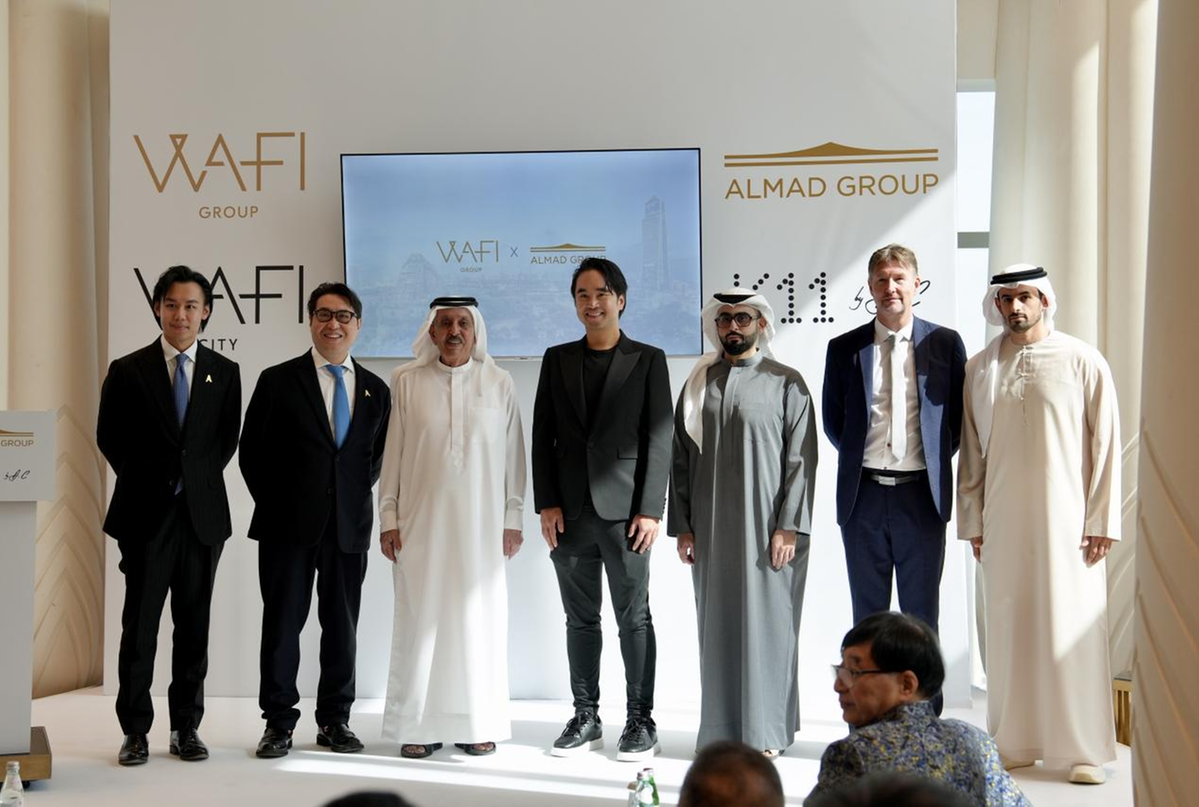
Hong Kong-based Almad Group and Dubai-based Wafi Group have formalised a strategic partnership aimed at tapping the fast-expanding animation, retail and cultural entertainment market in the Gulf, marking a notable deepening of commercial and cultural ties between East Asia and the Middle East.

The agreement, signed on December 11 in Dubai, brings together Almad Group’s lifestyle and cultural development arm, K11 by AC, and Wafi Group, one of the city’s established real estate and hospitality players. At the centre of the cooperation is the creation of a new joint venture entity, Wafi Anime 11, designed to anchor animation-led retail, immersive entertainment and intellectual-property-driven experiences in the UAE, with an eye on regional expansion.

Senior executives and representatives from both sides attended the signing, including Richard Cheung, group chief executive of K11 by AC; Dr Adrian Cheng, founder and executive chairman of K11 by AC of Almad Group; Sheikh Mana bin Khalifa Al Maktoum, founder and chairman of Wafi Group; and Sheikh Rashid bin Mana Al Maktoum, director of Wafi Group. The presence of Dubai Chambers’ executive vice-president for international relations, Salem Al Shamsi, underscored the broader trade and investment significance of the deal.

The partnership goes beyond a single retail concept. According to the framework outlined at the ceremony, Wafi Anime 11 will serve as a platform for developing themed cultural and entertainment projects, hosting IP-exclusive activities, and curating experiences aimed at both residents and international visitors. These initiatives are intended to align with Dubai’s wider strategy of positioning itself as a global hub for creative industries and experiential tourism.

A key commercial pillar of the agreement involves leasing and brand-entry cooperation for Hong Kong and the Chinese mainland labels seeking a foothold in the Middle East. The partners plan to introduce a portfolio of lifestyle, fashion and cultural brands that reflect contemporary Chinese creativity while adapting to local consumer tastes and regulatory environments. This approach reflects a growing trend among Asian brand owners to use Dubai as a gateway to the Gulf and wider Middle East and North Africa markets.

Tourism collaboration also features prominently. Almad Group and Wafi Group will roll out targeted incentive strategies aimed at visitors from Hong Kong and the Chinese mainland, encouraging longer stays and deeper engagement with Dubai’s retail and cultural offerings. Under the plan, travellers will be guided towards premium hospitality assets such as Sofitel Dubai The Obelisk and Raffles Dubai, both located within or adjacent to Wafi City, while being introduced to curated shopping, dining and entertainment itineraries.

Wafi City itself is expected to play a central role in the initiative. Long known as a mixed-use destination combining retail, hospitality and leisure, the complex will host several of the new animation-themed and IP-driven concepts. The partners believe this integrated environment provides a ready-made ecosystem for blending retail with storytelling, live events and digital engagement, a model increasingly favoured by younger consumers and families.

Another element of the cooperation involves the expansion of Gentry Club, a private members’ lifestyle concept, into the Middle East and North Africa. While details remain under development, the inclusion of Gentry Club signals an ambition to build community-based, experience-led offerings alongside mainstream retail, catering to affluent and culturally engaged audiences.

Richard Cheung said the agreement followed extensive groundwork and market analysis. “Our team has been studying the Middle East market since 2024 and is well aware of its immense development potential,” he noted. Cheung added that the first phase of cooperation would focus on brand introduction and ecosystem building, with several flagship labels representing Chinese cultural aesthetics expected to open by 2026.

Industry observers see the partnership as part of a broader shift in how cultural IP and retail are being deployed globally. Animation, gaming and character-driven franchises are no longer confined to screens or merchandise, but are increasingly used to anchor physical destinations, from themed malls to pop-up exhibitions and interactive spaces. The UAE, with its diversified economy, strong tourism flows and appetite for experiential formats, has emerged as a testing ground for such concepts.

India stands out among emerging economies for its high adoption of generative artificial intelligence, according to a new report by Organisation for Economic Co-operation and Development together with Cisco. The study shows that India, along with a few other emerging markets, leads global usage and trust metrics — even as sharp generational and geographical divides become evident.

Under-35s represent the bulk of this surge, with more than half of that demographic reporting active use of generative AI tools. Over 75 percent of young adults across the studied countries say they find AI useful. In India specifically, the share of adults actively using generative AI has been estimated at 66.4 percent, making the country the top performer among the 14 surveyed nations.

The appeal of AI appears to be shaped not only by age, but also by regional context. Emerging economies — India, Brazil, Mexico and South Africa — feature among the highest users globally, showing not only strong AI uptake but also greater eagerness to undertake AI-related training. In these countries, engagement with AI training programmes is broad, and a substantial number of respondents have expressed plans to deepen their familiarity with AI tools over the coming year.

However, this fast-paced adoption brings warnings of uneven benefits and rising risks. Populations in these emerging economies report significantly higher levels of recreational screen time and digital-only social interaction — patterns correlated with lower life satisfaction and well-being. The OECD-Cisco report warns that over five hours of daily screen time for leisure is linked to deteriorating well-being.

The divides cut deep: while younger adults readily embrace AI, older age groups remain largely disengaged. Among those over 45, many say they either do not use AI or are uncertain about trusting it. This uncertainty, according to the study, may stem more from unfamiliarity than explicit distrust. Expectations about AI’s impact on work also diverge sharply — under-35s in emerging economies overwhelmingly anticipate that AI will reshape job roles, while older respondents are more sceptical.

The findings challenge assumptions that advanced economies would lead in AI adoption, reflecting instead a reversal where developing nations leapfrog into new technologies. The data underscores how infrastructural improvements, rising digital literacy among younger generations, and perhaps lower legacy technology constraints are accelerating AI uptake in countries such as India.

LONDON, UK – Media OutReach Newswire – 5 DECEMBER 2025 – Family wellbeing is emerging as one of the strongest predictors of success on international assignments – yet support for families has not always kept pace with modern mobility expectations, according to new research from AXA Global Healthcare. Now in its third iteration (previously published in 2017 and 2020), the 2025 World of Work Report draws on […]

SINGAPORE – Media OutReach Newswire – 7 December 2025 – As Singaporean families plan for higher education, tuition costs often dominate the conversation. However, the more critical consideration lies in understanding the relationship between cost and value. This article provides an in-depth understanding of the financial implications of pursuing studies at local public universities, private institutions such as SIM, and overseas universities, while highlighting SIM’s distinctive proposition […]

SINGAPORE – Media OutReach Newswire – 6 December 2025 – Singapore’s education system offers two popular tertiary pathways after post-secondary, A-Levels through Junior Colleges and Polytechnic diplomas. Both leading to higher education but differ in focus. A-Levels are academically rigorous and theory-driven, preparing students for university through subject-based learning over two years at junior colleges or three years at Millennia Institute. Conversely, Polytechnic programmes emphasize applied learning, […]

HANOI, VIETNAM – Media OutReach Newswire – 5 December 2025 – The VinFuture Foundation officially announces the laureates of the VinFuture Prizes 2025. Four outstanding scientific and technological breakthroughs have been honored, reflecting this year’s theme “Rising and Thriving”, and highlighting the role of cross-border scientific collaboration in addressing global challenges in health, environment, and human livelihood. The 2025 VinFuture Prize Award Ceremony was broadcast live on […]

BEIJING, CHINA – Media OutReach Newswire – 5 December 2025 – Peng Liyuan, wife of Chinese President Xi Jinping, and Brigitte Macron, wife of French President Emmanuel Macron, visited the Beijing People’s Art Theatre on Thursday to learn about the theatre’s development and its cultural exchanges with the French theatre community. Following the visit, CGTN published an article highlighting the rich cultural and people-to-people exchanges in recent […]

SINGAPORE – Media OutReach Newswire – 5 December 2025 – Language should never stand in the way of ambition. At the Singapore Institute of Management (SIM), English proficiency is more than an entry requirement, it is the foundation for success in global education and careers. In today’s interconnected world, English opens doors to world-class learning and international opportunities. For students coming to Singapore, mastering English means more […]

A decision to withdraw a controversial directive on compulsory smartphone app preinstallation has been taken by the authorities after sustained objections from device makers and technology firms. The policy reversal follows intense debate over whether phone manufacturers should be required to preload the government’s Sanchar Saathi platform, amid concerns about user privacy, operating system integrity and compliance burdens. The shift comes less than two days after reports that Apple had declined to adopt the mandate, setting off a wider industry pushback that accelerated the measure’s rollback.

Officials confirmed that the mandatory installation plan has been shelved, indicating that further consultations will be held before any such directive is reconsidered. The original order sought to ensure that every new smartphone sold in the country carried Sanchar Saathi, a platform designed to help users trace lost devices, block stolen handsets and verify mobile connections. While the tool is already available for voluntary download, stakeholders argued that forcing manufacturers to embed it at the system level risked creating fragmentation across devices, complicating software updates and compromising user choice.

Senior executives from major handset brands expressed relief at the reversal, noting that the directive had introduced uncertainty at a time when the phone market is preparing for a competitive year-end cycle. Apple, which typically restricts preinstalled third-party apps to maintain strict control over its ecosystem, had reportedly conveyed through official channels that compliance would conflict with long-standing platform policies. That position highlighted the technical complexities of enforcing a uniform preinstallation rule across operating systems that function on entirely different architectures. Android phone makers had also raised procedural questions, cautioning that mandatory system additions could require extensive vetting, security reviews and manufacturer-specific testing.

The broader industry reaction underscored concerns about data governance and user rights. Digital rights groups argued that preloading state-linked applications without explicit user consent could set a troubling precedent, even if the stated aim of the app was consumer protection. Cybersecurity specialists added that any software embedded at the system level must undergo rigorous, transparent auditing to prevent vulnerabilities that malicious actors could exploit. They warned that compulsory integration could expand the attack surface on devices at a time when financial fraud, phone cloning and identity theft cases continue to grow.

Officials involved in policymaking acknowledged that the industry’s logistical and legal objections played a decisive role in halting the order. They said the withdrawal would allow departments to reassess the technical feasibility of the measure and examine alternative ways to boost the adoption of Sanchar Saathi without imposing new conditions on manufacturers. The platform, launched by the Department of Telecommunications, has gained traction through voluntary use, particularly for blocking stolen phones via the Central Equipment Identity Register. Policymakers are studying whether awareness campaigns, improved onboarding flows and coordination with telecom operators could enhance user uptake more effectively than preinstallation.

Market analysts described the reversal as a pragmatic move aimed at preventing friction between the government and global technology firms, particularly at a time when the country’s digital manufacturing ambitions remain in focus. Apple, which has expanded iPhone assembly through local partners, is seen as a critical participant in that strategy. Analysts said any regulatory action that appears to conflict with its operating standards risks diluting investment momentum. They added that Android manufacturers, many of whom operate extensive local supply chains, would also have faced significant re-engineering work to align with the directive.

Industry groups emphasised that while supporting consumer safety initiatives, they prefer interventions that preserve user autonomy and maintain consistent software governance standards. Stakeholders reiterated that preinstallation mandates, unless narrowly tailored and transparently justified, can lead to compatibility issues and unintended consequences across a diverse device ecosystem. They also highlighted that global smartphone markets increasingly recognise the importance of limiting bloatware and avoiding compulsory system-level apps that cannot be removed by users.

By Dr. Gyan Pathak When Indian rupee was falling in the Mumbai market against US dollar on Wednesday, December 3, 2023 – sliding past the 90-a-dollar mark for the second day, plumbing a new low of 90.29 in the morning trade after opening flat at 89.96, analysts were pegging the next level for the beleaguered […]


The article CEA’s Calmness Over Steep Fall Of Rupee Ignores Key Risks To India appeared first on Latest India news, analysis and reports on Newspack by India Press Agency).

SINGAPORE – Media OutReach Newswire – 4 December 2025 – Pursuing higher education abroad represents a significant financial commitment. According to a report by The Straits Times, annual tuition fees at top global universities can range from US$30,000 to US$50,000. Total expenditure for a four-year programme, including accommodation and living costs, exceeding S$500,000 in destinations such as the United States, United Kingdom and Australia. In comparison, international […]

SINGAPORE – Media OutReach Newswire – 3 December 2025 – As Singapore’s economy continues to evolve, the pursuit of education is no longer a linear journey. For many learners, choosing between full-time and part-time study has become a pivotal decision, one that shapes long-term career prospects, financial planning, and personal development. At the Singapore Institute of Management (SIM), flexibility is a core commitment. Offering over 140 full-time […]

A petition invoking the Sam Altman for living sainthood as “Patron Saint of Subsidised Layoffs” has gained traction across social-media networks, framing his stewardship of OpenAI as a kind of moral crusade against job displacement. The campaign draws on claims that OpenAI is enduring heavy financial losses—allegedly burning $2.25 for every dollar earned—while investors such as Microsoft underwrite costs that critics say pave the way for companies […]

VISHNU RAJA
RYO YAMADA
HITORI GOTOH
IKUYO KITA