The Congress-led United Democratic Front government on Monday defended its decision to provide a cheaper generic medicine for spinal muscular atrophy (SMA), promising efforts to reduce the treatment cost further amid Opposition allegations about patient safety. Chief Minister V D Satheesan told the Assembly that Natco…
Lower primary school teacher rank-list candidates escalated their protest outside the Kerala Secretariat in Thiruvananthapuram on Monday, with agitation leader S Valarmathi shaving her head and announcing an indefinite hunger strike as the demonstration entered its 113th day. The candidates, selected for inclusion in…
Joint study shows emerging markets will generate 60% of new online spending over the next decade — most of it from consumers without a credit card
SINGAPORE – Media OutReach Newswire – 21 October 2026 – Asia is projected to add 702 million middle-class adults between 2026 and 2036, three-quarters of all middle-class growth in emerging markets, according to a new study from World Data Lab (WDL) and EBANX, a global technology company specializing in payment services for emerging markets.
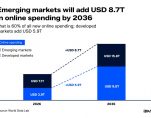
Emerging markets will add USD 8.7T in online spending by 2036
But this new consumer class will not shop the same way developed-market consumers do: by 2036, only 20% of adults in emerging markets will hold a credit card, against 66% in developed markets.
Global online spending is projected to grow from USD 11 trillion in 2026 to USD 25.6 trillion in 2036. Emerging markets add USD 8.7 trillion of that increase (60% of all new online spending), with China (USD +4.7 trillion) and India (USD +1.3 trillion) leading this growth. Indonesia (USD +243 billion), Brazil (USD +249 billion) and Mexico (USD +191 billion) form the next tier.
The categories matter as much as the markets. Online gaming spending in emerging markets grows 14% a year over the decade, the fastest of any category, and SaaS nearly 10%. Emerging markets will generate 76% of global growth in social media spending and 64% in SaaS.
The demographic picture challenges a common assumption. Consumers aged 45 and over account for 51% of emerging markets’ online spending growth through 2036, and spending by those aged 65 and over grows 12% a year, faster than any other age group.
The outlook was discussed during “Navigating Payments: How innovation and fragmentation are changing the game for e-commerce,” a webinar co-hosted by World Data Lab (WDL) and EBANX.
“Over the next ten years, people aged 45 and over will add USD 4.4 trillion in online spending in emerging markets, half of all the growth. Some of them already shop on their phones and will keep doing so as they get older. Others will buy online for the first time in their fifties or sixties. Merchants who build their checkout only for a 25-year-old will miss both groups,” explained Wolfgang Fengler, CEO of WDL.
The study models consumer spending, demographics, and financial access across 184 countries to 2036, drawing on the World Bank’s Global Findex and WDL’s consumer models, combined with EBANX’s experience processing payments for global merchants in emerging markets since 2012.
“If your checkout only takes credit cards, you are competing for one in five adults in emerging markets and conceding the other four”, said Marie-Elise Droga, Chief Revenue Officer of EBANX. “The merchants growing fastest with us didn’t wait for cards to arrive: they added the payment rails their customers already use, and they’re taking new buyers, bigger baskets and recurring revenue that card-only competitors can’t even see.”
834 million new online buyers, 281 million new credit cards
Between 2026 and 2036, the global economy will add 834 million online buyers but only 281 million credit card holders—a ratio of nearly three to one. In emerging markets, two in three new online buyers (67%) will arrive without a credit card. Adults without it already account for 55% of online spending in emerging markets, a share that rises to 90% in India and 93% in Sub-Saharan Africa. Credit cardless adults also represent 52% to 59% of spending in every digital category, from gaming and SaaS to streaming and travel.
Digital payment use is also running ahead of online shopping. Of the 2.6 billion emerging-market adults spending between USD 6 and USD 25 a day, 70% already pay merchants digitally while only 33% buy online, leaving at least 957 million digitally active consumers who are not yet online buyers. Many hold a bank account or mobile wallet but no card that works at an international checkout.
“This is closely tied to the innovation that came out of the financial industry in emerging markets, which developed solutions for an increasingly mobile economy and for the habits of local consumers. Today, we call them local payment methods, or LPMs, and they allowed e-commerce growth to decouple from the credit card, which still has very low penetration in these countries,” said Estelita Hass, head of Market Intelligence at EBANX.
Subscriptions are the next frontier — and India shows why
Recurring categories such as streaming, SaaS and online education will reach USD 2.1 trillion a year in emerging markets by 2036, with USD 1.1 trillion coming from adults without a credit card. In India, 82% of recurring online spending will be cardless. Account-based recurring rails are beginning to close that gap: a global SaaS company saw a 20% uplift in new subscribers after adding UPI at checkout in India, and cybersecurity company Nord Security now generates 28% of its revenue in Brazil through Pix Automático, Brazil’s recurring instant payment, six months after launching it with EBANX.
The issuer is solely responsible for the content of this announcement.
ABOUT EBANX
EBANX is the leading technology platform connecting global businesses to the world’s fastest-growing digital markets. Founded in 2012 in Brazil, EBANX was built with a mission to expand access to international digital commerce. Leveraging proprietary technology, deep market expertise, and robust infrastructure, the platform enables global businesses to offer hundreds of local payment methods and streamline cross-border payments across Latin America, Africa, and Asia. With a global footprint, it established a technology and regulatory headquarters in Singapore in 2026. More than just payments, EBANX drives growth, enhances sales, and delivers seamless purchase experiences for businesses and end users alike.
SINGAPORE – Media OutReach Newswire – 26 October 2026 – Programme choice, fees, university recognition and career prospects are often among the first considerations when students compare higher education options. For students who may require accessibility support, however, another practical question can be equally relevant: whether they will be able to participate effectively in learning and campus life once they enrol. Accessibility in higher education extends beyond physical infrastructure. It can include how students access learning, participate in classes and assessments, navigate the campus, and communicate individual requirements to their institution.
In Singapore, the Enabling Masterplan 2030 (EMP2030) sets out the national vision of becoming a more inclusive society by 2030. Its 29 recommendations span three strategic themes, including strengthening support for lifelong learning. One of its stated aspirations is for persons with disabilities to have greater access to lifelong learning opportunities and resources by 2030. Against this backdrop, SIM Global Education (SIM GE) is highlighting why accessibility should form part of the conversation when students and families evaluate their higher education choices.
Accessibility considerations can begin before classes start
Students who anticipate requiring accessibility support may benefit from raising their needs before beginning their studies, rather than waiting until an issue emerges during the semester. SIM GE encourages students with disabilities to contact its Student Development team early to explore accessibility services, including where formal documentation or a diagnosis may not yet be available. The institution works with its partners to reduce barriers in academic and non-academic areas.
Early discussion does not mean that every requested arrangement will automatically apply. SIM GE notes that available access arrangements depend on the university associated with the student’s programme. This is particularly relevant when comparing programmes delivered in collaboration with different university partners. Students may therefore need to understand how accessibility arrangements apply to the specific qualification they are considering, rather than assuming that the same provisions apply across all programmes.
Physical accessibility forms one part of the student experience
The physical environment remains an important consideration, particularly for students with mobility or other access requirements. SIM’s current campus accessibility provisions include ramps for building access, automatic sliding doors at the main entrances to Blocks A and B, stair lifts, accessible toilets and parking spaces, Braille on lift buttons and lift service at the overhead bridge opposite the campus. SIM also acknowledges on its accessibility information page that gaps in physical accessibility may still exist and provides a channel for students to raise barriers they encounter while navigating the campus.
For prospective students, this suggests that a campus visit can serve a purpose beyond viewing lecture theatres and recreational facilities. Students with particular accessibility requirements may also use the opportunity to understand how they would move between classrooms, student services, study spaces and other frequently used parts of the campus.
An accessible campus alone does not necessarily make the overall learning experience accessible. UNESCO has highlighted that students with disabilities can face barriers to higher education that extend beyond physical access, including barriers associated with learning environments and participation. It has called for broader collaboration to strengthen inclusion and equity within higher education.
For institutions, this places attention not only on facilities but also on how teaching and learning respond to different student needs. In 2026, SIM’s Centre for Teaching & Learning introduced a training series aimed at helping lecturers better understand and respond to students with special needs and diverse learning profiles. The initiative forms part of SIM Academic Division’s professional development efforts around more inclusive classroom practices.
Such efforts reflect a wider consideration for students choosing where to study: whether accessibility is addressed only through physical facilities or is also considered in the learning environment.
Programme-specific arrangements need to be understood early
Accessibility requirements can differ considerably between students. They can also be affected by programme structures, assessment requirements and the policies of the relevant awarding institution. SIM GE therefore advises early contact so that students can explore what accessibility services may be relevant to their individual circumstances. Its published guidance makes clear that available access arrangements are dependent on the university for the programme concerned.
For students and families comparing higher education options, practical considerations may include identifying who coordinates accessibility support, how early requirements should be raised, whether arrangements involve the institution, the awarding university or both, and what process applies if a student’s needs change during the course of study. Establishing these details before enrolment can provide greater clarity about what support may be available and what steps a student may need to take.
Accessibility is becoming part of the broader inclusion agenda
Singapore’s approach under EMP2030 places lifelong learning within the broader national effort to enable persons with disabilities to participate more fully in society. The Government’s 2025 updates to the Masterplan also included work to increase the availability of accessible training courses, alongside initiatives to create more inclusive physical and social environments.
Higher education institutions form one part of that wider learning ecosystem.
For prospective students, choosing a university will continue to involve considerations such as academic quality, programme fit, cost and future opportunities. For those who require accessibility support, understanding the learning environment and available support arrangements can provide another important piece of information before making that decision.
SIM GE’s position is that these conversations are better started early. By understanding what support is available, how it applies to a particular programme and where potential barriers may exist, students can make a more informed assessment of whether a learning environment meets their needs before their university journey begins.
The issuer is solely responsible for the content of this announcement.
About SIM Global Education
SIM Global Education (SIM GE) is a leading private education institution in Singapore and the region. We offer more than 170 academic programmes ranging from diplomas and graduate diploma programmes to bachelor’s and master’s degree programmes with some of the world’s most reputable universities from Australia, Canada, Europe, United Kingdom, and the United States. SIM GE’s cohort is made up of 17,000 full- and part-time students and adult learners, of which approximately 41% are international students hailing from over 50 countries.
SIM GE’s holistic learning approach and culturally diverse learning environment aim to equip students with knowledge, industry skills and employability competencies, as well as a global perspective to succeed as future leaders in a fast-changing, technologically driven world.
For more information on SIM Global Education, visit www.sim.edu.sg
New report sets out a method the industry can use to put a financial value on climate resilience
The Westbund Central case study shows that its resilience measures are expected to keep storm-surge and rainfall-flood losses in 2050 below the losses an unprotected building would face today
HONG KONG SAR – Media OutReach Newswire – 23 October 2026 – Hongkong Land Holdings Limited (“Hongkong Land”) today published Building Value That Lasts: Quantifying the Return on Climate Resilience in Real Estate. The report developed with Marsh puts a financial value on designing buildings for a changing climate. Its case study is Westbund Central, Hongkong Land’s mixed-use waterfront development of approximately 1.7 million sq. m. on Shanghai’s Huangpu River.
(From left to right) From left: Michael Long, Head of Group Sustainability, Hongkong Land; Stuart Grant, Chief Executive of Westbund Central, Hongkong Land; Swenja Surminski, Managing Director of Climate and Sustainability, Marsh; and Michael Li, Chairman and President, Marsh Risk China.
The report finds that the development’s resilience measures cut expected storm-surge losses by 84% and rainfall-flood losses by 88% under today’s conditions. Westbund Central’s resilience measures are expected to keep storm-surge and rainfall-flood losses in 2050 below the losses an unprotected building would face today.
Closing the resilience valuation gap
Climate risk now shapes how real estate is assessed, financed and insured. Almost every climate related disclosure acknowledges the need for adaptation, yet fewer than one in ten puts a number on it. Hongkong Land and Marsh set out to close that gap together by treating resilience as an investment with a measurable return, not a cost to be absorbed.
Resilience pays, and the reductions are large
Working with global leading insurance broker and risk advisor Marsh, Hongkong Land modelled the average annual loss (AAL) at Westbund Central from storm surge, rainfall flooding and wind. AAL is the expected yearly cost of physical damage. The modelling compared climate risks today and in 2050 for buildings with and without resilience measures beyond those required by building codes. It assumed a future in which global greenhouse-gas emissions remain high.
Without the development’s enhanced resilience measures, expected storm-surge losses would more than double and wind losses would more than triple by 2050. The measures reduce expected losses as follows:
storm-surge losses fall by 84%, both today and in 2050
rainfall-flood losses fall by 88% today and 79% in 2050
wind losses fall by 36% today and 31% in 2050
Built for the climate of 2050
Westbund Central was engineered for projected climate conditions in 2050, rather than historical conditions. These measures significantly reduce the impact of increasing climate risk:
Storm surge: with Westbund Central’s resilience measures in place, average annual losses in 2050 are projected at 0.12%, compared with 0.38% for a building without these measures today.
Rainfall flooding: with the resilience measures in place, average annual losses in 2050 are projected at 0.05%, compared with 0.19% for a building without these measures today.
Insurers are raising premiums, tightening terms and withdrawing cover from exposed locations. In that market, a lower and more stable loss profile matters.
Westbund Centrals resilience features include:
23% more drainage capacity, protecting against a 1-in-100-year rainfall event
Grade 1 waterproofed basements and the elevation of critical equipment
A “Sponge City” network of more than 12 features designed to capture and store stormwater, with capacity exceeding 2,000 m³
The figures are conservative. They count physical damage only and exclude extreme heat, the fastest-growing hazard at the site, which the development manages through design and operations.
Michael T. Smith, Group Chief Executive of Hongkong Land, said: “Climate change is a significant force reshaping real estate. At Westbund Central, climate resilience is core to all that we do because we believe resilience and commercial performance reinforce each other. This report shows the return on that investment can be measured today, with tools that already exist. The industry no longer has any excuse not to.”
Stuart Grant, Chief Executive of Westbund Central, said: “A premium destination is a seamless one. Much of the resilience work at Westbund Central is deliberately invisible to the tenants and visitors who use it every day. Its value shows in the disruption that never reaches them. Keeping the precinct open, comfortable and trading regardless of weather conditions is how resilience facilitates commercial performance.”
Michael Li, Chairman and President of Marsh Risk China, said: “Climate risk is now a balance-sheet risk. Westbund Central shows that adaptation pays back through lower loss exposure and stronger access to capital. As a risk orchestrator, Marsh matches protection needs to capital flows, helping clients quantify resilience and close the valuation gap.”
A method for the industry
The report is offered as a method others can apply, not just as an account of one development. It traces how climate risk can be assessed from site selection through to operations and linked to financial outcomes. It calls on the industry to:
quantify early, at site selection and design, when action is most cost-effective
bring insurers and lenders in from the start
build a shared standard so resilience can be benchmarked across assets, as carbon already is
For further details, please see the full report which is available for download [here].
Hashtag: #HongkongLand
The issuer is solely responsible for the content of this announcement.
Westbund Central
Hongkong Land’s Westbund Central is the Group’s largest-ever single investment. Scheduled to complete in phases up until 2028, it is an US$8 billion development encompassing approximately more than 1.7 million sq. m. of prime mixed-use property strategically located at Shanghai’s Xuhui Waterfront. It is a flagship development of Hongkong Land’s prime commercial properties’ CENTRAL Series. The ultra-premium integrated commercial property includes 240,000 sq. m of retail space, 650,000 sq. m. of premium Grade A offices, 160,000 sq. m. of high-end waterfront luxury residences, two hotels (55,000 sq. m.) and over 50,000 sq. m. of cultural and art venues.
Hongkong Land
Hongkong Land is a major listed property development, investment and management group. It focuses on developing, owning and managing premium and ultra-premium mixed-use real estate in Asian gateway cities, featuring Grade A office, luxury retail, residential and hospitality products. With over US$50 billion in assets under management, Hongkong Land’s ultra-premium mixed-use real estate footprint spans over 1.97 million sq. m. lettable area in operation and 1.43 million sq. m. lettable area under development, with flagship mixed-use projects in Hong Kong, Singapore and Shanghai. Its properties hold industry leading green building certifications and attract the world’s foremost companies and luxury brands. Established in 1889, Hongkong Land takes a long-term view, investing significantly alongside its capital partners and concentrating its portfolio where it can create the most value for tenants, customers and investors. Hongkong Land Holdings Limited has a primary listing on the London Stock Exchange, with secondary listings in Singapore and Bermuda. Hongkong Land is a member of the Jardine Matheson Group.
Marsh Marsh (NYSE: MRSH) is a global leader in risk, reinsurance and capital, people and investments, and management consulting, advising clients in 130 countries. With more than 95,000 colleagues, Marsh helps build the confidence to thrive through the power of perspective. For more information, visit marsh.com, or follow us on LinkedIn and X.
LOS ANGELES, USA – Newsaktuell – 21 October 2026 – A newly released study of US state government performance found strong partisan and regional patterns within three pillars of governance: democratic accountability, state capacity and public goods provision. Yet, the US states’ outcomes differ in important ways from international comparisons, as the three governance dimensions show limited correlation, the researchers found.
Panel discussion at Columbia University in New York: Speaking about the study “The Governance Performance of the Fifty States: The U.S. Berggruen Governance Index” were (from left): Prof. Helmut K. Anheier (UCLA), Prof. Robert Y. Shapiro, Prof. Adam Tooze (both Columbia), and Joseph C. Saraceno (UCLA). (Picture: Jason DeCrow/AP Content Services for DNA)
The report, “The Governance Performance of the Fifty States: The U.S. Berggruen Governance Index”, applies the research team’s “governance triangle” from past global country rankings to the 50 US states. The report has now been presented to the public at Columbia University in New York.
“Unlike in the Berggruen Governance Index’s cross-national comparisons, where the three dimensions are broadly correlated, in the 50 U.S. states they often run counter to each other,” the authors conclude. “This may seem counterintuitive, as one might expect a well-governed state to finish high on all three and a poorly governed one to place low across all three.”
The report concluded that state capacity and public goods provision are “essentially uncorrelated.” Massachusetts, which has among the highest per capita incomes, was third in public goods but 49th in state capacity. Mining and agriculture-dependent Wyoming was 36th in public goods provision but No. 1 in state capacity.
Public goods provision, which combines quality-of-life metrics such as health and educational outcomes with infrastructure and quasi-public goods that are often delivered by the private sector, saw four of the top five from the Northeast, while the bottom seven were in the South. All but one of the top 16 states were won by Democratic nominee Kamala Harris in the 2024 US presidential election. Nineteen of the bottom 20 went to Donald Trump.
Democratic accountability measures election procedures, which vary widely among states, along with scores for civil society activity and government openness. These include among others lobbying disclosures and state auditor independence. The top 12 states were a geographical mix of the West, Northeast and Midwest. Nine of that dozen voted for Harris, though the state with the highest score was reliably Republican Montana. The 10 lowest-ranked states were all Southern, and the bottom 20 were all won by Trump in 2024.
State capacity foremost indicates debt levels, along with budget processes and effective welfare-state delivery such as unemployment insurance. The top-ranked states were geographically diversified, but no Northeastern state was among the top 12. All major regions were represented in the bottom 10, including notoriously debt-laden Rhode Island, Illinois, Connecticut and New Jersey.
The three components produce four state groupings identified by the authors:
14 fiscally sound and delivering states, which are half Republican and half Democratic and swing states, based on the 2024 presidential race.
16 strained but delivering states, which are mostly Democratic.
Nine fiscally strong but poorly served states, almost entirely Republican.
11 low performing states, including only one Democratic state.
The report was written by principal investigator Helmut K. Anheier with co-authors Joseph C. Saraceno and Edward L. Knudsen, all of the UCLA Luskin School of Public Affairs, and produced as a collaboration of the Luskin School with the Berlin-based Hertie School, supported by the Berggruen Institute, a Los Angeles think tank.
During a panel discussion held with the release of the report at Columbia University, economic historian Adam Tooze focused on the states with poor scores for provision of public goods. He pointed out that for many public goods that in Europe are assumed to be state-led, such as health care, education and utilities, in the US the private sector has a greater role.
“If you look at all of the states which are underperforming, it’s the South, and the variable that’s operating here is race,” said Tooze, a Columbia professor. “The reason why these states don’t have large-scale public services is that white people who are richer don’t want to pay taxes to redistribute income to black people. And it’s not a secret; it’s the logic of American politics.”
Among the 11 low performing states, the very worst performers are in the South: Louisiana, Mississippi, Alabama and Kentucky.
Joseph C. Saraceno said that the 14 states classified in the report as fiscally sound and delivering “provide a moderate level of public goods while also having state capacity, or this measure of fiscal room that they find to be comfortable, or have a rainy day fund as needed.”
The group of fiscally strong, poorly served states have strong balance sheets but little to show for it in quality of life. Arkansas, for example, ranks seventh in state capacity but 46th in public goods provision. Tooze said those states have better fiscal resilience and “rank high on their capacity score because basically they’ve never done anything. So unsurprisingly, when push comes to shove, they could do something if one supposed they had politics that would allow them to.”
Edward Knudsen, another researcher who worked on the previous global versions of the Berggruen Governance Index, pointed out that the strained but delivering states are heavily traditionally Democratic Party states that also score higher for democratic accountability. “In a lot of the Democratic leaning states, you have more ability for the population to demand public goods. They in turn are able to receive them. That places this fiscal stress,” Knudsen said.
This text and the accompanying material (photos and graphics) are an offer from the Democracy News Alliance, a close co-operation between Agence France-Presse (AFP, France), Agenzia Nazionale Stampa Associata (ANSA, Italy), The Canadian Press (CP, Canada), Deutsche Presse-Agentur (dpa, Germany) and Press Association (PA, United Kingdom). All recipients can use this material without the need for a separate subscription agreement with one or more of the participating agencies. This includes the recipient’s right to publish the material in own products.
The DNA content is an independent journalistic service that operates separately from the other services of the participating agencies. It is produced by editorial units that are not involved in the production of the agencies’ main news services. Nevertheless, the editorial standards of the agencies and their assurance of completely independent, impartial and unbiased reporting also apply here.
The issuer is solely responsible for the content of this announcement.
Businesses are deploying artificial intelligence agents faster than they can monitor their behaviour, leaving gaps in security, accountability and cost control, according to a global Splunk study released by Cisco on Tuesday. The 2026 State of Observability report found that 87% of technology professionals consider AI monitoring a priority, yet 56% cannot measure important workload indicators such as the quality of responses generated by large language models. […]
Initiative offers 1,000 free paediatric eye examinations, 1,000 free adult myopia screenings and a planned three-year myopia-control trial
HONG KONG SAR – Media OutReach Newswire – 20 October 2026 – As part of its mission to eliminate avoidable vision loss, Orbis and the LKS Faculty of Medicine of the University of Hong Kong (HKUMed), partnered to tackle the growing, lifelong burden of short-sightedness (myopia) across Hong Kong. The joint initiative highlights how myopia takes root early in primary school and, if left unmanaged, poses a severe, sight-threatening risk in later life.
Rather than a minor inconvenience corrected by stronger glasses, unmanaged high myopia physically alters the structure of the eye, drastically increasing the lifetime risk of irreversible blindness. Drawing on insights from HKUMed’s academic research and data from the joint Orbis x HKUMed Vision Matters community screening project, this partnership provides a crucial wake-up call on how lifelong visual health is determined during childhood.
In direct response to this public health challenge, Orbis and the Department of Ophthalmology, School of Clinical Medicine, HKUMed, are taking immediate action by offering 1,000 free comprehensive eye examinations for local children. This initiative gives families immediate access to expert care, early detection, and evidence-based guidance to safeguard their children’s sight before permanent damage occurs. In parallel, free eye screening will be provided to 1,000 adults aged over 50 years with known myopia. The 1,000 paediatric eye examinations and 1,000 adult eye screenings are all part of the HKUMed 140 for the Community Campaign.
A Lifelong Threat: From Classroom to Later Life
The joint effort establishes a clear, connected narrative across two generations:
Myopia Starts Early: A 2025 HKUMed study conducted at the HKU Eye Centre examined 501 children aged 5–12 and found that nearly 40% suffered from myopia. These findings reinforce the urgent need for regular professional eye examinations, even when a child has not reported any vision problems.
Consequences Last a Lifetime: To evaluate the long-term impact, HKUMed researchers analysed 4,217 adults aged 50 and older through the Orbis x HKUMed Vision Matters: Glaucoma AI-ROTA Screening Project. The analysis revealed that 44.5% of older adults suffer from myopia, with 6.7% suffering from high myopia. Given the historical lack of recent large-scale Hong Kong data based on objective eye measurements in this demographic, these findings represent an important public health update.
Clear Vision Does Not Remove Risk: Myopia develops when the eye grows excessively long, causing distant objects to appear blurred. While glasses can correct distance vision, they do not shorten an elongated eye or eliminate the long-term risks associated with high myopia, including retinal disease, glaucoma, cataracts, and permanent sight loss.
In the adult analysis, visual impairment or blindness was roughly twice as common among individuals with myopia and more than four times (6.3% vs. 1.5%) as common among those with high myopia, compared to those without myopia. Glaucoma—the leading cause of irreversible blindness—was also nearly twice as prevalent among people with high myopia compared to those without (13.1% vs. 6.8%). Together, these findings highlight the critical importance of identifying and managing myopia early, before it progresses into high myopia.
Practical Action: Free Screenings and Clinical Solutions
To bridge medical evidence with practical community action, Orbis and the Department of Ophthalmology, School of Clinical Medicine, HKUMed are rolling out complementary initiatives. The 1,000 paediatric examinations and 1,000 adult screenings are all part of the HKUMed 140 for the Community Campaign:
1,000 Free Paediatric Examinations: Providing local families with comprehensive eye checks to help identify eye problems early and obtain professional advice on appropriate follow-up care and myopia management.
Free Eye Screening for 1,000 Adults with Myopia: Providing free eye screening to 1,000 adults aged over 50 years with known myopia.
Landmark “2027 Children Myopia Control Study”: Supporting a three-year HKUMed clinical trial to evaluate three advanced intervention strategies among children aged 5–12: 0.05% atropine eye drops, optical defocus spectacle lenses, and a combination of both therapies.
AT A GLANCE
Children: 39.7% of 501 children aged 5–12 screened had myopia.
Adults: 44.5% of 4,217 participants aged 50+ had myopia; 6.7% had high myopia.
Impact: Visual impairment or blindness affected 6.3% of adults with high myopia, versus 1.5% without myopia.
Action: 1,000 child exams; 1,000 screenings for myopic adults over 50. All are free under the HKUMed 140 for the Community Campaign.
Next step: Three-year trial of 0.05% atropine, defocus spectacle lenses, and combined therapy.
Leadership Quotes:
Professor Chak-sing Lau, Vice-President and Pro-Vice-Chancellor (Health) and Deanof Medicine, HKU:
“Myopia is an increasingly important public health challenge that places a substantial lifelong burden on individuals and society. Through the HKUMed 140 for the Community Campaign, these initiatives reflect our longstanding commitment to translating academic excellence into meaningful benefits for the community. HKUMed is dedicated to transforming pioneering research into real-world health benefits. Through our partnership with Orbis, we seek to integrate clinical excellence, technological innovation, and population health research to lessen the impact of myopia and its complications in Hong Kong, while providing robust scientific evidence to guide eye health policy and clinical practice in the region. Together, we are working to safeguard the long-term visual health of schoolchildren and the wider population.”
Kathleen Sherwin, President and CEO of Orbis International:
“This partnership connects community service directly with research. The adult screening programme gives us a clearer view of the long-term burden of myopia, while the children’s examinations and planned trial focus on acting earlier. Together, Orbis and HKUMed are turning evidence into practical steps to protect sight.”
Mary Lau, Director of Orbis Hong Kong:
“Parents should see myopia as a condition that needs active management, not simply stronger glasses. By offering 1,000 child exams; 1,000 screenings for myopic adults over 50, we want to help more families identify problems early, obtain professional advice and take action to protect their different generation’s sight.”
Professor Christopher Leung Kai-shun, Albert Bing-Ching Young Professor in Ophthalmology, Chairperson and Clinical Professor, Department of Ophthalmology, School of Clinical Medicine, HKUMed:
“Vision Matters is showing us that myopia is an important part of the eye-health burden among Hong Kong’s over-50s. Glasses can correct blurred vision, but they cannot reverse the excessive growth of the eye or eliminate the risk of permanent sight loss associated with high myopia. The earlier we act, the greater the opportunity to protect sight over a lifetime.”
Dr Helen Zhang, Principal Investigator of the 2027 Children Myopia Control Study; and Clinical Assistant Professor, Department of Ophthalmology, School of Clinical Medicine, HKUMed
“This trial will compare eye drops, myopia-control lenses and both treatments combined. We aim to provide clearer evidence to help families choose the right approach for their children.”
Dr Kendrick Shih, Investigator of the 2027 Children Myopia Control Study; and Clinical Associate Professor of Practice,Department of Ophthalmology, School of Clinical Medicine, HKUMed:
“Myopia can worsen without obvious warning signs. Regular monitoring and timely treatment can help protect a child’s vision for the future.”
What Parents Can Do
Prioritize Annual Checks: Arrange regular professional eye examinations rather than waiting for visual symptoms to appear.
Explore Clinical Control Options: Seek advice from a qualified eye-care professional if myopia is detected.
Look Beyond Standard Glasses: Discuss evidence-based myopia-control options instead of relying only on stronger prescriptions.
Encourage Healthy Visual Habits: Encourage outdoor time, regular breaks from close work, and maintain a comfortable reading distance.
Public Registration & Participation
Registration will open in phases: Phase 1 (Now Open): Free eye screenings for children aged 5–12 (limited quotas, first-come, first-served). Online Registration: https://forms.cloud.microsoft/r/CzitVUBgJQ
Phase 2 (Coming Soon): Free eye screenings for myopic adults aged 50 or above. Details will be announced on the HKU portal and official Orbis channels.
Hashtag: #Orbis #HKUMed #Myopia
The issuer is solely responsible for the content of this announcement.
Scientists have identified a possible inflammatory link between red meat consumption and type 2 diabetes after a study involving nearly 90,000 adults found higher disease risk among those consuming the most of a particular sugar molecule. The analysis found that participants with the highest estimated intake of N-glycolylneuraminic acid, known as Neu5Gc, from meat had a 63% greater risk of developing type 2 diabetes than those with […]
Technology companies, start-ups and financial technology ventures could help lift India-UAE bilateral trade to $200 billion, a diplomat told a Dubai forum, identifying opportunities beyond established trade.
Vishnu Vardhan Reddy, Consul General of India in Dubai and the Northern Emirates, said innovation, renewable energy, defence and space technology could contribute to the next phase of economic expansion. He was addressing the Innovators and Investors Series organised by the Indian People’s Forum on October 16.
The proposal comes as both governments pursue a target of $200 billion in bilateral trade by 2032. Trade reached $101.25 billion during India’s 2025-26 financial year, exceeding $100 billion for a second consecutive year, according to official figures.
Reddy urged businesses and investors to establish partnerships capable of taking emerging enterprises into international markets. Investment in technology businesses, he argued, could create additional commercial activity while linking the UAE’s capital providers with enterprises developing products and services in India.
His remarks were an assessment, not a new government commitment or forecast backed by contracts. Achieving the target would require substantial expansion across multiple sectors, including those already accounting for the largest share of bilateral commerce. The $200 billion figure is a bilateral merchandise trade ambition, not a valuation of technology investments or start-up fundraising.
India’s exports to the UAE totalled approximately $37.36 billion in 2025-26, while imports were about $63.89 billion. The UAE remained India’s third-largest trading partner and second-largest export destination. India was the UAE’s second-largest trading partner, according to diplomatic trade data.
The technology emphasis follows a September meeting of the UAE-India High Level Joint Task Force on Investments, where officials agreed to advance work on local-currency settlement, payment-system integration and central-bank digital currencies. Those initiatives are intended to make financial transactions and cross-border commerce more efficient. Officials also discussed cooperation in financial infrastructure, an area where payment interoperability could lower friction for businesses operating in both markets.
The task force also examined investment proposals involving manufacturing, food processing and logistics. Projects discussed included an integrated aluminium complex proposed for Odisha, a food park in Gujarat and opportunities for aviation and logistics development at Dholera.
At the Dubai forum, speakers called for greater participation by UAE investors in start-ups seeking financing, commercial partnerships and access to international customers. The gathering connected entrepreneurs with businesses and potential financial backers.
Two enterprises, JE Plus Healthcare and University Living, presented their business models. JE Plus Healthcare focuses on distribution and logistics for healthcare products, while University Living provides accommodation services for students studying away from home. Both were seeking investment to expand their operations. Their presentations illustrated the range of businesses seeking support, from physical supply chains to digital services for international customers.
Actor and investor Vivek Oberoi told participants that unsuccessful investments were part of entrepreneurship and that investors needed to recognise the lessons associated with business failures. He said he had invested in 35 companies, with mixed results across his portfolio.
Jitendra Vaidya, national president of the Indian People’s Forum, said stronger two-way investment could support commercial ties between the countries. The organisation’s business representatives encouraged investors to examine opportunities in technology, artificial intelligence, machine learning and robotics.
Mahesh Advani, convenor of the forum’s business council, urged UAE investors to consider start-up financing. Piyush Jhunjhunwala, co-convenor of its business and professional council, identified technology-led businesses as a potential destination for private capital.
Figures circulated at the event described a substantial start-up and venture investment ecosystem in India, including companies operating in financial services and advanced technology. However, the figures covered different categories of businesses and financing activity, making direct comparisons difficult without consistent definitions and reporting periods.
The bilateral trade framework rests on the Comprehensive Economic Partnership Agreement, which entered into force in May 2022. It reduced trade barriers across numerous product categories and provided a platform for wider business cooperation. Trade volumes nevertheless remain sensitive to energy prices, demand conditions and changes in the composition of imports and exports.
Government initiatives now include Bharat Mart, intended to support access to markets, and a Virtual Trade Corridor designed to simplify trade processes. Both form part of efforts to improve the movement of goods and information between the two economies.
The Dubai forum was organised by the Indian People’s Forum, a community organisation that also conducts business and professional networking activities in the UAE.
With chronic pain at midlife in focus this World Menopause Day, Singapore TCM clinic highlights joint and muscle discomfort as an often-overlooked midlife concern.
SINGAPORE – Media OutReach Newswire – 17 October 2026 – Ahead of World Menopause Day on 18 October 2026, the Singapore-based Traditional Chinese Medicine clinic Yi TCM is introducing its Women’s Wellness Starter Session to support women seeking to better understand physical and well-being changes experienced during midlife.
This year’s World Menopause Day theme, “Chronic Pain At Midlife”, draws attention to an issue that is particularly relevant in Singapore. Studies conducted by the Integrated Women’s Health Programme at the National University Hospital and NUS Medicine found joint and muscle discomfort to be among the most commonly reported menopausal symptoms among Singapore women.
Muscle and Joint Pain: An Overlooked Symptom
Muscle and joint pain during the menopausal transition may be associated with hormonal changes, including declining oestrogen levels. As oestrogen receptors are also found in the joints, ligaments, and muscles, a drop in this hormone’s levels may be associated with changes in joint and muscle health and increased pain perception.
“Muscle and joint pain are not always associated with menopause by medical care teams. They are more often diagnosed simply as the wear and tear of overuse or ageing,” a spokesperson for Yi TCM stated.
In Singapore, the average age of natural menopause is 49 years, about two years earlier than in many Western countries. Thus, overlooking these symptoms has major implications, especially as Singapore has become a super-aged society.
The impact of muscle and joint pain also extends beyond physical discomfort. Some midlife women in Singapore may also experience physical and mental exhaustion, reduced muscle strength, and sleep problems.
A TCM Perspective on Menopausal Symptoms
Traditional Chinese Medicine (TCM) is used by 1 in 5 adults in Singapore, with many users integrating it with Western medicine. A local study also found interest in information about complementary and alternative approaches for menopausal symptoms among midlife women.
“Rather than addressing each symptom in isolation, TCM physicians focus on underlying patterns of disharmony in the body. This process reveals each patient’s “zheng“, or symptom pattern, and a treatment plan is tailored to help address internal imbalances,” the Yi TCM spokesperson explained. An assessment may reveal deficiencies in the Kidney or Liver, or stagnation of the Qi and Blood.
At Yi TCM, the registered TCM practitioners offer treatments such as acupuncture and customised herbal formulas to support the body’s transition and address imbalances. Acupuncture may help stimulate specific points to support the flow of Qi and Blood, which may help relieve body aches.
Meanwhile, Chinese herbs may also be prescribed depending on the deficiency pattern. “This means symptoms due to Liver and Kidney Yin deficiency may be addressed differently from symptoms due to Qi stagnation,” Yi TCM’s spokesperson added. This way, TCM can be a tailored holistic pathway to help manage joint and muscle pain, as well as the broader symptoms faced by menopausal women such as low energy and insomnia.
Women keen on understanding their individual body constitution and symptoms can also learn more about Yi TCM’s Women’s Wellness Starter Session, which provides an opportunity to discuss concerns experienced during the menopausal transition with a registered TCM practitioner.
How TCM Can Fit Into Broader Integrated Care
While TCM can support women in managing menopausal symptoms, Yi TCM notes that not all aches and pains should be attributed to hormonal changes. Women experiencing severe, persistent symptoms, or those that are new or unusual, are advised to seek medical attention. A healthcare provider can help determine the underlying conditions causing the symptoms.
In Singapore’s regulated healthcare environment, TCM is increasingly used as a complementary treatment instead of a replacement for conventional medical care. Menopausal women experiencing body aches or other symptoms are encouraged to consult practitioners registered with the Traditional Chinese Medicine Practitioners Board (TCMPB) under the Ministry of Health.
With World Menopause Day approaching, Yi TCM recognises the importance of timely recognition and management of menopausal symptoms in supporting women’s health across their later years. The clinic encourages women to take a step and have open discussions with their medical doctors and TCM practitioners to get a tailored plan for their individual needs.
The issuer is solely responsible for the content of this announcement.
Yi TCM
Yi TCM is a TCM clinic in Singapore where care is provided by TCMPB-registered bilingual physicians. Across the clinics in Raffles Place, Novena and Somerset, Yi TCM provides personalised TCM care for fertility, women’s and men’s health, pain management and general wellness.
Planned high-speed rail and road links are expected to bring the city center within 20 to 35 minutes of the 2,870-hectare ESG++ coastal urban area in Can Gio, while on-site schools, healthcare, offices and parks are designed to reduce the number of trips residents need to make.
HO CHI MINH CITY, VIETNAM – Media OutReach Newswire – 16 October 2026 – Vinhomes is developing Vinhomes Green Paradise, a 2,870-hectare ESG++ coastal urban area in Can Gio, southeastern Ho Chi Minh City, around one measure of location: the time residents spend getting where they need to go.
Vinhomes Green Paradise combines new high-speed rail and road links with a self-contained ecosystem of schools, healthcare, workplaces and green space.
The master plan rests on two pillars. First, new transport infrastructure is expected to shorten journeys to the city center: the Ben Thanh-Can Gio high-speed railway, targeted for commercial operation in the fourth quarter of 2028, is designed to link the area with downtown in about 20 minutes, while the planned Can Gio Bridge and a widened Rung Sac Boulevard are expected to cut drive times to about 35 minutes.
Second, an on-site ecosystem that includes 104 planned schools, an international general hospital, more than 2 million square meters of office space and more than 370 parks is intended to place most daily needs within reach of home.
The approach responds to a shift in how urban households assess where to live. In fast-growing cities, a home only a few kilometers from the workplace can still require hours in traffic each week. For a resident who saves 15 minutes each way, the gain is about 11 hours a month over 22 working days.
Academic research suggests these hours carry real weight. Using German household data from 1985 to 1998, University of Zurich economists Alois Stutzer and Bruno Frey identified what they termed the “commuting paradox”: people with longer commutes consistently reported lower life satisfaction, contrary to the standard assumption that they are fully compensated by higher pay or better housing. By their estimate, a person commuting one hour each way would need roughly 40% more income to be as satisfied as someone with no commute.
In Ho Chi Minh City, where rapid growth has outpaced the expansion of the road network, traffic congestion remains a significant cost to residents and the local economy. For many homebuyers, the relevant question is increasingly not how far a property is from the center, but how long it takes to get there.
Rail and road links expected to bring the city center within 20 to 35 minutes
Two major infrastructure projects are set to change how Can Gio connects with the rest of Ho Chi Minh City. The Ben Thanh-Can Gio high-speed railway is designed to reach the city’s historic center in about 20 minutes, and the Can Gio Bridge, together with an expanded Rung Sac Boulevard, is expected to bring drive times from downtown to about 35 minutes.
Can Gio, home to a UNESCO-recognized mangrove biosphere reserve, has long been reached mainly by the Binh Khanh ferry. The railway, developed by Vingroup company VinSpeed, will run about 54 kilometers with a maximum design speed of 350 km/h. Construction began in December 2025, and commercial operation is targeted for the fourth quarter of 2028. The line will connect Ben Thanh station in central Ho Chi Minh City with Vinhomes Green Paradise.
On the road network, the Can Gio Bridge, scheduled to open in 2029, will replace the Binh Khanh ferry crossing. Rung Sac Boulevard, the main artery to the area, is being widened to up to 10 lanes. Once complete, the two options are expected to give residents a choice between rail for direct trips to the center and road travel for journeys with multiple stops.
International research points to a link between transit access and property values. A study commissioned by the American Public Transportation Association (APTA) and the National Association of Realtors (NAR), which tracked five U.S. metropolitan regions from 2006 to 2011, found that homes within half a mile of high-frequency transit outperformed their wider regions by 41.6% over the period, which included the Great Recession. A 2019 follow-up study found that homes near transit sold at median prices 4% to 24% higher than those farther away.
On-site services designed to reduce the number of daily trips
Beyond the commute, Vinhomes Green Paradise is planned to bring education, healthcare, work, retail and recreation inside the community, so that school runs, medical visits, shopping and exercise require shorter trips or none at all. Key components include 104 planned schools, Vinmec Can Gio International General Hospital, more than 2 million square meters of office space and more than 370 parks and green areas.
Education: The master plan provides for 104 schools, including the Vinschool K-12 system and Brighton College Vietnam, reducing the need for long school runs across the city.
Healthcare:Vinmec Can Gio International General Hospital is being developed with Cleveland Clinic as strategic advisor and is designed around the Cleveland Clinic model of care, offering residents access to international-standard treatment close to home.
Work:More than 2 million square meters of office space is intended to allow residents to work near where they live, as financial and technology businesses establish a presence in the area.
Retail and leisure:Planned amenities include Vincom shopping centers, a 20-hectare premium outlet, the 46-hectare Cosmo Bay dining and entertainment complex, two golf courses covering 155 hectares, the 122-hectare VinWonders theme park and Song Xanh Theater.
Green space:More than 370 parks and green areas are planned to place open space within 500 meters of every residence, linked by walking paths and bicycle lanes. The Trust for Public Land estimates, conservatively, that buyers pay 5% to 15% more for homes within three blocks of a well-maintained park.
The project draws on planning principles that cities such as Copenhagen and Singapore have applied for years: development organized around public transit, mixed land use and walkable neighborhoods. At Vinhomes Green Paradise, high-speed rail, education, healthcare, offices and recreation are being planned together from the outset rather than added incrementally, with the aim of measuring a home’s location by the time it returns to residents. Hashtag: #Vinhomes
The issuer is solely responsible for the content of this announcement.
About Vinhomes
Vinhomes is Vietnam’s largest residential real estate and integrated township developer. The company pioneers the development of synchronized, modern large-scale townships, delivering premium living standards and unlocking sustainable investment opportunities for domestic and international clients.
Google has demonstrated a quantum computing technique that reduces errors approximately 40-fold, marking a significant advance towards building powerful, reliable quantum computers capable of performing complex calculations. The breakthrough, announced on Thursday by Google’s Quantum AI research team, involves a technique called magic state cultivation, tested on the company’s Willow quantum processor. Findings published in the scientific journal Science show that the approach achieved 99.99% logical fidelity […]
When Abbie Dibbert and Francoise Albrando took over the day-to-day running of Stay® Property Management, the region was in the middle of a conflict. They chose to keep building. “We saw an opportunity to grow, to expand, and to believe even harder in the UAE and its ability to rise within the chaos,” the directors explain. Over the six months following their March takeover, the live portfolio […]
Thick smoke from Indonesia’s forest and peatland fires turned skies orange across parts of Kalimantan on Thursday, sharply reducing visibility as neighbouring East Timor began a three-day nationwide school closure amid worsening regional air pollution. Palangkaraya, the capital of Central Kalimantan province, experienced particularly severe conditions, with yellow and orange skies and visibility falling to a few dozen metres. Residents faced hazardous concentrations of airborne particles as […]
Artificial intelligence played a role in 84% of ransomware attacks experienced by surveyed organisations, while 87% reported attacks targeting identity infrastructure, according to a global cybersecurity study published on Wednesday. The 2026 Ransomware Risk Report, released by cybersecurity company Semperis, surveyed 1,200 IT and security professionals across nine countries and eight industry sectors, exposing significant weaknesses in corporate identity protection and recovery capabilities. The findings indicate that […]
Ransomware gangs are threatening employees’ families while deploying artificial intelligence in attacks on corporate systems, a global survey published on Wednesday found. Cybersecurity company Semperis said 37% of respondents who experienced intimidation reported threats against relatives or friends, while 84% of surveyed ransomware incidents involved attackers exploiting artificial intelligence. The findings underline how criminals are combining technical intrusions with personal pressure to extract payments. The 2026 Ransomware […]
Artificial intelligence models could soon copy themselves across vulnerable internet-connected devices without human assistance, Anthropic has warned, raising concerns about a new category of decentralised cybersecurity threat. Research published on Monday by the company’s Frontier Red Team suggests smaller AI systems may acquire the capabilities needed for autonomous replication within months. Such systems could operate on ordinary consumer electronics rather than depend on expensive data-centre infrastructure, complicating […]
Companies generating at least $1 billion annually are more than twice as likely as smaller businesses to knowingly leave serious software vulnerabilities unpatched, a global cybersecurity survey released on Wednesday found. Research commissioned by software security company Chainguard showed that 66% of security leaders at businesses with revenue of $1 billion or more acknowledged leaving high or critical vulnerabilities unresolved at least sometimes. The corresponding figure was […]
Arabian Post Staff -Dubai Dubai is studying an integrated underground transport network to carry passengers, goods and services as part of a wider strategy to develop a three-dimensional mobility system spanning roads, airspace and subterranean infrastructure. Mattar Al Tayer, Director General and Chairman of the Board of Executive Directors of the Roads and Transport Authority (RTA), disclosed the initiative during the Mohammed bin Rashid Leadership Forum on […]
BYD’s premium Denza brand is considering establishing its own vehicle-financing operation in Europe as early as 2027, a move that would extend its challenge to established luxury carmakers beyond vehicle design, technology and pricing. The proposal remains under consideration rather than a confirmed launch. Details of its ownership, regulatory structure, potential banking partners and initial markets have not been publicly established. Any financing business would have to […]
Canada has established a national artificial intelligence council to advise Prime Minister Mark Carney’s government on safe adoption, economic opportunities and domestic control of critical technology. The Prime Minister’s National Council on Artificial Intelligence, announced on 2 October, brings together researchers, entrepreneurs, investors and public-sector specialists to provide independent advice on the government’s AI for All strategy. Its remit includes managing technological risks, improving public services and […]
By Dr. Gyan Pathak Even as employment among the graduate-level or higher education have registered about 21 million increased in the last one year, share of working graduates in the labour market of India fell to 5 years low in September 2026 with fall in Labour for Participation to 52.26 per cent. Moreover, adding to […]
Arabian Post Staff -Dubai Dubai Police has warned that increasingly convincing artificial intelligence deepfakes could undermine confidence in genuine photographs, videos and recordings, creating new obstacles for criminal investigations and digital security. A study prepared by the force’s Future Foresight Centre says the challenge is expanding beyond identifying fabricated material to establishing that authentic content has not been manipulated. It identifies potential consequences for public safety, information […]



 https://ebanx.com/en/
 https://www.linkedin.com/company/ebanx/










 https://www.facebook.com/YiTCMsg/
 https://www.instagram.com/yitcmsg/