

By Anjan Roy
China has just concluded its “third plenum” (from 15 to 18 July) which traditionally re-examines and gives fresh directions in the country’s economic policy. The all-powerful Central Committee of the Chinese Communist Party generally holds seven plenums in five years, of which the third is devoted to looking at economic issues and policy challenges before the country.
The most celebrated third plenum, held in 1978, gave an altogether new direction to China’s economy when it departed sharply from policies pursued so far under Mao Tse Tung. The third plenum of 1978, under Deng Tsiao Peng, diverged from Chinese past under Mao and introduced a market oriented economy, liberalisation of policies that allowed private and foreign investments and private ownership of means of production.
With those changes, and fortunately, alongside these economic reset, the whole hearted embrace of China by the USA, had resulted in decades of unprecedented growth that lifted a poor undeveloped country, mired by widespread and deep poverty, to emerge as a modern economic powerhouse, challenging the dominance of America.
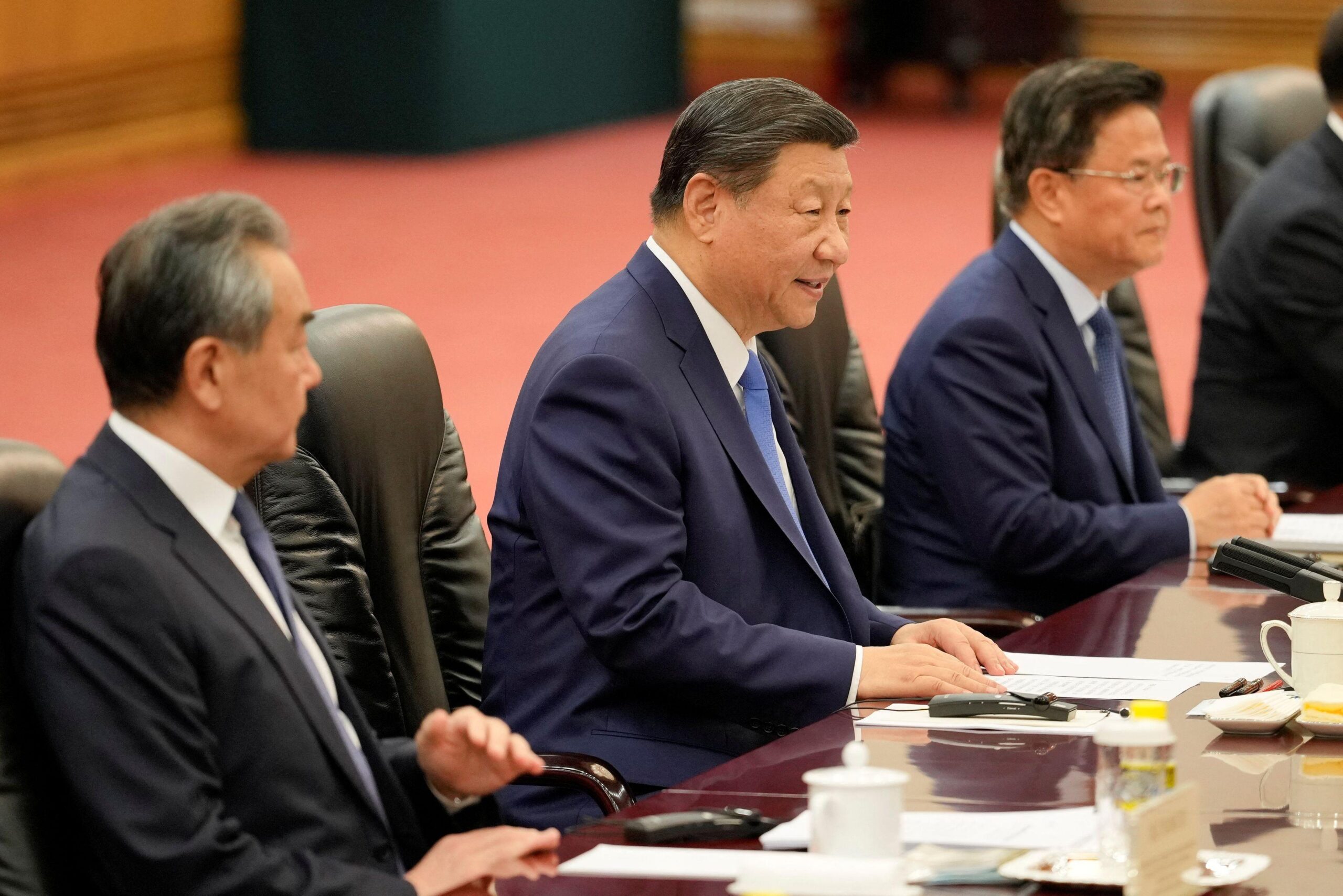
The just concluded third plenum, under Xi Jinping’s leadership, was billed as possibly another of the milestones in changing the course of Chinese economy. However, following the closure of the plenum, the official communique disappointed most China observers.
Instead, of new ideas and sharp departures from following the current practices and policies, the plenum seems to have rubber-stamped a “same as before approach”. It has effectively only reiterated faith in Xi’s political and economic thoughts in abject surrender to the ironclad hold of the supreme leader over the present political set up.
But it should have been otherwise, particularly in the context of the crisis through which the Chinese economy is currently passing. This third plenum was being held in the shadow of a slowing economy, severe headwinds for China in major overseas markets, rising unemployment among the youth, deep crises in the country’s property sector and worsening debt crisis for the regional governments and municipalities.
The principal commitment of the assembled top leaders has been a reiteration of the 5% growth target for the country. The ground level reality does not buoy up such an ambition. The Chinese economy has been witnessing a lower rate of growth on the back of low domestic consumer demand. The plenum has paid some attention to this fact, though the document does not elaborate on it.
The bane of the Chinese economy has been the deepening crisis in the country’s property sector. The Chinese economy had come to depend too much on the growth of the property sector and steady rise in property values. Based on these buoyant sectors, the local government institutions have been feasting on the profits from sale of land to property developer companies and earnings from the real estate sector. When the property developers started defaulting on their commitments, the entire superstructure of mutual benefits collapsed.
The local governments had resorted to large scale borrowing from the capital markets, and their load of accumulated debts is unsustainable. Alongside, banks which had liberally provided funds to the property companies are also facing threats to their survival. Worst of all, the ultimate buyers of property and real estates, the ordinary Chinese, are facing the prospect of their life time savings wither.
In such circumstances, who will spend money on consumption, rather than keeping funds aside for the rainy days. This has emerged as a fulcrum of current economic crisis: lack of domestic demand to sustain China’s massive production capacity.
Problems do not come alone. China’s domestic economic woes are being compounded by the geo-political threats that are emerging from all sides. The United States has identified China as enemy number one and imposed tariff and non-tariff barriers. Not satisfied with that, the Americans have imposed a virtually a technology embargo on the Chinese ad banned exports of key technology and inputs to the country.
Presently, the European Union, which has so long been rather expansive towards China, has started hardening their attitude. The EU has just slapped stiff tariffs on imports of Chinese electric vehicles into its market. China has been banking on the EV sector and had undoubtedly scored major victories over all else in EV and battery technology. The sudden clamp down on EV imports by a large market like EU is a shock to the Chinese EV makers.
The hype created around the third plenum in the Chinese state media had generated expectations that the assembled leaders — close to some 400 of them — would brain storm on these issues and come out with radical new ideas.
But the single biggest outcome appears to be the formalisation of the ouster of a senior leader —Qin Gang— erstwhile foreign minister, from the official hierarchy of the Chinese Communist Party. There was no trace of the senior leader anywhere around the third plenum proceedings. Besides, several other top leaders have similarly been absent and disappeared without trace like a former defence minister.
Some optimists have drawn consolation from the fact that the plenum has not come out with fresh boost to the state sector and cramping new restrictions. Already, under Xi regime the Chinese private sector, particularly those in technology industries, have been ostracised and ring fenced.
There is some hope otherwise. In the past, following the third plenum, the apparatus had come out with detailed policy prescriptions in subsequent days. Possibly, there is some lingering hope that some such initiatives might emerge out of the cavernous system of the CCP. (IPA Service)
Follow Arabian Post
Select Arabian Post as your preferred source on Google and MSN News for trusted business news and Arab politics and updates.



