

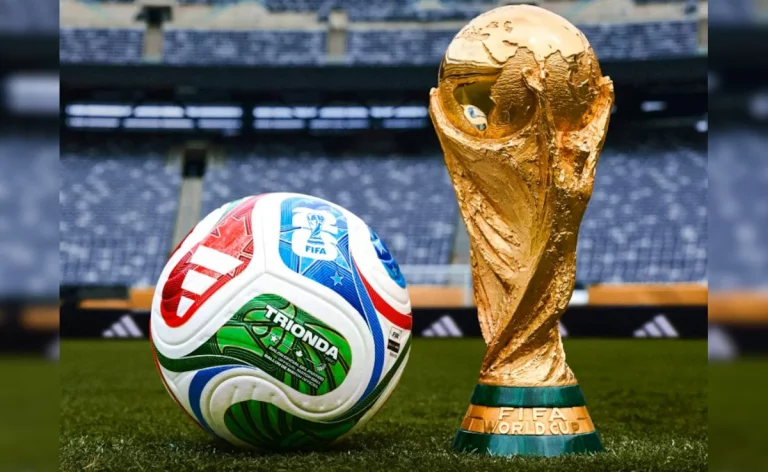
Colin Smith, FIFA’s chief operating officer for the World Cup, said the global competition is “too big” to delay even as geopolitical uncertainty spreads across parts of the Middle East and beyond. His remarks reflect the governing body’s position that the tournament’s planning, infrastructure commitments and international broadcast arrangements leave little room for sudden changes in scheduling.
Football’s flagship event involves years of preparation across host nations, hundreds of matches and billions of dollars in commercial agreements. Officials say the scale of the tournament, along with the intricate coordination required between governments, sponsors, broadcasters and sporting bodies, means postponement would create extensive financial and logistical complications.
Smith emphasised that the competition’s global footprint, including stadium operations, transportation networks, hospitality planning and international travel arrangements, has been organised across multiple jurisdictions. Altering the timetable would affect teams, fans, media organisations and commercial partners worldwide.
Security concerns have risen as military confrontation between Israel and Iran has intensified, drawing the United States into the broader geopolitical confrontation and heightening fears of regional instability. Such developments have prompted governments and international organisations to reassess travel advisories and security protocols.
FIFA officials say contingency planning is a standard component of preparations for major tournaments, particularly events that attract massive international audiences and large numbers of travelling supporters. Host nations typically coordinate closely with security agencies and international partners to manage risks ranging from terrorism to political unrest.
Football governing bodies have faced similar challenges before. Past tournaments have taken place amid geopolitical tensions, including conflicts in the Balkans during the late 1990s and broader global security concerns following the September 2001 attacks in the United States. Despite such circumstances, international competitions continued with heightened security measures.
FIFA’s approach reflects a broader trend within global sport to maintain schedules even during periods of uncertainty. Sporting institutions often argue that major tournaments serve as unifying global events that transcend political divisions, although critics contend that organisers sometimes underestimate security and ethical risks.
The financial stakes surrounding the World Cup further complicate any discussion of postponement. Broadcast rights alone generate billions of dollars, while sponsorship agreements with multinational companies depend on fixed tournament calendars. Altering the schedule could expose organisers to contractual disputes and significant financial penalties.
Preparations for the upcoming edition of the World Cup have already involved massive investments in stadium construction, infrastructure upgrades and urban development projects across host cities. Governments and local authorities have allocated substantial public funds to ensure readiness for the influx of supporters, media personnel and corporate partners.
Football analysts say such commitments reinforce the argument that postponement would be extraordinarily difficult. Rescheduling a tournament involving dozens of national teams and multiple host locations would require renegotiating travel arrangements, accommodation contracts and broadcasting timetables across dozens of countries.
Security planning has also evolved as organisers adapt to modern risks. Host governments deploy extensive surveillance systems, intelligence sharing mechanisms and emergency response plans during major sporting events. International policing agencies often collaborate with local authorities to monitor potential threats.
Sports governance experts note that global tournaments frequently become symbolic platforms during periods of geopolitical strain. Political tensions can influence participation decisions, diplomatic relations and fan travel patterns, yet organisers generally seek to preserve sporting neutrality.
Football’s governing structures also emphasise continuity of the competition cycle. Qualifying tournaments, continental championships and domestic league calendars are interconnected with the World Cup timetable. Any disruption could ripple through the broader football ecosystem, affecting clubs, players and federations worldwide.
Commercial partners likewise depend on the event’s fixed schedule. Sponsorship campaigns, advertising launches and promotional activities are planned years in advance. Global brands align marketing strategies with tournament timelines, making sudden alterations difficult to accommodate.
Despite the concerns raised by geopolitical developments, FIFA officials maintain that monitoring of global security conditions remains ongoing. Dialogue with host governments and international authorities forms part of the governing body’s operational planning, ensuring that safety considerations are integrated into tournament preparations.
Players and national football associations have largely focused on sporting preparations, with qualifying matches continuing across several continents. Coaches and federation officials emphasise that athletes are trained to perform under pressure and that tournament preparation cycles cannot easily be paused or reshaped.
Follow Arabian Post
Select Arabian Post as your preferred source on Google and MSN News for trusted business news and Arab politics and updates.




