

Arabian Post Staff -Dubai
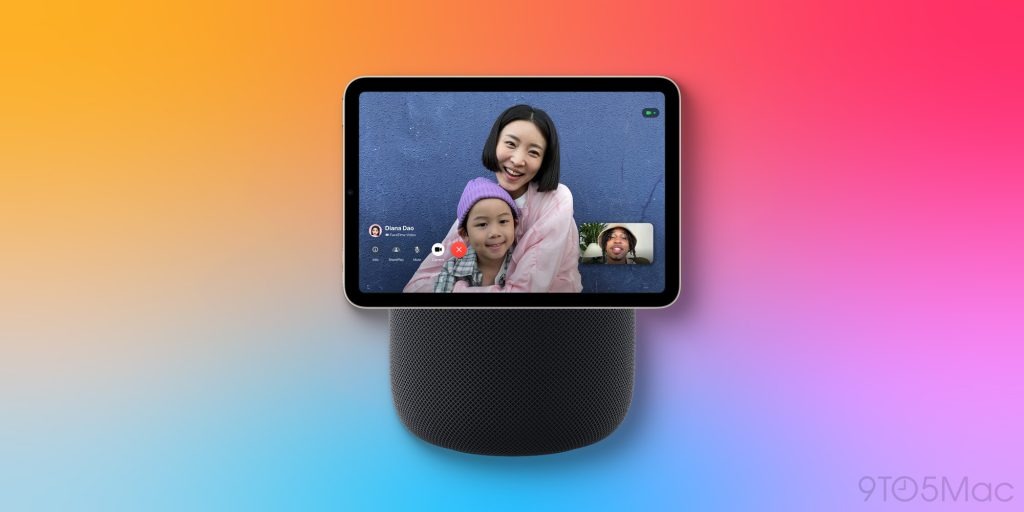
Apple appears poised to expand its smart home ambitions with a new device widely referred to as the “HomePad”, a screen-equipped hub designed to place voice control, automation and communication at the centre of connected households.
Industry leaks and supply-chain reports indicate that the product will feature a roughly seven-inch display powered by an A18-series processor, combining elements of the HomePod speaker with a touchscreen interface. The device is expected to act as a control hub for connected appliances and services, while placing Apple’s voice assistant Siri at the centre of the user experience.
Market watchers say the HomePad represents Apple’s most direct attempt yet to challenge smart display offerings from Amazon and Google, whose Echo Show and Nest Hub devices have dominated the category. Apple’s approach focuses on deeper integration with its ecosystem of services, devices and software platforms, positioning the product as a central command centre for HomeKit-compatible devices and the Matter smart home standard.
Reports suggest the device will carry a compact design with an aluminium casing and a single USB-C port for power. The display is expected to provide a dashboard for lighting controls, cameras, thermostats and security systems, while also supporting video calls and information panels similar to Apple’s StandBy interface introduced on the iPhone.
Engineers are said to be designing the system to run a customised operating environment derived from tvOS or a dedicated home-focused platform. That software layer would allow the display to manage media playback, smart home automations and communication tools such as FaceTime, while maintaining compatibility with the broader Apple ecosystem.
Despite growing anticipation, development delays linked to Siri’s next-generation artificial intelligence features have shifted the anticipated launch schedule. Apple had earlier targeted a debut around 2025 before internal timelines moved into 2026 as work continued on a redesigned version of the voice assistant capable of handling more complex conversational tasks.
Engineers are building the new Siri architecture to interpret context across apps and devices, allowing the assistant to control smart home functions with greater accuracy and flexibility. Executives believe the HomePad’s functionality relies heavily on these improvements, particularly features that allow Siri to carry out actions across different services and applications without requiring manual input.
Analysts say the hardware itself appears relatively straightforward compared with Apple’s broader software overhaul. The device is expected to incorporate microphones, speakers and possibly a front-facing camera to enable video communication and user recognition. Some reports indicate Apple has explored both tabletop and wall-mounted variants of the display, reflecting the company’s effort to create a flexible hub for home environments.
Pricing projections remain speculative, though several analysts place the product near the mid-range smart display segment, potentially around the price level of competing premium hubs. Apple’s strategy appears aimed at strengthening its presence in home automation rather than competing solely on hardware specifications.
Apple has long offered smart home tools through its HomeKit platform and HomePod speakers, yet the company has lacked a dedicated display device capable of controlling connected systems through both touch and voice commands. The HomePad would address that gap by combining screen-based interaction with the company’s expanding artificial intelligence features.
Strategists within the consumer electronics sector view the device as part of a broader shift in Apple’s product planning. The company has been investing heavily in artificial intelligence capabilities branded as Apple Intelligence, a framework intended to enable devices to process contextual information and automate everyday tasks across its ecosystem.
Industry observers say a smart home display offers an ideal environment for such capabilities. Positioned on a wall or table, the device could present personalised information panels, display reminders and operate as a household dashboard linking smartphones, tablets and smart appliances.
Supply-chain analysts have suggested that Apple may eventually expand the concept into multiple form factors, including more advanced versions featuring movable displays or robotic bases capable of tracking users during video calls. Those experimental designs are believed to be under exploration for later product cycles.
Competition in the smart home display market has intensified as technology companies race to integrate artificial intelligence into household devices. Amazon and Google have introduced increasingly sophisticated voice assistants and automation platforms, while Samsung and other manufacturers have developed display-based hubs linked to appliances and security systems.
Apple’s advantage, analysts say, lies in its tightly integrated ecosystem and the large installed base of iPhones, iPads and Macs. A home hub capable of seamlessly interacting with those devices could strengthen customer loyalty and encourage broader adoption of smart home technology.
Development delays tied to the AI-driven Siri overhaul remain the primary factor shaping the HomePad’s timetable. Reports indicate the product is now expected to arrive later in the year once the upgraded assistant and related software platforms are ready for release alongside Apple’s broader operating-system updates.
Follow Arabian Post
Select Arabian Post as your preferred source on Google and MSN News for trusted business news and Arab politics and updates.




