Arabian Post Staff -Dubai
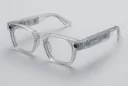
The reported project is notable not only because it would be Nothing’s first step into smart eyewear, but because it appears to sharpen a strategic shift that Pei has been signalling for months. In September 2025, the company said it was building its first “AI-native” devices for 2026, with Pei describing a platform intended to work across familiar hardware such as phones, headphones and smartwatches, as well as newer formats including smart glasses. By March 2026, Pei was publicly arguing that app-based smartphone interfaces could give way over time to AI agents that understand user intent and complete tasks on a user’s behalf.
That chronology matters. It suggests the smart-glasses effort is not an isolated experiment but part of a broader attempt to build a multi-device ecosystem around AI software rather than rely solely on handset sales. Bloomberg reported that Nothing is also working on earbuds with stronger AI features for later this year, indicating the company may be trying to create a family of connected products before moving into eyewear.
For Nothing, the commercial logic is clear even if execution remains uncertain. The company has built its brand on distinctive industrial design and a marketing style that prizes identity in a crowded Android market. Smart glasses offer a chance to extend that design-led approach into a category where fashion, comfort and ease of use are as important as computing power. Yet the same category is also littered with past failures, and market leaders still face questions over privacy, battery life, everyday usefulness and price.
The competitive backdrop is becoming more intense. Meta has moved fastest in consumer smart glasses, and Reuters reported this week that it unveiled new Ray-Ban prescription models priced at $499 while continuing to widen the appeal of AI-enabled eyewear. Reuters also cited data showing Meta accounted for 76.1% of global smart-glasses shipments in 2025, underscoring how far ahead it is in scale and distribution. Google, meanwhile, has returned to the category through Android XR and a partnership with Warby Parker, while Snap has created a separate unit to pursue its own glasses ambitions.
That leaves Nothing trying to enter a market where larger rivals already possess deeper software ecosystems, wider developer relationships and stronger supply-chain leverage. Analysts quoted by Reuters have argued that success in smart glasses may depend less on hardware novelty alone and more on ecosystem integration and software value. On that measure, Nothing’s challenge is to prove it can turn a bold concept into a service people use daily, rather than a niche accessory that attracts attention without delivering lasting habits.
Pei’s own messaging hints at how Nothing may try to differentiate. His comments about the decline of app-centric computing point towards simpler, audio-first or assistant-led interactions, where a device responds to intention instead of forcing users to move through multiple app interfaces. That vision aligns with broader industry thinking around screen-light or screen-free AI wearables, particularly for tasks such as messaging, navigation, translation, image capture and contextual search. It also fits with Bloomberg’s description of Nothing’s glasses as AI-enhanced rather than as a full augmented-reality headset, which would imply a lighter, more mainstream device than the bulky mixed-reality products that have struggled to break through.
Still, several risks stand out. Privacy remains the biggest social obstacle for camera-equipped glasses, with critics warning that discreet recording and persistent sensing can outpace public comfort and regulation. Cost is another constraint in a category that has generated excitement but not yet mass adoption. Reuters reported in late 2025 that smart-glasses sales had risen sharply, yet mainstream take-up was still limited by privacy, comfort and pricing concerns. That caution is likely to shape how investors and consumers judge any Nothing launch over the coming year.
Also published on Medium.
Follow Arabian Post
Select Arabian Post as your preferred source on Google and MSN News for trusted business news and Arab politics and updates.