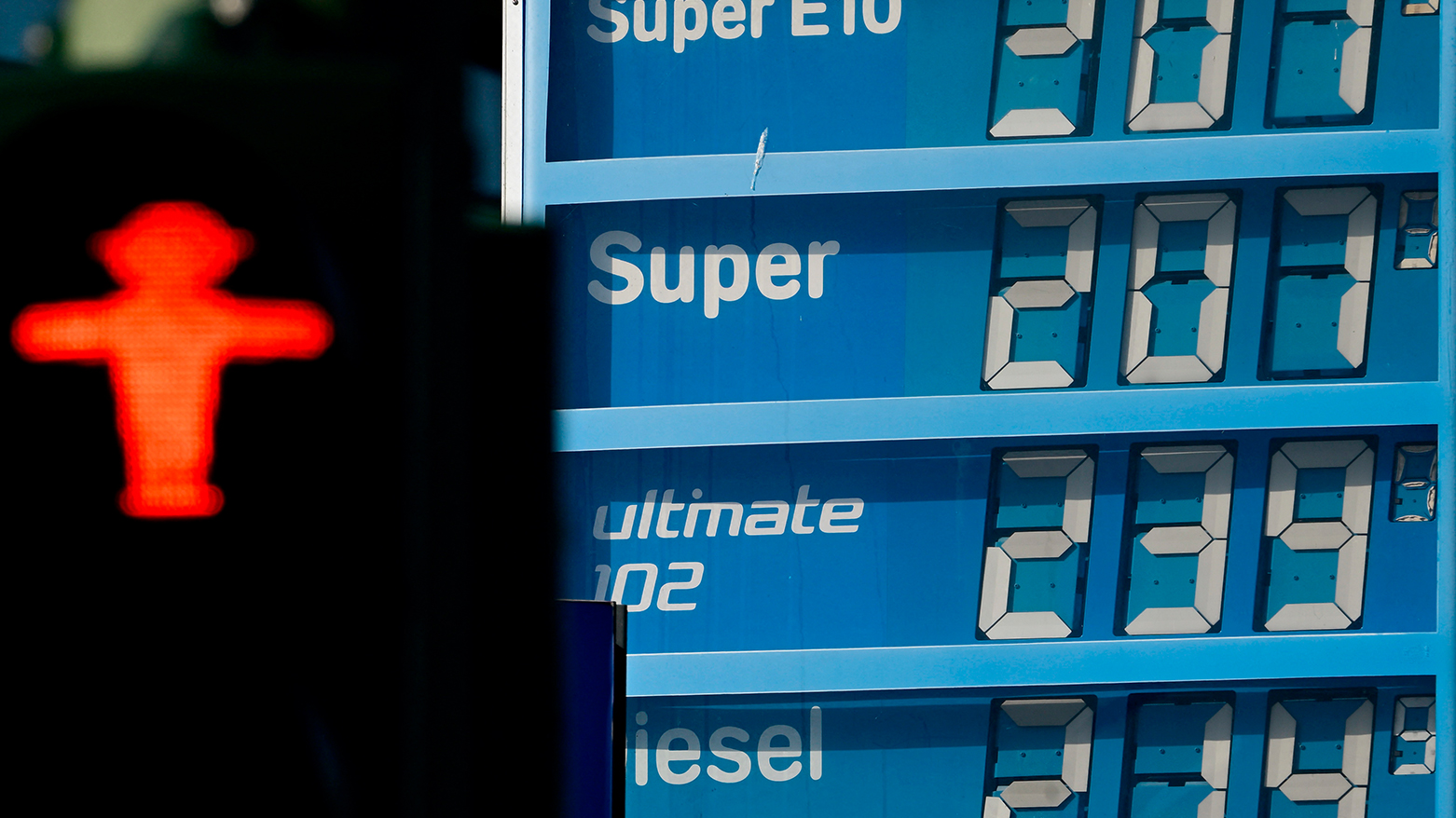
Oil prices jumped sharply on Thursday after US President Donald Trump said the United States would step up attacks on Iran over the coming weeks, stoking fears that disruptions around the Strait of Hormuz could last longer and tighten supplies of crude and refined fuels across global markets. West Texas Intermediate settled at $111.54 a barrel after surging more than 11%, while Brent closed near $109.03, extending a rally driven by war risk and the continued blockage of one of the world’s most important energy shipping lanes.
The market reaction reflected more than a headline shock. Traders were forced to price in the prospect of a prolonged conflict after Trump said the US would hit Iran “extremely hard” over the next few weeks and gave no clear route towards reopening Hormuz. The strait carries about 20 million barrels a day of oil, roughly 20% of global petroleum liquids consumption, while the International Energy Agency says around a quarter of world seaborne oil trade passes through it.
Crude rally tests global supply nerves
The sharpest moves were in prompt barrels, a sign that buyers are most worried about immediate shortages rather than long-term scarcity. Reuters reported that front-month WTI for May delivery traded at an unusually large premium to June, peaking at $113.97 before settling lower, as the market priced in an acute near-term supply squeeze. That structure, known as backwardation, tends to emerge when refiners and traders are scrambling for physical crude now rather than later.
Stress was also visible beyond headline crude benchmarks. Europe’s diesel futures benchmark climbed above $200 a barrel for the first time since 2022, underscoring how the conflict is feeding through to fuels used in freight, industry and agriculture. Bloomberg reported the benchmark ICE gasoil contract rose as high as $1,498 a tonne, equivalent to more than $200 a barrel. Dated Brent, the key gauge for physical North Sea cargoes, also climbed to levels not seen in about 18 years as refiners and end-users sought real barrels rather than paper hedges.
The speed of the move has revived comparisons with earlier supply shocks, though the present crisis has its own mechanics. This is not only about the loss of Iranian exports. It is also about the broader paralysis of Gulf shipping, the strain on regional benchmarks and uncertainty over how much oil can be rerouted through pipelines that bypass Hormuz. The IEA says only 3.5 million to 5.5 million barrels a day of pipeline capacity is available to redirect crude away from the strait, far below the volume normally moving through the waterway.
That mismatch helps explain why traders are assigning a high risk premium to every barrel available outside the Gulf. Reuters reported that the Dubai benchmark, which prices nearly 18 million barrels a day of crude, has come under severe stress as halted Gulf shipments and changes to benchmark methodology reduced deliverable supply. For Asian refiners, who depend heavily on Middle Eastern grades, the squeeze is particularly acute.
For governments and central banks, the rally threatens to reopen an inflation problem that had started to ease in many economies. Higher crude prices feed quickly into transport, power, chemicals and food costs, while diesel is especially sensitive because it underpins trucking, shipping and industrial activity. Reuters said US retail gasoline prices have already moved above $4 a gallon for the first time since 2022, with analysts warning they could rise further if Hormuz stays constrained.
Analysts are divided on how much higher prices can go, but few dispute that the range of outcomes has widened. A Reuters poll published earlier this week showed forecasters sharply lifting their 2026 oil-price expectations after the outbreak of war and the disruption to Gulf flows. Some scenarios examined by analysts point to Brent rising well beyond current levels if the closure persists into May, while Egypt’s President Abdel Fattah al-Sisi warned that oil could top $200 a barrel if the conflict spirals further.
There are still countervailing forces that could limit the rally. OPEC+ could raise output, strategic reserves can soften the blow for a time, and any diplomatic breakthrough over shipping could remove part of the fear premium almost as quickly as it appeared. Yet for now the oil market is signalling that the immediate question is not demand destruction or long-term investment, but whether enough physical supply can reach refiners safely and on time.
Follow Arabian Post
Select Arabian Post as your preferred source on Google and MSN News for trusted business news and Arab politics and updates.