Dubai Maritime City has opened Maritime Business Centre 2, an AED160 million commercial tower designed to add premium office capacity to DP World’s maritime, logistics and trade ecosystem at a time of sustained demand for Grade A workspace across the emirate. The new tower, located in the Commercial District of Dubai Maritime City, was completed in 20 months and had secured leasing commitments for 78 per cent […]
Dubai motorists will pay more to use toll gates and public parking from June 1, with Salik and Parkin applying 5 per cent value-added tax to their services under the UAE’s federal tax framework. The change will add VAT to Salik toll gate use and tag activation charges, while Parkin will apply the tax across its public parking services, including on-street and off-street parking, seasonal cards, permits […]
Abu Dhabi has cast its departure from OPEC as a strategic move to protect national revenue before global oil demand enters a long-term decline, marking one of the sharpest shifts in Gulf energy policy in decades. The UAE ended nearly 60 years of membership in the Organization of the Petroleum Exporting Countries on May 1, stepping away from both OPEC and the wider OPEC+ framework after years […]
State-run fuel retailers raised petrol and diesel prices on Saturday for the third time in eight days, extending a phased pass-through of higher crude costs to consumers after nearly four years of broadly frozen pump rates.
Petrol in New Delhi rose by 87 paise to ₹99.51 a litre, while diesel increased by 91 paise to ₹92.49 a litre. The latest increase takes the cumulative rise in both fuels to about ₹5 a litre this month, following the first retail fuel price increase since April 2022.
The pricing move reflects mounting pressure on oil marketing companies as international crude benchmarks remain elevated amid conflict in West Asia and supply concerns around key shipping routes. The controlled increases also point to a calibrated approach by the government, which is seeking to protect refiners’ balance sheets without delivering a sharp one-time shock to household budgets, freight operators and small businesses.
Indian Oil Corporation, Bharat Petroleum Corporation and Hindustan Petroleum Corporation dominate the retail fuel market, operating more than 90 per cent of the country’s roughly 103,000 fuel stations. Their pricing decisions carry wide implications for transport costs, food supply chains, inflation expectations and fiscal calculations.
The latest revision follows a ₹3-a-litre increase on May 15 and another smaller increase during the week, marking a clear shift from the long freeze that had shielded consumers from global volatility while pushing losses onto state-run refiners. That freeze had become harder to sustain as crude prices climbed and the rupee’s movement added to import costs.
The country imports more than four-fifths of its crude oil requirements, leaving domestic retail prices exposed to global oil markets and exchange-rate swings. Refiners have been selling petrol and diesel at discounted rates relative to landed costs, with diesel under-recoveries remaining larger because of its central role in freight, agriculture, public transport and industry.
Losses on diesel sales have been estimated at ₹25-30 a litre even after the first hike, while petrol losses have been placed at about ₹10-14 a litre. The fresh increase narrows that gap only modestly, suggesting further upward revisions could follow if crude prices stay high or the currency weakens.
Diesel is the more sensitive fuel for the broader economy. It powers trucks, buses, farm equipment, construction machinery and a large part of the country’s goods movement. Even modest increases can feed into freight rates, especially for smaller fleet operators with limited capacity to absorb higher running costs.
Petrol demand has also stayed firm, supported by urban commuting, two-wheeler use and private vehicle ownership. April consumption data showed petrol sales at about 3.7 million tonnes, up more than 6 per cent from a year earlier, while gasoil sales stood near 8.3 million tonnes, marginally higher than last year. The numbers indicate that demand has not weakened sharply despite higher living costs.
Bulk fuel demand has added another layer of pressure. Large users such as transport operators, mining companies and industrial consumers often respond quickly to price differences between retail outlets and direct industrial supply. A spike in retail buying can worsen supply imbalances and deepen losses for refiners if pump prices remain below market-linked levels.
The government has so far signalled little appetite for direct subsidies to compensate refiners for continuing under-recoveries. That stance increases the likelihood of gradual price adjustments, particularly if global crude remains above levels assumed in company projections. A sudden subsidy programme would also complicate fiscal planning at a time when public spending priorities remain stretched across infrastructure, welfare and defence.
State-level taxes mean consumers across major cities will see different pump prices even when the base increase is broadly similar. Mumbai, Kolkata, Chennai, Bengaluru and Hyderabad typically record higher retail rates than New Delhi because of local levies, dealer commissions and freight costs. That variation also affects inflation differently across regions.
Compressed natural gas prices have moved higher as well, with Delhi seeing another ₹1-per-kg increase, the third rise in ten days. The parallel increase in CNG adds pressure on taxis, autorickshaws and urban commuters who had shifted to gas-based transport as a cheaper alternative to petrol and diesel.
For oil marketing companies, the price increases may support margins but are unlikely to restore full profitability immediately. Investor attention is now focused on how quickly the companies can recover past losses, whether demand holds up, and whether policymakers allow market-linked pricing to continue if inflationary pressure grows.
Arabian Post Staff -Dubai Dubai has frozen private school fees for the 2026-27 academic year, giving families relief from education cost pressures as the emirate moves to balance household affordability with the stability of a fast-growing private education sector. Knowledge and Human Development Authority confirmed that schools under its regulation will not be permitted to raise tuition fees in the next academic year. The decision follows directives […]
Arabian Post Staff -Dubai Brazilian refiner Acelen has secured $1.5 billion to begin construction of a major biofuels refinery in Bahia, advancing Abu Dhabi’s Mubadala-backed strategy to build a large-scale renewable fuels platform in Latin America. The project, led by Acelen Renováveis, is expected to start operations in 2029 and produce up to 1 billion litres a year of sustainable aviation fuel and renewable diesel. The financing […]
Anthropic PBC is moving towards closing a funding round that could exceed $30 billion at a valuation above $900 billion, a transaction that would place the Claude maker among the world’s most valuable private companies and intensify the capital race reshaping artificial intelligence. The San Francisco-based company is expected to complete the round as soon as next week, though final terms could still change. The deal, if […]
Arabian Post Staff -Dubai Abu Dhabi’s exit from OPEC has placed the UAE at the centre of a wider debate over how Gulf producers should manage oil wealth as long-term demand faces pressure from the energy transition. Anwar Gargash, diplomatic adviser to President Sheikh Mohamed bin Zayed Al Nahyan, said the decision was shaped over three years and reflected the leadership’s view that the world is approaching […]
Hong Kong’s competitive weekend dining market is getting a sharper culinary edge as Lobster Bar & Grill at Island Shangri-La turns its Sunday roast brunch into a guest-chef platform linking hotel dining with some of the city’s most recognisable restaurant names.
The 2026 Sunday Roast Guest Chef Series runs across selected Sundays from February to October, with further dates expected for November and December. Priced at HK$898 per guest, plus a 10 per cent service charge, the programme gives each participating restaurant one Sunday to reinterpret the classic British roast through its own cuisine, while retaining the familiar three-course structure of starter, roast or seafood main, and dessert.
The format reflects a wider shift in Hong Kong’s premium dining scene, where luxury hotels are moving beyond standard brunch buffets and using chef-led collaborations to attract diners who want novelty, scarcity and recognised culinary talent. For Lobster Bar & Grill, long associated with seafood, grills, cocktails and live jazz, the series also positions brunch as a curated dining event rather than a routine weekend offering.
The 2026 line-up began with NOI on 8 February, bringing contemporary Italian cooking shaped by Chef Paulo Airaudo’s wider culinary approach and Hong Kong-based Chef Luigi Troiano’s execution. It continued on 15 March with 22 Ships, known for modern Spanish flavours under Chef Antonio Oviedo, and on 12 April with Yong Fu Hong Kong, whose Ningbo seafood cooking added a refined Chinese coastal identity to the Sunday roast template.
The next phase brings Neighborhood on 31 May, Leela on 28 June and Cristal Room by Anne-Sophie Pic on 19 July. Neighborhood, led by Chef David Lai, enters the series with strong recognition from both Michelin and Asia’s 50 Best Restaurants, where it ranked No. 24 in the 2026 list. Its reputation rests on market-led European bistro cooking, generous sharing dishes and a style that combines technical control with an understated dining room culture.
Leela, led by Chef Manav Tuli, adds a modern interpretation of regional cooking from India, using refined technique, spice layering and tandoor-led elements. Its participation broadens the series beyond European and Chinese traditions, giving the roast format a more expansive culinary identity at a time when Hong Kong diners are showing stronger interest in regional specificity and chef-driven storytelling.
Cristal Room by Anne-Sophie Pic brings the strongest fine-dining profile in the May-to-July phase. The Landmark restaurant, guided in Hong Kong by Chef Marc Mantovani, earned two Michelin stars in the 2026 Hong Kong and Macau guide. Its contribution is expected to bring a more composed French approach to the format, with emphasis on precision, balance and luxury ingredients.
Lobster Bar & Grill’s regular Sunday roast brunch already leans towards abundance, with appetisers such as lobster bisque, smoked salmon and steak tartare, followed by individually plated roast or seafood choices. Signature sides include duck-fat roasted potatoes and honey-glazed carrots, while desserts include banoffee pie, triple chocolate mud pie and seasonal creations. The guest-chef model keeps those anchors intact while allowing each collaborator to alter the flavour profile.
Executive Sous Chef Cary Docherty remains central to the concept. His role is not merely to host outside chefs, but to co-create menus that fit the kitchen’s seafood-and-grill identity while allowing each restaurant’s style to remain visible. That balance is crucial: too much hotel polish could dilute the individuality of the guest chefs, while too much experimentation could alienate diners expecting the comfort of Sunday roast.
The commercial logic is clear. Hong Kong’s dining market remains crowded, and premium hotel restaurants face intense competition from independent restaurants, private clubs and destination bars. A one-day-only brunch creates urgency, encourages repeat visits and lets diners access high-profile kitchens in a less formal setting than full tasting menus. For visiting chefs and independent restaurants, the collaboration offers exposure to a hotel audience with strong spending power.
Located on Level 6 of Pacific Place on Supreme Court Road in Central, Lobster Bar & Grill benefits from a business-district address and the broader Island Shangri-La dining ecosystem. Its Sunday and public holiday brunch service runs from 11.45am to 3.30pm, with last orders at 2.30pm, giving the collaboration format a defined weekend window rather than an open-ended promotional run.
Hackers are turning Middle East telecoms and hosting networks into a major command-and-control layer, exposing a regional cyber risk that now extends beyond compromised devices to the infrastructure patterns that sustain attacks. A three-month mapping of malicious activity between 1 February and 1 May identified more than 1,350 active C2 servers across 98 infrastructure providers in 14 countries, including Saudi Arabia, the UAE, Turkey, Israel, Iraq, Iran, […]
Hyundai Motor Group has committed to placing more than 25,000 Atlas humanoid robots across Hyundai Motor and Kia factories, setting up a major test of industrial automation as its South Korea labour union warns that no deployment can proceed without a formal labour-management agreement. The plan, outlined to investors this week, marks one of the most ambitious humanoid robot rollouts yet proposed by a global carmaker. The […]
Dubai motorists will pay 5 per cent value-added tax on public parking and Salik toll services from June 1, 2026, in a shift that will raise daily transport costs while accelerating the emirate’s move towards digital payments. Parkin Company PJSC, Dubai’s main paid parking operator, will apply VAT across its services, including on-street parking, off-street parking, seasonal cards, permits and reservation services. Salik Company PJSC will apply […]
Google and Blackstone have agreed to create a $5 billion TPU-powered cloud company, widening the battle for artificial intelligence infrastructure as enterprises seek alternatives to graphics processing units that dominate AI training and inference. The US-based venture will offer data centre capacity, operations, networking and Google Cloud’s Tensor Processing Units through a compute-as-a-service model. Blackstone is making the initial equity commitment, with the first 500 megawatts of […]
BANGKOK, THAILAND – Media OutReach Newswire – 22 May 2026 – Thai Cement Manufacturers Association (TCMA) marked a significant national milestone in advancing the decarbonization of Thailand’s cement and concrete industry toward Net Zero 2050. This progress is driven by strong collaboration among government agencies, industry players, and international partners under the “Decarbonization of the Cement and Concrete Sectors in Thailand” project, while accelerating the adoption of technology, innovation, and green investment to enhance competitiveness and support long-term economic growth.
Dr. Chana Poomee, Honourary Chairman of TCMA and President of ASEAN Federation of Cement Manufacturers (AFCM), stated that today’s “National Milestone” reflects the power of collaboration at both national and international levels. The initiative is led by the United Nations Industrial Development Organization (UNIDO), in partnership with TCMA and key Thai government agencies, including the Department of Climate Change and Environment and the Department of Industrial Works, with financial support of CAD 8 million from the Government of Canada through Environment and Climate Change Canada (ECCC), to accelerate tangible greenhouse gas reductions in the cement and concrete sector.
TCMA, as the industry representative, serves as a central platform connecting stakeholders across the entire value chain, driving the implementation of the “Thailand 2050 Net Zero Cement and Concrete Roadmap.” This aligns with Thailand’s NDC 3.0 targets, strengthening industrial competitiveness, attracting green investment, and fostering sustainable economic growth.
“Decarbonization is not only a pressing challenge but also a strategic opportunity to enhance national competitiveness. The progress achieved under this project spans policy development, innovation, technology deployment, standards, and capacity building-key enablers that will accelerate the industry’s transition toward Net Zero”, Dr. Chana said.
A key technological advancement under the project is the introduction of the Mobile Carbon Capture Unit (MCCU) from CETRI, Canada. This advanced and flexible technology is designed for real-world industrial operations and will be piloted starting in June, rotating across cement plants of TCMA members in the SARABURI SANDBOX. The pilot aims to validate performance under diverse operational conditions and pave the way for large-scale industrial application.
“The deployment of MCCU in Thailand highlights the strength of international collaboration in bringing advanced technologies into real-world application. It accelerates learning-by-doing, validates technological performance, strengthens local technical capabilities, and reduces investment risks-laying a strong foundation for future scale-up”, Dr. Chana added.
From an investment perspective, the development of technology-ready and standards-aligned projects enhances investor confidence, increases the attractiveness of green investment, and improves access to sustainable finance-key drivers in accelerating the industry’s transition to Net Zero.
TCMA continues to advance the industry under a “Collaborative Mindset-Action-Value,” promoting the systematic adoption of low carbon technologies, including low carbon cement innovations such as Limestone Calcined Clay Cement (LC3), Carbon Capture, Utilization and Storage (CCUS). These solutions not only reduce emissions but also improve efficiency, lower long-term costs, and strengthen global competitiveness.
At the regional level, TCMA is expanding its role through AFCM by fostering collaboration and advancing the AFCM Decarbonization Roadmap, which serves as a shared framework to reduce carbon emissions across ASEAN’s cement industry while enhancing regional technology, standards, and competitiveness.
“As President of the AFCM, TCMA is committed to driving ASEAN toward becoming a low carbon region by leveraging collaboration as a key mechanism to accelerate technology transfer, strengthen the industry capabilities, and unlock new regional economic opportunities”, Dr. Chana said.
TCMA reaffirmed its commitment to strengthening collaboration and welcoming international support in both technology and finance to accelerate the transition toward a low carbon industry, while enhancing Thailand’s competitiveness on the global stage.
Arabian Post Staff -Dubai Flydubai and Cyprus Airways have launched an interline partnership that gives passengers from Larnaca wider one-stop access to destinations across the Gulf, Asia, Africa and the Indian Ocean through Dubai International. The agreement allows customers to book travel on a single itinerary, with coordinated baggage handling and smoother transfers at DXB. For Cyprus Airways passengers, the arrangement opens connections beyond Dubai to flydubai […]
Cybercriminals are expanding phishing infrastructure built around the 2026 FIFA World Cup, with threat researchers mapping 222 malicious or suspicious domains to 203 unique IP addresses as fraud campaigns target fans, sponsors, travel operators and online shoppers before the tournament opens on 11 June. The findings point to a much broader operation than the first wave of 79 lookalike domains that impersonated FIFA and ticketing-related services. The […]
AMD has committed more than $10 billion to Taiwan’s semiconductor ecosystem, targeting advanced packaging and manufacturing capacity as demand for artificial intelligence infrastructure intensifies across global data centres.
The investment is designed to strengthen the chipmaker’s partnerships with foundries, packaging houses, substrate suppliers and server manufacturers that are central to its next generation of AI systems. The programme places Taiwan at the centre of AMD’s effort to scale production of high-performance processors, accelerators and rack-level systems built for increasingly complex AI workloads.
A major focus will be Elevated Fanout Bridge, or EFB, a 2.5D packaging technology intended to improve the speed and efficiency of connections between chip components. AMD plans to use the technology in its sixth-generation EPYC central processing units, codenamed “Venice”, which are being positioned for AI, cloud and high-performance computing deployments.
The move comes as AI infrastructure spending shifts from individual chips towards complete systems that combine CPUs, graphics processors, high-bandwidth memory, networking and software. Advanced packaging has become a critical bottleneck because AI workloads require large volumes of data to move quickly between processors while keeping power consumption and heat within manageable limits.
AMD Chair and Chief Executive Lisa Su said customers were rapidly expanding AI infrastructure to meet rising compute demand. The company is seeking to combine its high-performance computing portfolio with Taiwan’s manufacturing and packaging capabilities to support integrated, rack-scale AI systems.
AMD is working with partners including ASE, SPIL, Powertech Technology, Wiwynn, Wistron, Inventec, Unimicron, AIC, Nan Ya PCB and Kinsus. These companies cover key parts of the supply chain, from advanced packaging and substrates to server assembly and mechanical architecture. Sanmina is also involved in manufacturing support for the company’s Helios platform.
The investment will support both wafer-based and panel-based EFB interconnect development. AMD and Powertech Technology have qualified what they describe as the industry’s first 2.5D panel-based EFB interconnect, a step aimed at improving scalability and production economics for high-volume AI processors.
The technology is expected to help the “Venice” EPYC processors deliver higher interconnect bandwidth and better power efficiency. That matters because data centre operators are increasingly constrained by electricity availability, cooling capacity and rack density, not only by chip performance.
AMD has also begun ramping production of “Venice” CPUs using Taiwan Semiconductor Manufacturing Company’s 2-nanometre process technology in Taiwan. Future production is planned at TSMC’s Arizona facility, extending the supply chain beyond Taiwan while preserving the company’s close reliance on TSMC’s leading-edge manufacturing.
The “Venice” chips will be a central element of AMD’s Helios rack-scale platform, which also includes AMD Instinct MI450X graphics processors, advanced networking and the ROCm open software stack. The platform is scheduled for deployments beginning in the second half of 2026, with AMD describing the opportunity in terms of multi-gigawatt AI infrastructure rollouts.
The strategy puts AMD in a more direct contest with Nvidia, which dominates AI accelerator sales and has built a strong lead through its GPUs, networking, software ecosystem and full-rack systems. AMD’s challenge is not only to deliver competitive silicon but also to prove that it can scale complete AI infrastructure with dependable supply, efficient packaging and broad software support.
AMD’s data centre business has become the company’s main growth engine. First-quarter 2026 data centre revenue reached $5.8 billion, up 57 per cent from a year earlier, driven by demand for EPYC processors and the ramp-up of Instinct GPU shipments. That performance has strengthened investor expectations that AMD can capture a larger share of AI and cloud infrastructure spending.
Taiwan remains critical to that effort because of its concentration of semiconductor expertise. TSMC anchors the foundry side, while packaging, substrate and system-assembly partners provide the manufacturing depth needed to turn chip designs into deployable infrastructure. The concentration also creates geopolitical and supply-chain risks, particularly as governments and companies seek greater resilience across strategic technologies.
Significant reductions in energy consumption, CO₂ emissions, and operating costs for energy-intensive industries
Growing demand highlights strong market potential for sustainable heating technologies
NUREMBERG, GERMANY – Newsaktuell – 21 April 2026 – Innomotics, a globally leading supplier of electric motors and large drive systems, is advancing the decarbonization of industrial heat processes with its solutions for industrial heat pumps. By electrifying the heat process, companies can significantly improve energy efficiency, reduce emissions, and lower long-term operating costs.
Industrial heating is one of the largest contributors to global energy consumption, with more than 70 percent of process heat still generated from fossil fuels. Industrial heat pumps offer a highly efficient alternative by upgrading ambient and waste heat to usable temperature levels of up to 150°C. This makes them a key technology for reducing CO₂ emissions and achieving global climate targets.
The electrification of heat processes is a critical step in industrial transformation. Heat pumps deliver thermal output several times higher than the electrical energy input, making them one of the most efficient technologies for converting electricity into heat. When powered by renewable energy, CO₂ emissions can be virtually eliminated.
Innomotics provides a comprehensive portfolio of high- and low-voltage motors as well as medium-voltage drives to ensure reliable and efficient operation of heat pump compressors. The systems are designed for maximum availability, enabling operation for up to five years without scheduled shutdowns, and can be seamlessly integrated into existing industrial processes.
In addition to environmental benefits, operators gain from significantly lower operating costs, reduced maintenance requirements, and system availability of up to 99.9 percent. Industrial heat pumps also enable new opportunities for waste heat recovery and integration into district heating networks.
A flagship example is the largest heat pump system in the Netherlands, where heat is recovered daily from 65 million liters of treated wastewater. With Innomotics solutions, the system supplies district heating to around 20,000 households, covers approximately 15 percent of regional heat demand, and reduces CO₂ emissions by about 30,000 tons annually.
“Industrial heat pumps are a key technology for the energy transition and energy addition. They enable efficient use of existing heat sources while significantly reducing emissions. With our drive solutions, we provide the foundation for a sustainable and economically viable heat supply in industry,” says Michael Reichle, CEO of Innomotics.
He adds, “Operators are under pressure to make their processes both more efficient and more sustainable. Our technologies offer a scalable and economically a very attractive solution that supports the transition to electrified, low-carbon industrial operations.”
Recently awarded industrial heat pumps projects
Innomotics supplies key drive technology for world’s largest industrial heat pump at BASF, Germany: Innomotics GmbH has received a major order from Piller Blowers & Compressors GmbH to deliver 11 water-cooled HV M high-voltage motors and GH180HC medium-voltage converters. The systems will be deployed in the world’s most powerful industrial heat pump at BASF in Ludwigshafen.
Designed specifically for the requirements of PILLER and BASF, the Innomotics solutions combine compact design, high efficiency, and long-term reliability. The heat pump system will generate up to 500,000 tons of steam per year, while the water-cooled drive technology ensures low noise emissions and efficient, continuous operation.
Largest heat pump system in the Netherlands supplies 20k households with sustainable district heat The Dutch energy company Eneco is pursuing climate neutrality by leveraging aquathermal energy from wastewater to supply district heating networks in Utrecht and Nieuwegein. At the core of the Netherlands’ largest heat pump system, advanced motor and drive solutions from Innomotics enable the recovery of heat from around 65 million liters of treated wastewater per day. This results in a highly efficient and sustainable solution: approximately 30,000 tons of CO₂ emissions are saved annually, around 20,000 households are supplied with district heating, about 15 percent of Utrecht’s heat demand is covered, and 27 MW of thermal energy is generated.
Innomotics powers wastewater-based district heating in Amiens, France: With high-performance motor and drive solutions from Innomotics, Amiens Énergies is transforming treated wastewater into sustainable district heating. At the core of the system, 24 compact SD motors drive six large ammonia heat pumps, generating 18 MW of clean heat and supplying around 26,800 households.
By recovering thermal energy from 8.5 million m³ of wastewater annually, the solution reduces CO₂ emissions by approximately 41,000 tons per year while enabling a renewable energy share of over 70 percent. The robust and efficient Innomotics motors ensure reliable continuous operation under demanding industrial conditions, making the project a benchmark for climate-neutral urban heating.
Innomotics enables efficient industrial heat pump operation in Finland: At a major industrial heat pump installation in Finland, Innomotics supplied advanced drive technology to increase overall plant efficiency in a connected paper mill.
Innomotics delivered a variable frequency drive for a centrifugal compressor, supporting a 6.1 MW motor (6.6 kV, 2-pole). The system recovers process heat and feeds it back into operations, improving efficiency while reducing energy consumption and emissions.
Take-Two Interactive has moved to quiet speculation over another Grand Theft Auto VI delay, reaffirming that Rockstar Games’ blockbuster open-world title remains scheduled for release on 19 November 2026. The confirmation, issued alongside Take-Two’s fiscal 2026 results, places the game at the centre of the company’s next financial year and signals that management is still planning around one of the most consequential launches in entertainment. Chief executive […]
HONG KONG SAR – Media OutReach Newswire – 22 May 2026 – At the International Hydrogen Development Symposium 2026 today (May 18), nine pioneering companies from Korea, the Chinese Mainland, France, and Hong Kong – including Hyundai Motor Group – signed a landmark Memorandum of Understanding (MOU) on hydrogen ecosystem building, marking a major step toward advancing the city’s green economy.
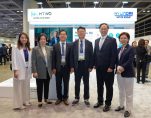
At the International Hydrogen Development Symposium 2026 today (May 18), nine pioneering companies from Korea, the Chinese Mainland, France, and Hong Kong – including Hyundai Motor Group – signed a landmark Memorandum of Understanding on hydrogen ecosystem building, marking a major step toward advancing the city’s green economy. Photo shows (from left) Senior Vice President (Sustainability) for Technology, Innovation and Entrepreneurship of Invest Hong Kong (InvestHK), Ms Olivia To; the Director-General of Investment Promotion of InvestHK, Ms Alpha Lau; Executive Vice President and Head of Energy & Hydrogen Policy Sub-Division at Hyundai Motor Group, Mr Seung Kyu-shin; Deputy Minister for Territorial and Urban Policy at Ministry of Land, Infrastructure and Transport of the Republic of Korea, Mr Jeong Eui-kyung; the Global Head of Financial Services, Fintech & Sustainability of InvestHK, Mr King Leung; and Senior Vice President, Transport, Logistics and Industrials of InvestHK, Ms Bonnie Ho, at the symposium.
This multi-party signing was officiated by Deputy Minister for Territorial and Urban Policy at Ministry of Land, Infrastructure and Transport of the Republic of Korea, Mr Jeong Eui-kyung; the Acting Secretary for Environment and Ecology, Miss Diane Wong; the Director of Electrical and Mechanical Services, Mr Poon Kwok-ying; and the Director-General of Investment Promotion of Invest Hong Kong (InvestHK), Ms Alpha Lau.
At the International Hydrogen Development Symposium 2026 today (May 18), nine pioneering companies from Korea, the Chinese Mainland, France, and Hong Kong – including Hyundai Motor Group – signed a landmark Memorandum of Understanding on hydrogen ecosystem building, marking a major step toward advancing the city’s green economy. Photo shows the Director-General of Investment Promotion of Invest Hong Kong, Ms Alpha Lau, delivering a speech.
Spearheaded by Hyundai Motor Group, the MOU establishes a collaborative framework to build a comprehensive, self-sustaining hydrogen ecosystem in Hong Kong, targeted to be fully operational by the end of 2030. The collaboration will prioritise the development of waste-to-hydrogen technologies to convert landfill gas into clean energy, along with an immediate focus on piloting a liquefied hydrogen refuelling infrastructure. To enable full value chain integration, it also targets the deployment of customised hydrogen fuel cell commercial vehicles, including tour and airport shuttle buses.
Through facilitating public-private partnerships and inter-governmental collaboration, InvestHK is supporting Hyundai Motor Group and its partners to implement go-to-market strategies aligned with the shared vision for hydrogen ecosystem building.
This partnership will also position Hong Kong as a strategic base for Hyundai Motor Group’s hydrogen business expansion across the Asia-Pacific region.
Miss Wong said, “This collaboration marks a significant milestone in developing tangible, on-the-ground hydrogen applications to accelerate the green transition towards carbon neutrality. By combining Korea’s world-class technological capabilities with Hong Kong’s strategic urban context, Hong Kong could serve as an exceptional international demonstration platform for showcasing green and low-carbon technologies. If these cutting-edge innovations could be applied and scaled up successfully here, it will serve as a positive model and provide highly viable options for reference by modern cities worldwide.”
Ms Lau said, “Today’s multi-party signing is both a landmark moment for Hong Kong’s green economy and a clear signal that the city’s hydrogen ecosystem is gaining real traction. Over the past three years, InvestHK has helped leading hydrogen enterprises establish themselves in Hong Kong, several of which have since listed on the Hong Kong Stock Exchange, raising over $2.5 billion in total. For businesses with global green ambitions, Hong Kong is where business growth takes shape.”
At the International Hydrogen Development Symposium 2026 today (May 18), nine pioneering companies from Korea, the Chinese Mainland, France, and Hong Kong – including Hyundai Motor Group – signed a landmark Memorandum of Understanding on hydrogen ecosystem building, marking a major step toward advancing the city’s green economy. Photo shows the Acting Secretary for Environment and Ecology, Miss Diane Wong, delivering a speech.
Executive Vice President and Head of Energy & Hydrogen Policy Sub-Division at Hyundai Motor Group, Mr Seung Kyu-shin, said, “This MOU was signed as Hyundai Motor Group’s commitment to advancing Hong Kong’s proactive hydrogen policies and driving the acceleration of its hydrogen ecosystem utilising the Group’s hydrogen business capability and experience. Starting with Hong Kong, we look forward to expanding our collaboration and business opportunities across the broader Asia-Pacific hydrogen market.”
At the International Hydrogen Development Symposium 2026 today (May 18), nine pioneering companies from Korea, the Chinese Mainland, France, and Hong Kong – including Hyundai Motor Group – signed a landmark Memorandum of Understanding on hydrogen ecosystem building, marking a major step toward advancing the city’s green economy. Photo shows Deputy Minister for Territorial and Urban Policy at Ministry of Land, Infrastructure and Transport of the Republic of Korea, Mr Jeong Eui-kyung (back row, second right); the Acting Secretary for Environment and Ecology, Miss Diane Wong (back row, second left); the Director of Electrical and Mechanical Services, Mr Poon Kwok-ying (back row, first left); and the Director-General of Investment Promotion of Invest Hong Kong, Ms Alpha Lau (back row, first right), witnessing the signing.
Partners entering into this MOU include Hyundai Motor Company and Hyundai Engineering & Construction from Hyundai Motor Group, China Inspection Co Ltd, Chun Wo Bus Services Limited, Chun Wo Construction & Engineering Company Limited, Jiangsu Guofu Hydrogen Energy Equipment Co Ltd, JEA ENG, Templewater Limited, the Hong Kong and China Gas Company Limited, and Veolia Hong Kong Holding Limited.
This multi-party, long-term collaboration is set to establish a robust, end-to-end hydrogen industry chain – spanning production, storage, transportation, refuelling and utilisation.
New energy is vital to Hong Kong’s Climate Action Plan 2050 and the national dual-carbon goals. As set out in the Chief Executive’s 2025 Policy Address, Hong Kong will establish public hydrogen filling facilities on Hong Kong Island and in Kowloon, press ahead with more hydrogen trial projects, and develop the GBA Hydrogen Corridor in collaboration with Guangdong Province. The Hong Kong Special Administrative Region Government is actively advancing hydrogen development through technological innovation, talent cultivation, ecosystem building, and regional co-ordination. To date, over 30 hydrogen trial projects have been greenlit, paving the way not only for decarbonisation targets, but also for unlocking new quality productive forces for green economic growth. Hashtag: #InvestHK
The issuer is solely responsible for the content of this announcement.
About InvestHK
Invest Hong Kong (InvestHK) is the investment promotion agency of the Government of the Hong Kong Special Administrative Region (HKSAR).
Singapore business leader Teo Siong Seng has been accused by US prosecutors of taking part in a multi-year conspiracy to restrict output and fix prices of standard dry shipping containers, a case that places one of the city-state’s most prominent maritime figures at the centre of a major antitrust action. The indictment names four container manufacturing companies and seven executives in an alleged scheme that prosecutors say […]
Full oil shipments through the Strait of Hormuz are not expected to return before the first or second quarter of 2027, even if the Middle East conflict were to end immediately, ADNOC chief Sultan Ahmed Al Jaber has said, signalling that the energy shock from the Iran war could outlast any diplomatic settlement by many months. The warning from the head of the Abu Dhabi National Oil […]
Emirates NBD has extended a AED367.3 million loan facility to Luxembourg-based CPI Property Group, giving the European real estate investor funding cover for deferred payments on a portfolio of ultra-luxury residential units in Dubai through 2026 and 2027. The transaction, equivalent to about $100 million or €86 million, is secured against 19 high-end residences owned by CPI Property Group, including 15 units still under construction. The assets […]
Shiba Inu is drawing fresh attention from crypto traders after a market analyst said the meme token could enter a high-momentum breakout phase if it clears a long-running resistance structure that has capped its valuation since late 2024. The token was trading near $0.000006 on Friday, with a market value of roughly $3.4 billion and a circulating supply of more than 589 trillion SHIB. The latest technical […]