News related to
City

All the pretty girls scroll like this

SINGAPORE – Media OutReach Newswire – 10 April 2026 – Modern beauty has a new enemy, and it’s right in our hands: the mobile phone. Endless scrolling keeps us hooked, but it also keeps our heads down. With content so addictive, one ends up spending hours slouching. So, all that main character power and energy vanish—replaced by slumping and hunching. Over time, posture slips, presence shrinks, and bold beauty follows. “Text neck” isn’t just a physical issue; it’s quietly changing how we carry ourselves.

Lux Chin UP PR1 main.jpg

LUX, the iconic global beauty brand, knows true radiance is about how you show up. That effortless “it girl” energy starts with posture. That’s why the brand is launching LUX Chin Up—a digital tool designed to tackle “Text Neck” and help women keep their heads high and their bold beauty even higher. It’s the perfect modern solution for the modern beauty problem.

“LUX always inspires women to boost their presence and own their beauty power,” said Gaurav Datta, Global Brand VP. “Our phones are amazing for self-expression, but there’s a catch. While they elevate our digital selves, they often shrink our real-world presence. That constant downward scroll quietly chips away at posture, poise, and bold beauty. With ‘Chin Up,’ we’re offering a simple way for women to realign, lift up, and step back into their power.”

LUX has a brilliantly simple, tech-forward solution. Forget complicated downloads or wearable tech. LUX Chin Up is a smart web page that taps into your phone’s own motion sensors. When used with the split-screen option, it stays on screen as a small tab, reminding you of the right angle to be maintained while you doomscroll.

  • The Sweet Spot: The tool encourages you to keep your screen at an optimal
    90-degree angle.
  • The Gentle Nudge: If you start to slouch and the angle drops (and with it your head), the sensor detects it and the screen blinks, prompting you to raise your phone and go chin up.
  • The Reset: Straighten up, bring your phone back up and carry on scrolling with boldness.

LUX believes this can be an essential modern-day beauty ritual that extends beyond the shower to solve a modern-day problem. By habituating women to hold the right posture, LUX is naturally lifting their chins, opening their posture, and instantly restoring that vibrant, room-commanding presence. It’s a small shift that brings Main Character Beauty to life, on screen and off.

Make LUX Chin Up a habit, try it for a week and improve your posture. Visit lux.com/chinup

Hashtag: #LUXChinUp #LUX

The issuer is solely responsible for the content of this announcement.

About LUX

LUX has been celebrating beauty and femininity since 1925. We uphold beauty that doesn’t blend in. It’s bold, sassy, maximalist. We will continue to support efforts that will help women best express their Main Character Beauty.

About VML

VML is a leading creative company that combines brand experience, customer experience, and commerce, to create connected brands that drive growth. The agency is a leading global marketing and systems integration partner, specializing in creating innovative solutions for business transformation. VML is celebrated for its award-winning work with blue chip client partners including AstraZeneca, Colgate-Palmolive, Dell, Ford, Intel, Microsoft, Nestlé, The Coca-Cola Company, and Wendy’s. The agency is recognized by the Forrester Wave™ Reports, which name WPP a “Leader” in Commerce Services, Global Digital Experience Services, Global Marketing Services and, most recently, Marketing Measurement & Optimization. VML’s global network is powered by 28,000 talented people across 60-plus markets, with principal offices in Kansas City, New York, Detroit, London, São Paulo, Shanghai, Singapore, and Sydney.

Asian buyers of liquefied petroleum gas are stepping up purchases from the United States and other Atlantic Basin suppliers as disrupted Gulf shipments upend one of the region’s most important fuel trades. India and China, the two biggest Asian importers of Middle East LPG, are at the centre of the shift, with traders, analysts and shipbrokers saying the scramble for replacement cargoes has pushed spot premiums to unprecedented levels and forced governments and industry to rethink supply security.

The immediate trigger has been the collapse in exports from the Gulf after the outbreak of war in late February and the severe disruption of shipping through the Strait of Hormuz. Middle Eastern LPG exports fell 73% in March from the previous month to 419,000 barrels per day, according to Kpler data cited by Reuters. The squeeze sent April-loading spot premiums for propane and butane from the Gulf to record highs of $250 a tonne over March Saudi contract price swaps, while Saudi Aramco lifted its April official selling price for propane by $205 a tonne to $750 and for butane by $260 a tonne to $800.

That shock is now reshaping trade flows. Preliminary Kpler data show U. S. LPG exports are expected to rise to a record 2.7 million barrels per day in April, with about 1.8 million barrels per day heading to Asia, up 14% from March. Traders say cargoes are also being drawn from Canada, Norway, Argentina and Australia, but the United States has emerged as the principal swing supplier because of its sheer export scale. Marex’s Vasudev Balagopal told Reuters that major importers were actively diversifying beyond the Gulf, although brokers caution that U. S. export terminals were already running close to capacity before the conflict and cannot fully replace Middle East barrels on their own.

The substitution is costly and slow. U. S. Gulf terminal fees for propane and butane hit record levels in March, and cargoes from the Gulf Coast to Asia typically take more than 30 days to arrive, compared with roughly two weeks from the Middle East. Even where a ceasefire has allowed some movement through Hormuz, traders are treating the route as fragile and unpredictable. Reuters reported on April 11 that some tankers had begun exiting the Gulf after a truce, but hundreds of vessels remained stranded or delayed, underlining how quickly physical dislocation can outlast any diplomatic pause.

India’s position illustrates the strain most clearly. The country consumed 33.15 million metric tonnes of LPG last year, with imports covering about 60% of demand and roughly 90% of those imports sourced from the Middle East. State-backed retailers have kept prices for 14.2-kg domestic cylinders unchanged to protect households, even as commercial LPG prices were raised in April and the government diverted supplies away from industry to shield cooking-gas consumers. Reuters also reported that India increased domestic daily LPG output by 40% to 50,000 tonnes and secured 800,000 tonnes of replacement cargoes from the United States, Russia, Australia and elsewhere.

Officials in New Delhi are also using the shortage to accelerate a structural shift towards piped gas. Emergency powers have been invoked to direct limited LPG toward households, while expansion of city gas networks has been fast-tracked. India added 580,000 new household piped-gas connections in March, up sharply from a year earlier, and credit-rating agency ICRA estimates the policy push could cut LPG imports by 10% to 15% by 2030. The fiscal logic is clear: household LPG is sold at deeply subsidised rates, while piped gas is priced closer to the market, easing pressure on public finances as well as on import dependence.

China faces a different kind of pressure. There, LPG is not only a cooking fuel but also a crucial petrochemical feedstock. Rystad Energy estimates regional steam crackers lost about 135,000 barrels per day of LPG demand in March from February levels, with further declines expected in April and May. In China, propane dehydrogenation plants, already running at only 60% to 65% because of weak margins before the conflict, are expected to cut operating rates again as feedstock shortages bite. That matters beyond the energy sector because PDH plants make propylene, a building block for plastics and a wide range of manufactured goods.

Arabian Post Staff -Dubai Saudi Arabia has restored full pumping capacity on its East-West pipeline to about seven million barrels a day, reactivating a strategic export artery that has become central to global crude flows during the disruption of shipping through the Strait of Hormuz. The Ministry of Energy said operational and technical teams brought the line back to full strength within days of attacks that had […]

DIAFA, the Abu Dhabi-based luxury hospitality investment platform affiliated with IHC Group, has completed a majority investment in Richard Caring’s hospitality portfolio in a deal described as ten-figure, placing a value of at least £1 billion on a collection of some of London’s best-known restaurants and private members’ clubs. The transaction brings The Ivy Brasseries, Caprice Holdings and The Birley Clubs under DIAFA’s control, while Richard Caring […]

A frantic hunt for oil cargoes that can be delivered at once has tightened the global crude market, even as headline prices have swung with every turn in the fragile ceasefire around Iran and the Strait of Hormuz. Behind the moves in futures, traders, refiners and state buyers have been competing for physical barrels from the North Sea, West Africa, the United States and anywhere else supplies […]

Police in San Francisco arrested a 20-year-old man after a Molotov cocktail was thrown at the home of OpenAI chief executive Sam Altman, in an attack that was followed within an hour by threats against the company’s headquarters, according to police statements and OpenAI. No injuries were reported, but the episode has sharpened concerns over the security risks facing senior technology executives as arguments over artificial intelligence […]

Arabian Post Staff -Dubai   Saudi Arabia Railways has launched five new logistics routes aimed at accelerating cargo movement between Gulf ports, inland industrial centres and cross-border markets, in a move designed to strengthen the Kingdom’s position in regional and international trade. The new network combines rail and road links, tying Arabian Gulf gateways to central and northern regions, with onward access to the Red Sea and […]

Advertisements

Dubai Aerospace Enterprise and Blackstone Credit & Insurance have launched a new aircraft investment platform, branded Equator, targeting about $1.6 billion in annual deployments into jets already on lease to commercial airlines, as institutional capital pushes deeper into aviation finance. The programme will focus on what the companies described as key markets, with DAE sourcing aircraft from third parties and managing them through its Aircraft Investor Services […]

Arabian Post Staff -Dubai   Capital, liquidity and asset quality at the UAE’s largest banks remain robust, according to Dubai-based Al Ramz Capital, which says a ceasefire between Washington and Tehran has removed an immediate geopolitical overhang that had weighed on sentiment, valuations and foreign risk appetite. The firm said direct exposure to sectors most sensitive to conflict, including real estate, hospitality, aviation, transport and trade finance, […]

Service My Car and PlusX Electric have formed a partnership aimed at making life easier for households in the UAE that own both petrol-powered vehicles and electric cars, as mobility providers race to adapt to a market that is adding EVs faster than the after-sales ecosystem has traditionally been built to handle. The agreement links a mainstream digital servicing platform with an EV-focused charging and support business, […]

Scientists tracking airborne particles over agricultural land in Oklahoma have identified medium-chain chlorinated paraffins, or MCCPs, in the atmosphere, marking what researchers describe as the first airborne detection of the chemical group in the Western Hemisphere. The finding has drawn attention because MCCPs are toxic industrial compounds under growing international scrutiny, and the researchers suspect the material may have reached the air from fertiliser made with treated […]

Dubai has unveiled a parking-linked retail incentive that will allow motorists to recover paid parking costs as cashback when they shop at participating neighbourhood businesses, in a move that blends urban mobility policy with support for smaller traders. The initiative, called Spots for Shops, is being introduced by Parkin, the emirate’s public parking operator, with the first phase due to go live on the Parkin app in […]

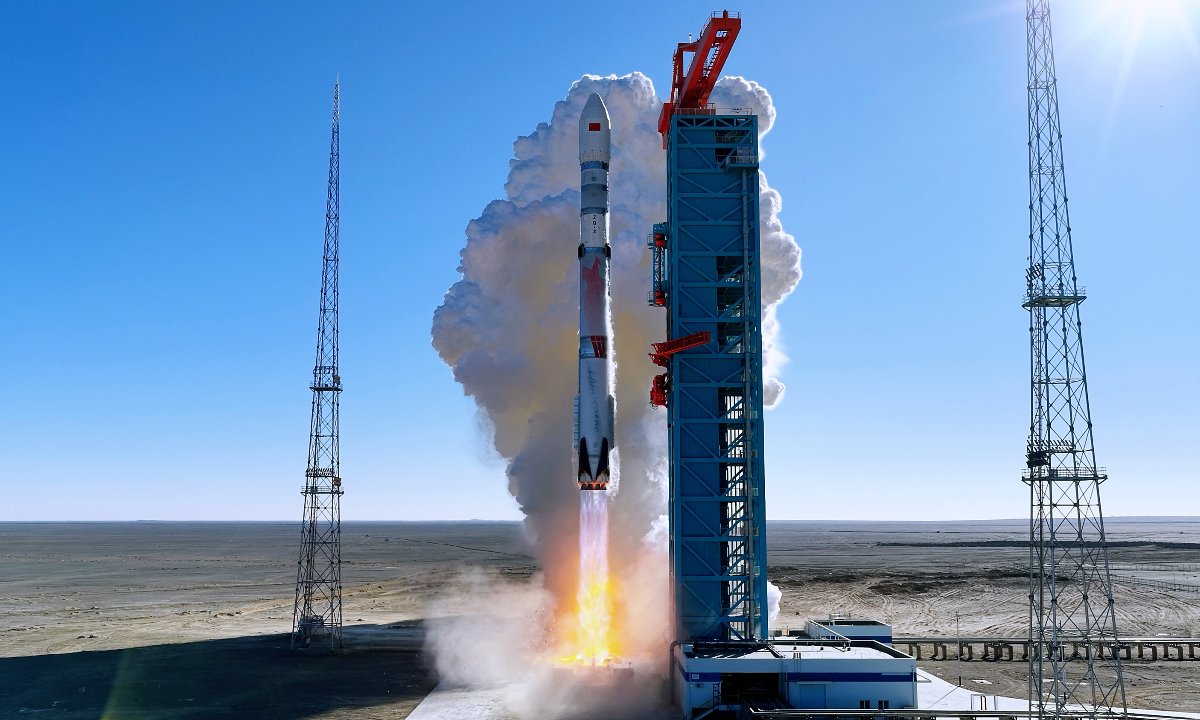
Beijing has pushed its reusable space programme a step further with the launch of an experimental spacecraft that state media described as a technology-verification mission, underlining how the country is trying to cut launch costs, raise flight tempo and broaden the range of missions it can carry out in orbit. The spacecraft was launched on 7 February aboard a Long March-2F rocket from the Jiuquan Satellite Launch Center in northwest China, in what was the fourth publicly disclosed mission of this type since 2020.

Chinese authorities released only a brief account of the flight, saying the spacecraft would verify reusable-spacecraft technologies and support the peaceful use of space. No official duration was given, and no details were provided on the systems being tested, the orbit reached or the vehicle’s configuration. That secrecy has become a hallmark of the programme and makes it difficult to judge exactly how far the technology has advanced, but the pattern of repeated flights suggests a sustained effort rather than a one-off demonstration.

Chronology matters here. China’s first disclosed flight in September 2020 lasted about two days. A second spacecraft launched in August 2022 stayed in orbit for 276 days before landing in May 2023. A third mission, launched in late 2023, returned in September 2024 after 268 days in orbit. Those longer flights point to growing confidence in long-duration autonomous operations, recovery procedures and mission endurance. Outside observers have often compared the craft with the United States’ X-37B-style approach to reusable uncrewed orbital vehicles, though Beijing has not publicly confirmed such comparisons.

This mission also fits into a much wider acceleration in Chinese space activity. On 7 April, China used a Long March-8 rocket from the Hainan commercial launch site to place 18 internet satellites into orbit for the Qianfan constellation. On 11 April, it carried out a sea launch using a Smart Dragon-3 rocket from waters off Guangdong, sending up a test satellite aimed at supporting satellite internet technology. Taken together, those launches show a programme expanding on several fronts at once: reusable vehicles, commercial launch infrastructure and large low-Earth-orbit communications networks.

Beyond low-Earth orbit, China is tying these advances to a broader national space agenda. Beijing is aiming for a crewed lunar landing by 2030 and is developing the Long March-10 rocket, the Mengzhou spacecraft and the Lanyue lunar lander for that effort. At the same time, the Chang’e-7 lunar probe is scheduled for launch in the second half of 2026. That means the reusable-spacecraft programme should be viewed less as an isolated experiment than as one part of an expanding architecture that spans launch systems, spacecraft design, lunar exploration and space-based connectivity.

Money and industrial policy are also shaping the picture. Reuters has reported that Beijing is funnelling more support towards private launch companies as it tries to build capacity for large satellite constellations and reduce reliance on state-owned providers alone. CAS Space has targeted fresh capital for reusable rocket research, while LandSpace and other firms are also turning to capital markets. Separate policy changes have given reusable-rocket developers a faster route to listing, provided they meet technical milestones, showing how closely commercial launch activity is now aligned with national strategic goals.

Yet the programme’s momentum should not be mistaken for mastery. China is advancing, but it is still chasing a lead established by SpaceX in frequent booster recovery and reflight. On 3 April, Space Pioneer said the maiden flight of its Tianlong-3 reusable rocket had failed, and Reuters reported that no Chinese firm had yet demonstrated the ability to recover and reuse a rocket’s main stage. LandSpace plans another recovery test for its Zhuque-3 rocket this year, while the Long March-12B reusable rocket completed a static firing test in January ahead of later flight missions. Progress is visible, but so are the engineering gaps.

By K Raveendran Election regulation in India is trapped in a contradiction that has become harder to defend with each passing cycle. The Election Commission continues to apply old assumptions about influence, persuasion and voter exposure to a media and political environment that has been transformed by technology, scale and the permanent visibility of public […]

The article Election Commission Applies 19th Century Thinking To 21st Century Realities appeared first on Latest India news, analysis and reports on Newspack by India Press Agency).

A prototype chip developed by engineers at the University of California San Diego has opened a possible new route to cutting energy waste inside data centres, by improving the way power is stepped down for graphics processors that handle artificial intelligence and other high-performance workloads. The team says the design converted 48 volts to 4.8 volts with peak efficiency of 96.2 per cent in laboratory tests, while […]

Commercial artificial intelligence tools were used as operational components in a cyber campaign that hit nine Mexican government organisations, according to a full technical report published by Gambit Security, which said the intrusion ran from late December 2025 to mid-February 2026 and exposed hundreds of millions of citizen records. The report says Anthropic’s Claude Code generated about three-quarters of the remote command activity, while OpenAI’s GPT-4.1 was […]

Earth is becoming brighter after dark overall, but the shift is proving far less uniform than older global averages suggested, with fast-growing parts of Asia and Africa lighting up while sections of Europe and some older urban zones are dimming through efficiency drives, new lamp technologies and policies aimed at cutting waste and light pollution. The clearest picture yet, drawn from daily satellite observations between 2014 and […]

Arabian Post Staff -Dubai Abu Dhabi will bring back its flagship infrastructure gathering in a larger format next month, with organisers casting the 12-14 May event as a platform to push smart, sustainable and people-centred urban development at a time when the emirate is moving ahead with one of the region’s biggest public project pipelines. The Abu Dhabi Infrastructure Summit, hosted by the Abu Dhabi Projects and […]

Samsung Electronics is weighing a semiconductor packaging and testing project in Vietnam that could be valued at about $4 billion, a move that would deepen the country’s role in the global chip supply chain and expand Samsung’s manufacturing base in one of its most important overseas hubs. Reporting over the past two days has shown that the company is discussing a semiconductor project with Vietnamese authorities, while […]

Arabian Post Staff -Dubai Saudi Arabia has moved to raise its profile in global data governance after the Saudi Data and Artificial Intelligence Authority, known as SDAIA, said it had joined the Global Privacy Assembly, a forum that links privacy and data protection authorities worldwide. The step puts the Kingdom’s privacy regime more visibly alongside international rule-setting efforts at a time when Riyadh is pushing digital government, […]

Qatar and India have moved to reinforce one of Asia’s most important energy relationships, with senior ministers in Doha pledging closer cooperation and calling for urgent protection of global supply chains as conflict-linked disruption continues to unsettle oil and gas markets. During talks on April 9 and 10, Qatar’s Minister of State for Energy Affairs and QatarEnergy chief executive Saad Sherida Al-Kaabi told India’s Minister of Petroleum and Natural Gas, Hardeep Singh Puri, that Doha would remain a reliable energy supplier, while both sides stressed the need for uninterrupted navigation and the free flow of commerce.

The meeting carried weight beyond bilateral symbolism. Qatar is India’s largest supplier of liquefied natural gas and a major source of liquefied petroleum gas, making the Gulf state central to India’s fuel security at a time when shipping risks and production interruptions have tightened markets. New Delhi’s outreach came as it sought assurances on supply after weeks of strain across West Asian energy routes and amid concern over the effect of regional instability on domestic fuel availability and industrial consumption.

Doha’s message was also framed by diplomacy. The official Indian statement said the ministers welcomed the two-week ceasefire agreed on April 8 and underlined the need for an early end to disruption in global energy supplies. It added that Puri conveyed greetings and a message of solidarity from Prime Minister Narendra Modi to Qatar’s leadership, reflecting how the energy relationship is now closely tied to broader strategic engagement covering trade, investment and regional stability.

For India, the stakes are immediate. The country depends on imports for about half of its natural gas needs, and the supply shock has already exposed vulnerabilities in infrastructure and procurement. GAIL’s finance director said this week that the Dabhol LNG terminal in Ratnagiri was operating at less than half its 5 million-tonnes-a-year capacity because of constrained global supplies. Hindustan Petroleum’s Chhara LNG terminal in Gujarat has also faced difficulties after missing two cargoes in March and April that were expected from Qatar via ADNOC Trading.

The background to the Doha talks is a sharp deterioration in regional energy logistics. Reuters reported on April 8 that QatarEnergy was preparing to restart LNG production after attacks in March forced stoppages at facilities in Ras Laffan and Mesaieed. Two of three trains at QELNG North 1 had been restarted, but a full return depended on vessels being able to pass safely through the Strait of Hormuz, one of the world’s most sensitive energy chokepoints. The same disruption has inflated spot prices and increased anxiety among large importers across Asia.

That makes Qatar’s long-term importance to India even clearer. In February 2024, QatarEnergy and Petronet LNG signed their largest single LNG supply agreement, under which Qatar will deliver 7.5 million metric tonnes a year from 2028 to 2048. Reuters reported at the time that Qatar planned to lift LNG liquefaction capacity to 126 million tonnes a year by 2027, up from 77 million, as it sought to strengthen its role in Asian and European markets. The scale of that agreement gives India a measure of stability, but it also underlines how deeply its gas strategy remains linked to a single Gulf supplier.

That dependence has advantages and risks. Qatar has earned a reputation for contractual reliability and remains among the lowest-cost LNG producers in the world, qualities prized by importers facing volatile spot markets. At the same time, the events of March and April have shown that even long-established energy corridors can be shaken by military escalation, damage to infrastructure and pressure on maritime routes. For policymakers in New Delhi, that is likely to sharpen interest in diversification through additional long-term contracts, more storage, broader sourcing and faster domestic gas infrastructure expansion.

India’s longer-term energy ambitions add another layer to the relationship. The government has repeatedly said it wants to raise the share of natural gas in the energy mix to 15 per cent by 2030, from just over 6 per cent at present. That target cannot be met without dependable imported LNG, even as the country pushes renewables, domestic gas output and cleaner urban fuels. Reliable Qatari supply therefore remains integral not only to short-term energy security, but also to India’s broader transition strategy and industrial planning.

Arabian Post Staff -Dubai RAK Ceramics has moved to reassure customers, contractors and distributors that its operations across the UAE and the wider region remain uninterrupted, saying access across its customer network is continuing without disruption across both retail and project channels. The statement comes at a time when businesses across the Gulf are paying closer attention to logistics resilience, input costs and delivery schedules amid wider […]

Jack Ma-backed Yunfeng Capital and Hillhouse Investment are among investors said to be planning to buy shares in Victory Giant Technology’s Hong Kong share sale, a deal that could raise about $2 billion and add fresh momentum to the city’s revival as a venue for large equity offerings. Bloomberg reported on Friday that the Guangdong-based company could begin taking investor orders as early as Monday, though the proposed allocations and timing were described as private and subject to change.

Victory Giant, formally known as Victory Giant Technology Co., Ltd., is already listed in Shenzhen and filed an application proof for a Hong Kong offering in February. The draft filing makes clear that the process was still incomplete at that stage and that no investment decision should be based on the draft document alone, a reminder that the final terms, investor line-up and valuation could still shift before launch. China’s securities regulator had already given the green light for the offering in early March, according to Bloomberg’s earlier reporting.

The company sits in a part of the technology supply chain that has drawn growing investor attention as spending on artificial intelligence infrastructure accelerates. Victory Giant makes printed circuit boards, including high-layer-count multilayer boards and high-build-up high-density interconnect boards used in AI accelerator cards, AI servers and high-speed networking equipment. In its Hong Kong filing, the company said such products are designed for high-frequency, high-speed and high-stability applications and are used in components including GPU accelerator modules, CPU motherboards and network interface cards for AI servers.

Its own figures point to a sharp improvement in financial performance as demand for those products strengthened. According to the application proof, revenue rose from RMB7.93 billion in 2023 to RMB10.73 billion in 2024. For the nine months to September 30, 2025, profit climbed to RMB3.24 billion from RMB764.6 million a year earlier, while the net profit margin rose to 23.0% from 9.9%. The filing attributes a large part of that jump to stronger demand for high-end HDI products used in AI-related applications, which command higher prices and fatter margins.

That performance helps explain why anchor demand matters. Cornerstone-style support from investors such as Yunfeng and Hillhouse would give the offering greater signalling power at a time when fund managers are trying to separate durable AI-linked manufacturers from companies benefiting only from short-lived enthusiasm. Neither investor had publicly confirmed participation at the time of Bloomberg’s report, so any description of their role remains conditional until final deal documents are published.

Victory Giant’s filing also underlines the industrial logic behind the listing. The company says it plans to use proceeds for capacity expansion, infrastructure enhancement and equipment purchases in Huizhou, Changsha and Yiyang, as well as investment in smart manufacturing. In Huizhou alone, it expects capacity additions for premium high-layer-count multilayer boards and high-build-up HDI products, reflecting management’s bet that demand tied to AI computing, data centres and advanced electronics will stay strong enough to justify further capital expenditure.

Industry data included in the filing suggest the company is positioning itself in one of the faster-growing corners of the electronics market. The application proof says the global PCB market grew to US$75.0 billion in 2024 and could reach US$93.7 billion by 2029. It estimates the PCB segment tied to AI and high-performance computing at US$6.0 billion in 2024, with that figure projected to rise to US$15.0 billion by 2029. The same filing says Victory Giant ranked first globally in the first half of 2025 for high-layer-count multilayer PCBs with 14 layers and above, and also first globally in high-build-up HDI PCB in that period. Those market-share claims are drawn from third-party industry research cited by the company and should be read in that context.

The backdrop in Hong Kong is supportive, though not uncomplicated. Reuters reported in late February that the city had its strongest start to a year since 2021, with IPOs and second listings raising about $5.5 billion in January. By March 18, LSEG data cited by Reuters showed Hong Kong’s IPO market had raised about $11.64 billion in the first quarter, up 385% from a year earlier. At the same time, Reuters also noted in March that worsening geopolitical tensions had begun to weigh on trading debuts, a sign that even a revived market remains vulnerable to shifts in sentiment.

Agentic AI is moving from pilot projects into mainstream corporate workflows, forcing boards and security teams to treat these systems less like software features and more like outside operators with broad access to data, tools and decisions. What changes the risk profile is not only the model itself, but the autonomy layered around it: agents can plan tasks, call other applications, handle credentials and act across systems […]

VISHNU RAJA
RYO YAMADA
HITORI GOTOH
IKUYO KITA