News related to
City

Croatia has been thrust into Europe’s artificial intelligence infrastructure race after Pantheon Atlas LLC outlined plans for a €50 billion data centre and innovation campus in Topusko, a small town in Sisak-Moslavina County that could become one of the continent’s most ambitious compute hubs. The proposed Pantheon AI campus is designed around 1 gigawatt of total power capacity, including about 800 megawatts of usable information technology load […]

India’s electronics manufacturing drive has gained fresh momentum after Ashwini Vaishnaw said the country was positioned to become a trusted global value chain and supply chain partner, placing semiconductors, mobile phones, artificial intelligence infrastructure and component manufacturing at the centre of its industrial strategy.

The Union Minister for Electronics and Information Technology, Railways and Information and Broadcasting made the remarks at the ground-breaking ceremony of the Google Cloud India AI Hub in Visakhapatnam, a project carrying an estimated investment of $15 billion. The facility, planned with Adani ConneX and Airtel Nxtra, will include a 1GW hyperscale AI data centre, with about 600 acres allocated across Turluvada, Rambilli and Adavivaram in Andhra Pradesh.

Vaishnaw’s comments reflect a broader policy effort to shift India’s role from assembly-led electronics manufacturing to deeper participation in global technology supply chains. The government is seeking to build domestic capability across finished devices, modules, sub-modules, components, raw materials, tools and manufacturing machinery, a progression seen as essential for reducing import dependence and gaining a larger share of global production.

Mobile phones remain the strongest evidence of that transition. Electronics production has risen from about ₹1.9 lakh crore in 2014-15 to about ₹11.3 lakh crore in 2024-25, while electronics exports climbed from about ₹38,000 crore to about ₹3.3 lakh crore over the same period. Mobile phone production expanded from about ₹18,000 crore to roughly ₹5.5 lakh crore, and mobile phone exports rose from about ₹1,500 crore to nearly ₹2 lakh crore, making the category one of the country’s most visible export successes.

Smartphones have become a leading export product, with Apple, Samsung, Tata Electronics, Foxconn, Dixon Technologies and other manufacturers playing prominent roles in the production ecosystem. The shift has been supported by the Production Linked Incentive scheme for large-scale electronics manufacturing, which helped attract global brands and contract manufacturers to expand capacity. The sector’s next phase, however, will depend less on assembly incentives and more on the availability of components, precision engineering, skilled labour, predictable taxation and faster logistics.

The Google Cloud project adds a digital infrastructure dimension to this manufacturing agenda. Vaishnaw urged global technology companies, including Google, to consider manufacturing servers, GPUs and chips in the country, arguing that the domestic data centre boom could create demand for high-value electronics and advanced computing hardware. Visakhapatnam is being positioned as an artificial intelligence hub, with subsea cable links expected to improve global connectivity through routes connecting Australia, the Middle East, Europe, Africa and the United States.

Semiconductors are the most strategic part of the plan. The India Semiconductor Mission has already helped draw investment into assembly, testing, marking and packaging facilities, chip design centres and fabrication proposals. Approved projects across several states include packaging units, display driver chip capacity and compound semiconductor facilities. The sector remains capital-intensive and technologically demanding, and India is entering a field dominated by Taiwan, South Korea, the United States, Japan, the Netherlands and China. Timelines, execution quality and ecosystem depth will determine whether the country can move beyond packaging and design services into higher-value production.

The government’s target of building a $500 billion domestic electronics ecosystem by 2030-31 is ambitious. It requires not only export-led growth but also a domestic supplier base for printed circuit boards, camera modules, batteries, displays, sensors, connectors, power electronics and semiconductor materials. Without local component depth, headline export gains can mask high import content, limiting value addition and leaving manufacturers exposed to currency swings and global supply disruptions.

Industry executives have generally welcomed the policy focus but continue to point to operational challenges. High logistics costs, customs procedures, dependence on imported inputs, limited component clusters, power quality, land acquisition delays and uneven state-level implementation remain constraints. Global companies also compare India with Vietnam, Mexico, Malaysia and Thailand when allocating production, making policy certainty and execution speed critical.

Labour availability is one of India’s advantages. Electronics manufacturing has generated large-scale employment, including substantial hiring of young women in assembly lines and component facilities. This has helped states such as Tamil Nadu, Karnataka, Uttar Pradesh, Andhra Pradesh and Gujarat compete for investment. Yet sustained growth will require improvements in industrial training, factory housing, transport, safety standards and career progression, particularly as production moves from assembly to precision manufacturing.

Geopolitics has created an opening. Companies are diversifying supply chains because of trade tensions, tariff risks, pandemic-era disruptions and concerns over concentration in China. India’s democratic institutions, large market, engineering talent and improving infrastructure make it a credible candidate for “China plus one” strategies. The challenge is to convert interest into anchored manufacturing networks that include suppliers, tooling companies, testing labs, logistics providers and research partnerships.

North Korea’s Naegohyang Women’s FC is set to travel to South Korea this month for a high-profile Asian Football Confederation Women’s Champions League semi-final, creating one of the few sporting contacts between the two sides in years. The Pyongyang-based club is scheduled to face Suwon FC Women at Suwon Stadium on May 20, with the final fixed for May 23 at the same venue. The Korea Football […]

Ooredoo has launched Smart Wi-Fi Analytics in Qatar, giving large venues and enterprises a tool to convert everyday wireless connectivity into real-time operational intelligence for business, customer experience and network management. The service has been introduced as an add-on to Ooredoo’s existing Smart Wi-Fi portfolio and is designed for high-density environments such as shopping malls, universities, large office buildings, hospitality venues and other sites where thousands of […]

Asian equities advanced sharply on Monday as artificial intelligence-linked chipmakers in South Korea and Taiwan drove regional benchmarks back towards record territory, erasing the losses triggered by the Iran war and restoring investor appetite for technology-heavy markets.

The MSCI Asia Pacific Index rose as much as 2.3 per cent on May 4, its strongest intraday gain since April 8, while the MSCI Asia Pacific excluding Japan Index climbed as much as 2.9 per cent. Benchmarks in South Korea and Taiwan, both heavily exposed to the semiconductor supply chain, gained more than 4 per cent each as investors moved back into companies seen as central to the global AI build-out.

The rally was led by the region’s dominant AI hardware suppliers, including Taiwan Semiconductor Manufacturing Co, Samsung Electronics and SK Hynix. These companies sit at crucial points of the AI infrastructure chain, from advanced foundry production to high-bandwidth memory chips used in data centres and graphics processors. Strong earnings from US technology groups have reinforced expectations that capital spending on AI servers, accelerators and cloud infrastructure will remain elevated through 2026.

TSMC has become the clearest symbol of that shift. The world’s largest contract chipmaker posted a 58 per cent jump in first-quarter net profit to a record level, supported by demand for AI processors, and guided second-quarter revenue to $39 billion to $40.2 billion. Its first-quarter revenue rose 35 per cent from a year earlier to about $35.7 billion, underlining the scale of orders tied to advanced computing.

Samsung’s semiconductor division also delivered a major earnings rebound, reporting 53.7 trillion won in operating profit for the first quarter on 81.7 trillion won in revenue. The group said memory sales were lifted by AI-related demand and tight supply, even as its mobile and display businesses faced margin pressure from higher component costs.

SK Hynix has benefited from its strong position in high-bandwidth memory, a category that has become central to AI accelerator performance. Demand from data centre operators and chip designers has pushed memory makers into long-term supply arrangements, with shortages expected to extend into 2027 as customers reserve capacity years ahead.

Taiwan’s broader market has also gained from the AI trade. The island’s economy expanded 13.69 per cent in the first quarter, its fastest annual pace in nearly four decades, supported by a surge in exports tied to AI hardware. Taiwan has overtaken Canada to become the world’s sixth-largest stock market by value, helped by TSMC’s rise and investor demand for companies embedded in advanced chip manufacturing.

Investor confidence has been strengthened by Nvidia’s expanding Asian supply chain. Its partners now span foundries, memory suppliers, electronics assemblers and companies linked to robotics and so-called physical AI. The shift has widened the rally beyond a handful of chip names, lifting component makers and specialist suppliers that provide substrates, packaging, power management and memory-related technologies.

The rebound also reflects a broader reassessment of geopolitical risk. The Iran war initially prompted investors to cut exposure to export-oriented and energy-importing markets, particularly those vulnerable to shipping disruptions and higher fuel costs. Yet the scale of AI-related earnings growth has helped offset those concerns, with funds favouring economies that are directly tied to semiconductor demand and less dependent on domestic consumption.

South Korea’s Kospi has been one of the year’s standout performers, supported by Samsung, SK Hynix and other technology exporters. Taiwan’s Taiex has also outperformed as investors price in continued demand for advanced nodes, AI servers and high-performance computing. The concentration of gains, however, has increased concerns that regional indices are becoming more dependent on a narrow set of semiconductor companies.

Valuations remain a key risk. Share prices in several AI-linked companies have risen faster than earnings forecasts, leaving markets exposed to any slowdown in capital expenditure by US cloud providers or delays in chip production. Memory supply shortages may support pricing in the near term, but they could also raise costs for downstream electronics makers and intensify competition among suppliers expanding capacity.

Currency movements have added another layer to the market response. A weaker won has supported earnings translation for South Korean exporters, while Taiwan’s market has drawn stronger foreign inflows on expectations that AI-linked exports will keep growth elevated. Japan’s yen strengthened during Monday’s regional trading, reflecting a mix of safe-haven demand and shifting expectations around monetary policy.

Arabian Post Staff -Dubai Saudi Arabia, Russia and five other Opec+ producers agreed on Sunday to raise their collective oil production quota by 188,000 barrels per day from June, pressing ahead with a planned supply increase despite severe disruption to Gulf exports and the UAE’s exit from the alliance. The decision was taken at a virtual meeting of Saudi Arabia, Russia, Iraq, Kuwait, Kazakhstan, Algeria and Oman, […]

Arabian Post Staff -Dubai Abu Dhabi National Oil Company will award Dh200 billion worth of project contracts between 2026 and 2028, marking one of the largest new execution phases in the Gulf energy sector as Abu Dhabi moves to expand capacity, secure supply chains and deepen local manufacturing. The planned awards, equivalent to about $55 billion, form the first major tranche of ADNOC’s $150 billion capital expenditure […]

Advertisements
NEW DELHI, INDIA – Media OutReach Newswire – 3 May 2026 – The Indo-Pacific region continues to be the focal point of global growth dynamics and strategic competition, and relations between Vietnam and India are facing new opportunities to develop in a deeper, more substantive, and more sustainable manner. Building on the Comprehensive Strategic Partnership established in 2016, cooperation in the fields of economy, science and technology, and environment has increasingly been identified by both sides as key pillars.

In 2024, the two sides adopted an Action Plan to implement the Comprehensive Strategic Partnership for the 2024-2028 period. This document not only consolidates traditional areas of cooperation but also expands into new domains such as science and technology, innovation, digital transformation, energy and sustainable development.

Economy continues to be a bright spot in bilateral cooperation

Over the past decade, Vietnam-India economic cooperation has recorded significant positive developments. Bilateral trade turnover has maintained steady growth, increasing from over USD 14 billion in 2023 to nearly USD 16.5 billion in 2025, reflecting the increasingly close integration between the two dynamic Asian economies.

The structure of two-way trade has increasingly demonstrated complementarity. Vietnam has strengthened its exports of electronics, machinery, processed agricultural products, wood, and seafood, while India serves as an important supplier of steel, pharmaceuticals, chemicals, and textiles to Vietnam.

Amid the ongoing restructuring of global supply chains, both Vietnam and India are intensifying efforts to diversify their partners and reduce dependency risks. This creates significant room for the two countries to promote supply chain linkages in areas such as processing and manufacturing industries, supporting industries, logistics, and high-tech agriculture. Vietnam, with its strategic location in Southeast Asia, can serve as a gateway for Indian enterprises to expand their presence deeper into ASEAN, while India represents a vast market with rapidly increasing consumer demand.

Science and technology: a new driver for deeper cooperation

Scientific and technological cooperation has seen remarkable development recently, gradually shifting from exchanges to more substantive collaboration, tied to specific products and developmental needs. Priority areas of cooperation include information technology, biotechnology, clean energy, and digital transformation.

Several representative projects, such as the Satellite Data Receiving Station and Satellite Image Processing Center, the Vietnam-India Nuclear Science Center (Da Lat), the Army Software Park (Nha Trang), and the Center of Excellence in Software Development and Training (CESDT), have been contributing to enhancing Vietnam’s technological capacity. Notably, the Indian Technical and Economic Cooperation (ITEC) program continues to be an effective channel for human resource training, helping Vietnamese officials and experts access modern management knowledge and experience.

Against the backdrop of the vigorous Fourth Industrial Revolution, the potential for cooperation between the two countries remains vast. The two sides can expand their cooperation into emerging areas such as Artificial Intelligence, semiconductors, cybersecurity, fintech, and biotechnology, aiming for the goals of co-development and co-innovation. ­

Environmental cooperation and sustainable development are gradually expanding

In the context of increasingly complex climate change, environmental cooperation between Vietnam and India is becoming an important component of the bilateral agenda. Areas such as renewable energy, water resource management, circular economy, and disaster-resilient infrastructure are receiving growing attention and promotion from both sides.

Cooperation agreements in marine science, along with Quick Impact Projects (QIPs) supporting communities, such as clean water supply, drought mitigation, and saline intrusion prevention in the Mekong Delta, have delivered practical results. Vietnam’s participation in the Coalition for Disaster Resilient Infrastructure (CDRI), initiated by India, also opens up opportunities to strengthen cooperation in sustainable infrastructure and climate change adaptation.

In the coming period, areas encompassing solar energy, energy storage, waste management, marine pollution monitoring, and early warning systems for natural disasters are considered promising directions for cooperation.

Prospects for cooperation

The prospects for cooperation in the coming period are assessed as positive. With the economic and scientific-technological complementarity, along with strong political will from both sides, Vietnam-India relations have many favorable conditions to grow more strongly, particularly in areas such as the digital economy, green economy, innovation.

Orientations for promoting cooperation in the coming period

With a foundation of excellent relations and significant room for cooperation, the two countries have the basis to elevate the Comprehensive Strategic Partnership to a new height, making it increasingly substantive and effective in the new phase, particularly in the context of the two countries heading towards new high-level engagements with the state visit of General Secretary and President To Lam to India in May 2026.

To effectively capitalize on opportunities, both sides need to continue maintaining high-level exchanges, intergovernmental mechanisms and specialized dialogues, and further translate strategic commitments into cooperation programs and projects with clear roadmaps and resources.

In the economic field, efforts should be intensified to remove trade barriers, improve logistics connectivity, and promote the review and upgrading of the ASEAN – India Trade in Goods Agreement (AITIGA); strengthen the development of large-scale investment projects in priority areas such as pharmaceuticals, the marine economy, renewable energy, and supporting industries.

In the field of science and technology, establishing joint research cooperation mechanisms, strengthening linkages between research institutes, universities, enterprises, as well as promoting expert exchanges, technology transfer, and human resource training will play an important role.

In the environmental field, efforts should be directed toward building a comprehensive green cooperation framework, focusing on water management, marine science, plastic pollution reduction, clean energy, and disaster-resilient infrastructure, while also effectively leveraging regional initiatives such as the CDRI.

Hashtag: #MAE

The issuer is solely responsible for the content of this announcement.

By K Raveendran Election-season restraint on fuel pricing is giving way to a harsher economic reality, and Indian consumers are likely to feel the impact first through the everyday costs that rarely appear as headline inflation until they have already entered household budgets. Petrol, diesel and cooking fuel are not merely energy products in India; […]

The article With Elections Over, Realistic Pump Prices Only A Matter Of Time appeared first on Latest India news, analysis and reports on Newspack by India Press Agency).

Oil at $80 would once have been considered elevated. Now it would be interpreted as stability, and that shift alone reveals how fundamentally the market has changed. Brent crude moving beyond $120 this week is widely being described as a spike driven by geopolitical tension. That interpretation is too narrow. Price action reflects something deeper and more consequential: a structural reset in how energy is priced, traded, […]

Apple is turning restraint into a strategic advantage as rivals pour record sums into artificial intelligence infrastructure, betting that a narrower, device-centred approach can protect margins while keeping investors focused on earnings rather than data-centre bills. The iPhone maker’s latest quarterly performance has strengthened that argument. Apple reported March-quarter revenue of $111.2 billion, up 17 per cent from a year earlier, with diluted earnings per share rising […]

Arabian Post Staff -Dubai Ras Al Khaimah’s economic regulator has stepped up public and business awareness over counterfeit goods, warning that fake products threaten consumer safety, undermine legitimate traders and expose offenders to serious legal action. The Ras Al Khaimah Department of Economic Development, through its Commercial Control and Protection Department, carried out an awareness campaign titled “Protect Your Products from Counterfeiting” as part of wider efforts […]

Arabian Post Staff -Dubai Uber Technologies has agreed to acquire FlyTaxi, strengthening its position in Hong Kong’s fast-changing point-to-point transport market as the city prepares to bring ride-hailing platforms under a formal licensing regime. The deal gives Uber control of one of Hong Kong’s main remaining independent taxi-hailing apps and adds to its earlier acquisition of HKTaxi, deepening its reach into the licensed taxi trade. FlyTaxi is […]

MILAN, ITALY – Media OutReach Newswire – 1 May 2026 – As the dynamic interplay of light and shadow along the Putuo District section of Suzhou Creek in Shanghai, known as the “Half Marathon Suzhou Creek,” met the artistic atmosphere of Milan Cathedral, a spring dialogue spanning continents opened warmly as part of the “Shanghai in My Mind · Spring Shanghai” pop-up event series in Milan. On April 25, the “Putuo Day” themed event was held at a newsstand in Largo Augusto, Milan. Centered on the theme “Half Marathon Suzhou Creek · Garden of Light,” the event offered local residents an immersive experience of the distinctive charm of Shanghai’s Putuo District.

Light as a Bridge: A Garden of Light in Miniature

Centered on the theme of “Garden of Light,” the pop-up event blended Putuo’s cultural heritage with Milan’s artistic aesthetic, transforming the compact newsstand into four themed spaces: the Light of Development, the Light of Vitality, the Light of Warmth and the Light of Craftsmanship. Together, they created a refined and richly layered exhibition of urban aesthetics.

The Garden Walk zone conveyed the “Light of Vitality,” with artificial greenery recreating the energy of the Suzhou Creek waterfront. Cultural and creative products from the “Half Marathon Suzhou Creek” collection, including sand-art magnets, liquid-motion coasters and custom scarves, added to the lively atmosphere. The Interactive Experience zone embodied the “Light of Warmth,” linking stamp collecting, message sharing and film screenings to create a welcoming space where every visitor could take part in the cross-cultural exchange. The Craftsmanship Heritage zone interpreted the “Light of Craftsmanship,” featuring century-old Hero pens, intangible cultural heritage bamboo weaving and pieces from the Shanghai Mint, highlighting the brilliance of Eastern craftsmanship through light and shadow. The Light and Shadow Window zone represented the “Light of Development.” Warm light passed through suspended golden bookmarks, casting colorful reflections across the walls and floor, echoing the stained-glass windows of Milan Cathedral.

At the event, local residents and visitors posed for photos with light-and-shadow bookmarks, wrote heartfelt messages on postcards, and captured joyful moments with instant cameras. They collected commemorative stamps as keepsakes, experienced the elegance of Eastern writing with Hero pens, and watched the VR film “HI, This Is Half Marathon Suzhou Creek” for an immersive introduction to Putuo. The pop-up event transcended barriers of language and distance, bringing the urban charm of Putuo to people in Milan through experiences that were tangible, engaging and memorable.

Spring Echoes: Suzhou Creek’s Story Continues in Light

The “Spring Shanghai” themed pop-up was not only a city showcase in Milan, but also a dialogue between two cities across Europe and Asia. To extend the memory of this celebration of light, Putuo has created a “Garden of Light” themed corner at the Half Marathon Suzhou Creek Café & Cultural Creative Store, allowing cultural exchanges between the two places to continue to grow.

Inside the store, white magnolias and azaleas feature throughout the décor, symbolizing friendship and dialogue between the two cities. Decorative decals inspired by the stained-glass windows of Milan Cathedral cast colorful patterns of light across the floor, creating an aesthetic connection between Shanghai and Milan. Messages from visitors collected during the Milan event, handwritten postcards and instant photos will be displayed in artistic installations, including a corridor of greetings and a light-and-shadow photo wall reflecting a blend of Chinese and Italian culture. Limited-edition light-and-shadow bookmarks and other themed merchandise will also be introduced, while messages written by Shanghai residents in response will be compiled into a collection, creating a two-way bond of mutual goodwill.

From Milan to Suzhou Creek, Putuo used light as a bridge to continue the friendship between China and Italy across the two cities, while enabling more people to see and understand the story of “Half Marathon Suzhou Creek.”

Vibrant Putuo: Half Marathon Suzhou Creek in Full Flow

Putuo District is actively participating in China’s Yangtze River Delta integration strategy. It supports the development of the Shanghai–Nanjing Industrial Innovation Belt, advances the “one belt, one core, one city” framework, and promotes a vision of a coordinated innovation zone and a high-quality Half Marathon Suzhou Creek area. A digital-driven upgrade of the bulk commodity trade supply chain is currently taking shape. Along the Suzhou Creek waterfront, ecological landscapes are increasingly being transformed into spaces for industrial development. The Zhenru sub-center is speeding up its digital transformation, combining heritage with modern urban functions and integrating cultural and commercial activity. Taopu Smart City is emerging as a hub for R&D and advanced manufacturing, as it moves toward becoming a model for integrated urban-industrial development. Together, these developments are helping drive Putuo’s high-quality growth.

Industrial growth brings urban vitality, and a vibrant city improves people’s quality of life. Building on a solid foundation of high-quality development, Putuo is shaping a livable and business-friendly district defined by energy and human warmth. It is both a hub for sports and an appealing place to live. Major events such as the Suzhou Creek Half Marathon, dragon boat races, the 10km Elite Race and the National Curling Championships showcase the district’s dynamism and competitive spirit. Daily life offers a different rhythm. TOP Central Park provides expansive green space, the RV Music Festival draws crowds with live performances, M50 Creative Park remains a center for arts and culture, and Hong Shou Fang blends Shanghai-style charm with the atmosphere of neighborhood street life. Putuo is working to build a district-wide “15-minute community living circle,” giving residents convenient access to education, healthcare, eldercare and retail services. It is advancing child-friendly urban development, expanding the silver economy to better serve seniors, and creating homes and support services for the city’s builders and frontline workers. Through these efforts, openness, inclusiveness and warmth have become defining features of the district.

To learn more about Spring Shanghai and Spring Putuo, please watch the video here: https://youtu.be/196Fmmbrsio.

Hashtag: #PUTUO

The issuer is solely responsible for the content of this announcement.

  America’s four largest AI spenders are pushing capital outlays towards a record level this year, betting that demand for computing power will justify one of the most expensive investment cycles in corporate history. Microsoft, Amazon, Alphabet and Meta are preparing to spend roughly $680 billion to more than $700 billion on data centres, chips, servers, networking equipment and related infrastructure in 2026, after quarterly earnings showed […]

Global internet reliability came under sharper pressure in the first quarter of 2026 as shutdowns, war damage, power failures and cable incidents disrupted connectivity across several regions, exposing a widening risk for enterprises that depend on cloud platforms, cross-border data flows and always-on digital services. Cloudflare’s review of disruptions from January to March showed that the most damaging incidents were not dominated by software faults alone. Political […]

Australia’s data centre industry is moving from rapid expansion to sharper scrutiny as new forecasting shows a widening gap between announced projects and capacity likely to be delivered by 2030. A joint market intelligence initiative by Data Centres Australia and DC Byte has put operational IT capacity at about 1.4 gigawatts at the end of 2025, with the market projected to reach 3.1GW to 3.2GW by 2030. […]

The current trend creates increased demand for tangible assets which provide investors with actual possession and permanent worth. The market has started to recognize rare diamonds as a valuable investment option. The current financial climate presents traders with an attractive investment opportunity through diamonds because their limited supply and high fundamental value create a trading asset that operates outside normal banking systems. The main advantage of rare […]

Arabian Post Staff -Dubai Samsung Electronics has signalled plans to expand its wearable device ambitions into AI glasses, even as it warned that a deepening global memory shortage could intensify through 2027 and raise costs across consumer electronics, servers and mobile devices. The remarks came during the company’s first-quarter 2026 earnings call, where executives linked the squeeze in RAM and storage supply to the rapid build-out of […]

SANYA, CHINA – Media OutReach Newswire – 30 April 2026 – The ninth day of competition marked the conclusion of the sixth Asian Beach Games in Sanya, bringing the multi-sport event to a close. Gathering over 1,600 athletes from 45 countries and regions across Asia, the Games not only delivered high-level competition but also offered a window into the new phase of openness following the island-wide special customs operations of the Hainan Free Trade Port (Hainan FTP).

The 6th Asian Beach Games was held in Sanya, Hainan, China from April 22 to 30, 2026.

The smooth staging of the Games demonstrated Sanya’s capacity to host major international events. From competition venues stretching across 22 kilometers of coastline, to 22 designated hotels accommodating domestic and international guests, and the support of 4,680 volunteers, as well as touristic and cultural engagement activities, the host city’s organization and services received broad recognition. Abdulaziz Baeshen, Secretary General and CEO at the Saudi Olympic & Paralympic Committee, said, “The organization of this Asian Beach Games has been of a very high standard, once again demonstrating China’s outstanding capability in hosting major international sporting events.”

The success of the Games was underpinned by the policies of the Hainan FTP. Benefiting from visa-free access for citizens of 86 countries and event-specific facilitation measures, cross-border travel was efficient and seamless. Qatari athlete Ahmed Elmeniawy said, “The entry procedures were extremely convenient. It took less than two minutes to complete all arrival formalities — a truly excellent experience.” An official from the Saudi Olympic Committee also noted that the FTP policies and visa-free arrangements facilitated participation by delegations and promoted bilateral sports exchanges.

During the Games, Sanya launched a series of cultural tourism activities and consumer incentive packages centered on a “spectating plus vacation” model, boosting the integration of sports and tourism consumption. At the same time, the Asian Beach Games served as a platform for exchanges among Asian countries. During his visit to Hainan, Thomas Bach, Honorary President of the International Olympic Committee, said he felt “the unity of Asia.” Raja Randhir Singh, President of the Olympic Council of Asia, noted that despite differences in language and traditions, a shared passion for sport brings people together.

Although the Games have concluded, openness and cooperation continue. The event has provided valuable experience for the Hainan FTP in hosting major international events and demonstrated China’s continued efforts to expand high-level opening-up. The FTP will continue to deepen international exchanges and cooperation with an open and inclusive approach.

Hashtag: #6thAsianBeachGame #Sanya #China

The issuer is solely responsible for the content of this announcement.

By Nitya Chakraborty Just two weeks before the scheduled summit of U.S President Donald Trump with the Chinese President Xi Jinping in Beijing on May 14-15, the report of the World Intellectual Property Organisation (WIPO) on the status of AI related applications, has unnerved the U.S. administration as the latest Chinese supremacy in robot related […]

The article China’s Lead Over U.S. In AI Patent Applications Casts Its Shadow Over Trump-Xi Summit appeared first on Latest India news, analysis and reports on Newspack by India Press Agency).

With Leisure Plus, Redefining Hong Kong’s Bathroom Experience Through AI
Smart Toilets and Bathroom Cabinets for a New Era of Intelligent Living

HONG KONG SAR – Media OutReach Newswire – 30 April 2026 – As urban life in Hong Kong places growing emphasis on efficiency, health and space utilisation, a truly future-facing bathroom brand has officially arrived. Leisure Plus Building Products Company Limited, which has been rooted in Hong Kong for nearly three decades, has officially announced its appointment as the Hong Kong sole agent for global bathroom leader JOMOO. Together, the two companies are bringing world-renowned premium smart bathroom products to the Hong Kong market, using JOMOO’s leading AI-powered digital technology to deliver innovative bathroom solutions tailored to the city’s unique living environment. This partnership not only marks the arrival of a heavyweight international brand in Hong Kong’s bathroom market, but also signals a new AI-driven era for local homes and commercial spaces.

image-3

For Hong Kong people, the bathroom has never been a purely functional space. Within a limited footprint, it carries cleansing, grooming, care, storage, and the rhythm of how each day begins and ends. Space is compact, humidity is high, storage must be efficient, and expectations for the user experience keep rising. JOMOO’s arrival in Hong Kong answers the city’s pursuit of efficiency, comfort, health and aesthetics with world-leading AI bathroom technology. The brand is also introducing several smart toilets and innovative bathroom mirror cabinets for their Hong Kong debut, showing how bathroom AI can move from concept into daily life and become a real part of improving everyday living.

Leisure Plus Building Products said: “Bringing JOMOO to Hong Kong reflects Leisure Plus’s deep insight into the future of living. We see Hong Kong’s premium bathroom market moving beyond traditional hardware into a new stage that combines smart technology, health management, space integration and sensory experience. By partnering with JOMOO, Leisure Plus is bringing globally leading AI smart bathroom technology to Hong Kong, not only adding an international-calibre brand to the market, but also redefining daily life through technology, enabling the bathroom to evolve from a single-function space into a core living space that delivers comfort, efficiency and wellness value.”

JOMOO: Reshaping the Bathroom Experience with AI and Unrivalled Global Leadership

Founded in 1990, JOMOO has long ranked No.1 in China’s bathroom industry and among the world’s top three. With technology-driven bathroom living at its core, the brand combines R&D, intelligent manufacturing and innovative design, and is committed to redefining premium living through AI. As the pioneer behind the “AI BATH” scene-based brand, JOMOO breaks away from conventional product thinking with pioneering motorised flip-and-discharge cleansing technology that significantly improves performance while achieving library-level quietness. Combined with AI robotic self-cleaning and contact-free health sensing technologies, it deeply integrates artificial intelligence, biosensing and everyday bathroom use, delivering more proactive and thoughtful health support for users.

In this high-profile move into Hong Kong, JOMOO is guided by the strategy “Tech Bathroom, Global JOMOO”, bringing not only products but also a lifestyle upgrade powered by AI. Tailored to Hong Kong’s compact and humid living environment, the brand offers smart, space-saving and health-enhancing bathroom solutions, helping lift the overall standard of bathroom living in the city.

From Smart Toilets to Bathroom Cabinets: A Powerful New AI Bathroom Lineup Arrives in Hong Kong

G06 and G08 Smart Digital Toilets

In Hong Kong’s space-constrained homes, bathroom spaces often face multiple challenges, including limited room, humidity and restricted functionality. Tailored specifically for Hong Kong homes, JOMOO is introducing two flagship smart toilets and one smart bathroom cabinet that use AI-powered digital technology to resolve the tension between space and functionality in one stroke, bringing consumers a world-leading premium smart bathroom experience. The G06 Smart Digital Toilet is an entry choice that balances intelligence, comfort and practicality, while the G08 Smart Digital Toilet comes with an upgraded digital display and a more comprehensive smart feature set, taking comfort, convenience and technology to a new level.

To address the common problem of compact bathrooms in Hong Kong, both products are equipped with features such as “triple foot-sensing control”, “smart wireless control” and “auto-flush on departure”. Users do not need to twist sideways or make unnecessary movements, and can enjoy a freer, smoother toilet experience even in narrower bathroom spaces. With an IPX4 water-resistance rating, the products also handle Hong Kong’s humid environment with ease, delivering reassurance and durability in everyday use.

Product highlights:
– Triple foot-sensing control with automatic lid opening for elegant use even in narrow spaces
– AI smart temperature sensing and adjustment for lasting comfort
– High-definition digital display showing water and seat temperature at a glance
– Multiple cleansing modes with antibacterial nozzle and warm-air drying system
– Soft-glow night light and backup flushing during power outages
– IPX4 high-efficiency water resistance for humid environments

Pricing:
– G06 Smart Digital Toilet:
Original price HK$5,980; promotional price HK$4,980

– G08 Smart Digital Toilet:
Original price HK$8,580; promotional price HK$5,980

Revolutionary Smart Bathroom Cabinet: VERA Jinci Series

Addressing the core issue of limited bathroom space in Hong Kong’s mainstream residential developments, JOMOO will soon launch the suspended VERA Jinci Series Smart Bathroom Cabinet. Powered by AI technology, it integrates three major functions – beauty-product preservation, dedicated wash care, and smart mirror features – so that every inch of space delivers greater value and daily routines become more precise, smoother and more relaxed, completely reinventing the bathroom experience.

Product highlights:
– 998x532x1900mm suspended golden-ratio structure with zero hygiene blind spots
– Built-in cosmetics fridge with AI-controlled constant temperature and humidity for skincare freshness
– Built-in 0.8kg mini drum washer with six cleansing modes tailored for small items
– Mirror with touch-control natural-light ambience and one-touch defogging
– High colour-rendering mirror for true-to-tone makeup application
– Moisture-resistant eco solid-wood body suited to Hong Kong’s maritime climate

The VERA Jinci Series Smart Bathroom Cabinet is scheduled to officially launch in Hong Kong in mid-2026. Consumers will be able to experience its intelligent features firsthand at JOMOO’s Hong Kong experience store. (Price to be announced)

Hashtag: #JOMOO #LeisurePlus #SmartBathroom

The issuer is solely responsible for the content of this announcement.

About Leisure Plus Building Products Company Limited

Established in 1997, Leisure Plus specialises in building products and design solutions for developers, architects and designers. Its services cover the supply of bathroom and kitchen equipment, design consultancy, logistics, technical support and installation. Since entering Mainland China in 2003, the company has established subsidiaries in Shanghai and Hubei and participated in a number of landmark projects, including Vanke Zhongxing Road No.1, Shanghai Sheshan Shimao InterContinental Hotel and Wuhan Tianhe Airport Terminal 3. This sole-agency partnership with JOMOO reflects Leisure Plus’s forward-looking vision: embracing the smart home wave, understanding Hong Kong people’s living needs, and combining its extensive project experience with world-class smart bathroom technology to further enhance living quality and health experiences. (Website: )

About JOMOO

Founded in 1990, JOMOO is an international fully integrated enterprise centred on smart digital bathroom solutions, firmly holding a leading global position as “No.1 in China, Top 3 in the World”. The brand has been jointly certified by Frost & Sullivan and Euromonitor as both the “World’s No.1 Smart Toilet Brand by Sales Volume” and the “No.1 Smart Toilet Brand in China”. It operates 16 R&D centres and 15 green lights-out factories worldwide, has accumulated more than 20,000 patents, and invests over 10% of annual sales revenue in R&D, continuously driving the intelligent transformation of the global bathroom industry. Its design strength has earned repeated international recognition, including the Red Dot: Best of the Best and the iF Design Award. JOMOO products are sold in more than 120 countries and regions and are installed in over 300 global landmark projects, including Emirates Palace Abu Dhabi, Burj Al Arab Dubai, The Peninsula Hong Kong and Beijing National Stadium (Bird’s Nest). JOMOO’s arrival in Hong Kong not only expands its global footprint, but also brings the market a new bathroom benchmark defined by technology, scenario-driven design and premium lifestyle quality. (Website: )

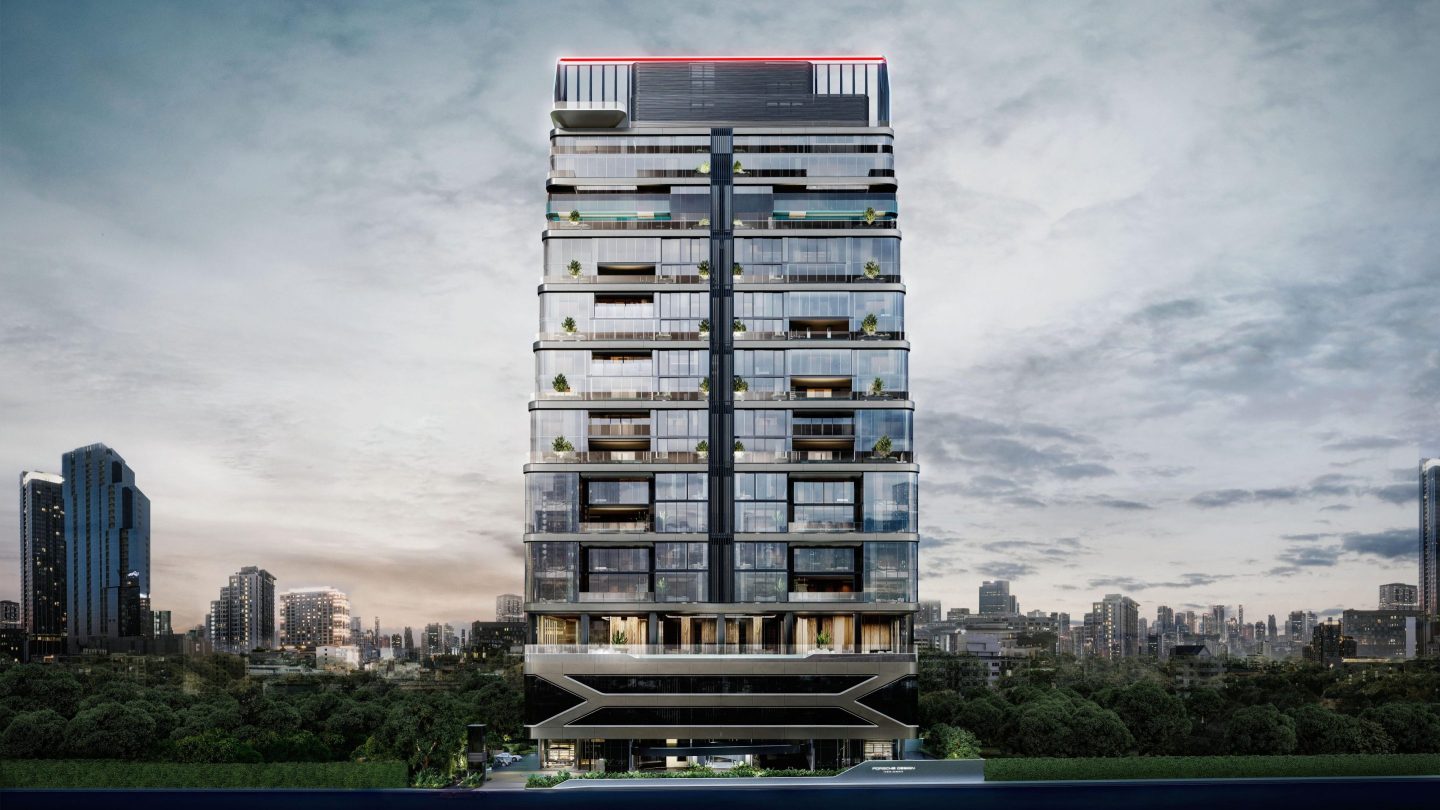
Porsche Design Tower Bangkok has intensified competition in Southeast Asia’s branded residence market after being presented to global yacht collectors at the Singapore Yachting Festival 2026 as a limited-edition property aimed at ultra-high-net-worth buyers seeking design pedigree, privacy and collectible real estate.

The 21-storey tower, rising 95 metres on Sukhumvit 38 in Bangkok’s Thonglor district, is being developed through a collaboration between Porsche Design and Ananda Development. It is the first Porsche Design Tower in Asia and the third worldwide after projects linked to Miami and Stuttgart, placing Bangkok within a small group of cities being used by luxury lifestyle brands to extend their reach beyond products and into residential property.

The project will comprise only 22 duplex and quadplex Sky Villas, with residences ranging from about 525 to 1,135 square metres. Prices have been positioned from about $15 million to $40 million, making the development one of the most expensive residential offerings in Thailand’s capital. Construction is scheduled to begin before completion targeted for the end of 2028, while the show suite in Bangkok is available by private appointment.

The presentation in Singapore marked a sharper effort to reach buyers whose interests overlap with luxury mobility, yachting, design and private collections. Rather than selling the tower as a conventional condominium, the marketing places it in the category of a scarce lifestyle asset. That approach reflects a wider shift in luxury property, where affluent buyers are increasingly drawn to homes that combine brand identity, service standards, security and membership-like exclusivity.

A defining feature of the Bangkok tower is the “Passion Space” concept, a private garage and display area attached to each residence. These spaces are designed for car collections, private gatherings or personal pursuits, and are accessed through a central spiral car ramp known as “The Loop”. The arrangement gives the building its most distinctive automotive link, turning the owner’s vehicle collection into part of the residential experience rather than a separate amenity.

The tower’s design also draws on Porsche cues. Its automated terrace system is inspired by the movement of the Porsche 911 Targa roof, while the exposed “X-Frame” structure takes references from the Mission R concept car. A lit crown at the top of the building is intended to create a night-time signature on Bangkok’s skyline. The interior proposition includes private lifts, large entertainment areas, wellness zones, pools and high-end kitchen and bathroom fittings.

Chanond Ruangkritya, president and chief executive of Ananda Development, has positioned the tower as a project that embeds Porsche’s design language into the structure rather than merely attaching a name to a luxury address. The developer is betting that a small pool of regional and international buyers will pay a premium for scarcity, brand association and the ability to personalise large-scale residences in a prime district.

Bangkok provides a strong setting for that strategy. Thonglor remains one of the capital’s most established luxury neighbourhoods, with restaurants, retail, wellness services and transport links that appeal to wealthy local residents, expatriates and regional buyers. The city has also become an important hub for branded residences, helped by tourism, medical services, international schools and its role as a base for high-net-worth families across Asia.

The project arrives as Thailand’s luxury property market shows a split trend. Mass-market condominium developers have faced weaker purchasing power, tighter lending and slower absorption, while the highest end of the market has remained more resilient because buyers are less dependent on mortgages. Limited freehold land in central Bangkok, rising construction costs and demand for larger, service-rich homes have supported pricing in prime locations.

The ultra-luxury segment, however, is not without risk. A 22-unit tower reduces supply pressure but also narrows the buyer base sharply. Sales depend on a small number of wealthy purchasers who must accept not only high upfront prices but also long-term maintenance costs associated with specialised amenities, private garages and brand-level service expectations. Foreign ownership limits for condominiums in Thailand also restrict the share available to non-Thai buyers.

Arabian Post Staff -Dubai Damac International has launched Harir Residences inside its Damac Hills Baghdad master community, adding twin premium residential towers to a capital city property market increasingly shaped by private developers, affluent buyers and demand for planned urban living. The project comprises two 12-storey towers with 210 apartments, offering one-, two- and three-bedroom units. The towers are positioned within a larger community near Baghdad International […]

VISHNU RAJA
RYO YAMADA
HITORI GOTOH
IKUYO KITA