ADNOC Distribution has agreed to buy Shell Downstream South Africa in a $1 billion deal that gives the Abu Dhabi fuel retailer control of one of South Africa’s largest petrol station networks and marks a decisive expansion of Gulf capital into Africa’s downstream energy market. The agreement covers 100 per cent of Shell Downstream South Africa from Shell South Africa Holdings, with the enterprise value subject to […]
A China-linked cyber-espionage group has expanded its use of hijacked devices to mask attacks on telecommunications infrastructure, deploying three newly documented malware implants across Windows, Linux and network edge systems. The activity, tracked as UAT-9244, has targeted critical telecoms infrastructure in South America since 2024. The campaign shows how state-aligned operators are moving beyond direct server compromise to build distributed relay networks that help them scan, brute-force […]
Eli Lilly’s once-daily weight-loss pill orforglipron has strengthened its case as a potential mass-market challenger to oral semaglutide after a large head-to-head trial showed stronger reductions in body weight and blood sugar among adults with type 2 diabetes. The late-stage ACHIEVE-3 study compared two doses of orforglipron with Novo Nordisk’s oral semaglutide, sold for diabetes as Rybelsus, over 52 weeks. At the highest tested dose, orforglipron cut […]
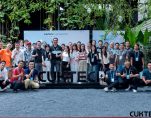
HO CHI MINH CITY, VIETNAM – Media OutReach Newswire – 8 July 2026 – Technology brand CUKTECH successfully hosted its first “Charge & Connect” event at The VIBES Events & Dining, officially introducing its next-generation charging ecosystem to the Vietnamese market. The event brought together company representatives, media professionals, technology reviewers, and industry partners, marking an important milestone in CUKTECH’s expansion strategy in Vietnam.
A Vision Built on Innovation
The event opened with a keynote by Eric Wang, Chief Marketing Officer (CMO) of CUKTECH, who shared the brand’s global vision and product roadmap for Southeast Asia, with Vietnam identified as one of its key strategic markets.
Eric Wang highlighted CUKTECH’s continuous investment in research and development (R&D) to solve the everyday challenges faced by modern consumers, including slow charging speeds, limited product innovation, and the increasing need for reliable, high-performance charging solutions that support multiple devices simultaneously. By combining advanced charging technologies with user-focused design, CUKTECH aims to deliver a faster, safer, and more intelligent charging experience.
Real-World Experience from Technology Reviewer Hung Khuc
One of the event’s highlights was a sharing session by Hung Khuc, one of Vietnam’s leading technology reviewers, who discussed his hands-on experience using CUKTECH products in his daily work.
“As a content creator who frequently shoots outdoors, I need charging devices that are both powerful and reliable. What impressed me most about CUKTECH’s power banks and chargers is their real-world performance. They can simultaneously fast charge my MacBook Pro, smartphone, and camera at full speed without power drops or interruptions.”
To promote transparency and foster closer engagement with the local technology community, the event concluded with an extensive media Q&A session. Eric Wang, together with CUKTECH’s product research and quality management teams, addressed questions on product localization, international safety standards, the brand’s one-for-one warranty policy, and future product development plans.
More than a product launch, Charge & Connect represents CUKTECH’s official step toward establishing a lasting presence in Vietnam. By combining cutting-edge charging technology, award-winning design, and a strong focus on user experience, CUKTECH is committed to delivering premium charging solutions that meet the evolving needs of modern consumers.
As the brand continues to expand its product ecosystem, CUKTECH aims to become a trusted technology partner for Vietnamese users while helping shape the future of premium charging accessories in the market.
Hashtag: #CUKTECH
The issuer is solely responsible for the content of this announcement.
Bake My Day has opened its first international store in Riyadh, taking the Dubai-born dessert brand beyond the UAE with a retail format built around its viral cookie dough sharing tins, fresh-baked cookies and gifting-led bakery experience. The Riyadh launch marks a cross-border step for a founder-led business that began as a home kitchen idea in Dubai and grew into a recognisable dessert label through social media […]
Samsung Group and SK hynix have laid out investment plans worth about $174 billion for South Korea’s Chungcheong region, expanding the country’s drive to secure a stronger position in artificial intelligence chips, advanced packaging, displays and next-generation battery materials.
The commitments, unveiled at a government-backed industrial development event in Asan, place Chungcheong at the centre of a broader strategy to spread high-technology manufacturing beyond the Seoul metropolitan area and existing semiconductor clusters. President Lee Jae Myung praised the companies’ “bold decision” and called for faster execution of major industrial projects, warning that global competition in semiconductors and artificial intelligence will reward countries that move with speed on permits, power, water and land.
Samsung plans to invest 140 trillion won, or about $90 billion, across the central region. The programme covers display panels, high-bandwidth memory-related capacity, semiconductor packaging substrates, batteries and other core materials. The group’s plan is expected to reinforce manufacturing links between Samsung Electronics, Samsung Display, Samsung SDI and Samsung Electro-Mechanics, whose operations span chips, OLED screens, batteries and electronic components.
SK hynix said it would invest 100 trillion won, or about $64 billion to $72 billion depending on exchange-rate calculations, in Cheongju, North Chungcheong Province. The plan includes the M17 NAND flash memory fabrication plant and P&T7, an advanced packaging and test facility. M17 is scheduled to break ground in 2026 and begin operations in the first half of 2029, while P&T7 is targeted for completion by the end of 2027.
The Cheongju expansion is intended to strengthen SK hynix’s NAND business and add back-end capacity at a time when artificial intelligence systems are raising demand for both high-performance memory and storage. While high-bandwidth memory has received the strongest investor attention because of its role in AI accelerators, large-scale data centres also require more NAND-based storage as models, user data and enterprise workloads expand.
The Chungcheong plan follows a wider national push in which Samsung Electronics and SK hynix are expected to invest hundreds of billions of dollars in new chipmaking hubs over the next decade. The government has framed the initiative as a “triple axis” strategy built around semiconductors, physical AI and data centres, with the aim of building industrial strength outside the traditional capital-area manufacturing corridor.
For Samsung, the Chungcheong investment gives the group a regional base for several linked supply chains. OLED production in Asan and surrounding areas can support premium smartphones, tablets, monitors and automotive displays. Battery investment strengthens Samsung SDI’s role in electric mobility and energy storage, while semiconductor materials and packaging substrates address one of the key bottlenecks in AI hardware production.
For SK hynix, Cheongju already has semiconductor infrastructure, making it a faster route for expansion than a greenfield project. The company has been one of the largest beneficiaries of the AI memory boom, helped by demand for high-bandwidth memory used with Nvidia graphics processors. Its latest investment signals that the company is also preparing for broader memory demand, including NAND and advanced packaging.
The scale of the commitments underlines the strategic importance of memory chips to South Korea’s economy. Samsung Electronics and SK hynix are the world’s two largest memory chipmakers, with dominant positions in DRAM and a major presence in NAND. Their investment decisions affect global supply, pricing expectations and the pace at which cloud companies can build AI infrastructure.
The programme also carries risks. Semiconductor investment cycles have often produced periods of oversupply after large capacity expansions. Investors have shown caution over whether the current AI-driven boom can absorb the output planned by the industry, especially if data-centre spending slows or if memory pricing weakens before new factories reach full capacity.
Infrastructure remains another challenge. Advanced chip plants require stable electricity, ultra-pure water, skilled engineers and rapid permitting. Lee’s comments on execution reflect concern that delays could undermine the industrial strategy. Local governments are expected to face pressure to accelerate utility connections, transport links and land-use approvals while managing environmental and community concerns.
Regional development is a central political theme of the initiative. By placing more advanced manufacturing in Chungcheong and other areas outside Seoul’s orbit, the administration is seeking to reduce economic concentration and create high-value jobs in provincial cities. That ambition will depend on whether new factories attract suppliers, research teams and service industries rather than functioning as isolated production sites.
Arabian Post Staff -Dubai Almarai’s second-quarter revenue rose 11 per cent year on year to SAR5.87 billion, as stronger demand for dairy, poultry and bakery products helped the Riyadh-listed food group absorb higher shipping, energy and raw material costs. The company’s first-half revenue reached SAR12.03 billion, up 9 per cent from the same period last year, reinforcing its position as one of the Gulf’s most closely watched […]
Greenlogue/AP Lhyfe has expanded one of Europe’s largest bulk green hydrogen logistics fleets, adding 10 new Hexagon Purus containers as it seeks to strengthen production, transport and storage capacity across a market still constrained by cost, infrastructure gaps and uneven demand. The Nantes-based producer now operates 84 Type IV tube trailers dedicated to hydrogen transport, a fleet serving its production sites, partner locations, storage facilities and transport […]
DXC Technology has opened a 200,000-square-foot Customer Experience Centre in Bengaluru, placing the city deeper into the global race to move enterprise artificial intelligence from pilot projects into live, measurable business systems.
The facility, announced on 7 July, is one of DXC’s largest global delivery hubs and brings together customer collaboration areas, an AI Hub, cybersecurity facilities, forensics labs, a Security Operations Centre and a Network Operations Centre. The centre is designed to help clients identify high-value AI use cases, test prototypes, integrate them with legacy platforms and operate them at scale.
The move comes as large companies are under pressure to modernise complex technology estates without disrupting core systems that run banking, insurance, manufacturing, public sector services, travel and healthcare operations. For global IT services firms, the most valuable opportunity now lies not only in building new AI tools, but in attaching them safely to ageing systems of record, cloud platforms, data pipelines and cybersecurity controls.
DXC said the Bengaluru site includes immersive Customer Experience Zones, Fluid Collaboration Hubs, Ideation Studios, Co-Creation Labs and Partner Experience Zones. The structure signals a shift in IT outsourcing from back-office delivery to co-engineering, where clients, consultants and technology partners work together on proof-of-value projects before wider deployment.
Ramnath Venkataraman, president of consulting and engineering services at DXC Technology, said the centre would bring engineering talent closer to customers and partners. He said the objective was to “co-create, engineer, and scale AI-powered solutions” that address complex business challenges and move clients faster from ideas to outcomes.
Rob Le Busque, DXC’s president for Asia Pacific and Japan, described the centre as a base for AI innovation, engineering and customer collaboration. He said DXC was aiming to help customers build connected enterprises where people work alongside AI agents to engineer and run systems of record.
The investment reflects Bengaluru’s continuing pull as a global technology hub. The city hosts a dense base of engineering talent, multinational technology development centres, enterprise software teams and start-up ecosystems. DXC already employs about 38,000 people in the country, making the new facility a strategic addition rather than a symbolic office expansion.
For DXC, the centre also arrives at a critical phase in its own turnaround. The company reported revenue of $12.64bn for fiscal 2026, down 1.8 per cent year on year, while adjusted EBIT stood at $970m. Fourth-quarter revenue was $3.13bn, down 1.2 per cent year on year, though bookings reached $3.3bn and the book-to-bill ratio stood at 1.07 times. Those figures underline both the pressure on legacy IT services revenue and the importance of higher-value modernisation work.
The enterprise AI market has moved beyond experimental chatbots and isolated productivity pilots. Large organisations are now seeking systems that can automate service operations, assist software engineering, improve fraud detection, support call-centre workflows, optimise supply chains and strengthen cyber response. The challenge is that many of these functions depend on decades-old enterprise platforms, heavily customised databases and compliance-heavy workflows.
That is where Bengaluru’s new DXC centre is positioned. Its AI Hub is intended to support hands-on development and testing, while the cyber and operations facilities allow clients to evaluate whether AI tools can be monitored, secured and maintained after deployment. This full-lifecycle approach is becoming central to enterprise modernisation, especially in sectors where downtime, data leakage or flawed automation can carry heavy financial and regulatory consequences.
The facility also strengthens DXC’s partner-led model. Its Partner Experience Zones are expected to support work with software, cloud, cybersecurity and platform companies. For IT services providers, alliances with hyperscalers and enterprise software vendors have become essential as clients seek hybrid solutions rather than single-vendor transformation programmes.
Arabian Post Staff -Dubai Ras Al Khaimah is preparing for one of the largest residential supply expansions in its history, with 25,600 new homes expected to be delivered by 2030 as developers accelerate launches around waterfront districts, branded residences and lifestyle-led communities. The new supply pipeline, tracked by Cavendish Maxwell, is heavily weighted towards apartments, which account for 97 per cent of planned stock. The figure underlines […]
Gulf Cooperation Council banks are bracing for slower growth as the Middle East war and wider geopolitical uncertainty weigh on credit demand, investor confidence and corporate activity, even as lenders retain strong profitability, capital buffers and stable funding. S&P Global Ratings analyst Tatjana Lescova said banks across the six-nation bloc are expected to continue delivering solid earnings despite pressure from the conflict, higher risk premiums and uneven […]
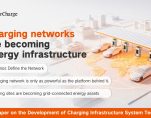
CHANG ZHOU, CHINA – Media OutReach Newswire – 7 July 2026 – The global new energy vehicle market has seen rapid growth in recent years. With continued strong expectations for new energy vehicle exports, the global electric vehicle (EV) charging market is entering a new stage of rapid expansion. Recently, StarCharge, the global leading brand of EV Charging equipment and smart energy systems, held a major industry seminar in Hong Kong and released two new white papers at the event, exploring two major transformative trends in the industry that are worth paying attention to.
Charging stations are becoming a key connection of smart energy systems
According to the ‘Technical White Paper’ by StarCharge, for years, EV charging infrastructure has mainly been seen as support for vehicle sales expansion: building more chargers, expanding coverage, and speeding up charging.
However, this role is starting to change.
As electrification scales up, charging networks are becoming a part of the energy system itself. They are no longer just places for vehicles to top up; they are evolving into smart energy nodes connecting vehicles, the grid, distributed energy, storage, and digital management.
This shift from charging infrastructure to charging network systems shows that the industry is moving from basic access to integrated value: from charging services to energy services, from standalone stations to PV-storage-charging systems, from equipment deployment to scenario-based infrastructure.
StarCharge believes that the future charging network ecosystem will go through four major turning points.
Four Key Points Reshaping the Ecosystem
1. Charging Networks Are Becoming Energy Infrastructure
Charging infrastructure is going beyond its original role as just a support for EVs. As EV adoption grows, charging networks are becoming strategic energy infrastructure: they connect mobility demand with the grid, distributed energy, storage, digital platforms, and future energy services.
2. Defining the Scenarios for the Network
The future charging network won’t be shaped by hardware alone. Policies determine whether infrastructure should be built, technology determines the speed of construction, but real-world scenarios determine what the charging network actually needs to look like.
Urban commuting, highway trips, ride-hailing, logistics fleets, county and rural coverage, holiday peak demand, heavy trucks, mining areas, ports, airports, and autonomous driving all create different charging needs. Therefore, a mature charging network can’t be ‘one-size-fits-all’; it has to be designed around different vehicle types, operating hours, power requirements, reliability needs, and grid conditions.
3. Digital platforms turn charging networks into operable assets
A large charging network only truly has value when it can be scaled, optimized, and managed. This is exactly the core role of cloud platforms. They turn millions of charging points, users, stations, transactions, and energy flows into a measurable, controllable, and continuously optimized operating system.
StarCharge’s platform capabilities cover site selection, pricing, marketing, station operations, smart maintenance, charging safety, station robots, AI-based smart charging, fleet management, energy optimization, and ESG reporting. In other words, digital platforms are the key to transforming charging infrastructure from a heavy-asset network into smart, operable, and scalable assets.
4. Charging stations are becoming grid-friendly energy resources
The next-generation charging infrastructure won’t be defined by any single technology. It will be built on a complete tech stack, combining high-power charging, liquid cooling, integrated PV-storage-charging, DC bus architecture, V2G, automated charging, and AI-driven operations. In other words, future charging stations shouldn’t just be passive electricity consumers that add stress to the grid. Through energy storage, renewable energy integration, V2G, smart scheduling, and AI-based energy optimization, charging stations can become grid-friendly energy resources.
This means that aside from charging vehicles, a charging station can absorb renewable energy, buffer peak loads, respond to demand-side signals, support peak shaving and valley filling, regulate frequency, and provide carbon-neutral ESG data for fleet operators. Its business model will also go beyond charging fees, creating new value through energy services, data services, carbon-related benefits, and grid interaction capabilities.
Microgrids Have Emerged at the Right Time
At the same time, with the continuous development of distributed energy and photovoltaic energy, microgrids have emerged at the right time. They are not just a product, but a local energy system built around real-world scenarios.
In the latest “White Paper” on scenario-based microgrid technology, StarCharge points out that microgrids are moving from customized engineering projects toward scalable, replicable energy systems.
A microgrid is a scenario-based local energy system
According to StarCharge, a microgrid is not a single device, nor is it just an energy storage product. It’s a local energy system designed around the needs of a specific scenario, coordinating local generation, loads, storage, control, and operational strategies within a defined electrical boundary.
Moreover, depending on the scenario—such as data centers, individual charging stations, zero-carbon industrial parks, or green mines—the energy challenges are completely different. The right microgrid is defined by the scenario it serves.
The white paper also highlights four high-value paths: electricity-computing synergy, independent power supply, zero-carbon parks, and green mines. In areas with weak grids or limited grid access, microgrids ensure the operation of critical loads. In emerging load scenarios like data centers and industrial parks, microgrids support renewable energy integration, energy resilience, and cost optimization. In high-tech-demand scenarios like mines, microgrids become the foundation for ensuring production continuity, energy transition, and ESG competitiveness.
The three-stage evolution of microgrids
As power sources and loads become increasingly DC, microgrid architectures are evolving from AC-dominated systems to AC-DC hybrid systems, and eventually toward microgrids with a higher proportion of DC.
Microgrid 1.0 — dominated by AC architecture. It integrates renewable energy into the existing AC grid framework, but its control heavily relies on grid-following management and support from the external grid.
Microgrid 2.0 — the AC-DC hybrid stage. AC and DC buses coexist, allowing PV, storage, and DC loads to connect more directly. Bidirectional power hubs, solid-state transformers (SST), and energy routers become important bridges between AC and DC systems. This stage balances strong AC compatibility with higher DC efficiency and is expected to remain mainstream in the next 10-15 years.
Microgrid 3.0—it’s the era of DC microgrids. As solar PV, wind power, battery storage, data centers, LED lighting, and EV charging increasingly move toward DC, DC microgrids can reduce repeated AC-DC conversion losses, simplify control, and support millisecond-level responses.
This evolution is closely linked to the mission of microgrids: breaking through energy access bottlenecks, enabling sustainable development, connecting technology, industry, policy, market, and community needs, and unlocking the integrated value of local energy systems.
In the future, StarCharge will steadily expand into the growing global markets for new EVs and renewable energy, building on its smart energy systems that have been widely validated in the Chinese market.
Hashtag: #StarCharge
The issuer is solely responsible for the content of this announcement.
By Satyaki Chakraborty Amidst Trump-Modi bonhomie and the continuation of India-US trade talks, former Indian intelligence chief Vikram Sood said on Sunday in an interview to a British network that the present U.S. deputy secretary of state Christopher Landau told Indian officials during his visit to India in March 2026 that Washington would use tariffs, […]
Formula E Season 12 accelerates global expansion and sustainability milestones as DHL delivers precision logistics behind one of the world’s most complex sporting championships
Battery logistics takes center stage off track as electrification drives new supply chain demands
SHANGHAI, CHINA – Media OutReach Newswire – 7 July 2026 – As the ABB FIA Formula E World Championship returns to Shanghai for the 2025/2026 Season, the world’s premier all-electric racing Championship accelerates into its most ambitious chapter yet with a record 17 races across 11 global cities, including new circuits in Madrid and Miami.
ABB FIA Formula E World Championship returns to Shanghai for the 2025/2026 Season
Underscoring its commitment to sustainability and transparency, Formula E has also recently become the first global sport to achieve B Corp Certification, a globally recognised designation awarded to companies that meet high standards of social and environmental performance, accountability, and transparency. “Achieving B Corp Certification is a defining milestone for Formula E and reinforces our mission to drive sustainable innovation both on and off the track,” said Barry Mortimer, Paddock and Logistics Director, Formula E. “It reflects our commitment to operating responsibly as we continue to push the boundaries of electric mobility and sustainable sport on a global stage.” DHL Powers the Global Movement of Formula E
Behind the high-speed action lies a complex global logistics operation. DHL, the Official Founding and Official Logistics Partner of the ABB FIA Formula E World Championship since 2013, plays a critical role in moving the Championship seamlessly across continents, ensuring that every race is delivered with precision, efficiency and sustainability.
Each race in this season requires the transport of approximately 400 metric tons of freight, including 21 electric race cars, charging infrastructure, broadcast equipment, and critical power systems, all orchestrated through tightly coordinated multimodal solutions spanning air, ocean, rail and road.
In the lead-up to the 2026 Shanghai E-Prix, DHL executed a three-day multimodal journey from Sanya, combining ferry and road transport. This required extensive planning and documentation to ensure full compliance across multiple transport regulations, highlighting the precision and intricate choreography required to meet unmovable race-day deadlines.
Battery Logistics at the Heart of Electrified Racing
Beyond motorsport, this partnership shines a spotlight on one of the fastest-growing and most complex areas of global trade: battery logistics. As electrification accelerates worldwide, the safe and compliant transport of lithium-ion batteries has become mission-critical and increasingly challenging.
Formula E offers a vivid real-world example. Each race involves transporting approximately 31 high-performance batteries, each weighing around 400kg—far exceeding typical consumer battery thresholds and classified as regulated dangerous goods. Their transport requires strict adherence to international regulations, including IATA and ICAO standards, covering specialized packaging, state-of-charge restrictions, certified handling procedures, and multiple layers of regulatory approvals from airlines and authorities.
The complexity is further amplified by varying customs requirements of different countries and cities, and stringent transport conditions across different modes. From certified aluminum containment units and non-stackable packaging to detailed documentation and risk classification requirements, every step demands precision and deep expertise.
“Every Formula E race may look seamless on track, but behind the scenes it is a highly complex logistics operation—especially when it comes to transporting lithium-ion batteries safely across borders,” said Federico Cavani, Head of Motorsports Italy, DHL Global Forwarding. “These are regulated dangerous goods that require meticulous planning, strict compliance with global standards, and specialized handling at every stage. Our partnership with Formula E showcases how advanced battery logistics can be executed safely at scale, and reflects the same challenges DHL customers face as electrification accelerates globally.” China: The Engine Driving Global Battery Supply Chains
China has emerged as the undisputed hub of the global battery ecosystem, underpinning the rapid growth of electrification worldwide. In 2025, global electric vehicle battery deployment reached 1.2 terawatt-hours (TWh), with China accounting for around 60% of the total, reinforcing its position as the largest and most dynamic market. Beyond demand, China also leads across the manufacturing value chain. The country produces over 70% of the world’s lithium-ion batteries, with some estimates placing its share at more than three-quarters of global output in 2025.
The ability to move batteries safely, compliantly, and efficiently—both within China and across international markets—has thus become a critical differentiator.
“DHL Global Forwarding China partners with several of the world’s leading battery manufacturers, providing end-to-end battery transportation solutions across the entire logistics value chain. The company also supports the rapidly growing energy storage logistics sector, helping customers better manage and optimize their energy storage supply chains. Each year, we handle more than 10,000 TEUs of batteries and battery-related materials exported from China, with shipments destined for major markets such as the United States and Europe,” said Stephen Zhang, Vice President, Ocean Freight, Greater China, DHL Global Forwarding.
As global supply chains evolve alongside the energy transition, DHL’s role extends far beyond the racetrack. From supporting EV and battery ecosystems to enabling resilient, compliant and sustainable logistics solutions, the company continues to power the shift toward a low-carbon future—one race, and one shipment at a time.
DHL Group has made significant investments in its New Energy capabilities under its Strategy 2030: Accelerating Sustainable Growth. Through DHL New Energy Logistics, a sector brand driving electrification and the energy transition, the company delivers end-to-end solutions across the full value chain, spanning wind, solar, EVs and batteries, BESS, charging, grid infrastructure, alternative fuels, and hydrogen. Leveraging a global network covering more than 220 countries and territories and supported by over 20 DHL EV Centers of Excellence and a dedicated team of trained dangerous goods specialists, DHL ensures high-sensitivity cargo moves safely, compliantly, and on time. Hashtag: #DHL
The issuer is solely responsible for the content of this announcement.
DHL – The logistics company for the world
DHL is the leading global brand in the logistics industry. Our DHL divisions offer an unrivalled portfolio of logistics services ranging from national and international parcel delivery, e-commerce shipping and fulfillment solutions, international express, road, air and ocean transport to industrial supply chain management. With approximately 389,000 employees in more than 220 countries and territories worldwide, DHL connects people and businesses securely and reliably, enabling global sustainable trade flows. With specialized solutions for growth markets and industries including technology, life sciences and healthcare, engineering, manufacturing & energy, auto-mobility and retail, DHL is decisively positioned as “The logistics company for the world”.
DHL is part of DHL Group. The Group generated revenues of approximately 82.9 billion euros in 2025. With sustainable business practices and a commitment to society and the environment, the Group makes a positive contribution to the world. DHL Group aims to achieve net-zero emissions logistics by 2050.
Arabian Post Staff -Dubai ADNEC Group delivered AED9.2 billion in economic impact in 2025, marking its strongest annual performance and strengthening Abu Dhabi’s position as a regional centre for exhibitions, conferences, hospitality and business tourism. The figure represented an 8 per cent rise from AED8.5 billion in 2024, supported by higher event activity, stronger visitor flows and deeper integration across venues, events, services, catering, tourism and media. […]
KUALA LUMPUR, MALAYSIA – Media OutReach Newswire – 7 July 2026 – AEON Bank (M) Berhad, Malaysia’s first digital Islamic bank, has expanded its business banking financing facilities with the introduction of Term Financing-i and Working Capital Financing-i, anchored by its Business Banking vertical, AEON Bank Biz.
Introducing the Term Financing-i and Working Capital Financing-i by AEON Bank Biz
Designed to provide timely and flexible capital, these two business financing facilities were developed to enable Shariah-compliant businesses in navigating shifting market demands. Both products are aligned with the Shariah finance principle of Murabahah via Tawarruq concept, delivering transparent, ethical banking solutions to the Malaysian market.
Term Financing-i: Business Growth and Strategic Expansion
Engineered to fund medium to long term growth projects, asset purchases and infrastructure expansion while maintaining a healthy cash flow. AEON Bank Biz’s Term Financing-i offers this flexibility:
Zero collateral required
No hidden charges on financing application or utilisation
Flexible repayment tenure of up to 60 months
Approved fund disbursed directly into customer’s AEON Bank Biz Business Current Account-i
*Terms and conditions apply
Working Capital Financing-i: Empowering Business with Liquidity Agility
This financing facility provides a flexible credit line for short term cash flow needs, designed to bridge operational budget gaps and manage financial cycles. With AEON Bank Biz’s Working Capital Financing-i, customers can gain access to the following:
High value liquidity and multiple disbursement options, within approved financing facility limit up to 3-year tenure
Flexibility to pay your principal and refresh approved limit, without the hassle of repeated financing applications
Up to 12-months disbursement period
Disbursement managed fully online, deposited straight into customer’s AEON Bank Biz Business Current Account-i
*Terms and conditions apply
A Dynamic Business Banking Experience
Beyond credit line disbursement, AEON Bank Biz serves as a holistic 360-degree, Shariah compliant banking partner for business owners across Malaysia. It enables businesses to manage assets, liabilities, operational financial needs and merchant operations, through a simplified banking process.
At the core of it all is the Business Current Account-i with a dynamic business banking functionality to support businesses to thrive :
Integrated cash management capabilities for payments and collections: Seamless processing for DuitNow and RENTAS, as well as instant settlement and notification for DuitNow QR
Smart cash management: Maximize idle capital yield via Biz Term Deposit-i, offering competitive profit optimization rates up to 3.20% p.a. on customizable tenures as short as 1 day, with an entry baseline of just RM500
Governance controls: Multi-user level access authorizations and structured approval workflows engineered to mirror corporate governance standards safely
*Terms and conditions apply
Empowering Businesses to Scale Sustainably
This latest rollout by a digital bank in Malaysia aligns directly with the national goal to supercharge SME contributions to the domestic Gross Domestic Product (GDP) up to 50% by 2030. In order to achieve that, access to financing, including digital banking solutions remains a key enabler for business growth. In fact, this is where banking institutions and fintech catalysts such as AEON Bank play an important role in achieving that target.
Click on the links to find out more about AEON Bank Biz and discover a #BetterBusinessBanking experience to scale your growth. Hashtag: #AEONBank #digitalbank #islamicbank #digitalislamicbank #AEONBankBiz #BusinessBanking #TermFinancing #WorkingCapitalFinancing
The issuer is solely responsible for the content of this announcement.
ABOUT AEON BANK (M) BERHAD
AEON Bank (M) Berhad is Malaysia’s first digital Islamic bank, licensed and regulated by Bank Negara Malaysia and the Ministry of Finance. Officially launched on 26 May 2024, we currently offer a suite of Shariah-compliant products and services for the Personal Banking and Business Banking (AEON Bank Biz) customers.
Our Personal Banking offerings are 100% accessible online via the AEON Bank app, where customers can activate and access the deposit Savings Account-i, AEON Bank x Visa Debit Card-i, Personal Financing-i, Term Deposit-i, Savings Pot, DuitNow QR, Zakat, Takaful, JomPay, utility bill payments, as well as a range of digital payment services with strategic partners and merchants. Moreover, AEON Bank has developed the Neko Missions, Malaysia’s first gamified digital banking interactive rewards programme and ‘Neko Sensei’, the AI-powered personal financial coach.
On 8 August 2025, AEON Bank (M) Berhad officially introduced AEON Bank Biz with the integrated cash management capabilities anchored by the Business Current Account-i, alongside Biz Term Deposit-i, Biz QR, Term Financing-i and Working Capital Financing-i. AEON Bank Biz focuses on streamlined processes for account onboarding, credit assessments and financial services, utilising AI-driven fintech solutions to enable simplified procedures, faster approvals, and an enhanced digital banking experience for businesses in Malaysia.
For eligible deposit-based products under AEON Bank and AEON Bank Biz, such as the Savings Account-i, Savings Pot, Term Deposit-i, Business Current Account-i and Biz Term Deposit-i, the deposits are protected up to RM250,000 per depositor. AEON Bank is a member of Perbadanan Insurans Deposit Malaysia (PIDM) and the deposit protection is automatic and free.
Being part of the AEON Group conglomerate, AEON Bank (M) Berhad is equally held by AEON Financial Service Co. Ltd. (AFS Japan) and AEON Credit Service (M) Berhad (ACSM). AFS Japan is responsible for the AEON Group’s financial services businesses, with strong roots in the retail sector which operates in Japan and 10 countries across Asia. AEON Group is Japan’s largest retail group and it is a pure holding company that comprises eight core businesses.
AEON Group Malaysia consists of several entities, namely, AEON Co. (M) Bhd, AEON Credit Service (M) Berhad, AEON Bank (M) Berhad, AEON BiG (M) Sdn Bhd, AEON Fantasy (M) Sdn Bhd, AEON Delight (M) Sdn Bhd, AEON Global Supply Chain Sdn Bhd and Malaysian AEON Foundation (MAF). AEON Group has been a recognisable household brand with more than 200 years of history and evolution in Japan since the Edo era, along with 4 decades of growth in Malaysia, providing consumers with daily financial solutions and diversified retail convenience.
Our cloud native agility and AI optimisation, combined with the strength of our Shariah finance DNA, Malaysian tenacity and Japanese roots are our distinguishing factors, while the integration across the AEON ecosystem gives us a competitive advantage of being the only bank in Malaysia with its own nationwide retail network. On top of that, AEON Points loyalty programme offers customers value-added benefits and meaningful rewards for their online shopping and in-store purchases.
AEON Bank (M) Berhad is committed to empowering the community in pursuing their financial aspirations and achieve economic independence, while cultivating a more inclusive financial future for all. We will continue to contribute towards positioning Malaysia as the Islamic banking hub in the region and fostering the growth of the nation’s digital economy.
G42 and Microsoft have deepened their artificial intelligence alliance through a new collaboration linking Inception42’s Catalyst agentic AI platform with Microsoft Copilot, a move designed to shift AI agents from limited trials into day-to-day government and enterprise operations. The agreement, announced on Monday, allows organisations to build, govern and monitor AI agents on Catalyst while making them available through Microsoft 365 applications including Teams, Outlook and Word. […]
By Nantoo Banerjee Despite never qualifying for the FIFA (Federations of International Football Associations) World Cup, India has emerged as one of the largest global markets for the current tournament being co-hosted by the United States, Canada, and Mexico, with matches played across 16 official host cities. In the opening weekend alone, the tournament reached […]
Arabian Post Staff -Dubai DMCC has launched a dedicated cybersecurity vertical as part of a wider restructuring of its technology ecosystem, bringing more than 4,000 technology companies under the newly formalised DMCC Tech platform. The new unit, DMCC Cyber, is designed to support businesses working across cyber resilience, digital trust, data protection, identity management, and governance, risk and compliance. It will sit alongside the DMCC AI Centre, […]
Grand Theft Auto VI has turned a viral comparison with Dubai’s Burj Khalifa into a wider debate over the cost of blockbuster entertainment, as industry estimates place the game among the most expensive creative projects ever attempted. The claim spreading across social platforms is striking: the Burj Khalifa, the world’s tallest building, cost about $1.5 billion and took six years to build, while GTA VI may cost […]
Ripple has secured full authorisation under the European Union’s Markets in Crypto-Assets framework, clearing the San Francisco-based blockchain payments company to expand regulated crypto services across the European Economic Area. The approval, granted through Luxembourg’s financial regulator to Ripple Payments Europe S. A., gives the company a Crypto Asset Service Provider licence and allows it to passport services across 30 EEA markets. It follows a preliminary clearance […]
The UAE’s first Etihad Rail passenger service has begun carrying travellers between Fujairah and Abu Dhabi, opening a new phase in the country’s transport infrastructure and giving residents a rail alternative to long inter-emirate road journeys. The inaugural service left Fujairah’s Al Hilal City station at 5.34am on June 30 and arrived at Mohamed bin Zayed City station in Abu Dhabi at 7am, ahead of its scheduled […]
Arabian Post Staff -Dubai The UAE has emerged as the GCC’s busiest confirmed construction market, with 700 execution-ready projects valued at $138 billion, underscoring the country’s shift from post-boom recovery to a broader phase of active development across real estate, energy, infrastructure and specialised industrial assets. Saudi Arabia ranks close behind by project count, with 628 confirmed schemes, though its pipeline is larger in value terms at […]
Famous for its signature crispy fried duck, the fast-growing Indonesian food brand proves that high-quality, affordable dining is a winning formula.
SINGAPORE – Media OutReach Newswire – 6 July 2026 – Bebek Goreng Pak Ndut, the rapidly expanding restaurant brand famous for its signature crispy fried duck and authentic Indonesian-style cuisine, today announced the upcoming grand opening of its fourth Singapore outlet at Sengkang Grand Mall, officially opening its doors on Saturday, July 11, 2026. This launch represents a key milestone in the brand’s aggressive regional growth strategy, which currently includes two successful high-volume locations in Malaysia and an upcoming market entry into Bangkok.
Built on a fast-turnover, highly accessible dining model, Bebek Goreng Pak Ndut is proving that affordable, everyday meals do not have to compromise on taste or quality. The brand focuses purely on operational efficiency and delivering exceptional value to the masses, making its famous fried duck and authentic Indonesian flavors accessible to everyone without the premium price tag.
”Our mission is simple: serve uncompromisingly authentic, high-quality food at a price that keeps customers coming back multiple times a week,” said Joni Anson, Founder of Bebek Goreng Pak Ndut. “With this new Sengkang location, our thriving outlets in Malaysia, and our upcoming expansion into Bangkok, we are showing that a great dining experience should be affordable, fast, and consistently delicious.”
To celebrate the grand opening with the Sengkang community, the new outlet will be offering an exclusive 23% storewide discount throughout the weekend of July 11 and 12, 2026.
For more information, to view the menu, or to find the nearest location, please visit www.bebekgorengpakndut.com.sg or follow the brand on Instagram and TikTok at @bebekgorengpakndut_sg. Hashtag: #BebekGorengPakNdut
The issuer is solely responsible for the content of this announcement.
About Bebek Goreng Pak Ndut
Bebek Goreng Pak Ndut is a regional multi-outlet restaurant brand specializing in authentic, affordable Indonesian-style cuisine. Operating a high-efficiency central kitchen and multiple fast-casual outlets across Singapore and Malaysia, the brand is dedicated to delivering consistent, high-quality meals at accessible price points.











 https://www.aeonbank.com.my/business
 https://www.linkedin.com/company/aeonbankmy/?viewAsMember=true
 https://www.facebook.com/share/1EqAqfTFLp/?mibextid=wwXIfr
 https://www.instagram.com/aeonbankmy?igsh=dnNwYnNjb2Z4N3ky