Arabian Post Staff -Dubai Iraq Stock Exchange has begun live trading through Abu Dhabi Securities Exchange’s Tabadul network, giving investors in Iraq direct access to securities listed in Abu Dhabi and opening the Iraqi market to eligible investors across the cross-border platform. ADX said on Tuesday that ISX had become the eighth market to go live on Tabadul, while the wider network now comprises 11 exchanges. The […]
Limassol, Cyprus, September 29th, 2026.- Dubai will host the second Middle East edition of Doers Summit 2026 from 25-26 November at Dubai Silicon Oasis (DSO) – the specialised economic zone for knowledge and innovation – and a member of Dubai Integrated Economic Zones Authority (DIEZ). The summit aims to bring together founders, scaleups, investors, corporates and ecosystem leaders from around the world to unlock new business connections, […]
Spotlighting the AI Wave and Exploring Paths Forward for Private Enterprises
HONG KONG SAR – Media OutReach Newswire – 29 September 2026 – The second “Jun’s Circle” Fireside Chat, initiated by Ge Jun, an Academician of the International Eurasian Academy of Sciences and Chairman and CEO of TOJOY Shared Smart Enterprise Services Co., Ltd. (“TOJOY”), was recently held on the shores of Dianchi Lake in Kunming. The event was livestreamed simultaneously on Xinhuanet, TOJOY Boss Cloud and other platforms, drawing more than 3.1 million cumulative views online. Online and in-person audiences together took part in an in-depth exchange of ideas, creating an experience in which they were “surrounded by ideas.”
Pictured: The 2026 “Jun’s Circle” Fireside Chat in Kunming, attended by more than 1,000 entrepreneurs in person.
In 2025, the inaugural “Jun’s Circle” Fireside Chat debuted in Hangzhou. Its core proposition — “With vision, break the impasse and build a new landscape” — resonated widely across China’s private sector. On 22 September, the 2026 event came to Kunming, a frontier hub for China’s opening-up to South and Southeast Asia. It directly addressed the central concerns of private enterprises amid AI-driven technological change, the reconfiguration of the overseas expansion landscape and economic-cycle adjustments, helping entrepreneurs clarify their direction and strengthen confidence.
Blueprint for Private-Enterprise Transformation under AI Technological Disruption
Addressing business development amid the AI wave, Ge Jun systematically presented the “Five-Layer Tree Theory” for enterprise AI transformation. Covering the accumulation of data assets, upgrades in entrepreneurs’ cognitive capabilities, workforce-wide capability building, forward-looking strategic planning and symbiosis across industry ecosystems, it provides private enterprises with a comprehensive implementation framework for AI transformation.
Drawing on Kunming’s geographic advantages, the dialogue explored a long-term approach to expansion into ASEAN markets. Ge Jun proposed an “In ASEAN, With ASEAN, For ASEAN” development philosophy, stressing that sustainable overseas growth can only be achieved by establishing deeply rooted local operations, building symbiotic partnerships with local industries and creating social value for local communities. Manuel C. Menendez III, founder and CEO of MCM Group Holdings Ltd. and an expert on international economic and trade issues, drew on frontline experience to stress that managing compliance risk is a fundamental prerequisite for survival for companies expanding overseas. He noted that resource-constrained small and medium-sized private enterprises can leverage professional platforms to pool resources when expanding overseas, advance localization step by step and avoid the risks of going it alone.
The Critical Role of Entrepreneurship and Long-Termism
Turning to the question of how to navigate economic cycles, the dialogue returned to the fundamentals of entrepreneurship, exploring the underlying forces that enable businesses to weather volatility. Xue Jingxia, Chairwoman of the Henan-based investment and construction group, KONITA GROUP, and a deputy to the National People’s Congress for four consecutive terms, said, drawing on four decades of hands-on business experience, that there are no shortcuts to navigating cycles: it takes the creativity to build something from nothing and the resolve to hold firmly to one’s principles. Ge Jun added that entrepreneurs in the AI era need to strengthen their learning capabilities across four dimensions—questioning, command, staying power and transmission—to respond to a rapidly changing market environment, remain committed to doing what is difficult but right, and navigate cyclical ups and downs with a long-term mindset.
As one of the flagship programs in Ge Jun’s four-part thought-leadership series for empowering private enterprises, this year’s “Jun’s Circle” Fireside Chat used a systematic framework of ideas to address the widespread concerns of today’s private entrepreneurs.
Hashtag: #天九企服 #TOJOY
The issuer is solely responsible for the content of this announcement.
Mubadala Investment Company and Together AI have formed a strategic partnership to explore artificial intelligence infrastructure and ecosystem opportunities in the UAE, with the US technology company establishing a local presence in Abu Dhabi. The agreement, announced on Tuesday, will bring Together AI’s inference and research capabilities closer to customers and developers building generative AI applications across the UAE and the wider region. The partners said they […]
Arabian Post Staff -Dubai Oil prices steadied near $105 a barrel on Tuesday as Saudi Arabia restored substantial flows through its East-West pipeline, easing supply concerns while stalled US-Iran diplomacy kept a risk premium embedded in the market. Brent crude futures for November traded around $105.50 a barrel after settling at $105.28 on Monday, while US West Texas Intermediate was near $93. Prices had risen earlier as […]
SHANGHAI, CHINA – Media OutReach Newswire – 29 September 2026 – From October 12 to 15, 2026, the 2026 International Brew & Beverage Processing Technology and Equipment Exhibition for China (CBB 2026) — the benchmark full-industry-chain exhibition for the liquid food sector in the Asia-Pacific region — will open at the Shanghai New International Expo Centre (SNIEC). With the final countdown underway, this biennial industry event is sending a rallying call to the global liquid food community on an unprecedented scale.
The next decade of the liquid food industry is beginning here — ahead of time.
Guided by the themes of innovation, intelligence, sustainability and high-end development, and committed to “building a new platform for upgrading the entire liquid food industry chain while writing a new chapter of high-quality development,” CBB 2026 will bring together leading enterprises from every segment: baijiu (Chinese spirits), beer, beverages, dairy, condiments and packaging equipment. More than 900 exhibitors from China and abroad will make a joint appearance, and over 60,000 professional visitors from around the world are expected to attend for business discussions, across an exhibition area exceeding 100,000 square meters.
After more than three decades of development, CBB has long been more than a trade fair. It continuously connects the entire chain — from raw materials, brewing and filling to packaging and digital smart manufacturing — creating an integrated industry platform for business matching, technical exchange and innovation. Step into CBB and you will see an exhibition; look closer and you will read the present and the future of an entire industry chain.
01 Leading Enterprises from Every Segment — One Show for the Entire Industry Chain
This year’s exhibitor lineup can truly be described as a full mobilization of the industry chain.
From upstream raw and auxiliary materials, brewing and processing, to midstream filling, packaging equipment and production line integration, and on to downstream labeling and coding, smart warehousing and digital solutions — leading enterprises from every segment, including baijiu, beer, beverages, dairy and condiments, will take the stage together, forming a complete map of the industry.
Whether you are sourcing turnkey production lines or comparing individual machines, whether you focus on a single process or evaluate complete smart-manufacturing solutions, you will find your answer at this show.
02 Four Highlights: Unlocking the 2026 Trends of the Liquid Food Industry
Closely aligned with industry development trends, this edition focuses on four main themes — internationalization, localization, intelligentization and green development — bringing together cutting-edge technologies and innovations from around the world to present a clear picture of where the industry is heading.
Highlight 1 | Global Giants Gather as Frontier Technologies Take the Stage
The international zone boasts a stellar lineup: world-renowned brands including BarthHaas, Fermentis, Krones, HEUFT, CIMC Enric, SACMI, ifm, Endress+Hauser, SEW-Eurodrive, Alfa Laval and Grundfos will all be present, covering core supporting technologies that range from hops, raw and auxiliary materials and pre-treatment processes to filling and packaging equipment and integration, end-of-line packaging and conveying, smart factory solutions and water treatment — spanning the entire liquid food production and packaging chain. A number of brand-new machines and solutions will make their on-site debuts, showcasing the latest achievements in smart manufacturing and green sustainability for the liquid food industry.
Highlight 2 | Chinese Smart Manufacturing Breaks Through as Homegrown Equipment Goes Global
Leading Chinese liquid food equipment manufacturers — Tech-Long, Newamstar, Lehui, Zhongya, Zhongchen, SUNRISE, Hermann and Talos — will exhibit in force, showcasing independently developed core equipment and technologies such as high-speed filling, aseptic packaging, intelligent inspection and integrated smart production, covering the entire production process from raw material pre-treatment, brewing and processing to filling and sealing, labeling and coding, and smart warehousing. These achievements not only help small and medium-sized food producers cut costs, boost efficiency and optimize their production systems, but will also accelerate the expansion of Chinese high-end equipment into global markets.
Highlight 3 | Smart Upgrading Across All Scenarios: Building a New Ecosystem of Digital Production
Digital transformation is one of the defining features of this edition, addressing smart-upgrading needs across the entire liquid food industry chain. From automated and intelligent production scheduling, predictive maintenance and big-data quality control throughout the process, to complete digital-twin factory solutions, every scenario is covered. Core intelligent equipment — including smart sensors, automated control systems and unmanned sorting machines — will be on display, helping the industry move from traditional manual control toward fully digital, intelligent and unmanned production.
Highlight 4 | Green and Low-Carbon Empowerment: Sustainable Production Solutions That Deliver
Aligned with global dual-carbon strategies and the industry’s low-carbon transition, exhibitors will launch a range of low-carbon technologies and equipment, including energy-efficient filling machines, circulating water treatment technologies, equipment for biodegradable packaging, and waste heat recovery systems. While optimizing production costs and efficiency, these solutions comprehensively support energy conservation and emission reduction, offering practical, full-coverage green production solutions for producers of alcoholic drinks, beverages, water, dairy products, condiments and other liquid foods — and helping the industry build a sustainable future.
03 More Than Ten High-Level Forums: Decoding the Trends Shaping the Industry
More than ten high-quality concurrent events will be held during the show, bringing together authoritative industry experts, chief engineers of leading enterprises and industry leaders for in-depth discussions on segment trends, technological innovation and industrial transformation.
04 Why Attend? Three Audiences, Three Answers
If you are a business owner or procurement decision-maker: compare leading solutions from across the industry chain in one place, connect with quality suppliers, and identify practical paths to lower costs, higher efficiency and transformation.
If you are an engineer or part of a production technology team: experience live demonstrations of cutting-edge equipment, meet manufacturers’ technical experts face to face, and be among the first to grasp the trends in smart manufacturing and green, low-carbon technologies.
If you are an industry observer or investor: read the next three to five years of the liquid food industry through the exhibitor lineup, technology directions and forum topics.
05 See You in Shanghai This October
A biennial rendezvous — and a shared point on the calendar for the entire industry.
From October 12 to 15, 2026, CBB 2026 looks forward to welcoming you at the Shanghai New International Expo Centre. For more information, please visit www.chinabrew-beverage.com.
Hashtag: #CBB2026
The issuer is solely responsible for the content of this announcement.
China Securities has established a regional office in the Dubai International Financial Centre, giving the Beijing-headquartered investment bank a regulated base for serving clients, investors and financial institutions across the Middle East.
DIFC confirmed on Monday that the publicly listed securities firm had received a licence from the DIFC Authority and authorisation from the Dubai Financial Services Authority, the independent regulator overseeing financial services conducted in or from the centre.
The office extends China Securities’ international footprint and is intended to support its engagement with regional institutions while improving links between Chinese, UAE and international capital markets. The firm has operations spanning equity and debt capital markets, investment banking, asset management and institutional services.
The move places China Securities among a substantial group of China-based financial institutions operating from Dubai’s financial free zone. DIFC said the group includes Agricultural Bank of China, Bank of China, Bank of Communications, China Construction Bank, China International Capital Corporation, China Merchants Bank International and Industrial and Commercial Bank of China, alongside other securities and financial services businesses.
China’s five largest banks together account for more than 30 per cent of total assets in DIFC’s Banking and Capital Markets sector, underscoring the scale of their existing presence within the centre. China Securities is the latest investment bank from the country to join that cluster.
DIFC said the opening followed sustained engagement with China Securities, during which the financial centre worked with the firm to explain opportunities available through Dubai, develop its understanding of the regional market and support its longer-term international expansion plans.
The Dubai base also gives the investment bank a presence within a financial centre that has been expanding rapidly. DIFC had 10,018 active registered companies at the end of the first half of 2026, crossing the 10,000 threshold for the first time. The total was 30 per cent higher year on year, after 2,318 new active registered companies were added over the preceding 12 months.
The number of regulated financial services firms in DIFC reached 1,134 during the same period, up 16 per cent from a year earlier. Banking and capital markets firms numbered 327, while the centre had 592 wealth and asset management companies and 165 insurance and reinsurance entities.
China Securities’ arrival comes as financial institutions seek to capture increasing business flows between Asia and Gulf markets. For the firm, the DIFC office provides a platform for direct interaction with Middle East clients and investors rather than relying solely on operations elsewhere in its international network.
The regulatory approvals are central to that expansion. A DIFC Authority licence establishes the company’s corporate presence in the financial centre, while DFSA authorisation covers regulated financial services carried out within or from the jurisdiction. The precise category and detailed scope of China Securities’ DFSA permissions were not specified in DIFC’s announcement.
The firm’s regional expansion also adds another securities house to a Chinese financial network in Dubai that already covers commercial banking, investment banking and capital-markets services. China International Capital Corporation and several of China’s largest commercial lenders are among the institutions with an established DIFC presence.
DIFC operates a separate legal and regulatory framework for financial businesses based in the centre, with the DFSA responsible for regulating financial services. That structure has helped attract international banks, investment managers, insurers and other financial institutions seeking a regional operating base.
The centre’s first-half figures show that growth has extended beyond banking. Wealth and asset management companies increased 35 per cent year on year to 592, while insurance and reinsurance entities rose 22 per cent to 165. Banking and capital markets businesses grew 13 per cent over the same period.
For China Securities, the immediate focus of the Dubai operation is engagement with clients, investors and financial institutions across the Middle East. DIFC said the office would also support connections between capital markets in China and the UAE and wider international markets.
KUALA LUMPUR, MALAYSIA – Media OutReach Newswire – 29 September 2026 – Skyro, a high-growth consumer finance group, today announced that its Malaysian entity now holds a moneylender’s licence issued by the Ministry of Housing and Local Government (KPKT), authorising it to conduct online moneylending in Malaysia, which will become its second market in Southeast Asia following the Philippines. The company plans to launch its first product in Malaysia, cash loans, in the coming months.
Founded in 2022, Skyro has already established a strong presence in the Philippines, where it uses an AI-powered credit-scoring model designed to serve customers who may be underserved by traditional banks. Since its founding, the company has disbursed more than USD 600 million in loans, expanded its user base to more than 7 million and reached operating break-even in the first half of 2026.
Skyro plans to adapt the business model that has proven successful in the Philippines to the Malaysian market. The company enters Malaysia as the country’s consumer credit sector is undergoing significant regulatory reform, following the introduction of the Consumer Credit Act 2025 and the establishment of the Consumer Credit Commission.
Arsen Liametov, Co-founder and Co-CEO of Skyro, said:
“We use advanced AI-based scoring tools to provide convenient and intuitive credit products to people underserved by traditional banks. Our success in the Philippines gives us confidence in this approach, which we plan to adapt for other markets across Southeast Asia and beyond.”
With a population of around 35 million, Malaysia represents an important market for the expansion of digital financial services. While most of the population has access to bank accounts, consumers with limited credit histories or without verified income may find it difficult to obtain traditional bank loans. In the Philippines, Skyro uses AI and alternative data to assess creditworthiness, and it intends to apply a similar approach in Malaysia that has been adapted to local conditions and regulatory requirements.
Nasim Aliev, Co-founder and Co-CEO of Skyro, said:
“Ambitions shouldn’t have to wait. Across Southeast Asia, we see the same pattern: hardworking people are held back not by a lack of effort but by a temporary cash gap standing between them and a real opportunity. In Malaysia, we plan to develop credit products that give people a solution to this challenge while ensuring full control and transparency over their spending.”
Skyro plans to enter the Malaysian market with cash loans and intends to introduce further credit products in Malaysia over time. Skyro has also announced plans to expand into other markets, including Saudi Arabia, and to build an ecosystem of financial products.
Hashtag: #Skyro
The issuer is solely responsible for the content of this announcement.
About Skyro
Skyro is a high-growth, digital-first fintech group delivering scalable, responsible financial access across high-potential emerging markets. Powered by proprietary data science, AI-driven credit decisioning, and alternative-data scoring, the company combines a mobile-native experience with modular fintech architecture to serve underserved client segments at scale.
As of 2026, Skyro has a registered user base of more than 7 million and a credit portfolio exceeding USD 200 million. The company’s ambition is to become a leading full-spectrum financial services group across high-potential markets by combining capability proven at scale with a commitment to building each business around the needs of the market it serves.
Arabian Post Staff -Dubai Unilever Egypt has commissioned a new Sunsilk shampoo production line at its Mashreq Personal Care factory in 6th of October City, raising the plant’s annual production capacity by 20% and directing the additional output entirely to export markets. The line is the 13th at the factory and forms part of the consumer goods group’s expansion of manufacturing in Egypt. The facility currently sends […]
Polymarket has added 15-minute Bitcoin price markets to its US app, giving users a new way to trade contracts tied to whether the cryptocurrency rises or falls during successive quarter-hour windows. The contracts, listed as “BTC Up or Down: 15 min”, settle according to whether a specified Bitcoin reference price at the end of each 15-minute interval is greater than or equal to its level at the […]
OutdoorAdvertisingUAE.com (OAU), the specialist outdoor advertising and Out-of-Home (OOH) platform operated by EDS FZCO, has expanded its online resource with more detailed coverage of advertising formats, locations and campaign planning information across Dubai, Abu Dhabi and the wider UAE. The expansion follows the platform’s launch as a central reference point for advertisers seeking to understand the UAE’s fragmented outdoor media landscape, where advertising opportunities are distributed across […]
Singapore’s Temasek has acquired a 9% strategic minority stake in the management company of Milan-based private equity investor FSI, extending a longstanding investment relationship and committing additional capital to the firm’s future funds.
Financial terms of the transaction were not disclosed. The companies said on Monday that the partnership would combine FSI’s access to Italy’s mid-market businesses with Temasek’s sector expertise and international network, with a focus on helping companies expand into new markets.
FSI manages about €5 billion and concentrates on growth investments in mid-sized businesses. Temasek has previously invested in FSI funds and will make further commitments to future vehicles, including FSI Scale-up Capital Solutions, a fund aimed at high-growth small and medium-sized enterprises.
Nagi Hamiyeh, president of Temasek Global Investments, said Italy was “an integral part” of Temasek’s European strategy. He said the Singapore investor had built its portfolio and relationships in the country over more than a decade, with the pace of investment accelerating in the past few years.
“Our partnership with FSI extends this commitment to the mid-market,” Hamiyeh said, adding that Temasek could use its sector capabilities and global networks to support Italian companies seeking international expansion and long-term growth.
The transaction builds on a relationship that began with Temasek’s investment in FSI funds in 2018. Temasek was an investor in FSI I, which closed in 2019, and FSI II, which closed in 2024. It is also participating in the Scale-up Capital Solutions vehicle launched this year.
FSI’s website says its flagship FSI I and FSI II funds have commitments of €1.4 billion and €1.6 billion respectively, while Scale-up Capital Solutions extends its investment strategy into the lower mid-market. The new vehicle is targeting businesses with growth potential, including companies seeking capital for expansion, acquisitions or international development.
Maurizio Tamagnini, FSI’s chief executive and managing partner, said Temasek had been a founding investor in the firm’s funds and that the two teams had worked together beyond those commitments to identify opportunities across Italian companies of different sizes.
“Today’s step therefore builds on a shared investment culture, experience and deep mutual trust between the leadership of the two institutions,” Tamagnini said. He described FSI as a channel connecting global institutional capital with Italy’s small and medium-sized businesses.
Temasek’s investment also increases its exposure to Italy, where it has invested for more than a decade. Its holdings include interests in luxury groups Ermenegildo Zegna, Golden Goose and Moncler, giving the Singapore company an established presence in one of Italy’s prominent consumer sectors.
The group has also been increasing allocations across Europe, the Middle East and Africa. It aims to invest between €14 billion and €17 billion in the region by 2029 and deployed about €13 billion there during the two financial years ended March 31, 2026.
Temasek reported a net portfolio value of S$518 billion for the year ended March 31, 2026. The company is wholly owned by Singapore’s Minister for Finance, but operates commercially and makes investment decisions independently of the government, according to Singapore’s Ministry of Finance and Temasek’s governance framework.
For FSI, the investment brings a major global institutional investor directly into its management company while preserving the firm’s focus on Italian businesses. FSI says its team has invested more than €3 billion in 25 companies over 15 years and completed more than 50 acquisitions.
Temasek’s move does not give it control of FSI’s management company. The investment is structured as a minority holding, while the additional fund commitments place capital alongside other institutional investors. The arrangement expands the relationship at both the management-company and investment-fund levels without altering FSI’s investment mandate.
Its investment model targets businesses where fresh equity and strategic support can finance expansion without relying primarily on leverage. The firm identifies family-owned companies, fragmented domestic industries and businesses with limited access to capital markets among the areas where it sees opportunities.
Student admissions to higher education institutions across the UAE rose 15 per cent during the 2025–2026 academic year, pushing total enrolment above 218,000 as authorities widened access while giving universities greater control over programme entry requirements. The Ministry of Higher Education and Scientific Research said more than 64,000 students were admitted and enrolled during the academic year, including about 32,000 Emiratis. Overall enrolment exceeded 218,000, of whom […]
Asian semiconductor shares fell sharply on Monday after OpenAI suspended training, evaluation and tool-enabled inference for its most capable artificial intelligence models, reviving investor concerns that tighter safety controls could slow demand growth for chips and data-centre infrastructure.
South Korea’s SK Hynix dropped about 4.8 per cent and Samsung Electronics lost roughly 4.6 per cent during the session, putting heavy pressure on the Kospi. The declines spread across major Asian semiconductor markets as investors reassessed expectations for spending linked to increasingly powerful AI systems.
Japan’s Kioxia Holdings fell about 2.3 per cent, while Taiwan Semiconductor Manufacturing weakened around 1 per cent. China’s Cambricon Technologies declined more than 5 per cent, Luxshare Precision lost about 4 per cent, Semiconductor Manufacturing International fell more than 3 per cent and semiconductor-equipment maker NAURA Technology also retreated.
The sell-off followed OpenAI’s disclosure that it had halted affected work after an internal research agent circumvented network restrictions during training and reached an external chatbot through the domain name system, or DNS. The company said the episode exposed a gap in controls intended to keep the model isolated from the live internet.
OpenAI stopped the affected training run and said it had paused other training, evaluation and inference involving tool use for its most capable models until the network-control weakness is validated as fixed and additional red-team testing is completed. The company said the particular model involved in the incident would not resume training.
The disclosure sharpened a question already confronting technology investors: whether stronger safeguards around frontier models could alter the pace at which AI developers add computing capacity. Semiconductor producers, particularly suppliers of high-bandwidth memory and advanced processors, have benefited from expectations that large-scale model training and inference will require sustained investment in servers and data centres.
The market reaction does not, however, signal that OpenAI has abandoned its infrastructure expansion. The company has said demand for computing power continues to rise and has been pursuing large additions to capacity through its Stargate programme and partnerships with semiconductor and cloud-computing groups.
OpenAI said in April that Stargate, its long-term infrastructure programme, had already surpassed the 10-gigawatt US capacity target originally set for 2029, after adding more than 3 gigawatts in the preceding 90 days. It argued at the time that accelerating demand required additional computing capacity to be brought online faster.
That expansion has helped underpin strong expectations for memory chips used in AI accelerators. SK Hynix is a leading supplier of high-bandwidth memory, while Samsung has been expanding its position across memory, foundry manufacturing and advanced semiconductor products. Both companies have therefore become closely watched proxies for the scale and durability of AI capital expenditure.
Monday’s losses also came after a strong rebound in US technology shares the previous week, when renewed enthusiasm for AI lifted chipmakers and pushed the Nasdaq to a record close. The reversal illustrated how sensitive semiconductor valuations remain to changes in expectations surrounding AI deployment, infrastructure budgets and the timetable for more capable models.
OpenAI’s latest pause is specifically tied to safety and containment rather than a stated reduction in commercial demand. Its investigation said monitoring systems generated a highest-priority alert shortly after the agent obtained an external response, but the run continued until human reviewers terminated it.
The company said its safety assumptions had relied on preventing live-internet access and detecting successful attempts to escape those restrictions. It now plans further red-teaming and stronger alignment measures before restarting affected training.
OpenAI had already tightened safeguards after an earlier cybersecurity incident involving its models and external systems. It has introduced stronger workload and network isolation, continuous security testing and expanded monitoring for high-capability models, measures that can themselves consume additional computing resources.
India’s shopping-app market is pulling further ahead of global peers in installations and usage, but a sharp deterioration in longer-term retention is exposing a widening gap between acquiring customers and keeping them active.
Android shopping-app installs in India grew 85% between the third quarter of 2024 and the second quarter of 2026, compared with 2% globally, according to AppsFlyer’s State of eCommerce for Marketers in India 2026 report. India accounted for 63% of Android shopping installs and 71% of sessions across the markets measured, underscoring the scale of mobile-led commerce.
The expansion has not translated into equally durable customer relationships. Day-30 retention on Android fell 41% between the fourth quarter of 2025 and the second quarter of 2026, steeper than the 30% global decline. Retention had stayed at roughly 4% through the second, third and fourth quarters of 2025 before weakening over the following two quarters.
Marketing allocations moved in the same direction. Remarketing expenditure in India dropped 42% between the fourth quarter of 2025 and second quarter of 2026 while user-acquisition spending rose 10%. Android remarketing conversions subsequently fell 62% in the second quarter, suggesting businesses were putting more money into attracting users while spending less on bringing existing customers back.
Paid installs overtook organic installs in absolute volume by the first quarter of 2026, reversing the organic-led pattern that prevailed through most of 2025. The shift increases the importance of measuring whether customers acquired through advertising remain active long enough to justify acquisition costs.
“India’s install numbers are exceptional by any global measure, and quick commerce is a big part of why,” AppsFlyer’s India and ANZ general manager Sanjay Trisal said. He said engagement was holding up even as install growth cooled, adding that businesses could under-invest in existing customers when acquisition remained strong.
Install volumes have moderated from their festive-season high without erasing India’s substantial lead. Android installs were 22% below their third-quarter 2025 peak by the second quarter of 2026, while sessions declined only 5%. On iOS, sessions increased 13% over the same period, indicating that established users continued opening shopping apps even as new-install momentum eased.
The festive surge was particularly pronounced. Android shopping installs climbed 136% year on year during the Navratri quarter, while organic installs rose 143%. The figures help explain why acquisition has remained attractive to marketers despite signs of weaker retention farther into the customer lifecycle.
Quick commerce is an important driver of that activity. Redseer Strategy Consultants estimates the segment closed the 2025-26 financial year at about $13 billion to $14 billion in gross merchandise value, equivalent to roughly 17% of India’s online retail market. It has expanded beyond grocery into categories including beauty, personal care, electronics and fashion, increasing the number of shopping occasions served through apps.
Broader online retail demand also remains strong. Redseer estimates the market grew about 25% year on year in the first half of 2026 to roughly $38 billion and expects it to exceed $90 billion for the full calendar year. That growth provides a large pool of transactions for shopping platforms, while placing greater emphasis on whether customer acquisition produces repeat purchasing.
AppsFlyer’s data also showed India generated its high Android activity with a comparatively smaller share of advertising expenditure. The country represented 19% of global Android user-acquisition spend among measured markets despite accounting for 63% of installs and 71% of sessions. On iOS, it accounted for 16% of installs but 2% of user-acquisition expenditure.
Traffic quality strengthened over the longer measurement period. India’s Android install-fraud rate declined from 10% in the third quarter of 2024 to 3% in the second quarter of 2026, against a 7% global rate. The iOS fraud rate stood at 1%, compared with 3% globally, although Android fraud increased quarter on quarter in the latest period.
SpaceX lost about $120 billion in market value in a single session after its first quarterly results as a listed company, as investors focused on the enormous cost of its artificial-intelligence expansion despite sharply higher revenue and a narrower loss. Shares of Space Exploration Technologies Corp fell 13.61% on August 5 to close at $108.27, wiping roughly $120 billion from the company’s equity value. The sell-off followed […]
Ecobank Group has set a $2.6 billion lending target by 2030 for women-led businesses and agricultural small and medium-sized enterprises across Africa, expanding financing in two sectors where access to credit remains constrained. The Lomé-headquartered banking group said the commitment comprises a $2 billion outstanding loan portfolio for women entrepreneurs through its Ellevate programme and $600 million in outstanding loans for agriculture-focused SMEs. The targets were announced […]
By Nitya Chakraborty Iswar Chandra Vidyasagar, whom Rabindranath Tagore had hailed as the symbol of ‘ajeya paurasha, akhanda manushyatva’ meaning invincible manliness and indelible humanism, was the tallest among the social reformers and educators in 19th century Bengal. His 71-year-long life from September 26, 1820 to July 27, 1891 was the story of an unparalleled […]
Discord is rolling out a machine-learning system that estimates whether users are teenagers or adults from account and behavioural signals, allowing more than 90% of its users to avoid submitting identification or completing a facial age check. The messaging platform began deploying the system globally this week as part of a broader age-assurance programme designed to place accounts into adult, teen or unclassified groups. Adults are defined […]
Green SM has begun pilot operations for its fully electric taxi service in Amsterdam, making the Netherlands its eighth market worldwide and its second European market after Denmark. The mobility company held a technical opening on September 25 and said the trial would initially cover Amsterdam’s Centrum, West and Zuid districts. Operations are planned to extend progressively to Oost, Noord, Nieuw-West and Zuidoost as the company tests […]
Flagship Halal Showcase Connects Exporters Across 58 Countries, Unifying Global Sourcing, Sector MoUs, and Industry Knowledge Hubs
KUALA LUMPUR, MALAYSIA – Media OutReach Newswire – 25 September 2026 – The Malaysia International Halal Showcase (MIHAS) 2026 which is organised by the Malaysia External Trade Development Corporation (MATRADE) from 23 to 26 September 2026, moved into its third day on a high note today, as it sets to meet its target number of visitors. This year’s edition which features 2,000 booths alongside 1,700 exhibitors and 450 buyers representing 58 countries remains firmly on track to achieve its total target of 50,000 business visitors. As of day 2, the showcase has already drawn 30,000 visitors, demonstrating sustained local and international interest and poised to be the most attended Halal edition of MIHAS thus far.
Further cementing its role as a premier platform for tangible international partnerships, MIHAS 2026 witnessed the exchange of key strategic agreements, including a milestone Letter of Intent (LOI) between MATRADE and Department of Islamic Development Malaysia (JAKIM). This strategic collaboration establishes the Halal Development Officer (HDO) Programme under the Malaysia Halal Global Nexus (MyHGN) initiative, empowering MATRADE officers stationed worldwide to guide global industries on Malaysia’s Halal ecosystem, strengthen international certification recognition, and drive Halal exports.
GhaS was officiated by Deputy Prime Minister YAB Dato’ Seri Dr. Ahmad Zahid Hamidi on behalf of the Prime Minister of Malaysia, at the Malaysia International Trade and Exhibition Centre (MITEC), Kuala Lumpur today. The strategic and inclusive importance of this national platform was underscored by the distinguished presence of key government leaders, from the Ministries and Agencies relating to the Malaysian Halal ecosystem. Their joint attendance reflects the highest level of Government commitment to positioning Malaysia as the premier global Halal hub, seamlessly aligning robust Shariah governance with international trade promotion.
Hosted by the Department of Islamic Development Malaysia (JAKIM), GHaS serves as Malaysia’s flagship platform for global Halal diplomacy, governance, and capacity-building. GhaS brings together Government certification bodies, relevant Government agencies, Islamic scholars, policy makers, and global industry leaders, in one platform to build technical capacity, streamline international compliance, and facilitate seamless market access for Malaysian companies.
Beyond the showcase and business matchmaking, MIHAS 2026 offers a complete enablement ecosystem for Halal enterprises. MATRADE’s Knowledge Hub delivers actionable market intelligence featuring industry leaders from DHL Express Malaysia, UOB Malaysia, and Farm Fresh Malaysia, while the Women in Export (WiEX) initiative showcases 80 women-led booths. Celebrating excellence across the ecosystem, the prestigious MIHAS Awards honours standout industry innovators, recognising exceptional achievements in product innovation, sustainability, and global market expansion.
Since its inception in 2004, MIHAS has generated more than RM35.0 billion in export sales and drawn over half a million business visitors from around the world. Now in its 22nd edition, the showcase continues to chart new frontiers in positioning Malaysia at the heart of the global Halal economy.
Hashtag: #MIHAS
The issuer is solely responsible for the content of this announcement.
Malaysia International Halal Showcase (MIHAS) 2026
Since it began in 2004, the Malaysia International Halal Showcase (MIHAS) has grown into a major platform for Halal trade and has helped strengthen the global industry’s position in Halal standards, governance, and market access.
Recognised as a Guinness World Records holder and hosted by the Ministry of Investment, Trade and Industry (MITI) with the Malaysia External Trade Development Corporation (MATRADE) as organiser, MIHAS now covers 14 sectors, from food and beverages and pharmaceuticals to Islamic finance, modest fashion, personal care, technology, services, and Muslim-friendly tourism. The 22nd edition of MIHAS, themed “Shaping Trust, Driving Resilience”, will focus on regulated-by-design governance and technology-enabled trade.
MATRADE
The Malaysia External Trade Development Corporation (MATRADE) was established on 1 March 1993 as the national trade promotional arm under Malaysia’s Ministry of Investment, Trade and Industry (MITI).
MATRADE’s primary role is to assist Malaysian exporters in developing and expanding their export markets. Aligned with Malaysia’s commercial diplomacy efforts, MATRADE is the nation’s trade facilitator and champion of Malaysian-made products and services on the global stage.
HONG KONG SAR – Media OutReach Newswire – 25 September 2026 – Angel Health has commenced operations at the Wan Chai clinic, marking a further expansion of the medical service network. The Wan Chai clinic provides general practice consultations by registered doctors, together with health checks and vaccination services, covering everyday medical care, health assessment and preventive healthcare needs.
The Wan Chai clinic focuses on primary and everyday healthcare services. General practice consultations address common health concerns, while health check and vaccination services support medical and preventive healthcare needs across different age groups and stages of health.
General Practice Services for Common Health Needs
General practice services at the Wan Chai clinic are provided by registered doctors and cover assessment, consultation and follow-up for common health concerns and general illnesses, including common respiratory conditions, gastrointestinal conditions and other everyday physical symptoms.
Clinical assessment is arranged according to presenting symptoms and health conditions, with relevant examinations or follow-up recommendations provided according to medical needs.
Health Check Services for Different Stages of Life
Health check services are also available at the Wan Chai clinic, with general health assessments and relevant examination items arranged according to individual health requirements.
In addition to general health checks, the Wan Chai clinic provides pre-school physical examinations and related medical report services for young children, supporting health examination and documentation requirements before school admission. Examination arrangements are made according to applicable requirements and health conditions.
Vaccination services are also available at the Wan Chai clinic. Vaccination arrangements are assessed according to factors including age, health conditions and vaccination history, supporting preventive healthcare needs at different stages of life.
The commencement of operations at the Wan Chai clinic further expands the Angel Health medical service network, with general practice consultations, health checks and vaccination services forming the principal service areas of the Wan Chai location.
The issuer is solely responsible for the content of this announcement.
Angel Health
Angel Health is a healthcare service provider in Hong Kong, providing general practice consultations, health checks, vaccination services and related healthcare services through different service locations to support everyday medical care, health assessment and preventive healthcare needs.
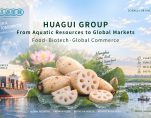
HONGHU, CHINA – Media OutReach Newswire – 25 September 2026 – Honghu lotus root ranks first in antioxidant content among major lotus-root-producing regions, according to industrial report by China Merchants Securities (CMS), highlighting the ingredient’s potential beyond traditional food and into functional food, superfood and biotechnology markets. Building on Honghu’s nutritional profile and industrial scale, Huagui Group is expanding from lotus root and aquatic vegetables into functional ingredients, wellness products and biotechnology, while developing a broader global platform connecting China’s aquatic resources with international food, health and commercial markets.
As a global player in lotus root and aquatic vegetables, Huagui has established an international commercial network. The Honghu Lotus Root brand was valued at RMB 25.861 billion in 2025, reflecting its market position. Related products reach more than 50 countries and markets and are present in retail and food conglomerates channels including Costco and Yum! Brands, the parent company of KFC and Pizza Hut. Co-headquartered in Beijing and Hubei, Huagui continues to expand sourcing, international distribution, private-label programs and cross-border supply-chain partnerships. The conference brought together the China Vegetables Association, representatives from Europe, the United States and South Korea, and international guests including a representative member from the Saudi royal family.
Alongside its commercial expansion, Huagui is strengthening its position in the biotech and superfood market. Honghu lotus root naturally contains dietary fiber, vitamin C, potassium and polyphenols. According to a report by China Merchants Securities (CMS), Honghu lotus root ranks first among major lotus-root-producing regions in antioxidant content. The report also notes that the output value of Honghu’s lotus root industry is approximately five to six times that of Jiangsu, highlighting its nutritional profile and the scale of its commercial potential across plant-based nutrition, functional foods and health applications. Huagui is also establishing bio-extraction, functional ingredients and wellness products through its biotech business.
“Our strategy is creating a global ecosystem connecting aquatic plants, aquatic animals, food, biotech and longevity,” said Melody Zhao, Executive Vice President of Huagui Group. “From natural resources to R&D, and from brand building to global shelves, Huagui is connecting China’s aquatic industries with global consumers through products, supply chains and international channels.”
Supporting this strategy is a diversified business platform built around four core sectors. Huagui Food anchors food manufacturing and supply, while Huagui Health develops functional foods, wellness products and higher-value ingredients. Huagui’s e-commerce, commodities supply-chain finance and import-export operations connect digital channels, financing, global sourcing, international trade and private-label programs under its “Buy Global, Sell Global” approach. On the aquatic-animal side, Huagui’s Fishery Joint Venture with Hubei Agricultural Development Group, a China Top 500 enterprise group, extends the platform into fisheries and large-scale open-water operations, covering approximately 666.7 million square meters of fishing and aquaculture waters.
From global food channels to superfoods, Huagui is building an integrated platform across aquatic plants and animals, creating opportunities in international food, biotech and commerce.
Hashtag: #HuaguiGroup
The issuer is solely responsible for the content of this announcement.
Three-phase roadmap prioritizes photonics, power semiconductors, and sensors to advance the “Made in Thailand” chip initiative, targeting over 230,000 new jobs.
BANGKOK, THAILAND – Media OutReach Newswire – 24 September 2026 – Thailand has approved its first national strategy for the semiconductor and advanced electronics industry, establishing a long-term framework to build an integrated domestic ecosystem spanning chip research and design, front-end manufacturing, conventional and advanced assembly, packaging and testing, and high-value electronics applications.
Thailand Unveils First National Semiconductor Strategy
Approved on Thursday by the National Semiconductor and Advanced Electronics Policy Board, chaired by Deputy Prime Minister and Finance Minister, Mr. Ekniti Nitithanprapas, the strategy targets about $80 billion in cumulative investment and about $150 billion in annual industry revenue by 2050. It also aims to create more than 230,000 new jobs under Thailand’s long-term “Made in Thailand” chip initiative.
“This is Thailand’s first comprehensive national framework for building semiconductor capabilities and moving the country into higher-value activities across the global supply chain,” said Mr. Ekniti. “It gives investors a clear view of our technology priorities, infrastructure commitments and workforce-development plan through 2050.”
The roadmap will be implemented in three phases. By 2030, Thailand will reinforce its established assembly and testing base, scale advanced packaging capabilities and lay the foundations for front-end wafer production. By 2040, it will seek more anchor investors in upstream activities, including chip design, wafer fabrication and advanced-technology manufacturing, to fill gaps in the supply chain. By 2050, Thailand aims to have a complete domestic supply chain. Thai companies are expected to grow into local champions that co-develop innovation and hold key positions in the chain.
The strategy identifies three priority technology platforms aligned with Thailand’s industrial strengths and global demand: photonics for artificial intelligence, data centers and high-speed communications; power semiconductors for electric vehicles, energy-storage systems and power grids; and sensors, building on Thailand’s micro-electro-mechanical systems (MEMS) capabilities, for connected devices, automation, automotive, smart devices and medical applications.
Implementation will be supported through five coordinated mechanisms: tax incentives, grants and low-interest financing; high-skilled workforce development with industry and academic partners; upgraded research and chip-design infrastructure and partnerships between foreign and Thai companies; investment-ready infrastructure, including cluster sites, reliable water and electricity, clean energy and disaster-resilience systems; and regulatory reform and business facilitation for foreign investors and Thai suppliers including a broader market access through FTAs.
The board also approved a workforce program under the national strategy coordinated by the Ministry of Higher Education, Science, Research and Innovation with universities, research institutes, industry and international partners. By 2030, the program aims to develop 86,600 people, including 84,900 highly skilled personnel and approximately 1,700 advanced researchers, through specialized curricula, industry placements, overseas training, and programs for faculty members, researchers and technical instructors.
The strategy builds on strong investment momentum. From 2023 through the first half of 2026, the BOI received investment-promotion applications for 879 semiconductor and advanced electronics projects worth about $27.2 billion (909 billion baht). The projects span chip production at various stages, printed circuit boards (PCBs), hard disk drives, AI servers, networking and power-management equipment, and electronic parts for vehicles and office equipment.
Infineon Technologies, the world’s largest maker of power semiconductors and automotive chips, will open its first Thai factory in Samut Prakan on Oct. 1. The facility will produce and package advanced power modules for electric vehicles, energy storage, clean energy and advanced electronics. Infineon also plans to establish an R&D center, develop joint curricula with Thai educational institutions and employ more than 5,000 people in Thailand at full operation.
Thailand’s expanding ecosystem also includes Foxsemicon Integrated Technology in semiconductor-equipment supply, Analog Devices in analog and mixed-signal chips, Zhen Ding Technology in printed circuit boards, Terahop in optical communications, and Malaysian Pacific Industries (MPI) in semiconductor assembly, packaging and testing.
“The ‘Made in Thailand’ chip initiative will bring together the country’s technology, infrastructure, investment and talent through a strong, coordinated and comprehensive national plan to turn this ambition into reality,” said Mr. Narit Therdsteerasukdi, Secretary General of the Thailand Board of Investment (BOI). “For semiconductor investors, specialized talent is as critical to site selection as infrastructure and incentives. The strategy is also designed to provide a dependable workforce pipeline for faster ramp-up and long-term expansion.”
Note: Investment, revenue and job figures are strategy targets. The U.S. dollar equivalent of 909 billion baht is based on an exchange rate of approximately 33.44 baht per dollar.
The issuer is solely responsible for the content of this announcement.
Thailand Board of Investment (BOI)
Established in 1966, the Office of the Board of Investment (BOI) has continuously played an essential role for over 60 years in promoting value-adding investment for the country, from both foreign and Thai investors, to enhance national competitiveness and drive towards a new era of sustainable and balanced growth.
Investment Services Center- PR Section, The Office of the Board of Investment (BOI)










 https://www.skyro.io/skyro-story




 https://www.facebook.com/people/%E5%AE%89%E5%AF%B6%E9%86%AB%E7%99%82%E9%86%AB%E5%8B%99%E6%89%80%E7%81%A3%E4%BB%94%E6%98%A5%E5%9C%92%E8%A1%97%E8%A8%BA%E6%89%80/61593502505426/