Westinghouse Electric is seeking a valuation above $50 billion for a planned US initial public offering, people familiar with the preparations said, as the nuclear technology group moves towards a potential public filing as early as October. The proposed valuation has not been announced by Westinghouse or its owners and could change as preparations advance. The number of shares to be sold, the price range and the […]
Software stocks are staging a sharp recovery as stronger-than-expected earnings and fresh calls for restraint in advanced artificial intelligence development ease fears that AI will quickly undermine the sector’s business models. The iShares Expanded Tech-Software Sector ETF has climbed about 17 per cent since the end of the first half, reversing part of a 14 per cent decline during the opening six months of 2026, when investors […]
Arabian Post Staff -Dubai flydubai has partnered with Egnatia Aviation and Skyborne Airline Academy to expand flight instruction for the first cadet batches of its Ab Initio Pilot Training Programme, strengthening a pipeline designed to feed qualified first officers into the Dubai carrier’s growing operation. The two academies will provide practical flight training for selected candidates working towards a Multi-Crew Pilot Licence, or MPL. Cadets completing the […]
The Africa Women Innovation and Entrepreneurship Forum has named Rania Al-Mashat, Magda Wierzycka and Judy Dlamini as keynote speakers for its 2026 conference in Cape Town, setting the headline line-up for the annual gathering focused on women-led enterprise and economic participation. The two-day Conference, Expo and Awards will take place on November 10 and 11 at the Cape Town International Convention Centre, with organisers expecting more than […]
The model supports multimodal inputs including text, images and video, and generates high-fidelity 1080p videos of 5 to 20 seconds with natively synchronized audio
BEIJING, CHINA – Media OutReach Newswire – 17 September 2026 – HiDream.ai, an AI company specializing in foundation models and generative AI, announced the launch of HiDream-O1-Video-1.0, or HiDream V1, its native omnimodal video generation model.
Designed around a deeper understanding of creative intent and real-world physics, HiDream V1 supports multimodal inputs including text, images and video. It can generate high-fidelity 1080p videos ranging from 5 to 20 seconds, with enhanced narrative planning, character consistency, physical plausibility and audiovisual synchronization.
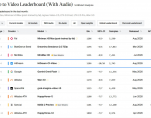
In its debut on two independent international benchmarks, HiDream V1 ranked No. 4 globally on the Artificial Analysis Image to Video Leaderboard (With Audio) and No. 8 on the Arena.ai Image-to-Video leaderboard, placing it among the world’s leading video generation models.
A Strong Debut on Two International AI Benchmarks
Artificial Analysis independently evaluates leading AI models through standardized and reproducible benchmark testing. Arena.ai uses anonymous head-to-head comparisons and user voting to assess model outputs. Together, the two platforms provide third-party perspectives on model performance based on both standardized testing and real-world user preferences.
HiDream V1’s results demonstrate its competitiveness across key dimensions including visual quality, prompt adherence, motion quality, narrative coherence and audiovisual coordination.
The global AI video generation market has become increasingly competitive, with models developed by Chinese teams—including Seedance and MiniMax H3—maintaining strong positions on international leaderboards. HiDream V1’s top-tier debut further expands China’s presence among the world’s leading video generation models.
“The next generation of video models will not be defined solely by higher resolution or longer duration,” said Yao Ting, Chief Technology Officer of HiDream.ai. “What matters is whether a model can genuinely understand a creator’s intent and how objects, actions and sounds interact in the real world. HiDream V1 was designed from the outset to represent text, video and audio within a unified framework. Our goal is to move video generation beyond simply looking sharp and moving smoothly toward understanding instructions, sustaining coherent performances and keeping sound aligned with visuals. Its performance on two independent international benchmarks provides encouraging validation of our native omnimodal approach.”
Upgrades in Visual Fidelity, Narrative Coherence and Character Consistency HiDream V1 introduces broad improvements in high-fidelity rendering, narrative continuity and character consistency. Rather than optimizing only for the quality of individual frames, the model is designed to maintain coherence across an entire video sequence.
Once characters, emotions, motivations and physical rules are placed within a continuous sequence, each element can affect the others. HiDream therefore uses a technical framework built around three stages: planning first, followed by joint generation, and then alignment through multimodal reward signals.
Under this approach, the model first plans the narrative and character states at a global level. It then jointly constrains visuals, movement and semantics during generation, before using multimodal reward signals to align visual quality, continuity and physical plausibility.
Native Omnimodal Architecture for Better Intent and Physics Understanding The central challenge in AI video generation is shifting from the quality of individual frames to a broader understanding of complex instructions, continuous motion and the rules governing the physical world.
User prompts often contain multiple layers of information, including characters, actions, settings, camera directions, dialogue and sound. To handle these requirements more effectively, HiDream V1 incorporates multimodal intent understanding and planning. Before generation begins, the model structures the user’s request across elements such as shot duration, setting, character state, movement, facial expression, composition, camera motion, dialogue and ambient sound.
Through this “understand, plan and generate” workflow, HiDream V1 plans narrative development and character states at a global level, while coordinating visuals, motion, semantics and audio during generation. This is designed to improve content completeness, character consistency and continuity between shots.
Physical reasoning is another core capability of HiDream V1. The model incorporates factors such as gravity, inertia, collisions, deformation, materials, lighting and spatial continuity into the generation process. As a result, object movement, character actions and environmental responses can more closely reflect the behavior of the real world.
This approach moves video generation beyond reproducing visual appearances and toward modeling how a dynamic world operates over time.
Content-Adaptive Video Duration Most current video generation models require users to specify a fixed duration in advance, forcing the content to fit within a predetermined time window. This can lead to unnecessary pauses after an action has ended or the use of slow motion to fill the remaining time.
HiDream V1 instead incorporates duration into its narrative planning process. Within a range of 5 to 20 seconds, the model can determine an appropriate video length based on how an event unfolds, how long an action takes to complete and the pacing required by the content.
The capability is not simply a matter of adding or removing frames. It is designed to make duration serve the narrative, producing more natural pacing and more complete sequences. Users can focus on describing the event and intended outcome, while the model plans the corresponding temporal structure.
Joint Modeling of Text, Video and Audio
Conventional AI video generation systems often follow a staged workflow in which visuals are generated first and sound is added afterward. This can lead to mismatches between lip movements, physical actions, ambient sound and sound effects.
HiDream V1 uses a native omnimodal architecture to jointly model text, video and audio signals. The three modalities constrain and inform one another within a single generation process. Visual motion influences sound timing, dialogue and sound effects contribute to the emotional tone of a scene, and text conditions guide the generation process throughout.
This unified approach is designed to improve synchronization across character performance, environmental changes and physical actions.
During post-training, HiDream uses Diffusion Reinforcement Learning and a multimodal reward model aligned with human perception and aesthetic preferences. Generated content is evaluated across multiple dimensions, including visual quality, semantics, motion, physical plausibility and sound, helping improve overall consistency and realism.
Completing HiDream’s Native Omnimodal World Model Portfolio HiDream V1 is not a standalone model. It is a core component of HiDream’s native omnimodal world model strategy.
Built on a unified UiT, or Unified Transformer, foundation, the company’s portfolio now comprises four major model families:
HiDream-O1-Image, for image understanding and generation;
HiDream-O1-Video, for dynamic content generation and temporal storytelling;
HiDream-O1-World, for 3D environment simulation and real-time interaction; and
HiDream-O1-Embodied, for spatial reasoning, action planning and feedback in embodied AI.
Rather than operating as four separate technology stacks, the models are designed to evolve from the same unified architecture. Together, they cover spatial understanding, temporal modeling, 3D interaction and embodied action, creating an integrated system for perceiving, understanding, generating, interacting with and acting upon the physical world.
HiDream’s models have previously achieved leading results on several independent benchmarks. HiDream-O1-Image 1.5, the commercial version of the company’s image model, ranked No. 2 globally and No. 1 among Chinese models on the Artificial Analysis text-to-image leaderboard, while its open-source edition also reached No. 2. HiDream-O1-World ranked No. 1 overall on WBench, a benchmark for interactive world models. HiDream-O1-Embodied achieved first-place results in the disturbance adaptation and spatial reasoning categories of RoboColiseum.
“We are not building four isolated model product lines,” said Dr. Mei Tao, founder and CEO of HiDream.ai. “We are building a native omnimodal system that shares a unified technical foundation and continues to evolve toward a deeper understanding of the real world. Competition among the next generation of foundation models will depend not only on improvements in individual capabilities, but also on whether different modalities can understand, generate and interact within a unified architecture.”
From understanding and generating the world to simulating and acting within it, the launch of HiDream V1 completes a key part of HiDream’s native omnimodal world model portfolio.
HiDream Completes Series C+ Financing
Alongside the launch of HiDream V1, HiDream announced the completion of a Series C+ financing round backed by New Micro Capital, Jiaozi Capital and ICBC Capital. The proceeds will support native omnimodal model research and development, product iteration, AI computing infrastructure and the expansion of industry applications.
New Micro Capital was jointly established by Shanghai New Micro Technology Group, Shanghai Science and Technology Venture Capital Group and its management team. The firm manages nearly RMB 10 billion in assets.
As the corporate venture capital arm of New Micro Technology Group, New Micro Capital is expanding its investments in artificial intelligence. Drawing on the group’s industrial capabilities in specialty integrated-circuit manufacturing, it seeks to advance collaboration across AI infrastructure, model technologies and end-user applications.
Jiaozi Capital is a wholly owned state-backed equity investment platform under Chengdu Jiaozi Financial Holding Group. The firm focuses on artificial intelligence and other strategic technology sectors, using long-term capital and industrial resources to accelerate technology commercialization and ecosystem development.
With the launch of HiDream V1, HiDream’s native omnimodal world model strategy is moving from a technical roadmap toward an integrated system supported by a unified foundation, a coordinated model portfolio and deployable product capabilities.
Availability
HiDream V1 is currently in internal testing and is expected to become available in the near future. Users can learn more at: https://hiharness.ai/
Hashtag: #HiDreamAI
The issuer is solely responsible for the content of this announcement.
About HiDream.ai
HiDream.ai is an artificial intelligence company focused on generative AI and native omnimodal world models. Built on its unified UiT architecture, the company’s model portfolio spans image generation, video generation, interactive world simulation and embodied intelligence. HiDream aims to develop AI systems capable of understanding, generating, simulating and acting upon the real world.
Leaderboard disclaimer: Rankings cited in this release reflect publicly available results at the time of publication and may change as participating models, evaluation data or platform methodologies are updated.
Arabian Post Staff -Dubai International visitor spending in the Middle East is forecast to rise by US$116 billion, or 57%, between 2025 and 2030, signalling a sharp expansion in tourism revenues despite near-term geopolitical disruption. The projection comes from the ATM Travel Trends Report 2026, produced by Arabian Travel Market with Tourism Economics, an Oxford Economics company, and presented at Arabian Travel Market in Dubai. The report […]
Houthi forces in Yemen are experimenting with advanced maritime weapons, including possible “loitering torpedoes”, as evidence points to efforts to expand their arsenal and reduce dependence on imported systems. Conflict Armament Research said investigators had identified navigation modules and propellers that could be used in such torpedoes, technology it has not documented in the possession of any other armed group. The organisation said the components could allow […]
A member of the National Traders’ Welfare Board has urged the Centre to withdraw the new merchant discount rate on higher-value UPI payments, warning that the levy could impede business growth and increase costs for consumers.
Ramesh Khandelwal, who represents Madhya Pradesh on the government-constituted board, said on Wednesday that the 0.4 per cent merchant discount rate, or MDR, on UPI transactions above Rs 2,000 was at odds with the government’s stated emphasis on ease of doing business. The charge is due to take effect on October 15.
Khandelwal said he would raise the issue at the next meeting of the National Traders’ Welfare Board and sought an immediate rollback in the wider interests of merchants and customers. He argued that businesses operating on thin margins could struggle to absorb the additional transaction cost and that some of the burden might ultimately feed into retail prices.
The National Payments Corporation of India has said the revised framework will apply to specified person-to-merchant UPI payments above Rs 2,000. The fee will be borne by merchants rather than consumers and will be capped at Rs 300 for transactions of Rs 75,000 or more.
Person-to-person transfers, including payments between friends and family, will remain free. Merchant transactions up to Rs 2,000 will also continue without MDR, while small merchants receiving up to Rs 1 lakh a month through UPI QR payments are exempt under the framework.
Specified categories including railway tickets, fuel, agriculture, utilities, telecom, insurance, credit-card dues and tax payments will attract a lower flat charge of Rs 5 on eligible transactions above Rs 2,000. The government has also advised banks to ensure that merchants do not directly pass the MDR on to customers.
The opposition from Khandelwal adds to broader concern among traders over the return of merchant charges to UPI after more than six years of a zero-MDR regime. A nationwide LocalCircles survey of more than 32,000 merchants and businesses across 242 districts found that only 17 per cent of respondents were willing to bear a 0.4 per cent MDR on payments above Rs 2,000, while 41 per cent said they were unwilling to pay any such fee.
Merchants have raised particular concerns about sectors where high-value digital payments are common but margins are comparatively narrow. Textile traders in Surat, for example, said the levy could affect smaller businesses and workers who use UPI extensively for salaries, purchases and other routine transactions.
The policy change also marks a significant shift in the economics of the UPI ecosystem. Banks, payment applications and payment aggregators have long argued that the rapid expansion of transaction volumes requires greater spending on infrastructure, fraud prevention, cyber security and system capacity. The new MDR is intended to create a revenue stream to support those costs while keeping small-value and personal transfers outside the charging structure.
UPI has become the dominant retail digital payment system, with billions of transactions processed every month. That scale has increased the cost of maintaining the network even as users have become accustomed to making payments without a visible transaction fee.
The government’s approach seeks to confine the charge to larger commercial payments and to limit the exposure of small merchants and customers. Under the announced structure, a Rs 5,000 eligible merchant payment would carry an MDR of Rs 20, while a Rs 50,000 payment would cost the merchant Rs 200. Payments of Rs 75,000 and above would face the Rs 300 ceiling.
Khandelwal’s intervention puts the focus on whether traders will accept those costs or seek alternatives such as cash, bank transfers or other payment methods. His position is that even a small percentage charge, when repeated across large transaction volumes, can become a meaningful operating expense.
The dispute is likely to centre on merchant margins, enforcement and whether businesses can absorb the levy without changing prices or payment preferences. Traders also want clarity on how exemptions will be identified at the point of payment, particularly where a business accepts UPI through multiple bank accounts, QR codes or payment service providers across different locations.
Petrol pump dealers have asked the Centre to exempt fuel outlets entirely from merchant discount rate charges on UPI payments, arguing that even the concessional ₹5 levy planned for transactions above ₹2,000 would directly erode fixed dealer margins.
The All India Petroleum Dealers Association, led by president Ajay Bansal, made the request in a letter to Finance Minister Nirmala Sitharaman on Wednesday, seeking relief before the revised UPI merchant payment framework takes effect on October 15.
Under the new framework, person-to-merchant UPI payments above ₹2,000 will generally attract an MDR of 0.4 per cent, with the charge capped at ₹300 for transactions of ₹75,000 and above. Fuel, railways, telecommunications, insurance and agricultural inputs have been placed in a separate essential-sector category carrying a flat MDR of ₹5 on payments above ₹2,000.
The Finance Ministry has said person-to-person UPI transfers will remain free regardless of value, while merchant payments of up to ₹2,000 and qualifying small-merchant transactions will also continue without MDR. It estimates that about 96 per cent of merchant UPI transactions will remain unaffected by the change.
AIPDA, however, said petrol pump economics differ from businesses where earnings rise with the value of a sale. Dealer margins are determined by oil marketing companies under the petroleum ministry’s framework and are primarily fixed on a per-litre basis, leaving outlets unable to offset payment-processing costs through higher margins on larger transactions.
“Dealers therefore have no mechanism to increase their earnings in proportion to the value of a transaction,” the association said in its letter.
The dealers’ body said even a flat ₹5 charge could become material because fuel stations handle large transaction volumes every day. It argued that multiplying the fee across thousands of payments would create a recurring cost burden, while applying the general 0.4 per cent rate would be still more difficult for the sector to absorb.
AIPDA asked for an absolute exemption from MDR and associated transaction fees for all UPI payments at retail fuel outlets, irrespective of value. As an alternative, it urged the government to provide a specific exemption for petrol pumps from both percentage-based MDR and fixed per-transaction charges if the ₹2,000 threshold is retained.
The association also warned that imposing the fee could encourage some dealers to discourage or restrict UPI payments above the threshold to protect margins, a development it said would run against the government’s goal of expanding digital payments and improving transaction transparency.
The Finance Ministry, setting out the rationale for the framework, said MDR is not a tax and is not collected by the government or the National Payments Corporation of India. The fee will instead be distributed among banks, payment service providers and UPI application providers to support the operation and expansion of the payment network.
The ministry said the differentiated fee structure was designed to preserve free payments for individuals and small merchants while creating a sustainable revenue stream for the wider UPI ecosystem. The flat ₹5 rate for fuel and other essential services was intended to give businesses in thin-margin sectors greater cost certainty than a percentage-based charge.
Dealers contend that fuel retailing warrants stronger protection because the mode of payment does not change the underlying economics of a petrol or diesel sale. They also cited earlier concessions on card-payment costs as evidence that fuel transactions have previously received distinct treatment within the digital-payment system.
The association said its commissions had not received an upward revision since October 2017 even as expenses including electricity, wages and regulatory compliance had increased. It said discussions with oil marketing companies over dealer earnings had yet to resolve the pressure on operating margins.
The dispute comes as fuel retailers prepare for the October implementation of the revised UPI rules. Dealers’ groups from several states have also approached the finance and petroleum ministries, seeking relief from the new fee and warning that outlets could reconsider accepting higher-value UPI payments if they are required to absorb the charge.
Arabian Post Staff -Dubai Emirates NBD has provided Cars24 Arabia with a digital revolving short-term financing facility to support the used-car platform’s expansion across the UAE and speed access to working capital for eligible dealers and business partners. The Dubai-based bank said the facility is built around an application programming interface, or API, that links its automated lending capabilities directly with Cars24 Arabia’s digital platform. Eligible businesses […]
More than 11.6 million cryptocurrency tokens stopped trading in 2025, an unprecedented annual total that accounted for 86.3% of all failures recorded by CoinGecko’s GeckoTerminal dataset between mid-2021 and the end of last year. The figure marks a steep acceleration from 2024, when 1,382,010 projects were classified as failed, and highlights the fragile economics of a market flooded with easily created tokens, particularly meme coins. CoinGecko counted […]
HANOVER, GERMANY – Media OutReach Newswire – 16 September 2026 – JAC Motors is making its second appearance at IAA Transportation At Hall 12, Stand C08. The line-up is headlined by the European premiere of the electric van SUNRAY PRO. JAC Motors’ commercial vehicle business is moving beyond vehicle supply to become a partner in Europe’s green logistics ecosystem—supporting the electrification of European commercial fleets and delivering low-carbon, intelligent solutions for urban logistics in Europe.
Press Conference: For Greener Cities, NOW!
On Press Day, 14 September, JAC Motors held a press conference at its booth under the theme “For Greener Cities, NOW!,” presenting four electrified models to the European market. Partners, fleet operators, and trade media from Germany, France, Spain, Italy, Poland, and other countries attended.
At the press conference, Oscar Yu, General Manager of JAC International, stated that Europe is a key market in the company’s global expansion. JAC commercial vehicles are already present in Germany, Spain, France, Norway, Denmark, Sweden, and Switzerland, with a target of full European coverage by 2028. Since IAA Transportation 2024, JAC has established one subsidiary in Europe and built a localised marketing and service system covering 13 countries, including 8 regional strategic partners, over 50 authorised sales outlets, and more than 100 after-sales service outlets. In Spain, JAC holds a 41% market share in the medium-duty electric truck segment, ranking first. (Source: Spanish Directorate-General for Traffic (DGT) registration data, Jan–Jun 2026.)
The solutions JAC offers European customers go beyond the vehicles themselves. JAC’s subsidiary in Italy serves as a regional parts centre, covering warehousing, service and technical support, customer operations, and marketing. On financing, JAC has partnered with Santander and others to offer finance leasing, operating leasing, PCP (Personal Contract Purchase)/TCM (Trade Cycle Management), and flexible instalment plans, covering needs from fleets to individual users. On complete vehicle solutions, JAC works with bodybuilder partners such as Infore Environment to cover refrigerated transport, municipal sanitation, rescue, and other specialist applications.
The press conference also showcased JAC’s progress in Europe: JAC Motors Italy is now operational, the German dealer network is taking shape, and the parts logistics system already covers all of Germany. As JAC’s European business gradually moves from building its footprint to day-to-day operations, the atmosphere of conversations at this year’s booth has changed noticeably compared with 2024. Conversations at the booth now go straight to operations: Is the range enough? How long does charging take? Can this vehicle save the fleet money?
Looking ahead, JAC will continue to advance product introduction and channel expansion, targeting full coverage of the European market by 2028, participating in Europe’s urban green logistics transition with a complete electrified product portfolio and localised service capabilities.
Hashtag: #JACMOTORS
The issuer is solely responsible for the content of this announcement.
Payward, the parent company of cryptocurrency exchange Kraken, is pursuing a route to offer US traders perpetual futures linked to Hyperliquid’s HYPE token, but publicly available regulatory and Kraken product information indicates the proposed expansion has not yet been confirmed as a live US offering. The move would broaden Payward’s regulated derivatives business and give eligible American customers exposure to one of the crypto market’s most actively […]
US midterm elections are emerging as a fresh policy risk for artificial intelligence-linked stocks as President Donald Trump defends rapid AI development while candidates from both parties respond to widening voter resistance to data centres and calls for tighter safeguards. The political pressure intensified this week after Trump rejected demands for a slowdown in advanced AI development and argued that existing laws and enforcement powers were sufficient […]
Middle East supply disruptions are accelerating Africa’s drive to expand domestic refining and production as governments and companies seek to reduce exposure to volatile fuel costs and vulnerable shipping routes. Disruption around the Strait of Hormuz and Red Sea has pushed energy markets higher, raising import bills across a continent where most countries remain net buyers of crude or refined petroleum products. The African Development Bank says […]
Hong Kong has placed a global gold trading hub at the centre of its first five-year economic plan, using the market as an entry point to expand commodity trading and broaden international use of the renminbi.
The 2026-2030 plan, released on Wednesday, calls for an integrated gold ecosystem covering storage, trading, clearing, refining and related financial services, while encouraging more renminbi-denominated commodity products. The government said it would strengthen links with mainland exchanges and attract international investors as it develops the city’s role as a global offshore renminbi centre.
It describes gold as an asset and envisages a one-stop storage, trading and clearing centre.
The strategy gives formal five-year backing to a gold-market expansion already under way. Hong Kong began trial operations of a central clearing and settlement system for gold in July and plans to launch the system formally in the first quarter of 2027. The administration is also seeking to expand storage capacity, improve refining capability and support more gold dealers and financial institutions in establishing operations in the city.
The plan says Hong Kong will explore renminbi-denominated gold and commodity markets and deepen co-operation with the Shanghai Gold Exchange and Shanghai Futures Exchange. It also aims to increase the range of products priced in the Chinese currency and encourage the use of renminbi for pricing and settlement in spot commodity transactions.
Chief Executive John Lee’s administration has framed the programme as part of a broader effort to strengthen Hong Kong’s position as an international financial centre while aligning more closely with China’s national development priorities. The five-year plan also seeks to enlarge the city’s offshore renminbi business, improve liquidity support and expand the range of renminbi bonds and other financial products.
Hong Kong remains the world’s largest offshore renminbi market. The government said offshore renminbi lending reached a record 935 billion yuan in 2025, while renminbi bond issuance reached 1 trillion yuan for a second consecutive year. The new plan proposes a dedicated offshore renminbi liquidity provision mechanism and wider use of the currency in trade, investment, financing and government expenditure.
Gold is intended to provide the first platform for a wider commodities push. The government said Hong Kong would use its status as an approved delivery point in the London Metal Exchange’s global warehousing network to develop trading, risk-management and financing services across additional commodities.
Since Hong Kong joined the LME warehousing network in 2025, approved storage space has exceeded 60,000 square metres and metal inventories have risen above 20,000 tonnes, according to the government. Authorities plan to facilitate more LME-approved warehouses in the Northern Metropolis and introduce a half-rate tax concession for physical commodity trading to attract additional market participants.
The Hong Kong Exchanges and Clearing group also plans to announce details this year for new renminbi-denominated, physically settled gold futures contracts. The government said the contracts are intended to strengthen the currency’s role in precious-metal pricing and provide another channel for international investors to gain renminbi exposure.
Other measures include possible tax concessions for qualifying gold and commodity activities, additional insurance capacity for gold storage and trading, and support for an industry-led trade association. Officials are also examining tokenised warehouse-receipt financing and blockchain-based systems that would allow commodity inventories to be used more flexibly as collateral.
The administration has set a target of lifting Hong Kong’s gold storage capacity to more than 2,000 tonnes within three years. It is also encouraging internationally qualified refiners to establish or expand local operations, with government agencies assisting interested companies in identifying sites and navigating regulatory requirements.
Closer integration with mainland markets is another element of the strategy. The plan calls for wider market access between Hong Kong and mainland gold markets and further collaboration with the Qianhai Mercantile Exchange, including development of renminbi-settled commodity futures, options and spot products.
Arabian Post Staff -Dubai Fasset will become the first platform worldwide to list DDSC, the UAE dirham-backed stablecoin, under a new collaboration that will also allow users to swap the token with major dollar-backed stablecoins including USDC and USDT. The arrangement expands DDSC’s distribution beyond its initial institutional use and follows regulatory approvals that opened the way for the token to appear on selected platforms overseen by […]
DeRAMA Singapore’s Joint Postnatal Recovery Seminar explored how Singapore can strengthen postpartum support by combining professional care with established family and confinement traditions.
SINGAPORE – Media OutReach Newswire – 16 September 2026 – As more women enter motherhood later in life, postnatal care should be shaped around the individual and grounded in clinical evidence, medical experts said at DeRAMA Singapore’s Joint Postnatal Recovery Seminar. Held at The Singapore EDITION on 17 August 2026, the session brought together Dr Park Jeong-mi, Founder and Medical Director of Garden of Her Women’s Clinic in Korea, and Singapore based obstetrician and gynaecologist Dr Ho Ping Ling of Ascensus Health @ Mount Alvernia. Together they examined how postpartum practices have evolved in both countries, and how professional support can sit alongside traditional confinement customs.
Dr Park Jeong-mi and Dr Ho Ping Ling discussing the evolving postpartum recovery needs of modern mothers at DeRAMA Singapore’s Joint Postnatal Recovery Seminar, held at The Singapore EDITION on 17 August 2026.
Supporting the Changing Needs of Modern Mothers
Singapore women are increasingly entering motherhood at a later age.
Dr Ho noted that mothers aged 35 and above may face a higher likelihood of pre-existing medical conditions, pregnancy complications and Caesarean delivery, each of which can affect how a woman recovers after childbirth. “There is no one-size-fits-all approach. All women deserve individualised care, regardless of whether they are younger or older mothers,” said Dr Ho.
Every mother’s needs, she added, should be assessed against her health, pregnancy journey, mode of delivery, family support and personal preferences. While the postpartum period is medically recognised as roughly six weeks, a full return to health may take longer from one woman to the next.
From Family-Based Care to a Professional Recovery System
Guests and members of the media at DeRAMA Singapore’s Joint Postnatal Recovery Seminar, which explored the Korean and Singapore approaches to postnatal care.
Dr Park shared that postpartum care in Korea, like Singapore, was traditionally provided at home by mothers, mothers-in-law and extended family members. However, the rise of nuclear families, greater workforce participation among women and reduced availability of family caregivers created a need for a more structured alternative.
This contributed to the development of the sanhujoriwon, or postpartum recovery centre, where mothers receive coordinated support for physical recovery, nutrition, breastfeeding and newborn care.
According to Dr Park, 85.5%1 of mothers in Korea now use a postpartum recovery centre after childbirth. While centres range from basic to premium facilities, they are generally regarded as an established part of the country’s postpartum journey rather than an occasional luxury service. Staff trained in maternal and newborn care are on hand around the clock.
Dr Park also shared that postpartum care in Korea has expanded beyond rest and nutrition. Modern recovery programmes may consider pain, swelling, musculoskeletal changes, sleep, breastfeeding and emotional wellbeing, with support adapted to the mother’s health and mode of delivery.
Singapore, by contrast, remains largely home-based in its approach, often drawing on relatives and confinement nannies. This offers valuable emotional and practical help, though the panel raised concerns about inconsistent training, uneven standards and the medical basis of certain confinement practices. Dr Ho observed that many long-held confinement rules stem from practices passed down over decades rather than medical evidence, pointing to the belief that mothers should avoid washing their hair or showering for long stretches, which she said runs counter to sound hygiene and infection control.
Making Structured Care More Accessible
A recurring theme was affordability, and how families might be better supported to access structured postnatal care. Dr Park noted that in Korea some centres are run with local government support at comparatively low cost, with maternal and newborn health vouchers helping to defray expenses. That model drew interest as a possible reference point for Singapore, where recovery centres began gaining acceptance only in recent years and remain out of reach for many families.
Dr Ho suggested there was room for local healthcare providers, public institutions and insurers to widen access, adding that stronger support for mothers could, in time, help lift Singapore’s birth rate. Both doctors also observed that families increasingly blend the two models, beginning at a centre before continuing recovery at home with trained or family support.
Looking Beyond the Delivery Room
The doctors concluded that postpartum care should not be viewed solely as a period of rest or a premium hospitality service. It is a critical stage of maternal and newborn health that can affect the wellbeing of the mother, child and wider family.
The seminar pointed to an opportunity for Singapore to weave professional, evidence-informed services into the family involvement and confinement traditions that mothers here already value, complementing them rather than pushing them aside.
By setting Korean and Singapore perspectives side by side, DeRAMA Singapore hopes to spark a broader national conversation, one that treats postnatal recovery not as an afterthought once a baby arrives, but as a stage where traditional practices, family involvement and professional care work together to support modern mothers.Hashtag: #DeRama
The issuer is solely responsible for the content of this announcement.
About DeRAMA Singapore
DeRAMA Singapore is the first international expansion of Her Garden DeRAMA, South Korea’s leading ultra-luxury postpartum care brand established in 2008, brought to the market and managed by Sserenity. Located inside Artyzen Hotel on Orchard Road, DeRAMA Singapore offers expert-led, bespoke postpartum recovery programmes for high-net-worth mothers seeking the highest standard of postnatal care. With 20 years of clinical protocol development and a Seoul clientele that includes globally recognised K-celebrity families, Sserenity brings an uncompromising standard of care to Singapore’s most discerning mothers.
SOCAR plans to take a final investment decision by the end of 2026 on a petrochemical expansion in Türkiye valued at up to $7 billion, placing higher-value manufacturing at the centre of Azerbaijan’s effort to broaden its energy economy beyond crude oil and gas sales. The State Oil Company of the Republic of Azerbaijan is assessing new production units and upgrades to existing facilities at Petkim, its […]
The US Senate failed to advance the CLARITY Act on Tuesday, handing the cryptocurrency industry a major setback despite a late White House effort to challenge banking-sector warnings that stablecoin rewards could drain deposits and curb lending. The procedural vote ended 50-49 in favour of advancing the legislation, 10 votes short of the 60 required. Republican senators Jerry Moran, Rand Paul, Josh Hawley and Thom Tillis joined […]
Arabian Post Staff -Dubai Emirates is expanding its A350 deployment and upgraded cabin footprint as strong winter bookings support additional capacity across its network following a better-than-expected summer. The Dubai-based airline said it had taken delivery of 18 aircraft since January, comprising 11 Airbus A350s and seven Boeing 777 freighters, with another six A350s scheduled to arrive before the end of December. Its A350s currently serve 30 […]
The Employees’ Provident Fund Organisation has opened an official WhatsApp channel to distribute verified updates and service information to members, adding another digital route for communicating changes affecting provident fund and pension users.
EPFO announced the channel through its official account on X, sharing a direct joining link and QR code. The channel had more than 83,000 followers by Tuesday, reflecting early uptake among members seeking alerts on schemes, procedures, service changes and public notices.
The new channel, however, should not be confused with a transactional WhatsApp service. EPFO’s own digital platforms show that personal services such as checking an individual provident fund balance, viewing a passbook, filing claims or tracking claim status continue to be provided through authorised channels including the Member Passbook portal, Unified Member Portal and the UMANG application. The WhatsApp channel is designed primarily to broadcast information rather than display confidential account data.
That distinction is important because some descriptions circulating online have suggested that members can directly check balances or access account-specific information through the new channel. EPFO’s published service framework does not support that interpretation. The organisation separately offers balance enquiries by missed call and SMS for eligible members whose Universal Account Number, or UAN, is linked to the required records.
Members registered on the UAN portal can obtain their last contribution and provident fund balance by giving a missed call to 9966044425 from the mobile number registered with EPFO, provided the UAN is linked with at least one prescribed know-your-customer detail such as a bank account, Aadhaar or PAN. EPFO’s passbook portal also lists an SMS option using the format “EPFOHO UAN” with the relevant language code sent to 7738299899.
For a fuller range of services, EPFO directs members to UMANG. Official guidance lists facilities there including viewing the passbook, filing online claims, tracking claims, activating or obtaining a UAN, submitting Jeevan Pramaan and downloading a Pension Payment Order. The Unified Member Portal provides additional account and member functions after authentication.
The WhatsApp channel therefore expands EPFO’s communications reach rather than replacing those existing systems. Followers can receive official notices on a platform already used by millions of people for everyday messaging, potentially reducing dependence on users repeatedly checking websites or social media accounts for updates.
EPFO has increasingly used multiple digital channels to communicate with members and employers, including its website, X, YouTube, Instagram, Facebook and LinkedIn. Its employer portal currently directs users to those official accounts for news and updates, while its member-facing portals continue to handle authenticated services.
Members can follow a WhatsApp channel without exposing their phone number to other followers, but that privacy feature does not turn the channel into an authenticated account interface. Balance checks, claims and passbook access still require EPFO’s designated systems, where identity and account credentials are handled through verification processes.
The expansion also comes with a need for caution over impersonation and fraud. EPFO repeatedly warns members not to disclose Aadhaar numbers, PAN details, bank information, passwords, UAN credentials or one-time passwords in response to calls, messages, WhatsApp contacts or social media approaches. Its anti-fraud portal states that EPFO staff do not seek such personal or financial details through these channels.
Members joining the WhatsApp channel should therefore verify that they are using the link or QR code shared through EPFO’s official communication channels. A WhatsApp broadcast channel does not require users to send credentials to receive public updates, and any request for sensitive account information should be treated with suspicion.
For members who only want to stay informed about policy changes, deadlines, service interruptions or procedural guidance, the channel provides a convenient additional source. Those seeking personal account details must still use the authenticated EPFO systems or designated balance-enquiry services.
Arabian Post Staff -Dubai Silicon Central Mall has become the first operating hub for Keeta Drone’s food delivery service in Dubai, linking participating restaurants with customers around Dubai Silicon Oasis through approved autonomous flights. The service is operating after clearance from the Dubai Civil Aviation Authority, with customers able to place eligible food and beverage orders through the Keeta app. Drones depart from Silicon Central Mall and […]
Arabian Post Staff -Dubai New York-based software company Clay has raised $115 million in a Series D funding round led by Wellington Management, lifting its valuation to $7.1 billion as demand grows for artificial intelligence tools used by sales and marketing teams. The financing, announced on September 9, included participation from Sequoia Capital, StepStone Group, Andreessen Horowitz’s Perennial fund, Meritech Capital, DST Global, CapitalG, BoxGroup, Boldstart, Bloomberg […]




 https://derama.sg/
 https://www.facebook.com/people/Derama-Singapore/61577219054775
 https://www.instagram.com/derama_singapore




