Elon Musk’s reaction to a viral post on India’s falling fertility rate has pushed the country’s demographic transition into a wider global debate, as official data show the national total fertility rate at 1.9 children per woman, below the replacement benchmark of 2.1.
Musk responded on X to a post claiming that India’s birth rate had fallen below replacement level, writing that the trend had appeared “among those most educated” many years earlier. His comment drew attention because the Tesla and SpaceX chief has repeatedly argued that declining birth rates pose a long-term risk to economies, innovation and social stability.
The viral post said India’s fertility rate had fallen from 2.3 to 1.9 over a decade and cited Delhi’s rate at 1.2, among the lowest in the country. Official demographic data broadly support the decline, though the claim that the fall below replacement level has happened for the first time needs qualification. India’s total fertility rate stood at 1.9 in 2024, the same level recorded for 2023, meaning the country has already been below the conventional replacement threshold.
The latest figures mark a sharp departure from long-running anxieties about population growth. India, with an estimated population of more than 1.4 billion, overtook China as the world’s most populous country in 2023. Yet the fertility trend now points to a slower population expansion in the coming decades, with regional variation likely to shape labour supply, welfare planning and state-level fiscal priorities.
Delhi’s total fertility rate of 1.2 highlights the depth of the shift in urban centres, where higher education levels, later marriage, higher housing costs, career pressures and rising aspirations have contributed to smaller families. Several southern and western states have also remained below replacement level for years, while parts of northern and central India continue to record comparatively higher fertility.
Only a small group of states remains above the replacement threshold. Bihar, Uttar Pradesh, Madhya Pradesh, Rajasthan, Chhattisgarh and Jharkhand continue to report fertility levels above 2.1, keeping national population momentum alive even as most states move towards smaller family norms. The divergence has implications for political representation, public finance and migration, particularly as lower-fertility states age faster while higher-fertility states continue to add younger workers.
Demographers distinguish between a falling fertility rate and immediate population decline. India’s population will continue to grow for some time because of demographic momentum: a large base of people in reproductive age groups will keep births high even when the average number of children per woman falls. The larger policy issue is not a sudden fall in population, but the speed at which the age structure changes.
Musk’s intervention reflects a view he has voiced across countries, including Japan, South Korea, China and several European economies, where low fertility has triggered concerns about shrinking workforces and mounting pressure on pension and health systems. His comment on India stands out because the country has long been seen as a counterweight to ageing economies, with a large young population expected to support growth.
India’s demographic advantage remains substantial, but the window is not permanent. A lower fertility rate can help families invest more in each child’s education and health, while also reducing pressure on land, housing and public services. At the same time, it places greater urgency on job creation, women’s workforce participation, skilling, healthcare and pension coverage before the population ages more visibly.
Education plays a central role in the fertility shift. Women with greater access to schooling and employment tend to marry later and have fewer children. Urbanisation has reinforced the trend by raising the cost of child-rearing and changing family expectations. The pattern is not unique to India, but its scale is significant because of the country’s population size and uneven development across regions.
The decline also complicates older political narratives around population control. States that achieved lower fertility earlier have argued that they should not be penalised in future federal arrangements, while states with higher fertility still face pressure to improve education, healthcare and women’s economic participation. Any future delimitation of parliamentary seats is likely to bring these tensions into sharper focus.
Public health indicators add another layer to the debate. Lower fertility often accompanies improvements in child survival, maternal health and access to contraception. However, uneven access to quality healthcare, nutrition and education means the benefits are not distributed equally. Rural families, poorer households and marginalised communities may face different constraints from urban professional families choosing to have fewer children.
India’s policy challenge is therefore more complex than simply reversing a fertility decline or celebrating it. The country must prepare for a future in which some regions face ageing and labour shortages while others continue to supply young workers. That will require better migration planning, stronger urban infrastructure, more reliable social security and greater investment in human capital.
Chinese President Xi Jinping is due to travel to North Korea on June 8 for a two-day state visit aimed at reinforcing Beijing’s leverage over Kim Jong Un at a moment when Pyongyang has expanded its nuclear posture, tightened defence ties with Russia and shown less dependence on its long-standing patron. The trip, Xi’s first to North Korea in nearly seven years, places China at the centre […]
Côte d’Ivoire is set to extend electricity access to more than 100,000 households after the African Development Bank Group approved €103.14 million in financing for a major grid-expansion programme aimed at strengthening the country’s power system and narrowing remaining access gaps. The financing, approved by the bank’s Board of Directors in Abidjan on 15 May 2026, will support the second phase of the Project to Strengthen the […]
Arabian Post Staff -Dubai Revolut is exploring a secondary share sale that could lift its valuation to about $115 billion, setting up a fresh test of investor appetite for one of Europe’s most valuable private technology groups after a decisive regulatory breakthrough in the UK and a push into US banking. The potential transaction would allow existing shareholders, including employees and early backers, to sell stock without […]
Amazon has unveiled an upgraded version of its Proteus warehouse robot that can take plain-language instructions from workers, marking a major step in the company’s push to automate heavier tasks across its European fulfilment network. The next-generation Proteus was shown at Amazon’s Dartford fulfilment centre east of London as part of a wider investment programme of more than €10 billion, equal to about $11.6 billion, aimed at […]
Mastercard is moving deeper into blockchain-based settlement by adding regulated stablecoins and the XRP Ledger to a wider upgrade of its global payments infrastructure, marking a significant step in the effort to make card settlement operate beyond conventional banking hours. The payments group has outlined plans to expand settlement options for issuers and acquirers, including intraday, weekend and holiday processing in fiat currencies and on-chain card settlement […]
HONG KONG SAR – Media OutReach Newswire – 5 June 2026 – On June 4, 2026, Money20/20 Europe—the premier global fintech event—officially concluded at the RAI Amsterdam Convention Centre.
Epay Captures Global Spotlight at Money20/20 Europe
As an innovative driver of global payment solutions, Epay made a powerful international impression by showcasing its robust product matrix and vertical industry solutions. Amidst this prestigious gathering of top-tier global decision-makers, Epay emerged as a focal point of the event, drawing significant industry attention with its specialized sector expertise and deep compliance capabilities.
Connecting Finance, Shaping the Future
Throughout the event, the Epay booth buzzed with high-energy discussions as a steady stream of industry leaders and representatives gathered for consultations. Against the backdrop of an evolving global trade landscape, the strategic synergy and bidirectional flow between high-growth markets in Europe and the Asia-Pacific region emerged as a primary focus for many attending businesses.
On the floor, Epay’s expert team provided in-depth, tailored consultations for fintech peers, social media platforms, digital marketing agencies, and B2B trading enterprises. Addressing complex pain points such as global pan-entertainment payouts and cross-border supply chain fund flows, the team demonstrated Epay’s core global collection and payout capabilities alongside its flexible API solutions, precisely empowering businesses to expand internationally.
Furthermore, the Epay team engaged in deep-dive strategic dialogues with local commercial banks, international clearing organizations, and financial experts from various countries. Moving forward, Epay remains dedicated to expanding robust local payment networks, leveraging its forward-looking vision to power the global digital economy.
Hashtag: #EPay
The issuer is solely responsible for the content of this announcement.
About Epay
Forging Ahead, Driving Digital Growth The curtain has fallen, but a new journey has just begun. For Epay, the conclusion of this international expedition marks the starting point for a new chapter in empowering global growth.
Standing at the forefront of the global digital economy, Epay remains committed to security as its foundation and innovation as its driving force, continuously building a compliant and rock-solid fintech infrastructure. Looking ahead, Epay will continue to dissolve geographical and financial barriers, marching alongside visionaries worldwide. We look forward to leveraging an even more forward-looking ecosystem to safeguard the global expansion of cross-border enterprises.
With past milestones honored and the future ahead, we look forward to seeing you at our next stop—ChinaJoy in Shanghai!
Synology used COMPUTEX 2026 in Taipei to set out a wider enterprise data strategy built around the next generation of DiskStation Manager, AI-assisted administration, expanded backup appliances and a larger surveillance and private cloud portfolio, positioning the company more directly in the market for secure, on-premises data intelligence. The showcase, held at Taipei Nangang Exhibition Centre from June 2 to 5, placed DSM at the centre of […]
Washington has moved to close a sensitive gap in its China technology controls after Trump administration officials concluded that overseas units of Chinese companies may have been able to buy Nvidia’s most advanced artificial intelligence chips without the export licences required for direct shipments to China. The Commerce Department’s Bureau of Industry and Security issued guidance on 31 May clarifying that licence requirements for advanced computing items […]
Jersey is facing a defining test over whether its finance-led prosperity can keep pace with faster, technology-driven rivals without eroding the small-island character that has long set it apart. The British Crown Dependency, once widely labelled a tax haven, has spent decades recasting itself as a regulated international financial centre. That shift has helped turn a 45-square-mile island of just over 100,000 people into one of the […]
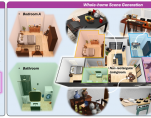
Kairos-HomeWorld is purpose built for embodied intelligence and represents the first unified framework capable of generating a complete, fully interactive home environment from a single text prompt. Extending indoor scene generation beyond individual rooms, it enables whole-home simulation in which every object is fully manipulable within an integrated simulation engine.
Kairos-HomeWorld employs a four-stage hierarchical architecture encompassing floorplan generation, 2D-to-3D lifting, recursive refinement, and manipulable object placement. This approach enables the production of globally coherent, physically accurate, and simulation-ready scenes. Each environment contains more than 15 manipulable objects and achieves a Footprint Object Density of 4.16, the highest among compared methods.
The accompanying open-source dataset is purpose-built for Chinese households, pairing 300,000 real residential floor plans with 5,000 fully furnished, simulation-ready homes and 50,000 physics-enabled interactive object assets. Already deployed in ACE ROBOTICS’ daily robot training, it significantly accelerates the simulation-to-reality transfer cycle.
SHANGHAI, CHINA – Media OutReach Newswire – 5 June 2026 – ACE ROBOTICS, in collaboration with the Multimedia Laboratory at The Chinese University of Hong Kong (CUHK) and Shenzhen Loop Area Institute, today announced the open-source release of Kairos-HomeWorld, the industry’s first unified World Model framework capable of generating full home-scale, object-level interactive 3D environments from a single text prompt. The solution addresses longstanding limitations in indoor scene generation, which has typically been restricted to single-room outputs with weak global consistency and limited interactivity. Kairos-HomeWorld overcomes these constraints by delivering structurally coherent, physically plausible, and functionally complete residential environments. These high-fidelity, large-scale simulations provide a robust foundation for advancing embodied intelligence applications and accelerating real-world robot training.
The long-term vision for embodied intelligence is the home environment. However, residential settings are inherently diverse and highly personalized, requiring robots to be trained across a broad range of realistic and differentiated scenarios before they can reliably operate in even a single household. High-fidelity simulation offers the most practical pathway to achieving this at scale, yet existing approaches typically involve a trade-off: synthetic environments lack realism, while scanned real-world scenes offer limited interactivity. Kairos-HomeWorld, together with its accompanying dataset, is designed to bridge this gap, delivering both realistic and interactive environments within a unified framework.
A four-stage architecture for whole-home, object-level generation Conventional approaches to indoor scene generation remain constrained to single-room outputs, often exhibiting weak global consistency, frequent physical inaccuracies, and limited or no interactivity. Kairos-HomeWorld takes a fundamentally different approach. It decomposes whole-home generation into a structured, four-stage process, redefining the underlying architectural paradigm from the ground up.
Stage 1 — Floor Plan Generation. A K-D tree-based approach translates real-world floor plans into a hierarchical text representation that can be efficiently processed by large language models (LLMs). This method mitigates common issues in conventional layout generation, including room overlaps and fragmented topologies, resulting in more coherent and structurally consistent spatial configurations.
Stage 2 — 2D-to-3D Lifting & Furniture Layout Generation. A “top-down global initialization combined with a first-person detail walkthrough” approach anchors the process to the 3D building shell generated in Stage 1. This methodology mitigates the geometric drift commonly associated with conventional 2D-to-3D lifting techniques, enabling more stable and spatially consistent scene generation.
Stage 3 — Recursive Refinement. A fine-tuned vision-language model performs iterative validation and correction, automatically identifying and resolving physical inconsistencies, such as obstructed doorways or object collisions. This recursive process materially reduces spatial errors, achieving among the lowest reported furniture-collision rates in the industry.
Stage 4 — Manipulable Object Placement. A surface-centric placement algorithm assigns each object detailed physical properties, including material composition, density, friction, and structural support relationships. Each generated scene incorporates an average of more than 15 manipulable objects and achieves a Footprint Object Density (FOD) of 4.16, a metric reflecting the concentration of items across furniture surfaces. All objects are natively compatible with simulation engines, enabling direct interaction for tasks such as grasping, movement, and stacking.
The resulting environments move beyond “viewable but not actionable” outputs. Their coherent spatial structure enables seamless, continuous navigation across multiple rooms, while objects embedded with realistic physical properties allow robots to simulate complex household tasks end-to-end. Taken together, this approach addresses key limitations in existing data pipelines, resolving the scarcity of high-quality 3D simulation data, the lack of realism in synthetic environments, and the limited interactivity of scanned scenes within a single unified framework.
The dataset: 300,000 real floor plans, 5,000 fully interactive homes, built for Chinese households ACE ROBOTICS and CUHK are open-sourcing a dataset of 300,000 structurally annotated residential floor plans, sourced from real-world listings and processed through a multi-stage automated pipeline. The pipeline vectorizes and labels key spatial elements, including door and window positions, room geometry, functional zoning, and connectivity. By comparison, widely used benchmarks such as RPLAN and ResPlan contain approximately 80,000 and 17,000 floor plans, respectively, underscoring the scale and comprehensiveness of the Kairos-HomeWorld dataset.
Building on this foundation, the dataset also includes 5,000 fully furnished residential environments, each featuring a complete furniture layout and an average of more than 15 physics-enabled, manipulable objects, powered by the PhysX-Omni model. All assets are sim-ready and can be directly imported into a simulation engine, enabling immediate use in interactive training scenarios.
Most existing open indoor-scene datasets are centered on North American and European residential formats, typically featuring open-plan kitchens, the absence of service balconies, and layouts and design elements that capture only a narrow segment of global housing. As a result, robots trained on these datasets often exhibit limited transferability when deployed in environments outside their scope. Kairos-HomeWorld ‘s dataset is purpose-built for Chinese households, with deliberate coverage of historically under-represented housing typologies. It spans a wide range of unit sizes, from approximately 30 m² (around 320 sq ft) studio apartments to residences exceeding 200 m² (approximately 2,150 sq ft). The dataset accurately reflects key architectural features common in these settings, including north-south cross-ventilated layouts, enclosed kitchens, dedicated service balconies, wet-and-dry-separated bathrooms, and entryway storage, as well as the irregular room configurations often found in older housing stock.
The dataset is being openly released to both academic and industry communities. Going forward, the team plans to expand its scope to include additional regions, interior styles, and interaction scenarios, further lowering barriers to real-world-ready training for embodied intelligence.
See it in action: one prompt to a fully interactive home Kairos-HomeWorld runs the full end-to-end pipeline, from initial text input to a fully interactive home environment, delivering global spatial consistency, physical realism, and seamless interactivity from a single prompt.
The system begins with a single-line prompt: “Generate a 90 m² (approximately 970 sq ft) two-bedroom apartment in neo-Chinese style.” Leveraging real floor plan data and its K-D tree representation, Kairos-HomeWorld first constructs an empty spatial layout aligned with real-world living patterns, incorporating cross-ventilation and well-defined functional zoning. Building on this foundation, a hierarchical “global layout plus first-person detail” approach furnishes the environment with stylistic coherence, while a PhysX-Omni rendering pass assigns full physical properties to all surfaces and objects, including articulated behavior, ensuring the scene is fully interactive and sim-ready.
A single natural-language instruction, “tidy the whole home”, is decomposed by the robot into a variety of discrete sub-tasks, executed sequentially along a complete navigation path spanning the living room, bedrooms, kitchen, bathroom, and dining area. The robot recognizes objects, plans efficient routes, and performs precise manipulation tasks, including articulated-object interactions for opening refrigerator and cabinet doors, fluid interactions for pouring laundry detergent, soft-body interactions for drawing curtains, irregular-object interactions for grasping apples, and gravity-based physical interactions for placing snacks.
Conventional simulation environments typically support navigation-focused training in isolation. By contrast, Kairos-HomeWorld integrates globally consistent spatial structures with objects that embody realistic physical properties. This enables robots to interact naturally with more than 15 object types, accurately modeling real-world dynamics such as collision, gravity, and friction, and to rehearse the full lifecycle of complex household tasks entirely within a virtual environment.
Across the industry, the same structural bottleneck, the scarcity of home-scale training data, is being addressed through multiple approaches. For example, Figure AI’s collaboration with Brookfield focuses on collecting human activity data across more than 100,000 residential units. Kairos-HomeWorld addresses this challenge through on-demand synthetic generation, delivering scalable training environments enhanced with object-level physical realism, capabilities that real-world data capture alone cannot fully provide.
In contrast, Kairos-HomeWorld delivers significantly lower costs and higher efficiency for household robot training. Powered by its world model, it can programmatically generate diverse Chinese home simulation scenes and physics-enabled interactive objects at scale.
Robots can complete a full range of household tasks training entirely within the virtual environment. New scene generation incurs near-zero marginal cost, eliminating substantial real-world testing expenses such as site operation and maintenance and furniture damage. Meanwhile, unconstrained by the limited stock of physical residential properties, it outperforms real-world data collection approaches in both training efficiency and scalable expansion.
Kairos-HomeWorld is already deployed in ACE ROBOTICS’ embodied intelligence training workflows, enabling full-pipeline simulation of long-horizon household tasks, including cross-room navigation and multi-room tidying. By allowing robots to rehearse complete task sequences in a virtual environment, the platform significantly shortens the simulation-to-reality transfer cycle. This approach lowers barriers to developing embodied intelligence systems and supports the accelerated, large-scale deployment of home robotics, particularly within the Chinese market. Kairos-HomeWorld is now available on GitHub.Hashtag: #ACEROBOTICS
The issuer is solely responsible for the content of this announcement.
About ACE ROBOTICS
Equipping robots with intelligent “brains” and engaging “souls”.
ACE ROBOTICS is a pioneering robotics company dedicated to advancing the field of embodied intelligence. Through breakthrough technological innovations and deep insights into embodied intelligence scenarios, we aim to empower robots with the ability to autonomously understand and explore the physical world, thereby accelerating their commercial implementation.
The company pioneered the ACE R&D paradigm and built a vision-based “environmental data engine, real-world cognition, embodied interaction generalization” technology chain. Using full spatiotemporal and multi-perspective environmental capture as its engine, along with Kairos 3.0 – China’s first open-source and commercially applicable world model – plus the Embodied Foundation Model as its technical backbone, ACE ROBOTICS addresses core industry challenges such as data scarcity, common sense gaps, poor generalization, and limited versatility. Simultaneously, the company unveiled its flagship A1 Embodied Super Brain Module, accelerating the large-scale commercial deployment of embodied intelligence across diverse scenarios.
ACE ROBOTICS is both a technology pioneer and an ecosystem builder. Through strategic cooperation with top hardware manufacturers, cloud service providers, and vertical scenario partners, we have broken through the “model-hardware-scenario” industrial deadlock, providing standardized and customized solutions that are driving the development of China’s embodied intelligence industry.
Capital inflows into the UAE are holding steady as investors adopt tougher due diligence standards rather than retreating from the market, with relative stability, low taxation and business-friendly regulation reinforcing the country’s position as a regional safe haven. Archers Valuation & Advisory said the market was not showing signs of capital withdrawal despite heightened regional uncertainty, but investors and lenders were becoming more selective in the way […]
SHANGHAI, CHINA – Media OutReach Newswire – 5 June 2026 – SKYWORTH Solar has reinforced its commitment to Thailand’s growing clean energy sector following the opening of its Bangkok office and the signing of a 100MW commercial and industrial (C&I) solar project memorandum of understanding with local partner CapSolar.
The announcement forms part of SKYWORTH Solar’s newly unveiled global growth strategy, revealed at the 2026 SNEC Exhibition and Global Customer Summit in Shanghai, where the company introduced its new positioning as a “Global Smart Energy Ecosystem Leader” and outlined plans to accelerate expansion across key international markets.
Thailand has emerged as one of SKYWORTH Solar’s strategic markets in Southeast Asia, driven by rising energy demand, increasing electricity costs for businesses, and growing momentum behind renewable energy adoption.
The opening of the company’s Thailand office at Empire Tower in Bangkok strengthens SKYWORTH Solar’s local presence. It enables the company to provide customers and partners with enhanced support across consultation, project execution, after-sales service, supply chain coordination and project delivery.
“Thailand represents a significant growth opportunity for SKYWORTH Solar as businesses increasingly seek reliable and cost-effective clean energy solutions,” said Wanfei Qu, Chief Investment Officer of SKYWORTH Group, CEO and Director of SKYWORTH Solar. “Our strategy is built on the principle of ‘Global Vision, Local Execution’, combining global expertise with strong local partnerships to support Thailand’s energy transition and long-term sustainability goals.”
As part of its expansion plans, SKYWORTH Solar signed a 100MW C&I solar project MOU with CapSolar, supporting the growing demand for rooftop solar solutions among commercial and industrial businesses.
The company is also strengthening its local ecosystem through investments in project development, financing partnerships and service capabilities. This includes a strategic banking collaboration with ICBC Thai and access to a US$500 million investment fund to support solar project development and deployment in Thailand and other international markets.
One example of SKYWORTH Solar’s growing footprint in Thailand is its 3MW rooftop solar project at UMC Steel Plant in Chonburi Province. The project is expected to generate approximately 4.4 million kWh of clean electricity in its first year, helping reduce energy costs while supporting the facility’s sustainability objectives.
The developments in Thailand were highlighted as part of SKYWORTH Solar’s broader global strategy unveiled at SNEC 2026. The company announced plans to expand its solar, energy storage, and integrated smart energy solutions across Europe, Southeast Asia, the Middle East, and Africa, in response to increasing global demand for renewable energy technologies.
As governments and businesses accelerate their decarbonisation efforts, SKYWORTH Solar aims to support customers through a combination of advanced technology, flexible business models and localised service capabilities.
For more information about SKYWORTH Solar and its clean energy solutions, please visit https://www.skyworth-pv.com. Hashtag: #SKYWORTH
The issuer is solely responsible for the content of this announcement.
About SKYWORTH
SKYWORTH Solar, the cutting-edge PV brand under SKYWORTH Group, is a global leader in providing comprehensive one-stop solar solutions. Comprehensive end-to-end services are provided, encompassing consulting, design, and product O&M, all supported by a portfolio of self-developed solutions.
As a leading global renewable energy developer, service provider and energy solutions provider, SKYWORTH is actively shaping the future of energy. With a strong presence in EPC services and one-stop product solutions, SKYWORTH delivers high-quality, reliable, and innovative energy solutions. SKYWORTH ‘s commitment to originality and excellence has earned widespread recognition in international markets such as Germany, Italy, the UK, Brazil, and Senegal.
Thailand’s richest man Sarath Ratanavadi is preparing a 140 billion baht expansion through Gulf Development Pcl over five years, placing data centres, digital infrastructure and power supply at the centre of one of Southeast Asia’s most ambitious corporate bets on artificial intelligence demand.
The plan, worth about $4.3 billion, reflects a sharp turn by Gulf from its traditional base as a power producer into a broader infrastructure group linking electricity generation, telecommunications, cloud services and industrial logistics. The investment push comes as Thailand seeks to position itself as a regional data hub, helped by rising demand for cloud computing, artificial intelligence workloads and data-localisation capacity across Southeast Asia.
Gulf’s strategy is built around a simple commercial premise: AI facilities need vast, reliable and increasingly low-carbon electricity. Data centres are among the most power-intensive assets in the digital economy, and operators are under pressure to secure stable energy supply while meeting sustainability commitments from global technology clients. Gulf’s existing position in gas-fired power, renewable energy and utilities gives it an advantage that pure technology infrastructure firms may struggle to match.
Sarath, Gulf’s chief executive and controlling figure, has spent years reshaping the group from a conventional energy developer into a conglomerate with exposure to telecoms, satellites, digital platforms and cloud infrastructure. The merger of Gulf Energy Development and Intouch Holdings created a larger listed platform linked to Advanced Info Service, Thailand’s biggest mobile operator, and Thaicom, the satellite company. That structure gives Gulf access to telecom traffic, enterprise clients and digital distribution channels that can support its data-centre ambitions.
The investment programme is expected to support new data-centre capacity, related infrastructure and power projects needed to serve hyperscale and enterprise customers. Gulf has already moved into the sector through partnerships involving global technology names and regional operators, while its digital arm has explored cloud and AI services designed for corporate and government clients. The company’s first major data-centre project has become a reference point for its expansion into facilities that can host high-density computing workloads.
Thailand’s broader investment environment has also shifted in Gulf’s favour. Authorities have approved large-scale data infrastructure projects from global technology players, including server and data-processing investments across Bangkok, Samut Prakan and Chachoengsao. Google, Amazon Web Services, Microsoft and ByteDance-linked operations have all announced or pursued major commitments in the country, intensifying competition but also validating Thailand’s role in the regional digital economy.
For Gulf, the opportunity lies not only in renting data-centre capacity but also in selling bundled infrastructure: power, connectivity, cloud access and long-term operational reliability. That model could create recurring income and reduce dependence on regulated returns from power generation. It may also help Gulf deepen its relationship with large technology clients seeking local partners that understand land, energy approvals, grid constraints and domestic regulatory requirements.
The group’s financial position gives it room to move, though the scale of the programme will be closely watched by investors. Gulf reported strong first-quarter earnings for 2026, helped by its energy operations and profit contribution from Advanced Info Service. Revenue growth and core profit gains have strengthened confidence in its ability to finance new projects, but data centres require heavy upfront spending and returns can depend on utilisation rates, long-term contracts and energy costs.
The timing is also sensitive. Across Asia, governments are competing for data-centre investment while confronting pressure on power grids, water use and land availability. Singapore’s cautious approach to new data-centre capacity has encouraged developers to look at Malaysia, Thailand, Indonesia and Vietnam, but each market faces its own constraints. Thailand has industrial land, policy incentives and improving connectivity, yet grid readiness and clean-energy availability remain decisive issues for hyperscale clients.
Gulf’s renewable energy targets are likely to form part of its sales pitch. The company has set out plans to raise the share of renewables in its generation portfolio and reduce carbon intensity, while continuing to rely on gas as a stable baseload fuel. Its long-term LNG supply arrangements also point to a strategy that balances energy security with transition commitments, even as customers demand cleaner electricity for digital operations.
Sarath’s expansion plan underscores how AI is redrawing corporate strategy beyond Silicon Valley. Energy groups, telecom operators and infrastructure funds are increasingly competing for the physical assets behind the digital boom. Gulf’s bet is that Thailand’s AI economy will be shaped as much by power plants, fibre networks and industrial sites as by software models and cloud applications.
Greenlogue/AP Dubai Electricity and Water Authority has raised clean energy’s share of its total production capacity to 21.5%, strengthening the emirate’s shift towards a lower-carbon electricity system as demand for power continues to rise across residential, commercial and industrial sectors. Saeed Mohammed Al Tayer, Managing Director and Chief Executive Officer of DEWA, said the increase reflects Dubai’s long-term strategy to align infrastructure growth with environmental sustainability, […]
MEXC has integrated with TradingView, allowing users to execute crypto trades directly from the charting platform and reducing the gap between market analysis and order placement in one of the fastest-moving areas of digital-asset trading. The Victoria, Seychelles-based exchange said the tie-up gives traders access to TradingView’s charting interface while connecting them to MEXC’s spot and derivatives markets. The move is aimed particularly at active crypto users […]
Arabian Post Staff -Dubai Abu Dhabi Exports Office has begun direct site visits to UAE-based manufacturers under its AED1 billion financing partnership with Emirates Development Bank, stepping up efforts to link industrial companies with export funding, working capital support and market-expansion tools. The visits covered MEDECO, Star Paper Mill and Dana Steel, three manufacturers operating in sectors closely tied to the country’s localisation and export-growth agenda. ADEX […]
Whale. io has launched Whale Printer, a staking feature that allows eligible holders of its native $WHALE token to lock tokens for fixed periods in return for predetermined rewards, adding a yield mechanism to the crypto casino and sportsbook platform’s token economy. The new system offers three lock-up options. Users can stake $WHALE for 90 days with a 1.2x multiplier and 107.8% annual percentage yield, 180 days […]
By Dr. Gyan Pathak The preliminary version of the OECD Outlook released on June 3, 2026 has projected the real GDP of India to grow by 6.3% during the FY 2026-27, which is a sharp decline from the robust growth rate of 7.8 per cent year-on-year in the quarter ending in December 2025 (Q3 FY2025–26), […]
MMC Port Holdings Sdn Bhd has approached prospective bidders for a minority stake in the business, shifting attention from a delayed public listing to a private transaction that could test investor appetite for one of Southeast Asia’s most significant port platforms. The move follows the postponement of an initial public offering that had been expected to rank among Malaysia’s largest listings in more than a decade. The […]
By K Raveendran Public anger has a strange way of finding symbols. Sometimes it gathers around a saintly figure in a white cap, sometimes around an unlikely political label that sounds almost like a joke until it begins to speak for a generation. The overwhelming response from Gen Z to the Cockroach party carries unmistakable […]
Arabian Post Staff -Dubai Abu Dhabi has temporarily halted rent increases across residential, commercial and industrial properties, cutting the permitted annual rise from 5 per cent to 0 per cent until further notice. The measure applies to tenancy contract renewals across the emirate and means rents must remain unchanged for the duration of the freeze. New tenancy contracts for previously rented units must also be registered at […]
HONG KONG SAR – Media OutReach Newswire – 3 June 2026 – A large delegation, led by John Lee, Chief Executive of the Hong Kong Special Administrative Region (HKSAR), is visiting Kazakhstan and Uzbekistan (June 1-6) to forge closer ties with Central Asia.
Comprising over 70 business and professional representatives from Hong Kong and the Chinese Mainland, the delegation has already yielded significant results at its first stop in Kazakhstan.
Speaking at a business luncheon in Astana yesterday (June 2), Mr Lee highlighted that 43 memoranda of understanding (MOU) and agreements have been concluded by the visiting delegation with companies and organisations from Kazakhstan, with more agreements to come.
“They span aviation, finance and trade, innovation and technology, the digital economy, green development, and more,” Mr Lee said, adding that a Hong Kong airline plans to launch direct flights to Almaty in the first quarter of 2027.
“I believe that Kazakhstan can serve as a hub for Hong Kong to connect with the Central Asian market. In turn, Hong Kong can be Central Asia’s hub in the east and southeast Asian region,” Mr Lee said.
“By strengthening co-operation between our two hubs, we can construct a hub-to-hub co-operation model.”
On his first day of visit in Astana (June 1), Mr Lee met with top government officials including the President of Kazakhstan, Kassym-Jomart Tokayev, Prime Minister Olzhas Bektenov, and Deputy Prime Minister and Minister of National Economy Serik Zhumangarin.
Hong Kong SAR’s Chief Executive John Lee (left) meets with the President of Kazakhstan Kassym-Jomart Tokayev to exchange views on deepening bilateral relations.
Mr Lee noted that Kazakhstan has been actively promoting reforms on various fronts to bring about rapid economic growth.
“As one of the world’s three major financial centres, and the world’s largest cross-boundary wealth management centre and offshore Renminbi business hub, Hong Kong can provide diversified and flexible support including capital and asset allocation for Kazakhstan’s economic reforms and infrastructure development,” Mr Lee said.
The Chief Executive also encouraged companies in Kazakhstan to leverage Hong Kong’s advantages under the “one country, two systems” principle.
“Under this unique principle, Hong Kong has its own economic, social, legal, legislative and judicial systems. We are the only common law jurisdiction in China. We have our own currency, with no capital or foreign exchange controls. We are, as well, a separate customs territory,” Mr Lee said.
“The ‘one country, two systems’ principle ensures Hong Kong’s unparalleled access to the markets of the Chinese Mainland. Capitalising on our global connectivity and world-class professional services, Hong Kong is your ideal, two-way springboard for business expansion.”
Mr Lee also visited the Astana International Financial Centre and the Astana Hub, a local technology and innovation park, to respectively learn about Kazakhstan’s experience in promoting the development of the non-bank financial sector and the latest developments of the country in the field of AI.
Hong Kong SAR’s Chief Executive John Lee (centre) witnesses the exchange of memoranda of understanding and co-operation agreements between organisations from both sides with the Governor of the Astana International Financial Centre Renat Bekturov (second right).
Before leaving Kazakhstan today (June 3), Mr Lee visited Nazarbayev University, underscoring the historic significance of the trip.
“It was here, at Astana’s Nazarbayev University in 2013, that President Xi Jinping first raised the visionary initiative of jointly building the Silk Road Economic Belt – today’s Belt and Road Initiative (BRI),” Mr Lee said.
Last year, at the 10th Belt and Road Summit in Hong Kong, the university signed a MOU with the Hong Kong University of Science and Technology, demonstrating a shared commitment to advancing higher education co-operation under the BRI. It further reached MOUs with Hong Kong’s Education University and Polytechnic University today.
“These agreements will deepen academic and research collaboration.
“Hong Kong is the only city in the world with five of the top 100 universities. This talent environment is reinforced by our global standing: last year, Hong Kong ranked first in Asia, and fourth globally, in the World Talent Ranking,” he added.
Mr Lee will continue to lead the delegation to Uzbekistan for the second leg of the mission to Central Asia.
Anthropic has expanded access to Claude Mythos Preview to about 200 organisations, widening a controlled cybersecurity programme designed to help governments, companies and critical software maintainers find severe vulnerabilities before attackers can exploit them. The San Francisco-based artificial intelligence company is adding around 150 organisations to Project Glasswing, its gated initiative for defensive use of a frontier model that has drawn intense attention from technology companies, banks, […]














 https://www.brandhk.gov.hk/
 https://www.linkedin.com/company/brand-hong-kong/
 https://x.com/Brand_HK/
 https://www.facebook.com/brandhk.isd
 https://www.instagram.com/brandhongkong




