By T N Ashok In most democracies, high voter turnout is read as a simple good—an affirmation of faith in the system. In India, it is rarely that straightforward. The extraordinary participation seen in the 2026 assembly elections in Tamil Nadu and West Bengal—with turnout brushing past 84% and 90% respectively—demands a more layered reading. […]
I remain strongly positive on AI. The pace of development, the scale of capital flowing into the sector, and the productivity upside it promises are all significant. Equity markets have responded accordingly, with leadership concentrated in semiconductors, cloud platforms, and software. The concentration reflects real earnings power and strong visibility. At the same time, the investment landscape around AI is broadening. The next phase is taking shape, […]
Dubai’s advertising market has become the launchpad for a new AI-powered creative intelligence system from Omnicom Advertising and Google, marking the first customised deployment of Google’s ABCD AI detector in the Africa, Middle East and Turkey region and setting up a wider rollout across client markets this year. The system combines Google’s framework for evaluating effective YouTube video creatives with Omnicom’s proprietary creative AI, giving advertisers a […]
Arabian Post Staff -Dubai Global gas markets face a deeper supply squeeze after the International Energy Agency estimated that conflict in the Middle East could remove about 120 billion cubic metres of liquefied natural gas from world supply between 2026 and 2030, a loss equal to roughly 15% of expected LNG availability over the period. The warning marks a sharp reversal for a market that had been […]
Dubai has set out the biggest public-transport expansion in its history with approval of the Metro Gold Line, a Dh34 billion underground corridor designed to bind older neighbourhoods to newer growth districts and give the emirate a fresh rail spine by 9 September 2032. The scheme covers 42 kilometres and 18 stations, will run as Dubai’s first fully underground metro line, and is intended to serve 1.5 […]
Investcorp Capital has deployed $200 million into a three-asset US residential real estate portfolio, betting that demand for senior living and rental housing in supply-constrained metropolitan markets will stay firm as demographic pressure builds. The Abu Dhabi-listed alternative investment company said the portfolio spans nearly 500 units and includes two senior housing properties in the Los Angeles and New York metropolitan areas, alongside a multifamily community […]
Arabian Post Staff -Dubai Masdar and Montenegro’s state power utility Elektroprivreda Crne Gore have agreed to create a 50-50 joint venture to develop large-scale renewable energy projects, giving the Adriatic country a fresh route to expand domestic generation, strengthen energy security and position itself as a supplier of cleaner electricity to neighbouring markets in the Balkans and southern Europe. The agreement was signed on 22 April […]
GamesIndustry. biz is set to return to Brazil next week to cover Gamescom Latam in São Paulo, as the event prepares for a five-day run from April 29 to May 3 at the Anhembi District, with April 29 reserved as a VIP day before the main public programme opens. The trip places the publication back at one of the gaming sector’s fastest-expanding regional gatherings, at a time […]
Arabian Post Staff -Dubai Raimondi Middle East has crossed the threshold of 100 cranes in operation across the UAE, underscoring how deeply the company has embedded itself in one of the Gulf’s busiest construction markets. The 100th machine, a Raimondi LR273 luffing jib crane, has been deployed in Dubai and is the first unit of that model to be installed in the country. The milestone is more […]
Arabian Post Staff -Dubai Abu Dhabi has stepped up its push to place more Emiratis in banking, finance and insurance, with the Central Bank of the UAE saying the sector’s Emiratisation programme outperformed its 2025 target and moved beyond entry-level hiring towards strategic and specialised roles. The latest official update said the “Ethraa” programme reached 160% of its 2025 goal, building on a strong 2024 performance and […]
Blackstone-owned AirTrunk is preparing what could become a landmark financing for Asia-Pacific digital infrastructure, with the data-centre operator seeking to raise at least A$500 million through asset-backed bonds backed by its facilities, according to market reports and company disclosures on its broader funding platform. The move would mark a notable step in bringing securitised debt structures, long familiar in other asset classes, into the region’s fast-growing data-centre […]
Arabian Post Staff -Dubai Washington’s suggestion that the United Arab Emirates might need outside financial support has drawn a swift rebuttal from Abu Dhabi, with the country’s envoy in the United States saying such claims misread the strength of the federation’s economy and balance sheet. The response followed remarks by President Donald Trump that a currency swap arrangement with the UAE was under consideration and that he […]
The Gentlemen ransomware operation is building momentum across the cybercrime market, drawing in more affiliates, broadening its toolset and sharpening its focus on corporate targets as security researchers trace a faster pace of attacks through the opening months of 2026. Check Point said the group has publicly claimed more than 320 victims, with about 240 of those listed this year, a pattern that points to rapid affiliate […]
Joining Forces to Build a New Regional Value Chain and Drive Industrial Upgrading across ASEAN
HONG KONG SAR – Media OutReach Newswire – 21 April 2026 – Hong Kong has long maintained a robust bilateral relationship with Malaysia. As ASEAN’s third-largest economy, Malaysia possesses strong manufacturing and service sectors and stands as Hong Kong’s eighth-largest trading partner. Amidst the global restructuring of supply chains, Hong Kong leverages its unique position as an international innovation and technology centre anchored by its regional connectivity while remaining integrated with the world. It serves as a vital springboard and strategic hub for Malaysian enterprises expanding into regional markets and for emerging firms seeking to go global. The Hong Kong Productivity Council (HKPC) and the Federation of Malaysian Manufacturing (FMM) have signed a Memorandum of Understanding (MoU), marking the establishment of a deep strategic partnership. By integrating the resource advantages of both regions, the collaboration will provide technological innovation and market expansion support for enterprises in Hong Kong and Malaysia, optimising global supply chain layouts and helping Hong Kong better implement the “Bringing in and Going Global” strategy to seize regional development opportunities within ASEAN.
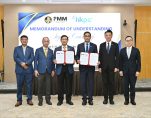
The Hong Kong Productivity Council and the Federation of Malaysian Manufacturing signed a Memorandum of Understanding, marking the establishment of a deep strategic partnership and integration of the resource advantages of both regions.
The signing ceremony of the MoU took place in Kuala Lumpur, Malaysia on April 20, 2026. Witnessed by Mr Jacob Lee Chor Kok, President of FMM; Tan Sri Dato’ (Dr) Soh Thian Lai, President Emeritus of FMM; Mr Owin Fung Ho Yin, Director of the Hong Kong Economic and Trade Office in Kuala Lumpur; and Hon Sunny Tan, Chairman of HKPC, the MoU was signed by Datuk Dr Yeoh Oon Tean, CEO of FMM, and Mr Mohamed D. BUTT, Executive Director of HKPC. This collaboration will facilitate the development of a new value chain connecting Hong Kong, Malaysia and ASEAN, driving new industrialisation in both regions while accelerating industrial upgrading and technological application.
Hon Sunny Tan, Chairman of HKPC, said, “Under the national 15th Five-Year Plan, Hong Kong has become a vital platform for enterprises to go global. Malaysia maintains robust ties with the Asian region, as well as the global industrial and trade markets. The signing of this MoU between HKPC and FMM marks a key milestone in the collaboration on industrial modernisation. We are committed to technological innovation, with a focus on enhancing expertise in automation, Industry 4.0, AI, and robotics, and actively building business matching platforms to facilitate business opportunities and expand our scope of cooperation. This not only deepens the partnership between the two organisations, but also establishes a strategic hub connecting Hong Kong with the ASEAN market. Hong Kong will fully leverage its ‘Bringing in and Going Global’, helping Malaysian enterprises precisely connect with the vast regional and global market while supporting Hong Kong companies in rooting themselves in ASEAN, co-creating a resilient and innovative cross-border value chain.”
Mr Jacob Lee Chor Kok, President of FMM, stated, “This MoU is just the beginning with our roadmap including joint technical training, workshops, technology visits and pilot projects to provide our members with first-hand exposure to the latest manufacturing innovations. We envision a future where Malaysian and Hong Kong companies collaborate on research and development (R&D), pilot new technologies and co-create solutions for emerging challenges”
Six Key Areas to Empower New Regional Industrial Upgrading HKPC and FMM will launch comprehensive cooperation to help enterprises transform technological empowerment into competitive advantage in today’s dynamic market. The two parties will focus on Smart Manufacturing & Industry 4.0, AI & Robotics Innovation, Digital Transformation & Cybersecurity, Cross-border Business Ecosystems and Talent Development.
This collaboration integrates FMM’s extensive supply chain network of over 4,000 member enterprises with HKPC’s profound R&D capabilities in product innovation and technology transfer. Through organising delegations, professional training, business matching, and technical seminars, we will assist enterprises in precisely mastering cutting-edge technologies and market trends. Furthermore, by promoting reciprocal visits between enterprises in both regions, we aim to foster mutual economic and trade empowerment. This synergy not only strengthens corporate resilience against supply chain risks but also ensures that enterprises from both regions secure a proactive position in global supply chain competition, co-creating a distinct competitive advantage.
Hashtag: #HKPC
The issuer is solely responsible for the content of this announcement.
Arabian Post Staff -Dubai Dubai International Financial Centre has unveiled plans to remake itself as what it describes as the world’s first AI-native financial centre, tying the ambition to a projected $3.5 billion contribution to Dubai’s economy and the creation of 25,000 jobs as artificial intelligence is woven into regulation, operations, talent development and the district’s built environment. The move marks a step beyond the common industry […]
SINGAPORE – Media OutReach Newswire – 13 March 2026 – ECOVACS Robotics, a global leader in home service robotics, is bringing its global “ECOVACS, Created for Ease” brand idea to the APAC region with a local twist: “Always in Your Corner”. With this, ECOVACS is underscoring its commitment to understanding and meeting the unique needs of users in the APAC region.
“ECOVACS, Created for Ease” reflects the brand’s ongoing commitment to leverage service robotics to create a world of ease for users by relieving them of household tasks. For users in the APAC region, ECOVACS knows that “ease” is not simply about doing less. It means easing the mind and letting go of mental burdens. To bring ease to APAC users, technology must not demand attention. It should be “Always in Your Corner” – quietly helping users to keep their daily life on track.
“Always in Your Corner” for APAC’s Unsung Heroes
“Always in Your Corner” represents how ECOVACS’ diversified full-scenario home service robotics ecosystem is designed to help ease the burdens faced by users in the APAC region and empower them to enjoy a more effortless modern lifestyle. For example, many in the APAC region are part of the so-called “sandwich generation”. They are the quiet backbones of their households, juggling career demands while also taking care of children and aging parents. Whether it’s helping a child with their homework or taking dad to his doctor’s appointment, these everyday heroes are always in someone else’s corner. ECOVACS believes they also deserve to have someone in their corner, to help ease their burdens.
For the past 20 years, ECOVACS has been driven by a fearless spirit of innovation to solve complex challenges and continuously advance the user experience. The pioneering intelligent technologies in the ECOVACS DEEBOT robotic vacuums and WINBOT robotic window cleaners, such as the OMNI Station, OZMO ROLLER technology, and PowerBoost technology have set new industry benchmarks and become the hidden heroes for every home, designed to help users clean every corner of their home with minimal effort.
Enabling Village Partnership in Singapore
Now ECOVACS is bringing this same innovation spirit to help ease the burdens faced by caregivers in the APAC region. As part of its brand campaign, ECOVACS is planning to cooperate with select like-minded local partners across the region, such as Enabling Village in Singapore. Enabling Village is an integrated community space that aims to empower caregivers for people with disabilities by providing them with resources to manage their responsibilities and enhance their quality of life. ECOVACS will provide Enabling Village caregivers with DEEBOT robotic vacuum cleaners to help ease their burdens and enable them to spend more time on themselves.
“Caring for a child with special needs requires lots of time and patience. And it can be challenging to find moments when I can focus on myself,” says Yvette Wang. “I’m grateful to ECOVACS and their efforts to assist caregivers. With their DEEBOT robotic vacuum I now have one less thing to manage, as I can leave DEEBOT to take care of our floors, and itself.”
To commemorate their partnership, ECOVACS and Enabling Village have invited Yvette’s son, artist @Eli_lailai, to specially design some exclusive merchandise. This collaboration was made possible through I’mable Collective, an initiative by SG Enable that supports and empowers persons with disabilities by providing training and employment opportunities within the creative sector.
An Ecosystem that Empowers Ease
ECOVACS’ efforts to continually strengthen its leadership in service robotics are rooted in its deep understanding of users’ needs. Its regionally tailored brand idea “Created for Ease – Always in Your Corner” reflects the brand’s desire to tailor its mission of ‘Robotics for All’ to shape a better future for users in the APAC region with robots that can seamlessly serve every home, everywhere.
The industry-leading cleaning technologies pioneered by ECOVACS demonstrate its dedication to reducing human effort while maximizing cleaning precision and efficiency, all with the aim of offering dependable cleaning experiences tailored to the needs of today’s households. ECOVACS’ service robots offer users more ease by bringing efficient, effortless cleaning to every corner of their household.
“Always in Your Corner” reflects how ECOVACS’ home service robotics ecosystem is designed for users in the APAC region – to support their full-home scenarios, from floors to windows. The ECOVACS DEEBOT robotic vacuums and WINBOT robotic window cleaners are built to handle what must be done — quietly, consistently, and intelligently. They don’t just clean, they leave users with less to manage.
Amplifying a Message of Care
ECOVACS will extend the impact of this brand campaign across multiple touchpoints in key APAC markets, including Singapore, Australia, Vietnam, India, Thailand, Malaysia and Indonesia. Through localized partnerships, integrated brand storytelling, and community engagement, ECOVACS aims to honor caregivers as well as those across the region who are seeking a less stressful and more balanced life.
Intelligent. Innovative. Intuitive.
From its DEEBOT family of robotic vacuum cleaners to its WINBOT family of robotic window cleaners, all of ECOVACS’ innovations are backed by its well-established vertically integrated supply chain and independently developed technologies spanning batteries, AI, motors, transmission components and more.
Today, ECOVACS serves over 38 million households across nearly 180 markets worldwide. Its mission — “Robotics for All” — reflects a long-term commitment to making intelligent service robotics accessible, reliable, and seamlessly integrated into everyday life.
“Created for Ease” is not only about cleaning better. It’s about living lighter and reducing what needs your attention – so that you can focus on what truly matters. And in doing so, ECOVACS is always in your corner.
Hashtag: #ECOVACS
The issuer is solely responsible for the content of this announcement.
About ECOVACS ROBOTICS
Founded in 2006, ECOVACS ROBOTICS is a global leader in home service robotics with a diverse portfolio of products encompassing robotic vacuum cleaners and robotic window cleaners. With its expansion into robotic lawn mowers, commercial cleaning robots and robotic pool cleaners, ECOVACS solidified its position as a multi-category leader in home service robotics.
Guided by the mission “Robotics for All”, ECOVACS continues to advance technology and enhance the user experience to make life smarter and more stylish for consumers worldwide. With sales subsidiaries in Germany, the United States, Japan, and Singapore, ECOVACS products reach nearly 180 major markets and serve over 38 million households globally.
flydubai will begin daily flights to Bangkok’s Don Mueang International Airport on July 1, expanding its Thailand network beyond Krabi and adding a second entry point into one of Southeast Asia’s busiest travel markets. The service will operate from Terminal 3 at Dubai International Airport under the carrier’s codeshare partnership with Emirates, giving passengers onward access across a wider global network.
The move is more than a straightforward route launch. It signals how Dubai’s low-cost carrier is sharpening its focus on high-demand leisure and business corridors in Asia while using its partnership model to compete more effectively against full-service rivals. Bangkok has long been a major draw for Gulf-based travellers, migrant communities, short-break tourists and business passengers, and the use of Don Mueang rather than Suvarnabhumi suggests flydubai is aiming for a cost-efficient operating base while still tapping into the Thai capital’s large catchment area.
According to the published schedule, outbound flight FZ1333 will leave Dubai at 01:35 and arrive in Bangkok at 11:25, while return flight FZ1334 will depart Don Mueang at 23:50 and land in Dubai at 03:25 the next day, all in local times. Introductory return fares start at AED 11,100 in Business Class and AED 3,000 in Economy Class Lite from Dubai, with corresponding starting fares from Bangkok at THB 83,900 and THB 22,100. Those fare levels position the route as a hybrid offering rather than an ultra-budget play, reflecting flydubai’s steady shift towards a broader market that includes premium leisure and corporate demand.
The airline’s management has framed the Bangkok launch as a response to strong summer demand and as part of a wider effort to deploy capacity where yields and passenger volumes justify expansion. The commercial logic is supported by flydubai’s broader performance. In 2025, the carrier reported revenue of AED 13.6 billion, pre-tax profit of AED 2.2 billion, passenger traffic of 15.7 million and a network spanning 140 destinations, underlining both scale and financial resilience at a time when many airlines continue to wrestle with fleet bottlenecks, maintenance costs and geopolitical disruptions.
That backdrop matters because airline route announcements do not happen in isolation. Carriers are adding capacity cautiously, especially where aircraft supply remains constrained. flydubai ended 2025 with a fleet of 97 aircraft and has been pursuing long-term growth with major Airbus A321neo and Boeing 737 MAX orders, broadening a fleet strategy that was once almost entirely centred on Boeing narrow-bodies. That gives the airline more room to grow deeper into medium-haul markets where price-sensitive demand overlaps with demand for better connectivity and upgraded cabin products.
Thailand fits that strategy well. Demand between the Gulf and Thailand has been supported by tourism, retail travel, medical trips, visiting friends and relatives, and small-business movement. Bangkok also works as a distribution point for wider travel into Thailand and neighbouring markets. By choosing Don Mueang, flydubai enters a major airport with a strong low-cost profile and dense domestic and regional links. For passengers, the appeal is likely to rest on timing, one-stop connectivity through Dubai, and the convenience of booking through the Emirates partnership on a single ticket with baggage checked through.
The Bangkok service also reflects a wider pattern in Gulf aviation. Airlines based in Dubai, Abu Dhabi and Doha have spent years turning geographic advantage into network depth, linking Europe, Asia and Africa through hub operations that can absorb both premium and value-focused traffic. flydubai’s role in that system has evolved significantly. It no longer operates purely as a low-cost feeder or point-to-point budget airline. Its commercial model now leans on network breadth, underserved routes, codeshare traffic and selective premium demand, a shift reinforced by a 19 per cent rise in Business Class uptake last year.
Coinbase and Bybit are discussing a partnership focused on tokenisation, custody and distribution of U. S. stocks, a move that would tie one of the largest listed crypto exchanges to one of the sector’s biggest offshore trading venues as competition intensifies around blockchain-based versions of traditional assets. The talks, as reported, do not involve a stake purchase or any comparable transaction tied to Bybit’s route into the […]
Nvidia has delivered another blockbuster quarter, posting revenue of $68.1 billion and giving a next-quarter forecast of $78 billion, a result that underlined how aggressively the world’s largest technology groups are still spending on artificial intelligence infrastructure. Data centre sales reached $62.3 billion, up 75 per cent from a year earlier, showing that demand for high-end chips, networking gear and full AI systems remains strong despite growing […]
GUANGZHOU, CHINA – Media OutReach Newswire – 20 April 2026 – XTransfer, the World’s Leading B2B Cross-Border Trade Payment Platform, released its latest figures at the 139th China Import and Export Fair (Canton Fair). In the first quarter of this year, emerging markets across Asia, Africa, and Latin America accounted for 73% of XTransfer’s inbound cross-border payment collections, with 45% increase year-on-year. Collections from Africa, Latin America, and Southeast Asia increased 115%, 97%, and 18% year-on-year, respectively, highlighting growing demand among exporters for secure and efficient cross-border collection channels.
XTransfer at the 139th Canton Fair
According to statistics from the China General Administration of Customs, emerging markets in Asia, Africa, and Latin America have become a key driver of export growth. However, underdeveloped local financial infrastructure, incomplete cross-border payment systems, and shortages of foreign exchange mean buyers often struggle to access U.S. dollars. As a result, exporters in these markets frequently face low settlement efficiency, slow cash recovery, and risks such as account freezes.
To address these collection challenges, XTransfer has developed a comprehensive set of cross-border collection solutions. In 2025, payment collections from emerging markets in Asia, Africa, and Latin America rose 106% year-on-year. By region, collections increased 273% in Africa, 82% in Southeast Asia, and 94% in Latin America.
Over the same period, customs statistics show that in 2025, China’s total goods exports to Asia, Africa, and Latin America increased 14.6% year-on-year, with exports to Africa, Southeast Asia, and Latin America up 26.6%, 14%, and 8%, respectively. XTransfer’s significantly faster growth in collections compared with export growth suggests exporters are accelerating the shift from informal channels to secure, compliant collection methods, and that market recognition of high-quality cross-border payment services continues to rise.
Bill Deng, Founder and CEO of XTransfer, said emerging markets offer long-term opportunities for Chinese exporters, but many are held back by the “last mile” of collections. He added that XTransfer is committed to helping SMEs collect funds safely and quickly through secure, compliant, and efficient cross-border financial services comparable to those used by multinational companies.
Release of XTransfer PMI At the Canton Fair, XTransfer partnered with the Yicai Research Institute to publish the “China Small and Medium Enterprises (B2B) Merchandise Export Purchasing Manager Index” (XTransfer Export PMI), offering operational guidance and decision-making reference for small and micro export-oriented businesses.
This edition draws on a sample survey of XTransfer’s 800,000 SME users, selecting over 3,000 companies nationwide. It covers the full export process across export orders, pricing, procurement, logistics, staffing, and cash flow. The report shows that the March 2026 XTransfer PMI was 51.56%, indicating export conditions for SMEs are generally improving. Despite a complex external environment, SMEs have remained resilient and steadily strengthened their pricing power in international markets. Meanwhile, demand structures in emerging markets are reshaping, with export focus shifting toward intermediate goods and higher value-added products.
Resilience Amid Geopolitical Disruptions Customs data show that in the first quarter, China’s goods exports reached RMB 6.85 trillion, up 11.9% year-on-year, marking a strong start to the year and benefiting SMEs. The XTransfer PMI also shows expansion in the export order index (53.85) and the export price index (56.15). While seasonal factors like the Spring Festival affected the short term, the underlying “volume and price rising together” trend suggests SMEs are accelerating their shift from “low-price internal competition,” strengthening pricing power through technology upgrades and improved quality.
Geopolitical disruptions have also extended delivery times, pushing the logistics time PMI down to 37.50. In contrast, the sales collection (receivables) index rose to 68.59, showing a pattern of “goods moving slower, money returning faster”. This suggests overseas buyers remain strongly tied to China’s high-quality supply chain and are willing to raise prepayment ratios or shorten payment terms to secure capacity. One exhibitor, Mr Wang, said, “A Southeast Asian customer increased its deposit from 30% to 70% to lock in production, worried our capacity would be booked by others.“
Emerging Markets Demand Trends Toward “High-End” Upgrading The report highlights a shift toward higher-end demand in emerging markets. Africa’s export orders index (57.55) points to rising infrastructure-related demand; Latin America’s export orders index (56.47) and price index (57.81) signal opportunities in electromechanical and optical medical equipment; and Southeast Asia is absorbing components and semi-finished goods, calling for SMEs to move from finished-goods suppliers to supply-chain partners.
As industrialisation accelerates in emerging markets, demand for high-quality intermediate goods, complete electromechanical equipment, and technical services is rising. SMEs are moving from “low-end capacity exports” to “exports of technology and supply chain support”.
The composite PMI for the “New Three” (new energy vehicles, photovoltaics, and lithium batteries) was 54.59. The “New Three” sectors continue to hold growth potential, and enterprises need to enhance profit margins by delivering differentiated value. Hashtag: #XTransfer #PMI #Crossborder #Payment #SMEs
The issuer is solely responsible for the content of this announcement.
Lenskart has raised $220 million from investors including Temasek and Falcon Edge Capital, a deal that marked one of the standout funding rounds in a year when technology companies were drawing heavy global capital and pushing valuations sharply higher. The eyewear retailer was valued at about $2.5 billion in that transaction, according to multiple reports at the time, extending a run in which consumer internet businesses were moving from niche start-up status into large-scale retail platforms with national reach.
The deal did not arrive in isolation. It came only weeks after KKR invested $95 million, taking the wider financing linked to that phase of fundraising to about $315 million. Lenskart said the fresh capital would support expansion of its online business and physical store network, reinforcing its strategy of building an omni-channel model rather than relying solely on digital sales. That approach helped distinguish it from many internet-first companies that were still testing how to translate app traffic into durable consumer brands.
Founded in 2010, Lenskart entered physical retail in 2013 and built its business around prescription eyeglasses, contact lenses and sunglasses, using technology tools such as virtual try-on features and a tightly managed supply chain to bring down delivery times and widen consumer choice. The 2021 fundraising gave investors another signal that eye care and vision products could support a scaled consumer business in a market where organised retail had long remained fragmented. It also underlined growing confidence that health-linked discretionary categories could attract repeat spending even outside the big metropolitan centres.
At the time, the broader market backdrop was unusually supportive. India’s start-up sector went through a record funding cycle in 2021, with Reuters later reporting that start-ups in the country raised about $35 billion that year before the market turned more difficult in 2022. Lenskart’s round therefore became part of a larger story: global investors were competing for exposure to domestic consumption, digital adoption and a new generation of companies that blended software, logistics and offline distribution. That enthusiasm also produced a wave of unicorns, richer private valuations and a heavier pipeline for later public listings.
What makes the Lenskart story more durable than a single boom-year headline is what followed. The company continued to attract capital after the 2021 round, raising another $200 million in 2024 from Temasek and Fidelity in a deal that valued it at about $5 billion, according to reports. That step-up suggested investors still saw room for growth despite the post-2021 funding reset that hit many privately held technology firms. It also showed that consumer-facing businesses with large store networks, repeat demand and clearer revenue visibility were being treated differently from cash-burning platforms built around discount-led expansion.
By 2025, Lenskart had moved into the next phase of that journey, filing for an initial public offering and seeking a valuation of nearly $8 billion at the top end of its price band. Reuters reported that the company had 2,067 stores across the country and another 656 overseas, reflecting a business that had grown well beyond its original online-only identity. That proposed public market debut placed Lenskart among a wider group of venture-backed companies testing whether private-market optimism could translate into sustained investor demand on the stock exchange.
Operationally, the business has also shown signs of maturing. Reuters reported in November 2025 that Lenskart had turned profitable in financial year 2025 and posted a 23% rise in revenue to 66.53 billion rupees. Another Reuters report in February 2026 said about 80% of its revenue came from prescription eyeglasses, while international revenue from Southeast Asia, Japan and the Middle East was rising strongly. Those figures matter because they suggest the company’s scale is now being supported not only by funding rounds and valuation jumps, but by a more established earnings and expansion profile.
Dubai Chambers has stepped up its push to build stronger commercial ties with the Philippines, holding meetings in Manila with influential business groups and leading companies as it seeks to turn rising trade flows into broader investment and sector partnerships. The talks came days after Dubai International Chamber opened its representative office in the Philippine capital, underlining a coordinated effort to deepen its presence in a market that Dubai sees as strategically important for trade, services and expansion across Asia.
At the centre of the Manila discussions was Mohammad Ali Rashed Lootah, President and Chief Executive of Dubai Chambers, who met Ferdinand A. Ferrer, president of the Philippine Chamber of Commerce and Industry, and Donald Lim, president of the Management Association of the Philippines. According to Dubai Chambers, the conversations focused on trade facilitation, investment promotion and business partnerships, with particular attention to artificial intelligence, digital transformation and smart cities. Separate talks were also held with leading Filipino companies, where Dubai’s advantages were presented in areas including the digital economy, real estate investment and retail.
The Manila visit was not an isolated diplomatic stop. It followed the formal launch of Dubai International Chamber’s office in Manila on April 14, part of Dubai’s wider effort to build a larger global commercial footprint. Dubai Chambers says the office will serve both sides of the relationship: helping Filipino companies study opportunities in Dubai and use the emirate as a platform for expansion, while also supporting Dubai-based companies looking to enter the Philippine market through local intelligence, commercial introductions and help with market entry.
The commercial backdrop helps explain the urgency. Non-oil trade between Dubai and the Philippines reached AED3.58 billion in 2025, a 17 per cent increase from 2024, according to Dubai Chambers. By the end of December 2025, 2,592 Filipino companies were registered as active members of Dubai Chamber of Commerce, up 23.3 per cent year on year, while 856 new Filipino companies joined during 2025. Those figures point to a relationship that is moving beyond labour and remittance links into a more formalised business corridor involving services, trade intermediation, investment and corporate expansion.
That momentum has been building for some time. In May 2025, Dubai Chamber of Commerce organised a trade mission to the Philippines involving representatives from 17 Dubai-based private-sector companies. The mission produced 180 bilateral business meetings and included a Manila forum, “Doing Business with the Philippines”, attended by 314 participants. During that forum, Dubai Chambers signed a memorandum of understanding with the Philippine Chamber of Commerce and Industry to strengthen cooperation and explore new avenues for trade and investment. January 2026 brought another symbolic marker when First Lady Louise Araneta-Marcos visited Dubai Chambers headquarters, adding political visibility to what has become a more structured economic relationship.
For Dubai, the Manila initiative fits a larger policy design. The chamber says the office forms part of the “Dubai Global” initiative, which aims to establish 50 representative offices worldwide by 2030 and support expansion into 30 priority markets. That strategy is designed to attract foreign direct investment into Dubai while helping companies based there expand overseas. The Philippines, with its large consumer market, growing digital economy and active private-sector institutions, offers Dubai an opening not only into Southeast Asia but also into sectors where urban development, technology adoption and service-led growth are accelerating.
For the Philippines, the significance lies in access. Dubai positions itself as a gateway market linking Asia, the Gulf, Africa and Europe, and Filipino businesses looking for a wider regional or global footprint may see value in that proposition. The chamber has framed Manila’s new office as a bridge that can lower information barriers, connect firms with partners and convert general goodwill into bankable deals. Sectors identified during the talks suggest where both sides believe there is room to move fastest: AI and digital transformation for future-oriented growth, smart cities for infrastructure and urban services, and real estate and retail for more immediate commercial activity.
Arabian Post Staff -Dubai Prestige One Developments has begun handing over Vista, a 140-home residential project in Dubai Sports City, marking a delivery milestone for the developer as it expands construction activity across the emirate. The handover comes as Prestige One says it has more than 20 active developments under way and about 2,500 residential units under construction, underscoring how mid-sized developers are trying to convert off-plan […]
Arabian Post Staff -Dubai The Integrated Transport Centre, an affiliate of Abu Dhabi’s Department of Municipalities and Transport, has held its annual ceremony to honour strategic partners, using the event to spotlight the role of public-private collaboration in shaping the emirate’s transport ambitions. The gathering in Abu Dhabi came as the transport authority continues to widen its work with technology firms, mobility operators and infrastructure partners […]