News related to
Expansion

Metaplanet has rejected speculation that it sold hundreds of millions of dollars worth of bitcoin, saying a large movement of cryptocurrency detected on-chain was an internal custody transfer and that its holdings remain unchanged at 43,000 BTC. Chief Executive Simon Gerovich said the Tokyo-listed company transferred 5,014 bitcoin between Metaplanet-controlled custodial addresses over a 24-hour period. The cryptocurrency was worth roughly $320 million at prevailing market prices. […]

  • New 20,000 sqm facility will more than triple Kuehne+Nagel’s Container Freight Station capacity in Cambodia
  • Strategic location strengthens cross-border connectivity between Cambodia, Thailand and Vietnam
  • Expanded facility supports customers in the consumer goods industry

PHNOM PENH, CAMBODIA – Media OutReach Newswire – 13 August 2026 – Kuehne+Nagel has invested in a new Container Freight Station (CFS) in Phnom Penh, Cambodia. Scheduled for completion in June 2027, the facility will provide more than 20,000 sqm of warehouse space, helping customers manage growing trade volumes and move goods more efficiently within Cambodia and across the region.

Cambodia CFS groundbreaking event

Cambodia continues to strengthen its trade infrastructure, with Phnom Penh Autonomous Port handling around 600,000 TEUs and Sihanoukville Autonomous Port approximately 1.3 million TEUs in 2025. Complementing this growth, the new CFS is strategically located near key transport gateways, including both ports, Phnom Penh International Airport and cross-border road links to Thailand and Vietnam, facilitating cargo movements across the country and supporting regional logistics operations.

David Roussiere, Managing Director, Thailand, Cambodia and Myanmar, Kuehne+Nagel, said: “This investment will more than triple our CFS capacity in Cambodia and strengthen our logistics capabilities in the country. With direct access to key transportation gateways and regional trade corridors, the facility will support customers in the consumer good industry as they navigate evolving supply chains and growing trade opportunities across the region.”

Designed for cargo consolidation and handling operations, the new CFS will feature a raised-floor warehouse equipped with loading doors and dock levellers. It will offer a floor loading capacity of five tonnes per square metre and is expected to be certified to ISO 9001, ISO 45001 and ISO 14001 standards.

The facility will also incorporate sustainability features including solar panels, skylight roofing, LED lighting, battery-operated forklifts, water infiltration systems and rainwater management infrastructure.

The investment reflects Kuehne+Nagel’s continued focus on strengthening its logistics infrastructure in high-growth markets and supporting the expansion of regional and international trade.

Hashtag: #Kuehne+Nagel

The issuer is solely responsible for the content of this announcement.

About Kuehne+Nagel

With approximately 88,000 employees across over 1,300 sites in close to 100 countries, the Kuehne+Nagel Group is one of the world’s leading logistics providers. Headquartered in Switzerland and listed on the Zurich stock exchange, it is the global number one in Air and Sea Logistics and holds strong market positions in Road and Contract Logistics. Supporting around 400,000 customers worldwide, the Group draws on its global network, logistics expertise, and data-driven insights to deliver end-to-end supply chain solutions for global companies and industries.

Swedish artificial intelligence start-up Lovable has raised $400 million at a $13.3 billion valuation, doubling its worth in less than a year as demand grows for tools that let employees build software using natural-language instructions. The Series C financing was led by Menlo Ventures and the Scaleup Europe Fund, with participation from investors including Balderton Capital, Carmignac, Tencent, World Innovation Lab and Regent. The transaction lifts Lovable’s […]

Arabian Post Staff -Dubai OpenAI has launched Inference Residency in the UAE, allowing eligible organisations to run artificial intelligence model inference on graphics processing units located within the country while using its enterprise and developer services. The move strengthens local control over sensitive AI workloads as government bodies and regulated industries expand their use of generative AI. The service is available to eligible customers using OpenAI’s API, […]

President Donald Trump’s administration is preparing White House construction and modernisation projects costing at least $927 million, with much of the expenditure expected to be financed with public money transferred through federal accounts. The planned spending represents a substantial expansion of work across the presidential complex, encompassing the East Wing redevelopment, security infrastructure, a visitor screening centre, improvements around Lafayette Square and a new helipad. More than […]

Cognition AI has opened preliminary discussions with investors over a fresh capital raise that could value the fast-growing artificial intelligence coding company at at least $40 billion, marking another sharp escalation in investor expectations for autonomous software development tools. The talks remain at an early stage and the size, valuation and investor line-up could change before any transaction is completed. A $40 billion valuation would nevertheless represent […]

Google has opened Google Earth’s flight simulator to users worldwide through the web, bringing a feature that spent almost two decades largely confined to its desktop application directly into the browser. The experimental tool allows people to fly across Google Earth’s satellite imagery and three-dimensional terrain without installing separate software. The simulator is available from the Tools menu after users launch the web version of Google Earth […]

Advertisements
Nintendo will begin officially selling the Nintendo Switch 2 and original Switch in Indonesia in December, giving the Japanese games company its first direct hardware presence in Southeast Asia’s largest economy while leaving a significant gap in its digital offering.

The December 2026 launch was announced by Nintendo executive officer Juro Takeuchi at a business conference in Jakarta. Distribution will be handled by PT Nusantara Interactive Niaga, part of the Salim Group, with Nintendo’s Singapore operation involved in the market rollout. Prices and a precise sales date have yet to be disclosed.

Nintendo’s move formalises a market that has for years relied heavily on imported consoles and third-party retailers. Switch systems and games have long been available in Indonesia through unofficial distribution channels, but an authorised presence should improve access to locally supported products, warranties and retail partnerships.

The expansion arrives more than a year after Nintendo launched the Switch 2 in its major markets. The successor to the original Switch has become a substantial part of the company’s hardware business, with cumulative shipments reaching 23.68 million units by the end of June. Nintendo shipped another 3.82 million Switch 2 consoles during the April-June quarter, while lifetime shipments of the original Switch exceeded 156 million units.

Indonesia offers Nintendo considerable scale. Estimates of the country’s gaming population vary considerably depending on methodology, platform and definition of an active player. Government-linked figures have previously placed the number above 174 million, while officials this year have cited more than 200 million active gamers. The market is valued at roughly $2 billion annually, although mobile gaming accounts for a large proportion of participation.

That mobile-heavy profile makes Nintendo’s challenge different from simply putting consoles into more shops. Smartphone games have built enormous audiences through free-to-play models, localised payment systems and low barriers to entry. Nintendo must persuade consumers to spend substantially more on dedicated hardware and premium software, while competing for attention with mobile titles, personal computers and rival console ecosystems.

One potential obstacle is the absence of a dedicated Indonesian Nintendo eShop when the hardware goes on sale. Buyers seeking digital games will not initially receive a local storefront alongside the official console launch. Players have commonly used Nintendo Accounts registered in supported territories to gain access to digital purchases, but that workaround is less convenient than a domestic store with local pricing and payment options. Nintendo has not given a timetable for introducing an Indonesian eShop.

The omission is commercially significant because digital distribution has become central to Nintendo’s software business. Digital sales reached 132.7 billion yen in the quarter ended June, up 90% from a year earlier, and represented 61.5% of dedicated video-game platform software revenue. That category includes downloadable packaged titles, download-only software, add-on content and Nintendo Switch Online.

Nintendo nevertheless has an advantage in Indonesia through established brand recognition. Franchises including Mario, Pokémon, The Legend of Zelda and Animal Crossing have maintained large followings even without a formal local hardware operation. Official distribution could also make it easier for major retailers to carry consoles, accessories and physical games with more predictable supplies and after-sales arrangements.

The timing gives Nintendo a new market as Switch 2 enters its second full year. The company is supporting the platform with a widening catalogue of first-party and third-party games while maintaining compatibility with much of the original Switch software library. Nintendo has said regular software releases are important to expanding the installed base, particularly as consumers decide whether to move from the original system.

Indonesia could also provide a test for Nintendo’s broader Southeast Asian strategy. The company already operates official services in markets including Singapore and Malaysia, but the region remains fragmented by differences in income, digital payments, retail infrastructure and consumer preferences. Indonesia’s size makes it attractive, while its dependence on mobile gaming and sensitivity to hardware pricing create a more demanding commercial environment.

Arabian Post Staff -Dubai Moody’s Ratings has placed Binghatti Holding Ltd’s Ba3 rating on review for downgrade, signalling rising concern over the Dubai developer’s liquidity and its ability to generate sufficient cash as major debt obligations approach. The action covers Binghatti’s Ba3 corporate family rating and Ba3-PD probability of default rating. The company previously carried a stable outlook. The review reflects a sharp deterioration in unrestricted liquidity […]

SINGAPORE – Media OutReach Newswire – 12 August 2026 – Artificial intelligence is driving one of the largest infrastructure investment cycles in decades, but the rapid global build-out of data centers is also creating a new era of construction, operational, climate and insurance risks, according to the latest Allianz Commercial The data center construction boom: risks and claims trends report. Annual investment in data centers is projected to double from around US$500bn in 2024 to more than US$1trn as early as 2027. The investment opportunity extends far beyond server halls to electricity generation, grid infrastructure, cooling, networking, and semiconductors. According to Allianz Research, the US and China are expected to account for around 62% of new global capacity additions through 2030, but the next wave of investment is becoming increasingly global. In Europe, Germany, the UK and Ireland remain major markets, but faster expansion is expected in Spain, Finland and Denmark, where power availability and permitting conditions can be more favorable. Across Asia Pacific, excluding China, installed capacity is projected to increase from around 9GW today to more than 28GW by 2030, with Malaysia expected to grow more than tenfold.
“AI is turning the latest generation of data centers from a specialist real estate asset into mission-critical infrastructure,” says Thomas Lillelund, CEO of Allianz Commercial. “The scale of investment is extraordinary and, as these centers evolve beyond traditional data storage to high-performance compute demands, success will increasingly depend on resilience: access to power, reliable supply chains, robust construction controls, as well as climate-aware site selection and insurance programs that reflect the true accumulation risk. Indeed, comprehensive insurance cover has become a prerequisite for financing many large-scale AI infrastructure projects.”

Resilience must be central to data center operations
The sector’s biggest constraints are increasingly physical rather than financial. Competitive advantage is increasingly determined by access to electricity, grid connections, permitting, specialized equipment and skilled labor. In the US alone, the construction industry faces a shortage of around 439,000 skilled workers, while an estimated 349,000 additional workers may be needed in 2026. Climate resilience is increasingly a strategic consideration rather than an operational afterthought. Around 79% of global data center capacity is already located in areas exposed to heightened natural catastrophe risk, while 54% is exposed to chronic heat and drought stress. Some of the fastest-growing AI infrastructure markets are also among the most climate-exposed, including Northern Virginia, US, Johor in Malaysia, and Marseille, France. Acute flood, wildfire and wind exposure is highest in the Americas, affecting 86% of capacity, while chronic heat and drought stress is greatest in Asia Pacific, where 89% of capacity is exposed.

Global data center insurance market will more than double by 2030
Insurance is evolving alongside the sector. As data centers assume a more critical role in infrastructure, comprehensive insurance cover has become a prerequisite for financing many large-scale AI infrastructure projects. Construction costs for a single AI campus can exceed US$20bn, with insured values rising substantially once high-performance computing equipment is installed. The global data center insurance market is projected to grow from around US$11bn today to more than US$24bn by 2030, reflecting rapid capacity expansion, rising insured values and increasing operational complexity. Demand is expected to extend beyond traditional property cover towards integrated solutions spanning construction, engineering, property, business interruption, cyber and liability, while also creating new opportunities in areas such as energy resilience, operational continuity, and technology risk.

Risk and claims trends: fire drives severity; water damage frequency
Allianz Commercial analysis of insurance industry data center-related claims shows that fire is the leading driver of loss severity, accounting for well over 50% of around €700mn (US$800mn) worth of losses. Natural catastrophe activity ranks second, followed by willful acts, which include crime and cyber incidents, followed by power failure. Water damage is the most frequent cause of data center claims, followed by willful acts, fire, and equipment breakdown. Business interruption is the primary driver of claims severity by line of insurance, highlighting the significant financial impact of operational downtime.

The data center risk profile is changing as facilities become larger, more complex, and more increasingly interdependent. Hyperscale and colocation of campuses can bring together multiple tenants, construction works, servers, supporting utilities and on-site infrastructure in one physical or operational space. A single event can therefore trigger claims across property, construction, business interruption, liability, cyber, and financial lines. Real-life claims case studies show that in hyperscale facilities, damage to external cooling systems, hot works-related fire damage, and a delay in start-up caused by power disturbances have each resulted in losses in the US$50mn to US$100mn range.

“For insurers, the key question is not only the value of the building, but the concentration of value and dependency inside and around it. Power, cooling, batteries, fiber routes, testing and commissioning, and business continuity planning are all part of the same risk picture. Effective risk mitigation must begin early and continue throughout the data center lifecycle. Resilience must be designed in from the earliest planning stage,” explains Christian Kolbe, Global Head of Construction Claims at Allianz Commercial.

Clarity between policies essential to avoid ambiguity
Data center projects encompass different project phases with several stakeholders and interests involved, which can create complications. During the construction phase, stakeholders include the owner, developer, contractor, and subcontractors, whereas in the operational phase, the stakeholders include the owner-operator, and potentially multiple tenants or end users. For example, different policies could respond to a hot works-related fire resulting in damage to a data center nearing completion, and this would impact different stakeholders.

“Clarity is critical with an insurance claim,” says Charlotte Field, Regional Head of Short-tail Claims, Asia, at Allianz Commercial. “Clearly documented handovers are essential between your construction all-risk policy and operational policy. There must be no ambiguity about practical completion, in order to avoid disputes over which policy responds to a particular event and the extent of cover.”

Hashtag: #AllianzCommercial


The issuer is solely responsible for the content of this announcement.

About Allianz Commercial

Allianz Commercial is the center of expertise and global line of Allianz Group for insuring mid-sized businesses, large enterprises and specialist risks. Among our customers are the world’s largest consumer brands, financial institutions and industry players, the global aviation and shipping industry as well as family-owned and medium enterprises which are the backbone of the economy. We also cover unique risks such as offshore wind parks, infrastructure projects or film productions. Powered by the employees, , and network of the world’s #1 insurance brand, we work together to help our customers prepare for what’s ahead: They trust us in providing a wide range of traditional and risk transfer solutions, outstanding and services as well as seamless handling. Allianz Commercial brings together the large corporate insurance business of Allianz Global Corporate & Specialty (AGCS) and the commercial insurance business of national Allianz Property & Casualty entities serving mid-sized companies. We are present in over 200 countries and territories either through our own teams or the Allianz Group network and partners. In 2025, the integrated business of Allianz Commercial generated around €17.3 billion in gross premium globally.

US Senator Bernie Sanders has urged OpenAI, Anthropic and Meta to pause the development of advanced artificial intelligence, arguing that emerging evidence of autonomous behaviour and powerful biological capabilities shows existing safety protections may no longer be sufficient. The Vermont senator addressed his demand to OpenAI chief executive Sam Altman, Anthropic chief executive Dario Amodei and Meta chief executive Mark Zuckerberg. Sanders said the companies should honour […]

Nvidia is joining forces with six of the world’s biggest investment groups to mobilise more than $500 billion for artificial intelligence infrastructure, creating financing platforms designed to expand access to the computing capacity underpinning the global AI boom. The chipmaker has signed memorandums of understanding with Apollo, BlackRock, Blackstone, Brookfield, Goldman Sachs and KKR. The firms plan to establish independent platforms that will provide dedicated pools of […]

Mark Zuckerberg has laid out his most expansive case yet for putting powerful artificial intelligence into the hands of billions of people, arguing that widely available “personal superintelligence” can improve education, work, healthcare and creativity while preventing control of advanced AI from becoming concentrated among governments and a handful of companies. The Meta chief executive’s essay, titled “The Future is for Everyone”, runs to more than 6,400 […]

Greenlogue/AP A consortium led by EDF power solutions has reached financial close on Oman’s 120-megawatt Jaalan Bani Bu Ali Wind Independent Power Project, clearing a key hurdle for construction and commercial operation targeted for the third quarter of 2027. EDF power solutions is developing the project with Al Khadra Partners, part of the Hind Bahwan Group, and OQ Alternative Energy. The partners secured financing after signing a […]

Coinbase has chosen Abu Dhabi as its international base for tokenised securities after securing regulatory approval to arrange investment transactions and provide custody services within Abu Dhabi Global Market, accelerating its expansion beyond cryptocurrency trading into blockchain-based capital markets. The Financial Services Permission granted by ADGM’s Financial Services Regulatory Authority gives the US-listed crypto exchange the regulatory foundation to develop tokenised investment products from the emirate. Coinbase […]

JAKARTA, INDONESIA – Media OutReach Newswire – 11 August 2026 – VinFast continues to strengthen its aftersales network in Indonesia by expanding its Authorized Service Outlet network through partnerships with reputable automotive service providers across the country. The expansion marks another milestone in VinFast’s strategy to develop a comprehensive EV ecosystem in Indonesia, making genuine aftersales services more accessible and convenient for customers while supporting the country’s transition to sustainable mobility.

Representatives of VinFast Indonesia and its partners at the signing ceremony.

VinFast has signed Memoranda of Understanding (MoUs) with 10 reputable partners across Indonesia, including PT Lampung Auto Mandiri, PT Karoto Seiko Indonesia, CV Agus Lio Ban, CV Family Auto Motor, PT Motoreko Mobilindo, PT Green Mobilitas Indonesia, PT Global Mobil Indonesia, PT Layanan Prima Sejahtera, CV Karya Indah Motor, and PT Prayoga Tangguh Perkasa.

Under the agreements, the partners will join VinFast’s Authorized Service Outlet network to provide vehicle maintenance, general repair, and body repair services in accordance with VinFast’s global standards. They will also distribute genuine VinFast parts and accessories throughout Indonesia.

Pursuant to the agreements, the Authorized Service Outlets will meet VinFast’s stringent requirements for technical capability, facilities, and service quality, while committing to uphold the Company’s core values and brand standards.

The continued expansion of VinFast’s Authorized Service Outlet network enables customers across Indonesia to access genuine aftersales services more conveniently, wherever they are. Supported by VinFast-certified technicians and a reliable supply of genuine parts and accessories, customers can be confident that their vehicles will receive consistent, high-quality care, ensuring safety, reliability, and optimal performance throughout the ownership experience.

To date, VinFast has established a network of more than 100 Authorized Service Outlets across Indonesia. The network extends beyond Greater Jakarta (Jabodetabek) to major cities nationwide, meeting the growing aftersales needs of both individual customers and commercial fleet operators.

Mr. Antonio Zara, Chief Executive Officer of VinFast Southeast Asia, said: “For electric vehicles, a reliable aftersales network is essential to giving customers confidence throughout their ownership journey. The continued expansion of our Authorized Service Outlet network demonstrates VinFast’s long-term commitment to customers in Indonesia. By partnering with experienced and trusted automotive service providers, we aim to deliver international-standard aftersales services that are convenient, efficient, and dependable, giving consumers greater confidence in choosing VinFast electric vehicles.”

The expansion of the Authorized Service Outlet network is a key pillar of VinFast’s strategy to build a comprehensive EV ecosystem in Indonesia. Together with an increasingly diverse product portfolio, a rapidly expanding charging infrastructure, and the continued development of a broader green mobility ecosystem, the nationwide aftersales network will further strengthen VinFast’s ability to provide Indonesian consumers with a convenient, reliable, and sustainable EV ownership experience.

VinFast has also introduced a range of customer-focused initiatives to make EV ownership more accessible and convenient, including its battery subscription program, guaranteed buyback program, and free charging at V-GREEN charging stations through March 31, 2029. Together with its partners across vehicle distribution, financing, charging infrastructure, and aftersales services, VinFast continues to strengthen its integrated EV ecosystem, reaffirming its long-term commitment to accelerating the adoption of electric vehicles in Indonesia.
Hashtag: #VinFast

The issuer is solely responsible for the content of this announcement.

New DHL daily flight service on Boeing 767 freighter strengthens connections between China, Indochina, the Middle East and Europe

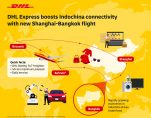
SINGAPORE – Media OutReach Newswire – 11 August 2026 – DHL Express has added a new direct flight between Shanghai and Bangkok, increasing capacity on a trade lane linking China and the rapidly growing economies of Indochina. The new flight route, Shanghai-Bangkok-Bahrain*-Brussels-Shanghai, significantly enhances connectivity among manufacturing, sourcing, and consumption markets across Asia, the Middle East, and Europe.

DHL Express boosts Indochina connectivity with new Shanghai-Bangkok flight

Operated by a DHL Boeing 767 freighter with a maximum payload of 50 tons, the new daily service demonstrates DHL Express’s ongoing investments in network capacity and infrastructure to strengthen connectivity for customers in high-growth markets. Equally, it also reflects DHL’s constant review of evolving trade patterns and swift action to adapt to those changes.

“This route is a direct response to how trade flows in Asia are shifting,” said Peter Bardens, Senior Vice President for Network Operations & Aviation – Asia Pacific, DHL Express. “We’re seeing increasing movement of goods between China and Southeast Asia, alongside continued demand from customers in Europe and the Middle East for products manufactured across the region. This new route boosts our network where customers need it most, providing additional capacity and more direct connections between key production and consumption markets.”

Bangkok serves as a strategic gateway to the Indochina region, while Bahrain and Brussels are key DHL Express hubs. The introduction of the Shanghai-Bangkok route enables DHL Express to efficiently consolidate shipments originating from China and Southeast Asia before connecting them to destinations across Europe and the Middle East.

The direct flight comes at a time when manufacturers and traders in markets such as Thailand, Vietnam, Cambodia and Laos are sourcing more from China. For many customers, those shipments are part of production chains that stretch across multiple countries. As trade links between China and Southeast Asia deepen, DHL Express is improving speed, flexibility and network resilience for customers moving materials, components and finished products across Asia and onward to global markets. Last month, DHL Express also expanded its Shenzhen gateway, located at Shenzhen Bao’an International Airport. The facility can handle 900 tons of cargo daily – approximately three times the original throughput – as it supports booming cross-border trade and e-commerce shipments in China.

At the same time, businesses in Europe and the Middle East continue to trade heavily with their peers in China and Southeast Asia for a wide range of products, from electronics and industrial components to consumer goods. As international business activity remains highly dispersed across global markets rather than concentrating within regions, the new route opens more trading opportunities for businesses while strengthening access for both regions.

As both intra-Asia and global trade flows continue to show resilience, DHL remains focused on investing in its dedicated air network. Another recent example includes the introduction of a new transpacific service by DHL Global Forwarding that connects Southeast Asia and the United States. These expansions seek to better connect businesses to global markets as well as build more agile supply chains.

*Note to editor: Due to the current conflict in Middle East, flights are tentatively diverted to other locations in the Middle East.
Hashtag: #DHLExpress #Globaltrade #Indochina


The issuer is solely responsible for the content of this announcement.

DHL – The logistics company for the world

DHL is the leading global brand in the logistics industry. Our DHL divisions offer an unrivaled portfolio of logistics services ranging from national and international parcel delivery, e-commerce shipping and fulfillment solutions, international express, road, air and ocean transport to industrial supply chain management. With approximately 389,000 employees in more than 220 countries and territories worldwide, DHL connects people and businesses securely and reliably, enabling global sustainable trade flows. With specialized solutions for growth markets and industries including technology, life sciences and healthcare, engineering, manufacturing & energy, auto-mobility and retail, DHL is decisively positioned as “The logistics company for the world”.

DHL is part of DHL Group. The Group generated revenues of approximately 82.9 billion euros in 2025. With sustainable business practices and a commitment to society and the environment, the Group makes a positive contribution to the world. DHL Group aims to achieve net-zero emissions logistics by 2050.

HAIKOU, CHINA – Media OutReach Newswire – 10 August 2026 – A delegation of journalists from nine major overseas media outlets, including the United States, France, Türkiye, Spain, and the Republic of Korea, recently visited China’s Hainan Province for an in-depth tour across multiple cities including Haikou, Wanning, Lingshui, and Sanya. The mission was to investigate the region’s marine cultural tourism, ecological conservation efforts, and innovative consumer models, and to witness firsthand the renewed dynamism of Hainan’s “ocean economy.”

Caption: Global Media Explore Hainan Free Trade Port, Unlocking the New Vitality of the "Ocean Economy"
Caption: Global Media Explore Hainan Free Trade Port, Unlocking the New Vitality of the “Ocean Economy”

As the first full year following the island-wide special customs operations of the Hainan Free Trade Port (FTP), 2026 has been designated the “Marine Tourism Year,” with a strategic focus on ocean-themed cultural travel. Leveraging policy dividends such as visa-free access for citizens of 86 countries, expanded traffic rights, and offshore duty-free shopping, Hainan has consistently enhanced its openness to the world, fueling a surge in cultural tourism demand. In the first half of this year alone, the island recorded over 1 million inbound visits, a year-on-year increase of 48.8%, underscoring the robust growth momentum of the FTP’s tourism sector.

In Wanning’s Riyue Bay, the international media group experienced firsthand the rapid expansion of Hainan’s coastal sports industry. Renowned as a world-class surfing destination, the bay receives more than 500,000 visits annually, drawing travelers from as far as Australia and Southeast Asia. A major highlight was the nation’s first Olympic-standard artificial surf pool, which employs advanced wave-making technology to simulate 23 different wave types, enabling year-round, all-weather surfing regardless of natural conditions. Mr. Guney Isik Ganimgil, a contributor to Turkey’s Aydınlık newspaper, remarked that Hainan’s cultural tourism development has far exceeded expectations and holds tremendous investment potential.

Eco-empowered tourism and the protection of blue bays are the defining hallmarks of Hainan’s development. The Hainan Ocean Paradise Resort adheres strictly to a policy against capturing wild marine life; its rescue center has successfully rehabilitated and released over 200 rare marine creatures, including sea turtles and hawksbills, back into the wild. Meanwhile, Wuzhizhou Island has pioneered an innovative model of eco-tourism, partnering with universities to develop a tropical marine ranch. Through the strategic deployment of artificial reefs and the transplantation of tens of thousands of coral colonies, the island now offers visitors the opportunity to participate in coral transplantation—a hands-on experience that fosters a virtuous cycle between ecological conservation and tourism engagement, earning high praise from the attending media.

Deepening the integration of culture and tourism has also revitalized Hainan’s traditional maritime heritage. The Danjia fishing rafts continue to enrich their authentic marine-ethnic cultural offerings, continuously diversifying their “product portfolio”. Tianya Town, built around a century-old fishing village, has evolved into a coastal leisure landmark, now home to nearly a hundred boutique homestays and specialty cafés. The Sanya International Duty-Free Shopping Complex, housing over 1,000 international brands, has introduced cutting-edge “duty-free + technology” consumption scenarios. And the Sanya Yacht Tourism Center, with a complete industrial chain, recorded over 220,000 yacht outings in 2025, cementing its status as a premier destination for high-end coastal tourism.

After four days of in-depth exploration, the media delegation witnessed a Hainan that is open, green, and vibrantly dynamic. Today’s Hainan FTP has transcended the traditional model of seaside tourism, with policy as its backbone, ecology as its canvas, and culture as its soul. By continually energizing the blue economy, Hainan is presenting a compelling new vision of high-quality development to the world.

Hashtag: #HainanFreeTradePort

The issuer is solely responsible for the content of this announcement.

Arabian Post Staff -Dubai Flowdesk has secured a full broker-dealer licence from Dubai’s Virtual Assets Regulatory Authority, allowing its local entity to provide regulated digital-asset services to qualified and institutional investors from the emirate. The authorisation for Flowdesk Omega FZE completes a regulatory process that moved from in-principle approval in June to full licensing in August. It gives the digital-asset trading and technology company an operating base […]

MARA Holdings sold about 23,093 bitcoin for $1.6 billion during the first half of 2026, marking a major reversal from the cryptocurrency miner’s earlier strategy of accumulating and retaining virtually all the bitcoin it produced. The figure, disclosed in the company’s quarterly regulatory filing, represents cumulative sales during the six months ended June 30 rather than a single transaction carried out on Monday. Social-media posts describing the […]

Elon Musk has predicted that Starlink connectivity will eventually become standard across cars worldwide, extending SpaceX’s satellite broadband ambitions into an automotive market increasingly dependent on permanent, high-bandwidth data links. “All cars will have Starlink in the future,” Musk said in a post on X, adding that satellite connectivity was the only practical way to deliver very high bandwidth to billions of vehicles. The statement sets out […]

Arabian Post Staff -Dubai Qatar’s inward foreign direct investment rose 3.3% in the first quarter of 2026 to QAR172.2 billion, while the country’s investments abroad climbed 3.5% to QAR221.7 billion, strengthening signs of expanding cross-border capital activity. The figures, covering January to March, show foreign investment positions increasing on both sides of Qatar’s balance sheet as Doha pursues a strategy of attracting international capital while expanding its […]

Taiwan’s cabinet is preparing to raise defence spending by about 16 per cent in 2027, pushing total security-related expenditure above NT$1 trillion for the first time as Taipei accelerates military modernisation amid sustained pressure from Beijing.

The proposed allocation is expected to exceed NT$1.1 trillion, or roughly US$34 billion, when broader defence-related spending is included. The package is due to be unveiled on August 20 and will cover the armed forces as well as expenditure linked to the coast guard, veterans and special military programmes.

The increase would maintain Taiwan’s defence expenditure above 3 per cent of gross domestic product, extending a shift towards substantially higher military budgets under President Lai Ching-te. Taipei has been expanding funding for weapons, ammunition, drones, missile systems, naval platforms and military infrastructure as China strengthens its forces across the Taiwan Strait.

Taiwan’s 2026 defence expenditure calculated under a broader methodology covering coast guard spending and military pensions stands at NT$949.5 billion, equivalent to about 3.32 per cent of GDP. The Ministry of National Defence’s own allocation is NT$806 billion, NT$161.1 billion higher than the previous year.

Lai has set a longer-term objective of raising defence expenditure to 5 per cent of GDP by 2030, arguing that Taiwan must demonstrate greater capacity to defend itself while adapting to China’s rapid military expansion. The policy also responds to pressure from Washington for Taipei to shoulder a larger share of the cost of deterring an attack.

The spending expansion comes as Taiwan conducts its annual Han Kuang exercises, which this year involve large-scale simulations of invasion, blockade, cyber disruption and attacks on critical infrastructure. About 20,000 reservists have been mobilised as the military tests decentralised command, communications under disrupted conditions and stronger integration between civilian agencies and the armed forces.

Taiwan is placing greater emphasis on asymmetric capabilities designed to make a cross-strait assault costly. Drones, mobile missile launchers, sea-denial weapons and dispersed command systems have become important elements of planning. Military exercises have also incorporated lessons from conflicts in Ukraine and the Middle East, where inexpensive unmanned systems have demonstrated their ability to damage far more costly military assets.

The island is developing its domestic defence industry alongside purchases from the United States. Projects include locally built submarines, missiles and unmanned systems, while American arms orders include F-16V fighters, HIMARS rocket launchers, torpedoes and stand-off weapons. Some deliveries have been delayed because of production and supply-chain constraints, although parts of the HIMARS programme have moved ahead of schedule.

Political approval remains an important hurdle. Taiwan’s opposition-controlled legislature has challenged parts of Lai’s military programme and previously reduced or delayed special defence spending proposed by the administration. Lawmakers in May approved additional defence expenditure worth about US$25 billion, substantially below the amount originally sought by the government.

Those disputes are likely to shape scrutiny of the 2027 proposal once the cabinet sends the wider government budget to parliament. The administration argues that higher expenditure is necessary because military preparedness requires long-term procurement, stockpiling and infrastructure investment rather than emergency spending after a crisis emerges.

China claims Taiwan as part of its territory and has not ruled out the use of force to bring the democratically governed island under its control. Taipei rejects Beijing’s sovereignty claim. Chinese aircraft, naval vessels and coast guard ships operate regularly around Taiwan, while Beijing has repeatedly staged major exercises intended to demonstrate its ability to surround or blockade the island.

Beijing has also continued expanding its own military budget. China announced a 7 per cent increase in defence expenditure for 2026, taking officially declared spending to about US$283 billion, leaving a wide financial and numerical gap between the People’s Liberation Army and Taiwan’s forces.

Arabian Post Staff -Dubai BJP Rajya Sabha MP Raghav Chadha met Prime Minister Narendra Modi on Saturday, describing their interaction as detailed and enriching as attention grows around his possible role in the party’s preparations for the Punjab Assembly election next year. ][1]) Chadha shared photographs of the 8 August meeting on social media and called it “a morning I will cherish”. He said he was grateful […]

VISHNU RAJA
RYO YAMADA
HITORI GOTOH
IKUYO KITA