A new study by Pearson and Amazon Web Services has sharpened concerns over whether universities are keeping pace with the demands of an AI-driven labour market, finding that 53% of employers say their main difficulty is hiring graduates with the right AI skills. The report, released on April 13, surveyed 2,711 learners, higher-education leaders and employers across the United States, the United Kingdom, Brazil, Saudi Arabia, Malaysia […]
DUBAI, UAE — Red Rock Technology FZ-LLC has entered into an exclusive strategic agreement with Innobotics, securing sole rights to deploy and commercialize its robotics and automation technologies across the GCC, Africa and India. The agreement establishes a cross-regional infrastructure layer combining AI governance, automation and physical deployment systems, positioning Red Rock as a primary integrator in markets where food security, supply chain resilience and technological sovereignty […]
Deutsche Börse has moved further into digital assets with a reported $200 million investment in Kraken’s parent, Payward, a deal that would give the German exchange operator a 1.5 per cent fully diluted stake and extend a partnership the two sides unveiled in December. The transaction, first reported by Bloomberg and subsequently echoed by Reuters, is said to be due to close in the second quarter, subject […]
Arabian Post Staff -Dubai Apple is testing four design directions for smart glasses as it weighs a more fashion-led push into wearable computing, with premium materials and a 2027 target emerging as central themes in the company’s plans to challenge Meta in a market that is moving from novelty towards a more serious consumer category. The designs under consideration are said to include two rectangular frames and […]
OpenAI has told users of its Mac software to update their applications after a third-party supply-chain incident touched the company’s app-signing workflow, prompting a wider effort to replace security certificates and tighten the process that proves its desktop software is authentic. The company said there is no evidence that user data was accessed, that passwords or API keys were exposed, or that its systems, intellectual property or […]
Booking.com has confirmed that hackers accessed customer booking information, exposing names, email addresses, phone numbers and reservation details in a security incident that has triggered fresh concern over how much personal travel data is concentrated on large online platforms. The company said it moved to contain the issue, reset reservation PINs for affected bookings and contacted impacted guests directly. It has not disclosed how many customers were […]
BEIJING, CHINA – Media OutReach Newswire – 14 April 2026 – The 2026 Beijing E-Town Half-Marathon and Humanoid Robot Half-Marathon is scheduled to kick off on April 19. To ensure better preparation for the event, the Beijing Economic-Technological Development Area (BDA), also known as Beijing E-Town, organized a full-process, all-element test run for the 2026 Humanoid Robot Half-Marathon from the night of April 11 to the early hours of April 12. The drill comprehensively simulated core scenarios such as track passage, process scheduling, equipment coordination, and emergency support, serving as a combat-ready exercise to safeguard the official race. Of the registered teams, more than 70 participated in this test, including four international teams, with both autonomous navigation and remote-controlled teams conducting night trials on the course together.
From the night of April 11 to the early hours of April 12, the full-process, all-element test event for the 2026 Beijing E-Town Humanoid Robot Half-Marathon was held in Beijing E-Town. Pictured is a robot running during the test.
As the world’s first humanoid robot marathon event brand, this competition has reached new heights in terms of scale, technological innovation, and organizational requirements. Therefore, the drill was conducted to drive a further upgrade in the quality of event preparations.
In terms of scale, the number of participating teams for this year has grown by nearly five times compared to last year, exceeding 100 teams. Covering two major categories—autonomous navigation and remote control—with autonomous teams accounting for nearly 40%, the number of participants, types of technology, and scope of testing have all reached historic highs. Consequently, full-process drills are required to solidify operational links, hone team coordination, and ensure the efficient operation of the event.
Regarding technological innovation, the first large-scale application of autonomous navigation technology has become a major highlight and challenge. In complex and changing environments, robots face difficulties in perceiving and making decisions within intricate surroundings, posing huge challenges to their computing power. At the same time, long-distance running places severe tests on the robots’ endurance, specifically examining their long-range stamina and energy management capabilities. Furthermore, dynamic balance and gait control capabilities are put to the test; robots must maintain dynamic balance at all times. Especially during high-speed running or sharp turns, the requirements for adaptive gait and millisecond-level posture correction are extremely high to prevent falls caused by shifts in the center of gravity.
In terms of regulations, this year’s event has also seen systematic upgrades in five areas: stricter rules on human intervention, more scientific start and movement protocols, clearer scoring and penalty criteria, more standardized supply and equipment management, and tighter safety and emergency procedures.
Facing these numerous challenges, the main purpose of this full-process, all-element test is to conduct technical validation, process refinement, risk prevention, and standard consolidation, ensuring the official race proceeds safely, smoothly, efficiently, and in an orderly manner. This drill, adhering to the standards of “full-process, all-scenarios, and all-elements,” followed the complete official race route of 21.0975 kilometers for the first time. It followed official race timelines, track rules, and support systems, covering two categories of teams (autonomous and remote-controlled), two types of scenarios (urban main roads and eco-parks), and two major segments (technical competition and service support). Through full-chain stress testing, the organizers carried out targeted breakthrough verifications to precisely identify potential issues and optimize procedural details.
The entire event involves a full chain of operations including start-line assembly, track control, battery swapping and resupply, finish-line diversion, emergency containment, vehicle dispatch, timing and judging, and security and medical services. All these must undergo practical drills to identify risks, optimize movement lines, and unify standards. This test comprehensively inspects the stability and reliability of humanoid robot technology, laying a solid foundation for the successful hosting of the official event.
During this test, team positioning was strictly verified and orderly arranged based on technical data submitted by each team, ensuring the process was open, standardized, fair, and orderly. As a realistic pre-race simulation drill, the test focused on process refinement, problem identification, and detail optimization. Test results were for reference only and did not count towards official rankings or race results. At the same time, speed performance and operational data of the teams during the test were within the scope of verification and do not represent their level in the official competition.
Currently, the short-distance speed of robots has improved significantly, and some teams predict that their half-marathon results may approach the level of elite human athletes. As a competition that serves as an extreme test of comprehensive performance and adaptability to complex terrain, the final results are worth looking forward to. On April 19, this human-robot co-running half-marathon will officially kick off, providing more impetus for the development of the robotics industry and accelerating the transition of humanoid robots from the laboratory to real-world applications.
China’s export growth lost momentum sharply in March, offering the clearest sign yet that the war centred on Iran is beginning to weigh on the world’s second-largest economy through higher energy costs, disrupted shipping patterns and weaker overseas demand. Official trade data showed exports rose 2.5 per cent from a year earlier, far below market expectations and down from the 21.8 per cent jump recorded in the combined January-February period.
The slowdown matters because overseas sales have been doing much of the heavy lifting for China while the property downturn and soft household spending continue to restrain growth at home. Economists surveyed by Reuters expect the economy to have expanded 4.8 per cent in the first quarter, up from 4.5 per cent in the previous three months, but they also see the outlook dimming as the Middle East conflict pushes up input costs and clouds demand in key markets.
March’s figures suggest that what had looked like a strong start to the year is becoming harder to sustain. Earlier gains had been supported by front-loaded shipments, strong demand for artificial intelligence-linked electronics and a rebound in some advanced manufacturing exports. That mix is now facing a harsher external backdrop. The conflict involving Iran has disturbed energy markets, with the Strait of Hormuz under severe strain and oil prices climbing towards the $100 a barrel mark, a level that raises transport, production and logistics costs across Asia and Europe.
Imports into China, by contrast, jumped 27.8 per cent in March, the strongest increase since late 2021. Part of that rise reflected demand tied to semiconductors, components and technology supply chains, but it also pointed to stockpiling and shifting trade flows as businesses prepared for a more volatile energy and freight environment. The divergence between softer export growth and surging imports may complicate Beijing’s effort to keep its large trade surplus intact through 2026.
Pressure from the Iran conflict is being transmitted through more than one channel. China remains heavily exposed to imported energy, and although it has reserves and a diversified supply base, higher crude and gas costs squeeze manufacturers’ margins and can erode the price competitiveness that has underpinned the country’s export machine. Reuters reported that March also brought the first rise in factory-gate prices in more than three years, indicating that cost pressures are building just as external demand becomes less predictable.
There are also direct trade effects. Reuters reported that crude and natural gas imports fell as the regional conflict disrupted flows. OPEC, in its first formal assessment of the war’s economic effect, cut its forecast for second-quarter global oil demand by 500,000 barrels a day, saying the conflict had become a meaningful drag on consumption and trade. For export-oriented economies such as China, that points to a tougher environment in which customers abroad may curb discretionary spending while producers face steeper energy bills.
Yet the picture is not uniformly bleak. China’s technology and clean-energy manufacturers still have areas of strength that could cushion the blow. Overseas demand for electric vehicles, batteries and solar equipment has been supported by the same oil shock that is hurting traditional exporters. Associated Press reported that Chinese new-energy vehicle exports continued to surge in March, while another AP analysis said the energy crisis was sharpening global interest in Chinese clean-tech supply chains. Those sectors are unlikely to offset every weakness, but they do show that the country’s export story is becoming more uneven rather than simply weaker across the board.
That unevenness is visible across product categories. Lower-value consumer goods such as clothing, furniture and other labour-intensive shipments were hit by seasonal factors and softer foreign demand, while higher-end electrical and AI-linked exports remained more resilient. South Korea’s sharp rise in exports to China, driven by chip demand, underlined the point that advanced technology supply chains are still expanding even as broader goods trade loses pace.
Beijing now faces a familiar policy dilemma made more acute by war. It wants to preserve growth without adding excessive leverage, support exporters without worsening trade tensions, and stabilise domestic demand while avoiding another debt-fuelled property cycle. Current forecasts still place full-year growth within the official 4.5 to 5 per cent target range, but many analysts now expect a weaker second quarter than they did before the Iran crisis deepened. Fiscal support, bond issuance and selective easing remain on the table, though officials appear cautious about deploying a large stimulus immediately.
Greenlogue/AP QatarEnergy has announced a hydrocarbon discovery offshore the Republic of Congo, adding fresh momentum to its international upstream drive and strengthening the case for further low-cost development around existing West African production hubs. The find was made at the MHNM-6 NFW exploration well in the Moho G structure under the Moho offshore exploration and production licence. The well encountered a hydrocarbon column of about 160 metres […]
Arabian Post Staff -Dubai Dubai’s Department of Economy and Tourism has signed a strategic agreement with HSBC Bank Middle East Limited aimed at drawing more multinational companies, institutional investors and high-net-worth individuals to the emirate, in a move that fits Dubai’s wider push to deepen capital inflows and strengthen its standing as a global business centre. The agreement was announced on April 13 and positions HSBC’s regional […]
Arabian Post Staff -Dubai Al Ansari Exchange has expanded its partnership with Etihad Credit Bureau, enabling individuals to obtain official credit reports through more than 285 branches across the UAE in a move that broadens physical access to personal financial data and underlines a wider push towards transparency in consumer finance. The service marks an extension of a relationship that had already covered corporate credit reports, and […]
Microsoft has lifted prices across its Surface hardware range, making its premium laptops and tablets significantly more expensive as a global memory shortage ripples through the personal-computer market and forces manufacturers to pass higher component costs on to buyers. The move places Microsoft alongside other device makers that have warned of steeper bills for DRAM and NAND components, with the pressure tied largely to booming demand from […]
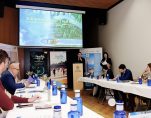
MADRID, SPAIN – Media OutReach Newswire – 14 April 2026 – Recently, the Department of Tourism, Culture, Radio, Television and Sports of Hainan Province, China, hosted a Hainan tourism promotion seminar for the local cultural and tourism industry at the China Cultural Center in Madrid. This event aimed to further advance cultural and tourism exchanges and cooperation between Hainan and Spain.
Hainan tourism promotion seminar held in Madrid, Spain.
Attendees included Yang Changqing, Director of the China Cultural Center in Madrid; Aranzazu Urbina Álvarez, Deputy Director for Sustainability and Tourism Development, Community of Madrid; and representatives from over 30 local cultural and tourism enterprises, travel agencies, and industry associations. Together, they conducted in-depth discussions on bilateral cooperation in culture and tourism. Local travel agencies, cultural and tourism companies, and industry association representatives in Madrid showed strong interest in Hainan’s tourism resources and engaged in extensive exchanges with the Hainan delegation, injecting new vitality into the future coordinated development of cultural tourism between the two regions.
Yang Changqing noted that the seminar provides Spanish travel operators with a window to deeply understand the latest developments in China’s inbound tourism market. She expressed China’s hope to enhance cooperation with Spanish cultural and tourism professionals, aiming for more concrete outcomes in joint tourism product development and two-way visitor exchanges, thereby elevating bilateral cultural and tourism cooperation to a new height.
Aranzazu Urbina Álvarez remarked that the event has created a valuable platform for dialogue between China and Spain, enabling both sides to share insights on core issues such as sustainable tourism development. She expressed her anticipation of visiting Hainan in the future to tour the local tourism sector and pinpoint cooperation opportunities that capitalize on the complementary strengths of the two sides.
Over the past year, cultural and tourism exchanges between Hainan and Madrid have seen remarkable progress. Hainan’s Food Week event in Madrid allowed European audiences to experience the unique charm of this Chinese tropical island firsthand. This year, Hainan officially set up a tourism promotion office in Madrid, which will further open channels for cultural and tourism enterprises from both sides to connect, boosting tourism promotion and cooperation on the ground.
Wang Yuechuan, Director of the International and Hong Kong, Macao, Taiwan Market Promotion Division of the Department of Tourism, Culture, Radio, Television and Sports of Hainan Province, stated that the Hainan Free Trade Port is actively working to launch a direct flight route from Madrid to Haikou. At the same time, it is continuously improving infrastructure, such as international payment systems and multilingual services, to offer European tourists a more convenient vacation experience.
Hashtag: #HainanTourism
The issuer is solely responsible for the content of this announcement.
China’s President Xi Jinping used talks in Beijing with Spain’s Prime Minister Pedro Sánchez on Tuesday to press for closer ties with Madrid, casting Spain as a useful partner at a time of what he described as a “crumbling” international order. The meeting placed Spain at the centre of China’s broader effort to keep channels open with Europe as trade frictions, security tensions and strategic rivalry with Washington continue to reshape diplomacy.
Sánchez, on his fourth trip to China in four years, arrived with a message that mixed engagement with caution. On the eve of meeting Xi, he told an audience at Tsinghua University that China should assume a larger role in tackling climate change, inequality, global health, responsible artificial intelligence and major conflicts, while also arguing that Europe must step up as the United States pulls back from several fronts. That language reflected Madrid’s attempt to deepen economic relations with Beijing without ignoring the strategic unease that still colours China’s ties with much of the West.
For Xi, Spain offers a politically valuable counterpart inside the European Union. Beijing has been looking for reliable European interlocutors as Brussels tries to defend industrial interests, scrutinise state-backed Chinese investment and manage disputes over electric vehicles and market access. Spain has often sounded less confrontational than some other European capitals. Sánchez has previously urged compromise over tariffs on Chinese-made electric vehicles and has continued to frame China as a strategic partner rather than only a rival. That posture does not place Madrid outside the EU mainstream, but it does make Spain one of the more open major economies for Chinese diplomacy.
Trade remains the hardest fact beneath the warmer language. Sánchez acknowledged in Beijing that China accounts for 74 per cent of Spain’s overall trade deficit, and Reuters reported that Spain’s deficit with China approached $50 billion in 2025 after more than doubling over four years. Madrid wants better access for agricultural and manufactured exports while preserving inward investment that could help its green transition and industrial base. Chinese capital has already been tied to projects in batteries, hydrogen and manufacturing in Spain, underlining why the government sees practical gains in staying engaged even as the imbalance in trade grows harder to ignore.
That commercial logic is colliding with a tougher geopolitical climate. Sánchez’s visit has drawn scrutiny because it comes as China seeks stronger European ties during a period of strain with Washington. Reuters reported before the trip that Sánchez’s independent line on China had already irritated U. S. President Donald Trump, while Spain also rejected sharp U. S. criticism of moves to expand trade with Beijing. Chinese officials, for their part, signalled before the visit that they wanted to use it to deepen strategic trust, cooperation and multilateral coordination. The result is a diplomatic balancing act in which Madrid is trying to protect its autonomy, retain access to both superpowers and avoid being forced into a binary choice.
The political symbolism runs beyond bilateral ties. Sánchez’s stop in Beijing follows a succession of other European leaders visiting China this year, suggesting that even governments wary of Beijing’s security posture and industrial policies still see a need for direct dialogue. China is encouraging that trend, presenting stable relations with Europe as proof that it is not isolated despite mounting tension elsewhere. Spain’s government has echoed part of that argument, with Sánchez saying in Beijing that Europe and China had prospered together before and could do so again. That sentiment fits neatly with Xi’s effort to frame China as a pillar of order against a backdrop of war, protectionism and institutional drift.
MSBuild, a legitimate Microsoft build tool embedded in many Windows and developer environments, is drawing renewed scrutiny after fresh threat research showed how attackers are using it to run malicious code in memory, evade signature-based defences and blend into normal system activity. Security researchers and defenders say the technique is not new, but its continued effectiveness underlines how cyber intrusions are shifting away from obvious malware files […]
Federal investigators in the United States, working with Indonesian police, have dismantled the W3LL phishing network, a cybercrime operation that authorities say enabled the theft of thousands of account credentials and supported more than $20 million in attempted fraud. The action, led by the FBI’s Atlanta field office, included the seizure of infrastructure linked to the service and the detention in Indonesia of an alleged developer identified […]
Singapore’s crowded digital marketing sector has gained a new entrant after SEOExpert said it was launching with proprietary artificial intelligence tools and a results-only commercial pitch aimed at small and medium-sized enterprises, stepping into a market where agencies are increasingly selling automation, search visibility and measurable returns as core differentiators.
The company, which appears to have been incorporated in Singapore in March 2026 as SEOEXPERT PTE. LTD., is presenting itself as a performance-driven agency focused on SEO, paid advertising and social media marketing. Its public-facing claims centre on AI-assisted content publishing, competitor monitoring, campaign optimisation and lead qualification, alongside a “no long-term contracts” offer and a promise to be judged on outcomes rather than retainers alone. That message lands at a time when many smaller businesses are under pressure to justify every marketing dollar and are increasingly wary of vague promises around rankings and traffic.
The broader backdrop helps explain why such positioning may resonate. Singapore’s digital economy accounted for 18.6 per cent of gross domestic product in 2024, up from 14.9 per cent in 2019, according to the Infocomm Media Development Authority, while SME adoption of AI more than tripled in one year to 14.5 per cent in 2024. That expansion has widened the addressable market for agencies promising to help firms compete online, but it has also sharpened scrutiny of whether AI-branded services genuinely improve sales, lead quality and discoverability or merely repackage familiar tactics with new language.
SEOExpert is entering a field where established players already market many of the same ideas. Rival agencies in Singapore promote AI-assisted SEO, performance pricing, flexible contracts and proof-of-results case studies, while independent directories and agency marketplaces show a busy, fragmented sector serving everything from small retailers to larger regional brands. That means the newcomer is not inventing a category so much as trying to sharpen a proposition around trust, transparency and speed of execution. The challenge will be whether it can demonstrate that its systems produce durable gains rather than short bursts of visibility.
For SMEs, the appeal of a results-linked arrangement is obvious. Search marketing has long suffered from an information imbalance: agencies control the technical work, clients often lack the tools to assess quality, and outcomes can depend on shifting search algorithms, website health, content quality and competition in a given niche. In that environment, a promise that reduces fixed commitment can sound attractive, particularly for businesses that have previously paid monthly retainers without a clear link to revenue. Yet such offers also deserve careful reading. “Results” can mean rankings, clicks, leads or sales, and those metrics do not carry equal commercial value. A company can rise in search results without converting more customers.
The AI element also cuts both ways. Automation can help agencies monitor competitors, scale content operations and identify technical issues faster, which may lower delivery costs and shorten turnaround times. At the same time, search platforms and clients alike are becoming more alert to thin, repetitive or mechanically generated material. That raises the bar for agencies claiming proprietary tools. The real test is not whether software is involved, but whether the work improves relevance, authority and user experience in a way that survives algorithm changes and stricter expectations from search engines and AI-driven discovery platforms.
Another factor is credibility. Public records indicate the company is newly formed, which is not unusual for a startup agency but does mean prospective clients will have limited operating history to assess. Its website advertises more than 100 brands served and showcases commercial claims around measurable growth, though such statements are difficult to independently verify from public information alone. For buyers in Singapore’s SME segment, that typically shifts due diligence towards contract terms, reporting standards, client references, attribution methods and whether performance targets are clearly defined before money changes hands.
Washington has moved from threats to enforcement, with the U. S. military beginning a blockade on shipping to and from Iranian ports across the Gulf, the Gulf of Oman and the Arabian Sea, in a step that sharply raises the risk of a broader regional conflict even as a temporary ceasefire remains in place. U. S. Central Command said the restrictions took effect on Monday morning U. […]
Cisco is closing in on a deal to buy Astrix Security for as much as $350 million, according to multiple reports, in a sign that one of the world’s largest networking and security groups is moving faster to secure the fast-growing risks created by AI agents and other non-human identities inside large organisations. The talks, first reported on April 10, value the Israeli startup at roughly three […]
KK Éclat, a France-founded luxury skincare label with Hong Kong ties, has staged an invitation-only gala in Central after its UV and Pollution Blocker Cream won “Best Everyday Sunscreen” at the 2026 Vogue Hong Kong Beauty Awards, giving the brand a fresh marketing lift in an increasingly crowded premium sun-care market. Vogue Hong Kong’s awards coverage lists the product among this year’s winners, while the company said the celebration was held in March at The Pin, a private club in Central.
The company said more than 30 guests attended the dinner, including business figures, tastemakers and industry personalities, as founders Karen and Katherine used the event to underline the brand’s positioning at the intersection of prestige beauty and science-led formulation. The award matters because it comes from a high-visibility fashion and beauty title in Hong Kong, where premium skincare remains a strong draw and brand differentiation is increasingly tied to product efficacy claims, texture, convenience and visible daily-use appeal.
Vogue Hong Kong published a dedicated winners’ article on 22 March naming KK Éclat’s UV and Pollution Blocker Cream as the new “Best Everyday Sunscreen”, and a broader recap of the 2026 awards ceremony on 19 March also listed the same product in that category. That dual confirmation helps anchor the company’s claim to a recognised editorial accolade rather than a self-created brand distinction.
KK Éclat has built much of its identity around what it calls Nano Frame Technology, which the brand says helps active ingredients disperse evenly, remain on the skin surface where needed and deliver hydration over an extended period. On its website, the company presents itself as a science-backed luxury line designed for consumers with irregular routines, frequent travel and high exposure to urban stress. The product page and brand materials place the sunscreen within a broader narrative of multifunctional skincare that promises protection, hydration and cosmetic elegance in a single formula.
That pitch aligns with a wider industry shift. Market researchers tracking sun-care cosmetics say Asia-Pacific is one of the strongest growth regions for the category, with demand increasingly favouring SPF products that merge protection with skincare benefits and easy everyday wear. Industry analysis has also pointed to a move toward lighter, less visible formulas and premium products that can slot into daily beauty routines rather than sit apart from them as purely functional beachwear items.
KK Éclat’s own messaging leans heavily on a long-running debate in sunscreen formulation. Founder Katherine, speaking in the company-issued announcement, contrasted the white cast often associated with mineral blockers with continuing consumer questions around the absorption of some chemical filters. That is a commercially potent argument, though one that requires careful reading. US regulators and medical literature have indeed examined systemic absorption of certain sunscreen ingredients, but dermatology guidance continues to stress that sunscreen use remains essential and that both mineral and chemical formats can play an important role depending on skin type, tolerance and formulation.
For KK Éclat, the commercial challenge now is scale and credibility. Awards can accelerate awareness, especially for younger labels, but the premium skincare segment is unforgiving and crowded with multinational incumbents, heritage luxury houses and a fast-growing pipeline of boutique science-led brands. Vogue Hong Kong’s 2026 awards list itself illustrates that competitive backdrop, with winners spanning names such as Chanel, Dior, La Mer, Clé de Peau Beauté and SkinCeuticals alongside smaller players.
GitHub and Jira notification emails are being hijacked by threat actors who have found a way to turn trusted software alerts into convincing phishing lures, using the platforms’ own mail systems to slip past many of the checks that companies rely on to stop malicious messages. Security researchers say the tactic marks a notable shift in email abuse because the messages are not crudely spoofed copies […]
Mirax, an emerging Android banking trojan being marketed as a malware-as-a-service operation, is drawing attention from mobile security researchers after reports that it can do more than steal banking credentials. Analysts say the malware can remotely control infected phones and repurpose them as residential proxy nodes, giving cybercriminals a way to hide malicious traffic behind ordinary consumer devices while pursuing financial fraud across Europe. The threat stands […]
Dubai still delivers, even in the shadow of war. I’ve just arrived back in the city where we have our headquarters and several core offices, and what strikes me immediately is not disruption, but continuity. The US-Iran conflict has injected real tension into the region, with the Strait of Hormuz under pressure and the wider Middle East adjusting to a far more uncertain backdrop. Yet here in […]
The UAE Ministry of Education has moved to stamp out social media claims that distance learning will be extended until 1 May, saying no such decision has been issued and that the existing nationwide schedule remains unchanged. For now, remote classes continue until Friday, 17 April, across nurseries, kindergartens and public and private schools, with officials insisting that any further decision will be announced only through verified […]