Elon Musk’s X is preparing to launch XChat as a standalone messaging app for iPhone and iPad on 17 April, turning what had been a feature inside the social platform into a separate product aimed at users seeking private, app-first communication. Apple’s App Store listing identifies X Corp. as the developer, describes the service as fully end-to-end encrypted, and says it is built as a focused space […]
SINGAPORE – Media OutReach Newswire – 10 April 2026 – Modern beauty has a new enemy, and it’s right in our hands: the mobile phone. Endless scrolling keeps us hooked, but it also keeps our heads down. With content so addictive, one ends up spending hours slouching. So, all that main character power and energy vanish—replaced by slumping and hunching. Over time, posture slips, presence shrinks, and bold beauty follows. “Text neck” isn’t just a physical issue; it’s quietly changing how we carry ourselves.
LUX, the iconic global beauty brand, knows true radiance is about how you show up. That effortless “it girl” energy starts with posture. That’s why the brand is launching LUX Chin Up—a digital tool designed to tackle “Text Neck” and help women keep their heads high and their bold beauty even higher. It’s the perfect modern solution for the modern beauty problem.
“LUX always inspires women to boost their presence and own their beauty power,” said Gaurav Datta, Global Brand VP. “Our phones are amazing for self-expression, but there’s a catch. While they elevate our digital selves, they often shrink our real-world presence. That constant downward scroll quietly chips away at posture, poise, and bold beauty. With ‘Chin Up,’ we’re offering a simple way for women to realign, lift up, and step back into their power.”
LUX has a brilliantly simple, tech-forward solution. Forget complicated downloads or wearable tech. LUX Chin Up is a smart web page that taps into your phone’s own motion sensors. When used with the split-screen option, it stays on screen as a small tab, reminding you of the right angle to be maintained while you doomscroll.
The Sweet Spot: The tool encourages you to keep your screen at an optimal 90-degree angle.
The Gentle Nudge: If you start to slouch and the angle drops (and with it your head), the sensor detects it and the screen blinks, prompting you to raise your phone and go chin up.
The Reset: Straighten up, bring your phone back up and carry on scrolling with boldness.
LUX believes this can be an essential modern-day beauty ritual that extends beyond the shower to solve a modern-day problem. By habituating women to hold the right posture, LUX is naturally lifting their chins, opening their posture, and instantly restoring that vibrant, room-commanding presence. It’s a small shift that brings Main Character Beauty to life, on screen and off.
Make LUX Chin Up a habit, try it for a week and improve your posture. Visit lux.com/chinup
Hashtag: #LUXChinUp #LUX
The issuer is solely responsible for the content of this announcement.
About LUX
LUX has been celebrating beauty and femininity since 1925. We uphold beauty that doesn’t blend in. It’s bold, sassy, maximalist. We will continue to support efforts that will help women best express their Main Character Beauty.
About VML
VML is a leading creative company that combines brand experience, customer experience, and commerce, to create connected brands that drive growth. The agency is a leading global marketing and systems integration partner, specializing in creating innovative solutions for business transformation. VML is celebrated for its award-winning work with blue chip client partners including AstraZeneca, Colgate-Palmolive, Dell, Ford, Intel, Microsoft, Nestlé, The Coca-Cola Company, and Wendy’s. The agency is recognized by the Forrester Wave™ Reports, which name WPP a “Leader” in Commerce Services, Global Digital Experience Services, Global Marketing Services and, most recently, Marketing Measurement & Optimization. VML’s global network is powered by 28,000 talented people across 60-plus markets, with principal offices in Kansas City, New York, Detroit, London, São Paulo, Shanghai, Singapore, and Sydney.
HONG KONG SAR – Media OutReach Newswire – 13 April 2026 – The Hong Kong Trade Development Council (HKTDC) will unite the global lifestyle industry with its seven lifestyle and licensing events from 27 to 30 April 2026. Encompassing gifts, houseware, fashion, printing, packaging, and licensing, these events offer buyers a streamlined and cross-sector sourcing journey. The Hong Kong Gifts & Premium Fair and Home InStyle will be hosted at the Hong Kong Convention and Exhibition Centre, where exhibitors will showcase curated international collection, enabling efficient and diverse sourcing across key lifestyle categories in one central location.
Connecting global suppliers and buyers with trending lifestyle products and innovative ideas.
In 2026, the Hong Kong Gifts & Premium Fair will spotlight four key focuses – personalisation, sustainability, health & wellness, and culture & creativity – guiding buyers to discover products that reflect the latest market trends and consumer preferences.
The fair will once again feature the highly acclaimed Hall of Fine Designs, a convergence point of reputed brands. First time exhibitors include Alpha Art Gifts LLC (United Arab Emirates), known for its unique and high-quality gift solutions; Crown Decor Pvt Ltd (India), a leading manufacturer for premium laminates. And the distinguished Hong Kong brands Camel and RedA will continue showcase their products at the fair. In addition, the Shanxi Pavilion will make its debut at the Hong Kong Gifts & Premium Fair 2026. This year, the Zhejiang Pavilion, for the first time led by the Department of Commerce of Zhejiang Province, will bring a large number of exhibitors. Meanwhile, the Korea Pavilion and Busan Pavilion will return with even greater presence.
Furthermore, the Hong Kong Exporters’ Association will assemble Hong Kong companies to form a pavilion, showcasing the design skills and branding excellence of Hong Kong’s product designers. The Smart Design Global, organised by Hong Kong Exporters’ Association, will also showcase shortlisted entries and signature products from its participating companies at the Gifts & Premium Fair, leveraging the fair as a platform to promote Hong Kong original designs to international markets.
Running concurrently, Home InStyle will focus on new materials, culture & creativity, and gerontechnology for silver‑age living, aligning with emerging lifestyle and consumer trends. The fair completes the sourcing journey by fostering meaningful connections and spark fresh inspiration across the design and lifestyle community.
A key highlight remains the signature Cultural and Creative Avenue, which will showcase distinguished designs from around the world and welcome international brands that blend unique design concepts with cultural heritage. The fair’s collaboration with Pantone will be elevated, with the Colour of the Year 2026 “Cloud Dancer” prominently featured in this zone. Through trend-focused displays and real-life applications, visitors will see the colour brought to life, helping buyers and exhibitors visualise its use in contemporary home and lifestyle products.
Furthermore, funded by the Innovation and Technology Commission, Home InStyle will launch the Gerontech and Innovative Material Pavilion, where nearly 20 local enterprises will present a wide range of innovative technology products and solutions designed for senior living, while highlighting the application of new materials in home spaces.
“Adding to the fair’s design-led highlights, the 2nd MOTIFX – Embracing the Beauty of Chinese Culture exhibition, organised by the Hong Kong Design Institute (HKDI) under the Vocational Training Council (VTC) and sponsored by the Cultural and Creative Industries Development Agency (CCIDA), invites emerging designers to reinterpret traditional Chinese elements for contemporary contexts. The project seamlessly integrating historical components into modern objects, interiors, and lifestyle products while deepening new generations’ engagement with their cultural heritage.”
Home InStyle will also host a selection of international brands known for their craftsmanship and creativity. Highlights include vibrant hand-blown Bohemian glassware, handmade baskets and bags woven from wild grapevines alongside classic bamboo steamers, and licensed DC Comics illuminated signs.
Throughout the fairs, a series of seminars and forums will bring together leading industry experts to share forward-looking insights on key trends and future developments, from creative thinking and the silver economy to sustainability and beyond. These sessions are crafted to foster meaningful dialogue and equip attendees with the latest market intelligence. As a comprehensive one-stop sourcing platform, the fairs unlock exciting business opportunities and deliver a diverse, world-class selection of lifestyle products and services tailored to every buyer’s needs.
Digital platform creates efficient exhibition experience Under the EXHIBITION+ model, the fairs integrate offline and online elements. Buyers can continue searching for products and services on the hktdc.com Sourcing platform and network through the Click2Match smart business-matching platform. During the physical fair, buyers can use the Scan2Match function of the HKTDC Marketplace App to scan exhibitors’ exclusive QR codes, bookmark favourite suppliers, browse product information and continue discussions with exhibitors online during or after the show.
Japan will release an additional 20 days’ worth of oil reserves from May as Tokyo tries to shield domestic fuel supplies from continued disruption in the Middle East and reduce its exposure to shipments that pass through the Strait of Hormuz. Prime Minister Sanae Takaichi told a cabinet meeting on April 10 that the move would come from the public stockpile, adding to emergency releases already under way since mid-March.
The decision marks a further escalation in Japan’s energy contingency response at a time when the Strait of Hormuz remains under severe strain despite a two-week ceasefire between the United States and Iran. The waterway is one of the world’s most important oil chokepoints, and its disruption has hit Japan especially hard because the country depends on the Middle East for about 95% of its oil imports. Takaichi’s government has been racing to prevent shortages, stabilise prices and reassure refiners, transport operators and households that fuel will continue to flow.
Tokyo had already moved ahead on March 16 with the release of reserves equivalent to 50 days of consumption, combining privately held stocks with state reserves and supplies jointly held with producing nations. That initial step was announced before a formal coordinated action by the International Energy Agency, underscoring the urgency felt by Japanese officials as tanker traffic through Hormuz became severely constrained. The new plan adds another layer of insurance rather than replacing the earlier programme, signalling that authorities believe the market shock may last longer than first expected.
Officials say Japan still has considerable room to act. As of April 7, the country held reserves covering 228 days, including 143 days in the public stockpile. That buffer gives policymakers flexibility, but it also reflects the scale of the threat they see. Refiners have already been forced to adjust operations as crude availability tightens, and the government is attempting to manage not only total supply but also how fuel is distributed across the country. Concerns have centred on keeping essential sectors supplied first, particularly healthcare, transport, agriculture, fisheries and livestock production.
Japan’s strategy goes beyond drawing down reserves. Takaichi said the government expects that by May more than half of oil imports will be secured through routes that do not involve the Strait of Hormuz. That shift is central to Tokyo’s effort to avoid becoming hostage to a single maritime corridor while conflict risk remains elevated. Officials have not identified every supplier publicly, but the Ministry of Economy, Trade and Industry has indicated that Japan is seeking alternative barrels from a wide range of countries, including Malaysia, Azerbaijan, Brazil, Nigeria and Angola.
The United States is set to play a larger role in that reshaping of supply. A ministry document cited by Reuters said oil imports from the US in May would be four times higher than a year earlier. Japan imported about 189,000 barrels a day from the US in May last year, equal to roughly 8% of total crude purchases for that month. Tokyo is also drawing on Middle East supplies that can bypass Hormuz, including shipments from Saudi Arabia’s Red Sea outlet at Yanbu and from Fujairah in the United Arab Emirates. Those routes do not eliminate vulnerability, but they reduce reliance on the narrow strait at the centre of the crisis.
Domestic politics and inflation pressures are also shaping the response. Takaichi has paired the reserve releases with fuel price measures meant to keep retail gasoline around a nationwide average of ¥170 a litre, even if crude prices remain elevated. Officials have warned that a prolonged supply shock could otherwise push pump prices much higher and strain households as well as businesses already dealing with cost pressures. Finance Minister Satsuki Katayama has also flagged the fiscal burden of existing subsidy measures, suggesting that energy security is becoming not only a supply issue but a budgetary one.
Arabian Post Staff -Dubai Saudi Arabia has restored full pumping capacity on its East-West pipeline to about seven million barrels a day, reactivating a strategic export artery that has become central to global crude flows during the disruption of shipping through the Strait of Hormuz. The Ministry of Energy said operational and technical teams brought the line back to full strength within days of attacks that had […]
DIAFA, the Abu Dhabi-based luxury hospitality investment platform affiliated with IHC Group, has completed a majority investment in Richard Caring’s hospitality portfolio in a deal described as ten-figure, placing a value of at least £1 billion on a collection of some of London’s best-known restaurants and private members’ clubs. The transaction brings The Ivy Brasseries, Caprice Holdings and The Birley Clubs under DIAFA’s control, while Richard Caring […]
Amazon has drawn a hard line under Amazon Luna’s experiment with digital game sales, ending the purchase of standalone titles on the cloud platform and stripping out third-party store access and subscriptions as it pushes the service towards a fully subscription-led model. The change took effect on April 10, with Amazon saying users will no longer be able to buy individual games through Luna or sign up […]
Arabian Post Staff -Dubai University of Sharjah has opened a conference on intellectual security and social media, placing the debate over online influence, youth vulnerability and responsible digital engagement at the centre of its academic agenda as governments, universities and religious scholars grapple with the speed at which harmful narratives can spread online. The event, organised by the College of Sharia and Islamic Studies through its Forum […]
Two empty supertankers heading towards the Persian Gulf reversed course near the Strait of Hormuz on Sunday, underscoring how quickly shipping sentiment can turn when diplomacy falters in one of the world’s most sensitive energy corridors. The movements came as talks between Washington and Tehran in Islamabad ended without agreement, leaving a fragile ceasefire under strain and traders, shipowners and refiners facing renewed uncertainty over access to […]
Reserve Bank officials have sharpened their criticism of banks and foreign-exchange market makers after volatile rupee trading during the Middle East crisis, arguing that arbitrage activity between onshore and offshore markets worsened pressure on the currency and distorted price discovery at a delicate moment for the economy. The intervention marks a tougher regulatory message from Mumbai as policymakers try to contain imported inflation risks, calm hedging costs and restore order to a market jolted by oil shocks and shifting geopolitical headlines.
The backdrop is a bruising spell for the rupee. The currency sank to record lows in March as conflict-linked fears over energy supplies drove oil prices higher and triggered capital outflows from domestic assets. That slide left the central bank confronting a familiar dilemma: allow the exchange rate to absorb the shock or step in more forcefully to curb disorderly moves in a country heavily exposed to imported crude. Reuters reported that the rupee hit a record low around mid-March before the Reserve Bank stepped up support measures as traders fretted over the growth and inflation fallout from elevated oil prices.
Against that backdrop, the central bank moved on March 27 to tighten rules around banks’ foreign-exchange exposure. It imposed a $100 million cap on net open dollar-rupee positions in the onshore market and restricted banks’ ability to deal in non-deliverable forwards, measures aimed at curbing arbitrage between local and offshore markets that officials believed had become destabilising. Governor Sanjay Malhotra has since said the steps were temporary rather than a long-term retreat from market development or rupee internationalisation, but the regulatory intent was clear: volatility linked to rapidly expanding positions would no longer be tolerated.
Bloomberg reported on Sunday that a senior Reserve Bank official criticised market makers for aggravating the rupee’s weakness during the Middle East tensions, reinforcing the view that policymakers see some trading strategies not merely as opportunistic but as harmful to market functioning. Bloomberg had earlier quoted Deputy Governor T. Rabi Sankar as saying the arbitrage build-up led to an “artificial drying up” of dollar supply in the market, affecting prices. That language is notable because it suggests the regulator believes the issue went beyond normal speculative behaviour into a form of distortion that reduced liquidity when it was needed most.
Market participants have broadly accepted that the positions were sizeable. Reuters, citing industry estimates and clearing data, said consensus had settled around roughly $40 billion of arbitrage exposure, much of it built across the onshore and non-deliverable forward markets. By early April, banks had exited the bulk of those trades ahead of the Reserve Bank’s April 10 deadline. Clearing house data pointed to around $36 billion in NDF trades between April 1 and April 7, seen largely as part of the unwind. That process helped support the rupee at points, but it also created other distortions, including sharp moves in forward premiums and strained hedging conditions for importers.
For companies exposed to foreign-currency liabilities, the clean-up has been costly. Reuters said one-year dollar hedging costs jumped sharply, at one point posting the steepest rise since the global financial crisis, as importers rushed to lock in cover and market liquidity thinned. That matters because the regulatory cure, while aimed at curbing speculative pressure, can tighten financing and risk-management conditions for genuine commercial users. It is one reason some dealers have privately argued that while the central bank was justified in tackling excessive positioning, abrupt curbs can deepen dislocations in a market that depends on continuous two-way activity.
Still, the Reserve Bank appears willing to accept short-term disruption in exchange for regaining control of the policy signal. The rupee rallied through parts of early April as arbitrage positions were unwound and a temporary US-Iran ceasefire drove oil lower, with the currency at one stage strengthening into the 92-93 range against the dollar. Yet that recovery proved fragile. On April 9, the rupee slipped again as doubts over the truce resurfaced, Brent crude rebounded and wider risk sentiment weakened. For policymakers, that sequence underscored how quickly external shocks can overwhelm domestic market plumbing if positioning is allowed to build unchecked.
Broader lessons are now emerging for the financial system. One is that India’s increasingly connected currency market, spanning domestic forwards, exchange-traded futures and offshore NDFs, can improve price discovery in calm conditions but amplify stress when geopolitical shocks hit. Another is that the Reserve Bank remains prepared to intervene not only through spot-market support but also through conduct-based regulation when it thinks market behaviour is aggravating weakness. That stance may temper speculative excess, but it also raises questions about how much freedom banks will have to intermediate risk in future episodes of volatility.
Arabian Post Staff -Dubai University of Doha for Science and Technology and the Community College of Qatar have signed a memorandum of understanding aimed at deepening academic collaboration, in a move that underscores Qatar’s push to align higher education more closely with labour-market needs and applied learning. The agreement establishes a framework for cooperation and knowledge exchange between the two institutions, with the stated goal of advancing […]
China has announced 10 measures aimed at signalling goodwill towards Taiwan after a rare meeting between President Xi Jinping and Cheng Li-wun, chairwoman of Taiwan’s main opposition Kuomintang, offering easier tourism, broader trade access and a possible new party-to-party contact channel even as Beijing kept its conditions on sovereignty unchanged.
The package, unveiled on Sunday at the close of Cheng’s visit to China, includes moves to restore more flights across the Taiwan Strait, permit some residents of Shanghai and Fujian to visit Taiwan, ease standards affecting food and fishery imports, and allow selected Taiwanese television dramas, documentaries and animation to be broadcast on the mainland provided they meet Beijing’s content requirements. Chinese state media also said officials would explore a regular communication mechanism between the Communist Party and the KMT.
The announcement followed Cheng’s meeting with Xi at the Great Hall of the People in Beijing on Friday, a politically sensitive encounter that stood out because China has refused to engage with Taiwan’s President Lai Ching-te, branding him a separatist. During the talks, Xi repeated Beijing’s long-held position that both sides of the strait belong to “one China”, said Taiwan independence was the main threat to peace, and called for efforts toward what he described as reunification. Cheng, presenting her trip as a peace mission, said people on both sides wanted stability, development and more balanced exchanges.
That combination of outreach and warning is central to the significance of Sunday’s measures. Beijing appears to be trying to show Taiwanese voters that practical benefits may be available through engagement with the opposition, while keeping pressure on the ruling Democratic Progressive Party and preserving the political precondition that any improvement in ties must rest on opposition to formal independence. The trade and tourism sweeteners may carry appeal for sectors in Taiwan that have long depended on mainland visitors and mainland demand for agricultural and aquatic products, both of which have been disrupted by years of political tension, pandemic-era restrictions and Chinese import curbs.
Taipei’s response was sharply critical. Taiwan’s Mainland Affairs Council said Beijing’s unilateral concessions were “poisoned pills” dressed up as generous gifts and argued that healthy cross-strait exchanges should not be tied to political conditions. That reaction underscored the core divide between the two governments: China says the issue is domestic and insists on a one-China framework, while Taiwan’s administration says only the island’s people can decide their future and that Beijing should talk directly to its democratically elected government rather than sidestepping it.
The KMT, by contrast, welcomed the package and cast it as beneficial to ordinary people in Taiwan. That stance is consistent with the party’s longstanding preference for deeper economic and diplomatic engagement with the mainland than the ruling DPP supports. Cheng’s trip was the first by a KMT leader to China in a decade, making it symbolically important as well as politically divisive at home, where critics say opposition outreach risks strengthening Beijing’s narrative while weakening Taiwan’s bargaining position.
Any goodwill message from Beijing has also been complicated by events in the skies and seas around Taiwan. Reuters reported that Chinese military activity around the island continued during Cheng’s visit, and Taiwan’s defence ministry said warplanes were detected near the island as Xi met the opposition leader. That has allowed Lai’s administration and its supporters to argue that China is offering conciliation in public while maintaining coercion in practice. The contrast has sharpened a broader political argument inside Taiwan between those who say deterrence and defence spending are indispensable, and those who believe dialogue must have a larger role in reducing risk.
Washington has added another layer to the story. Raymond Greene, the top United States diplomat in Taiwan, said Beijing should abandon threats and military pressure and keep communication open with all of Taiwan’s political parties, especially leaders elected by the Taiwanese people. His remarks reflected a familiar United States position: support for dialogue across the strait, opposition to unilateral changes to the status quo, and insistence that talks cannot be divorced from the balance of deterrence.
Police in San Francisco arrested a 20-year-old man after a Molotov cocktail was thrown at the home of OpenAI chief executive Sam Altman, in an attack that was followed within an hour by threats against the company’s headquarters, according to police statements and OpenAI. No injuries were reported, but the episode has sharpened concerns over the security risks facing senior technology executives as arguments over artificial intelligence […]
Greenlogue/AP Spring rain has reshaped the Aja Mountains in Hail into a greener, water-fed landscape, drawing fresh attention to one of the region’s best-known natural landmarks and reinforcing a wider push to turn northern Saudi Arabia’s scenery into a stronger tourism asset. Official reports on April 9 described vegetation spreading across ravines and valleys after rainfall, with seasonal grasses and wild plants softening the granite terrain […]
Arabian Post Staff -Dubai Saudi Arabia Railways has launched five new logistics routes aimed at accelerating cargo movement between Gulf ports, inland industrial centres and cross-border markets, in a move designed to strengthen the Kingdom’s position in regional and international trade. The new network combines rail and road links, tying Arabian Gulf gateways to central and northern regions, with onward access to the Red Sea and […]
Dubai Aerospace Enterprise and Blackstone Credit & Insurance have launched a new aircraft investment platform, branded Equator, targeting about $1.6 billion in annual deployments into jets already on lease to commercial airlines, as institutional capital pushes deeper into aviation finance. The programme will focus on what the companies described as key markets, with DAE sourcing aircraft from third parties and managing them through its Aircraft Investor Services […]
Wafacash and Money Fellows have signed a strategic partnership at GITEX Africa in Marrakech aimed at digitising Daret, the traditional savings circle widely used in Morocco, in a move both companies say could widen access to formal financial tools while preserving a long-standing social practice. The agreement marks Money Fellows’ formal push into Morocco and places Wafacash, a subsidiary of Attijariwafa Bank Group, at the centre of […]
Arabian Post Staff -Dubai Capital, liquidity and asset quality at the UAE’s largest banks remain robust, according to Dubai-based Al Ramz Capital, which says a ceasefire between Washington and Tehran has removed an immediate geopolitical overhang that had weighed on sentiment, valuations and foreign risk appetite. The firm said direct exposure to sectors most sensitive to conflict, including real estate, hospitality, aviation, transport and trade finance, […]
Service My Car and PlusX Electric have formed a partnership aimed at making life easier for households in the UAE that own both petrol-powered vehicles and electric cars, as mobility providers race to adapt to a market that is adding EVs faster than the after-sales ecosystem has traditionally been built to handle. The agreement links a mainstream digital servicing platform with an EV-focused charging and support business, […]
Scientists tracking airborne particles over agricultural land in Oklahoma have identified medium-chain chlorinated paraffins, or MCCPs, in the atmosphere, marking what researchers describe as the first airborne detection of the chemical group in the Western Hemisphere. The finding has drawn attention because MCCPs are toxic industrial compounds under growing international scrutiny, and the researchers suspect the material may have reached the air from fertiliser made with treated […]
Dubai has unveiled a parking-linked retail incentive that will allow motorists to recover paid parking costs as cashback when they shop at participating neighbourhood businesses, in a move that blends urban mobility policy with support for smaller traders. The initiative, called Spots for Shops, is being introduced by Parkin, the emirate’s public parking operator, with the first phase due to go live on the Parkin app in […]
RAVE has staged one of crypto’s sharpest April breakouts, vaulting from roughly $0.25 at the start of the month to above $2 at its peak within days, a move that pushed the token into the market’s top tier by capitalisation and drew a surge of speculative trading across spot and derivatives venues. The question now is less about how fast the token climbed than whether that ascent […]
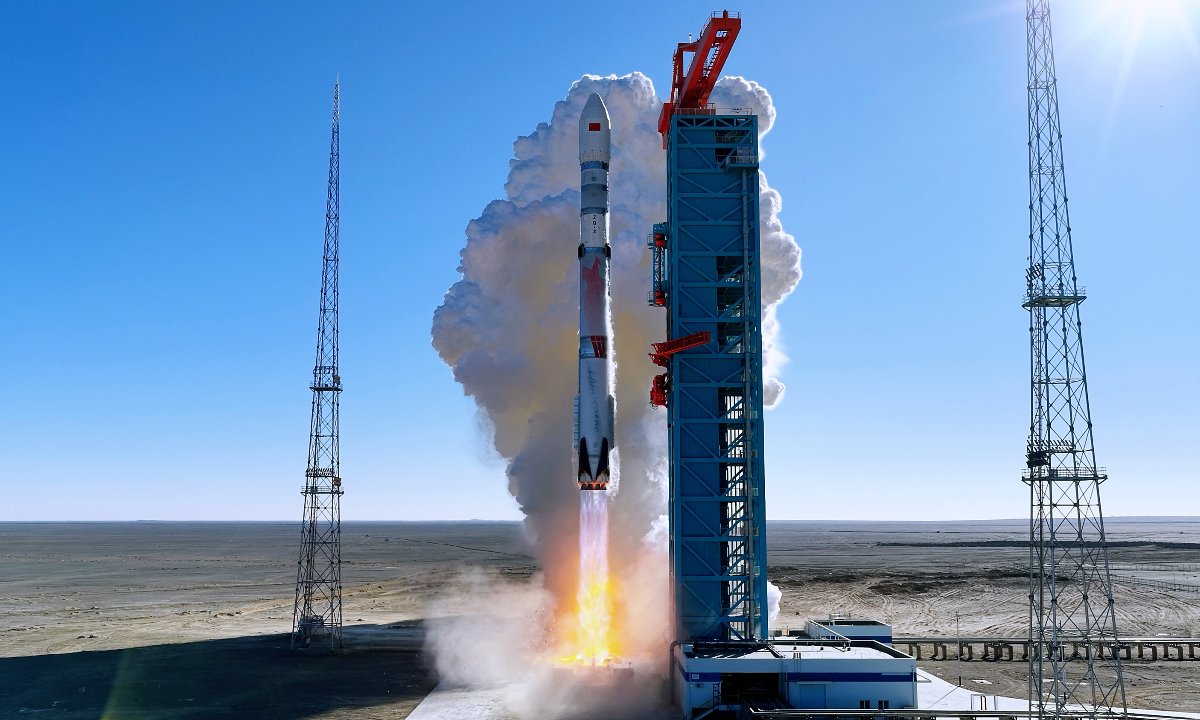
Beijing has pushed its reusable space programme a step further with the launch of an experimental spacecraft that state media described as a technology-verification mission, underlining how the country is trying to cut launch costs, raise flight tempo and broaden the range of missions it can carry out in orbit. The spacecraft was launched on 7 February aboard a Long March-2F rocket from the Jiuquan Satellite Launch Center in northwest China, in what was the fourth publicly disclosed mission of this type since 2020.
Chinese authorities released only a brief account of the flight, saying the spacecraft would verify reusable-spacecraft technologies and support the peaceful use of space. No official duration was given, and no details were provided on the systems being tested, the orbit reached or the vehicle’s configuration. That secrecy has become a hallmark of the programme and makes it difficult to judge exactly how far the technology has advanced, but the pattern of repeated flights suggests a sustained effort rather than a one-off demonstration.
Chronology matters here. China’s first disclosed flight in September 2020 lasted about two days. A second spacecraft launched in August 2022 stayed in orbit for 276 days before landing in May 2023. A third mission, launched in late 2023, returned in September 2024 after 268 days in orbit. Those longer flights point to growing confidence in long-duration autonomous operations, recovery procedures and mission endurance. Outside observers have often compared the craft with the United States’ X-37B-style approach to reusable uncrewed orbital vehicles, though Beijing has not publicly confirmed such comparisons.
This mission also fits into a much wider acceleration in Chinese space activity. On 7 April, China used a Long March-8 rocket from the Hainan commercial launch site to place 18 internet satellites into orbit for the Qianfan constellation. On 11 April, it carried out a sea launch using a Smart Dragon-3 rocket from waters off Guangdong, sending up a test satellite aimed at supporting satellite internet technology. Taken together, those launches show a programme expanding on several fronts at once: reusable vehicles, commercial launch infrastructure and large low-Earth-orbit communications networks.
Beyond low-Earth orbit, China is tying these advances to a broader national space agenda. Beijing is aiming for a crewed lunar landing by 2030 and is developing the Long March-10 rocket, the Mengzhou spacecraft and the Lanyue lunar lander for that effort. At the same time, the Chang’e-7 lunar probe is scheduled for launch in the second half of 2026. That means the reusable-spacecraft programme should be viewed less as an isolated experiment than as one part of an expanding architecture that spans launch systems, spacecraft design, lunar exploration and space-based connectivity.
Money and industrial policy are also shaping the picture. Reuters has reported that Beijing is funnelling more support towards private launch companies as it tries to build capacity for large satellite constellations and reduce reliance on state-owned providers alone. CAS Space has targeted fresh capital for reusable rocket research, while LandSpace and other firms are also turning to capital markets. Separate policy changes have given reusable-rocket developers a faster route to listing, provided they meet technical milestones, showing how closely commercial launch activity is now aligned with national strategic goals.
Yet the programme’s momentum should not be mistaken for mastery. China is advancing, but it is still chasing a lead established by SpaceX in frequent booster recovery and reflight. On 3 April, Space Pioneer said the maiden flight of its Tianlong-3 reusable rocket had failed, and Reuters reported that no Chinese firm had yet demonstrated the ability to recover and reuse a rocket’s main stage. LandSpace plans another recovery test for its Zhuque-3 rocket this year, while the Long March-12B reusable rocket completed a static firing test in January ahead of later flight missions. Progress is visible, but so are the engineering gaps.
Ice Open Network has opened more of its codebase to public view as its ION token comes under acute market pressure, an awkward overlap that captures the project’s current predicament: visible engineering momentum on one side, collapsing market confidence on the other. The team has been publishing weekly development updates on its Online+ social app and ION framework, while public GitHub repositories now show active work on […]







 https://www.hktdc.com/event/hkgiftspremiumfair/en