Arabian Post Staff -Dubai Autonomous taxi operations in Abu Dhabi are expanding across Yas Island as authorities push forward with plans to integrate self-driving transport into everyday mobility. The Integrated Transport Centre, operating under the Department of Municipalities and Transport, announced the extension of commercial driverless taxi services across the island, marking a further step in the emirate’s strategy to build a technology-driven transport ecosystem. The initiative […]
Arabian Post Staff -Dubai Brent crude could average more than $100 a barrel in March as escalating conflict and shipping disruptions in the Gulf tighten global supply, according to a revised outlook from Goldman Sachs that underscores mounting volatility in energy markets. The investment bank said benchmark Brent prices are expected to average above the $100 mark during March before easing to around $85 a barrel in […]
A sophisticated strain of Android malware capable of diverting real-time payments has emerged as a major cybersecurity concern in Brazil, exploiting the country’s widely used PIX instant payment platform and highlighting the risks attached to rapidly expanding digital payment ecosystems. Cybersecurity researchers say the malware, dubbed PixRevolution, hijacks transactions at the exact moment a user sends money through PIX, redirecting funds to accounts controlled by criminals […]
Digital asset markets received renewed attention after Coinbase chief executive Brian Armstrong argued that tokenisation of financial assets could remove entrenched inequities in global finance by widening participation in investment markets and lowering structural barriers that historically limited access. Armstrong, speaking in comments circulated across financial and crypto industry platforms, said tokenisation could “strip away a huge amount of unfairness from the system by increasing asset access […]
A native world model built from the ground up for embodied intelligence, Kairos 3.0-4B delivers exceptional physics-consistent deep understanding and cross-embodiment generalization, enabling a single “brain” to drive robots of multiple form factors.
Kairos 3.0-4B leverages a unified “multi-modal understanding-generation-prediction” architecture for physical-level deep understanding, long-horizon dynamic interaction, precise action control, and long-horizon interaction — 7-minute coherent interaction videos set a new industry benchmark.
As a lightweight 4B-parameter model, Kairos 3.0-4B outperforms mainstream embodied world models while delivering industry-leading inference efficiency. It achieves real-time edge generation on the THOR platform with a1:1.5 ratio of generation time to video duration, leading performance across both cloud and edge environments.
Kairos 3.0-4B achieves top-ranking accuracy across multiple authoritative benchmarks. Furthermore, leveraging model capabilities and inference tooling, its inference speed is 72 times faster than Cosmos 2.5, setting a new global performance record for embodied world models.
SHANGHAI, CHINA – Media OutReach Newswire – 13 March 2026 – ACE ROBOTICS announced the open-source release of Kairos 3.0-4B, the industry’s first native world model for embodied intelligence to realize unified “multi-modal understanding-generation-prediction” within a single architecture. As the technical cornerstone of the company’s “Human-Centric” ACE Embodied Intelligence R&D Paradigm, Kairos 3.0-4B is designed from the ground up for real-world robotic operation — integrating physical laws, human behavior, and real robot actions to deliver physics-consistent deep understanding of the real world.
The prevailing approach to embodied world models has largely involved retrofitting general-purpose large language or vision models with motion interfaces. Kairos 3.0-4B takes a fundamentally different path. Rather than appending motion capabilities onto existing model architectures, it is built from the architectural level around the fundamental physical and causal laws that govern real-world environments, constructing a unified world-understanding framework capable of cross-embodiment generalization. By embedding causal reasoning chains directly into its decision-making process, the model transcends behavioral imitation and achieves what ACE ROBOTICS defines as physical-level deep understanding — enabling robots to not only know what to do, but to understand why. Its core breakthrough lies in the deep integration of three categories of data: real robot interaction data, structured human behavioral data, and chain-of-thought reasoning data, effectively breaking down multi-source data barriers and significantly improving the reuse efficiency of real-world data.
A landmark achievement of this release is Kairos 3.0-4B’s real-time edge deployment capability. Deployed on the NVIDIA Jetson Thor T5000 platform at 517 TFLOPs, it is the world’s first embodied world model to achieve real-time generation on edge hardware — achieving a 1.5x faster-than-real-time generation speed on the THOR platform — and the first capable of directly driving physical robot bodies for real-world task execution through native edge deployment. The model issues full-body control commands spanning upper limbs, fingers, and lower limbs without intermediate control layers, enabling robots to move from “capable of performing” to genuinely “capable of working.”
Kairos 3.0-4B also delivers a breakthrough in long-horizon interaction. By combining its unified architecture with Agent-based hierarchical planning and a self-reflective iterative optimization mechanism, the model generates coherent future-state predictions up to 7 minutes in length while maintaining full scene coherence and physical fidelity throughout — setting a new industry benchmark for long-horizon embodied interaction and opening new pathways for embodied intelligence training and deployment.
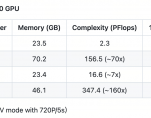
On the A800 GPU benchmark, Kairos 3.0-4B’s inference speed surpasses NVIDIA Cosmos 2.5 by 72 times, setting a new global performance record for embodied world models. This performance is delivered with a lightweight footprint of just 4B parameters and 23.5GB of VRAM — a fraction of Cosmos 2.5’s 70.2GB requirement — demonstrating that efficiency and capability need not be in tension and fundamentally challenging the assumption that larger parameters are a prerequisite for superior performance. The model has also achieved top rankings across three authoritative global benchmarks: PAI-Bench-robot, co-developed by Georgia Tech and CMU; WorldModelBench-robot TI2V, introduced at CVPR 2025; and NVIDIA GEAR Lab’s DreamGen Bench, outperforming all evaluated models on physical consistency and instruction-following metrics.
In A800 GPU benchmarks, Kairos 3.0-4B achieves order-of-magnitude breakthroughs in compute efficiency and inference speed
Supporting seamless cross-embodiment deployment across single-arm, dual-arm, and dexterous hand configurations with no additional per-embodiment training required, Kairos 3.0-4B is compatible with major hardware platforms including Agilex PIPER, Unitree G1, and Galaxy G1. Kairos 3.0-4B is now available on Github (https://github.com/kairos-agi/kairos-sensenova) and Hugging Face (https://huggingface.co/kairos-agi/kairos-sensenova-common).
The issuer is solely responsible for the content of this announcement.
About ACE ROBOTICS – Equipping robots with intelligent “brains” and engaging “souls”
ACE ROBOTICS is a pioneering robotics company dedicated to advancing the field of embodied intelligence. Founded by SenseTime co-founder Wang Xiaogang, the company has brought together a team of young, globally scarce AI scientists and industry experts to focus on embodied intelligence. Through breakthrough technological innovations and deep insights into embodied intelligence scenarios, we aim to empower robots with the ability to autonomously understand and explore the physical world, thereby accelerating their commercial implementation.
The company pioneered the ACE R&D paradigm and built a vision-based “environmental data engine, real-world cognition, embodied interaction generalization” technology chain. Using full spatiotemporal and multi-perspective environmental capture as its engine, along with Kairos 3.0 – China’s first open-source and commercially applicable world model – plus the Embodied Foundation Model as its technical backbone, ACE ROBOTICS addresses core industry challenges such as data scarcity, common sense gaps, poor generalization, and limited versatility. Simultaneously, the company unveiled its flagship A1 Embodied Super Brain Module, accelerating the large-scale commercial deployment of embodied intelligence across diverse scenarios.
ACE ROBOTICS is both a technology pioneer and an ecosystem builder. Through strategic cooperation with top hardware manufacturers, cloud service providers, and vertical scenario partners, we have broken through the “model-hardware-scenario” industrial deadlock, providing standardized and customized solutions that are driving the development of China’s embodied intelligence industry.
By Nitya Chakraborty As the U.S. Israel war against Iran entered its fourteenth day on Friday March 13, in the diplomatic corridors in the UN headquarters in New York and in other major capitals including the EU headquarters in Brussels, speculation has started on what can be the likely stand of Iran’s two allies China […]
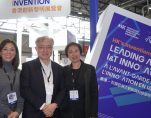
(From Left to right: Ms. Helena Chiu, Chairman of the Hong Kong Exporters Association; Ir. Andrew Young Honorary Advisor, The Hong Kong Exporters’ Association; and Ms. Alice Lai, Vice Chairman of the Hong Kong Exporters Association and Project Convenor, Hong Kong Innovation & Invention)
Hosted by HKEA and sponsored by the Innovation and Technology Commission (ITC) of the Government of the Hong Kong Special Administrative Region, HKII is committed to providing free international exchange opportunities for Hong Kong’s innovation and technology community. The initiative brings Hong Kong’s unique technological inventions onto world‑class exhibition platforms, connecting GBA innovators with global enterprises and users, and showcasing Hong Kong’s innovation story to the world.
Exhibited inventions have undergone rigorous evaluation by a distinguished panel of industry professionals. The shortlisting process will be conducted based on novelty, level of innovation and invention, technical utility, and symbolic significance. All exhibits are original inventions and launched in the market with patent protection or are under patent filing.
“‘Created in Hong Kong’ has long been recognised worldwide, yet the global visibility of our SMEs and start‑ups still has room to grow,” said Helena Chiu, Chairman of HKEA. “Through HKII, we enable Hong Kong’s innovation and technology brands to participate in top‑tier international exhibitions at no cost and connect directly with the global business community. This year, we are also bringing leading innovators from the Greater Bay Area to join Hong Kong enterprises as we venture overseas together and capture new opportunities around the world.”
MEET International, a multi-functional engineering inspection company, exhibits at IEIG for the first time. “With a supply chain anchored in the Greater Bay Area and more than 30 years of global market experience, we have been committed to strengthening ties with overseas clients and building a world‑recognised brand,” said K.S. Chou, Director of MEET International. “IEIG offers valuable access to engineers from European construction firms and research organisations, enabling us to present our product capabilities directly and substantially enhance our opportunities for international orders.”
“Intellectual property built on core technologies is essential for Hong Kong enterprises to upgrade their businesses,” said Marco Li, Managing Director of Propagate Intellectual Property, an invention commercialisation platform. “We are committed to nurturing academic innovations into patented technologies, developing products tailored for different scenarios for global customers. By exhibiting with other Greater Bay Area enterprises at Generva, our intellectual properties could become more attractive to European buyers. On top of greater revenue to companies and inventors, it also strengthens the branding of ‘Created in Hong Kong’ among the global, high‑end, industrial value chain.”
48 innovations and inventions are being showcased at the exhibition through HKII for free. The inventions span a wide spectrum of categories, including:
Smart City,
Smart Home & Lifestyle,
Health Technologies and Medicine, and
Smart Industry,
alongside a dedicated Youth Category for inventors aged 18 or below. The showcased innovation and technology products from the Greater Bay Area include:
Smart City: MEET International, a multi-functional engineering inspection company, developed a “7‑in‑1 Building Leakage Tracing Device,” breaking through the technical limitations of traditional single‑function inspection tools and redefining the standards for leakage detection. By continuously capturing and comparing highly precise data readings, the device pinpoints the source of leakage, ensuring that concealed problem areas are accurately exposed.
The device features synchronized “AC leakage” and “water leakage” dual detection, enabling early identification of hidden risks and precise localisation of the source to mitigate both seepage and electrical hazards. It also incorporates an innovative all‑scenario adaptability design, allowing it to operate effectively across different building materials and leakage environments. Applications include building maintenance, renovation inspection, and property management.
Smart Home & Lifestyle: Researchers at Sun Yat‑sen University developed a patented “Composite Heating Material” that integrates advanced graphene and nano-carbon tube composite heating films, replacing traditional heating tubes. The invention delivers precise, rapid and efficient heating with uniform heat distribution, while reducing energy loss.
Propagate Intellectual Property has commercialised the invention into more than 40 intellectual property assets, applying it to products such as electric teppanyaki, food‑warming mats and beauty eye masks, as well as in building and industrial settings, providing an efficient and flexible heating solution across diverse applications.
Health Technologies and Medicine: Health‑tech start‑up Kin Technology launched Kindo & App, a homecare solution redefining homecare and wellness. Integrating automation, IoT connectivity, and advanced AI, Kindo & App can automatically sort and dispense up to 10 types of medication with a single click. Equipped with smart reminders, a child‑safety lock, and built‑in humidity and temperature sensors, the solution ensures medication safety, accuracy, and convenience.
Paired with the Kin App and Web Platform, users can track their dosage history, set reminders, and receive low-medication alerts. The platform also supports remote dispensing, enabling caregivers to manage prescriptions and dispense medications from anywhere. Families and caregivers gain real-time access to adherence data and remote management tools, while healthcare providers can monitor patients, manage prescriptions, and access analytics to enhance outcomes.
Smart Industry: URS AI developed URS AI MATE, a holographic interactive AI agent. Integrating holographic projection technology, proprietary LLM, and multimodal interaction algorithms, URS AI MATE has successfully built a full closed‑loop of perception, cognition, decision‑making, and execution that enables continuous self‑evolution. This strengthens its ability to adapt in different scenarios and understand users, creating an AI agent uniquely tailored to each individual.
The issuer is solely responsible for the content of this announcement.
About “Hong Kong Innovation & Invention” (HKII)
Launched in 2023, “Hong Kong Innovation & Invention” (HKII), organized by the Hong Kong Exporters’ Association (HKEA) and sponsored by the Innovation and Technology Commission (ITC) of the Government of the Hong Kong Special Administrative Region, is an initiative dedicated to showcasing and promoting Hong Kong’s immense potential in innovation and technology (I&T) to a global audience. The Project aims to facilitate collaboration within the industry and cultivate a vibrant I&T culture among the general public.
Founded in May 1955, the Hong Kong Exporters’ Association (HKEA) is a non-profit-making trade association registered under the Hong Kong Companies Ordinance. The Association’s mission is to develop Hong Kong as a trading hub for exporters, dedicating its efforts to serve and add value for the exporter community.
This press release is distributed by Mitopia Limited on behalf of the Hong Kong Exporters’ Association.
*Disclaimer: Any opinions, findings, conclusions or recommendations expressed in this material/event (or by members of the project team) do not reflect the views of the Government of the Hong Kong Special Administrative Region, the Innovation and Technology Commission or the Vetting Committee of the General Support Programme of the Innovation and Technology Fund.
Motorists navigating through Dubai have reported unusual glitches in digital navigation systems, with some drivers briefly appearing to travel across open water or far from their actual locations on popular mapping applications. The phenomenon, noticed by commuters across parts of the emirate, has drawn attention to the growing vulnerability of satellite-based navigation systems to interference and technical anomalies. Drivers using applications such as Google Maps and […]
Air freight rates have surged sharply across several global trade corridors as the war involving the United States and Israel against Iran disrupts transport routes, closes large portions of Middle Eastern airspace and forces cargo operators to reroute shipments at significantly higher cost. Industry data show some air cargo routes have experienced price increases of up to 70 percent since the escalation of hostilities, with South Asia–Europe […]
Capital from a subsidiary of Abu Dhabi’s sovereign wealth fund has flowed into a Hong Kong-based private credit manager, signalling continued appetite among Gulf investors for property-linked lending opportunities across developed Asia-Pacific markets. Dignari Capital Partners said a wholly owned unit of the Abu Dhabi Investment Authority has committed capital to its Asia Pacific Developed Markets Private Credit Strategy, a fund designed to finance real-estate-related projects and […]
Hosting New Energy Summit to Connect Global Experts Insights on New Energy Landscape
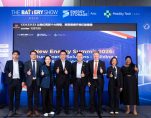
HONG KONG SAR – Media OutReach Newswire – 13 March 2026 – Centre of Advanced Power and Autonomous Systems (APAS), under the Hong Kong Productivity Council (HKPC),made its debut at The Battery Show Asia held from 10 to 12 March. During the exhibition, APAS set up a dedicated showcase area to present eight innovative battery technology solutions featuring high safety standards and intelligent capabilities for the first time. In parallel, APAS hosted the second edition of the New Energy Summit during the exhibition. The summit brought together five industry experts and scholars from Hong Kong, Singapore, Thailand, India and Switzerland to deliver speeches on various topics related to new energy and energy storage. Speakers shared the latest industry developments and application trends, fostering international technology exchange and collaboration.
During the exhibition, APAS hosted the second New Energy Summit, inviting industry experts and scholars from Hong Kong, Singapore, Thailand, India and Switzerland to speak and share the latest technological developments and application trends in the fields of new energy and advanced materials.
Mr Yonghai DU, Chief Innovation Officer of HKPC and General Manager of APAS, said, “In line with the strategic priorities set out in the outline of the 15th Five-Year Plan for emerging and future industries such as new energy, advanced energy storage and hydrogen energy, energy technologies are entering an unprecedented period of growth. The outline also emphasise the pursuit of smart, green, and integrated development of industry, injecting long-term momentum for the new energy development. For many years, HKPC has been committed to market-led technology R&D. APAS focuses on areas including new energy technologies, green transportation, smart mobility, intelligent systems and emerging applications, actively translating research outcomes into market-ready solutions to help industries enhance technological capabilities and industrial value.”
He added, “Through this international platform, we hope to strengthen our collaboration with enterprises and research institutions from around the world. Hong Kong can play a more proactive role as a connector between Chinese Mainland and the global market in the development of innovation, international standards and the practical application of new energy technologies, thereby enhancing the city’s global competitiveness in the new energy industry. Looking ahead, APAS will continue to focus on research and practical applications in new energy and intelligent systems, while advancing technological innovation and cross-regional collaboration to support both the nation and Hong Kong in fostering emerging industries and future industries.”
First Participation in The Battery Show Asia, Highlighting Battery Technology Achievements
The Battery Show Asia brings together more than 20,000 industry representatives from Chinese Mainland, Japan, Korea, Southeast Asia, India, Europe and the United States, including policymakers, technology innovators, engineers, manufacturers and industry experts. Covering battery manufacturing, energy storage solutions and new energy transportation industries, the exhibition serves as an international platform integrating technology showcase, industry exchange and business collaboration.
In its first participation in the exhibition, APAS showcased its research strengths in new energy technologies and emerging applications by presenting a range of innovative battery technology solutions. The showcase aims to contribute to the development of the battery industry while providing an important platform for Hong Kong to connect with global technologies and markets, facilitating cross-regional exchange and collaboration.
APAS set up a dedicated exhibition area to present several research outcomes developed in collaboration with industry partners, including:
Battery Cell Technologies:
High-performance Sodium-ion Battery: Using stable poly-anionic phosphate cathode, the battery enables rapid storage and release of sodium-ions while offering high safety and cost efficiency. It is suitable for applications such as low-speed electric vehicles, power batteries and large-scale energy storage. Looking ahead, APAS will collaborate with industry partners to establish large-scale production capabilities for high-performance sodium-ion battery, further optimising its performance and cost-effectiveness while exploring deployment in low-speed electric vehicles and utility-scale energy storage systems.
Battery Systems and Solutions:
Explosion-Proof High-Energy Battery Systems:This solution features proprietary safety technology that prevents thermal runaway, delivering reliable power in the most challenging environments, engineered for demanding marine and portable power applications. APAS will assist partners in optimising battery module design and thermal management systems to enhance product performance and align R&D processes with industry standards. This will support partners in establishing manufacturing facilities in Hong Kong and expanding into overseas markets.
Yacht Battery System: The system integrates advanced solid-state battery technology with an intelligent Battery Management System (BMS) to eliminate risks associated with traditional liquid electrolytes, including leakage, corrosion and thermal runaway. It is specifically designed to withstand the high-humidity, high-vibration and salt-spray conditions inherent to open-water yacht operations. APAS is currently supporting partners in obtaining international battery standard certifications to facilitate entry into the global market.
These solutions feature high safety standards, intelligent capabilities, and flexible applications. They support a wide range of sectors, including electric transportation and smart mobility, marine and industrial applications, specialised equipment, aerospace and high-end manufacturing, medical devices, consumer electronics, home assistive equipment and portable energy storage for travel.
Hosting New Energy Summit to Jointly Build a Sustainable Future
During the exhibition, APAS also hosted the second New Energy Summit, which brought together industry leaders and academic experts from Hong Kong, Singapore, Thailand, India and Switzerland. The summit focused on key topics related to new energy development and applications, providing a platform for speakers to share insights and engage in discussions with industry professionals in attendance.
The summit focused on two key themes — new energy and advanced materials — bringing together global experts to explore technological development and industrial applications. In the new energy sector, a representative from The Hong Kong and China Gas Company Limited introduced innovative hydrogen energy technologies and their potential applications in promoting clean energy development in Hong Kong. Representatives from energy technology companies and alliances in Switzerland, India and Thailand shared the latest trends and practical applications in energy storage technologies, as well as the integration of renewable energy with smart infrastructure. In the field of advanced materials, a scholar from the Department of Materials Science and Engineering at the National University of Singapore highlighted the critical role of nanotechnology in energy and sustainable development, offering insights into the future landscape of sustainable new energy.
Through this cross-regional and cross-industry platform, APAS aims to promote international technology exchange and collaboration, accelerate the application of new energy technologies and drive industry transformation, contributing to a more resilient and sustainable future energy ecosystem.
Advancing Technologies onto the Global Stage, Reinforcing Hong Kong’s Connectivity Advantages
HKPC actively participates in various international exhibitions and industry exchange activities to showcase innovative solutions co-developed with industry partners. Leveraging Hong Kong as a platform, HKPC supports enterprises in expanding into international markets and advancing cutting-edge technologies and standards worldwide.
Through international exhibitions and collaboration initiatives, HKPC further strengthens Hong Kong’s role as an important connector between Chinese Mainland and the world. In line with the Government’s 2026-27 Budget to attract large-scale international exhibitions to Hong Kong and promote the city’s exhibition brand globally, HKPC will continue to participate in international exhibitions and foster industry exchanges to drive innovation showcase and collaboration.
Hashtag: #APAS
The issuer is solely responsible for the content of this announcement.
About Centre of Advanced Power and Autonomous Systems (APAS)
Centre of Advanced Power and Autonomous Systems (APAS) (formerly Automotive Platforms and Application Systems R&D Centre) was established in 2006 and is fully integrated as a business division under HKPC on 1 April 2025. APAS continues to undertake market-led R&D programmes spanning green transportation, smart mobility, intelligent systems and emerging applications, as well as commercialises R&D results in collaboration with industry, universities and technology institutes to enhance the competitiveness of Hong Kong’s automotive and other transportation sectors in new energy and smart driving.
About Hong Kong Productivity Council
The Hong Kong Productivity Council (HKPC) is a statutory body established in 1967, dedicated to enhancing the productivity and competitiveness of Hong Kong enterprises through world-class applied R&D, innovative technology services, and integrated manufacturing solutions. As a market-oriented, international R&D organisation, HKPC leverages its deep expertise and extensive industry experience in key areas such as AI, advanced manufacturing, life and health technology, green technology and new energy to drive new industrialisation and support the growth of emerging and future industries.
HKPC focuses on addressing businesses challenges and industrial technology needs, promoting the full integration between technological and industrial innovation. Through technology transfer, product innovation, intellectual property protection and commercialisation of R&D outcomes, the Council fosters collaboration with the local business community as well as top global R&D institutions, delivering added value to industries and advancing the development of new productive forces. HKPC’s world-class R&D achievements have been widely recognised over the years, winning an array of local and overseas accolades, reinforcing Hong Kong’s role as an international innovation and technology centre and a smart city.
To help enterprises capitalise on Hong Kong’s strengths in international connectivity to expand into global markets, HKPC offers comprehensive overseas expansion services tailored to critical areas including product development, technology, manufacturing, and management, enabling businesses to successfully go global from Hong Kong.
HKPC is also committed to providing timely and practical support to SMEs and startups with timely and practical, assisting them in accessing Government funding programmes. Through its FutureSkills training initiatives, HKPC helps both industry and academia stay ahead in latest digital and STEM technologies, nurturing a future-ready talent pool for Hong Kong.
For more information, please visit HKPC’s website: www.hkpc.org/en.
International Monetary Fund officials have urged South Africa to ensure that a planned fiscal rule designed to guide public spending and debt management is carefully structured and strongly supported, warning that the success of such a framework will depend on clear targets, institutional oversight and political commitment. The recommendation comes as authorities in Africa’s most industrialised economy attempt to stabilise public finances following years of rising government […]
Washington is preparing a temporary suspension of a century-old shipping rule as the administration seeks to blunt a sharp rise in fuel prices triggered by turmoil in global energy markets and disruptions to key maritime routes. Officials are examining whether to grant a short-term waiver of the Merchant Marine Act of 1920, widely known as the Jones Act, which requires goods transported between United States ports to […]
Artificial intelligence is set to reshape the software industry, yet the transformation is unlikely to lead to a sweeping decline in credit ratings across the sector, according to an assessment by S&P Global Ratings that seeks to temper investor concerns about widespread financial stress among software companies. Analysts at the credit ratings agency say the rapid development of AI technologies may alter competitive dynamics and business models […]
Arabian Post Staff -Dubai Saudi Arabia has introduced a sea-to-air logistics corridor linking its western seaports with airports, an initiative aimed at sustaining cargo flows to international markets as disruptions continue to affect major shipping lanes and aviation routes. The programme connects Red Sea ports with key aviation gateways to allow freight arriving by sea to be transferred rapidly onto cargo aircraft, enabling exporters and logistics companies […]
Arabian Post Staff -Dubai Saudi oil producer Aramco has rejected claims that it is negotiating with Ukrainian companies to acquire interceptor drones to defend its oilfields, pushing back against reports that the energy giant was seeking aerial defence systems amid escalating regional security threats. The company issued a statement saying reports of discussions with Ukrainian manufacturers were inaccurate, after media coverage suggested Aramco was exploring purchases […]
Arabian Post Staff -Dubai Debt issuance across Gulf financial markets has slowed sharply as geopolitical tensions linked to the confrontation involving Iran inject volatility into global credit markets, prompting borrowers and investors to reassess financing plans. Analysts warn that the shift could ripple across emerging market borrowing trends, given the Gulf region’s growing share of international dollar-denominated debt issuance. Credit rating agency assessments indicate that bond deals […]
Pressure on cooking gas supplies has pushed households and businesses across the country toward more polluting fuels, including kerosene, biomass and fuel oil, highlighting the vulnerability of energy supply chains during geopolitical upheaval.
Authorities have authorised the wider use of alternative fuels to ease the strain on liquefied petroleum gas and natural gas networks after disruptions to shipments from West Asia tightened availability and drove up prices. The shift marks a temporary reversal of a decade-long policy drive aimed at replacing traditional fuels such as coal, wood and kerosene with cleaner LPG and piped gas.
Officials say the measures are designed to shield households from the worst effects of the supply squeeze while allowing industries and commercial establishments to adapt by switching to alternative fuels. Hospitality businesses, restaurants and small manufacturers have been among the first to face curbs on LPG allocations as authorities prioritise residential supply. Environmental regulators have advised state pollution control boards to permit the temporary use of biomass, kerosene, refuse-derived fuel pellets and coal in certain sectors to maintain operations during the shortage.
The supply stress is linked to the conflict in West Asia, which has disrupted energy shipments through the Strait of Hormuz, a crucial corridor for crude oil, liquefied petroleum gas and liquefied natural gas moving from the Gulf to Asian markets. The country imports a large share of its LPG needs and has limited strategic reserves of the fuel, leaving the domestic market exposed to sudden supply shocks and price spikes when global trade routes are interrupted.
Government agencies have sought to reassure consumers that domestic cooking gas deliveries remain stable even as authorities adopt contingency measures. Emergency powers have been invoked to instruct refiners to maximise LPG production, diverting propane and butane toward household cooking fuel and away from petrochemical uses. Oil marketing companies have also tightened commercial sales and redirected supplies to residential consumers, a move affecting hotels, restaurants and other energy-intensive sectors.
As part of the response, officials have increased allocations of kerosene to states through the public distribution system to ensure access for households that depend on subsidised fuels. Additional supplies of the product are being released to meet growing demand in areas where LPG refills have become harder to secure.
Energy analysts say the sudden return to older fuels underscores the complexity of managing the transition to cleaner energy sources in a country with rapidly rising consumption. Over the past decade, policies promoting LPG connections for low-income households helped drive a significant decline in the use of biomass and kerosene for cooking, improving public health outcomes and reducing indoor air pollution. Programmes designed to expand LPG access reached tens of millions of homes and sharply increased the penetration of modern cooking fuels in rural regions.
Yet the current disruption reveals how heavily the system relies on global supply chains. Nearly two-thirds of the country’s LPG consumption is met through imports, with a substantial portion arriving from Gulf producers. When shipments are delayed or rerouted, domestic supply can tighten quickly, forcing policymakers to intervene to stabilise markets and protect vulnerable consumers.
Industry groups warn that sustained disruptions could place additional strain on manufacturing and services, particularly sectors that rely heavily on natural gas or LPG for process heat. Fertiliser plants, petrochemical complexes and small industrial units have already faced adjustments to gas allocations, and some facilities have reduced operations as fuel availability fluctuates.
Energy companies have responded by diversifying import sources in an effort to offset supply disruptions from the Gulf. Cargoes are being sourced from producers in North America, Europe and other regions as traders seek alternative routes and suppliers. This diversification strategy is intended to reduce dependence on any single supply corridor and cushion the domestic market from geopolitical shocks.
At the same time, officials are urging consumers and businesses to conserve fuel where possible and avoid panic buying. Authorities have intensified monitoring of fuel distribution channels to prevent hoarding and black-market sales, which can worsen shortages and inflate prices during periods of uncertainty.
Environmental experts note that the temporary return to dirtier fuels may carry consequences for air quality and emissions if prolonged. Burning kerosene, coal and biomass releases higher levels of particulate matter and greenhouse gases compared with LPG, potentially undermining progress made through clean cooking initiatives.
Policy planners therefore face a delicate balancing act: ensuring reliable energy supplies for households and industry while maintaining momentum toward cleaner fuels and reduced emissions. The current crisis has renewed debate among energy economists over the need for larger strategic reserves of LPG and natural gas, as well as expanded domestic production and storage capacity to cushion future shocks.
Shiba Inu has staged a modest rebound after a prolonged slide, prompting speculation among crypto traders that the meme-inspired token could be approaching a technical breakout. The price movement has revived debate about whether the digital asset can escape months of bearish pressure or whether the uptick represents only a short-lived relief rally. Market data shows the token climbing from levels near $0.0000055 to around $0.0000060 during […]
BlackRock has introduced a new exchange-traded fund offering investors exposure to ethereum alongside staking-based income, marking another step in the expansion of institutional products tied to digital assets. The fund, trading under the ticker ETHB, opened with more than $100 million in assets and generated over $15 million in trading volume during its first day on the market, signalling strong early demand from investors seeking yield in […]
Global medical technology manufacturer Stryker has been hit by a major cyberattack claimed by an Iran-linked hacker collective, triggering widespread disruption to corporate systems and raising fresh concerns about cyber warfare spilling into commercial infrastructure. The group, calling itself Handala, said it carried out a destructive operation that wiped data across more than 200,000 company devices while extracting roughly 50 terabytes of information from internal networks. The […]
HONG KONG SAR – Media OutReach Newswire – 13 March 2026 – KCM Trade, a leading global CFD broker, has recently announced the launch of KCM Trade Copy, a new mobile copy trading platform officially released in February and now available on both iOS and Android. The launch comes as the company marks its 10th anniversary, highlighting a decade of growth and innovation in the global trading industry.
A Platform Designed for Collaboration
KCM Trade Copy is a dedicated mobile application that allows clients to automatically replicate the trades of experienced Master Traders in real time. Through the app, users can browse detailed trader profiles, review historical performance data, and select strategies that match their individual goals and risk preferences.
Once a Master Trader is selected, their trades are automatically replicated in the client’s account in real time, allowing users to participate in the markets without the need for constant monitoring or manual trading. Meanwhile, experienced traders can join the platform as Signal Providers, showcase their performance, grow a following, and earn profit-sharing fees, fostering a collaborative and opportunity-driven trading community.
Key features of KCM Trade Copy include:
Real-time automated trade replication
Full transparency through detailed performance data
User control with adjustable lot sizes and risk limits
The ability to follow multiple Masters simultaneously
Secure infrastructure with segregated accounts and SSL protection
Fast execution and competitive trading conditions
By combining these capabilities within a single mobile application, KCM Trade Copy provides clients with a convenient and efficient way to engage with the global financial markets.
Supporting Traders Through Innovation
The launch of KCM Trade Copy is part of KCM Trade‘s broader strategy to continuously improve the trading experience for clients around the world. By integrating new technology alongside its established MT4 and MT5 offerings, the company is expanding opportunities for traders of all experience levels to participate in the markets with greater flexibility and convenience.
Commitment to Client-Centric Growth
With the launch of KCM Trade Copy, the company aims to foster a more inclusive environment where clients can choose strategies that align with their individual goals while strengthening long-term relationships with its global client base.
Looking ahead, the company plans to further enhance the platform, including the development of a web-based version, as part of its ongoing efforts to build a comprehensive suite of trading tools designed to serve modern investors.
SINGAPORE – Media OutReach Newswire – 13 March 2026 – i-Sprint Corporation today announced the successful completion of a management buy-out (MBO) of all its operating companies, and marks a pivotal milestone as the company celebrated its 25th anniversary last year. The transaction was led by the company’s existing management team in strategic partnership with KV Asia Capital.
This landmark transaction ranks among the significant Identity and Access Management acquisitions in Asia. It underscores i-Sprint’s strategic importance in the region’s cybersecurity landscape as AI-driven threats, machine identity proliferation, and tightening regulatory requirements reshape cybersecurity across the region. The deal positions i-Sprint for its next phase of innovation and global expansion, as it continues to invest in next-generation capabilities, while expanding its footprint across the region.
This milestone firmly establishes i‑Sprint as one of the region’s largest independent IAM, Quantum Safe and Mobile cybersecurity provider.
Dutch Ng, Chief Executive Officer of i-Sprint, commented: “This Management Buy-Out is a defining moment for i-Sprint and a testament to the strength of the business we have built and our deep belief in its future. Partnering with KV Asia Capital provides us with the strategic tools and capital to accelerate growth while preserving the entrepreneurial spirit and customer focus that define i-Sprint. We are grateful for the trust and support of our clients, partners, and team—and excited about the future we’re building together.”
KV Asia Capital has a proven track record of scaling growth-stage companies across Asia. Their expertise and financial backing will enable i-Sprint to enhance product offerings, invest in cutting-edge R&D, and pursue new market opportunities with greater agility.
Lee Gan Ping, Managing Director, at KV Asia Capital, said: “We are thrilled to partner with i-Sprint’s founders and management team, whose deep domain expertise and track record has earned the trust of Asia’s leading financial and government institutions. As identity and authentication become increasingly complex and relevant, we look forward to supporting the team in their next chapter of growth. Together, we will scale i-Sprint’s global footprint through accelerated R&D investments and strategic M&A.”
The existing management team will continue to lead the company, ensuring seamless operations and a continued focus on delivering innovative and superior products and services. Hashtag: #iSprint
The issuer is solely responsible for the content of this announcement.
About i-Sprint Innovations
i-Sprint Innovations is a global leader in Digital Identity, Mobile Security, PQC App Migration, and Brand Protection solutions. For 25 years, i-Sprint has provided award-winning security solutions to financial institutions, multinational corporations, and government agencies worldwide.
About KV Asia Capital
KV Asia Capital is a private equity firm dedicated to partnering management teams and companies across Southeast Asia. The firm has a multi-year track record of successfully investing behind management teams to drive strategic transformation and growth of mid-market businesses into regional success stories.
Japan’s stock market volatility has surged to levels not seen since the global pandemic turmoil of 2020 as a sharp jump in crude oil prices shakes confidence in the country’s economic outlook and disrupts what had been a strong equity rally.
Measures of market anxiety tied to Japanese equities climbed sharply as investors reacted to the sudden rise in global energy prices and mounting geopolitical tensions affecting oil supply routes. The spike in volatility coincided with a steep sell-off in Tokyo’s equity market, where the Nikkei 225 index plunged more than 7 per cent during trading while the broader Topix index fell over 6 per cent, marking one of the most severe declines in several years.
Traders and analysts attribute the surge in market fear to an abrupt reversal of expectations that had supported Japan’s equity rally earlier in the year. A powerful jump in crude prices above the $100-a-barrel threshold has heightened concerns about rising import costs, inflationary pressure and potential disruption to the country’s fragile economic recovery.
Japan remains one of the world’s largest importers of energy resources, relying heavily on overseas supplies for oil and liquefied natural gas. The sharp rise in crude prices therefore carries immediate implications for corporate profitability, household spending and the nation’s trade balance. Higher fuel costs can quickly feed into transport, manufacturing and electricity prices, creating ripple effects across the broader economy.
Equity strategists say that markets had been pricing in a favourable scenario for Japan’s corporate sector, including stable energy costs, a weaker yen that supports exporters, and gradual improvement in domestic consumption. The oil shock has complicated that outlook, prompting investors to reassess earnings forecasts and risk exposure.
The volatility gauge for Japanese equities, often referred to as the market’s “fear index,” spiked to levels not seen since the early months of the Covid crisis. Such indicators measure the expected turbulence in stock prices based on options trading, and a sharp rise typically signals increased hedging activity by investors preparing for further market swings.
The abrupt shift in sentiment comes amid wider turbulence across global financial markets. Equity benchmarks across Asia fell sharply as investors reacted to the energy price shock and rising geopolitical tensions in the Middle East, a region responsible for a large share of global oil production. The surge in crude prices has revived worries that inflation could accelerate again just as many central banks were expected to ease monetary policy.
Market participants say the latest volatility reflects more than a temporary correction. Analysts note that the rally in Japanese equities had drawn significant foreign investment during the past year, encouraged by corporate governance reforms, share buybacks and improved shareholder returns. Strong gains in technology stocks and export-oriented companies had helped drive the Nikkei to multi-decade highs.
Rising energy costs now threaten to undermine some of those positive dynamics. Japan’s manufacturing sector, including carmakers and electronics producers, depends heavily on imported raw materials and fuel. A sustained rise in oil prices could increase production costs and squeeze margins, particularly for companies unable to pass higher expenses on to consumers.
Currency movements add another layer of complexity. The yen often weakens when oil prices surge because the country must spend more on energy imports. While a weaker currency can benefit exporters by boosting overseas earnings, it also increases the cost of imported fuel and food, intensifying inflationary pressure on households.
Economic policymakers are watching the developments closely. Officials at the Bank of Japan have maintained an accommodative monetary stance even as other major central banks tightened policy to fight inflation. The current surge in energy prices raises questions about how the central bank might respond if inflationary pressure accelerates further while economic growth slows.
Financial analysts emphasise that volatility indicators should not be interpreted as a prediction of sustained market decline. Instead, they reflect heightened uncertainty and the demand for protection against abrupt price swings. Still, such spikes often coincide with periods of intense market stress and rapid portfolio adjustments.
Energy-related stocks and commodity producers have been among the few segments to benefit from the oil surge, as higher crude prices can boost revenues for companies involved in exploration, refining and trading. Conversely, sectors sensitive to fuel costs, including airlines, shipping and heavy manufacturing, have faced selling pressure.
Global investors are also weighing broader geopolitical risks tied to the energy market. Disruptions to shipping routes in key waterways used for oil transport could tighten supply and prolong elevated prices. Analysts warn that if crude remains above the $100-a-barrel mark for an extended period, the impact could spread beyond equity markets into inflation expectations, bond yields and currency movements.



 https://www.linkedin.com/company/acerobotics/posts/?feedView=all&viewAsMember=true|
 https://x.com/ace_robotics


 https://hk-ii.com






 https://www.facebook.com/share/1Hg7xa9Js2/?mibextid=wwXIfr
 https://www.instagram.com/kcm_trade_global?igsh=MTJ5Y2QydmJxY2Ziag==





