News related to
Years

Abu Dhabi’s infrastructure expansion enters an ambitious phase with the Abu Dhabi Projects and Infrastructure Centre announcing a capital-projects pipeline valued at US$54 billion over the next five years, and ambitions to double the size of this programme by 2040. Officials described the initiative as a broad invitation to overseas and regional contractors to engage in major new developments spanning housing and social infrastructure. During a road-show […]

New Consumer Insights and Digital Strategies Shaping Thailand’s Luxury Landscape BANGKOK, THAILAND – Media OutReach Newswire – 21 November 2025 – LINE Thailand hosted “FLAIR BKK ’25”, an exclusive gathering of luxury leaders in Thailand and abroad. The event unpacked emerging luxury trends, shifting consumer aspirations from ownership to experience-driven value, and the rising influence of digital innovation across the luxury sector. It also highlighted Thailand’s accelerating […]

Many homeowners dream of turning a patio, garden, or balcony into a cozy open-air retreat. Yet in reality, these spaces often go underused. In fact, a 2024 survey by the International Casual Furnishings Association found that only 18% of people utilize their outdoor living areas as much as they’d like, but 94% said they would spend more time outside after updating their furniture and décor. This shows how quality, comfortable furnishings can transform a patio or deck […]

First Abu Dhabi Bank has mandated a group of global and regional banks to arrange investor calls on Wednesday, 19 November, signalling the preparation of a benchmark USD-denominated Additional Tier 1 capital issuance. The Abu Dhabi-based lender, rated Aa3 by Moody’s and AA- by both S&P and Fitch, is targeting a fixed-rate, resettable perpetual instrument with a non-call six-year structure, expected to be rated Baa3 by Moody’s, subject to market conditions.

FAB has appointed Abu Dhabi Commercial Bank, Barclays, Emirates NBD Capital, itself, HSBC and Standard Chartered Bank as joint lead managers and bookrunners for the issuance, reflecting a strong syndicate backing. According to institutional-market briefings, the period of investor calls is intended to gauge pricing, demand, and issuance size ahead of launch.

This move marks FAB’s first benchmark AT1 issuance in approximately five years and comes as the bank seeks to bolster its capital buffer amid evolving regulatory expectations. Market-specialist commentary notes that such securities serve a dual purpose: providing permanent capital that counts towards Tier 1 regulatory ratios while offering issuers the flexibility of a call option after a set period — in this case six years — to redeem, subject to certain conditions.

FAB’s prior issuance of a senior green bond earlier this month — a €850 million deal priced at mid-swaps plus 70 basis points after opening at plus 100 basis points — underlined its readiness to access capital markets. That deal illustrated investor appetite for the bank’s funding instruments and the bank’s willingness to tap diverse instruments and jurisdictions. The proposed AT1 issuance broadens FAB’s capital-raising toolkit further.

In assigning an expected rating of Baa3 by Moody’s for the proposed issue, the bank is effectively targeting the lowest investment-grade category from that agency for this level of instrument. Such ratings reflect the subordinated nature of AT1 securities; they rank lower than senior debt in the creditor hierarchy and often incorporate features such as coupon discretion and loss-absorption mechanisms — factors that carry higher credit risk for investors compared to senior bonds.

Emerging-markets commentators note that demand for Gulf-region AT1 securities has been relatively scant over the past year as investors have weighed macro-economic headwinds, rising interest-rate environments and regulatory adjustments. The Gulf region’s total primary issuance of bonds and sukuk for the first quarter of the year was reported at USD 51.5 billion, down from USD 55.5 billion in the same period a year prior; within this, financial-institution capital instruments formed a subset of activity. Nevertheless, select banks continue to tap issuance windows that align with investor sentiment.

For FAB, the timing appears strategic: the bank’s common equity Tier 1 ratio stands at 13.7 per cent — a figure comfortably above its internal threshold of 13.5 per cent but lower than the 14.3 per cent recorded a year earlier. This suggests room for issuing capital-absorption securities like AT1 to reinforce buffers without triggering market concern. Regulatory changes also loom: UAE banks are due to face a 50-basis-point increase in the counter-cyclical buffer next year, which will raise total capital requirements and heighten the capital-management imperative.

Investor calls scheduled on 19 November are expected to cover structuring options, timing of launch, target size and investor syndication. Initial market commentary anticipates that FAB may aim for a headline size in the region of USD 750 million — consistent with its last AT1 benchmark in 2020 — although precise sizing will hinge on demand and market dynamics.

The joint bookrunners assemble a strong global footprint: Barclays, HSBC and Standard Chartered provide global investor access while Emirates NBD Capital and Abu Dhabi Commercial Bank offer regional distribution strength. That reflects FAB’s dual aim of tapping both GCC-based and international institutional investors. Market observers believe that if oversubscription builds, pricing could tighten relative to initial guidance and the syndicate may consider increasing sizing accordingly.


BEIJING, CHINA – Media OutReach Newswire – 20 November 2025 – China showcased its environmental achievements at a side session during the 30th UN Climate Change Conference (COP30) in Belém, Brazil, on November 10, underscoring its broader vision of ecological civilization and its ongoing efforts to address climate change. The event, held at the China Pavilion under the theme on ecological civilization and the practice of building […]

HONG KONG SAR – Media OutReach Newswire – 20 November 2025 – With over 125 years of history in Japan, the legendary Japanese brand revered as the “King of Purebred Chicken”, “TORI SANWA,” has seen continuous high popularity and enthusiastic response since its launch in Times Square, Causeway Bay. To meet the fervent anticipation of its broad customer base, TORI SANWA is collaborating with family style Café […]

By Dr. Gyan Pathak By the Day 9 November 18, the COP30at Belem (Amazonia) under the Brazilian Presidency recorded several achievements, but the two key issues still remain sticking points – financing the climate action, and clear roadmap for phasing out of fossil fuels. We have now three days to go until the last day […]

The article COP30 So Far Have Some Achievements, But Finance Remains A Sticking Point appeared first on Latest India news, analysis and reports on Newspack by India Press Agency).

Advertisements

Apple Inc’s Chief Executive, Tim Cook, declared his confidence that China will surpass the United States as the company’s leading market, signalling a major strategic shift in the iPhone-maker’s global priorities. In a Beijing meeting with China’s Minister for Industry and Information Technology, Jin Zhuanglong, Cook pledged to deepen Apple’s investment in the country and underscored its significance to the firm’s long-term supply-chain and innovation plans. Cook’s […]

The developer behind the world-famous skyscraper in Dubai has acquired a 12th-century fortress in the rolling hills of Umbria and laid out a vision for one of Europe’s most opulent destination resorts. Mohamed Alabbar, founder of Emaar Properties, confirmed the purchase of Castello di Antognolla for around US $55 million and disclosed plans to invest as much as US $145 million further, bringing the total commitment to […]

Abu Dhabi-based aerospace engineering firm Sanad Aerotech has reported a substantial increase in its order backlog and rapid expansion into new engine platforms as airlines face global supply-chain constraints in engine manufacturing. The company disclosed that its backlog rose by 5 billion UAE dirhams to more than 38 billion dirhams as of end-June, driven by heightened demand from carriers struggling to secure engine availability. Sanad, backed by […]

NANJING, CHINA – Media OutReach Newswire – 19 November 2025 – From November 21 to 22, the 2025 Yangtze Culture Forum will be held in Nanjing, China. This gathering will bring together global scholars in river studies, ecological conservation experts, cultural ambassadors, and representatives from international waterfront cities for intercontinental dialogues on topics such as aquatic culture preservation, sustainable water resource utilization, and mutual learning among great […]

In the 35th edition of Cushman & Wakefield’s Main Streets Across The World report, Hong Kong’s Tsim Sha Tsui maintains its global ranking position as the world’s 4th most expensive retail street; whilst the area continued to top the APAC ranking as region’s the most expensive retail destination Rents on New Bond Street ($2,231 per square foot per year) have leapfrogged Milan’s Via Montenapoleone and New York’s […]

Nairobi-based electric mobility firm Roam Electric Ltd has begun talks to monetise carbon-offset credits generated by its motorcycles while launching a global crowdfunding campaign to raise working capital. Each machine sold by Roam is designed to offset around three tonnes of CO₂ annually; with about 4,000 units currently in circulation, the company estimates roughly 12,000 tonnes of emissions reduction per year—equivalent to the output of some 2,600 […]

Beijing has initiated sweeping agricultural trade measures targeting the United States, Canada and the European Union as a means to counter duties imposed on Chinese electric vehicles. The move centres on sectors worth billions of dollars in export value and signals a new front in the global tariff standoff as Chinese factories ramp up global auto-sales ambitions.

According to official announcements and industry trackers, China imposed tariffs and import restrictions on major agricultural products including soybeans, pork, canola and cognac after Western governments raised tariffs on Chinese EV imports—some reaching 100 per cent in the US, and up to 35 per cent in the EU. Those duties stemmed from concerns about subsidised manufacturing, imports displacing domestic output and national-security implications tied to EV supply-chains.

One Chinese commercial diplomat told Canadian media that Ottawa’s export restraints on Chinese EVs directly triggered Beijing’s agriculture penalties. Canadian farmers in canola and pulses markets have already seen orders plummet and export corridors shut or taxed heavily. European spirits producers also face duties: cognac exports to China, valued at around $1.7 billion annually, have dropped by about 35 per cent since the levy took effect.

Analysts say the strategy is calculated. While China’s domestic market remains protected from full import competition, its international agriculture import volumes give Beijing leverage. An academic at Peking University noted that “a slight adjustment in China’s import preferences can ripple through farming regions and rural constituencies that carry significant political weight”. By focusing on sectors with concentrated politically-sensitive producers, China increases the pressure on Western governments to reconsider EV levies.

On the Western side, officials are signalling that they are unlikely to surrender their EV-tariff stance. A senior analyst at a Brussels-based think-tank said that the European Commission had “clearly shown that it was not willing to back down from the EV case”, citing China’s rapid auto-industry progress and state-support programmes. With climate targets and supply-chain security on the table, Western capitals view EV tariffs as integral to domestic industry viability.

Yet the backlash in agriculture could be deeper and more enduring than the EV duties themselves. A supply-chain expert explained that new contracts, logistics investments and alternative-buyer relationships developed in response to Chinese import suspensions may lock in shifts for years to come. In concrete terms, U. S. soybean farmers—who sold $12.6 billion worth to China in 2024—have seen export volumes fall to zero for key new-crop shipments, while Canadian producers of rapeseed and pea oil are facing a near-complete market closure under 100 per cent tariffs.

Observers point out that agriculture is an especially potent tool in trade diplomacy because it touches multiple layers of the economy: from regional employment to global commodity markets and corporate finances. By wielding farm-product bans or tariffs, Beijing can inflict political damage in sending countries while avoiding direct escalation of high-tech sectors where Western governments might respond more aggressively.

For Western farm sectors the choices are stark. Some firms are exploring alternative markets in Latin America, Africa or South-East Asia, while others are pressing their governments for compensation or trade-negotiation efforts. Meanwhile, Western trade officials are increasingly emphasising diversification of supply-chains away from China, which may dampen China’s leverage over time.

India’s workforce is entering a critical phase as artificial intelligence reshapes job markets and industry demands, with upskilling emerging as a non-negotiable necessity for both individuals and organisations. According to a recent assessment of the Asia-Pacific region, India needs to scale up its skilling efforts rapidly to avoid falling behind in the global AI marathon. A report by Asian Development Bank and Google. org warns that without accessible AI-skilling initiatives, large segments of the workforce risk being left out of the transition.

The country already boasts one of the youngest and fastest-growing workforces in the world, offering a potential advantage in the AI era. Yet the report highlights a mismatch: numerous workers in labour-intensive sectors such as textiles, manufacturing and logistics perform roles with high automation risk — for example data-entry, scheduling and support functions — and these roles are disproportionately held by women and informal workers. With AI-driven automation advancing quickly, these groups could be among the hardest hit unless targeted training interventions are introduced.

Data published by NASSCOM indicates that India’s existing AI talent pool, estimated at around 600,000 today, must expand to more than 1.2 million by 2027 to fill expected demand—implying a shortfall of more than a million skilled professionals. This gap emerges despite the country producing hundreds of thousands of engineering graduates each year. Industry trackers indicate that more than half the workforce in technology services is already undergoing training in AI, machine learning and related domains, yet skills still lag employer expectations.

Business research from Microsoft found that across Indian organisations two-thirds of employees and four-fifths of leaders are now familiar with AI agents. Within the next 12-18 months more than half of these companies will place upskilling at the top of their agenda, and more than half expect AI training to become a core team responsibility within five years. These trends confirm that industry demand is ahead of the skill supply curve.

Beyond technical expertise, new job roles are emerging. Organisations are recruiting for “AI Workflow Designers”, “Software Operators” and multi-agent system builders. The most vulnerable workers are those in roles focused on infrastructure management, manual testing, and basic coding — positions that technology is already beginning to automate. This points to an imperative for current employees to acquire cross-functional, human-centric skills such as critical thinking, adaptability and collaboration with AI.

Educational institutions and vocational training providers are responding. For example, an initiative at Andhra University in partnership with NASSCOM integrates advanced skill modules into non-engineering streams and appoints department-wise coordinators to ensure student readiness. The move reflects recognition that skilling must extend beyond traditional tech fields to arts and sciences, and must address digital literacy gaps.

Nonetheless, major structural obstacles remain. A digital divide persists: only about one in five young adults in some South Asian regions has reliable internet access at home, limiting participation in online skilling programmes. Language barriers and low digital literacy further hamper effective engagement. Informal-sector workers, who often lack formal training and social protections, face a double risk of displacement without clear pathways into higher-value work.

The informal economy accounts for a large share of India’s employment, and workers in this segment are often overlooked in skill-development policies. Analysts warn that unless training programmes are redesigned for accessibility — offering tailored formats for women re-entering the workforce, rural populations and digitally disadvantaged groups — AI adoption may deepen existing inequalities.

HONG KONG SAR – Media OutReach Newswire – 19 November 2025 – In response to frequent wild bear sightings in Japan and other popular tourist spots, which have brought new risks and unease for travellers, Blue Cross (Asia-Pacific) Insurance Limited (“Blue Cross”) has announced the launch of a limited-time “Bear Attack Additional Coverage“¹ to provide customers with more extensive travel protection. Additionally, Blue Cross is rewarding SmartClub […]

With over 50 years of global innovation and 34 years of local experience, Somfy is a trusted partner for outdoor screens that can handle Singapore’s unpredictable weather. SINGAPORE – Media OutReach Newswire – 19 November 2025 – Singapore’s tropical climate presents significant challenges to outdoor comfort. Sudden rain, high winds, and humidity can impact the performance and safety of conventional shading systems. Somfy, a global leader in […]

  Papio Consulting recently launched an AI-powered ESG platform. As Steven Jansen, Founder of Papio Consulting, states MENA is one of the fastest-evolving regions for ESG transformation, with a long-term vision where transparent ESG performance becomes a competitive advantage. Governments are increasingly advancing sustainability agendas and innovation, and companies are ready to integrate smart tools. “Our Papio Sustainability Manager helps reduce the time and cost of ESG reporting by up […]

Matein Khalid The bloodbath in Bitcoin is symbolic of the risk aversion spasm that has now hit risk assets as varied as Japan’s Nikkei Dow, Nasdaq’s Mag-7, gold and even the EM carry trade. The AI infrastructure trade that was the high octane fuel for the most frenzied bubble in Silicon Valley history has lost its luster (price momentum is the mandate of heaven on Wall Street), […]

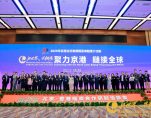
BEIJING, CHINA – Media OutReach Newswire – 18 November 2025 – On November 12, 2025, the thematic investment promotion event “Synergy Between Beijing and Hong Kong, Connecting the World – Towards a Brighter Future with Chaoyang” was successfully held at the Hong Kong Convention and Exhibition Centre. Jointly hosted by the Chaoyang District People’s Government and the Beijing Investment Promotion Service Center, and organized by the Chaoyang […]

The Video Game History Foundation is making strides in preserving gaming culture by unearthing a trove of out-of-print gaming magazines, including the iconic Game Informer. With the increasing demand for digital archives of media, this initiative aims to provide the gaming community, researchers, and enthusiasts with a valuable glimpse into the evolution of gaming through these historic publications. The Game Informer collection represents decades of gaming history, […]

GE Aerospace has reached significant milestones at the Dubai Airshow 2025, signing major engine agreements with two of the UAE’s most prominent carriers—Emirates and flydubai. The deals highlight the ongoing growth and resilience of the UAE’s aviation sector, which continues to see robust demand for both commercial aircraft and high-performance engines, despite the global challenges facing the industry.

The first of these landmark agreements was signed with Emirates, the world-renowned airline based in Dubai. Under the terms of the agreement, GE Aerospace will supply advanced engines for a number of Emirates’ new aircraft, including both narrowbody and widebody models. The deal underscores the airline’s commitment to expanding its fleet with cutting-edge technology to enhance fuel efficiency, performance, and sustainability.

For flydubai, the agreement is equally important as it continues its rapid growth trajectory. Flydubai, known for its extensive network across the Middle East, Africa, and Asia, will also integrate GE engines into its fleet expansion plans. The airline’s strategic focus on upgrading its fleet with advanced engine technology aims to improve operational efficiency while reducing carbon emissions—an essential move in line with global environmental goals.

GE Aerospace’s role in both of these agreements solidifies its position as a leader in the global aviation industry, especially in the Middle East, a region that has become a critical hub for air travel. These deals are seen as a testament to GE’s cutting-edge engineering capabilities, which align perfectly with the UAE’s ambitious aviation growth plans. The country’s major airlines, particularly Emirates, have long been at the forefront of technological advancements in the aviation industry, pushing the envelope on fuel efficiency and operational performance.

The Dubai Airshow itself has served as a vital platform for aerospace companies to showcase new technologies and forge strategic partnerships. The agreements with Emirates and flydubai are a clear indication of the UAE’s ongoing investments in its aviation infrastructure, which is poised to continue its rapid expansion over the coming years. Aviation experts suggest that these deals are also part of a broader trend in the region, where carriers are increasingly prioritising the integration of more fuel-efficient and environmentally sustainable technologies into their fleets.

In addition to fleet expansion, both Emirates and flydubai are working to increase their market share, not only within the Gulf region but also globally. With air travel demand rebounding in many parts of the world, the strategic importance of the UAE’s aviation sector cannot be overstated. Emirates, with its vast global reach, remains a key player in international air travel, while flydubai has emerged as a critical part of the UAE’s broader air transport network, offering affordable travel options to key regional destinations.

GE Aerospace’s engine technology plays a crucial role in supporting both airlines’ efforts to stay competitive and sustainable in the evolving air travel market. The next-generation engines provided by GE offer improved fuel economy and significantly lower emissions, aligning with international targets for reducing aviation’s environmental footprint. In addition to offering operational benefits, these engines will provide long-term economic advantages, ensuring that both Emirates and flydubai remain agile in a highly competitive market.

The Middle East’s aviation market is poised for an extraordinary expansion, according to Airbus’s Global Market Forecast 2025. The region, currently experiencing rapid economic growth and a surge in travel demand, is expected to see its in-service fleet more than double over the next two decades. The forecast reveals that the fleet will increase from 1,480 aircraft in 2024 to 3,700 by 2044, driven by both the […]

Michele Faissola, a senior figure at the family office of Qatar’s former emir, has joined a growing list of high-net-worth individuals relocating from the UK, driven by rising taxes on the wealthy. Faissola, who had been a prominent London-based executive for more than a decade, has shifted his primary residence to Italy, according to recent filings. This move comes amid a surge of wealthy individuals seeking more favourable tax regimes, a trend that has accelerated in recent years.

Faissola, a former Deutsche Bank executive, joined the Dilmon family office in 2018. The office manages the vast fortune of Sheikh Hamad bin Khalifa Al Thani, the former emir of Qatar. The decision to relocate marks a significant departure for the 57-year-old, who had long been part of London’s financial elite. His move highlights the growing concerns over the UK’s increasing tax burden on the rich, which has led to a shift in both the financial landscape and the geography of its wealthiest residents.

While Faissola did not immediately respond to requests for comment, his decision reflects a broader trend among ultra-wealthy individuals. They are increasingly looking outside the UK for residence options that offer more favourable tax conditions. The move is not isolated, as numerous other high-profile figures have also sought alternative locations with tax incentives. London, long considered a global financial hub, has seen some of its most affluent residents relocate to places such as Switzerland, Monaco, and, in Faissola’s case, Italy.

The British government has raised taxes on high earners in an effort to address its budget deficit. The increase in income tax, capital gains tax, and other levies has sparked significant debate about the impact on the wealthy. Critics argue that these changes could drive away much-needed capital, potentially harming the country’s financial sector and economy. Supporters of the tax hikes, however, contend that the changes are necessary to balance public finances and ensure social welfare.

The rise in taxes is part of a broader trend in the UK, where the wealthiest citizens are facing higher rates of taxation. The introduction of the so-called “surcharge” on the highest earners’ income and the steady increase in capital gains taxes has left many individuals questioning whether the UK remains an attractive place to live and do business. This has prompted many to seek jurisdictions with lower tax rates or more favourable tax treatment for high-income earners.

For those like Faissola, who manage significant family fortunes, the decision to relocate is not purely financial. The tax environment is a key factor, but considerations around lifestyle, security, and political stability also play a role in these decisions. The growing trend of wealthy individuals leaving the UK has prompted discussions about the potential long-term effects on the country’s attractiveness to global investors and its position as a financial centre.

The trend of high-net-worth individuals moving abroad is also being driven by the increasing mobility of the wealthy. With the advent of digital platforms and remote work, it is easier than ever for executives and business owners to operate across borders. As the global economy becomes more interconnected, the ability to move assets and people efficiently has become a key consideration for the wealthy.

VISHNU RAJA
RYO YAMADA
HITORI GOTOH
IKUYO KITA
Just in:
Huawei Cloud INSPIRE AI Forum Highlights Vietnam’s Readiness and Explores Opportunities for Agentic AI // Kuwait engages hostile drones as Bahrain intercepts attacks // Kochi police arrest man over pitbull attack on wife after quarrel // Over 360 electricity distribution professionals meet in Seoul for CIRED’s first major event in the Asia-Pacific region // Reliance explores satellite manufacturing alliances for broadband network // Mexican journalists demand accountability after Acapulco reporter killed // Optimizely breach exposes visitors across 178 organisations // Broermann Medical Innovation Award 2026: Three Pioneers of Modern Obesity and Diabetes Therapies Honored // Mangroves Documentary Premieres, Exploring How Cities and Wetlands Coexist // Ratio cut mooted to end teachers stir // South Korea weighs cash rewards for AI exam tips // Galaxy Resort Presents: “Plácido Domingo & José Carreras: The Legends United Opera Gala” // Kodiyeri in-law attacks Vijayan, Govindan over leadership style // Google identifies autonomous AI systems conducting vulnerability attacks // TCMA Advances ASEAN Cement Decarbonization with 14.4 Mt. of CO₂ Reductions // Trilateral Summit On Nov 19 Will Be A Dialogue Between Trump And Xi With Putin Observing // China’s Recombinant Collagen Technology Wins the INPD Innovative Manufacturing Process Award // UK privacy regulator flags GTA 6 phishing threats // Anthropic-linked futures price valuation at $1.7 trillion // ASEAN adopts binding pact on regional digital commerce //