News related to
Years

The Labour Fund, Tamkeen, has confirmed it will organise the Kingdom of Bahrain’s pavilion at GITEX Global 2025 in Dubai, featuring 14 Bahraini technology start-ups and small and medium enterprises alongside the Economic Development Board and ARRAY Innovations.

The event, scheduled from 13 to 17 October 2025, promises to provide the participating firms with access to global investors, partners and industry networks. The pavilion’s aim is explicit: to boost the international visibility of Bahrain’s ICT ecosystem and facilitate business growth.

Tamkeen’s announcement places it firmly in a leadership role for the pavilion’s curation and operations. The decision aligns with its 2025 strategic priorities, which emphasise supporting enterprise growth, promoting digitalisation, strengthening private-sector competitiveness and fostering sustainability.

Officials from Tamkeen and the Economic Development Board have highlighted that the selection of the 14 entities spans multiple subsectors within ICT, including software, data analytics, cybersecurity, and emerging technologies. They say the mix is intended to reflect both Bahrain’s current strengths and its ambitions for diversification.

In past editions of GITEX, Bahrain’s pavilion drew attention from regional and international delegations. During GITEX Global 2024, the pavilion was credited with facilitating multiple memoranda and partnership discussions. Tamkeen’s continued involvement signals its belief that sustained pavilion presence is critical to maintaining momentum in Bahrain’s tech diplomacy.

Some observers note that Bahrain’s tech infrastructure and regulatory environment are increasingly seen as competitive in the Gulf region. Over the past few years, the kingdom has liberalised foreign ownership rules in certain sectors and introduced incentives for startups and innovation funds. This pavilion engagement is viewed by analysts as part of a broader soft-power strategy to position Bahrain as a hub for digital investment.

However, challenges remain. For many Bahraini startups, scaling beyond domestic markets continues to be difficult. Access to international capital, navigating cross-jurisdictional regulation, and building brand recognition are persistent hurdles. Critics caution that pavilion exposure does not always translate into long-term market entry, and that stronger post-exhibition support is needed to ensure sustained growth.

Tamkeen has stated that it plans to accompany pavilion exposure with mentorship, investor matchmaking and export facilitation services for participating firms. The hope is that a combination of showcase visibility and structural support will help convert leads into lasting collaborations.

Already, the pavilion has generated interest among regional stakeholders. Several Gulf regional delegations and venture capital firms have expressed intent to engage with Bahrain’s teams during the event. The EDB is reportedly coordinating bilateral sessions between Bahrain’s entrants and visiting foreign trade missions.

For the 2025 edition, organisers have introduced a more structured schedule for pitch sessions, one-on-one meetings and thematic forums. This signals learning from past editions, where informal networking sometimes overshadowed targeted client engagement. Tamkeen officials have emphasised tighter alignment of startup offerings with investor interest sectors like fintech, AI and cloud services.

Within Bahrain’s domestic ecosystem, private sector associations and incubators have welcomed the announcement. Some have pushed for better curation, arguing that selecting firms with proven traction or clear roadmaps increases the chance that pavilion participation yields concrete contracts or investment.

HANOI, VIETNAM – Media OutReach Newswire – 7 October 2025 – The mega concert G-DRAGON 2025 WORLD TOUR [Übermensch] will take place on November 8 at 8Wonder Ocean City, with tickets officially opening for sale on October 7, 8, and 9. Prices range from VND 2 million to VND 8 million, offering a variety of exclusive benefits. With such anticipation, ticket sales are expected to spark an […]

Rania Gule Over the past few months, silver prices have witnessed a strong rally — not only as a safe-haven asset alongside gold, but also due to fundamental factors rooted in industrial supply and demand dynamics. As of early October 2025, silver is trading around $48.65 per ounce in spot market data, while ETFs such as iShares SLV show a slightly lower net asset value (NAV), reflecting […]

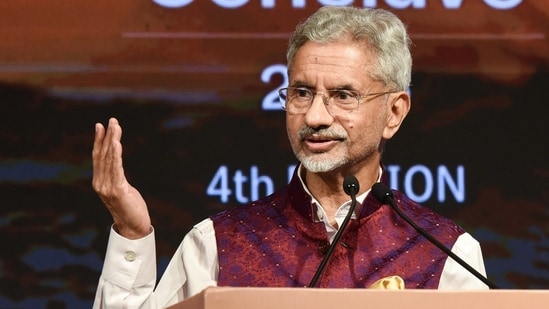
By Nitya Chakraborty Indian foreign policy makers have at last showing some mature understanding of the geopolitics of the post-Trump.2 months if the external affairs minister Dr. S Jaishankar’s observations at the concluding session of Kautilya Economic Conclave in New Delhi on Sunday, are any indication. The minister was quite candid in explaining the complexity […]

The article EAM Jaishankar Is Right: Trump Has To Respect India’s Red Lines appeared first on Latest India news, analysis and reports on Newspack by India Press Agency).

HANOI, VIETNAM – Media OutReach Newswire – 6 October 2025 – This November, for the very first time, Vietnamese audiences will be immersed in an unprecedented music event: the global superstar G-DRAGON’s world tour, landing right on the Eastern bank of Hanoi. Few realize that securing the nod from G-DRAGON required 8Wonder, the mega-festival brand of Vingroup, to overcome the incredibly stringent standards set by this S-tier […]

DP World has signed a memorandum of understanding with PayPal to roll out a digital payments solution meant to accelerate cross-border trade, bringing settlement times down from days to minutes. The agreement is part of DP World’s broader Digital Payments programme, targeting merchants, shippers, exporters, importers and marketplaces with a more transparent, lower-cost infrastructure. Under the deal, DP World will not itself act as a regulated payments […]

Dubai has issued Law No. of 2025 to regulate the professional practice of engineering consultancy firms, forbidding unlicensed operations and introducing a tiered classification system.

Under the law, no individual or office may conduct consultancy across fields such as architectural, civil, mechanical, electrical, chemical, geological or coastal engineering in the emirate without proper authorisation. Firms must hold a valid trade licence, register with Dubai Municipality, and submit detailed disclosures regarding their licensed scope, classification, and technical staff credentials.

A unified electronic platform, to be integrated with “Invest in Dubai,” will centralise firm registration, classification, issuance of competency certificates, and updates to consultancy qualifications.

A permanent “Committee for the Regulation and Development of Engineering Consultancy Activities” will be established under the law, chaired by a Dubai Municipality representative and comprising stakeholders from relevant authorities, tasked with overseeing implementation and resolving sectoral disputes.

The legislation classifies eligible firms into several categories: local Dubai-based companies; branches of UAE-based consultancies with at least three consecutive years of experience; branches of foreign consultancies with at least ten years of global experience; joint ventures between local and foreign players with at least a decade of consultancy track record; advisory offices led by registered engineers with a decade of experience; and engineering audit offices providing third-party evaluations.

Firms are barred from operating beyond their licence scope, hiring unregistered engineers or subcontracting to unlicensed entities. Violations can attract fines up to AED 100,000, stricter penalties for repeat breaches, suspension, downgrading classification, removal from the registry, licence cancellation, or revocation of professional certificates. Affected parties may file appeals within 30 days and decisions must be issued within 30 days, communicated within five working days.

Existing regulations under Local Order No. 89 of 1994 and its amendments will remain effective until new implementing regulations are issued, provided they do not conflict with the new law.

Consultancy firms and staff will have one year from the law’s effective date to regularise their status; extensions may be granted, and expired registrations can be renewed by committing to full compliance.

Dubai’s move mirrors the emirate’s broader legal recalibration of the infrastructure sector. In July 2025, Law No. 7 of 2025 was enacted to regulate contracting activities, consolidating prior laws and mandating registration, classification, subcontracting oversight and ethics codes across construction and engineering services. The new consultancy law can be seen as a complementary measure to ensure that consultancy services feeding into contracting projects meet defined quality and governance standards.

Industry stakeholders have expressed cautious optimism about the changes. Some consultancy firms believe the law will reduce unfair competition by eliminating unlicensed operators, thus raising standards overall. Others warn of compliance costs, especially for smaller local consultancies that may struggle to meet classification thresholds or hire adequately certified staff.

Regional and international firms see opportunity in the rule clarity and the potential to compete more transparently. Observers expect the new digital registry and classification framework to influence government procurement and tenders by favouring higher-ranked consultancies.

Advertisements

Strong demand and constrained inventory have pushed Dubai’s residential rents upward for several years. However, multiple indicators now suggest that 2026 will bring slower growth—perhaps even declines—in many segments of the market.

Headline figures already point to a deceleration. Yearly rental growth across residential properties in Dubai fell to about 8.5 percent by May 2025, down from 14.3 percent at the start of the year and 21.1 percent a year earlier. The long-term rental sector is under pressure as new supply enters the market: in the second quarter of 2025, long-term rental contracts fell 6.3 percent year on year, new contracts dropped nearly 8.9 percent, and overall rents declined 12.9 percent in quarterly comparison.

Analysts attribute the cooling largely to a surge in forthcoming housing supply. Some 150,000 new homes are expected to be completed between 2025 and 2027, representing a stock increase of nearly 20 percent in many parts of the market. Fitch Ratings projects residential property values could pull back by as much as 15 percent during late 2025 and into 2026, citing that the volume of handovers will likely outpace demand.

In the mid- and affordable segments, the impact may be most visible. Experts expect that communities with heavy handovers—such as Jumeirah Village Circle, Al Furjan, Dubai South, and surrounding areas—will experience downward pressure on asking rents. Nevertheless, prime areas like Downtown Dubai and Palm Jumeirah are forecast to continue seeing double-digit rent growth, buoyed by scarcity and sustained demand for luxury housing.

A tale of two markets is emerging. In central, premium sectors, landlords maintain leverage, while suburban and emergence zones will offer more negotiation room for tenants. Springfield Properties’ chief executive, Farooq Syed, observes that the large transaction volume and development pipeline into 2026 will provide tenants greater choice—especially in the apartment segment. Cushman & Wakefield Core’s head of research, Prathyusha Gurrapu, describes the trend as “clear signs of stabilisation,” especially outside the top-tier districts.

Beyond supply and demand dynamics, shifts are occurring in tenant preferences. Short-term and flexible lease arrangements continue to gain popularity, particularly among transient professionals and investors seeking yield. In Q2 2025, short-let occupancy remained strong—AirDXB, a key player in Dubai’s short-term rental market, achieved 90 percent occupancy compared to citywide averages around 63 percent. Technology trends are also creeping into real estate: blockchain-based platforms are being tested to automate rent payments and maintenance workflows.

On the investor side, yields remain attractive. Knight Frank reports residential yields are holding in the 5–7 percent range for apartments and 4.5–6 percent for villas and townhouses. But concerns are rising about overleveraged speculative investment, especially in lower-end segments. The Financial Times recently noted that many flippers—investors hoping to resell properties quickly for a profit—are already struggling to offload unfinished units as competition mounts.

Regulatory efforts may also temper volatility. Dubai’s Real Estate Regulatory Agency continues to push for transparency and consistent valuation practices, while the broader Dubai Land Department is moving toward digital registration and enhanced oversight. For tenants, the requirement to declare all occupants in Ejari contracts—an enforcement step introduced in 2025—tightens accountability in co-living arrangements.

Macro-economic fundamentals still support the market, albeit with caution. The emirate’s population passed 3.8 million in 2025, reflecting steady migration and growth—fuelling housing demand. Moreover, Dubai continues to attract global capital, drawn by tax benefits, infrastructure, economic diversification, and a relatively stable environment across the Gulf region.

Pressures are evident however. UBS’s 2025 index flagged Dubai at “bubble risk,” warning that rapid appreciation may not be sustainable without moderation. If large-scale oversupply hits the market at once, correction cycles may deepen in specific micro-markets.

The Bifrost subsea cable system has been certified as Ready for Service, paving the way for commercial data traffic between Singapore and the western United States.

Stretching more than 20,000 km, Bifrost charts a novel route via Indonesia—across the Java Sea and Celebes Sea—enabling the first direct subsea connection between Singapore and the U. S. West Coast. Its design supports over 260 Tbps of capacity, and the round-trip latency between Singapore and the U. S. is projected at under 165 milliseconds, approximately 10 ms faster than many alternative routes.

Keppel Ltd holds five of the total 12 fibre pairs in Bifrost, through a 40-60 joint venture with private fund co-investors. The cable system’s landing stations include Grover Beach, Winema, Guam, Singapore, and branching units to Jakarta, Manado, and Davao in the Philippines.

Manjot Singh Mann, CEO for Connectivity at Keppel, described Bifrost as a “landmark project” that will “bolster digital connectivity between Southeast Asia and the USA” and reinforce Singapore’s status as a regional digital hub. Alcatel Submarine Networks handled the cable’s construction; its CEO, Alain Biston, noted that reaching readiness reflects “the hard work of ASN teams working hand in hand with our client.”

In the Philippines, Converge ICT serves as the landing party at Davao. Dennis Anthony Uy, Converge’s CEO, said that the cable will “not only boost the company’s international bandwidth capacity, but for the Philippines, it will mean redundancy and diversity in network infrastructure.”

The significance of Bifrost lies not only in its raw capacity and speed but also in route diversification. By crossing via Indonesia, the cable offers an alternate path independent of existing transpacific systems, lowering the risk of congestion or outages on established corridors. Analysts view its timing as aligned with surging demand for bandwidth, driven by growth in AI workloads, real-time applications, cloud services, and digital transformation across Asia.

Bifrost enters a competitive environment of subsea infrastructure expansion. Projects such as Echo, Apricot, Hawaiki Nui, and others vie for roles in connecting Asia with the Americas and the Pacific islands. Echo is expected to link Singapore to Guam and onward to Eureka, California. Apricot, largely intra-Asia in scope, is ramping up deployments across Japan, Taiwan, the Philippines, and Indonesia.

Market commentators point out that Bifrost’s success will hinge on uptake from global cloud providers, telcos, and hyperscalers. Keppel’s stake reflects a confidence in long-term returns. Some financial analyses anticipate internal rates of return exceeding 30 percent, with projected revenue from operational and maintenance fees per fibre pair exceeding S$200 million over 25 years.

Because Keppel and its partners delayed the original launch schedule, the push to achieve RFS signals a resolve to catch up with escalating infrastructure demand.

By Manish Rai In his maiden speech in the United Nations General Assembly, Syria’s interim president, Ahmed al-Sharaa, called for lifting of international sanctions on Syria, becoming the first head of state from Syria to address the gathering in nearly 60 years. This signifies the first appearance of a Syrian president since Nureddin al-Atassi took office in 1967. Syrian President Sharra engaged in a series of bilateral […]

Global investment firm KKR has acquired a minority stake in ADNOC Gas Pipeline Assets LLC, reinforcing its commitment to Middle East energy infrastructure. ADNOC retains full operational control and ownership of the pipelines. KKR’s move builds on longstanding ties with Abu Dhabi’s national energy group. In 2019, KKR and BlackRock acquired a portion of ADNOC’s oil pipeline business in a landmark deal; that investment was later sold […]

Hamas has announced that it will free the final Israeli hostages taken in its October 2023 assault on Israel, but insisted that other elements of a U. S.-backed 20-point peace plan remain subject to negotiation, leaving the path ahead fraught with uncertainty. President Donald Trump welcomed the announcement, calling for an immediate halt to Israeli bombardment and offering indications that he might allow flexibility on the broader proposal.

Under the deal endorsed by Israel, all hostages—alive and deceased—are to be returned within 72 hours of Israel’s public acceptance, in exchange for the release of around 1,950 Palestinian detainees. The agreement envisages a phased Israeli withdrawal, transfer of Gaza’s administrative functions to apolitical technocrats, and demilitarization of Hamas. But Hamas has declined to commit to disarmament, signalling that parts of the plan will undergo further negotiation.

Trump, in a public message, said Israel “must immediately stop” its bombing of Gaza and asserted that he believed Hamas was “ready for lasting peace.” He also warned that failure to accept the terms by the deadline—Sunday at 6 p. m. Eastern Time—would provoke severe consequences. Israel has given tentative backing to the first phase of the plan, though it maintains reservation about Hamas’s retention of weapons.

Israeli Prime Minister Benjamin Netanyahu has accepted the peace initiative in principle but imposed caveats: Israel’s withdrawal will be partial, and Gaza will remain under strong security oversight. Netanyahu rejected formation of a Palestinian state under this framework, warning that such a move would reward terrorism. He has also suggested that Hamas participants who commit to peaceful transition could be granted amnesty.

Egypt, Qatar and other regional powers are acting as intermediaries to push Hamas toward acceptance. Israeli officials have reportedly reduced ground operations in Gaza City following U. S. pressure, instructing troops to limit activities to defensive operations even as the air campaign continues. Meanwhile, humanitarian groups warn that any ceasefire in name must be accompanied by unimpeded aid delivery and infrastructure repairs.

Some opposition voices in Israel—particularly among far-right coalition partners—view the latest developments as insufficient, demanding continued military pressure. Families of hostages have expressed cautious optimism, although they remain sceptical of open-ended guarantees.

In Hamas’s statement, the group claimed that the hostage release marks a gesture of “good faith,” but stressed that Israel’s withdrawal, guarantees on the safety of Gaza’s population, and the future role of Palestinian governance must be negotiated further. It described disarmament as “off the negotiating table” and refused to accept unconditional terms.

Analysts caution that the hostages’ release, while important, does not resolve deep structural issues: the role of Hamas in governance, security guarantees for Israel, and Gaza’s long-term reconstruction remain unresolved. Regional watchers view the moment as the most significant opening for a potential ceasefire in years—but one that may collapse without strict adherence to implementation timelines and third-party oversight.

International leaders have responded with varying tones. Some support the deal as a rare breakthrough, while others urge caution, calling for clear mechanisms to enforce demilitarization and civilian protections. The United Nations has reiterated its demand for accountability under international law and its role in aid operations.

Rain, Ekin Cheng, Hins Cheung and other music icons brought on the festival energy as part of Grand Prix™ Season Singapore 2025 SINGAPORE – Media OutReach Newswire – 3 October 2025 – JAM OFF 2025 roared back into Singapore last weekend, igniting Resorts World Sentosa with two unforgettable days of star-studded performances, dynamic competitions, and festival cheer. Organised by Destinations Network Tourism and Leisure Marketing Ltd., a […]

By Sushil Kutty There’s this theory going around that the Congress, wherever it has fought elections in recent years, from Haryana to Maharashtra, and now Bihar in the offing, it fought with its INDIA bloc allies more than with the BJP, the party to beat if the INDIA Bloc has to oust Prime Minister Narendra […]


The article Congress Should Go The Whole Hog With Its Ally RJD In Coming Bihar Polls appeared first on Latest India news, analysis and reports on Newspack by India Press Agency).

Matein Khalid Will we still be dancing when the music stops as Citigroup and UBS were in the autumn of 2007. Even my friends dissed me when I predicted a global financial crash as early as January 2007, but I track credit cycles like a bloodhound and it flashed the mother of all distressed SOS’s as it does now. In 2007, the trillion dollar daisy chain of […]

Dubai, UAE — 3 October 2025 — Igor Sergeev, founder and CEO of Papa Media, has announced the launch of a new PR marketplace designed to make media access possible in just three clicks. For over 15 years, Papa Media has worked across international markets with corporations, public figures, and opinion leaders. With this latest platform, the company introduces a product that makes media publishing faster, more […]

The non-oil private sector in the United Arab Emirates surged in September, with the S&P Global UAE Purchasing Managers’ Index climbing to 54.2, up from 53.3 in August. This marks the strongest expansion in seven months, as new business inflows rebounded sharply and domestic demand regained traction. Growth across new orders was the standout driver. The new orders sub-index jumped to 57.2 from 53.1, registering its fastest […]

HANOI, VIETNAM – Media OutReach Newswire – 3 October 2025 – Legendary global icon G-DRAGON has officially revealed the details of his much-awaited world tour, G-DRAGON 2025 WORLD TOUR [Übermensch], making his triumphant return to the global stage. In collaboration with Galaxy Corporation and AEG Presents, the tour promises an electrifying experience for fans worldwide. Promoted by AEG Presents, 8Wonder, and ER CMG, G-DRAGON 2025 WORLD TOUR […]

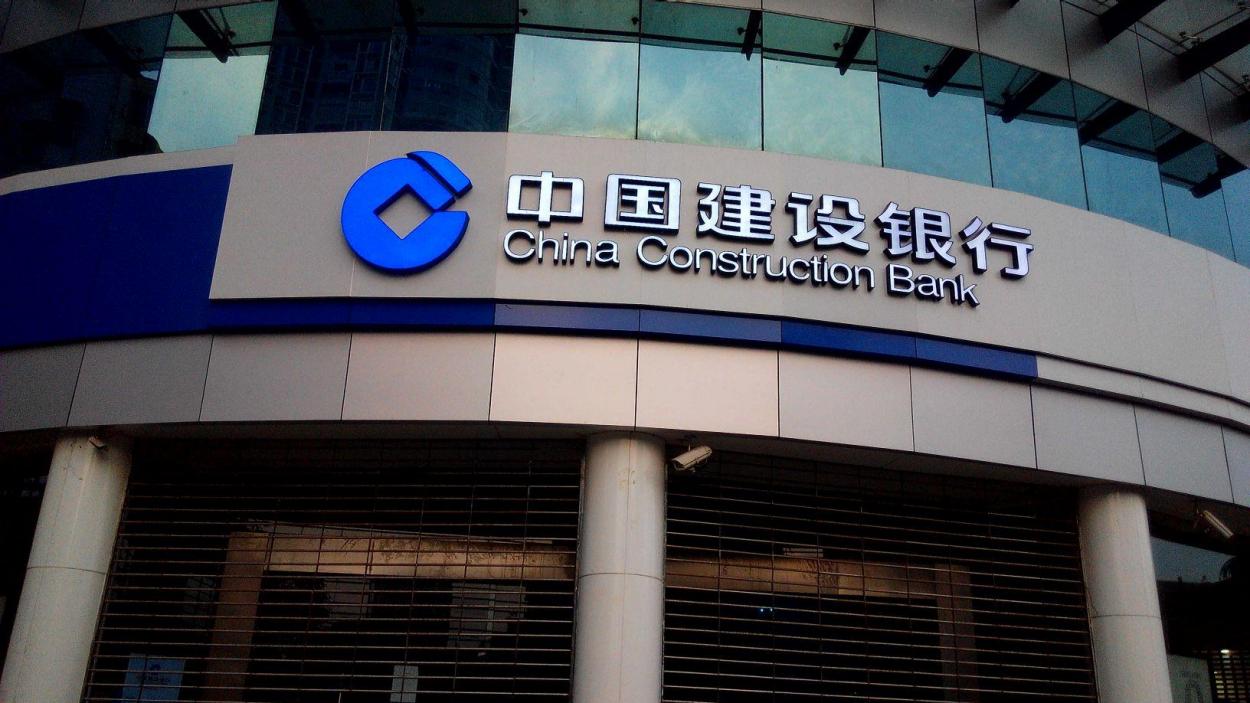
China’s largest state banks have committed over $3.75 billion in debt financing to Saudi Aramco’s Jafurah gas project, while Chinese investment funds have declined to take equity stakes in the venture, sources told Reuters.

The bulk of this funding comes from Bank of China, ICBC and China Construction Bank, each contributing around $1 billion, and Agricultural Bank of China adding roughly $750 million. This debt financing accounts for more than one-third of the total capital sought for what is expected to be the largest shale gas development outside the United States.

Aramco’s deal involves an $11 billion lease-and-leaseback agreement signed in August with a consortium led by Global Infrastructure Partners, an arm of BlackRock. Under the arrangement, a new entity called Jafurah Midstream Gas Company will lease processing assets to Aramco for 20 years. Aramco retains a 51 per cent stake, while the consortium holds the remaining 49 per cent.

Despite the opportunity to join the equity syndicate, several Chinese state-linked funds declined to participate, a move that sources attribute to heightened U. S.–China tensions. Beijing is said to have discouraged fund-level engagement with U. S.-affiliated private capital firms, even when such firms do not have overt U. S. exposure.

The Chinese banks’ decision to provide senior debt but avoid equity signals a calibrated strategic posture: backing the project financially without direct governance alignment with U. S.-linked investors.

Aramco’s broader ambition is to expand its gas production capacity by 60 per cent over 2021 levels by 2030. The Jafurah basin is estimated to contain 229 trillion standard cubic feet of raw gas and 75 billion stock tank barrels of condensate.

The BlackRock-led consortium is also negotiating additional capital of around $10.3 billion with a mix of debt instruments; participants in those talks include JPMorgan and Sumitomo Mitsui Banking Corporation. Those financial structures are intended to support the lease-and-leaseback model without ceding control of core infrastructure assets to external parties.

Within the Gulf, Chinese lenders’ prominent involvement in Jafurah’s financing echoes a broader trend. Analysts note that China is repositioning its role in Gulf energy infrastructure by leveraging its strengths in project debt and export credit rather than co-investment in U. S.-sponsored equity schemes.

Saudi Arabia is concurrently expanding its gas network. It has signed over $25 billion in contracts for the second phase of Jafurah development and further gas-network enhancements, including pipeline extensions of 4,000 km to increase capacity by 3.2 billion standard cubic feet per day. Chinese firms, such as Sinopec, are among the contractors participating in these projects.

For Aramco, the dual approach of securing large-scale debt from Chinese banks while partnering with international investors via the leaseback model helps it mobilise capital without relinquishing decisive control. The arrangement offers investors predictable tariff-based returns.

Chinese banks’ exposure gives them influence over covenant terms, loan pricing and repayment schedules. That leverage, without the burdens or political friction associated with equity, aligns with Beijing’s financial diplomacy toward strategic energy corridors.

The full constellation of debt and equity deals around Jafurah—and the dynamics among Gulf producers, Chinese state capital, and U. S.-linked private investors—will be among the key nodes shaping the next wave of energy infrastructure financing.

Space42 has issued its Foresight Constellation Viewpoint, a strategic dossier that underscores how Synthetic Aperture Radar satellite systems, when paired with artificial intelligence, can reshape decision making for governments and industries. The viewpoint emphasises the capacity for persistent imaging, all-weather operation and near-instant analytics — capabilities that are becoming mission-critical in an era of intensifying climate, security and infrastructure challenges.

At the heart of the Viewpoint is GIQ, Space42’s AI engine that converts raw SAR data streams into decision-grade intelligence within minutes. The report argues that the combination of high-resolution persistent coverage and AI transforms Earth observation from static imagery into a dynamic intelligence layer for monitoring, planning and emergency response. Launching Foresight-1 in August 2024 and Foresight-2 in January 2025 has already bolstered the UAE’s Earth observation capability.

Space42 frames its approach as not just a technological upgrade, but a sovereign asset: reliance on third-party satellite data leaves states vulnerable to disruptions, but a domestic SAR-analytics ecosystem offers resilience and control. The global SAR market, currently estimated around $5.8 billion, is forecast to nearly double to $9.8 billion by 2030. According to the Viewpoint, deployment of integrated SAR systems can yield cost savings — for instance, reducing predictive maintenance expenses by up to 30 per cent while improving emergency response by as much as 90 per cent.

The technical backbone of this strategy depends on both the satellite constellation and ground systems. Space42 has entered into a joint venture with ICEYE to localise manufacturing of SAR satellites in the UAE, aiming to strengthen supply chains and transfer expertise. The joint venture builds on prior collaboration: ICEYE’s technology underpins the Foresight satellites, and cooperation is intended to deepen over coming years.

Foresight-2 was successfully deployed via a rideshare launch on 14 January 2025, expanding the constellation’s capabilities and reinforcing its ability to revisit areas multiple times per day. With Foresight-1 and 2 in orbit, the full constellation is expected by 2027. The satellites exploit SAR’s unique ability to image through clouds and in darkness — a significant advantage over optical systems, especially in disaster and high-latency environments.

The Viewpoint also positions its narrative with real-world scenarios. It cites the 2023 Turkey earthquake, in which optical systems were hindered by cloud cover, while SAR satellites continued functioning — enabling assessments of a major dam’s structural integrity in crisis conditions. That example supports the argument that SAR ecosystems must be treated not as supplements but as core infrastructure for resilience and security.

Space42 positions itself as a full-stack player: not merely a satellite operator but a systems integrator combining space services, geospatial analytics and AI. Its dual business units—Space Services and Smart Solutions—serve satellite operations and downstream intelligence markets respectively. Among its touted use cases are border surveillance, maritime monitoring, infrastructure health, mobility and disaster management.

Yet challenges remain. Building sovereign SAR ecosystems demands investment in ground infrastructure, antenna networks, data processing centres and skilled personnel. Market competition is increasing: global players—commercial and governmental—are accelerating developments in miniaturised SAR payloads, hybrid optical/SAR systems and edge AI processing. Moreover, the cost dynamics of deploying dense constellations must be managed against returns from clients in defence, environment and infrastructure sectors.

HANGZHOU, CHINA – Media OutReach Newswire – 3 October 2025 – Geely Riddara launches the RD6 Econ all-electric pickup in Laos and the Philippines, with rollouts to Thailand, Malaysia, and Pakistan—Positioned as an economical, dual-use pickup for commercial and personal needs, the RD6 Econ combines outstanding cost efficiency with optimized energy consumption to offer global markets a more sustainable, value-driven choice. Geely Riddara Launches RD6 Econ All-electric […]

Austria’s armed forces have shifted from Microsoft Office to the open-source LibreOffice platform on approximately 16,000 desktops, a move framed by defence authorities as a step toward digital sovereignty rather than cost cutting. Michael Hillebrand, head of Directorate 6 ICT and Cyber, emphasised that data processing will now remain entirely in-house under strictly auditable systems. He told ORF radio that dependency on external cloud providers was considered […]

Dubai’s ride-hailing landscape has shifted dramatically as the UAE-based Zed app now encompasses 10,764 taxis across the emirate—equivalent to more than four in five licensed cabs. The move was enabled through strategic partnerships with Dubai Taxi Corporation and National Taxi, folding in the fleets of three major operators.

Under the new arrangement, DTC’s entire fleet and those of National Taxi and Kabi by Al Ghurair become bookable via the Zed platform, effectively making Zed the host of Dubai’s second-largest taxi fleet. Zed executives describe the expansion as a means of enhancing coverage, cutting cancellations, and lowering wait times, especially across areas traditionally underserved.

Badr Al Ghurair, Zed’s Chief Executive, emphasised the home-grown nature of the platform and its deep knowledge of Dubai’s commuting patterns: “this collaboration … further strengthens Dubai’s mobility ecosystem while ensuring that our communities have access to reliable, everyday transport solutions” he said. Abhinav Patwa, Zed’s EVP and Head, added that the alliances provide scale and reliability without losing sight of a customer-first approach.

The accord comes amid Dubai’s broader ambition of converting 80 per cent of taxi bookings to digital platforms—a target within reach through the emirate’s Smart City 2025 programme. The integrated fleet also introduces more electric and hybrid taxis into Zed’s pool, aligning with the city’s sustainability goals.

This consolidation represents a notable realignment in Dubai’s mobility market. For years, taxis and e-hailing apps operated largely in parallel, with limited overlap in booking channels. The new model bridges that divide, bringing traditional operators into the digital fold via a single platform. Analysts say the move may accelerate the decline in usage of standalone taxi apps and push rivals to forge similar alliances or risk falling behind.

Dubai Taxi Company, now a public joint stock firm under Law No. 21 of 2023, operates more than 10,000 vehicles, of which 6,200 taxis were folded into the agreement. Kabi by Al Ghurair contributed another 3,680 vehicles under the tie-up. According to RTA data, Dubai’s taxi sector expanded by 7 per cent in the first half of 2025 compared with the same period in 2024, signalling growing demand for urban mobility services.

Through the arrangement, newly commissioned taxis across the partner fleets will automatically integrate into Zed’s system—making service expansion incremental and scalable. Several of the added vehicles are electric or hybrid, helping Zed accelerate its greening efforts.

Passengers can now access all these taxis via Zed’s iOS and Android apps, with the platform continuing to offer features such as guaranteed on-time pickups for pre-booked premium rides. The enhanced capacity is expected to reduce wait times during peak hours, improve service in remote zones, and lower the incidence of ride cancellations.

Celebrating life through innovation and compassion in reproductive medicine. KOTA DAMANSARA, MALAYSIA – Media OutReach Newswire – 2 October 2025 – Thomson Fertility is shining a spotlight on In Vitro Activation (IVA), an advanced technique that provides renewed possibilities for women diagnosed with Primary Ovarian Insufficiency (POI) (due to follicular dysfunction or early loss of eggs) and diminished ovarian reserves (DOR), two conditions that significantly reduce fertility […]

VISHNU RAJA
RYO YAMADA
HITORI GOTOH
IKUYO KITA