Ras Al Khaimah has enacted a new law establishing a comprehensive legal and technical framework for the testing, deployment and operation of autonomous vehicles, positioning the northern emirate among the jurisdictions in the region seeking to regulate emerging transport technologies with an emphasis on safety, security and data protection. The legislation, approved by the Ruler of Ras Al Khaimah, lays out the conditions under which autonomous vehicles […]
India’s largest information technology services firms together reported a net reduction of close to 3,000 employees in the third quarter of the 2025–26 financial year, underscoring a structural shift in hiring as companies rebalance workforces around artificial intelligence, cloud platforms and higher-value digital engineering.
Quarterly disclosures showed that headcount at several bellwether firms edged lower despite stable deal pipelines. The combined net decline, modest by historical standards, contrasted sharply with the aggressive campus hiring and broad-based workforce expansion that defined the sector for more than a decade. Executives and analysts pointed to a “barbell” pattern in demand, with strong hiring at the high end for niche digital and AI skills and limited intake, or attrition-led pruning, in legacy application maintenance and commoditised services.
At Tata Consultancy Services, the country’s largest IT services exporter by revenue, total employee strength slipped during the quarter as voluntary attrition stayed elevated in certain service lines and fresh hiring remained selective. Infosys also reported a marginal fall in headcount, reflecting a focus on utilisation, internal redeployment and productivity improvements rather than large-scale lateral recruitment. Wipro and HCLTech posted similar trends, with management teams emphasising skill transformation over volume growth.
The net reduction came even as revenue growth stabilised sequentially for most firms, helped by cost optimisation deals, vendor consolidation and demand for cloud migration. Industry executives said the hiring slowdown was not a signal of weakening fundamentals but a recalibration after years of overcapacity built during the post-pandemic surge in digital spending.
What is different this cycle, analysts argue, is the depth of the technology shift reshaping delivery models. Generative AI tools, low-code platforms and automation frameworks are beginning to decouple revenue growth from headcount expansion. Routine coding, testing and support tasks are increasingly automated, reducing the need for large teams, while boosting productivity per employee.
This dynamic has produced the barbell model now widely discussed in boardrooms. On one end, firms are competing fiercely for specialists in data engineering, AI model deployment, cybersecurity, semiconductor design services and advanced cloud architecture. On the other, demand for entry-level roles tied to traditional application development and infrastructure support has softened, leading to fewer campus offers and limited backfilling of exits.
Management commentary during earnings calls reinforced this shift. Several chief executives highlighted large internal reskilling programmes, with tens of thousands of employees undergoing training in AI, machine learning and cloud-native technologies. The emphasis has moved from hiring for scale to building depth in targeted capabilities that command higher billing rates and longer-term client commitments.
Client behaviour has also played a role. Enterprises in North America and Europe, which account for the bulk of export revenues, continue to scrutinise technology budgets amid macroeconomic uncertainty. Discretionary projects have faced delays, while spending has been redirected toward efficiency-led initiatives where automation is central. This has compressed demand for traditional staff-augmentation models that once absorbed large numbers of engineers.
Despite the headline job losses, the sector remains a major employer, with total headcount across the top firms still running into the millions. Analysts caution against interpreting the quarterly decline as a broad-based contraction. Instead, they see a transition phase in which workforce pyramids are being reshaped to align with evolving client needs and delivery economics.
Wage dynamics reflect the same adjustment. Salary hikes have been measured, variable pay has been linked more closely to utilisation and skill relevance, and onsite deployments have been rationalised. At the same time, niche talent continues to command premiums, widening pay dispersion within firms.
Gmail is undergoing a set of structural changes that extend beyond visible interface tweaks, and security specialists warn the quieter updates could leave millions of accounts exposed if users fail to adjust their settings. The most immediate concern centres on how Google is reworking legacy email access and tightening the way third-party messages are handled inside Gmail, at a time when artificial intelligence tools are becoming more […]
Arabian Post Staff -Dubai NMK Electronics has unveiled NMK Beyond, a 21,500 sq ft immersive technology hub positioned in Dubai’s urban core, marking a significant expansion of the company’s footprint in professional audio-visual and integrated solutions. The facility is designed to function as a live, hands-on environment where enterprise clients, systems integrators, consultants, educators and content creators can experience end-to-end technology workflows rather than static product displays. […]
A shift in global technology talent flows is becoming clearer as companies and professionals reassess the United States’ immigration environment, with India emerging as a leading beneficiary. Tightened visa scrutiny, policy uncertainty and prolonged processing timelines linked to Trump-era approaches to skilled migration have altered career calculations for engineers, researchers and founders who once saw the US as the default destination. Technology firms across Silicon Valley and […]
Major powers are expanding sensor investment across land, air, sea, cyber and space as platforms grow faster, stealthier and more autonomous. Aerospace advances such as reusable launch vehicles, hypersonic flight and satellite mega-constellations depend on dense networks of precision sensors to operate safely and effectively. In military settings, those same tools are redefining early warning, targeting and defence. One of the most consequential shifts has been in […]
Apple is confronting a shareholder campaign seeking a comprehensive audit of the company’s exposure to China, sharpening a debate over supply-chain concentration, intellectual property protection and geopolitical risk as ties between Washington and Beijing remain strained. The proposal, scheduled for consideration at Apple’s annual meeting set for February 2026, has been filed by a coalition led by the National Legal and Policy Center, which argues that the […]
Pressure is building on developers and corporate users of generative AI as “hallucinations” — confident statements that are wrong — continue to surface in customer service chats, legal filings, coding assistants and financial research notes, exposing organisations to reputational harm, regulatory scrutiny and operational risk. The problem has become harder to dismiss as adoption accelerates, because the errors often arrive wrapped in fluent prose, invented citations and […]
Cybersecurity firm Rubrik has rolled out a sovereign version of its Rubrik Security Cloud, positioning the offering as a response to mounting pressure from governments and regulated industries to keep sensitive data under national control and outside the reach of foreign jurisdictions. Rubrik said the sovereign capability is designed to ensure that customer data, encryption keys, operations and support remain confined within specific countries or regions, aligning […]
A major ransomware intrusion at a key manufacturing partner of Apple has intensified concerns over cyber resilience across global electronics supply chains, after attackers claimed to have stolen more than one terabyte of confidential data linked to unreleased products and internal operations. The attack, attributed to the criminal group RansomHub, targeted Luxshare, a long-standing supplier involved in assembling and producing components for flagship consumer devices. Information circulating […]
GitLab has issued urgent security updates to address multiple high-severity vulnerabilities that could allow attackers to bypass two-factor authentication and disrupt service availability, prompting strong advisories for organisations running self-managed instances to upgrade without delay. The company confirmed that patched versions 18.8.2, 18.7.2 and 18.6.4 for both Community Edition and Enterprise Edition close a set of flaws affecting authentication controls and system resilience. GitLab. com, the hosted […]
In an era where luxury travel is no longer just about lavish surroundings, renowned service, or even selecting the perfect paintings for home decor to bring that elegance indoors, the integration of cutting-edge tech is reshaping how affluent globetrotting geeks experience this world. From artificial intelligence (AI) shaping bespoke services to augmented reality (AR), creating stunning previews, innovation is driving unprecedented levels of personalization, convenience, and engagement […]
Raaga, a Chennai-based music streaming platform with a large global audience, has confirmed a significant data breach that led to the exposure of personal information linked to more than 10.2 million user accounts, triggering renewed scrutiny of data protection practices across consumer digital platforms. The company acknowledged that a database containing user details was unlawfully accessed and later advertised for sale on an underground hacking forum during […]
New York Stock Exchange plans to introduce continuous, 24-hour trading for United States equities through a newly designed on-chain, tokenised exchange, marking a structural shift in how shares could be issued, traded and settled across time zones. The proposal, disclosed by people familiar with the exchange’s roadmap and echoed in public briefings around digital market infrastructure, would extend trading beyond traditional hours while keeping securities within a […]
UAE President Sheikh Mohamed bin Zayed Al Nahyan arrived in New Delhi on a working visit, marking another step in the steady expansion of political, economic and strategic ties between Abu Dhabi and New Delhi. He was received at the Palam Air Base by Prime Minister of India Narendra Modi, accompanied by senior members of the Union Cabinet and officials from the external affairs establishment, underscoring the importance both sides attach to the engagement.
The visit places renewed focus on deepening UAE–India partnership at a time when bilateral cooperation spans trade, energy security, technology, defence and people-to-people exchanges. Officials said discussions during the visit would review progress under existing agreements while identifying new areas for collaboration aligned with long-term economic and geopolitical priorities.
The UAE and India have built a close relationship over the past decade, anchored by high-level political engagement and sustained institutional cooperation. The elevation of ties to a Comprehensive Strategic Partnership has provided a framework for collaboration across sectors, with regular leader-level interactions helping to maintain momentum. Sheikh Mohamed and Prime Minister Modi have met frequently on the margins of multilateral forums and through bilateral visits, creating a rapport that has translated into concrete outcomes.
Trade and investment remain central to the agenda. Bilateral non-oil trade has expanded significantly following the implementation of the Comprehensive Economic Partnership Agreement, which reduced tariffs, simplified customs procedures and opened services markets. Officials on both sides view the agreement as a catalyst for further growth, particularly in manufacturing, logistics, food security and digital services. The UAE has also emerged as a major investor, with sovereign and private capital flowing into infrastructure, renewable energy, ports and technology ventures.
Energy cooperation continues to be a pillar of the relationship. The UAE is a key supplier of crude oil and liquefied natural gas, while joint investments in strategic petroleum reserves and downstream assets have added depth to the partnership. As both countries pursue energy transition goals, collaboration has widened to include renewables, green hydrogen and climate technology, reflecting shared commitments to sustainability and diversification.
Defence and security cooperation has gained prominence amid evolving regional and global challenges. Regular joint exercises, intelligence exchanges and defence industrial cooperation have strengthened interoperability and trust. Counter-terrorism, maritime security and cyber resilience are areas where officials see scope for closer coordination, particularly given the shared interest in stable sea lanes and secure digital infrastructure.
Technology and innovation feature prominently in the discussions. The UAE’s push to position itself as a hub for advanced technologies aligns with New Delhi’s focus on digital public infrastructure, fintech and start-up ecosystems. Partnerships between research institutions, technology firms and start-ups have expanded, supported by policy initiatives and investment platforms designed to facilitate cross-border collaboration.
The large expatriate community also shapes the relationship. Millions of people from India live and work in the UAE, contributing to its economy and cultural diversity, while remittances and professional exchanges strengthen social and economic links. During past engagements, leaders have highlighted the role of this community as a bridge between the two nations, with initiatives aimed at skills development, worker welfare and cultural exchange.
On the multilateral front, both countries coordinate positions on regional stability, economic governance and climate action. Cooperation within forums such as the G20, where the UAE has participated as a guest under New Delhi’s presidency, has reinforced alignment on development priorities, debt relief for vulnerable economies and sustainable growth.
Officials familiar with the visit said meetings would assess progress on commitments made during earlier engagements and set timelines for new initiatives. Agreements and memoranda of understanding under consideration span sectors including education, healthcare, space cooperation and financial services, reflecting the breadth of the partnership.
ESET MDR delivers industry-leading real-time detection and a mean-time-to-respond (MTTR) of 6 minutes to keep businesses secure
SINGAPORE – Media OutReach Newswire – 19 January 2026 –ESET, a global leader in cybersecurity solutions, today announced the launch of two Managed Detection and Response (MDR) subscription tiers: ESET PROTECT MDR for small and medium businesses (SMBs) and ESET PROTECT MDR Ultimate for enterprises in Singapore.
Bridging the gap with MDR
ESET PROTECT MDR delivers a comprehensive cybersecurity package, offering 24/7/365 superior protection. This includes modern protection for endpoints, email, and cloud applications, vulnerability detection and patching, and managed threat monitoring, hunting, and response. For enterprises, ESET PROTECT MDR Ultimate offers continuous proactive protection and enhanced visibility, coupled with customised threat hunting and remote digital forensic incident response assistance.
ESET’s APAC SMB Cybersecurity Report 2024 revealed that 49% rate lacking a dedicated cybersecurity team and 52% rated keeping up with the latest threats as one of the top three cybersecurity challenges in Singapore. 31% also cited alert fatigue as the biggest challenge. Incidentally, APAC also faces the largest shortage of cybersecurity experts in the world. These highlight the urgent need for skilled cybersecurity professionals and managed services that can help bridge the country’s growing talent gap. ESET’s MDR services ensure organisations of all sizes and cybersecurity maturity to stay one step ahead of all known and emerging threats, effectively closing the cybersecurity talent gap, and facilitating expert consultations for incident management and containment in a fully managed experience.
ESET MDR delivers a remarkable 6-minute Mean Time to Respond (MTTR) — the fastest in the industry*. In comparison, the median time for organizations to detect a breach is 24 days**, leaving critical systems and data exposed for weeks. Every hour that a breach goes undetected dramatically increases the risk of data loss, operational disruption, and financial damage.
“Cyber threats are becoming more sophisticated and more time-critical, especially in highly connected digital economies like Singapore,” said Pamela Ong, Country Manager of Asia and Singapore at ESET. “Our AI-powered MDR services combine automation, human expertise, and global threat intelligence to help organisations move beyond reactive security. The ability to detect and respond within minutes can make the difference between a contained incident and a major breach.”
ESET’s MDR services Meet the Unique Challenges of MSPs
ESET recognises the growing pressures facing MSPs who must balance the critical task of securing clients’ complex IT environments with their own business growth and operations. With threat actors going heavy on supply-chain attacks and abusing MSP tooling, MSPs too find themselves fixed in the crosshairs of cybercriminals. Simply put, MSPs are not only potential victims, but also potential accessories to a crime. To help MSPs fulfill their security potential, ESET’s MDR is also designed to be deployed in an MSP environment with a single solitary security service, available 24/7 that help MSPs to secure themselves as well as their clients.
*Based on publicly available information as of 1 October 2025. **Verizon 2025 Data Breach Investigations Report Hashtag: #ESET
The issuer is solely responsible for the content of this announcement.
About ESET
ESET® provides cutting-edge digital security to prevent attacks before they happen. By combining the power of AI and human expertise, ESET stays ahead of known and emerging cyberthreats — securing businesses, critical infrastructure, and individuals. Whether it’s endpoint, cloud, or mobile protection, our AI-native, cloud-first solutions and services remain highly effective and easy to use. ESET technology includes robust detection and response, ultra-secure encryption, and multifactor authentication. With 24/7 real-time defense and strong local support, we keep users safe and businesses running without interruption. An ever-evolving digital landscape demands a progressive approach to security: ESET is committed to world-class research and powerful threat intelligence, backed by R&D centers and a strong global partner network. For more information, visit www.eset.com or follow us on LinkedIn, Facebook, and X.
India has overtaken most markets to become the world’s second-largest 5G network by user base, crossing an estimated 400 million subscribers as operators expand coverage and devices become more affordable. The scale of adoption places the country behind only China, underscoring the pace at which fifth-generation services have spread across cities, towns and large rural corridors.
Official tallies compiled from industry disclosures and regulatory filings show nationwide 5G availability across all states and union territories, with more than 450,000 base stations activated since commercial launch in October 2022. Data from the Telecom Regulatory Authority of India indicates that fifth-generation users now account for a substantial share of total mobile broadband connections, a shift that has occurred faster than earlier transitions from 2G to 3G and 4G.
India’s 5G surge reshapes global rankings as operators leveraged aggressive rollouts and introductory pricing to seed usage. The government’s early spectrum auctions, coupled with simplified right-of-way rules for fibre and towers, reduced deployment friction. Policymakers also pushed indigenous manufacturing through production-linked incentives, lowering equipment costs and shortening supply chains.
Market leaders have driven much of the momentum. Reliance Jio built a standalone 5G network using mid-band spectrum and dense fibre backhaul, prioritising urban clusters and industrial zones before pushing into smaller towns. Bharti Airtel opted for a non-standalone architecture initially, upgrading existing 4G sites to accelerate time-to-market while expanding capacity. Vodafone Idea has begun selective launches following capital infusions, focusing on circles with higher data demand.
Subscriber growth has been supported by falling handset prices and a rapid refresh cycle. Entry-level 5G smartphones from domestic and global brands now sit near mass-market price points, while older devices have been phased out as networks refarm spectrum. Analysts note that average data consumption per user has climbed as video streaming, cloud gaming and real-time navigation benefit from lower latency and higher throughput.
Enterprise use cases are also gaining ground. Private 5G deployments are being tested in ports, manufacturing plants and campuses to support automation, predictive maintenance and machine vision. The Department of Telecommunications has approved pilot licences for captive networks, enabling firms to experiment without relying solely on public networks. Healthcare applications such as remote diagnostics and education tools like immersive classrooms are being trialled in partnership with state governments.
The speed of expansion reflects a competitive pricing environment. Unlimited 5G plans bundled with 4G subscriptions reduced barriers to trial, while promotional offers encouraged device upgrades. Industry executives argue that scale efficiencies and declining network costs will support sustainable pricing even as data traffic rises.
Challenges persist. Monetisation remains uneven as consumers expect higher speeds at similar prices, pressuring average revenue per user. Network densification in dense urban areas requires continued capital expenditure, and power availability in remote regions complicates operations. Cybersecurity and data privacy frameworks must keep pace with new applications that rely on ultra-reliable connectivity.
Spectrum policy will shape the next phase. Operators are seeking clarity on millimetre-wave allocations to unlock ultra-high-capacity hotspots for campuses and stadiums. Backhaul capacity, particularly fibreisation of towers, is another bottleneck that policymakers are addressing through coordinated infrastructure planning.
Globally, India’s ascent alters competitive dynamics. Vendors see the market as a proving ground for large-scale deployments, while application developers view it as a launchpad for services that require millions of concurrent users. The country’s experience is being studied by emerging economies looking to leapfrog directly to advanced mobile broadband.
Dubai’s financial regulator has rolled out a strengthened framework for crypto tokens in the Dubai International Financial Centre, marking a significant step in the evolution of the emirate’s digital assets oversight as global scrutiny of the sector intensifies. The updated regime, announced on Tuesday by the Dubai Financial Services Authority, replaces and expands the rules introduced in 2022 and applies to all crypto token activities conducted within […]
A security weakness in Google’s Fast Pair protocol has exposed a broad range of Bluetooth earbuds and headphones to silent hijacking, allowing attackers within wireless range to connect to devices without the owner’s knowledge and potentially listen in, track movements or activate microphones. The issue, widely referred to by researchers as WhisperPair, affects millions of products that rely on Fast Pair to simplify setup on Android phones. […]
HONG KONG SAR – Media OutReach Newswire – 15 January 2026 – HKU Business School unveiled the “Hong Kong Economic Policy Green Paper 2026” (“Green Paper”). This comprehensive document delves into various facets of Hong Kong’s economic domain, covering everything from trade finance and Hong Kong’s role in the Greater Bay Area (GBA) startup ecosystem to green finance, the IP economy, social and shareholder value for Hong Kong-listed companies, and pressing social issues such as housing affordability and overcrowding in emergency departments. Moreover, with the emergence of AI, the Green Paper examines the impact of AI on the labour market, cybersecurity, and the development of a Web 3.0 ecosystem.
This is the fifth edition of the Hong Kong Economic Policy Green Paper, released by HKU Business School, with the aim of providing recommendations on how Hong Kong can effectively tackle these challenges.
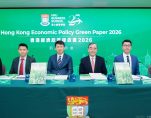
HKU Business School today unveils the Hong Kong Economic Policy Green Paper 2026. From left: Prof. Huiyin Ouyang, Associate Professor in Innovation and Information Management of HKU Business School, Prof. Dragon Tang, Professor in Finance in HKU Business School, Professor Hongbin CAI, Dean and Chair of Economics of HKU Business School, Prof. Richard Wong, Provost and Deputy Vice-Chancellor of The University of Hong Kong and Director, Hong Kong Institute of Economics and Business Strategy, Prof. Heiwai Tang, Associate Vice-President of The University of Hong Kong and Associate Dean of HKU Business School, and Dr. Tingting Fan, Principal Lecturer in Marketing of HKU Business School.
Prof. Richard Wong, Provost and Deputy Vice-Chancellor of The University of Hong Kong and Director, Hong Kong Institute of Economics and Business Strategy said, “This Green Paper was released after months of rigorous research by the scholars from HKU Business School. Grounded in an academic perspective and guided by a pragmatic, problem-solving approach, we have conducted objective analyses and in-depth investigations into core issues and real-world challenges currently facing Hong Kong’s development in political and economic operations, people’s livelihood, and industrial upgrading. Our aim is to provide the Government and relevant authorities with valuable insights and actionable policy recommendations.”
Professor Hongbin Cai, Dean and Chair of Economics of HKU Business School, said, “As a ‘super-connector’ bridging China and the world, Hong Kong’s unique role remains indispensable. Looking ahead, Hong Kong must deeply integrate into China’s national development plans, and also take a more prominent role on the international stage, with an in-depth understanding of the global market and active engagement with its international collaborators.
With campuses in Beijing, Shanghai, and Shenzhen, and an expanding presence in Vietnam and Europe, HKU Business School embodies our unique proposition: deeply rooted in Hong Kong, fully engaged with the Chinese Mainland, and truly international. This year’s Green Paper reflects our dedication to inspiring solutions based on rigorous research. As a world-class institute of higher education, we are committed to enabling Hong Kong to further unleash its core values and usher in a new era of high-quality development.”
Prof. Heiwai Tang, Associate Vice-President of The University of Hong Kong and Associate Dean of HKU Business School, added, “This Green Paper features research papers from ten teams of scholars with diverse backgrounds and varied expertise. Based on profound insights into Hong Kong’s development, they offer unique and targeted policy recommendations, building a rich and multifaceted framework of issues for the Green Paper. At the same time, behind these research achievements lies the scholars’ deep affection for and sense of responsibility toward Hong Kong.”
Regarding how digital technology can boost Hong Kong’s trade finance, he emphasised: “Both data and industry feedback clearly demonstrate the core value of trade finance. However, we need more synergy in the trade finance ecosystem and to catch up in digitisation. To address this, we must strengthen the governance and standard promotion of digital trade platforms and tools, deepen the cross-border interoperability of trade data, expand the functions of the Hong Kong Export Credit Insurance Corporation, focus on high-value-added trade enterprises, extend the coverage of Free Trade and Double Taxation Avoidance agreements, and promote responsible stablecoin adoption and Renminbi internationalisation.”
Prof. Dragon Tang, Professor in Finance at HKU Business School, stated, “Hong Kong is uniquely positioned to lead in the integration of blockchain technology within green finance, exemplified by our pioneering issuance of the world’s first tokenised green bonds, totalling HKD 6 billion in February 2024. With green finance representing a critical avenue for sustainable development, the global market is projected to grow significantly, emphasising the importance of transparency and trust. To capitalise on this opportunity, we must enhance our blockchain infrastructure, establish clear regulatory standards, and promote cross-border integration with initiatives like Core Climate. By leveraging blockchain’s capabilities, we can significantly reduce costs, improve transparency, and engage a broader investor base, ultimately driving our transition to a sustainable finance future.”
Prof. Huiyin Ouyang, Associate Professor in Innovation and Information Management, HKU Business School, commented on her study, saying, “Two weeks post-implementation of the hospital fee reform, the media reported no significant change in emergency department crowding, which aligns with what our analysis predicted. Overcrowding isn’t simply about patient behaviour – it’s a structural issue. Demographics are shifting, capacity is constrained, and alternative treatment options remain limited. What we now need is a careful, systematic evaluation of the fee changes. Where are vulnerable patients going for care? Are some patients delaying treatment? What unintended effects are emerging? Effective reform requires pairing fee adjustments with expanded primary care access. We can’t solve a capacity problem with pricing alone.”
Dr. Tingting Fan, Principal Lecturer in Marketing at HKU Business School, presented as well, spoke on her study and asked, “Why did Pop Mart go public in Hong Kong but register IP in Singapore? Or why was Molly ‘born’ in Hong Kong but did not go viral from Hong Kong? Why have local companies not managed to turn these homegrown IPs into major business triumphs? Learning from the past and looking forward, Hong Kong can leverage its financial market, legal system, as well as talents to build a comprehensive IP industry infrastructure and become an IP hub.”
The Green Paper includes ten articles; the key points are as follows:
Empowering Merchandise Trade Finance with Digital Technology in Hong Kong Author: Prof. Heiwai Tang, Associate Vice-President (Global), The University of Hong Kong; Associate Dean (External Relations), HKU Business School; Associate Director, Hong Kong Institute of Economics and Business Strategy; Victor and William Fung Professor in Economics
Trade is an essential lifeline for Hong Kong; its total merchandise trade was three times the city’s HKD3.2 trillion GDP in 2024. Trade finance is thus equally important, yet research shows that the total loans extended for trade finance have been declining.
As geopolitical and technological shifts reshape trade, Hong Kong must upgrade its trade finance services. With consumer-goods trade shifting to smaller, more frequent orders and shorter cycles, financial institutions need to streamline approvals and develop flexible products for e-commerce and logistics-driven cash cycles. Banks also need to digitise core processes in fund settlement. The article cautions that platforms directly connecting mainland manufacturers with overseas buyers disintermediate Hong Kong’s traditional hub-and-spoke role.
To address this, the article suggests the government leverage digital technologies to elevate the adoption of Hong Kong’s digital trade platforms through unifying core digital trade functions. Moreover, speeding up interoperability of trade data platforms with the Chinese Mainland and other economies will enable seamless data exchange.
Rebuilding Hong Kong as the Catalyst to the Greater Bay Area (GBA) Startup Ecosystem Prof. Alberto Moel, Professor of Practice in Finance, HKU Business School Prof. Joseph Chan, Associate Professor of Practice in Management and Strategy, HKU Business School; Associate Director, Centre for Innovation and Entrepreneurship
Offering a quantitative analysis of the evolution of Hong Kong’s startup landscape, the article found that post-2019 activity has slowed, mirroring global venture capital trends, with most failing to grow beyond 50 employees due to scarce late-stage capital despite early-stage availability. While fintech and logistics dominate and AI/blockchain grow quickly, deep tech lags—authors view this as temporary and highlight Hong Kong’s alignment in financial innovation, regtech, and GBA supply chains to attract investment and support corporate transformation.
To strengthen Hong Kong as the GBA’s premier startup hub and international financial centre, the article recommends nine policies—including fixing funding gaps, closing academia-market divides through industry-focused research for tech transfer, attracting/retaining talent, integrating Northern Metropolis with GBA supply chains, pivoting to high-value services, and drawing large tech platforms to incubate local startups.
The Applications of Blockchain in Green Finance: Hong Kong’s Experience and Opportunities Author: Prof. Dragon Tang, Professor in Finance, HKU Business School; Associate Director, Centre for Financial Innovation and Development
The green finance market has entered an important new phase. Hong Kong became the world’s first issuer of sovereign tokenised green bond when it priced an HKD800 million one-year note in February 2023. Despite this, Hong Kong faces several challenges in the practical implementation of using blockchain to advance green finance. This is due to the limited interoperability between blockchain platforms and existing financial infrastructure, which hinders cross-market transactions. Real-time settlement for tokenised assets is also difficult because of scalability constraints.
The article argues that the future success of blockchain development in green finance will depend on progress in three areas: standardisation, scalability, and security. Clear regulatory frameworks and common technical protocols are needed to provide legal certainty and interoperability across platforms. While collaboration among regulators, technology providers, and energy-market participants can align rules for tokenisation. Blockchain can also connect Hong Kong’s Core Climate platform with overseas counterparts, as cross-border integration is crucial to the inherently international nature of climate finance.
Can Hong Kong be an IP hub for Future Labubu? An Overview of Hong Kong’s IP Industry Dr. Tingting Fan, Principal Lecturer in Marketing, HKU Business School Prof. Heiwai Tang, Associate Vice-President (Global), The University of Hong Kong; Associate Dean (External Relations), HKU Business School; Associate Director, Hong Kong Institute of Economics and Business Strategy; Victor and William Fung Professor in Economics
As Labubu’s success turns the spotlight on the growing importance of the IP industry, the authors propose that this can inspire more creators and businesses to invest in branding, licensing, and cross-border collaborations. This can also attract policymakers’ attention to the emerging IP sector as a key driver of innovation and economic growth.
To position Hong Kong as a leading regional IP trading centre, the authors recommend that stakeholders—including IP developers, entrepreneurs, and government agencies—coordinate efforts across key areas. These include building a robust IP financing ecosystem, such as through government-issued IP bonds replicating the green finance model; enhancing infrastructure and platforms to support IP development; developing specialised talent and professional services in the IP sector; promoting IP initiatives throughout the Greater Bay Area; and strengthening IP protection alongside a solid legal framework.
Thematic Research: Maximisation of Social Value and Shareholder Value – Insights from Hong Kong-listed Companies Across Sectors Author: Prof. Sean Chang, Associate Professor of Practice in Finance, HKU Business School
Through a triangulation research approach, the article examines how social policies, international frameworks, and corporate social responsibility influence a company’s valuation and capital budgeting decisions. Using insights from major Hong Kong-listed companies across nine sectors—spanning transport, utilities, financials, banking, conglomerates, technology, real estate, consumer, and hotel servicing—the research highlights CSR’s role in enhancing long-term firm performance.
Key findings show that corporate risk assessment, company valuation, and stock performance are significantly influenced by CSR-linked socially responsible investing (SRI) factors. Hong Kong-specific social values, such as equality and sustainability, shape investor preferences, guiding finance managers to tailor solutions and adapt regulatory standards. While conventional metrics remain dominant, incorporating social value boosts long-term firm value by building shareholder trust and mitigating risks; companies can pursue CSR projects financed via SRI bonds to create dual economic and societal benefits.
The study recommends embedding core values like equality and sustainability into corporate strategies, aligning budgeting processes with social objectives to pinpoint investments yielding both returns and positive impacts, and urging Hong Kong-listed firms to sustain capital budgeting aligned with enduring societal values.
Housing Affordability and Homeownership in Hong Kong, 1985-2023 Mr. Allen W. Huang, Student Researcher, Hong Kong Future Economy Institute Mr. Alex Ngau, Research Associate, Hong Kong Future Economy Institute Prof. Michael B. Wong, Assistant Professor in Economics, Management and Strategy, HKU Business School
Hong Kong’s housing market has grown increasingly unaffordable, hindering upward mobility for younger generations. Main findings from the research reveal that since the 2002 suspension of the Home Ownership Scheme (HOS), homeownership has declined sharply, rendering private housing “impossibly unaffordable” for median-income households. A wide public-private rent gap drives young people to accept lower-paying or part-time jobs to qualify for public rental housing (PRH), distorting labour supply, stifling human capital investment, and fuelling a surge in adult co-living with parents; younger cohorts (born 1980-1999) face far lower access to public housing and ownership than prior generations at the same age.
Taking Hong Kong Island as an example, between 2003 and 2024, the rent-to-income ratio for a typical 400-sq-ft private unit jumped from 35% to 60% of median household income, peaking at 65% in 2015 and 2019—far exceeding the UN-Habitat and World Bank’s 30% affordability threshold. Public housing rents stayed dramatically lower at just 7%–11% of median household income from 1985 to 2024. For home purchases, it now takes 18.2 years of median income to buy a 500-sq-ft private unit (up from 7.4 years in 2003), placing it in the “impossibly unaffordable” zone per the Demographia International Housing Affordability report, where ≤3.0 years is considered affordable and 9.0+ years is impossibly unaffordable. After the 2002 Home Ownership Scheme suspension, even subsidised HOS units now require 15.8 years of income on Hong Kong Island (up from 7.4 years in 2007), shifting them from moderately unaffordable to severely or impossibly unaffordable in urban cores.
To reverse these trends, the authors recommend ramping up production of high-quality ownership units, easing resale and leasing restrictions on existing subsidised sale flats to boost residential mobility and enable “trading up” the housing ladder, setting housing price and affordability targets over mere supply goals, and adopting responsive mechanisms to balance demand and supply.
Beyond Crisis Management: Structural Reform for the Overcrowding in Hong Kong’s Emergency Departments Prof. Huiyin Ouyang, Associate Professor in Innovation and Information Management, HKU Business School Ms. Yiran Zhang, PhD student, HKU Business School
Hong Kong’s public emergency departments (EDs) handle over 2.14 million annual attendances. This crisis, exacerbated by an ageing population, results from a structural mismatch: the majority of the attendances are for non-emergency conditions, leading to staff burnout and compromised care.
The article proposes three comprehensive structural reforms. First, improving operational efficiency with accurate wait time information systems is crucial. Second, increasing the ED fee (categories III–V) aims to divert non-critical patients. Success for this hinges on assumptions about patient responses, particularly how varied population segments will react to the price signal. International evidence raises concerns, showing that higher ED fees can reduce overall utilisation, but with the decrease primarily occurring among price-sensitive groups who may risk delays in receiving serious care. Therefore, for this reform to succeed, the public must have genuine access to alternative care pathways that can accommodate acute but non-emergency needs outside regular business hours, with pricing acceptable to price-sensitive populations. Third, AI can augment the workforce and manage demand (e.g., through telemedicine).
Ultimately, sustainable reform demands robust evaluation, political courage, and a commitment to address root causes, not just symptoms.
Initial Efforts to Empirically Measure AI Activity and Its Impacts on Hong Kong’s Labour Market Prof. Alan Kwan, Associate Professor in Finance, HKU Business School Prof. Mingzhu Tai, Associate Professor in Finance, HKU Business School; Associate Director, Institute of Behavioural and Decision Science Mr. Zihan Wang, Master student, HKU Business School
In an effort to empirically measure the impact of AI on Hong Kong’s labour force, the researchers observe that firms with a higher adoption of AI experience lower headcount growth. However, the scale of impact appears small in the city, which could be due to several potential reasons. One of these is the different composition of Hong Kong’s labour force compared with other countries. For instance, Hong Kong has a high proportion of finance or managerial talent, which is harder to displace; the city also features older or more elite workers. On the other hand, much of the impact of AI, particularly generative AI, is on the less elite and younger populations.
As such, the authors recommend policymakers produce more labour market statistics that track the impact of AI, particularly by occupation. On the rate of AI adoption in Hong Kong through innovation, the authors find that the city is heavily skewed towards research, but not commercialisation. This means that the quality and quantity of academic research is not translating to commercial use. To address this decoupling, the authors propose that the government tweak its existing early-stage startup funding platforms to encourage streamlining and higher utilisation of existing government resources.
The Impact of Generative Artificial Intelligence on Cybersecurity in Hong Kong Author: Prof. Michael Chau, Professor in Innovation and Information Management, HKU Business School
As GenAI can produce human-like text, code, images, and audio, cybersecurity crimes have become easier and faster to perpetrate. Not only have data leaks and hacks into security systems led to significant financial losses in Hong Kong, but they also hurt confidence in the city’s digital infrastructure.
The article recommends using AI to fortify Hong Kong’s cyber defence, such as using biometric verification and deepfake detection technologies, especially in areas involving critical infrastructure and high financial stakes. It is also important to prevent data leakage and other threats in using GenAI.
Hong Kong’s Next Growth: Pioneering the Web 3.0 Ecosystem Prof. Yulin Fang, Professor in Innovation and Information Management, HKU Business School; Director, Institute of Digital Economy and Innovation Mr. Yangchen Mou, PhD student, HKU Business School
Given the inherent risks in Web 3.0 operational models—most notably within Decentralised Finance (DeFi) systems—striking a balance between fostering the development of the Web 3.0 ecosystem and implementing appropriate regulation to maintain financial stability is and should be a key priority for Hong Kong authorities. To support this, the article categorises the industry into three distinct systems—Centralised Finance (CeFi), the integration of Traditional Finance and Centralised Finance (TradFi-CeFi), and Decentralised Finance (DeFi)—and put forward targeted policy recommendations for each.
For the CeFi system, the authors recommend creating a more conducive environment for development by refining specialised auditing frameworks, promoting a local Web 3.0 talent certification system, and introducing global leading CeFi institutions to the local market. For the TradFi-CeFi system, they suggest upgrading audit standards for traditional firms holding digital assets and upskilling traditional finance professionals with Web 3.0 expertise. In contrast, for the DeFi system, which carries higher inherent risks and poses greater regulatory challenges, the authors advise authorities to adopt a prudent stance while keeping monitoring its latest technological developments.
The full version of the Green Paper can be accessed here. Hi-res photos are available here.
Hashtag: #HKUBS
The issuer is solely responsible for the content of this announcement.
About HKU Business School
Established in 2001, HKU Business School is one of the youngest and most dynamic members of The University of Hong Kong (HKU). The School strives to nurture first-class business leaders and foster academic and relevant research that serves the needs of Hong Kong, China and the rest of the world in the new Asia-led economy. As a top international business school, the School has established its place as a globally impactful institution that leads the way through timely thought leadership, pioneering research, and educational excellence. Deeply rooted in Hong Kong and fully engaged with China, the School’s world-class faculty equip students with global knowledge and perspectives.
HKU Business School offers business education across a full range of disciplines, while achieving remarkable growth in faculty strength and research capabilities. The School ranks Asia’s No.1 in Financial Times’ Aggregated Research Ranking for two consecutive years, 2024 and 2025, while the University of Hong Kong ranked 11th in the world and No. 1 in Asia according to the QS World University Rankings 2026. The School has strategic partnerships with world-renowned universities and corporate partners, providing market-oriented content, superior learning, and instrumental resources.
To better serve our students and alumni in various cities and regions, and to facilitate collaboration opportunities with business communities around the globe, HKU Business School has established a unique international network that extends to Beijing, Shanghai, Shenzhen and Ho Chi Minh City.
HKU Business School is fully accredited by the European Quality Improvement Systems (EQUIS) and the Association to Advance Collegiate Schools of Business (AACSB).
Dubai’s financial regulator will bar privacy-enhancing cryptoassets from operating inside its main international finance hub from January 12, 2026, sharpening the emirate’s stance on anti-money laundering and sanctions compliance while tightening how stablecoins can be issued and used. The decision by the Dubai Financial Services Authority applies within the Dubai International Financial Centre and prohibits regulated firms from trading, holding, promoting or facilitating privacy tokens and transaction-obfuscation […]
UAE authorities and major lenders have warned customers to stay on high alert after disclosures of a dangerous WhatsApp security flaw that can allow attackers to compromise smartphones through a single call, exposing banking credentials, personal data and private communications. Advisories circulated by banks and cyber security teams say the vulnerability exploits the way WhatsApp handles voice calls, enabling so-called zero-day or zero-click attacks that do […]
Moves to prohibit political donations made in cryptocurrency are gathering pace at Westminster, as lawmakers warn that digital assets could be exploited by hostile states and anonymous actors to influence elections and undermine democratic safeguards. Cross-party concern has sharpened following intelligence assessments that flagged the vulnerability of political finance rules to opaque funding channels. Legislators argue that while donations in cash and traditional banking systems are subject […]
Instagram moved to contain concerns over account security after confirming it had corrected a password reset flaw that cybersecurity firm Malwarebytes described as a breach, signalling a swift response as scrutiny of social media safety intensifies. The platform, owned by Meta Platforms, said the issue affecting its password recovery process had been fixed after being flagged by researchers at Malwarebytes, who warned that the vulnerability could have […]





 www.eset.com
 LinkedIn
 Facebook
 X