By Nantoo Banerjee Fake news is flooding across India’s nearly half-a-billion social media and messaging platforms, threatening trust, relationships, and democratic processes. The country, boasting almost a billion internet subscriptions, is facing a growing crisis of misinformation with digital content spreading faster than truth across the online community. To add to the concern are Artificial […]
SBI Holdings and the Solana Foundation have formed a strategic partnership to develop an on-chain financial market centred on Japan, spanning stablecoins, tokenised securities, institutional services and cross-border settlement infrastructure. The collaboration will involve the Solana Foundation acquiring a stake in SBI R3 Japan, a blockchain-focused company jointly backed by SBI Holdings and Sumitomo Mitsui Financial Group. SBI R3 Japan is set to be renamed SBI Solana […]
A newly identified ransomware operation is using a Microsoft-signed malicious driver to disable cybersecurity protections before encrypting files, exposing a dangerous weakness in the trust mechanisms underpinning Windows systems. The malware, named GodDamn, deploys the PoisonX kernel driver to terminate antivirus and endpoint detection and response processes. Kernel-level access gives the driver extensive control over an infected computer, allowing attackers to neutralise defensive software that might otherwise […]
A new artificial intelligence system has autonomously identified and exploited security weaknesses in laboratory-based Internet of Things environments, completing 95% of 260 attempted attacks. The framework, named VEXAIoT, uses cooperating AI agents to scan networks, identify vulnerable services, devise attack plans and execute exploits with limited human involvement. Researchers tested it against IoTGoat and Metasploitable2, two deliberately vulnerable platforms used for cybersecurity training and controlled experimentation. VEXAIoT […]
Arabian Post Staff -Dubai ADI Chain has secured a $50 million strategic investment to accelerate the international deployment of blockchain infrastructure designed for governments, enterprises and regulated digital-asset markets. The funding will support network expansion, institutional integrations and the development of applications that connect public blockchain technology with national payment systems, financial institutions and large corporate users. The company did not disclose detailed commercial terms of the […]
The US Cybersecurity and Infrastructure Security Agency has disclosed how privileged AWS GovCloud credentials and sensitive development material were exposed through a contractor’s public GitHub repository, using the breach to urge organisations to strengthen cloud security and incident-response procedures. CISA said it opened an internal investigation on May 15 after an investigative journalist asked about agency credentials appearing online. The journalist had been alerted by a security […]
Cybersecurity investigators have uncovered an AI-generated PowerShell script used during a live attack to map a company’s Active Directory environment, offering fresh evidence that criminals are deploying “vibe-coded” malware inside compromised networks. The script was recovered from an intrusion that began on June 3 after the attacker gained remote desktop access to a Windows Server connected to the victim’s domain. The available evidence indicated that the intruder […]
Interpol has announced 5,811 arrests and the interception of $293 million in illicit assets following a sweeping operation against cyber-enabled fraud across 97 countries and territories. Operation First Light 2026 targeted social engineering scams and related money laundering networks between January 15 and April 30. Authorities identified more than 142,000 victims, analysed 152,808 cases and blocked 31,014 bank accounts linked to suspected criminal proceeds. The China-funded operation […]
Infoblox has agreed to acquire network observability specialist Kentik, bringing together core internet infrastructure data and real-time traffic intelligence as enterprises seek greater control over increasingly complex digital operations. The companies announced a definitive agreement on July 8, with completion subject to regulatory approvals and customary closing conditions. Financial terms were not disclosed. Kentik will continue operating under its existing contracts, pricing, account teams and support arrangements […]
OpenAI and Google have supplied advanced artificial intelligence services to overseas subsidiaries of major Chinese technology companies identified by the Pentagon as having links to China’s military, exposing a gap in Washington’s technology controls. The services were provided through entities in Singapore connected to Alibaba, Baidu and Tencent. Transactions involving the subsidiaries were permitted under existing US rules, even though their parent groups appear on a Department […]
Arabian Post Staff -Dubai Digital Dubai and the Emirates Group have signed a collaboration agreement to widen the aviation group’s access to Dubai’s government digital services, shared platforms and data. The agreement is designed to improve employee experience, accelerate internal processes and strengthen operational efficiency across a workforce of more than 130,000 people. It also creates a framework for systems integration, secure data exchange and wider use […]
By Paul Murray, CEO Life & Health Reinsurance, Swiss Re
SINGAPORE – Media OutReach Newswire – 9 July 2026 – Op-ed by Paul Murray, CEO Life & Health Reinsurance, Swiss Re.
Ten years.
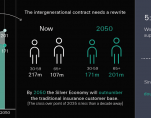
That is roughly how long we have before many societies reach one of the most defining demographic tipping points of our era: the point at which the “new” silver economy (over 65’s) outnumber people aged 30-59 who have traditionally been the bedrock of the life and pensions system.
The intergenerational contract needs a re-write
The significance of this shift goes far beyond demographics.
It represents a symbolic moment that forces us to rethink the intergenerational contract: how we provide care and financial security for people as they move into later life – and how we finance a new set of needs.
The demographic evidence is already visible across major economies. In the US, adults aged 65 and over already outnumber children in 11 states. Singapore’s over-65 population has nearly doubled in a decade to 21%. Japan is approaching 30%. The UK, France and Germany are not far behind
These numbers are well-known. But their meaning is not yet fully reflected in our industry’s existing product strategy.
The tipping point is also more than a statistical curiosity. We will experience it through the decisions we make coming into retirement and to secure the future of the generation coming after us. We will need to make new choices on how we fund care. We will need to make new assumptions about when to retire. And we will face a new reality around how much of the financial burden falls on the state, families or the individual.
Families have always carried the weight of old age, even as pensions, healthcare systems and social care programmes have broadened that responsibility across society.
But the arithmetic underpinning the system is breaking. Globally, the ratio of working-age people financially supporting each person over 65 is projected to fall from around five-to-one in 2021 to three-to-one by 2050. Across developed markets, debates about pension reform, healthcare funding and retirement ages reflect the same underlying question: how do we maintain security and dignity later in life when there are fewer hands to carry the weight?
It’s not a crisis of demographics. It’s a crisis of design – our systems were built for shorter lives and larger workforces, and they haven’t been rebuilt for the world we are actually entering.
That insight matters because it challenges how we think about insurance’s role. I believe we have less than a decade to develop the products that the older consumers who make up the Silver Economy – and their families – will need.
There will be no silver bullet. We cannot return to a single solution based around family care versus public provision. The individual retiree will be the focus, but our thinking will need to be based on a more collaborative model in which families, governments, communities and the private sector work together.
Recent Swiss Re consumer research in France and Germany revealed something striking. People don’t think about later life in terms of pensions or insurance policies. They think about practical outcomes: staying independent, being resilient when health shocks hit, not becoming a burden to their children.
Our industry has spent decades optimising for wealth accumulation and income protection during working years. Ageing societies demand we apply the same rigour to what happens after.
That does not mean the intergenerational contract has failed. It means it is evolving.
We are already seeing what that evolution looks like in practice.
Senior health products in Asia are closing a real gap —The median age of cancer diagnosis is 67, yet many critical illness policies expire before retirement even begins. The result is high out-of-pocket expenses, stressed public healthcare, and increased burden on families. With dedicated products to cover later life illnesses, such as senior cancer products we are effectively closing a protection gap.
Long term care in France has had some success with private solutions alongside public provision. With over 1.4 million people covered by private long term care insurance, France has built a strong risk pool that directly addresses one of the strongest concerns expressed by consumers: not becoming a burden on the next generation.
Deferred annuities offer a third path beyond the binary “draw-down versus annuity” thinking. By combining flexibility today with guaranteed income later, they help transform longevity from an individual financial risk into one that can be shared more broadly.
At first glance these solutions appear very different. In reality, they are pieces of the same puzzle. Each expands the circle of support around the individual. They help families carry less of the burden alone, and they complement the work of state safety nets.
That is what the next evolution of the intergenerational contract looks like in practice.
Ageing societies are one of humanity’s great achievements. But if our products and institutions stay built for a demographic reality that no longer exists, achievement curdles into liability.
We have a decade to close that gap. Let’s treat it as a product-development window, not a deadline.
Disclaimer Certain statements and illustrations contained herein are forward-looking and are made for informational purposes only. These statements (including as to plans, objectives, targets, and trends) and illustrations provide current expectations of future events based on certain assumptions and include any statement that does not directly relate to a historical fact or current fact. Readers are cautioned not to place undue reliance on forward-looking statements. Swiss Re undertakes no obligation to publicly revise or update any forward-looking statements, whether as a result of new information, future events or otherwise. Further information on forward looking statements and the use of information contained in this publication can be found in the Legal Notice section on Swiss Re’s website.
The issuer is solely responsible for the content of this announcement.
About Swiss Re
The Swiss Re Group is one of the world’s leading providers of reinsurance, insurance and other forms of insurance-based risk transfer, working to make the world more resilient. It anticipates and manages risk – from natural catastrophes to climate change, from ageing populations to cyber crime. The aim of the Swiss Re Group is to enable society to thrive and progress, creating new opportunities and solutions for its clients. Headquartered in Zurich, Switzerland, where it was founded in 1863, the Swiss Re Group operates through a network of around 70 offices globally.
European Parliament lawmakers have approved the revival of temporary rules allowing online platforms to voluntarily detect child sexual abuse material, while shielding end-to-end encrypted communications from the measure. The vote on Thursday did not approve unrestricted monitoring of private messages, as some social media posts claimed. Parliament backed a modified framework that permits companies to scan certain communications voluntarily but excludes encrypted services such as WhatsApp, Signal […]
Arabian Post Staff -Dubai Azentio Software has launched a UAE e-invoicing solution inside its enterprise resource planning platform, positioning the product around the Federal Tax Authority mandate that will begin applying to large businesses from January 2027. The Dubai announcement follows Azentio’s designation as a pre-approved Accredited Service Provider by the Ministry of Finance, a status that places the company among technology vendors preparing to connect businesses […]
Compelling path to $1billion ARR and public offering, fueled by product market fit in the agentic AI age, explosion of identities and related threats, and accelerating growth
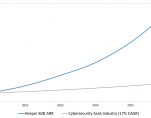
SINGAPORE – Media OutReach Newswire – 9 July 2026 – Keeper Security (“Keeper” or “we”), the identity security platform for humans, machines and AI agents, today announced a major milestone in its journey to become the market standard for AI-native identity security, having reached $225 million in Annual Recurring Revenue (ARR). Since 2021, Keeper’s ARR has grown over 3x.
Keeper protects over 95,000 organizations, which includes many Fortune 500 enterprises and public sector agencies. The company is quickly emerging as the market standard for AI-native identity security for enterprises globally with its leading zero-trust and zero-knowledge identity security platform. In 2025, leading analyst firm Gartner recognized Keeper as the second-fastest-growing security software competitor globally, second only to Google.* This recognition underscores Keeper’s rapid market expansion in addressing identity security challenges created by cloud transformation and artificial intelligence adoption across enterprise infrastructure and endpoints.
Keeper is now growing at over 4x the industry average.
This market-leading growth is driven by the explosion of identities in the agentic AI age and relentless focus on innovation to protect customers, as evidenced by the release of its unified privileged access management and identity security platform, KeeperPAM®, which protects both human and Non-Human Identities (NHIs), including service accounts, machine identities, databases, AI agents and agentic workloads. Since the launch of KeeperPAM in February 2025, KeeperPAM revenue has exhibited 10x year-over-year growth and Keeper has seen industry-leading new customer growth, adding an average of 850 new organizations every month. In the last fifteen months, Keeper added over 400 innovative features and products to KeeperPAM.
“Identity is the new security perimeter,” said Darren Guccione, CEO and Co-founder of Keeper Security. “As enterprises increasingly deploy AI agents and autonomous systems, the number of privileged identities and machine credentials is growing exponentially. Organizations need a modern, unified platform that secures every identity – human and non-human – and governs every privileged interaction. Our growth reflects the market’s demand for a platform purpose-built to address these challenges.”
Keeper’s cloud-native cybersecurity platform delivers a comprehensive approach to identity security and privileged access management by unifying enterprise password management, secrets management, privileged session management, database management and endpoint privilege management in a single platform. Keeper’s AI-native identity security strategy seamlessly extends these capabilities to non-human identities and agentic AI environments, enabling organizations to discover, manage and secure machine credentials and autonomous workloads with the same rigor applied to human users.
As enterprises adopt AI technologies at scale, the proliferation of non-human identities is rapidly outpacing that of human identities by 150:1, according to reports, thereby creating new attack surfaces and operational complexity. Keeper’s platform helps organizations establish identity-first security strategies that provide security, visibility, governance and least-privilege controls across their entire identity ecosystem.
“Autonomous agents, frontier LLMs and machine-to-machine workflows are operating inside enterprise environments right now – without adequate governance, secrets management or access controls,” said Craig Lurey, CTO and Co-founder of Keeper Security. “Keeper is purpose-built to solve this problem at scale.”
The company’s continued growth and market recognition reinforce its position as one of the cybersecurity industry’s most innovative and fastest-growing providers of AI-native identity security and privileged access management solutions. Keeper’s financial profile combines best-in-class growth, profitability and a debt-free capital structure and is an asset positioned to efficiently lead identity security in the agentic AI age.
“Surpassing $225 million in ARR confirms what we’ve heard in every enterprise conversation – that securing non-human identities is the defining security challenge of the AI era,” said Darren Guccione, CEO of Keeper Security. “We have established an accelerated path to $1 billion in ARR which, coupled with our technology roadmap, will provide optionality for a public offering.”
Gartner is a trademark of Gartner, Inc. and/or its affiliates.
Gartner does not endorse any vendor, product or service depicted in its research publications and does not advise technology users to select only those vendors with the highest ratings or other designation. Gartner research publications consist of the opinions of Gartner’s Business and Technology Insights Organization and should not be construed as statements of fact. Gartner disclaims all warranties, expressed or implied, with respect to this research, including any warranties of merchantability or fitness for a particular purpose.
Hashtag: #KeeperSecurity
The issuer is solely responsible for the content of this announcement.
About Keeper Security
Keeper Security is the leading zero-trust and zero-knowledge identity security solution, trusted by millions of people and thousands of organizations globally. KeeperPAM® is Keeper’s privileged access management platform that unifies password and passkey management, secrets management, privileged session management and endpoint privilege management in a single cloud-native platform, protected with quantum-resistant encryption. KeeperAI delivers real-time, AI-native threat detection across every privileged session. As AI agents proliferate and identity becomes the defining attack surface, Keeper governs access for humans, machines, non-human identities and AI agents, serving as the unified control plane for access, compliance and visibility across the enterprise. For more information, visit KeeperSecurity.com.
A China-linked cyber-espionage group has expanded its use of hijacked devices to mask attacks on telecommunications infrastructure, deploying three newly documented malware implants across Windows, Linux and network edge systems. The activity, tracked as UAT-9244, has targeted critical telecoms infrastructure in South America since 2024. The campaign shows how state-aligned operators are moving beyond direct server compromise to build distributed relay networks that help them scan, brute-force […]
Cybercriminals are using fake cracked-software downloads to infect consumers and smaller businesses with a double payload that steals credentials and mines Monero, underscoring how commodity malware operators are combining immediate data theft with longer-running attempts to profit from compromised machines. The campaign delivers Vidar, a widely used information stealer, alongside XMRig, an open-source cryptocurrency miner often abused in cryptojacking attacks. Victims are lured through malvertising into downloading […]
DXC Technology has opened a 200,000-square-foot Customer Experience Centre in Bengaluru, placing the city deeper into the global race to move enterprise artificial intelligence from pilot projects into live, measurable business systems.
The facility, announced on 7 July, is one of DXC’s largest global delivery hubs and brings together customer collaboration areas, an AI Hub, cybersecurity facilities, forensics labs, a Security Operations Centre and a Network Operations Centre. The centre is designed to help clients identify high-value AI use cases, test prototypes, integrate them with legacy platforms and operate them at scale.
The move comes as large companies are under pressure to modernise complex technology estates without disrupting core systems that run banking, insurance, manufacturing, public sector services, travel and healthcare operations. For global IT services firms, the most valuable opportunity now lies not only in building new AI tools, but in attaching them safely to ageing systems of record, cloud platforms, data pipelines and cybersecurity controls.
DXC said the Bengaluru site includes immersive Customer Experience Zones, Fluid Collaboration Hubs, Ideation Studios, Co-Creation Labs and Partner Experience Zones. The structure signals a shift in IT outsourcing from back-office delivery to co-engineering, where clients, consultants and technology partners work together on proof-of-value projects before wider deployment.
Ramnath Venkataraman, president of consulting and engineering services at DXC Technology, said the centre would bring engineering talent closer to customers and partners. He said the objective was to “co-create, engineer, and scale AI-powered solutions” that address complex business challenges and move clients faster from ideas to outcomes.
Rob Le Busque, DXC’s president for Asia Pacific and Japan, described the centre as a base for AI innovation, engineering and customer collaboration. He said DXC was aiming to help customers build connected enterprises where people work alongside AI agents to engineer and run systems of record.
The investment reflects Bengaluru’s continuing pull as a global technology hub. The city hosts a dense base of engineering talent, multinational technology development centres, enterprise software teams and start-up ecosystems. DXC already employs about 38,000 people in the country, making the new facility a strategic addition rather than a symbolic office expansion.
For DXC, the centre also arrives at a critical phase in its own turnaround. The company reported revenue of $12.64bn for fiscal 2026, down 1.8 per cent year on year, while adjusted EBIT stood at $970m. Fourth-quarter revenue was $3.13bn, down 1.2 per cent year on year, though bookings reached $3.3bn and the book-to-bill ratio stood at 1.07 times. Those figures underline both the pressure on legacy IT services revenue and the importance of higher-value modernisation work.
The enterprise AI market has moved beyond experimental chatbots and isolated productivity pilots. Large organisations are now seeking systems that can automate service operations, assist software engineering, improve fraud detection, support call-centre workflows, optimise supply chains and strengthen cyber response. The challenge is that many of these functions depend on decades-old enterprise platforms, heavily customised databases and compliance-heavy workflows.
That is where Bengaluru’s new DXC centre is positioned. Its AI Hub is intended to support hands-on development and testing, while the cyber and operations facilities allow clients to evaluate whether AI tools can be monitored, secured and maintained after deployment. This full-lifecycle approach is becoming central to enterprise modernisation, especially in sectors where downtime, data leakage or flawed automation can carry heavy financial and regulatory consequences.
The facility also strengthens DXC’s partner-led model. Its Partner Experience Zones are expected to support work with software, cloud, cybersecurity and platform companies. For IT services providers, alliances with hyperscalers and enterprise software vendors have become essential as clients seek hybrid solutions rather than single-vendor transformation programmes.
US officials have reportedly cleared OpenAI to widen access to GPT-5.6, allowing the company to move its most advanced model series from a restricted partner trial towards a broader commercial release after cybersecurity and national security checks. The decision covers GPT-5.6 Sol, the flagship version, alongside lower-cost Terra and Luna models. OpenAI has said the models will be made available after an initial period in which access […]
Dubai’s plan to launch commercial air taxis has moved closer to operation after the UAE aviation regulator certified a purpose-built vertiport for electric vertical take-off and landing aircraft near Dubai International Airport. The facility, registered as VDX under the General Civil Aviation Authority’s certification process, is being positioned as the primary hub for the emirate’s first air taxi network. Skyports Infrastructure, which developed the site with Dubai’s […]
Arabian Post Staff -Dubai Du Pay has signed a strategic memorandum of understanding with GCash to enable near-instant wallet-to-wallet remittances from the UAE to the Philippines, giving overseas Filipino workers a faster route to send money home and access exclusive rewards tied to digital transfers. The partnership connects du Pay’s mobile wallet in the UAE with GCash accounts in the Philippines, allowing funds sent through the du […]
G42 and Microsoft have deepened their artificial intelligence alliance through a new collaboration linking Inception42’s Catalyst agentic AI platform with Microsoft Copilot, a move designed to shift AI agents from limited trials into day-to-day government and enterprise operations. The agreement, announced on Monday, allows organisations to build, govern and monitor AI agents on Catalyst while making them available through Microsoft 365 applications including Teams, Outlook and Word. […]
Arabian Post Staff -Dubai DMCC has launched a dedicated cybersecurity vertical as part of a wider restructuring of its technology ecosystem, bringing more than 4,000 technology companies under the newly formalised DMCC Tech platform. The new unit, DMCC Cyber, is designed to support businesses working across cyber resilience, digital trust, data protection, identity management, and governance, risk and compliance. It will sit alongside the DMCC AI Centre, […]
Nissan Americas has disclosed a cyber breach involving employee records after attackers exploited a critical Oracle PeopleSoft flaw used in a wider data-theft campaign linked to the ShinyHunters extortion group. The carmaker said personnel information belonging to current and former staff in the United States, Canada, Mexico and Brazil may have been accessed through Oracle PeopleSoft, the enterprise platform it uses for payroll, tax administration and other […]



 https://www.swissre.com/
 https://www.linkedin.com/company/swiss-re/