News related to
cyber

SINGAPORE – Media OutReach Newswire – 11 December 2025 – In a labour market reshaped by digitalisation and industry transitions, working adults in Singapore increasingly turn to short, skills-focused programmes to stay employable, switch roles, or move into growth sectors. The national SkillsFuture movement, administered by SkillsFuture Singapore (SSG), exists precisely to make such upskilling accessible, combining course subsidies, credit top-ups, and train-and-place pathways that prioritise employment […]

Bank lending across the UAE, Saudi Arabia and wider Middle East is projected to gather momentum next year as resilient economic conditions and steady financing demand strengthen the outlook for regional lenders. The assessment reflects the prevailing view among major rating analysts that banks have entered the coming year with solid balance sheets, expanding pipelines in corporate and retail credit, and a supportive macroeconomic environment. Fitch Ratings […]

Empowering Enterprises with AI-Driven, Built-In Security and Unmatched Flexibility HONG KONG SAR – Media OutReach Newswire – 10 December 2025 – As digitalization accelerates, Hong Kong enterprises of all sizes are confronting an increasingly challenging cyberattack landscape, where system vulnerabilities, phishing, and ransomware are becoming more prevalent, jeopardizing operational continuity and corporate cybersecurity. Addressing these challenges, HGC Global Communications (“HGC”), a fully-fledged ICT service provider and network […]

Abu Dhabi’s transformation into a leading centre for digital asset regulation is gathering global recognition, with legal and financial experts pointing to its advanced regulatory framework and investor-friendly environment as key drivers for growing crypto-sector confidence.

At the sidelines of Abu Dhabi Finance Week, compliance specialist Magdalena Boškić of Swiss firm Kellerhals Carrard declared that the UAE has firmly established itself as a global hub for digital-asset businesses, drawing major international players thanks to robust legislation and transparent licensing regimes. She highlighted the role of regulatory bodies such as the Financial Services Regulatory Authority at Abu Dhabi Global Market, the Virtual Assets Regulatory Authority in Dubai, the Dubai Financial Services Authority, and the Central Bank of the UAE, describing their collective efforts as among the most advanced globally.

Under the UAE’s multi-jurisdictional model, companies involved in trading, custody, asset-management or tokenisation can select the regulatory framework that matches their business model, offering flexibility without sacrificing oversight. The regime is built on principles like technology neutrality, activity-based licensing and strict compliance with investor-protection standards — features that offer legal clarity and attract institutional as well as retail participation. Boškić noted that this environment has led several prominent Swiss digital-asset banks such as Sygnum and AMINA to expand their presence in the Emirates.

A 2025 ranking by the Global Finance & Technology Network, in collaboration with consultancy Arthur D. Little, placed the UAE alongside jurisdictions such as Switzerland and Singapore among the most advanced globally for crypto regulation. The report credited the UAE for its comprehensive approach to tokenised assets, stablecoins, virtual-asset service providers and other fintech innovations — moving the country from ambition into execution.

Institutional adoption has risen sharply. Data on inflows between mid-2023 and mid-2024 show digital-asset investments of more than US$30 billion — roughly 10 percent of the Middle East and North Africa region’s total — with institutional-sized transfers jumping about 55 percent year-on-year. Simultaneously, retail participation has surged; the number of daily active crypto traders in the UAE has reportedly crossed 500,000, underscoring broad public engagement with digital-asset markets.

Fiscal incentives have added to the appeal. The absence of personal income tax or capital-gains tax, combined with exemptions on value-added tax for trading and conversion of virtual assets, offers one of the most favourable tax regimes globally. These conditions, combined with regulatory clarity, help explain the influx of both specialized crypto firms and traditional financial institutions adapting to digital-asset offerings.

The expansion also includes the tokenisation of real-world assets — such as real estate, aviation and even sovereign bonds — indicating that the UAE’s digital-asset market is evolving beyond speculative cryptocurrency trading into structured financial instruments. This opens pathways for sophisticated investors and enterprises seeking to integrate blockchain-based financing or asset-tokenisation into mainstream operations.

Still, rapid growth is not without risks. Observers caution that heightened crypto activity brings exposure to money laundering, unregulated peer-to-peer trading, cybersecurity threats and uneven investor protection. Regulators must balance fostering innovation with safeguarding financial integrity.

A milestone for regulatory trust came this week when Binance secured a global licence under the ADGM framework granted by the FSRA. The approval of the world’s largest crypto exchange underlines the UAE’s drive to cement its status as a credible, regulated base for digital-asset operations.

Security researchers have uncovered critical infrastructure details tied to the ransomware operation LockBit 5.0, exposing a publicly accessible server and domain used by the gang. The server, identified by IP address 205.185.116.233, and the domain karma0. xyz have been linked to the group’s latest leak-site. The disclosure, first shared by cybersecurity researcher Rakesh Krishnan on 5 December 2025, represents a major operational security failure for the ransomware […]

Web3 momentum across the Gulf is increasingly visible in grassroots spaces where developers, founders, and early-stage investors gather to exchange ideas far from official boardrooms. The growth of these informal networks in Dubai, Abu Dhabi, Riyadh, and Bahrain has become a notable driver of activity in blockchain, tokenisation, digital assets, and decentralised applications, complementing government-led strategies that have positioned the region as a key hub for emerging […]

Russia has blocked access to Apple’s FaceTime and messaging service Snapchat, escalating a sweeping campaign to curb foreign communication platforms across the country. The decision by the state regulator Roskomnadzor marks a significant shift from throttling public social media sites to restricting private and encrypted communication tools. Roskomnadzor said the two services were being used “to organise and carry out terrorist acts within the country” and for […]

Advertisements

A newly documented exploitation method using scalable vector graphics has intensified scrutiny of browser-level security after a security researcher demonstrated how attackers can transform traditional clickjacking into a highly responsive, interactive deception technique. The approach, described as “SVG clickjacking,” shows how malicious actors can build dynamic and precise overlays that track user behaviour far more effectively than the static frames typically seen in older attacks. The method […]

A decision to withdraw a controversial directive on compulsory smartphone app preinstallation has been taken by the authorities after sustained objections from device makers and technology firms. The policy reversal follows intense debate over whether phone manufacturers should be required to preload the government’s Sanchar Saathi platform, amid concerns about user privacy, operating system integrity and compliance burdens. The shift comes less than two days after reports that Apple had declined to adopt the mandate, setting off a wider industry pushback that accelerated the measure’s rollback.

Officials confirmed that the mandatory installation plan has been shelved, indicating that further consultations will be held before any such directive is reconsidered. The original order sought to ensure that every new smartphone sold in the country carried Sanchar Saathi, a platform designed to help users trace lost devices, block stolen handsets and verify mobile connections. While the tool is already available for voluntary download, stakeholders argued that forcing manufacturers to embed it at the system level risked creating fragmentation across devices, complicating software updates and compromising user choice.

Senior executives from major handset brands expressed relief at the reversal, noting that the directive had introduced uncertainty at a time when the phone market is preparing for a competitive year-end cycle. Apple, which typically restricts preinstalled third-party apps to maintain strict control over its ecosystem, had reportedly conveyed through official channels that compliance would conflict with long-standing platform policies. That position highlighted the technical complexities of enforcing a uniform preinstallation rule across operating systems that function on entirely different architectures. Android phone makers had also raised procedural questions, cautioning that mandatory system additions could require extensive vetting, security reviews and manufacturer-specific testing.

The broader industry reaction underscored concerns about data governance and user rights. Digital rights groups argued that preloading state-linked applications without explicit user consent could set a troubling precedent, even if the stated aim of the app was consumer protection. Cybersecurity specialists added that any software embedded at the system level must undergo rigorous, transparent auditing to prevent vulnerabilities that malicious actors could exploit. They warned that compulsory integration could expand the attack surface on devices at a time when financial fraud, phone cloning and identity theft cases continue to grow.

Officials involved in policymaking acknowledged that the industry’s logistical and legal objections played a decisive role in halting the order. They said the withdrawal would allow departments to reassess the technical feasibility of the measure and examine alternative ways to boost the adoption of Sanchar Saathi without imposing new conditions on manufacturers. The platform, launched by the Department of Telecommunications, has gained traction through voluntary use, particularly for blocking stolen phones via the Central Equipment Identity Register. Policymakers are studying whether awareness campaigns, improved onboarding flows and coordination with telecom operators could enhance user uptake more effectively than preinstallation.

Market analysts described the reversal as a pragmatic move aimed at preventing friction between the government and global technology firms, particularly at a time when the country’s digital manufacturing ambitions remain in focus. Apple, which has expanded iPhone assembly through local partners, is seen as a critical participant in that strategy. Analysts said any regulatory action that appears to conflict with its operating standards risks diluting investment momentum. They added that Android manufacturers, many of whom operate extensive local supply chains, would also have faced significant re-engineering work to align with the directive.

Industry groups emphasised that while supporting consumer safety initiatives, they prefer interventions that preserve user autonomy and maintain consistent software governance standards. Stakeholders reiterated that preinstallation mandates, unless narrowly tailored and transparently justified, can lead to compatibility issues and unintended consequences across a diverse device ecosystem. They also highlighted that global smartphone markets increasingly recognise the importance of limiting bloatware and avoiding compulsory system-level apps that cannot be removed by users.

A proposed acquisition involving Solmate and RockawayX is set to form a digital-asset business valued at about $2 billion, marking one of the most significant consolidation moves in the crypto infrastructure segment this year. The companies have signed a term sheet that lays the foundation for a unified institutional platform, bringing together treasury management, custody, infrastructure services, and investment capabilities under a single framework aimed at accelerating growth in regulated markets.

The structure under discussion places Marco Santori at the helm of Solmate as chief executive, overseeing the combined treasury and infrastructure strategy. Santori, whose career has spanned legal, compliance and policy roles across the crypto sector, is expected to steer the organisation through advancing regulatory requirements and the maturation of institutional demand for blockchain-based services. Viktor Fischer will continue as chief executive of the RockawayX subsidiary, maintaining operational continuity for the unit’s investment and venture activities, while supporting its integration into the broader strategy being shaped for the merged entity.

The term sheet signals a drive toward strengthening institutional-grade products, an area that has been expanding as asset managers, banks and corporates look for secure and compliant exposure to digital assets. Market analysts note that consolidation among service providers has intensified during the year, with firms seeking scale to meet tighter rules around custody, disclosures and consumer protection. The combined platform is positioned to benefit from these pressures, particularly as policymakers in Europe and the Gulf continue to advance clearer frameworks for crypto trading and asset tokenisation.

Both companies have been active in digital-asset infrastructure, with Solmate operating from the UAE while expanding its footprint across treasury services, custody architecture and enterprise solutions, and RockawayX building a presence in venture investment and decentralised finance infrastructure. Industry observers point out that merging these capabilities could create a diversified revenue base that spans recurring service fees and strategic investment returns. The proposal aligns with a wider shift toward vertically integrated models, enabling providers to streamline operations and reduce dependence on external platforms.

The acquisition plan comes at a time when institutional appetite for blockchain-based solutions has grown. Asset tokenisation has gained traction across global financial centres, with several regulators encouraging pilots in settlement, fund distribution and real-world asset token structures. Market estimates from financial institutions tracking tokenisation flows suggest that the segment could expand into multi-trillion-dollar territory over the next decade, creating opportunities for firms positioned to serve corporate treasuries and fund managers seeking secure digital infrastructure.

Santori has highlighted in prior industry engagements that regulatory clarity is central to institutional adoption. His role in shaping the combined strategy is seen as critical as Solmate works to align its offerings with evolving rules across the EU, the UK and the Gulf. Fischer, meanwhile, has maintained a focus on early-stage blockchain innovation and decentralised services, an area where RockawayX has built strong networks with founders and developers. The proposed structure allows both executives to operate within their respective strengths while contributing to a unified long-term roadmap.

The companies are expected to enter a detailed due-diligence phase, during which they will assess operational integration, regulatory conditions and market positioning. While the term sheet outlines key leadership and structural arrangements, the final agreement will depend on further negotiations and any regulatory permissions required in relevant jurisdictions. People familiar with transactions of this scale emphasise that the coming stages typically involve extensive compliance reviews, cybersecurity audits and technology-stack assessments, especially for firms engaged in digital-asset custody and treasury operations.

Market participants say the combined entity’s valuation of around $2 billion reflects the premium placed on platforms capable of serving institutional demand for secure storage, liquidity management, infrastructure and tokenisation support. Comparable transactions this year have highlighted a rising interest among investors in firms that can bridge traditional financial practices with advanced blockchain tools. Analysts also point out that bringing treasury and venture operations together may create synergies, allowing insights from early-stage ecosystems to inform enterprise-level product design.


A sanctioned spyware vendor’s capability to view government surveillance feeds through its own platform has intensified global scrutiny over the boundaries of state monitoring and private-sector intrusion. Researchers examining Intellexa’s Predator spyware found that the firm had the technical capacity to access data streams from government clients in real time, raising alarm among security experts and rights groups about the scale of oversight failures. The findings emerged […]

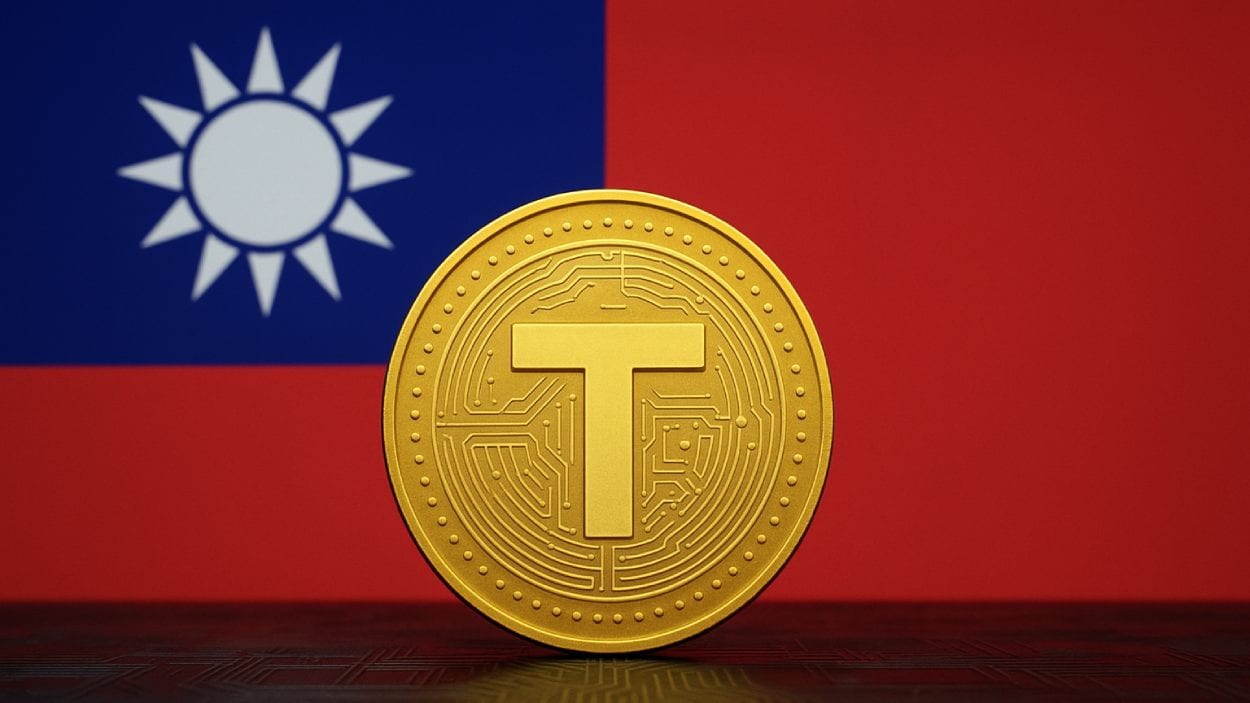
Taiwan’s financial authorities have confirmed that the territory is preparing to introduce its first regulated stablecoin by the second half of 2026, marking a significant step in its oversight of digital assets. The move establishes a formal framework for issuers and signals a wider effort to balance financial innovation with stricter consumer safeguards.

The Financial Supervisory Commission said the project aims to create a compliant asset-backed token that can operate within a supervised environment. Officials outlined that the proposed model would require issuers to undergo licensing, maintain verifiable reserves and implement robust disclosure rules. The initiative forms part of a broader regulatory roadmap that includes enhanced governance standards for exchanges and custodians, supplemented by anti-money laundering protocols already legislated in earlier phases of Taiwan’s digital asset oversight.

Taiwan has seen increased retail interest in digital tokens over the past two years, accompanied by concerns about informal trading platforms and fragmented reserve practices. Authorities have been developing clearer definitions around virtual asset providers, following earlier commitments to draft bespoke legislation for the sector. The stablecoin proposal marks the first time regulators have publicly set a target date for a national, fully supervised token that can circulate in mainstream financial channels.

Officials involved in the planning process described the stablecoin framework as an attempt to reduce systemic vulnerabilities that arise from lightly governed instruments. They indicated that the 2026 timeline allows sufficient room for market consultation with local banks, fintech operators and blockchain firms. The authorities emphasised the need for transparency around backing assets, independent audits and liquidity arrangements to prevent redemption shocks during periods of market stress.

Taipei’s policy trajectory mirrors a wider shift across Asia, where governments have begun formalising rules for digital currencies amid concerns about financial stability and technological competitiveness. Japan’s stablecoin regulations came into force earlier, requiring issuers to be banks, trust companies or registered intermediaries. Singapore’s approach has focused on wallet security, reserve segregation and consumer risk warnings. Taiwan’s proposed regime appears to blend elements of both models, adapting them to domestic institutions and supervisory capacities.

Market analysts say the announcement demonstrates how regulators are transitioning from broad guidance to more detailed rule-making. They note that several local financial institutions have shown interest in blockchain-based settlement systems but have lacked the legal certainty required to develop pilot projects. A regulated stablecoin could allow banks to explore tokenised deposits, speed up cross-border payments and reduce settlement backlogs, provided the technology meets stringent compliance standards.

Developers and industry groups argue that clarity around governance will be crucial to gaining public trust. They expect Taiwan’s framework to include ring-fencing of reserves, real-time reporting tools and strong oversight of custodial arrangements. Several blockchain service providers in Taiwan have already contributed to consultation papers, advocating for interoperability with international systems and stronger penalties for misappropriation of client funds.

Policy advisers involved in the consultation say authorities are mindful of global regulatory pressure, as jurisdictions coordinate rules for financial stability and cross-market supervision. They note that Taiwan has studied overseas cases where unbacked or poorly audited stablecoins faced severe liquidity issues, prompting large-scale withdrawals and disruptive price swings. Officials believe a regulated model will help Taiwan avoid similar vulnerabilities and foster safer digital innovation.

Some opposition lawmakers have urged the commission to publish more technical details, particularly regarding the choice of reserve assets, settlement architecture and the criteria required to issue the token. They want clearer rules on redemptions, consumer rights and supervisory intervention during market volatility. Financial regulators responded that these elements remain under review and will be formalised following extended consultation with the private sector.

Industry observers expect the stablecoin to be structured as a fully collateralised token backed by high-quality liquid assets such as government bonds or cash equivalents. This design is intended to minimise counterparty risk and ensure immediate redemption at par value. Regulators are also exploring how to embed cybersecurity requirements and resilience testing into the licensing regime, responding to heightened concerns about digital infrastructure vulnerabilities.

Cybersecurity officials have issued a coordinated alert on a malware strain known as BRICKSTORM after identifying a wave of intrusions targeting VMware ESXi hosts and Windows environments across several sectors. The advisory, released by national defence and cyber agencies in the United States and Canada, underscores mounting concern over activity linked to operators aligned with the People’s Republic of China, whose campaigns have been tracked exploiting virtualisation […]

United Kingdom legislation now formally recognises digital assets such as cryptocurrencies and stablecoins as personal property, offering holders protections under established property law. The Property Act 2025 — previously a bill — received royal assent, confirming that digital tokens may be treated as a third category of personal property alongside traditional “things in possession” and “things in action.” This marks a decisive shift from earlier reliance on case-by-case rulings by courts.

Legal recognition ensures that crypto-owners gain enforceable rights in instances of theft, fraud or insolvency, and enables digital assets to be included in estates or bankruptcy proceedings under the same protections afforded to conventional property. The Act does not itself define which digital assets qualify — courts will decide those details over time.

Judicial developments had already begun to lay the groundwork for this change. As early as 2019, the UK Jurisdiction Taskforce concluded that crypto-assets met criteria for property under English law: they could be defined, identified, transferred and treated as assets capable of value retention. A key case, AA v Persons Unknown, saw the High Court of England and Wales recognise Bitcoin provided as ransom in a cyber-attack as property, granting the insurer a proprietary injunction.

Advocates of the law hailed it as providing clarity long sought by individuals and businesses holding crypto-assets. CryptoUK, a leading trade body for digital assets, noted that while courts had already treated crypto as property in some cases, codifying the principle into statute removes uncertainty and streamlines legal protections across theft, insolvency and estate-related scenarios.

Legal experts say the Act reflects the recommendations laid out by the Law Commission in a 2023 report, which urged reform to ensure the law could accommodate emerging digital assets under a flexible yet robust framework. The Commission argued that existing categories of personal property under law were too rigid to account for assets that lacked physical form or contractual rights.

This statutory change arrives as UK regulators concurrently refine the broader regime for crypto-assets. Draft legislation published earlier this year already seeks to amend the Financial Services and Markets Act 2000 to designate certain “qualifying cryptoassets” and “qualifying stablecoins” as regulated investments, bringing market-level rules for trading, custody and compliance under formal oversight.

While the law does not render cryptocurrency a legal tender — meaning it still cannot be used to settle debts in substitute for currency — its classification as property gives holders legal certainty over ownership and enforceable rights. Taxation and regulatory treatment will continue to follow established frameworks, though this legal milestone reduces ambiguity over the status of crypto-assets in private law contexts.

Judges, lawyers and market participants anticipate that the Act will lead to a more stable and predictable legal environment for crypto-asset ownership, enabling individuals and institutions to treat tokens with the same legal respect accorded to traditional assets. As the courts start applying the new law in real cases, the boundaries of which digital assets qualify will grow clearer — and the UK’s position as a regulatory pioneer in digital asset law will be reaffirmed.

SINGAPORE – Media OutReach Newswire – 3 December 2025 – As Singapore’s economy continues to evolve, the pursuit of education is no longer a linear journey. For many learners, choosing between full-time and part-time study has become a pivotal decision, one that shapes long-term career prospects, financial planning, and personal development. At the Singapore Institute of Management (SIM), flexibility is a core commitment. Offering over 140 full-time […]

Geopolitical and macroeconomic uncertainty, tariffs, and cyber risks pose liability challenges for the boards of corporations of all sizes. The increasing number of insolvencies around the globe is becoming a major issue for executives. Claims severity and settlement costs are increasing, especially in the US, while the commercial financial lines insurance market remains highly dynamic. SINGAPORE – Media OutReach Newswire – 3 December 2025 – Around the […]

Smartphone makers in India have been instructed by the telecom ministry to preload a government-owned cybersecurity app on all new devices sold in the country, blocking users from deleting the application once installed. Under a directive issued on November 28, companies such as Apple, Samsung, Vivo, Oppo and Xiaomi have been given a 90-day window to ensure all handset models destined for India include the Sanchar Saathi app. For devices already in the retail pipeline or those awaiting sale, manufacturers must deliver the app via over-the-air software updates and ensure it appears prominently during first-use setup.

Authorities say the app plays a key role in telecom security by giving users tools to verify device authenticity through IMEI checks, report suspected thefts or fraud, and block lost or stolen phones. Since the app’s launch in January 2025, government data indicates it has helped recover over 700,000 lost devices and block millions of connections flagged as fraudulent. Officials argue that this move is critical to counter growing misuse of duplicate or tampered IMEI numbers—a problem that fuels scams and the resale of stolen phones across India’s vast second-hand device market.

This mandate marks the first time the government has required a permanently installed, non-removable application on all smartphones sold in the country. The decision reflects a broader tightening of regulatory oversight over telecom infrastructure and device authenticity, drawing parallels with security measures in other jurisdictions.

The requirement has triggered sharp criticism from technology companies and privacy advocates alike. For example, the policy of Apple prohibits pre-installation of third-party or government apps prior to device sale—an approach that could force the company to either seek exemptions or find workarounds. Industry representatives have warned that the mandate may strain compliance operations, increase production costs, and undermine relationships with handset vendors.

Beyond logistical concerns, digital rights groups argue the rule tramples on user consent and privacy. Critics contend that embedding a state-run app with potentially broad access on every phone amounts to unwarranted surveillance and sets a troubling precedent. Some lawmakers and civil liberties advocates dubbed the move “a Big Brother measure,” warning that once entrenched, such mandates could be expanded further, eroding individual privacy without adequate data-protection safeguards.

Tesla is advancing a bold push toward delivering unsupervised Full Self-Driving to customers before the end of 2025, riding on technological progress, regulatory shifts and a faster rollout of robotaxi services. CEO Elon Musk recently reiterated the company’s commitment to achieving true autonomy, underpinning Tesla’s ambition to transform mobility globally. The company’s roadmap has gained momentum as its robotaxi programme — launched in June 2025 in Austin, […]

Growing sophistication in artificial-intelligence driven video and audio forgery has sent shockwaves through financial systems and public trust alike, with 2025 emerging as a watershed year in deepfake-enabled fraud. Losses tied to deepfake scams are widely estimated at over $50 billion annually — a stark indicator of how rapidly cybercrime is evolving. Fake videos that convincingly mimic celebrities, corporate executives or even family members are now being […]

European banking regulators are intensifying warnings that widespread use of artificial intelligence across the financial sector could expose the banking system to new, systemic vulnerabilities. The chair of supervision at the central bank of the Netherlands, Steven Maijoor, stated that the increasing reliance on AI tools supplied by non-European tech firms is creating a structural threat to financial stability. He urged swift action to reduce dependence on […]

Security analysts working on China-linked cyber espionage have deepened scrutiny of two Beijing-based organisations that appear to support the country’s intelligence infrastructure. The Beijing Institute of Electronics Technology and Application and its subsidiary Beijing Sanxin Times Technology Co., Ltd. are now under particular focus for allegedly supplying advanced steganography tools and network-penetration services to agencies tied to the Ministry of State Security.

BIETA has built a decades-long publication record in information hiding research, with around 40–46 percent of its 87 peer-reviewed papers between 1991 and 2023 devoted to steganography methods. Observers note that those outputs align with covert-communication and data-exfiltration requirements typical of state espionage missions. CIII, meanwhile, boasts copyright registrations for software capable of disguising malicious code within images, audio and video files, and has offered foreign-developed network simulation and penetration-testing tools that are frequently repurposed by advanced persistent threat actors.

Officials familiar with the intelligence landscape argue that BIETA and CIII function less like independent private firms and more like technology-enablement arms of China’s state-security apparatus. Evidence cited includes overlapping leadership — several BIETA executives have held or continue to hold roles within organisations tightly linked to the MSS — and a shared location: BIETA’s headquarters sit adjacent to the MSS First Research Institute in Beijing, a facility believed to be behind China’s mass surveillance infrastructure in regions such as Xinjiang.

The role of front organisations like BIETA and CIII expands beyond development of steganographic tools. According to analysts, these firms provide a bridge between Western technical innovation and China’s intelligence needs by acting as intermediaries for acquiring or licensing foreign cybersecurity and network-monitoring products. Through such supply-chain activity, capabilities like deep network simulation, cyber-range training and payload obfuscation may be imported under the guise of legitimate commercial transactions.

Linking BIETA and CIII’s activities to actual APT campaigns remains difficult, in part because those campaigns rely on clandestine infrastructure and rarely include public attribution. Nevertheless security researchers point to historical patterns: Chinese-linked APTs have employed image, audio and video steganography to deploy malware or smuggle exfiltrated data; such techniques were documented in operations as far back as 2013. These precedents match the capabilities now associated with BIETA and CIII’s publicly disclosed research and product catalogue.

Last year’s exposure of another contractor, i‑Soon, offered insight into how the wider ecosystem operates: leaked internal communications and product manuals revealed use of malware management platforms tied to major intrusion campaigns against governments and companies globally. That development affirmed concerns that front organisations could serve as staging grounds for supply-chain attacks, with steganographic delivery mechanisms functioning as invisible carriers for payloads.

Coupang has admitted that unauthorised access exposed the personal information of 33.7 million customer accounts, marking the worst data leak in South Korean history. The leaked data includes names, email addresses, phone numbers, delivery addresses and some order histories, while payment credentials and login details are said to remain secure. The breach first began on 24 June and remained undetected until 18 November, when the company discovered suspicious access affecting about 4,500 accounts — a figure swiftly revised upward as investigators uncovered the full scale of the leak.

Police investigators are analysing server logs and have identified the IP address used in the attack, triggering efforts to trace the suspect. Authorities have not confirmed the nationality of the person under suspicion, though local media have pointed to a former employee of Chinese origin. Coupang filed a formal complaint on 25 November under legislation covering unauthorised access and data theft, and the probe has since turned into a full-fledged criminal investigation.

In response to mounting public concern, the Ministry of Science and ICT convened an emergency meeting to examine whether Coupang violated national data-protection laws. The government has warned that the exposed information — though not financial in nature — could easily be used for phishing, identity theft or other scams, particularly given the extent of the leak and the volume of personal data involved.

Coupang says it blocked the breach route as soon as the intrusion was confirmed and has engaged external cybersecurity experts to strengthen internal monitoring. The firm also issued a public apology through its chief executive, pledging full cooperation with law enforcement and regulatory bodies.

China’s central bank has reaffirmed its prohibition on cryptocurrency use and announced a renewed enforcement drive targeting stablecoins and underground trading networks. At a high-level interagency meeting convened in Beijing by the People’s Bank of China, officials declared that all virtual currencies remain outside the legal tender framework and insisted that any related business activity constitutes illicit financial conduct.

The PBOC underscored heightened concerns over what it described as a resurgence in speculative trading and misuse of stablecoins. According to the statement delivered at the meeting, stablecoins fail to meet mandatory requirements for identity verification and anti-money-laundering safeguards — deficiencies that increase their vulnerability to use in fraud, money laundering and unauthorised cross-border transfers.

China outlawed trading and mining of cryptocurrencies in 2021, with regulators barring financial institutions and intermediaries from facilitating such activity. The current announcement makes explicit that the ban also extends to stablecoins — digital assets whose value is typically pegged to fiat currencies or other claims — signalling a shift from broad prohibition to more specific targeting.

Officials from thirteen government agencies, including judicial and cyberspace regulatory bodies, participated in the enforcement meeting, indicating that anti-crypto efforts are being treated as a coordinated, cross-sector priority. The agencies pledged to intensify monitoring, crack down on underground trading platforms, clamp down on illicit payment flows and coordinate information sharing across law enforcement and regulatory bodies.

The renewed clampdown comes even as some on-the-ground activity suggests partial revival of mining in certain energy-rich provinces, driven by low electricity costs and data-centre growth. Reports indicate that a segment of cryptocurrency miners have quietly restarted operations despite the 2021 ban, suggesting enforcement may be uneven across China’s vast terrain.

Regulators framed the move as necessary to safeguard financial and economic stability, citing recent upticks in speculation, fraud and illegal cross-border capital flows linked to virtual currencies. The articulation of fresh enforcement measures and explicit inclusion of stablecoins reflects a shift in China’s regulatory approach — from discouragement to active suppression.

Given the global ripple effects of China’s policy, observers expect tightening enforcement to influence not only domestic underground markets but also international crypto platforms, stablecoin issuers and cross-border payment flows that might involve Chinese users or capital.

New facility is set to be South Korea’s most advanced automated hub for clinical logistics and sourcing, reinforcing the nation’s position as a leader in clinical research innovation GYEONGGI-DO, SOUTH KOREA – Media OutReach Newswire – 1 December 2025 – Zuellig Pharma, a leading healthcare solutions company in Asia, today announced the grand opening of its new state-of-the-art Clinical Trial Support (CTS) Innovation Center in South Korea. […]

VISHNU RAJA
RYO YAMADA
HITORI GOTOH
IKUYO KITA