Microsoft and cybersecurity partners have disrupted a global phishing network linked to more than one billion fraudulent messages, targeting infrastructure supplied through the Chinese-language YAM Store marketplace. The operation, announced on Wednesday, involved the seizure and redirection of internet domains supporting YAM Store and two associated phishing services, CoGUI and Iron Man. Microsoft and Health-ISAC obtained an order from the United States District Court for the Southern […]
SINGAPORE – Media OutReach Newswire – 15 October 2026 – Held on 11 October 2026 at Shangri-La Rasa Sentosa in Singapore, AIMCONNECT 2026 gathered industry leaders from 11 countries under the theme “Where Mobility Meets the Future.” Organised by X Star Technology and Aimotion, the event welcomed representatives from more than 100 automotive organisations, over 60 financial institutions and around 20 technology companies to explore how collaboration across industries can create a more connected mobility ecosystem.
The event was opened by Tin Pei Ling, Member of Parliament, and Dato’ Tony Khor Chong Boon, President of the Federation of Motor and Credit Companies Associations of Malaysia (FMCCAM). Through keynote presentations, panel discussions and live technology demonstrations, participants examined how AI-driven solutions can improve customer experiences while ensuring transparency, security and responsible decision-making.
AIMCONNECT 2026 Highlights the Shift Towards Connected Mobility
During the keynote address, “The Next Mobility Economy: Intelligence, Connection, Trust,” X Star Technology CEO Shawn Yang highlighted the growing gap between consumers’ digital engagement and completed automotive transactions.
Shawn Yang noted that consumers increasingly begin their vehicle purchase journey online, with research showing strong demand for AI-supported decision-making. According to figures shared during the keynote, 90% of car buyers conduct online research before visiting dealerships, 63% expect to use AI during their next vehicle purchase and 67% believe AI will influence their financing decisions.
However, the automotive journey remains fragmented. Customers often move between dealerships, financing providers and multiple systems, creating unnecessary friction during purchasing and ownership processes.
“Customers are not lost in one stage; they are lost to the friction between them,” Yang said. Yang said. The CEO explained that the next stage of mobility innovation requires closer cooperation between automotive companies, financial institutions and technology providers. Rather than improving isolated parts of the journey, the industry must create connected experiences that allow information, decisions and services to move more efficiently between stakeholders.
During AIMCONNECT 2026, technology demonstrations showcased emerging solutions designed to address these challenges. X Star Technology presented its Xport platform, demonstrating one-click lead-to-loan matching and real-time approval capabilities. Aimotion, MStar, AI Wingman and MK.X also introduced their latest innovations, highlighting the potential of AI-enabled tools across the automotive value chain.
Building Trust as AI Takes a Greater Role in Decision-Making
A key theme throughout AIMCONNECT 2026 was the importance of trust as artificial intelligence becomes increasingly involved in customer-facing processes.
While AI can improve speed and efficiency, industry leaders emphasised that technology must operate within clear boundaries. Decisions involving financing, customer eligibility and financial commitments require transparency, human oversight and accountability.
Yang introduced X Star Technology’s proprietary Harness framework, which combines AI operating boundaries, human supervision and traceable data management. The framework is designed to ensure that AI systems operate within authorised parameters while allowing complex cases to be escalated for human review.
“In auto finance, a single flawed decision risks customer harm and regulatory non-compliance. For AI to operate across the customer journey with true autonomy, trust cannot be an afterthought; it must be engineered into the architecture from day one,” Yang said.
The discussions also highlighted the importance of balancing personalisation with privacy. While consumers increasingly expect services tailored to their needs, excessive automation or unnecessary intervention may reduce trust. Effective AI solutions must therefore combine intelligence with appropriate restraint.
Strengthening Connections Across the Auto Finance Ecosystem
Another major discussion at AIMCONNECT 2026 focused on how stronger collaboration between automotive companies, financial institutions and technology providers can create a more efficient and trusted financing experience.
During the panel discussion “Building a Connected Auto Finance Ecosystem,” moderated by MStar CEO Zhang Peng, industry representatives explored the role of data connectivity, cybersecurity and responsible technology adoption in shaping the future of automotive finance.
Speakers from Deloitte, Deutsche Bank, The CEO Circle and JWT Bespoke examined how financial institutions and mobility businesses can use technology to improve decision-making while maintaining customer confidence.
“Better data infrastructure and connectivity can help the industry make more informed financing decisions, but technology must go hand in hand with trust,” Zhang said.
The discussion emphasised that connectivity is not simply about collecting more data. A truly integrated ecosystem requires organisations to establish clear principles for how information is shared, protected and used. Customers must also understand what information they provide and how it contributes to a better service experience.
Matthew Duncan, Director and CEO of JWT Bespoke, highlighted the importance of balancing innovation with consumer protection, drawing from Australia’s experience in automotive and financial regulation.
“Regulation works best when it protects customers and still gives the industry room to improve how people buy and finance their cars,” Duncan said.
Exploring the Future of Vehicle Ownership
Beyond financing and transactions, AIMCONNECT 2026 also examined a broader question facing the mobility industry: how will consumers define vehicle ownership in the future?
The rise of leasing, subscription services, car-sharing and ride-hailing has expanded consumer choices, creating new possibilities beyond traditional ownership models.
During the panel “The Future of Owning a Car,” moderated by Shawn Yang, industry leaders discussed how changing consumer expectations may influence future mobility behaviour.
An audience poll showed a closely divided perspective. While 54% of participants believed flexible mobility solutions could become the preferred choice within the next decade, 46% expected vehicle ownership to remain the dominant preference.
The result reflected the complexity of future mobility trends. Rather than replacing ownership completely, emerging mobility models may provide consumers with more options depending on their lifestyle, financial situation and travel needs.
James Ng, Managing Director of BYD Singapore and President of BYD Philippines, shared insights into BYD’s technology development journey.
“BYD’s first phase was electrification, delivering performance. The second phase is intelligence, using AI to enhance the customer experience. The third phase will focus on integration,” Ng said.
Xiao Ting, CEO of MK.X, noted that increasingly capable AI assistants could change how consumers approach mobility decisions.
“The decision may increasingly be less about owning a car and more about finding the right mobility solution for each journey,” noted the CEO.
Ng also highlighted the broader applications of BYD’s technology beyond vehicles, including Battery Energy Storage Systems (BESS) and renewable energy solutions that contribute to a wider technology ecosystem.
These developments suggest that the future mobility landscape will involve not only automakers, but also dealers, financial institutions and technology platforms adapting their services to meet changing consumer expectations.
AI Is Expanding the Vehicle Experience Beyond the Point of Sale
The role of artificial intelligence throughout the vehicle ownership lifecycle was another key focus at AIMCONNECT 2026.
During the panel “How Is AI Reshaping Mobility?” moderated by X Star Chief Technology Officer Michael Jia, industry experts discussed how AI can support consumers beyond vehicle selection and purchase.
Panel participants included Carson Zhang of Aimotion, Connor Liu of Google Cloud, Dr Harold Teng of MK.X Technology and Bryan Tan of Carro.
When delegates were asked where AI would create the greatest impact, personalised ownership services ranked ahead of vehicle selection, automotive financing and in-car intelligence. The results suggested that industry participants see significant opportunities in improving the ownership experience after purchase.
Bryan Tan, Chief Scientist at Carro Group and CEO of Carro Indonesia, explained that vehicle value assessment is becoming increasingly influenced by new data sources. For electric vehicles, factors such as battery condition and charging history are becoming important considerations alongside traditional indicators such as mileage.
Tan also noted that markets such as Singapore have unique considerations, including the impact of the Certificate of Entitlement (COE) system on vehicle value.
These examples demonstrate how advances in automotive technology are influencing areas beyond driving performance, extending into finance, resale value and long-term ownership decisions.
However, industry leaders agreed that AI adoption must remain focused on practical benefits.
“The focus must remain on delivering practical benefits, enhancing safety and making mobility more intuitive for consumers,” Dr Teng said.
Collaboration Will Define the Next Stage of Mobility Innovation
Across the discussions at AIMCONNECT 2026, one common message emerged: the future of mobility will be shaped by collaboration.
Automotive manufacturers and dealers must better understand customer needs and reduce unnecessary friction throughout the ownership journey. Financial institutions must improve efficiency while maintaining responsible lending practices. Technology providers must develop solutions that meet operational, regulatory and customer expectations.
For policymakers and industry stakeholders, the challenge will be encouraging innovation while maintaining public confidence.
“No single company can transform the entire mobility journey on its own,” Xiao Ting said.
Zhang highlighted that the success of future mobility solutions should be measured not only by speed and efficiency, but also by how effectively the industry works together to serve customers.
“Progress should be measured not only by how quickly a loan can be approved, but by how well the industry works together to serve the customer,” Zhang said.
AIMCONNECT 2026 demonstrated that artificial intelligence will play an increasingly important role in mobility, but technology alone will not define the future. The next phase of automotive transformation will depend on building systems that are intelligent, transparent and connected — supported by stronger partnerships across the mobility ecosystem.
Hashtag: #XStar
The issuer is solely responsible for the content of this announcement.
About AIMCONNECT 2026
AIMCONNECT 2026 brings together automotive leaders, dealers, original equipment manufacturers (OEMs), financial institutions, technology innovators and industry decision-makers to explore the future of automotive commerce and mobility.
Through industry dialogue, thought leadership sessions and live technology demonstrations, AIMCONNECT provides a platform for stakeholders to exchange insights and collaborate on the next generation of connected mobility solutions.
US cybersecurity shares have surrendered part of September’s gains as investors weigh growing demand for artificial intelligence protection against the possibility that AI developers could become competitors to established security companies. Shares in leading vendors fell on Wednesday, 14 October, amid speculation that OpenAI was exploring an acquisition of security specialist Trail of Bits. No transaction had been announced, and the possibility of a deal did not […]
Google DeepMind and Singapore’s Government Technology Agency have developed an artificial intelligence system designed to identify scams within private smartphone conversations without sending messages to external servers.
The technology, announced on Wednesday at Singapore International Cyber Week, uses a customised version of Google’s Gemma model to recognise manipulation in conversations and warn users before they transfer money or disclose sensitive information.
The partners have not announced a public release date, named supported messaging applications or published independent accuracy figures. Their announcement describes a model that messaging platforms and operating system developers could integrate, rather than a scam detection application already available for general download.
The initiative forms part of the National AI Partnership between Google DeepMind and Singapore’s government. It addresses fraud schemes that unfold through extended conversations, rather than relying exclusively on suspicious links, keywords or individual messages.
Google DeepMind said the model had been adapted using examples of scams involving impersonation of banks, public institutions and prominent local figures. Its training also covered regional fraud patterns intended to make fraudulent exchanges appear credible to Singaporean users.
The system operates through two stages to limit the processing demands placed on smartphones. A lightweight classifier initially examines incoming messages for possible threats, consuming relatively little computing power. Messages considered suspicious then undergo a more detailed assessment using the fine tuned Gemma model.
During the second stage, the AI examines a broader section of the conversation to assess whether the exchange displays patterns of manipulation. This contextual approach is intended to distinguish ordinary conversations from attempts to build trust before requesting payments, passwords or other confidential details.
Where the model identifies potentially fraudulent behaviour, it generates a warning on the handset, encouraging the recipient to pause and exercise caution. The alert is designed to intervene before a person acts on a scammer’s instructions, although the organisations have not disclosed measured reductions in fraud losses from using the system.
A central feature is that the analysis takes place locally. Conversations do not need to be uploaded for cloud based examination, an important distinction for messaging services that use end to end encryption to prevent intermediaries from reading message contents.
Mark Chen, director of trust and safety at GovTech Singapore, said the collaboration sought to identify targeted local scams in real time while keeping personal communications private. The partners present local processing as a way of reconciling fraud prevention with confidentiality.
The privacy safeguards also extend to development. Google DeepMind said the model was fine tuned inside a government managed Google Cloud environment described as a sovereign sandbox, where training material remained isolated.
According to the company, private citizen conversations and personally identifiable information were excluded from training. Instead, developers used anonymised datasets derived from scam reports and intelligence feeds. Testing included synthetic conversations and local material covering different scam categories and changing impersonation methods.
Those measures describe the development process and proposed operation, rather than an independent assessment of the finished product. The partners have not released detailed public benchmarks showing false positive rates, missed scams, battery consumption or performance across different smartphone models.
Singapore has strong reasons to pursue additional protections. Google DeepMind said scams account for more than half of crimes reported in the country, while cumulative losses since 2019 exceed S$4 billion. It estimated that social engineering schemes account for as much as 80 per cent of scam losses.
Such schemes often depend on prolonged interaction, with perpetrators establishing apparent relationships or authority before introducing requests for money. Detecting suspicious intent across multiple messages therefore presents a different technical challenge from blocking known fraudulent websites or telephone numbers.
The announcement comes alongside separate Android security enhancements unveiled by Google, including optional cloud assisted analysis in Google Messages. That service uses a protected computing environment, whereas the Singapore collaboration specifically centres on keeping conversation analysis on the handset.
The distinction is significant because the two approaches involve different arrangements for processing private communications. The Singapore model is designed to assess message content without transmitting conversations externally, although its practical privacy protections will also depend on how individual applications implement the technology.
Google DeepMind said its model was optimised for smartphones commonly used in Singapore. It has not specified the minimum hardware requirements, participating mobile manufacturers or whether the technology will eventually support additional languages and markets.
Artificial intelligence played a role in 84% of ransomware attacks experienced by surveyed organisations, while 87% reported attacks targeting identity infrastructure, according to a global cybersecurity study published on Wednesday. The 2026 Ransomware Risk Report, released by cybersecurity company Semperis, surveyed 1,200 IT and security professionals across nine countries and eight industry sectors, exposing significant weaknesses in corporate identity protection and recovery capabilities. The findings indicate that […]
Google has made its new frontier artificial intelligence model, Gemini 4 Argon, available through Google AI Studio, expanding developers’ access to advanced reasoning, software engineering and autonomous task execution capabilities. The global rollout, announced on October 13, extends access to developers and enterprises through the Gemini API, with the company positioning Argon as its most capable model for complex professional and scientific workloads. Google said the model […]
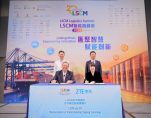
The MoU was signed at the LSCM Logistics Summit 2026 at Hong Kong Science Park
The two parties will collaborate on ICT infrastructure, AI, general computing, operating systems and cyber resilience
HONG KONG, CHINA – Media OutReach Newswire – 15 October 2026 – ZTE Corporation (0763.HK / 000063.SZ), a global leading provider of integrated information and communication technology solutions, announced that its wholly owned subsidiary ZTE (Hong Kong) Limited (“ZTE Hong Kong”) and The Logistics and Supply Chain MultiTech R&D Centre (“LSCM”) today officially signed a Memorandum of Understanding (MoU) at Hong Kong Science Park during the LSCM Logistics Summit 2026.
The signing ceremony was attended by representatives of both parties. Ir Prof Alan Lam, Chairman of the Board of Directors of LSCM, and Mr. Mei Zhonghua, Senior Vice President of ZTE, jointly witnessed the signing; Mr. Simon Wong, Chief Executive Officer of LSCM, and Ms. Wang Huan, Managing Director of ZTE Hong Kong Representative Office, signed the MoU on behalf of both parties..
In accordance with the principles of complementary strengths, equality and mutual benefit, and win-win cooperation, both parties reached a consensus on cooperation focusing on Hong Kong’s digital and intelligent development, enhancing e-government information services, and promoting the local application of secure and reliable diversified technologies in Hong Kong. They also agreed to jointly cultivate a digital and intelligent industry ecosystem suited to Hong Kong’s actual needs.
The Logistics and Supply Chain MultiTech R&D Centre (LSCM) was established in 2006 with funding from the Innovation and Technology Fund of the Hong Kong Special Administrative Region Government. Since its establishment, LSCM has been committed to researching and developing various technologies that promote the development of industries related to logistics and supply chains, and to assisting industries across Hong Kong and mainland China in adopting relevant technologies.
ZTE (Hong Kong) Limited was incorporated in Hong Kong in 2000 and is a wholly-owned subsidiary of ZTE Corporation. ZTE Hong Kong has been deeply rooted in the Hong Kong market for many years, serving local operators over the long term. It has a strong localized service team and delivery capability, enabling it to respond quickly to customer needs, as well as full-stack locally developed products and IT application innovation solutions, which have been widely implemented. With a deep understanding of the Hong Kong market and rich project experience, ZTE Hong Kong has achieved breakthroughs and established a presence in key industries such as the public sector and finance, providing safe and reliable ICT solutions to customers across various industries. In the future, ZTE Hong Kong will continue to leverage its localized service advantages to support the digital transformation of industries in Hong Kong.
Under the MoU, cooperation between the two parties covers areas including ICT infrastructure, artificial intelligence, general computing, operating systems, and cybersecurity. Both parties will also actively promote technology and talent exchange, fully leverage their respective R&D strengths, comprehensively carry out joint innovation in areas such as general computing and artificial intelligence, and jointly develop and incubate a digital and intelligent ecosystem suited to Hong Kong. Focusing on the C86 next-generation computing platform, the two parties will carry out in-depth cooperation in areas such as locally developed computing infrastructure development and the digital transformation of government and enterprises, jointly promoting the high-quality development of industries in Hong Kong and the Greater Bay Area.
The signing of this MoU marks the official launch of the strategic cooperation between the two parties in promoting Hong Kong’s digital and intelligent development and the application of secure and reliable technologies. Both parties will take this opportunity to deepen cooperation and complement each other’s strengths, jointly contributing to Hong Kong’s innovation and technology development and enhancements in trusted public-sector digital capabilities.
Hashtag: #ZTE
The issuer is solely responsible for the content of this announcement.
Ransomware gangs are threatening employees’ families while deploying artificial intelligence in attacks on corporate systems, a global survey published on Wednesday found. Cybersecurity company Semperis said 37% of respondents who experienced intimidation reported threats against relatives or friends, while 84% of surveyed ransomware incidents involved attackers exploiting artificial intelligence. The findings underline how criminals are combining technical intrusions with personal pressure to extract payments. The 2026 Ransomware […]
Artificial intelligence models could soon copy themselves across vulnerable internet-connected devices without human assistance, Anthropic has warned, raising concerns about a new category of decentralised cybersecurity threat. Research published on Monday by the company’s Frontier Red Team suggests smaller AI systems may acquire the capabilities needed for autonomous replication within months. Such systems could operate on ordinary consumer electronics rather than depend on expensive data-centre infrastructure, complicating […]
Companies generating at least $1 billion annually are more than twice as likely as smaller businesses to knowingly leave serious software vulnerabilities unpatched, a global cybersecurity survey released on Wednesday found. Research commissioned by software security company Chainguard showed that 66% of security leaders at businesses with revenue of $1 billion or more acknowledged leaving high or critical vulnerabilities unresolved at least sometimes. The corresponding figure was […]
Meta Platforms has launched its Muse Wonder artificial intelligence models, claiming performance comparable with leading systems from OpenAI and Anthropic, marking a significant advance in the company’s efforts to compete at the technological frontier. The company introduced Muse Wonder and Muse Wonder Full on October 12, describing them as its most capable models, designed for complex professional assignments, software development and autonomous digital assistants. Chief executive Mark […]
Arabian Post Staff -Dubai Etisalat has completed its first procurement contract evaluation using agentic artificial intelligence operating within its private cloud, marking a new deployment of automated decision support in the UAE telecommunications group’s internal operations. The Abu Dhabi-based company announced the milestone on Tuesday, saying the system can analyse information, assist contract assessments and automate parts of complex purchasing workflows. It plans to extend the technology […]
The only vendor in the Pace Setters quadrant and the only Asia-based vendor in the report. CyCraft marks its third major international recognition of 2026
TAIPEI, TAIWAN – Media OutReach Newswire – 14 October 2026 – CyCraft Technology (TWSE: 7823), an AI-native cybersecurity company, today announced that it has been positioned in the Pace Setters quadrant of the Gartner Emerging Market Quadrant for AI Application Security, Startup Vendors, published on September 16, 2026. CyCraft Technology is the only vendor in the Pace Setters quadrant and the only Asia-based vendor in the report.
XecGuard offers a range of modules that can be tailored to enterprise needs, including General Prompt Attack Protection, System Prompt Enforcement, and Harmful Content Protection.
When AI Goes Off-Script, Defense Must Move at Machine Speed
Enterprises are handing AI agents real authority: reading email, querying databases, approving transactions, changing system configurations. Attackers are using AI too. They probe AI applications with thousands of prompt variations in minutes, adapt to every refusal, and look for the one input that turns a trusted agent into an insider. Prompt injection, sensitive data exposure, and agents exceeding their permissions are no longer edge cases. They are becoming everyday incidents.
Human-speed review cannot keep up with machine-speed attacks. Every organization deploying AI now faces two questions: has this system been tested against an adaptive attacker before launch, and can anything stop it in real time once it goes live?
“AI behaving outside its intended boundaries is fast becoming the norm, not the exception,” said Dr. Benson Wu, CEO and Co-Founder of CyCraft. “When agents act on their own and adversaries use AI to attack them, defense has to run at the same speed. Every decision an agent makes must be testable before launch, interceptable in production, and traceable afterward. That is why we built XecART and XecGuard on our own models from day one. We believe being named the only Pace Setter reflects both the strength of our technology and our ability to deliver it in real enterprise environments.”
Test Before Launch. Protect in Production.
CyCraft’s AI application security portfolio covers both pillars of AI defense.
XecART, CyCraft’s AI Red Teaming Security Assessment, attacks AI applications and agents the way a real adversary would. It runs multi-round adaptive tests, shifts tactics based on each response, and delivers resilience reports aligned with international standards, so teams know where their AI breaks before attackers find out.
XecGuard is a real-time guardrail for LLMs and AI agents. Instead of static keyword filters that attackers learn to evade, it is built around each enterprise’s own security context. It reads the intent behind every prompt and response, and blocks malicious or abnormal activity as it happens.
Both products draw on CyCraft’s native expertise in Chinese and Japanese and on regional threat intelligence, catching attack patterns that general-purpose models routinely miss.
CyCraft believes security is not a brake on AI innovation; it is what lets AI move fast without losing control. Organizations deploying AI applications or agents can request an XecART assessment or a XecGuard evaluation at https://www.cycraft.com/en/contact-us.
Gartner®, Emerging Market Quadrant for AI Application Security — Startup Vendors, Meghan Hollis et al., 16 September 2026.
Gartner®, Emerging Tech: AI Vendor Race: Reasoning Models Reshape Providers’ Approaches to AI Pricing, Aapo Markkanen et al., 5 June 2026.
Disclaimer
Gartner does not endorse any company, vendor, product or service depicted in its publications, and does not advise technology users to select only those vendors with the highest ratings or other designation. Gartner publications consist of the opinions of Gartner’s business and technology insights organization and should not be construed as statements of fact. Gartner disclaims all warranties, expressed or implied, with respect to this publication, including any warranties of merchantability or fitness for a particular purpose. GARTNER is a trademark of Gartner, Inc. and its affiliates.
Hashtag: #CyCraftTechnology
The issuer is solely responsible for the content of this announcement.
Cybersecurity researchers have identified a text-message scam that places recipients’ names on fabricated Facebook Marketplace listings, encouraging them to respond to enquiries about goods they never offered for sale. The scheme, described by Malwarebytes researcher Pieter Arntz on 6 October, uses an apparently ordinary buyer enquiry accompanied by an image resembling a Marketplace advertisement. The message asks, “Is this still available for purchase?”, while the supposed seller […]
Thyssenkrupp Automotive Technology has inaugurated an engineering centre in Pune, expanding its international research network for vehicle software, electronic systems and advanced chassis technology.
The German automotive supplier said the facility, formally inaugurated on 8 October, already employs more than 120 engineers and is expected to increase its workforce to more than 300 over the coming years. It did not specify a deadline for reaching that target or disclose the investment involved.
Engineers at the Pune centre are working on software, hardware, systems engineering and mechanical development for customers internationally. Their responsibilities include embedded software, functional safety, cybersecurity and technologies associated with the next generation of steering and chassis systems.
The operation will collaborate with Thyssenkrupp’s development teams in other countries throughout product development, rather than concentrating exclusively on projects for the domestic vehicle market. The company described the facility as an integrated part of its global research and development organisation.
Viktor Molnar, chief operating officer of Thyssenkrupp Automotive Technology, said software, electronics and collaboration between engineering teams across countries were becoming increasingly important to the automotive industry. The Pune operation would provide additional development capacity for customers worldwide, he said.
The expansion reflects changes in vehicle engineering as software increasingly controls functions previously handled primarily through mechanical components. Steering and chassis systems now require developers to coordinate electronic hardware, embedded code and physical components while meeting stringent safety and security requirements.
Functional safety work concerns the identification and control of hazards arising from failures in electrical and electronic systems. Cybersecurity engineering addresses vulnerabilities that could expose connected vehicle functions to interference or unauthorised access. Both are integral to the development of more digitally controlled automotive systems.
The Pune engineers will contribute to customer programmes at different stages of development, including systems design and integration. Thyssenkrupp has not identified individual vehicle manufacturers whose programmes will be handled at the new location, nor has it disclosed specific contracts associated with the expansion.
Björn Erbe, a senior research and development executive in Thyssenkrupp Automotive Technology’s chassis business, said the intention was to establish a significant engineering operation integrated with the group’s international teams. Combining expertise based in Pune with the company’s existing technical resources would enable it to expand development activities, he said.
The centre is situated at Solitaire Business Hub 2 in Pune’s Baner-Balewadi business district. The company identified the city’s established automotive manufacturing sector, universities, engineering businesses and availability of software specialists as factors behind its choice of location.
Recruitment is expected to concentrate initially on software, hardware and mechanical engineering, with specialist capabilities added according to technical needs and customer demand. The company has also indicated that it sees opportunities to work with universities and the wider engineering community in Pune.
The company’s move also places engineering functions and prospective customer engagement in the same city, although it has not yet publicly said whether the new sales organisation will operate from the engineering premises. The plans for sourcing and sales are separate from the confirmed staffing figures for the development centre.
The engineering investment forms part of a broader plan to expand Thyssenkrupp Automotive Technology’s activities in India. The company is strengthening its sourcing operations and establishing a sales team in Pune to build relationships with vehicle manufacturers and pursue business locally.
Manufacturing is not included in the newly inaugurated engineering centre. Thyssenkrupp said it envisages establishing production capabilities in India only if it secures suitable customer projects. No factory location, investment commitment or production timetable has been announced.
The distinction means the confirmed expansion concerns engineering capacity, while local manufacturing remains conditional on commercial demand. The company has similarly not given a precise timetable for the next phase of staffing at the Pune development site.
Plans for the facility were first announced in 2025, and engineering operations were progressively established before the formal opening. The inauguration therefore marks an expansion of an existing development team rather than the beginning of work at an entirely unstaffed location.
Thyssenkrupp’s steering business also announced a partnership with L&T Technology Services in June 2025 for a Pune software development hub dedicated to safety-critical steering applications. That agreement provided for L&T Technology Services to establish and manage the hub on the steering business’s behalf. The latest inauguration announcement did not specify whether the two Pune operations share facilities or personnel.
Ransomware operators Qilin and Settra are exploiting a five-month-old vulnerability in Palo Alto Networks’ remote-access software to penetrate corporate networks, cybersecurity company ReliaQuest warned on 9 October. The activity targets CVE-2026-0257, an authentication bypass flaw affecting certain configurations of GlobalProtect, the virtual private network service used by organisations to give employees access to internal systems. Palo Alto Networks issued fixes on 13 May, but attacks against unprotected […]
Arabian Post Staff -Dubai Dubai Police has warned that increasingly convincing artificial intelligence deepfakes could undermine confidence in genuine photographs, videos and recordings, creating new obstacles for criminal investigations and digital security. A study prepared by the force’s Future Foresight Centre says the challenge is expanding beyond identifying fabricated material to establishing that authentic content has not been manipulated. It identifies potential consequences for public safety, information […]
Turkey has prohibited social media companies from providing services to children younger than 15 under regulations published on Saturday, with the restrictions scheduled to take effect on 1 November. The rules, issued by the Presidency’s Cyber Security Directorate and published in the Official Gazette, require platforms to verify users’ ages, refuse registrations by children below the threshold and close accounts identified as belonging to them. They also […]
Britain, the United States and international partners have issued a joint cybersecurity warning detailing how China-linked hackers allegedly use commercial tools and compromised infrastructure to penetrate organisations worldwide and steal sensitive information. The advisory, published on Thursday, identifies Integrity Technology Group, a company based in China, as an enabler of operations targeting government services, manufacturers, healthcare providers and technology networks. It describes automated scanning, large botnets and […]
Britain, the United States and international partners have issued a joint cybersecurity warning identifying malicious operations enabled by China’s Integrity Technology Group, as American authorities seized internet domains associated with tools used to penetrate critical infrastructure networks. The advisory, released on Thursday by Britain’s National Cyber Security Centre and agencies from six other countries, describes how China-linked operators combine automated scanning, compromised devices and direct exploitation of […]
Abu Dhabi has launched a new artificial intelligence training programme targeting 20,000 government employees this year, advancing its Dh13 billion strategy to establish the world’s first fully AI-native government by 2027. The Department of Government Enablement announced the AiNative programme on October 7, partnering with OpenAI, Microsoft and Mohamed bin Zayed University of Artificial Intelligence to develop practical AI capabilities across the public sector and eventually among […]
OpenAI has begun rolling out GPT-6 across ChatGPT subscription tiers, introducing an intelligent interface that combines conversational responses with interactive graphics, charts, calculators and other tools generated directly within conversations. The global expansion, announced on October 7, brings GPT-6 Sol to Plus, Pro, Business and Enterprise subscribers, while Free and Go users begin receiving GPT-6 Luna from October 8. Availability will depend on subscription arrangements, supported applications […]
Hackers have compromised hundreds of GitHub repositories by inserting malicious automation workflows designed to steal SSH keys, cloud credentials and access tokens, with security researchers confirming the theft of 26 secrets from 13 repositories. Cybersecurity company GitGuardian identified 772 affected public repositories belonging to 373 users and organisations during an attack campaign spanning August 31 to September 30. The malicious workflows targeted 2,577 secrets, although the overwhelming […]
Litmus chief executive Vatsal Shah has warned that efforts to connect artificial intelligence systems with industrial control networks could trigger a major cyber incident within two years, as manufacturers accelerate automation without adequately securing critical infrastructure. Shah described an internal one-dollar wager predicting a serious cybersecurity breach involving supervisory control and data acquisition systems within the next 12 to 24 months. His warning centres on network access, […]