News related to
data

ByteDance is weighing capital expenditure of as much as $70 billion this year as the TikTok owner accelerates an artificial intelligence push aimed at strengthening its position in China’s intensifying technology contest. The Beijing-based group is discussing one of the largest spending programmes by a private technology company outside the United States, with funds expected to go into data centres, AI chips, networking equipment and model development. […]

Arabian Post Staff -Dubai Qatar’s Ministry of Transport has automated 14 additional maritime transportation services, expanding online access for vessel operators, shipping companies and seafarers as Doha pushes ahead with a wider programme to digitise public services and strengthen its logistics base. The newly automated services are now available through the ministry’s official website and cover two main areas: large-vessel transactions and seafarers’ affairs. Ten services relate […]

Immutable and XDC Network have recorded their largest exchange withdrawals of 2026, signalling a shift in investor behaviour as holders move tokens away from trading venues and into private wallets. On-chain data showed net outflows of about 4.67 million IMX, worth roughly $760,000, and 10.38 million XDC, valued at about $756,000, from exchange-linked wallets in a single day. The moves mark the strongest withdrawal readings for both […]

Humanity is consuming resources at a rate the planet cannot sustain, a new peer-reviewed study has warned, placing pressure on food systems, climate stability, biodiversity and living standards as the global population moves deeper into ecological overshoot. Researchers led by Corey J. A. Bradshaw of Flinders University found that the world’s population has already surpassed Earth’s sustainable carrying capacity, with today’s 8.3 billion people well above the […]

Microsoft has issued fixes for a high-severity SharePoint Server vulnerability that could allow authenticated attackers to run code remotely on affected on-premises systems, sharpening security concerns for organisations that continue to rely on self-managed collaboration platforms. Tracked as CVE-2026-45659, the flaw affects SharePoint Server Subscription Edition, SharePoint Server 2019 and SharePoint Enterprise Server 2016. The vulnerability has been assigned a CVSS score of 8.8, placing it in […]

Bitcoin slipped towards $75,000 as traders watched a developing “golden cross” on its chart, leaving the world’s largest cryptocurrency at a critical technical point even as global equity markets pushed to record highs. The token traded near $75,800 after touching an intraday low close to $75,200, extending pressure across major digital assets. Ether also weakened, hovering just above $2,080, while traders identified the $2,400 area as an […]

Microsoft is preparing to scale back internal use of Anthropic’s Claude Code and move thousands of developers towards GitHub Copilot CLI, marking a sharper push to consolidate AI coding work around tools it owns and governs more directly. The reported shift affects the company’s Experiences and Devices division, which covers major product groups including Windows, Microsoft 365, Outlook, Teams and Surface. Engineers using Claude Code have been […]

Advertisements

48% of job seekers now expect upfront salary disclosure before applying

HONG KONG SAR – Media OutReach Newswire – 27 May 2026 – As the European Union prepares to transpose the EU Pay Transparency Directive into law by June 2026, employers will soon be required not only to disclose pay scales but to provide unprecedented clarity on how pay decisions are made.

This movement is not confined to Europe. Across the US, UK, Canada, Brazil, Australia, and Japan, a combination of strict regulation and rising employee expectations is pushing organisations toward a new standard of openness.

According to the latest Pay Transparency E-guide from the world’s most trusted talent solutions company Robert Walters, 48% of job seekers say they only apply for roles where salary ranges are disclosed upfront, which reflects salary transparency is no longer a ‘nice-to-have’ but prerequisite for even engaging in the hiring process.

In Hong Kong, where salary disclosure has traditionally remained limited and highly individualised, these global developments are beginning to prompt new conversations around how pay is determined and benchmarked in the hiring process.

Growing public debate over current hiring practice to benchmark offers in Hong Kong

The common practice of requesting candidates’ current or previous salary is beginning to attract more discussion in Hong Kong. While employers have traditionally used this information to benchmark offers, some professionals question whether it places too much emphasis on past earnings rather than the value of the role or prevailing market rates.

“Candidates are increasingly asking how compensation is determined, not just what is being offered,” said John Mullally, managing director at Robert Walters Hong Kong. “Where decisions appear to be anchored to previous salary rather than the scope of the role, it can shape perceptions of fairness during the hiring process.”

At the same time, candidates are also paying closer attention to the amount of personal information requested during recruitment, reflecting broader expectations for transparency and consistency.

Wage secrecy culture under reassessment as Gen Z shows greater openness toward salary disclosure

Traditionally, salary has been a deeply private matter in Hong Kong, often viewed as a “confined personal message” that is rarely shared even with family members, which can make it difficult for employees to understand how pay decisions are made or how they compare with peers in similar roles.

However, data from the Robert Walters Salary Survey suggests that Gen Z is beginning to dismantle these long-standing cultural roots.

While only 5.5% of Hong Kong professionals overall are comfortable discussing their compensation with colleagues, that openness jumps to 24% among Gen Z. This stands in stark contrast to the 4% of Millennials and 2% of Gen X who are willing to share such information. This shift indicates that as the younger workforce grows, the cultural resistance to pay transparency is starting to fade.

“For Gen Z, transparency is a marker of fairness, equity, and social responsibility,” says John Mullally. “Candidates today have more access to market information and are making more informed decisions. Greater transparency can help build trust earlier in the process and support more constructive conversations around expectations.”

Global standards, local implications

With stricter requirements emerging in regions such as Europe, practices in one location are increasingly shaping expectations in others. Companies that operate across borders may find that consistency in how compensation is communicated becomes more important in attracting and retaining talent.

“For multinationals, this is more than just a compliance task. Operating transparently in one market while remaining opaque in another creates an ‘information asymmetry’ that erodes internal trust. We are seeing forward-thinking firms ‘level up’ by adopting a consistent, global standard of transparency, even before local legislation mandates it.” comments John Mullally.

While standardisation is difficult in industries like sales or professional services, where pay is often tied to commissions and individual portfolios, companies may need to balance flexibility with clearer communication. As expectations evolve, greater openness may become an important factor in securing and retaining talent.

Navigating complexity: how organisations can prepare

To prepare for this shift, Robert Walters advises Hong Kong organisations to move beyond simple disclosure toward building a robust job architecture. This framework must clearly explain the logic behind pay decisions, ensuring that transparency provides clarity rather than confusion when employees compare compensation.

Businesses should also prioritise internal equity audits to resolve any unjustified pay gaps before they lead to friction. Ultimately, the success of this transition depends on communication; managers must be trained to lead data-driven, honest conversations about pay to ensure transparency becomes a foundation for trust and a stronger employer brand.

“While full transparency on pay is still some way off in Hong Kong, expectations are clearly evolving,” Mullally said. “Organisations do not need to replicate other markets overnight but taking steps towards clearer and more consistent communication around pay will become increasingly important in staying competitive.”
Hashtag: #RobertWaltersHongKong #HongKongHiringMarket #HiringTrends #Benefits #Salary #Hiring #2026 #PayTransparency


The issuer is solely responsible for the content of this announcement.

Robert Walters Hong Kong

About – Robert Walters is the world’s most trusted talent solutions business. Across the globe, we deliver recruitment, recruitment process outsourcing and advisory services for businesses of all shapes and sizes, opening doors for people with diverse skills, ambitions, and backgrounds. We help organisations find the skills and solutions to reach their goals and assist talented professionals to power their unique potential.

The Hong Kong office specialises in placing high-calibre professionals on a permanent or contract basis in the following specialities: accounting & finance, construction, property & engineering, financial services, HR & business support, legal & compliance, sales & marketing, supply chain, logistics & procurement, and tech & transformation.

About the Robert Walters Pay Transparency E-guide

With landmark legislation going live in Europe this June and conversations around salary openness gaining momentum worldwide, the era of “confidential” compensation is rapidly coming to an end. In its place is a new corporate landscape defined by transparency, clarity, and open dialogue around pay. This comprehensive e-guide explores the practical realities of this global shift, defining what pay transparency actually looks like in practice and examining why open compensation structures matter now more than ever in the modern workplace.

The guide also provides deep insights into how employee and job applicant expectations are shifting on a global scale, highlighting the direct link between pay transparency and a company’s Employee Value Proposition (EVP). Ultimately, it offers actionable, strategic advice for businesses and hiring managers on how to successfully navigate the cultural and structural transitions within their own organisations.

To download the full Robert Walters Pay Transparency E-guide, please contact us or visit: https://www.robertwalters.com.hk/insights/hiring-advice/e-guide/global-pay-transparency.html


KUALA LUMPUR, MALAYSIA – Media OutReach Newswire – 27 May 2026 – As traditional large-model scaling laws near their computational limits, the global tech community is racing to explore next-generation AI pathways. On May 12, at the Science x AI Summit 2026 in Silicon Valley, Turing winners, Fields Medal-level scientists, and leaders from Google, OpenAI, and NVIDIA discussed algorithm efficiency, high-value data, and industrial restructuring. Chow Kit Hui, a senior finance expert and AI founder, drew attention for his data‑rationality and vertical risk‑control perspective.

The summit signaled a clear “cross‑border restructuring.” With computing power collaboration entering a new phase, AI competition is expanding from single‑model parameters to industrial scenarios like math, life sciences, financial risk control, and complex macro decisions. Chow Kit Hui argues that extensive competition based on capital and model scale is shifting to refined competition—the future AI ecosystem hinges on integrating technology, data, and scenarios.

At the summit, Chow Kit Hui and NVIDIA launched a new strategic collaboration on algorithm optimization, AI training architecture, vertical data assets, and decision‑model integration, aiming to boost computing efficiency and drive deployment of industry‑level AI agents and autonomous reasoning in complex scenarios.

Chow Kit Hui unveiled his strategically positioned AI fund, AlgoVision AI Growth Partners Foundation. Driven by computing power, capital, and application scenarios, it backs upstream tech breakthroughs and high-value downstream applications, bridging AI research with industrial use. From academic discourse to computing coordination, the summit revealed a new competitive landscape: core advantage now lies in integrating technology, data, scenarios, capital, and resources—not the capability of a single model. With data-driven rationality and risk control, Chow injected lasting long-termism into global AI deployment.

Hashtag: #KitHuiGrowthFinancialAcademy

The issuer is solely responsible for the content of this announcement.

About KitHui Growth Financial Academy

Kit Hui Growth Financial Academy was founded by Chow Kit Hui. Chow Kit Hui has long focused on global asset allocation, corporate mergers and acquisitions, private equity, derivatives, risk management, macroeconomic research, and financial valuation modeling. The academy does not center on short-term market predictions or teaching investment “tricks.” Instead, it helps learners establish a rational, long-term, and structured path to financial understanding. The academy emphasizes structured comprehension of market mechanisms, risk-prioritized decision-making, and independent judgment.

Official website: https://www.kithuiacademy.com/

Asia’s first Design & Innovation Festival announces its venue and key speakers — where Japanese design expertise meets the cultural diversity of Asia

BANGKOK, THAILAND – Media OutReach Newswire – 27 May 2026 – On Friday, June 26, 2026, SYNC Design & Innovation in SITE 2026 will be held at Siam Paragon, Bangkok — a large-scale forum dedicated to the convergence of design and business. Organized by Nikkei Business Publications, Inc. (Nikkei BP) and co-organized by FOURDIGIT Inc. and the National Innovation Agency (NIA) of Thailand, the event announces its venue and principal speaker lineup.

SYNC_in_SITE.jpg

Event website: https://syncforum.asia
A special program within SITE 2026, one of Southeast Asia’s largest innovation festivals
SYNC Design & Innovation is realized in collaboration with SITE 2026 (June 25–27), the flagship startup and innovation technology festival hosted by NIA and one of the largest of its kind in Southeast Asia. Past editions have drawn more than 30,000 in-person visitors and generated approximately 2.89 million online impressions, establishing SITE as a focal point of the regional innovation calendar across Asia. SYNC will be staged on June 26, the second day of SITE 2026, as a dedicated forum within the festival, positioned as the meeting point where Japanese design intelligence converges with the cultural diversity of Asia.

A landmark gathering of Japan’s leading designers and business leaders

The program brings together pioneers who have carried the power of design from Japan to the global stage:

• Manabu Mizuno (good design company), known for long-horizon brand strategy and total direction
• Eisuke Tachikawa (NOSIGNER), Board of Directors, World Design Organization (WDO)
• Eriko Yamaguchi, founder of MOTHERHOUSE, a brand operating across six Asian markets
• Kazufumi Nagai (Tama Art University), behind the branding of numerous Japanese corporations
• Yoshihiro Yagi (dentsu Japan), recipient of more than 750 awards in Japan and abroad
From the co-organizer, Ryo Taguchi, CEO of FOURDIGIT Inc., who has pioneered UX design within Japan’s digital industry, and Takehiro Suenari, who has led service design practice across Southeast Asia, will also take the stage.

The business track features practitioners working at the intersection of AI, technology and enterprise, including Satoru Yamamoto, who leads AI initiatives across the Dentsu Group; Akio Kazama of ZOZO, Japan’s leading fashion commerce company; and Shinichiro Nishikawa of NTT DATA Global Payment, who has supported international financial innovation. They will be joined by senior leaders of Japanese enterprises based in Thailand.

Thai innovation and design leaders join the stage

From the host city, leaders shaping policy, business and design in Thailand will convene:

• Dr. Krithpaka Boonfueng, Executive Director of NIA, architect of the 4G Strategy for national growth
• Dr. Chakrit Pichyangkul, Executive Director of the Creative Economy Agency (CEA), driving Thailand’s creative economy
• Dr. Surapant Meknavin of the National Higher Education, Science, Research and Innovation Policy Council (NXPO), leading AI policy and digital transformation
• Dr. Nares Damrongchai, an international leader of organizational transformation
• Sumpatha Jadee, Senior Designer at Farm Group
A special live performance bridging music and innovation

Beyond the business and design sessions, SYNC will feature live performances by acclaimed Japanese and Thai artists, designed to symbolize the fusion of business and creativity and to broaden the event’s reach to wider audiences.

Featured artists include: Wednesday Campanella, KIKI, EYE VDJ MASA (with ALS MASATANE MUTO), Takahito Uchisawa (androp), STEREO DIVE FOUNDATION, Tom Kawada, Ohzora Kimishima, Hana Taguchi, inmintcondition, and others.

Special guest: Kumamon to appear with Manabu Mizuno

The forum welcomes a special guest from Japan: Kumamon, Sales and Happiness Manager of Kumamoto Prefecture. The beloved mascot will share the stage with creative director Manabu Mizuno, who designed Kumamon.

Event Overview
Name SYNC Design & Innovation in SITE 2026
Date Friday, June 26, 2026
Venue Paragon Hall, 5th Floor, Siam Paragon, Bangkok, Thailand
Admission Free (advance registration required)
Languages Thai / English / Japanese
Website https://syncforum.asia
Organizer Nikkei Business Publications, Inc.
Production & Co-organizers FOURDIGIT Inc., National Innovation Agency (NIA), Thailand
Supported by Creative Economy Agency (CEA)
Production partners Y’s Connection Inc., J-WAVE, Inc., iDID

Hashtag: #FOURDIGIT

The issuer is solely responsible for the content of this announcement.

Qualcomm has secured a major opening in artificial intelligence infrastructure through a deal to supply ByteDance with chips for AI data centres, giving the San Diego-based group a high-profile customer as it pushes beyond its traditional smartphone processor business. The agreement covers application-specific integrated circuits, or ASICs, designed to support AI workloads in ByteDance’s expanding data-centre operations. The chips are expected to be used for AI agent […]

Developers using Angular’s official Visual Studio Code extension have been urged to update their systems after multiple high-severity flaws were found to expose workstations to remote code execution through malicious project files and dependencies. The vulnerabilities affect Angular Language Service, published as Angular. ng-template on the Visual Studio Marketplace, in all versions before 21.2.4. The patched release closes weaknesses that could allow an attacker to execute commands […]

China-linked cyber operators have targeted edge routers across Southeast Asia with a custom Linux implant, widening concern that network infrastructure has become a prime entry point for long-term espionage rather than a peripheral security risk. The campaign centres on Linux-based border and edge routers used by organisations to manage traffic entering and leaving enterprise networks. By compromising these devices, the attackers place themselves at a strategic point […]

South Africa’s diesel shock has turned a distant Middle East conflict into a domestic economic threat, exposing how sharply the country’s transport, mining, farming and power systems now depend on imported refined fuel. The Iran war and disruption around the Strait of Hormuz have pushed global energy markets into a new phase of volatility, but South Africa’s vulnerability is not driven by crude oil alone. The deeper […]

Code4Mzansi highlights the growing strength of South Africa’s developer ecosystem and the role of youth-led innovation in shaping the country’s digital future

JOHANNESBURG, SOUTH AFRICA – Media OutReach Newswire – 26 May 2026 – South Africa’s emerging developers are building close to the ground, with many of the strongest solutions at the inaugural Huawei Code4Mzansi finals focused on systems people use every day: township retail, healthcare, energy, agriculture, payments and the creative economy.

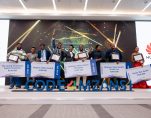
The winners at the Huawei Developer Competition, Code4Mzansi

The competition was held in partnership with the Department of Small Business Development. “The Code4Mzansi competition is not just a celebration of achievement, it is a launchpad for the future,” said Minister Stella Ndabeni, whose department co-hosted the event and delivered the closing address.

The finals revealed a clear shift from building abstract digital products to practical tools that help small businesses trade better, communities access services more easily, and local industries solve problems faster.

Four finalist teams focused directly on the township economy, with solutions covering food safety verification for spaza shops, offline point-of-sale systems built for load-shedding, WhatsApp-native marketplaces for informal retailers, and community credit systems for SASSA grant recipients.

Others addressed AI-driven healthcare access, electricity theft detection, smart agriculture, financial infrastructure for the creator economy, and AI-generated African music.

Held at Huawei Office Park in Woodmead, the finals brought together more than 100 attendees, including government representatives, academic partners, industry leaders and media.

“The quality of the finalist solutions demonstrated the potential of local innovation to respond to real market needs,” said Steven Chen, Cloud CEO of Huawei Technologies South Africa.

Academic partners included the University of Pretoria, the University of Johannesburg, the University of the Witwatersrand and the University of Cape Town.

“Small businesses are the backbone of our economy, and technology is their greatest accelerator. The participants here today are future entrepreneurs who will drive South Africa’s digital economy forward,” said Professor Thokozani Shongwe, Vice Dean of Postgraduate Studies, Research and Internationalisation at the University of Johannesburg’s Faculty of Engineering and the Built Environment.

Industry partner rain also attended. Leon Nortje, Principal and Senior Architect at rain, said the competition offered a strong view of the country’s emerging technology pipeline.

“It is always good to see new projects and new teams working on solutions that are valuable and industry-related. We will be looking out for potential new employees,” said Nortje.

The winners

The finalists competed for a prize pool of R800,000. MAAT by SIMVAK was named the overall grand winner and received the Business Value Award, taking home R300,000. The platform addresses food safety and regulatory compliance in South Africa’s informal retail sector through AI agents, real-time product recall alerts, and counterfeit detection for the spaza shop ecosystem.

“The spaza network is the supply chain for most South African households,” said SIMVAK founder Shingirayi Mandebvu.

HealthHive by FTCK received second prize in the Business Value Award category, taking home R200,000, for its AI telemedicine platform that matches patients with the right medical practitioners based on their symptoms.

Auraa received the Grand Innovation Award for its AI music engine built to generate authentic African sound. The platform has been associated with an album that has crossed one million streams.

The Future Star Award went to e-Khadi, a community credit and stokvel platform giving SASSA grant recipients access to essentials at their local spaza shops, supported by AI-assisted credit scoring and fraud detection.

The People’s Choice Award, voted by the public on Huawei’s social media channels, went to DevRift, a semi-finalist in the competition, who took home R100,000.

Minister Ndabeni delivered the closing address, positioning Code4Mzansi within the government’s agenda for youth entrepreneurship, small business development and digital inclusion.

“Our task is to ensure that innovation does not remain a moment of applause, but becomes a pathway to enterprise creation, digital inclusion, and sustainable growth,” she said.

“Thank you to Huawei for being a perfect partner on the journey that we are travelling, and of course, those that matter most, the developers who dared to compete,” she said.

Code4Mzansi forms part of the global Huawei Cloud Developer Competition. In its inaugural edition, South Africa attracted more participants than any other country: 1,041 across 353 teams, including 176 enterprise teams, resulting in the highest enterprise participation rate among all competing markets. Twenty semi-finalists were selected before the top nine advanced to the final.

For the finalists, the work is just beginning. As Minister Ndabeni said, “Go home today proud. But tomorrow, wake up, build again.”

Hashtag: #Huawei #Code4Mzansi #SouthAfrica


The issuer is solely responsible for the content of this announcement.

About Huawei

Founded in 1987, Huawei is a leading global provider of information and communications technology (ICT) infrastructure and smart devices. With 213,000 employees operating in over 170 countries, we serve more than three billion people worldwide.

Huawei is committed to bringing digital to every person, home, and organisation for a fully connected, intelligent world. In 2025, Huawei generated CNY880.9 billion in revenue, reinvesting 21.8% (CNY192.3 billion) into R&D, with about 53.7% of its employees working in R&D. As a private company fully owned by its employees, Huawei focuses on customer-centric innovation and open collaboration to create lasting value and drive technological breakthroughs globally.

For more information, please visit Huawei online at www.huawei.com or follow us on:


Wes Streeting has intensified pressure on Keir Starmer to impose tougher curbs on children’s access to social media, warning that Britain’s current approach to mobile phones and online platforms amounts to “giving children a hammer and saw” without enough protection from the harm they can cause. The former health secretary, who quit government this month after accusing Starmer of lacking the ambition needed to improve Britain, said […]

Microsoft has opened a clearer path for Windows 11 users and administrators to remove Copilot, marking a notable shift in its handling of artificial intelligence features that have become increasingly visible across the operating system. The change means Copilot can be removed like a conventional app on many devices, while IT administrators managing business PCs now have policy tools to uninstall or prevent the Microsoft Copilot app […]

China’s artificial intelligence market is entering a faster and more expensive phase, with enterprise spending forecasts pointing to a surge that could reshape global competition in cloud computing, semiconductors, robotics and industrial automation.

Global enterprise AI expenditure is expected to reach about $940 billion in 2026 and climb to roughly $2.1 trillion by 2029, reflecting a shift from experimental deployments to large-scale use across manufacturing, finance, logistics, health care, energy and public services. China is emerging as one of the fastest-expanding markets within that cycle, helped by heavy infrastructure spending, state-backed industrial policy and a corporate race to build domestic alternatives to foreign chips, models and cloud platforms.

The acceleration is no longer confined to model development. China’s AI buildout is moving across the full technology stack, from data centres and accelerators to enterprise software, robotics and agentic systems capable of handling complex workflow tasks. The first phase of the investment wave was dominated by computing power, foundational models and large infrastructure projects. The next phase is being shaped by applied AI, intelligent services and automation across production lines, offices and consumer platforms.

That transition is putting pressure on global rivals. US technology groups still lead in advanced chips, frontier models and hyperscale cloud capacity, but China’s market has advantages in deployment speed, manufacturing depth and policy coordination. Companies including Alibaba, Tencent, Baidu, Huawei and ByteDance are expanding AI services while also trying to reduce dependence on restricted US semiconductor supplies. Alibaba has unveiled a new AI chip through its T-Head unit and is directing tens of billions of dollars into cloud and AI infrastructure over several years. Huawei’s Ascend processors have become central to China’s domestic accelerator strategy as export controls limit access to top-tier Nvidia products.

Infrastructure remains the foundation of the race. Worldwide AI infrastructure spending is on course to exceed $1 trillion by 2029, with accelerated servers accounting for the overwhelming share. China remains the second-largest AI infrastructure market after the US, even though export restrictions have created supply constraints for high-end accelerators. Those restrictions have encouraged domestic chip design, local server ecosystems and more efficient deployment models for inference, where many commercial AI applications run after models have been trained.

China’s data centre expansion is also moving into more specialised formats. AI workloads demand dense computing power, stable electricity supply and advanced cooling, all of which are raising costs and straining grids. Projects near Shanghai and other technology hubs are testing alternative energy and cooling systems, including offshore and renewable-powered facilities. These efforts reflect a broader attempt to manage the energy burden of AI while supporting national ambitions in cloud services, industrial software and smart manufacturing.

Robotics is becoming a central pillar of the spending wave. China already has the world’s largest industrial robot base and is pushing into embodied intelligence, where AI systems are integrated into machines that operate in factories, warehouses, homes and public spaces. Forecasts for China’s robotics market point to rapid expansion over the next five years, with demand coming from electric vehicles, electronics, logistics and elder care. The combination of AI models, sensors, batteries and manufacturing scale gives domestic firms a route to compete internationally beyond software alone.

Policy support is reinforcing corporate investment. Beijing’s “AI Plus” strategy, issued in 2025, aims to embed artificial intelligence across the economy by expanding access to data, compute and talent while promoting open-source ecosystems and industrial adoption. Local governments have added funding programmes, innovation parks and procurement support, creating competition among cities such as Beijing, Shanghai, Shenzhen and Hangzhou. That model can accelerate deployment, though it also raises the risk of duplicated capacity, uneven standards and projects driven more by subsidy incentives than commercial demand.

The competitive picture remains mixed. China leads in AI publication volume, citations, patent output and industrial robot installations, while the US continues to produce more frontier models and higher-impact patents. The performance gap between leading US and Chinese models has narrowed, aided by open-source releases and engineering efficiency from Chinese labs. DeepSeek’s breakthrough earlier in the cycle demonstrated that capable systems could be produced with fewer resources than previously assumed, intensifying debate over whether raw spending alone will determine leadership.

Bitcoin’s recovery attempt is losing momentum as equity markets push higher, leaving traders focused on whether the largest digital asset is forming another lower high after a two-week pullback. The token was trading near $77,000 on Tuesday, after falling about 7 per cent over two weeks and failing to regain the stronger technical posture it held earlier this month. Ether was near $2,120, still trapped in a […]

By Nitya Chakraborty With the U.S. President Donald Trump himself downgrading the status of the four nation Quadrilateral Security Dialogue (QUAD), why is Indian government spending so much of its precious time on QUAD meetings? It is sheer wastage of time for the Prime Minister Narendra Modi as also Foreign Minister Dr. S Jaishankar. US […]

The article Trump Has Downgraded Status Of QUAD-India Should Not Waste Time On It appeared first on Latest India news, analysis and reports on Newspack by India Press Agency).

HONG KONG SAR – Media OutReach Newswire – 26 May 2026 – At 11.08pm on May 24, Dr Lai Ka-ying made history by becoming the first Hong Kong astronaut to blast off into space aboard the Shenzhou-23 manned spaceship. This momentous occasion also launched a new era for Hong Kong’s development of innovation and technology (I&T) as well as the city’s participation in national development under China’s 15th Five-Year Plan.

Congratulating Dr Lai on her achievement, John Lee, Chief Executive of the Hong Kong Special Administrative Region (HKSAR), said that the HKSAR can “transform from a ‘supporter’ of the country’s great aerospace endeavours into an ‘executor’ “.

Dr Lai Ka-ying (left) made history by becoming the first Hong Kong astronaut to blast off into space aboard the Shenzhou-23 manned spaceship.

“This not only demonstrates the HKSAR’s capability in contributing to the country’s development into an aerospace power, but also showcases how Hong Kong could better integrate into and serve the overall national development,” Mr Lee said.

“This mission is of great significance, as it is not only the first manned spaceflight mission during the 15th Five-Year Plan period, but also the first time for a payload expert from the HKSAR to participate in it.”

The Shenzhou-23 crew will conduct on-orbit rotation with the Shenzhou-21 crew. The crew, including Dr Lai, will stay in the space station and conduct multiple experiments and applications in various fields such as scientific applications.

The Secretary for Innovation, Technology and Industry of the HKSAR Government, Professor Sun Dong, led a delegation to the Jiuquan Satellite Launch Center to witness this historic moment. Members of the delegation included other government representatives, I&T experts, youths and students.

“I truly believe this is a great demonstration of Hong Kong integrating into and serving the overall national development through concrete actions, while contributing our strength in I&T,” Professor Sun said.

” ‘Science and technology is primary productive force, talent is primary resource, and innovation is primary driver of growth.’ The HKSAR Government will continue to drive the development of I&T, accelerate the establishment of an international I&T centre, and make greater contributions to building our nation into a strong power in science, technology, and aerospace.”

Commissioner for Innovation and Technology of the HKSAR Government, Mr Ivan Lee, said that the Government had been providing funding support for universities and research institutions in conducting aerospace technology-related projects through the Innovation and Technology Fund.

“In 2024, we launched a special call for funding applications, inviting universities to submit project proposals related to aerospace technology. Following a selection process, we supported six projects. Among them was the Multi‑Spectral Imaging Carbon Observatory (MUSICO) developed by a team from the Hong Kong University of Science and Technology,” he said.

On the Tiangong Space Station, Dr Lai will conduct experiments including operating the MUSICO — the world’s first lightweight, high-resolution synergistic observatory for carbon dioxide and methane emission point sources.

The Long March 2F Y23 carrier rocket carrying the Shenzhou-23 manned spaceship launched successfully at 11.08pm on May 24 at the Jiuquan Satellite Launch Center. ‎

Born and raised in Hong Kong, Dr Lai is a Superintendent of the Hong Kong Police Force. In the recruitment exercise of China’s fourth batch of preparatory astronauts launched in 2022, she was successfully selected as a payload expert and was deployed to the China Astronaut Research and Training Center for training.

Before embarking on the historic spaceflight, Dr Lai expressed hope that it would inspire more Hong Kong youths to devote themselves to the field of I&T, thereby contributing to the country’s scientific and technological self-reliance and strength.

Hashtag: #HongKong #BrandHongKong #I&T #aerospace #technology


The issuer is solely responsible for the content of this announcement.

NightSpire has moved from an emerging ransomware operation to a fast-scaling cyber-extortion threat, using exposed Remote Desktop Protocol access, legitimate administration tools and a Tor-based leak site to pressure victims across multiple sectors. First observed in early 2025, the group has built its campaign around double extortion, stealing sensitive files before encrypting systems and then threatening public exposure if victims refuse to pay. Its operations show a […]

Hackers are exploiting a critical vulnerability in Ghost CMS to compromise more than 700 websites and turn trusted publishing pages into delivery points for ClickFix malware, escalating concerns over unpatched content management systems used by media, universities, fintech firms, software companies and research organisations. The flaw, tracked as CVE-2026-26980, is a SQL injection vulnerability in Ghost’s Content API. It affects Ghost versions from 3.24.0 through 6.19.0 and […]

Pope Leo XIV has used the first encyclical of his papacy to call for tighter regulation, transparency and human oversight of artificial intelligence, warning that unchecked systems could intensify misinformation, deepen inequality and make war easier to wage. The document, Magnifica Humanitas, places AI at the centre of the new pontificate’s social agenda, treating the technology not as a narrow technical issue but as a test of […]

VISHNU RAJA
RYO YAMADA
HITORI GOTOH
IKUYO KITA