News related to
drone

Tests by Thailand’s Pollution Control Department have revealed that arsenic concentrations in the Kok River and tributaries now exceed national safety limits by up to five times. Biochemical analysis indicates that these toxic levels are linked to unregulated mining operations in Shan State, Myanmar, particularly within territories controlled by the United Wa State Army.

The Kok River, which begins its 285km course in Myanmar’s Daen Lao Range before entering Thailand through Mae Ai and flowing into Chiang Rai and eventually the Mekong, has become the focus of mounting alarm. Tests conducted between late May and early June demonstrated elevated arsenic at all 15 tested points along the Kok and Sai rivers, with further contamination detected in two Mekong sampling sites.

Local fishermen have reported adverse impacts to aquatic life and livelihoods. Prices for catch in Chiang Rai have dropped by nearly half, as consumer fear surrounding contamination takes hold. Fisherman Sawat Kaewdam told AFP: “They say, ‘There’s arsenic. I don’t want to eat that fish.’”.

Satellite imagery and drone footage show dozens of active mining sites emerging since around 2022, believed to involve both gold and rare earth minerals. These mines operate under minimal environmental safeguards, with tailings and chemical-laden effluent discharged directly into rivers. One environmental campaigner described the situation as Thailand’s “largest-ever case of transboundary pollution”.

Health experts warn that while immediate poisoning symptoms may not materialise, long‑term exposure through contaminated water and fish consumption could lead to chronic arsenic poisoning. Somporn Phengkham of the Community Health Impact Assessment Platform emphasised the risk of gradual accumulation, urging increased scrutiny of wells and irrigation systems.

Communities along the Kok River have experienced unusual water discolouration, persistent skin irritations, and fish deformities. Chiang Rai environmentalists staged protests on 5 June, tying ribbons along the river bridge to demand intervention and mine closure. In Chiang Mai’s Mae Ai district, a monk from Wat Thaton confirmed that the river’s appearance and use had become culturally and practically untenable.

Thailand’s federal government has initiated emergency measures. Deputy Prime Minister Prasert Jantararuangtong has overseen a new response centre, while the Pollution Control Department is conducting enhanced sampling. Officials reassure domestic water supplies are safe, although the contamination source remains external.

Proposals for containment include constructing a dam across the Kok River to trap sediments, dredging heavily polluted sections, and pursuing diplomatic negotiations with Myanmar and China. The Foreign Affairs Committee is engaging Beijing to urge oversight of Chinese mining companies operating within UWSA territories.

Challenges persist as Shan State’s mines lie beyond Myanmar’s central control. With the UWSA exerting autonomy and Chinese-linked firms driving extraction operations, finding a direct negotiating partner proves elusive. Regional analysts warn that building physical barriers without curbing source pollution will yield temporary alleviation at best.

Environmental advocates underscore the urgency of scaling up real-time monitoring and cross-border coordination. They highlight growing concerns that contamination could extend throughout the Mekong basin, threatening agriculture, fisheries, and water security across Southeast Asia.

Experts like Tanapon Phenrat of Naresuan University stress that addressing the problem requires systemic reform: mandated tailings treatment, strict environmental standards, and international cooperation. “We need to act now,” he stated.
Arabian Post Staff -Dubai Major U.S. and European carriers have halted flights to key Gulf destinations amid escalating hostilities between Israel and Iran, while international regulators warn of heightened risk as far-flung air routes face rerouting challenges. American Airlines has paused its Philadelphia–Doha service until at least 22 June, citing growing security concerns, with a spokesperson affirming the decision would be reviewed “as needed”. United Airlines has similarly […]

Oil markets surged on Tuesday and Wednesday as escalating military exchanges between Iran and Israel sparked investor anxiety. Brent crude futures climbed approximately 2.1 per cent to $74.79 a barrel by 12:02 GMT, while US West Texas Intermediate settled near $73.19—following intraday swings exceeding 2 per cent gains and drops. The gains were driven by soaring geopolitical concerns after Israel bombed Iran’s South Pars gas field—shared with Qatar—igniting a fire that prompted Iran […]

The United Arab Emirates has cautioned against a dangerous spiral between Israel and Iran, as its foreign minister strongly warned that “uncalculated and reckless steps” might spread beyond the conflict zones. Sheikh Abdullah bin Zayed Al Nahyan expressed deep concern over escalating military actions that risk drawing in neighbouring states and aggravating regional instability, the UAE Foreign Ministry said on Tuesday. Abu Dhabi’s heightened alarm follows a sharp intensification of hostilities. […]

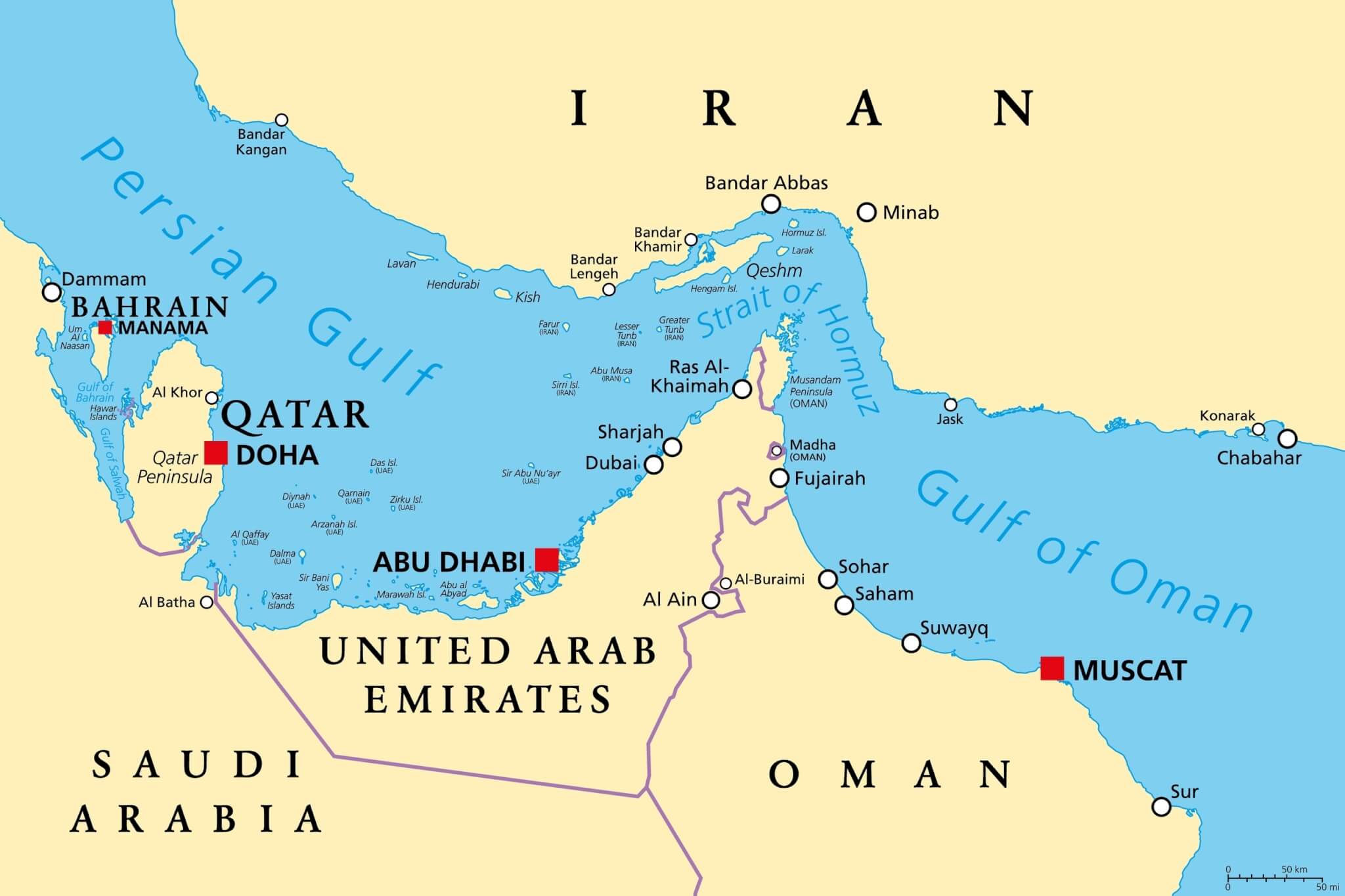
Qatar has instructed LNG carriers to remain outside the Strait of Hormuz until one day prior to loading operations as regional security risks heighten, with officials emphasising that this measure is precautionary and unlikely to disrupt overall supply volumes.

The directive from QatarEnergy affects vessels bound for the Ras Laffan terminal, one of the world’s largest liquefied natural gas export facilities. Around a dozen carriers are idling in ballast outside the terminal, awaiting final instructions before undertaking brief, tightly scheduled transits through the strait.

Market indicators reacted swiftly: European gas prices surged as much as 4.8%, while Asian benchmarks inched upward amid growing concern over potential delivery delays. Despite this, analysts and industry insiders maintain that the streamlined entry process—coupled with Qatar’s steady production—should keep cargo volumes within normal parameters.

This move aligns with contingency efforts by the world’s third-largest LNG exporter. Industry sources confirm that the carriers will execute “quick entry and speedy exits” across the Hormuz passage, necessitating precise scheduling and coordination with maritime authorities.

Analysts acknowledge that about 20–25% of global LNG traffic transits the Strait, underscoring its significance as a logistical chokepoint. Instructing vessels to loiter offshore aims to reduce their vulnerable exposure time in the strait.

Strategic analysts warn that escalating tensions—particularly after recent military exchanges involving Israel and Iran—increase risks for all Gulf shipping. Tehran has threatened to seal off the strait, which could strain Qatar’s export pipelines and ripple through global energy markets.

Despite geopolitical headwinds, Qatar’s production at the South Pars/North Field complex remains steady. The foreign ministry emphasised that LNG output and shipments continue to follow their usual course, even as the country takes enhanced security measures.

Operational insights from shipping analysts describe a familiar summer idling pattern, but note slight increases in loitering time and cautious routing. Vessels such as the tanker HLAITAN are reportedly waiting outside the strait in anticipation of load orders.

Market response has been modest. European gas hubs such as TTF recorded price rises of around 4–5%, while the Asia‑Pacific’s JKM benchmark reached nearly $14 per mmBtu, marking a $1.20 uptick since mid‑June. CNBC‑style commentary points out that the precautionary shift is “unlikely to cause major disruption,” although insurers are adjusting premiums to reflect the heightened transit risks.

For global exporters and importers, Qatar’s stance underscores a renewed emphasis on maritime risk management. Shipping firms are increasingly factoring geopolitical volatility into their routing and scheduling protocols. International insurers have begun revising coverage for LNG carriers traversing the Gulf, citing increased premiums tied to potential missile or drone threats in the region.

Qatar’s approach enables more controlled maritime planning: by delaying vessel entry until close to the loading window, the country limits their exposure to strategic bottlenecks and regional flare‑ups. This calculated move underscores Doha’s dual priorities of maintaining export reliability and protecting vital shipping assets.

A landmark agreement between UAE’s Autocraft and Indonesian aerospace maintenance giant GMF AeroAsia positions the Autocraft E20+ electric vertical take‑off and landing aircraft for regional deployment, signalling a major advance in Southeast Asian air mobility. Signed on 11 June at the Indo Defence Expo in Jakarta, the memorandum of understanding enlists GMF as the official Maintenance, Repair and Overhaul partner for the E20+ platform, while establishing frameworks […]

President Donald Trump has called for the immediate evacuation of Tehran, warning that Iran “cannot have a nuclear weapon” after a series of escalating military exchanges with Israel. He issued the statement via Truth Social while attending the G7 summit in Canada, then departed early to convene his national security team. The growing hostilities, now entering a fifth day, have provoked market turbulence, prompted military deployments, and […]

Advertisements

EdgeCortix has launched its SAKURA‑II M.2 AI accelerator for the Raspberry Pi 5 and other Arm‑based platforms, enabling high‑performance, energy‑efficient execution of generative AI at the device edge. With 60 TOPS and 30 TFLOPS performance within an 8–10 W power envelope, the SAKURA‑II module supports advanced models including Llama 2, Stable Diffusion, Vision Transformers and VLMs on compact, affordable hardware. Dr Sakyasingha Dasgupta, EdgeCortix founder and CEO, highlighted that the integration “opens […]

Iran launched a coordinated attack using ballistic missiles and combat drones against Israel, marking a significant intensification of hostilities and signalling a tactical shift in its military posture. A new guided ballistic missile—named ‘Haj Qassem’ after the late Major‑General Qasem Soleimani—was deployed alongside swarms of drones, striking central Israel including Tel Aviv and Haifa. Iranian state media described the operation as a hybrid assault, showcasing advanced navigation capabilities […]

Oil benchmarks surged on Friday following a major Israeli military operation in Iran, sparking fears over potential disruptions to Middle Eastern oil supplies. Brent crude climbed more than 7 %, reaching an intraday peak of approximately $78.50, before settling at around $74.23 a barrel. The US West Texas Intermediate benchmark mirrored the jump, with intraday highs near $77.62 and a close at $72.98—a 7 % increase and the largest […]

Over 1,800 flights have been disrupted and more than 650 cancelled after Israel’s airstrikes on Iran prompted sweeping airspace closures over Israel, Iran, Iraq, Jordan, and Syria, prompting carriers worldwide to reroute or suspend services. Tel Aviv’s Ben Gurion Airport remains closed indefinitely, while Iran’s state media confirmed grounding all flights. The European Union’s aviation safety agency has classified the region as a high-risk zone.

Flight-tracking platforms like Flightradar24 and Cirium recorded a sudden clearance of air traffic in the affected region. Planes were diverted south via Egypt and Saudi Arabia or north through Turkey, Azerbaijan, and Central Asia. Airlines such as Emirates, Qatar Airways, Etihad, Air India, Lufthansa, British Airways, Delta, United, and El Al have either cancelled or dequeued flights due to safety concerns.

El Al announced suspension of all inbound and outbound operations, evacuating its fleet from Israel. Its budget counterpart, Israir, has similarly withdrawn aircraft from Tel Aviv, with full suspension through to at least 15 June. On the US side, United suspended its Newark–Tel Aviv service until 30 June, and Delta halted routes from JFK through 31 August.

In Europe, national carriers tightened flight operations. Lufthansa extended cancellations to Tel Aviv and Tehran through July, and halted flights to Amman and Beirut until 20 June. KLM, SWISS, Aegean, Ryanair, and EasyJet collectively cancelled flights into Israel, some as late as October. Turkish Airlines, Flydubai, Pegasus, and AJet suspended routes to Iran, Iraq, Jordan, and Syria until mid‑June.

The flight disruptions are exacting a toll on airlines’ financial performance. US carriers Delta, United and American saw share prices fall between 3.5% and 5%, while the US Global JETS ETF dropped around 3.5%. Rising oil prices—spiking between 7% and 11%—have compounded the burden. Investor sentiment across transatlantic carriers remains cautious as volatility in the Middle East continues to unsettle markets.

Aviation risk consultancy Osprey Flight Solutions reports six commercial aircraft have been shot down unintentionally, with three near-miss incidents since 2001, including downed civilian jets in Kazakhstan and Sudan. Such events have heightened the emphasis on airspace risk assessment in conflict zones. International Air Transport Association Director‑General Willie Walsh stressed the need for more coordinated information sharing between states, airlines, and global flight advisory systems.

Operation Rising Lion, the designation given to Israel’s offensive, involved over 200 fighter jets striking more than 100 Iranian targets—including nuclear enrichment sites at Natanz, ballistic missile facilities, and senior military commanders. Iran retaliated with missile and drone strikes, although most were intercepted. The escalation has forced Israel to place its defence units on high alert for further retaliation.

Operationally, airlines have adapted fast. Air India rerouted 12–16 flights—spanning transatlantic and Europe‑India services—via Vienna, Frankfurt and other hubs. Emirates diverted flights from Manchester to Istanbul, and Flydubai rerouted services from Belgrade to Yerevan. Abu Dhabi’s airports issued advisories urging passengers to verify status before travelling, as disruptions are expected to persist through the weekend.

The widespread closure underscores the commercial aviation sector’s exposure to geopolitical volatility. As routes are restructured to avoid conflict zones, carriers face longer routings, elevated fuel costs, crew redeployments, and cancellations—all eroding profit margins already weakened by post‑pandemic recovery strains.

Safety remains paramount. While no civilian aircraft have been lost in the current hostilities, the track record of past downings amplifies concerns. Airlines now rely heavily on real‑time risk intelligence from platforms like OPSGROUP’s Safe Airspace and coordination with aviation authorities. Russia’s Rosaviatsia has also barred its carriers from the contested airspace and banned flights to Iran and Israel until at least 26 June.

Global aviation authorities now face calls to bolster measures: real‑time intelligence sharing, harmonised flight advisories, and contingency routing to maintain safety while minimising disruption. But as long as the Israel‑Iran confrontation rages, the skies remain fragile. Passengers worldwide are urged to monitor airline communications and government travel advisories as the situation remains highly fluid.

Markets across the Gulf and beyond plunged on Friday following a sharp military escalation after Israel struck Iranian nuclear and military sites, triggering drone counter‑attacks by Iran and a broader risk‑off reaction among investors.

Dubai’s benchmark index tumbled 5.1%, its steepest single‑day loss since May 2022, while Abu Dhabi’s dropped 3.5% before paring losses. The rout extended into Israel, where the shekel slid as much as 3.5% against the dollar, with long‑dated Israeli bonds and select regional government debt also weakening.

Commodity markets mirrored investor anxiety. Brent crude surged over 6%, touching its highest level in nearly five months, as traders assessed the risk of supply disruptions through the Strait of Hormuz. Gold likewise rallied, reaching two‑month highs as capital flowed into safe‑haven assets.

Airline stocks were among the hardest hit. Air Arabia shares plunged more than 4%—some reports suggest nearly 8%—as carriers rerouted flights away from airspace over Iran, Israel, Iraq and Jordan. Regional exchanges in Riyadh and Doha were closed on Friday, with trading set to resume on Sunday amid anticipation of continued volatility.

The market shockwaves reverberated worldwide. Europe, Asia and US indices all registered dips: the S&P 500 dropped roughly 0.4% mid‑day, the Dow slipped nearly 1.8% and the Nasdaq around 1.3%, while Tokyo’s Nikkei and Hong Kong’s Hang Seng also declined.

Analysts warned that while markets historically absorb such shocks fairly quickly, the sustained threat of conflict brings inflation and growth risks. Chris Scicluna of Daiwa Capital Markets noted the initial oil spike “hasn’t been too extreme” but cautioned that a sustained rise toward US $80 oil would be problematic for central banks. Meanwhile, Tariq Kakish of FH Capital pointed out that geopolitical instability remains “the key factor affecting investors’ sentiments”.

Concerns centred on the Strait of Hormuz, which channels approximately one‑third of global seaborne oil, raising the potential for disruption. Demand for insurance on tankers in the Gulf surged, and traders remain on edge over possible Iranian retaliation targeting shipping or oil infrastructure. However, OPEC+ sources suggest that Saudi Arabia and others retain sufficient spare capacity and are monitoring the situation closely.

Financial markets also showed classic risk‑off behaviour: US Treasury bonds rallied even as yields ticked higher, reflecting investor concerns about energised inflation, as per Axios commentary. The dollar strengthened, while gold and the Swiss franc benefited from increased flight‑to‑safety demand.

In Asia, the ASX 200 slipped modestly, offsetting losses in financials and consumer sectors with gains in energy and mining stocks. In Mumbai, Reliance Industries’ shares fell nearly 1.8% as Brent crude surged past $75 per barrel amidst the tensions.

Political and economic analysts emphasise two themes: the possibility of an enduring inflation shock from energy price escalation, and the risk of prolonged conflict dragging in wider regional powers. While some argue Gulf states may help mitigate supply-side shocks via increased production, others highlight that even modest increases in oil prices could influence global inflation and central bank policy.

Despite the turbulence, multiple analysts noted past flare‑ups between Israel and Iran tended to cool within weeks, with markets rebounding once diplomatic pathways re‑opened. Yet this episode differs: it involves overt attacks deep into Iranian territory, targeting nuclear and ballistic infrastructure, and marking a new phase in the conflict. The outcome may recalibrate norms for military engagement in the region—and investor expectations alongside them.

Pentagon officials have trimmed the U.S. Air Force’s F-35A fighter jet order dramatically, requesting just 24 aircraft in fiscal year 2026—cutting it by half from the previously projected 48 jets. The revised procurement proposal, submitted to Congress, seeks approximately $3.5 billion for the jets and an additional $531 million set aside for advance materials procurement. This downsizing is part of a broader strategy by the Department of Defence to […]

Red Bull is staging a groundbreaking multiplayer gaming finale in Dubai this December, where elite competitors will face off in Tetris on a dramatic canvas: the 150‑metre Dubai Frame, illuminated by more than 2,000 drones. The spectacle promises to be the largest live playable Tetris game ever, combining digital skill with live drone artistry. Red Bull’s global tournament roll‑out kicked off on World Tetris Day, drawing an […]

UAE’s car market is undergoing a fundamental shift as lifestyle-driven mobility rises to prominence, reshaping consumer choices from metal to experience. A surge in preference for digitally enabled, subscription-based, and autonomous transportation is aligning with the emirates’ drive for sustainable, high-tech urban living. Automakers and transport authorities are adapting, marking a new era for mobility in the region.

At the forefront is the uptake of connected and autonomous vehicles. A 2024 Astute Analytica report found that the UAE invested US $500 million in autonomous and connected vehicle infrastructure, and government surveys show that nearly 60 per cent of residents are open to self-driving cars once available . Dubai aims for 25 per cent of its transport network to operate autonomously by 2030, while Abu Dhabi is piloting robotaxis under a combined Dubai Roads and Transport Authority and DP World initiative . Chinese mobility pioneer WeRide has commenced fully driverless robotaxi trials in Abu Dhabi and holds significant UAE licences, further cementing the country’s status as a regional testbed .

Parallel to autonomy, digital car buying and subscription services are gaining ground. A global study by Arthur D. Little reports that UAE has the highest percentage worldwide of buyers willing to complete vehicle purchases entirely online, with 53 per cent preferring full digital transactions . It also notes more than half of car buyers intend to purchase hybrid or electric models for their next car . Major brands such as Jaguar‑Land Rover, Audi and Volvo have launched subscription models allowing flexible short‑term access to vehicles, reflecting a deeper shift from ownership to access .

Luxury meets lifestyle in a market defined by adventure and affluence. The UAE’s love for off‑road capable SUVs—icons like Land Rover, Toyota Land Cruiser and Mercedes G‑Class—remains strong, supported by driving culture and desert heritage . At the same time, social media has amplified the aspirational value of high‑performance and bespoke vehicles, prompting services offering vehicle customisation and luxury rentals to expand .

Despite their prestige, sustainable mobility options are advancing steadily. Government plans aim for EVs to account for 10 per cent of all vehicles by 2030; Dubai Electricity and Water Authority intends to install 1,000 public charging points by 2025 . Financial incentives including free parking and toll exemptions support uptake. While less than 15 per cent of buyers currently prefer full battery‑electric vehicles , more than 50 per cent plan to choose hybrid or electric options next .

Shared mobility and micro‑mobility solutions are gaining traction among urban dwellers. The UAE’s ride‑hailing market grew to US $1.3 billion in 2023, and car‑sharing usage surged by 30 per cent to over 200,000 subscribers . Platforms like Careem, ekar and others expand convenient access while supporting sustainability goals .

Pre‑owned and rental markets also reflect shifting lifestyle demands. The luxury car rental segment caters to business travellers and experience‑seeking residents, accounting for over half of regional luxury rentals . Certified pre‑owned programmes and digital platforms make premium vehicles accessible and promote circular economy models .

Industry participants are racing to adapt. Six major dealers—including Al Futtaim Motors and Al Habtoor—control more than 62 per cent of the auto market by offering hybrid and electric models, digital sales funnels, and after‑sales personalisation services . Additionally, more than 80 per cent of UAE and KSA consumers now value in‑car digital services and are willing to share data for personalised experiences .

Strategic foreign investment continues to flow. In 2024, DP World handled a record 1.3 million vehicles, up 53 per cent year‑on‑year. China led automotive investments region‑wide, with 27 projects worth US $8 billion, generating 20,000 jobs . The UAE attracted 145 automotive projects valued at US $22 billion, solidifying its regional industry leadership .

Air mobility is emerging as a bold frontier. Authorities, including the General Civil Aviation Authority and Technology Innovation Institute, are mapping aerial corridors for air taxis and drones with a view to commercial roll‑out by 2026. Vertiports are under construction as Dubai aims to launch urban air taxi operations in early 2026 . Collaborations with global developers such as Volocopter and Joby Aviation underscore UAE’s intent to lead advanced mobility innovation.

Demographic and behavioural trends are shifting expectations. UAE’s younger, tech‑savvy population demands multimodal transport, sustainable choices, and flexible ownership. European research shows Gen Z and millennials prefer compact, shared, and electric vehicles, and lease options tied to services—mirroring emerging patterns in the Emirates . The convergence of digital retail, in‑car connectivity, autonomous capabilities and lifestyle choices is now the defining feature of the market.

That convergence gives rise to dynamic policy alignment and infrastructure development. Dubai’s Autonomous Transportation Strategy ambitions to ease congestion and strengthen economic diversification, while public‑private partnerships are building the ecosystem for AI‑enabled transport .

The transformation is clear: the UAE auto sector is evolving from a conventional showroom‑focused industry to an experiential mobility ecosystem. Consumers expect seamless digital transactions, autonomous options, flexible subscriptions, and elevated experiences. Governments and businesses are aligning investment and strategy to meet these expectations, fusing luxury with sustainability, and individual desire with urban resilience.

As the 2030 horizon approaches, next‑generation mobility is no longer an aspiration but a reality rolling on UAE roads, in the air, and on digital platforms—heralding a new age for the Gulf’s automotive narrative.

Abu Dhabi will serve as the host for the Games of the Future 2025, a pioneering global event blending physical and digital sports. Scheduled for December 18 to 23, the competition aims to redefine the boundaries of athletic contests by merging traditional sporting disciplines with cutting-edge technology. This event marks a significant step in the evolution of international sports, as organisers position Abu Dhabi at the forefront of the phygital sports movement.

The Games of the Future will bring together elite athletes and esports competitors from across the world, competing in hybrid formats designed to test skill, strategy, and adaptability. The term “phygital” refers to the integration of physical and digital elements within the same competitive environment. This concept challenges conventional sports formats, creating new experiences for participants and audiences alike.

Organisers highlight that the Games of the Future are intended to captivate younger, tech-savvy audiences, whose preferences are shifting towards immersive and interactive entertainment. The event will showcase competitions that combine real-world physical prowess with virtual reality, augmented reality, and advanced sensor technologies. These innovations allow athletes to perform in augmented settings where physical actions influence digital gameplay in real time.

Abu Dhabi’s selection as host city follows extensive consideration of its infrastructure, innovation-driven vision, and commitment to becoming a global hub for futuristic sports and entertainment. The emirate has invested heavily in smart city technologies, sporting facilities, and digital innovation hubs, creating a conducive environment for this landmark event. Local authorities are confident that the Games will bolster Abu Dhabi’s reputation as a leader in hosting high-profile international sporting and cultural events.

The event will be staged across multiple venues, including state-of-the-art arenas equipped with immersive technologies, interactive fan zones, and digital broadcasting platforms. These setups are designed to offer spectators an unparalleled experience, allowing them to engage with the games through interactive apps, live data feeds, and virtual participation elements.

Key components of the Games will include virtual cycling races, drone racing, mixed-reality martial arts, and AI-assisted team sports. Each competition will be carefully crafted to balance physical skill with digital interaction, emphasising creativity, teamwork, and technological proficiency. Organisers have underscored the importance of fairness and integrity in the competition, with robust systems in place to ensure transparency and prevent cheating in both physical and digital realms.

Prominent figures in the world of sports technology have expressed optimism about the Games’ potential to accelerate the integration of digital tools in mainstream athletics. Experts argue that these innovations could provide new avenues for athlete training, injury prevention, and fan engagement. Furthermore, the Games of the Future could act as a testing ground for technologies that might soon become standard in traditional sports worldwide.

The event also reflects broader trends in the sports industry, where the lines between physical sports, esports, and entertainment are increasingly blurred. Sporting bodies and commercial partners are exploring hybrid formats as a way to reach diverse demographics and unlock new revenue streams. By hosting the Games, Abu Dhabi aims to position itself as a pioneer in this transformative phase.

Economic analysts project that the Games will generate significant benefits for the emirate, including increased tourism, job creation, and investment in related sectors such as technology, hospitality, and media production. The event’s timing aligns with Abu Dhabi’s broader economic diversification goals, supporting the emirate’s transition from a primarily oil-dependent economy to a knowledge-based, innovation-driven hub.

As the competition approaches, several international teams and technology companies are confirming participation, signalling robust global interest. Collaborative efforts between sporting federations, tech firms, and event organisers have been instrumental in developing the formats and rules, ensuring they are competitive, engaging, and scalable for future iterations.

The Games of the Future 2025 are expected to attract a wide media presence, with live broadcasts planned across multiple platforms to reach audiences worldwide. This extensive coverage will highlight both the athletic feats and the technological marvels on display, offering insights into how sports could evolve in the coming decades.

Organisers have committed to sustainability principles, incorporating eco-friendly practices throughout the event’s planning and execution. This includes energy-efficient venues, waste reduction initiatives, and promotion of digital engagement to minimise the carbon footprint typically associated with large-scale sports events.

The Games represent a convergence of sport, technology, and culture, reflecting the aspirations of a generation that embraces digital innovation while celebrating physical excellence. Abu Dhabi’s role as host underscores the emirate’s ambition to shape the future of global sports, setting a benchmark for how cities can adapt to and lead in the rapidly changing landscape of athletic competition.

Arabian Post Staff Rivers across the globe are receiving new attention with a wave of innovative technologies designed to tackle plastic and other pollutants more efficiently than ever before. These emerging systems focus on smart, targeted solutions rather than brute-force methods, achieving significant gains in waste removal while minimising harm to aquatic ecosystems. Four technologies stand out for their unique approaches and effectiveness in various water environments. […]

M A Hossain By any military measure, Ukraine’s ‘Operation Spider Web’ was an astonishing success. In a meticulously planned operation, Ukrainian drones struck deep into Russian territory, obliterating at least 40 military aircraft—including nuclear-capable Tu-95 and Tu-22M3 bombers—in a single, devastating blow. The attack revealed not only meticulous Ukrainian planning over 18 months but also the glaring vulnerabilities of Russia’s so-called impenetrable airspace. It was a coup […]

Dubai’s Roads and Transport Authority has initiated a comprehensive upgrade of Umm Suqeim Street, aiming to significantly enhance traffic flow and urban connectivity across the city. The project, stretching from the intersection with Jumeirah Street to Al Khail Road, is a pivotal component of a broader strategy to modernise the city’s infrastructure and accommodate its rapid urban expansion.

The upgrade is designed to increase the road’s capacity to 16,000 vehicles per hour in both directions, effectively reducing travel time between Jumeirah Street and Al Khail Road from 20 minutes to just six. This enhancement is expected to alleviate congestion and improve accessibility for key residential and commercial areas, including Jumeirah, Umm Suqeim, Al Manara, Al Sufouh, Umm Al Sheif, Al Barsha, and Al Quoz.

Integral to the project are the redevelopment of six major intersections along Umm Suqeim Street. These include the construction of four bridges and three tunnels, collectively spanning 4.1 kilometres. Notably, a two-lane tunnel in each direction will be constructed at the intersection with Jumeirah Street, complemented by a signalised surface-level junction. Another two-lane tunnel is planned at the intersection with Al Wasl Street to facilitate traffic flow from Sheikh Zayed Road towards Jumeirah Street, while maintaining uninterrupted surface traffic in the direction of Sheikh Zayed Road.

At the intersection with Sheikh Zayed Road, two bridges will be constructed to eliminate traffic overlap and enhance movement efficiency. Additionally, a tunnel will be developed at the intersection with First Al Khail Street to accommodate traffic from Al Barsha towards Sheikh Zayed Road, along with associated surface-level improvements. The stretch between First Al Khail Street and Al Asayel Street will be widened by adding one lane in each direction, increasing capacity to four lanes per direction. At Al Khail Road, the works involve the construction and widening of two flyovers—one connecting Al Khail Road with Al Quoz Industrial Area, and the other facilitating traffic from Umm Suqeim Street to Al Khail Road heading towards Deira.

Beyond vehicular traffic improvements, the project places a strong emphasis on enhancing pedestrian and cyclist infrastructure. Upgrades include the development of pedestrian walkways, dedicated cycling tracks, landscaped boulevards, and vibrant public spaces designed to foster community interaction and promote sustainable urban living. A direct link will also be established between the Mall of the Emirates Metro Station and nearby residential communities, enhancing last-mile connectivity and encouraging the use of public transportation.

This initiative is part of RTA’s master plan to overhaul the surrounding road network, which includes planned upgrades to Jumeirah Street, Al Wasl Street, and Al Safa Street. The overarching goal is to enable uninterrupted traffic flow from Jumeirah to Al Qudra Road over a distance of 20 kilometres, thereby improving connectivity across four major transport corridors: Sheikh Zayed Road, Al Khail Road, Sheikh Mohammed bin Zayed Road, and Emirates Road.

Mattar Al Tayer, Director General and Chairman of the Board of Executive Directors at RTA, stated that the upgraded corridor will directly serve vital residential and development areas with a combined population exceeding two million. He emphasised that the project is designed to accommodate Dubai’s rapid population growth and urban expansion while improving the overall quality of life for residents and visitors.

Construction is already 70% complete on a 4.6-kilometre segment of Umm Suqeim Street from Al Khail Road to Sheikh Mohammed bin Zayed Road. This phase includes an 800-metre tunnel near Kings’ School in Al Barsha South and a surface-level junction, scheduled to open in the third quarter of the year. The completion of this segment is expected to reduce travel time between Sheikh Mohammed bin Zayed Road and Al Khail Road by 61%, from 9.7 minutes to just 3.8 minutes.

The RTA is also leveraging advanced technologies to monitor and manage the project’s progress. Drones are being utilised to capture and analyse project data, while artificial intelligence is employed to track construction milestones and performance indicators. This integrated approach has enhanced operational efficiency on-site, accelerated decision-making processes, and enabled the provision of real-time, high-precision data. The adoption of these technologies has resulted in a 100% increase in field presence and a 60% reduction in the time required for site surveys. Time-lapse imaging systems are also being used to continuously monitor construction activities, contributing to a 40% improvement in overall project monitoring efficiency.

Over 100 AI+ Game Changers Share Cutting-Edge AI Trends—Register for Free to Unlock New Opportunities. HONG KONG SAR- Media OutReach Newswire – 29 May 2025 – Artificial Intelligence (AI) is the game-changing key! Presented by BUSINESS GOVirtual (BGOV), AI+ Power 2025, Hong Kong’s premier AI application exhibition, will take place on June 5-6, 2025, at the Hong Kong Convention and Exhibition Centre. Showcasing local and Greater Bay […]

Moscow and its surrounding regions experienced one of the most extensive aerial assaults since the onset of the conflict, as Russia’s Defence Ministry reported intercepting 337 Ukrainian drones overnight. The attack resulted in at least three fatalities and significant disruptions across multiple sectors. Russian authorities confirmed that 91 drones were downed over the Moscow region, with 74 of these intercepted as they approached the capital. The remaining […]

If you’ve spent the past few months watching the Trump tariff drama unfold, AI stocks become volatile and listening to everyone from your broker to your barista talk about rate cuts and inflation, you might think the only path to investment success in 2025 runs through stocks. But quietly, away from the hype, a growing number of individual investors are making a different move: they’re locking in […]

Ukraine and Russia have carried out the largest prisoner exchange since the onset of the war in 2022, with each side releasing 307 individuals. This significant development follows earlier phases of a broader agreement initiated during peace talks in Istanbul, aiming to exchange 1,000 prisoners from each side. Ukrainian President Volodymyr Zelensky confirmed the return of 307 Ukrainian military personnel, while the Russian Defence Ministry reported a […]

By Sushil Kutty Nobody can beat the Prime Minister in breathing fire at adversaries. Especially, when his ire is directed at Pakistan. The Pakistanis, they can be irritating, damn! But Pakistani newspapers would have spent much of May 22 reworking their scripts after Prime Minister Modi went all out against the Pak Army and the […]

VISHNU RAJA
RYO YAMADA
HITORI GOTOH
IKUYO KITA