“The Land Cruiser isn’t just a car. It’s status, reliability, and a price that keeps climbing. Figuring out the trims and prices for 2025 and 2026 isn’t easy, but it’s doable. Here’s what you need to know before you buy.” “Price is what you pay. Value is what you get. The Land Cruiser always gives more than it costs.” The Land Cruiser is one of the most […]
By Dr Arun Mitra When discussing India, it is important to recognize that two fundamentally opposing ideologies are currently engaged in a direct confrontation. One thrives on hatred, division and violence, while the other stands for secularism, love, harmony and the creation of a just and egalitarian society. It is, therefore, essential to examine not […]
TONGXIANG, CHINA – Media OutReach Newswire – 6 November 2026 – A robot makes coffee. Others dance, patrol exhibition halls or trade mock blows in choreographed demonstrations. Scenes like these were on full display at this year’s World Internet Conference Wuzhen Summit, which concluded on Nov 5 in the canal town of Wuzhen in eastern China.
American content creator Evan Kail poses for a photo with Unitree Robotics’ GD01, a robot designed for emergency-response scenarios, at the summit.
Companies including Unitree Robotics, AgiBot and UBTECH used the “Light of Internet” Expo to show how far robots have come — and how close they may be to becoming part of everyday life.
But the expo was not only about spectacle. Many of the machines on display were being developed for tasks beyond the exhibition hall.
Evan Kail, an American content creator visiting the expo, paused in front of Unitree Robotics’ GD01, a robot designed for emergency-response scenarios.
Kail said the machine captured the pace of China’s progress in robotics. A few years ago, he said, Unitree robots were widely known for dancing in televised gala performances. Now, machines such as the GD01 pointed to more practical roles, including disaster response and search-and-rescue operations.
“The leaps of technology in China are very impressive,” Kail said. “As climate change gets worse and worse, robots like this can make a difference if they are used to save lives.”
The shift from eye-catching demonstrations to practical deployment was a recurring theme across the expo. But for robots to work reliably in crowded streets, disaster zones or industrial sites, the machine itself is only part of the equation. It also needs a network capable of carrying huge amounts of data, responding almost instantly and supporting AI decisions close to where they are needed.
At China Mobile’s booth, a display highlighted one example: traffic-management robots deployed in Hangzhou, the eastern Chinese city that hosted the 2023 Asian Games.
Earlier this year, during a peak holiday travel period, Hangzhou deployed 15 robots at major intersections in tourist areas and downtown districts. Part of the Hangzhou Police Smart Mobility program, they can answer questions, guide pedestrians and vehicles, and warn people about traffic violations.
The deployment illustrates how connectivity is becoming central to the usefulness of intelligent machines. The current system uses 5G and 5G-Advanced connections and typically supports one camera on each robot. Future versions are expected to carry as many as six cameras and operate more independently within defined areas.
That will require latency below 10 milliseconds, uplink speeds above 100 Mbps and positioning accurate to within centimeters — demands that are helping shape the development of 6G.
The next generation of mobile technology is still years from commercial deployment. But its ambitions extend beyond faster download speeds. Industry plans for 6G include combining communications with sensing, edge computing and satellite connectivity.
“With 6G, networks will effectively gain radar-like eyes — the ability to sense and understand their surroundings — while AI will give them a brain,” said Liang Zeshuai, a network optimization engineer at China Mobile Zhejiang.
In this vision, a base station would do more than transmit data. Equipped with radar-like sensing capabilities, it could detect a nearby drone, identify obstacles around a blind corner or provide an autonomous machine with a more detailed understanding of its surroundings. Edge computing, meanwhile, would allow AI tasks to be processed closer to the user, rather than sending every request to a distant data center.
That could matter especially in the kinds of situations Kail had in mind: complex and dangerous environments where time, connectivity and situational awareness can make a difference.
Satellite connectivity could provide another layer of resilience when typhoons, earthquakes or other disasters damage ground-based infrastructure. China Mobile has launched a direct-to-handset service using the Tiantong and BeiDou satellite systems.
For now, 5G-Advanced — a network that goes beyond 5G in speed and performance — has already been widely rolled out across China. In Wuzhen, a 5G-Advanced “super uplink” network with upload speeds of up to 1,000 Mbps covered the conference venue for the first time. Robot dogs used the network to patrol the area, transmitting 4K video and location data in real time.
A girl reaches out to shake hands with a robot dog used for patrol demonstrations at the summit.
The same combination of connectivity, computing and AI is moving into industries where the gains may be less visible than a dancing robot, but potentially more consequential.
China Mobile and Sinopharm, China’s state-owned pharmaceutical and healthcare conglomerate, for example, have developed an AI-enabled cold-chain logistics platform that has reduced delivery costs by 65% and cut delivery times by 70%. The system is designed to help manage the transport of temperature-sensitive products, where delays or poor monitoring can lead to waste.
At Ningbo-Zhoushan Port, China Mobile has built what it describes as the world’s largest 5G private network for port operations. Such networks can support real-time coordination among cranes, vehicles, cameras and control systems across a vast, fast-moving industrial site.
The company is also applying AI and connected systems to public safety and emergency management, including flood-control planning and drone inspections of buildings. The aim is not only to respond faster after an emergency, but to identify risks before they become crises.
At Wuzhen, the robots remained the most visible attraction. They made coffee, danced for visitors and posed for cameras. Yet the more consequential story was happening behind them — in the networks, computing systems and satellite links that could determine how quickly AI moves from a trade-show novelty into a tool for cities, industries and, potentially, lifesaving work.
Hashtag: #TongxiangNewsOffice
The issuer is solely responsible for the content of this announcement.
By Dr. Gyan Pathak Real earning of workers in India remained unchanged and there was low quality of employment growth in recent years. Even though extreme poverty in India has been reported declined to 2.6 per cent by World Bank’s Poverty & Equity brief for India released on October 30, 2026. Poverty, Prosperity, and Planet […]
By Arun Srivastava Logical Discrepancy category is an algorithmic or “rightist tool”, a central and mischievous mechanism, created by ECI under its Special Intensive Revision (SIR) scheme to disenfranchise huge population of the voters who are opposed to the political hegemony of the rightist forces, to ensure their electoral victory and push India on the […]
By Nitya Chakraborty Incumbent President of Brazil Luiz Inacio Lula da Silva, better known globally as Lula made a dramatic comeback in October 25 run off Presidential elections by comfortably defeating the far right candidate Flavio Bolsonaro who was the frontrunner after the first round of elections on October 4. After 100 per cent counting […]
By Nantoo Banerjee The long-drawn Ukraine-Russia war seems to be turning out to become the world’s largest and most expensive proxy war in the modern era, in which the European Union and the United Kingdom have so far spent nearly $300 billion on Ukraine to tame Russia. The Syrian civil war since 2011 may be […]
By Nitya Chakraborty U.S. Secretary of state Marco Rubio’s visit to India this week and talks with the Indian corporate leaders including Mukesh Ambani and Gautam Adani have roused unusual interest in the country’s business circles as also among diplomats globally. There are two aspects. First, Rubio gave priority to his visit to Jamnagar and […]
By Nilotpal Basu The struggle over defending the right to vote has spilled over to issues which are more fundamental to Indian nationhood. At the same time, it has also inevitably brought to fore the question of right to peaceful protest and public assembly. These are the issues which were once thought to have been […]
By Jag Mohan Thaken CHANDIGARH: Drug issue has boiled up the political and social atmosphere in the state of Punjab. Seeing the assembly elections on the head, all political parties are trying to get the waves in their own favour and targeting each other for the current deteriorated condition due to root level web of […]
By Dr. Gyan Pathak The byelection results of the five assembly constituencies – Thattanchavady in Puducherry, Madurantakam and Dharapuram in Tamil Nadu, and Rejinagar and Nandigram in West Bengal, along with Nagaon Lok Sabha constituency in Assam, have given clear signal that regional parties of the country still hold central position in the Indian politics. […]
SHENZHEN, CHINA – Media OutReach Newswire – 3 October 2026 – Huawei hosted an international media roundtable today featuring Richard Yu, Executive Director, Chairman of the Investment Review Board, and Chairman of the Board of Directors of the Consumer BG. Yu shared comprehensive insights into Huawei’s consumer business and HarmonyOS ecosystem.
Richard Yu joined Huawei in 1993, working on early developments like the first-generation program-controlled switch and participating in the establishment of Huawei’s wireless communications business, which started with GSM. Over the past decade, Yu has led Huawei’s consumer business with the vision to deliver a seamless AI life experience to all consumers across five key scenarios: HIMA-powered Smart Travel, HarmonyOS Office, Smart Home, Fitness & Health, and Entertainment, which he said is also the long-term strategy for Huawei’s consumer business over the next 10 years.
Between 2007 and 2025, Huawei invested more than CNY1.8 trillion into R&D shifting from roughly 10% of annual revenue in early years to over 20% recently. Huawei has continued to increase investment into the core technologies of the ICT domain and basic research, which has translated into robust core capabilities, extensive intellectual property, and a vast patent portfolio, and helped with achieving a series of breakthroughs in technological innovation.
The Mate 90 series smartphones Huawei just launched come with the latest Kirin 9050 Pro chip. The overall device performance is 31% higher than the previous generation. The Balong modem, image sensor processor (ISP), mobile security processor (MSP), Lingxi CPU, Maleoon GPU, and the NPU that adopts Huawei’s Da Vinci architecture for AI processing are all designed by Huawei. They offer higher energy efficiency and deliver much-improved overall system-level performance.
Even though Yu admitted that Huawei has limited access to advanced semiconductor processes, Huawei recently made a new breakthrough in the semiconductor domain – the LogicFolding technology under the Tau Scaling Law. Unveiled by He Tingbo, head of Huawei’s Semiconductor Business Department this May, this technology vertically stacks the logic layers of chips and restructures the circuit layout through inter-layer high-density interconnect to shorten critical paths and reduce latency. This technology was adopted on Kirin 9050 Pro chip, which shows very strong AI processing power. The Mate 90 series powered by this chip can run a 30B MoE on-device AI model.
In the AI domain, Yu talked about the Ascend compute foundation that Huawei provides, by remarking Huawei’s large models called openPangu, AI capabilities for intelligent driving, and HarmonyOS Celia, which is similar to Gemini in the Google Android ecosystem. Huawei is also using AI to improve the O&M of communications network equipment. By combining AI computing power with domestic open-source large models, Huawei’s vision is to help enterprises and industries around the world to become more productive and bringing more convenience to everyone.
In the past years, Huawei has launched a broad series of products and solutions, including smartphones, PCs, tablets, wearables, TWS audio products, Smart TVs, home routers, smart home control solutions, as well as intelligent electric vehicles together with partners. Underlying these products and solutions are Huawei’s chip hardware platform and HarmonyOS – another OS ecosystem after iOS from Apple and Android from Google that Huawei developed to support all the smart devices and smart hardware across all scenarios.
Development of HarmonyOS began in 2019. Before that, Huawei was a major contributor to the Android community as well as the entire Android ecosystem. Now, more than 90 million devices, including smartphones, PCs, and tablets, currently run on HarmonyOS 6 and HarmonyOS 7. This figure is expected to hit the 100 million mark by the end of this year. The number of apps and services in the HarmonyOS ecosystem has already exceeded 450,000. Its global registered developer count has reached 11 million, and Huawei now has over 23,000 app innovation partners. Expressing his special thanks to all partners and developers for their trust and support, Yu also pointed out that Huawei is considering gradually bringing HarmonyOS to the global market in the future.
Globalization is another topic of the conversation. Yu mentioned that Huawei had very good collaboration with many companies from the US, Europe, Japan, South Korea, and Taiwan, delivering huge business value and benefits to those partners. When it comes to the difficulties that Huawei overcame since 2019, Yu said that relying on homegrown technologies and capabilities, Huawei gradually designed its own operating system and developed basic tools and software by themselves, putting a domestic supply chain in place. In 2023, Huawei started to manufacture the chips used by smartphones domestically again. With these chips and HarmonyOS, and by relying on China’s domestic supply chain, materials, and process nodes, Huawei has basically gotten rid of the dependence on US technologies.
While Huawei’s global market share was once No. 1, nowadays it only sells several million units of smartphones outside China every year. However, Yu revealed that Huawei is trying to return to the overseas market step by step.
Taking wearables as an example, Huawei is No. 1 in terms of the market share both in China and globally. Other innovative products such as TWS earphones, are also growing fast and have reached No. 1 in many countries. While Huawei’s tablet and PC business was greatly affected after it was denied access to Windows and Intel x86 chips, the HarmonyOS-based tablets are now performing strongly. Another example would be CPE, which is a mobile router that provides connectivity to the unconnected in remote and rural areas. These products are also very well received across many regions outside China, helping more people connect to the rest of the world and live better lives.
Question: Both the Huawei XT 2 and the two most advanced models of the Mate 90 series use a LogicFolding chip. Will LogicFolding chips be used for more phones in the future? We understand that Huawei’s chip production capacity is still limited. Huawei has launched SuperPoDs, and AI infrastructure is a huge business. They are both very important in China. How do you secure a larger share of the chip supply internally?
Richard Yu: We started introducing the chip that adopts the LogicFolding technology powered by the Tau Scaling Law to the Mate XT 2 tri-fold phone. To answer your question, yes, more of our phones will definitely use these LogicFolding chips in the future.
Currently, the production capacity for advanced semiconductors in China still cannot meet the rapidly growing demand. Huawei’s Ascend chips for the AI domain also use such capacity. But we have developed a requirement plan, which also covers the chip requirements of smartphones.
The sharp price increase for memory components over the past two years has somewhat limited the smartphone sales volume. Even though the production capacity remains tight right now, generally it is sufficient to meet our market shipment needs.
We hope that production capacity will ramp up in China’s semiconductor industry so that we can manufacture more advanced products for consumers in the Chinese market as well as the overseas market in the future.
By Dr. Gyan Pathak On the very first day of the protests on October 2, by INDIA bloc and other opposition political parties, Cockroach Janata Party (CJP), Civil societies, and common people against CEC demanding his resignation across the country, particularly in Delhi and Mumbai, the campaign entered a consequential phase and at a political […]
By Ashis Biswas Nearly a month after the shocking glacial slide in the Himalayas close to the China/Nepal border that killed hundreds of people, angry Nepalis are pressing for immediate ‘climate justice’ in well attended rallies at home and abroad. Sadly international response to one of the worst natural disasters the world has seen has […]
President Trump says the White House is considering a ban on US diesel exports “very seriously”. This is a huge threat, but behind the threat sits a problem no export ban can solve: the world can’t refine enough fuel. A barrel of crude does nothing for a truck or a cargo ship until a refinery has processed it. Oil in the ground or on a tanker counts […]
By Anjan Roy Clearly under massive pressure to bring the war to a close and on honourable terms, Iran has utilised the United Nations General Assembly session in New York to turn the tables on the United States. The American blockade of the Strait of Hormuz and any exit for the Iranians into the broader […]
Global investors go into Thursday’s talks between Donald Trump and Xi Jinping with one overriding demand. They want predictability, and they want it with a long runway attached. Markets have already placed a bet on a calm outcome. Wall Street’s benchmark index climbed 1.5% this week to post its best session since early August, while the main US tech index notched its first record close since June. […]
Ed Sheeran has said his “heart has been broken” by the scale of civilian suffering in Gaza, while apologising for mistakes made amid the dispute over rapper Macklemore’s removal from his United States tour. Addressing fans at Lincoln Financial Field in Philadelphia on Saturday, Sheeran described the situation in Gaza as “catastrophic and unjustifiable and disproportionate” and said the humanitarian toll had forced him to speak publicly […]
Foreign capital has just delivered its verdict on the United States, and the verdict is not what Washington wants to hear. A record $600 billion flowed into US equities over the past year, outpacing foreign purchases of Treasuries for the first time since the 2008 financial crisis. For decades, buying America meant buying its government debt alongside its companies as though they were one investment. This assumption […]
Calls by leading artificial intelligence executives to slow development of advanced models pressured Asian semiconductor shares on Monday, but investors and strategists said robust spending on computing infrastructure was likely to keep the longer-term AI investment cycle intact. Samsung Electronics fell as much as 4.1% in early trading, while South Korea’s SK Hynix dropped 5.8%. Japan’s Advantest declined 4.7% and Kioxia Holdings slid 9.3% as markets assessed […]
By R. Suryamurthy India’s trade with BRICS has expanded dramatically, but the numbers reveal an uncomfortable imbalance beneath the rhetoric about a multipolar world and alternative financial architecture. Between FY2021 and FY2026, India’s total merchandise trade with the 11-member grouping more than doubled, from $203.1 billion to $417.5 billion. Yet the expansion was overwhelmingly […]
By Dr. Gyan Pathak Guwahati High Court’s September 3, 2026 order to bring the woman pushed into Bangladesh as infiltrator back to India and to give interim compensation of ₹2 lakh to her husband has brought the BJP’s infiltrator politics on test for accountability. The order has already made the BJP led Government of Assam […]
Via the integration with EBANX, Canva becomes the first merchant on Capitec Pay’s new recurring A2A payment
SYDNEY, AUSTRALIA, SINGAPORE, and STELLENBOSCH, SOUTH AFRICA – Media OutReach Newswire – 4 September 2026 – Canva, the global visual communication platform, has become the first international company to offer recurring subscription payments to South African customers via Capitec Pay, the account-to-account payment method built by South Africa’s largest personal bank — Capitec. The milestone is made possible through Canva’s ongoing partnership with EBANX, a global technology company specializing in payment services for emerging markets.
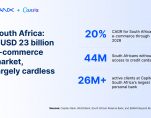
South Africa: a USD 23 billion e-commerce market, largely cardless.
The announcement represents a shift in how global subscription businesses can reach South African consumers. Credit card penetration in the country ranges between 8% and 10% of the adult population, according to the South African Reserve Bank and the World Bank. This limitation has historically restricted the reach of traditional card-on-file subscription models, excluding 44 million people in South Africa who do not own credit cards.
Instead of needing a credit card, Capitec Pay lets clients approve a recurring payment once in the Capitec app. After that, participating businesses can collect future subscription payments automatically. Canva is the first international subscription service to offer recurring payments with Capitec Pay.
Capitec is South Africa’s largest personal bank by customer base, with 26 million clients and over 16 million app users. According to Capitec, one in three South African adults uses its mobile app. “For Canva, going live as the first global merchant on this infrastructure is a removal of a structural barrier that was preventing a large portion of South Africans from accessing our platform at all,” said Bianca Sibiya, Canva Africa Lead.
The offering of recurring payments through Capitec Pay by Canva in South Africa is possible thanks to its partnership with EBANX, which helped enhance the solution and became the first global payment service provider (PSP) to integrate it into cross-border payment flows.
“For years, card-based billing has been treated as the default model for global subscription products, but that default was built around consumer behavior in the United States and Western Europe, not South Africa,” explained Wiza Jalakasi, Commercial Lead for Africa and the Middle East at EBANX.
EBANX has become a leading enabler of recurring alternative payment methods (APMs) in cross-border digital commerce across the world. Including South Africa, the company supports recurring APMs across 12 emerging markets, enabling global merchants to reach more than 1 billion consumers, many of whom lack access to credit or debit cards.
“Capitec’s philosophy is to ensure that our clients experience simple, affordable and innovative services. Recurring payments through Capitec Pay is just one of the many ways we bring that simplicity to life, offering clients a payment experience they already know and trust. Through this partnership with Canva, we are expanding our trusted payment experience and giving clients access to international merchants in an accessible way,” said Francois Viviers, Group Executive of Marketing and Client Experience at Capitec.
South Africa’s digital commerce market continues to grow rapidly, reaching 74% of adults and annual growth projected at 20% through 2028, according to Payments and Commerce Market Intelligence (PCMI) data analyzed by EBANX. By that year, South Africa’s e-commerce market is expected to represent a USD 23 billion opportunity, based on PCMI insights featured in EBANX’s Beyond Borders study.
The issuer is solely responsible for the content of this announcement.
About EBANX
EBANX is the leading technology platform connecting global businesses to the world’s fastest-growing digital markets. Founded in 2012 in Brazil, EBANX was built with a mission to expand access to international digital commerce. Leveraging proprietary technology, deep market expertise, and robust infrastructure, the platform enables global businesses to offer hundreds of local payment methods and streamline cross-border payments across Latin America, Africa, and Asia. With a global footprint, it established a technology and regulatory headquarters in Singapore in 2026. More than just payments, EBANX drives growth, enhances sales, and delivers seamless purchase experiences for businesses and end users alike.
Launched in 2013, Canva is a free online visual communications and collaboration platform with a mission to empower everyone in the world to design. Featuring a simple drag-and-drop user interface and a vast range of templates ranging from presentations, documents, websites, social media graphics, posters, apparel to videos, plus a huge library of fonts, stock photography, illustrations, video footage, and audio clips, anyone can take an idea and create something beautiful.
Capitec Limited (JSE: CPI) is South Africa’s largest retail bank by active client numbers, serving 26 million active clients. It is recognized as the country’s leading digital bank, with 16 million active app users. Capitec offers simple, affordable and transparent banking solutions through innovative technology and personalized service via its app, online banking, and a network of 866 branches and 8,771 ATMs and cash-accepting devices. The Group uses data and technology to understand client needs and provide tailored solutions across Personal Banking, Business Banking, value-added services, insurance, and international consumer lending through its subsidiary AvaFin. Capitec aims to make a meaningful difference and unlock growth opportunities for all.
Nvidia has agreed to acquire Hugging Face for a reported $12.9 billion, moving to take control of one of the artificial intelligence industry’s most important open-model platforms after the startup explored a sale at valuations above $13 billion. The transaction, which has not been publicly detailed by either company, would rank among Nvidia’s largest acquisitions and deepen its expansion beyond the graphics processors that underpin much of […]


















 https://www.ebanx.com/en/
 https://www.linkedin.com/company/ebanx




