News related to
platform

Lenskart has raised $220 million from investors including Temasek and Falcon Edge Capital, a deal that marked one of the standout funding rounds in a year when technology companies were drawing heavy global capital and pushing valuations sharply higher. The eyewear retailer was valued at about $2.5 billion in that transaction, according to multiple reports at the time, extending a run in which consumer internet businesses were moving from niche start-up status into large-scale retail platforms with national reach.

The deal did not arrive in isolation. It came only weeks after KKR invested $95 million, taking the wider financing linked to that phase of fundraising to about $315 million. Lenskart said the fresh capital would support expansion of its online business and physical store network, reinforcing its strategy of building an omni-channel model rather than relying solely on digital sales. That approach helped distinguish it from many internet-first companies that were still testing how to translate app traffic into durable consumer brands.

Founded in 2010, Lenskart entered physical retail in 2013 and built its business around prescription eyeglasses, contact lenses and sunglasses, using technology tools such as virtual try-on features and a tightly managed supply chain to bring down delivery times and widen consumer choice. The 2021 fundraising gave investors another signal that eye care and vision products could support a scaled consumer business in a market where organised retail had long remained fragmented. It also underlined growing confidence that health-linked discretionary categories could attract repeat spending even outside the big metropolitan centres.

At the time, the broader market backdrop was unusually supportive. India’s start-up sector went through a record funding cycle in 2021, with Reuters later reporting that start-ups in the country raised about $35 billion that year before the market turned more difficult in 2022. Lenskart’s round therefore became part of a larger story: global investors were competing for exposure to domestic consumption, digital adoption and a new generation of companies that blended software, logistics and offline distribution. That enthusiasm also produced a wave of unicorns, richer private valuations and a heavier pipeline for later public listings.

What makes the Lenskart story more durable than a single boom-year headline is what followed. The company continued to attract capital after the 2021 round, raising another $200 million in 2024 from Temasek and Fidelity in a deal that valued it at about $5 billion, according to reports. That step-up suggested investors still saw room for growth despite the post-2021 funding reset that hit many privately held technology firms. It also showed that consumer-facing businesses with large store networks, repeat demand and clearer revenue visibility were being treated differently from cash-burning platforms built around discount-led expansion.

By 2025, Lenskart had moved into the next phase of that journey, filing for an initial public offering and seeking a valuation of nearly $8 billion at the top end of its price band. Reuters reported that the company had 2,067 stores across the country and another 656 overseas, reflecting a business that had grown well beyond its original online-only identity. That proposed public market debut placed Lenskart among a wider group of venture-backed companies testing whether private-market optimism could translate into sustained investor demand on the stock exchange.

Operationally, the business has also shown signs of maturing. Reuters reported in November 2025 that Lenskart had turned profitable in financial year 2025 and posted a 23% rise in revenue to 66.53 billion rupees. Another Reuters report in February 2026 said about 80% of its revenue came from prescription eyeglasses, while international revenue from Southeast Asia, Japan and the Middle East was rising strongly. Those figures matter because they suggest the company’s scale is now being supported not only by funding rounds and valuation jumps, but by a more established earnings and expansion profile.

Dubai Chambers has stepped up its push to build stronger commercial ties with the Philippines, holding meetings in Manila with influential business groups and leading companies as it seeks to turn rising trade flows into broader investment and sector partnerships. The talks came days after Dubai International Chamber opened its representative office in the Philippine capital, underlining a coordinated effort to deepen its presence in a market that Dubai sees as strategically important for trade, services and expansion across Asia.

At the centre of the Manila discussions was Mohammad Ali Rashed Lootah, President and Chief Executive of Dubai Chambers, who met Ferdinand A. Ferrer, president of the Philippine Chamber of Commerce and Industry, and Donald Lim, president of the Management Association of the Philippines. According to Dubai Chambers, the conversations focused on trade facilitation, investment promotion and business partnerships, with particular attention to artificial intelligence, digital transformation and smart cities. Separate talks were also held with leading Filipino companies, where Dubai’s advantages were presented in areas including the digital economy, real estate investment and retail.

The Manila visit was not an isolated diplomatic stop. It followed the formal launch of Dubai International Chamber’s office in Manila on April 14, part of Dubai’s wider effort to build a larger global commercial footprint. Dubai Chambers says the office will serve both sides of the relationship: helping Filipino companies study opportunities in Dubai and use the emirate as a platform for expansion, while also supporting Dubai-based companies looking to enter the Philippine market through local intelligence, commercial introductions and help with market entry.

The commercial backdrop helps explain the urgency. Non-oil trade between Dubai and the Philippines reached AED3.58 billion in 2025, a 17 per cent increase from 2024, according to Dubai Chambers. By the end of December 2025, 2,592 Filipino companies were registered as active members of Dubai Chamber of Commerce, up 23.3 per cent year on year, while 856 new Filipino companies joined during 2025. Those figures point to a relationship that is moving beyond labour and remittance links into a more formalised business corridor involving services, trade intermediation, investment and corporate expansion.

That momentum has been building for some time. In May 2025, Dubai Chamber of Commerce organised a trade mission to the Philippines involving representatives from 17 Dubai-based private-sector companies. The mission produced 180 bilateral business meetings and included a Manila forum, “Doing Business with the Philippines”, attended by 314 participants. During that forum, Dubai Chambers signed a memorandum of understanding with the Philippine Chamber of Commerce and Industry to strengthen cooperation and explore new avenues for trade and investment. January 2026 brought another symbolic marker when First Lady Louise Araneta-Marcos visited Dubai Chambers headquarters, adding political visibility to what has become a more structured economic relationship.

For Dubai, the Manila initiative fits a larger policy design. The chamber says the office forms part of the “Dubai Global” initiative, which aims to establish 50 representative offices worldwide by 2030 and support expansion into 30 priority markets. That strategy is designed to attract foreign direct investment into Dubai while helping companies based there expand overseas. The Philippines, with its large consumer market, growing digital economy and active private-sector institutions, offers Dubai an opening not only into Southeast Asia but also into sectors where urban development, technology adoption and service-led growth are accelerating.

For the Philippines, the significance lies in access. Dubai positions itself as a gateway market linking Asia, the Gulf, Africa and Europe, and Filipino businesses looking for a wider regional or global footprint may see value in that proposition. The chamber has framed Manila’s new office as a bridge that can lower information barriers, connect firms with partners and convert general goodwill into bankable deals. Sectors identified during the talks suggest where both sides believe there is room to move fastest: AI and digital transformation for future-oriented growth, smart cities for infrastructure and urban services, and real estate and retail for more immediate commercial activity.

North Korea fired multiple short-range ballistic missiles into waters off its east coast early on Sunday, prompting swift condemnation from Seoul, Tokyo and Washington and extending a run of weapons activity that is deepening security concerns across North-East Asia. South Korea’s Joint Chiefs of Staff said the missiles were detected from the Sinpo area at about 6:10 a. m. local time and were launched towards the East […]

StarLink opened its 2026 roadshow in Riyadh on 19 April, pitching a vision of cyber defence in which autonomous systems are used not only to detect threats but to counter AI-enabled attacks at machine speed, as companies across the Middle East weigh how far they can trust software agents with critical security decisions. The event series, branded “The Silent War of AI vs AI”, is scheduled to […]

Medical robots are moving from specialist showcases into mainstream care, changing how operations are performed, how scans are read and how hospitals manage overstretched staff. The shift is being driven by better imaging, faster computing, advances in minimally invasive surgery and growing pressure on health systems to cut delays, improve precision and reduce administrative burden. At the same time, regulators and clinicians are warning that the rush […]

  eToro has relaunched its AI investing companion Tori with a stronger claim to immediacy, adding real-time market sentiment drawn from X through Grok 4.2, persistent memory across sessions and a new conversational tool for creating and managing AI-driven “Agent Portfolios”. The move, announced on 16 April, places artificial intelligence more squarely at the centre of the platform’s retail investing strategy as brokers compete to turn chat […]

Axight, the Abu Dhabi private equity investment manager established by Lunate, has agreed to buy a significant minority stake in Australia’s La Trobe Financial from Brookfield Asset Management in a transaction that values the alternative asset manager at about A$3 billion, or roughly US$2.1 billion. Brookfield will remain the majority shareholder after the deal, which the companies said is intended to support La Trobe’s next stage of […]

Advertisements

China has launched a new satellite designed to track greenhouse gases with greater precision, adding a fresh layer of space-based monitoring to the country’s climate and environmental data network.

The satellite lifted off aboard a Long March-4C rocket from the Jiuquan Satellite Launch Centre in north-west China at 12:10 pm Beijing time on April 17. State media said the spacecraft entered its planned orbit successfully, marking the 638th mission of the Long March rocket family. Chinese reports described it as a high-precision greenhouse-gas detection satellite intended to strengthen observation of atmospheric conditions from orbit.

Chinese broadcaster CGTN reported that the satellite carries five instruments, including an atmospheric detection lidar, a broad-spectrum hyperspectral greenhouse-gas monitor, ultraviolet and infrared hyperspectral sensors for atmospheric composition, and a cloud-and-aerosol imager. Together, those tools are intended to improve detection of carbon dioxide, methane and related atmospheric variables, while helping scientists separate emissions signals from interference caused by clouds, aerosols and other background conditions. The spacecraft and launcher were developed by the Shanghai Academy of Spaceflight Technology, according to CGTN and other Chinese reports.

The launch gives Beijing a more advanced platform for a task that has become politically and economically important: measuring what is actually entering the atmosphere. Satellite-based observation has become a key part of climate governance because it can provide independent, repeated coverage across large industrial zones, energy corridors and remote terrain where ground-based monitoring is patchier or harder to verify. Methane, in particular, has come under sharper scrutiny because it traps far more heat than carbon dioxide over the short term, while carbon dioxide remains the dominant driver of long-term warming.

For China, the mission also carries strategic weight. The country has pledged to peak carbon dioxide emissions before 2030 and reach carbon neutrality before 2060, goals that require more dependable measurement of emissions trends and sector-by-sector performance. Yet that transition remains uneven. Reuters reported in February 2025 that China cut carbon intensity by 3.4 per cent in 2024, but still lagged behind its five-year target, underscoring the tension between climate pledges, industrial growth and energy security. More precise atmospheric data can help narrow that gap between policy targets and real-world measurement.

The new mission also builds on a longer Chinese effort to monitor greenhouse gases from space. In 2016, China launched TanSat, a carbon-tracking satellite aimed at taking global carbon dioxide readings roughly every 16 days, with accuracy of at least four parts per million, according to Reuters and the China National Space Administration. That earlier satellite was presented as a step towards giving policymakers more independent climate data. The new spacecraft appears to signal a move from pioneering measurement capability towards a more operational and higher-resolution system.

That matters beyond China. Space-based emissions tracking has gained prominence as governments, investors and campaigners press for more transparent climate accounting. The loss last year of MethaneSAT, a privately backed satellite funded in part by Jeff Bezos and operated by the Environmental Defense Fund, highlighted both the promise and fragility of this new monitoring architecture. At the same time, political pressure on some United States climate-observation programmes has raised concerns among scientists about the continuity of global emissions data. Against that backdrop, China’s launch adds capacity to a field in which international coverage remains valuable but uneven.

The timing is notable because climate data has become more than a scientific matter. It now feeds into carbon markets, industrial regulation, trade pressure and diplomatic claims over who is cutting emissions and who is not. Better satellite detection could strengthen verification of methane leaks from coal mines, oil and gas facilities, and large industrial sites, while also improving broader atmospheric modelling. Chinese researchers are already working on ever finer emissions datasets for the country, and the addition of a new orbital platform could help tighten links between satellite observation, ground measurements and policy enforcement.

Microsoft has given its clearest account yet of how it plans to build the next Xbox, saying the teams that make its games are working alongside the engineers shaping Project Helix, the company’s next-generation console. The approach, outlined by Xbox Chief Content Officer Matt Booty, signals a tighter link between hardware and software as Microsoft tries to define what an Xbox machine should be in a market […]

Rockstar Games’ Grand Theft Auto VI is heading towards a 19 November 2026 release, but the loudest conversation around the title this month is not coming from the studio’s official marketing. It is being driven by a new wave of leak claims and online speculation that suggest major changes to the game’s story structure, character dynamics and wider design, even as Rockstar itself has confirmed only a […]

Payward, the parent of crypto exchange Kraken, has agreed to buy Chicago-based derivatives venue Bitnomial for up to $550 million in cash and stock, a deal that would hand the group a full set of US licences for trading, clearing and broking digital-asset derivatives under Commodity Futures Trading Commission oversight. Announced on April 17, the transaction is expected to close in the first half of 2026, subject […]

Commercial artificial intelligence models are advancing quickly in vulnerability research and exploit development, sharpening concern across the cybersecurity industry that tools built for productivity and defence could also lower the barrier for offensive misuse. A study by Forescout’s Vedere Labs found that commercial systems now outperform open-source and underground alternatives in identifying software flaws, while more than half of the models tested were able to generate exploits […]

A sweeping international law-enforcement campaign has disrupted one of the cybercrime market’s most accessible attack models, with authorities saying Operation PowerOFF warned more than 75,000 suspected users of distributed denial-of-service-for-hire services, took down 53 domains, issued 25 search warrants and made four arrests during a coordinated action week on 13 April. The effort, backed by Europol and involving agencies from 21 countries, targeted both the operators and […]

International law enforcement agencies have disrupted dozens of websites linked to paid cyberattack services, arrested four suspects and sent warning notices to more than 75,000 alleged users in one of the broadest crackdowns yet on the market for rented distributed denial-of-service attacks. The coordinated effort, announced on April 16, was carried out under Operation PowerOFF and involved authorities from 21 countries targeting so-called “booter” and “stresser” platforms […]

Bluesky suffered a second day of disruption after what the company described as a coordinated distributed denial-of-service attack, leaving many users unable to reliably load feeds, notifications, threads and search results while engineers worked to stabilise the social platform. Bluesky said the trouble began late on April 15 and intensified through April 16, adding that it had found no evidence of unauthorised access to private user data. […]

Singapore Gulf Bank has launched a USDC mint-and-redeem service on the Solana blockchain, opening a round-the-clock channel for corporate and high-net-worth clients to move between fiat currency and digital dollars directly from their bank accounts as it pushes deeper into cross-border payments and treasury services. The bank said the product is designed to bypass delays tied to correspondent banking and standard settlement windows, offering near-instant conversion and […]

  Roblox has agreed to a $12 million settlement with Nevada and is rolling out broader child safety and age-checking measures across its platform, as the gaming company faces mounting scrutiny over how it protects young users from harmful contact and unsuitable content. The deal, announced this week, combines payments for youth programmes and safety initiatives with product changes that Roblox says will apply nationwide by June. […]

Netflix is set to roll out a redesigned mobile app by the end of April, adding a vertical video discovery feed that mirrors the swipe-driven format popularised by short-form platforms as the streaming group pushes to make browsing faster and more intuitive on phones. The company disclosed the change in its April 16 shareholder letter, saying the updated mobile experience follows a period of testing and is […]

Google has extended its Personal Intelligence system to the Gemini app’s built-in image generation tools, allowing users to create tailored visuals shaped by data from their own Google services, including Google Photos, rather than relying only on long text prompts or manual uploads. The update ties a more personal layer of context to Nano Banana 2, Google’s latest image model, as the company pushes harder to make […]

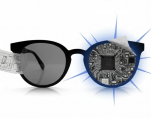
Arabian Post Staff -Dubai   Google is preparing to take its Android XR eyewear effort into luxury fashion through a partnership with Gucci, with Kering chief executive Luca de Meo saying the smart glasses are expected by 2027 rather than this year. The plan gives Google a high-end brand partner as it tries to turn experimental smart eyewear into something consumers will actually wear in public. The […]

  Tether has moved to support a $150 million recovery package for Solana-based Drift Protocol after the trading platform was hit by one of the biggest crypto exploits of the year, with the plan aimed at repaying affected users over time and helping relaunch the protocol under tighter security controls. Drift said the package would include up to $127.5 million from Tether and a further $20 million […]

  Dogecoin climbed on Friday, extending a 24-hour advance that outpaced some larger digital assets and lifted sentiment across the meme-coin corner of the market, as traders responded to a burst in turnover and a broader recovery in risk appetite. Market trackers showed DOGE trading near 9.8 US cents on 17 April, with daily volumes above $2.5 billion and sharply higher than the previous day, pointing to […]

Arabian Post Staff -Dubai Abu Dhabi Crown Prince Sheikh Khaled bin Mohamed bin Zayed Al Nahyan used meetings in Beijing with President Xi Jinping and Premier Li Qiang to push the UAE-China relationship deeper into energy, investment, technology and industrial cooperation, as both sides sought to align long-term economic goals with a more volatile regional backdrop. The visit, which ran from April 12 to April 14, also […]

Trend Micro’s enterprise business accelerates its transformation as AI security category leader

HONG KONG SAR – Media OutReach Newswire – 17 April 2026 – TrendAI™, the enterprise AI security leader from Trend Micro Incorporated (TYO: 4704; TSE: 4704), today announced a strategic engagement with Anthropic, embedding Claude models across its platform to power agentic workflows, automation, AI-native security operations, and develop threat research to identify vulnerabilities in AI systems and infrastructure. TrendAI™ will use Claude to advance vulnerability discovery while ensuring coordinated action in real-world risk reduction.

Rachel Jin, Chief Platform and Business Officer, Head of TrendAI™: “We launched TrendAI™ to define the AI security category. This next phase is about scaling that vision globally, with leading partners like Anthropic. Our broad, strategic collaboration across research, defense, and innovation will define how AI is secured moving forward.”

TrendAI™’s use of Claude spans threat research, real-world risk reduction, platform innovation, and global go-to-market execution. This will operate across the full AI security lifecycle, from vulnerability discovery to automated defense and AI-native operations.

Ash Alhashim, Head of Cybersecurity GTM at Anthropic: “For 35 years, TrendAI™ has been at the forefront of cybersecurity. By using Claude to power TrendAI Vision One™ and initiatives like TrendAI™ Zero Day Initiative™ (ZDI) and Pwn2Own, TrendAI™ is advancing the next iteration of vulnerability discovery and reporting—and tilting the scales toward defenders.”

Focus areas include:

Advancing AI Threat Research: TrendAI™ is scaling its threat research to address the growing attack surface of AI, building on proven programs like Pwn2Own Berlin under TrendAI™ ZDI. This approach brings real-world vulnerability discoveries into AI systems, helping identify and address critical weaknesses before it reaches production environments.

Driving AI-Native Innovation: Anthropic’s Claude models will help power TrendAI™’s platform innovation, enhancing agentic workflows, automation, and AI-native security operations. This enables organizations to reduce noise, act faster, and scale security alongside AI adoption.

The announcement comes as TrendAI™ prepares to welcome over 600 cybersecurity leaders to its Spark Leadership Exchange in Phoenix, Arizona in May. Anthropic will join TrendAI™ on stage at the event alongside other industry leaders, reinforcing a shared commitment to shaping the future of AI security and engaging directly with global enterprise leaders.

To learn more about the Spark Leadership Exchange, visit: https://resources.trendmicro.com/spark-leadership-exchange.html

Hashtag: #trendmicro #trendai #trendaivisionone #trendvisionone #visionone #cybersecurity


The issuer is solely responsible for the content of this announcement.

About TrendAI™

TrendAI™, the global AI security leader and enterprise business unit of Trend Micro, empowers organizations with full AI visibility and consolidated security that inspires confidence, drives innovation, and eliminates risk. Trusted by the largest enterprises and governments across 185 countries, TrendAI™ secures the entire organization, from identities to infrastructure to data. Global Fortune 500 companies rely on TrendAI™ to cut risk and stop threats up to three months earlier, powered by world-leading threat and attack intelligence. Through deep ecosystem partnerships with market leaders like NVIDIA, Anthropic, AWS, Google, and Microsoft, TrendAI™ empowers your organization to securely drive forward at the speed of AI. AI Fearlessly. Learn more at trendaisecurity.com.

VISHNU RAJA
RYO YAMADA
HITORI GOTOH
IKUYO KITA