News related to
platform

Europe has strengthened its push for technological sovereignty with the launch of the Euro Q Exa quantum computing system in Munich, marking a significant addition to the continent’s developing high-performance computing network. Unveiled on 12 February at the Leibniz Supercomputing Centre, part of the Bavarian Academy of Sciences and Humanities, Euro Q Exa is designed to integrate quantum processors into Europe’s broader supercomputing ecosystem. The system forms […]

Arabian Post Staff -Dubai Abu Dhabi-based Global South Utilities has inaugurated a 5 megawatt-peak grid-connected solar photovoltaic plant in Berbera, marking a significant step in Somaliland’s efforts to diversify its energy mix and curb dependence on diesel generation. The project, developed under a public-private partnership model, is accompanied by the launch of the Green Berbera initiative aimed at accelerating renewable energy adoption and sustainable infrastructure in the […]

Dragonfly Capital has secured $650 million for its fourth investment vehicle, pressing ahead with fresh commitments to digital asset infrastructure even as senior partners describe the current venture climate in crypto as a “mass extinction event”. The San Francisco and Singapore-based firm said the new capital will be directed towards foundational blockchain systems, stablecoins, on-chain financial services and tokenised real-world assets, signalling a long-term strategy despite persistent […]

Arabian Post Staff -Dubai Abu Dhabi Judicial Department has begun rolling out facial recognition technology for notary transactions, marking a significant shift in how legal documents are verified and authenticated in the emirate. The first phase of the initiative, announced by the department, integrates biometric identification into selected notary services, enabling clients to complete procedures through digital platforms without the need for physical attendance. Officials describe the […]

By Nitya Chakraborty Just twenty days after the February 12 national elections in Bangladesh, another South Asian country Nepal is going to the polls on March 5 just six months after the Gen Z movement in the country ousted the K P S Oli government in September 2025. The official poll campaign under the interim […]

The article Veteran Politicians Are Back In Strength As Nepal Votes On March 5 appeared first on Latest India news, analysis and reports on Newspack by India Press Agency).

Arabian Post Staff -Dubai Yango Group says its artificial intelligence-driven routing system saved users more than five million hours in 2025, with riders in Dubai and Abu Dhabi alone reclaiming over 34,000 hours through dynamic route optimisation. The mobility and technology company, which operates ride-hailing and delivery services across the Middle East, Africa, Europe and Latin America, reported that its AI models analysed billions of data points […]

Arabian Post Staff -Dubai SHIFT has entered a strategic partnership with Amber Connect to roll out an advanced telematics platform across its fleet operations in the United Arab Emirates, marking a significant push towards data-driven mobility management in the region. Under the agreement, SHIFT will integrate Amber Connect’s real-time vehicle tracking and analytics system into its operational infrastructure, enabling comprehensive monitoring of vehicle performance, driver behaviour and […]

Advertisements

Microsoft has completed the global rollout of a new AI Workflows feature within the Teams Workflows app that uses Microsoft 365 Copilot to help users automate complex tasks and daily operations, marking a significant advance in intelligent productivity tools for organisations worldwide. Users with Microsoft 365 Copilot licences can now access preset workflow templates that harness scheduled Copilot prompts to handle repetitive actions like project summaries, data […]

Leading British boarding schools are set to deepen educational engagement with Nigerian parents and students this March through a series of exhibitions and interactive events in Abuja and Lagos, as part of UK Boarding Schools Week 2026. The initiative, driven by Mark Brooks Education, aims to provide a platform for direct dialogue between families and school leaders about admissions, academic pathways and boarding life. The programme is […]

ByteDance is said to be in advanced negotiations to sell Shanghai-based game developer Moonton Technology — the studio behind Mobile Legends: Bang Bang — to the Saudi-backed Savvy Games Group in a transaction valued at between $6 billion and $7 billion, with talks progressing toward a possible deal this quarter. Both parties have reportedly agreed on broad commercial terms, marking a significant shift in ByteDance’s strategy and […]

The Al-Khayyat family, a Syrian-Qatari business dynasty that rose to prominence in Doha through ventures such as Baladna dairy and Power International Holding, is accelerating its involvement in rebuilding Syria’s economy as Damascus opens up to foreign investment after years of conflict. Brothers Moutaz and Ramez Al-Khayyat, chairing sprawling conglomerates that span food, construction, energy and financial services, are spearheading a wave of deals that could shape […]

OpenAI’s chief executive Sam Altman has said that India now has 100 million weekly active users of ChatGPT, elevating the country to the position of the platform’s second-largest market globally after the United States and underscoring its growing influence in the artificial intelligence ecosystem. Altman disclosed the figure in an opinion piece published ahead of the Global AI Impact Summit 2026 in New Delhi, where government officials and global tech leaders are convening to discuss the future of AI and its integration into education, enterprise and public services.

This milestone reflects not just a vast user base but also a distinct pattern of adoption: students in India now represent the largest single demographic of ChatGPT users worldwide, according to Altman, who highlighted the role younger generations are playing in embedding generative AI into daily workflows for learning and productivity.

The 100 million figure forms a significant share of ChatGPT’s global weekly active user count, which stood at about 800 million as of October 2025 and is widely projected to edge closer to 900 million as platforms refine their offerings and expand reach. OpenAI’s decision to open an office in New Delhi in August 2025 and tailor pricing, including a lower-cost subscription tier later made free for a year, is seen as part of a strategy to deepen engagement in what many technology firms regard as a key growth market.

Altman underscored India’s demographic advantages, including a population exceeding one billion internet users and a large proportion of English speakers outside native English-speaking countries — factors that have made the country fertile ground for generative AI adoption. Many students have turned to ChatGPT for support with research, coding, examination preparation and language practice, reflecting a broader trend of digital tools being woven into educational routines.

Despite this surge, translating sheer user numbers into sustained economic returns poses challenges for AI firms. India’s price-sensitive market and uneven internet access complicate monetisation, causing some companies to adjust their strategies to balance affordability with revenue generation. OpenAI’s tailored pricing and promotional offers have helped lower entry barriers, but broader monetisation across emerging markets may require further innovation in business models.

The competitive landscape in India’s AI space is intensifying. Alphabet’s Google has made inroads with its Gemini AI suite, aggressively targeting younger users through free one-year subscriptions and partnerships with telecom firms to broaden adoption among students and professionals. These efforts are part of a broader contest among technology giants to capture share in a market that has vast potential due to its size and digital engagement.

The presence of global tech leaders and politicians at the New Delhi summit highlights the geopolitical and economic significance of India’s AI trajectory. Policy discussions span topics from responsible AI governance and equitable access to scaling infrastructure and boosting domestic innovation capacity. Indian policymakers, alongside industry executives, are advocating approaches that leverage technology to enhance education, public services and economic participation, while grappling with concerns over job displacement and digital divides.

Altman has outlined priorities for fostering inclusive AI growth in India, emphasising the need for practical digital literacy, robust computing infrastructure and frameworks that ensure ethical deployment. Such an approach, he argues, will empower users to harness AI’s potential effectively rather than just expanding access to tools.

The prominence of India’s student base on ChatGPT has broader implications for how AI products are developed and tailored. Feedback from a large and diverse user community helps shape feature enhancements and localisation efforts, influencing global development roadmaps. For companies like OpenAI, this dynamic underscores a strategic shift from traditional markets in Europe and North America toward regions where usage patterns reflect unique demographic and cultural needs.

Anthropic has enabled its Claude artificial intelligence system to edit files directly within software development environments, marking a significant escalation in the race to build autonomous coding agents capable of handling complex engineering tasks with limited human intervention. The capability allows Claude to read, modify and write code across structured repositories, moving beyond code suggestions in chat windows to targeted alterations inside live projects. Developers can grant […]

By Nantoo Banerjee There is little to be excited about the defence ministry’s latest clearance for the acquisition of 114 Rafale fighter jets from France at a huge cost of Rs.3.25 lakh crore (nearly $40 billion), branded as ‘mother of all defence deals’. It is a matter of major concern that even 78 years after […]

The article India’s Reliance On Imported Arms For Defence Is A Concern appeared first on Latest India news, analysis and reports on Newspack by India Press Agency).

Electrons confined within self-assembled phosphorus chains have been shown to move in a strictly one-dimensional manner, marking a significant advance in condensed matter physics and nanomaterials research. The breakthrough offers a rare experimental confirmation of behaviour long predicted by theory and points to a pathway for engineering materials whose electronic states can be tuned simply by adjusting atomic spacing. The international research team demonstrated that phosphorus atoms, […]

India has emerged as the second-largest market globally for Claude, the generative artificial intelligence model developed by US-based start-up Anthropic, underscoring the country’s expanding influence in the global AI ecosystem.

Debjani Ghosh, who leads Anthropic’s operations and policy engagement in India, said the scale of adoption by developers, enterprises and start-ups has placed the country just behind the United States in terms of usage and integration of Claude’s models. She described India as a “strategic growth engine” for the company, citing strong demand from sectors including financial services, healthcare, education and software development.

Anthropic, founded in 2021 by siblings Dario Amodei and Daniela Amodei, has positioned Claude as a competitor to models from OpenAI and Google. The company has attracted substantial backing from Amazon and Google, with Amazon committing up to $4 billion as part of a strategic partnership to integrate Claude into Amazon Web Services infrastructure. The funding has enabled Anthropic to expand globally, with India becoming a focal point due to its developer base and digital economy.

India’s prominence in the AI adoption cycle reflects broader structural factors. The country has one of the world’s largest pools of software engineers, a fast-growing start-up ecosystem, and a government push towards digital public infrastructure. Enterprises across banking and fintech have begun embedding generative AI tools to automate compliance checks, summarise documents and enhance customer interaction. In healthcare, pilot projects are under way to use AI systems for clinical documentation and triage support, while education technology platforms are deploying AI-driven tutoring tools.

Ghosh indicated that India’s market dynamics differ from those of Western economies. Cost sensitivity and the need for scalable deployment across diverse languages and devices have shaped how enterprises experiment with large language models. Claude’s emphasis on constitutional AI — a framework designed to make outputs safer and more aligned with human values — has resonated with corporate clients concerned about regulatory risk and reputational exposure.

Regulatory considerations are central to the AI conversation in India. The Ministry of Electronics and Information Technology has signalled its intent to craft a framework that balances innovation with safeguards against misinformation, bias and misuse. While India has not enacted a standalone AI law, policy discussions have intensified around data governance and algorithmic accountability. Companies operating in the country must also comply with the Digital Personal Data Protection Act, which imposes obligations on data fiduciaries and processors.

Industry analysts note that India’s large English-speaking population has historically accelerated the adoption of global technology platforms. However, the next phase of growth in AI is expected to depend on multilingual capabilities. Claude’s ability to handle multiple languages is seen as an advantage in a country with 22 constitutionally recognised languages and hundreds of dialects. Developers are increasingly testing generative models for vernacular content generation and customer support.

Competition in the Indian market is intensifying. OpenAI’s ChatGPT has built a strong user base, while Google has integrated its Gemini models into productivity tools and cloud services. Domestic start-ups are also entering the field, building foundation models trained on local datasets. Analysts say that enterprise adoption, rather than consumer usage alone, will determine long-term market leadership.

Anthropic’s expansion strategy in India includes partnerships with cloud providers and enterprise software companies. By leveraging Amazon Web Services’ presence in major Indian cities, Claude is being offered as part of broader digital transformation packages. Ghosh emphasised that collaboration with academic institutions and start-up incubators is another priority, with the aim of fostering responsible AI research and skills development.

The rapid uptake of generative AI has also raised concerns. Experts warn of the risks of hallucinations, data leakage and overreliance on automated systems. In financial services, regulators have cautioned against using AI outputs without human oversight. Cybersecurity specialists highlight the potential for AI tools to be misused for phishing or deepfake generation. Anthropic has sought to address such issues by embedding guardrails into its models and conducting external safety evaluations.

Zilliz has launched a new Zilliz Cloud region in Amazon Web Services’ eu-west-1 data centre in Ireland, expanding its European infrastructure as demand for localised artificial intelligence systems accelerates across Western Europe and the United Kingdom. The move positions the vector database specialist closer to enterprise customers that require data residency, lower latency and regulatory compliance within the European Union. By deploying in AWS’s Ireland region, Zilliz […]

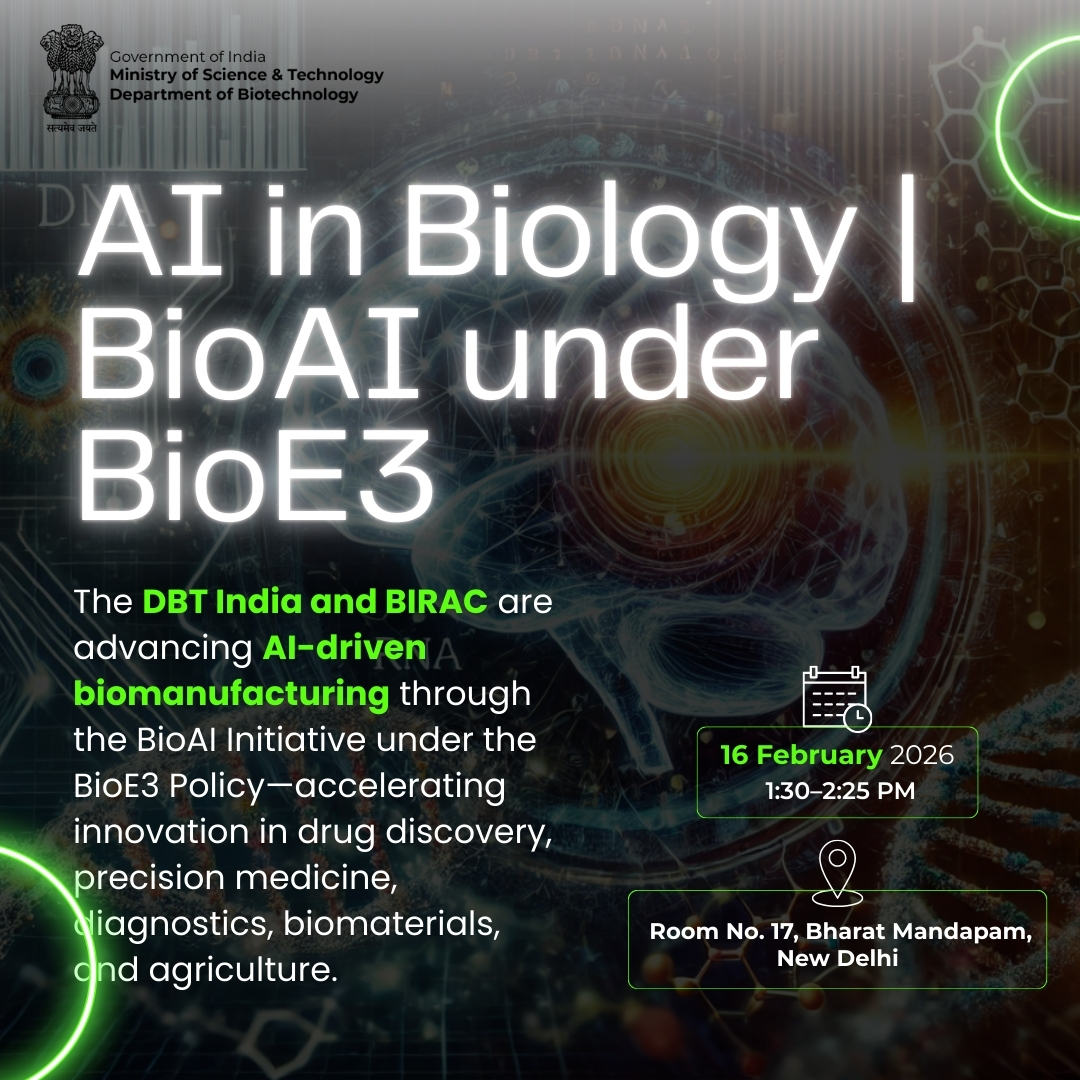
Artificial intelligence is being positioned as a catalytic force in reshaping biomanufacturing, with policymakers, scientists and industry leaders outlining a roadmap that blends computational power with biological science to accelerate drug discovery, industrial enzymes and sustainable materials. Discussions at the India AI Impact Summit placed BioAI at the centre of a strategy aimed at using genomics, in-silico modelling and closed data loops to build scalable and trusted production systems.

The convergence of AI and biology has moved from laboratory experimentation to commercial ambition. India’s biotechnology sector, valued at over $80 billion and targeting significant expansion by the end of the decade under the BioE3 policy framework, is seeking to harness machine learning tools to shorten development cycles that traditionally take years. Speakers at the summit argued that AI-enabled simulation and predictive modelling can reduce trial-and-error experimentation in fields ranging from vaccine development to precision fermentation.

BioAI refers to the integration of artificial intelligence techniques with biological data, particularly genomic sequencing, proteomics and metabolic engineering. The approach relies on large datasets and advanced algorithms capable of identifying patterns invisible to conventional research methods. Advances in protein structure prediction, including breakthroughs in computational biology over the past few years, have demonstrated how neural networks can model complex molecular interactions with remarkable accuracy.

At the summit, researchers described how generative AI systems are being trained to design novel proteins and enzymes tailored for industrial use. By feeding genomic datasets into predictive algorithms, scientists can simulate biological pathways in silico before conducting physical experiments. This method reduces costs and speeds up scaling, particularly in biopharmaceutical production and alternative protein manufacturing.

Government representatives outlined plans to expand national AI infrastructure to support such applications. IndiaAI Mission initiatives include the creation of high-performance computing resources and domain-specific data repositories to ensure that biotech firms and research institutes have access to secure and interoperable datasets. Officials emphasised that trust frameworks and regulatory clarity would be essential to encourage private investment while safeguarding data privacy and biosafety standards.

Industry leaders echoed that sentiment, highlighting that biomanufacturing requires rigorous validation. Unlike digital products, biological outputs interact with living systems, making quality control paramount. AI-driven feedback loops—where laboratory results continuously refine algorithms—were presented as a mechanism to maintain reliability while scaling up production. Data integrity, traceability and auditability were recurring themes, reflecting global debates about AI governance.

The global context underscores the strategic significance of BioAI. The United States and European Union have invested heavily in synthetic biology and AI-assisted drug discovery. China has also advanced computational genomics and large-scale fermentation capabilities. Analysts note that countries able to combine AI talent with robust biotech ecosystems stand to capture a growing share of the global bioeconomy, projected by several industry reports to exceed $4 trillion over the coming decade.

India’s strength in information technology services and pharmaceutical manufacturing offers a foundation for this convergence. The country is a major supplier of generic medicines and vaccines, supported by a network of research institutions and startups. By integrating AI tools into these value chains, stakeholders believe production timelines can be compressed and new therapeutic molecules identified with greater precision.

Academic voices at the summit stressed the importance of interdisciplinary training. Biologists must understand algorithmic thinking, while data scientists need grounding in molecular biology. Collaborative platforms linking universities, startups and established pharmaceutical firms were proposed to ensure knowledge transfer and talent development. Investment in computational biology curricula and shared research facilities is seen as critical to sustaining momentum.

Ethical considerations formed part of the dialogue. AI models trained on genomic data raise questions about consent, ownership and equitable benefit sharing. Experts argued for transparent governance structures aligned with international norms, noting that trust is fundamental when dealing with health-related information. Regulatory agencies are exploring how to evaluate AI-generated biological designs within existing approval pathways.

Private sector participation is accelerating. Venture capital funding in biotech startups leveraging machine learning has grown steadily, reflecting confidence in AI-assisted discovery platforms. Companies are experimenting with digital twins of biological systems, enabling simulation of fermentation processes before industrial deployment. Such capabilities can enhance efficiency and reduce resource consumption, aligning with sustainability goals.

Sustainability featured prominently in discussions on biomanufacturing. AI-optimised microbes can produce bio-based chemicals and materials that substitute fossil-derived inputs. Precision fermentation techniques, guided by predictive analytics, may lower energy use and waste. As global supply chains face pressure to decarbonise, the combination of AI and biotechnology is viewed as a pathway to cleaner industrial production.

Participants also highlighted challenges. High-quality biological datasets remain fragmented, and interoperability across laboratories is uneven. Ensuring cybersecurity in research networks is another concern, given the sensitivity of genetic information. Scaling laboratory successes to commercial volumes demands capital expenditure and regulatory compliance that can deter smaller enterprises.

Three decades after its modest debut on a handheld console, Pokémon has evolved into one of the most lucrative entertainment properties in history, generating tens of billions of dollars in revenue and emerging as a potent instrument of Japan’s cultural influence abroad. Created by Satoshi Tajiri and launched in 1996 by Nintendo, Game Freak and Creatures, the franchise began with Pokémon Red and Green for the Game […]

Cyber security researchers are warning that built-in “Summarise with AI” buttons and AI-generated share links are being exploited to covertly plant malicious instructions inside artificial intelligence assistants, creating a new class of threat capable of distorting recommendations on health, finance and security matters. The technique, described by Microsoft as “AI recommendation poisoning”, centres on prompt injection attacks that subtly bias what large language models treat as trusted […]

Gathering Global Experts Delivering Insights from the forefront of Space Science and Sustainability

HONG KONG SAR – Media OutReach Newswire – 16 February 2026 – In a landmark development for the region’s scientific community, Hong Kong has been selected to host the Asia-Pacific Regional IAU Meeting (APRIM) for the first time. Dubbed the “The Olympics of Astrophysics and Space Science,” this prestigious event will take place from May 4 to 8, 2026, at the Hong Kong Convention and Exhibition Centre (HKCEC).

Organised by the International Astronomical Union (IAU) and hosted by The University of Hong Kong’s Laboratory for Space Research (LSR), the conference will feature Nobel and Shaw laureates, together with other distinguished scientists from around the world. As a leading astronomical gathering in the Asia-Pacific, the event represents a significant milestone for Hong Kong, underscoring its pivotal role in fundamental research, STEM education, and international collaboration.

A Convergence of Minds in a Burgeoning Space Hub

Professor Quentin Parker, Chair of the APRIM2026 and Director of the HKU Laboratory for Space Research, noted that bringing the “The Olympics of Astrophysics and Space Science” to Hong Kong demonstrates the city’s capacity to serve as a global nexus for astrophysics and space science.

“As Chair of this historic meeting, I am honoured to welcome the global Astrophysics and Space Science community to Hong Kong. We aim to use this platform not only to showcase our city’s capabilities in the ‘New Space’ era but to inspire the next generation of scientists to pursue the unknown,” said Prof. Parker.

Professor Xue Suijian, former Deputy Director of the National Astronomical Observatories of the Chinese Academy of Sciences, attributed the IAU’s decision to Hong Kong’s highly international environment and academic excellence. He highlighted the city’s growing contributions to deep-space exploration, planetary science, and big data analysis, cementing its role as a bridge for international scientific exchange.

Bridging Fundamental Research and Future Possibilities

While rooted in academic rigour, APRIM 2026 also addresses the paradigm shift from government-led initiatives to the democratised era of “New Space.” The conference offers a platform that links theoretical astrophysics with real-world applications.

Aligning with the global scientific agenda, the conference is expected to bring together nearly 1,000 experts. Discussions will span from the origins of the universe to emerging directions in space exploration, covering key areas such as Planetary Science, Stellar Evolution, and Cosmology. The event will also seek to bridge academia and industry, exploring how frontier technologies can contribute to addressing global challenges.

Championing Space Sustainability

A defining feature of APRIM2026 is its focus on “Space Sustainability.” With the growing density of satellite constellations in low Earth orbit, the scientific community faces urgent challenges, particularly in relation to space debris and light pollution.

Through dedicated sessions and public engagement, the conference will tackle these critical issues, advocating for responsible stewardship of the cosmic environment. By integrating these discussions with outreach sessions including youth-focused workshops, the event aims to cultivate a scientifically literate generation ready to steward the future of space exploration.

Professor Luis C. Ho, Director of the Kavli Institute for Astronomy and Astrophysics at Peking University, described the meeting as a vital platform for strengthening Asia-Pacific research collaboration. He noted that the event marks a shift from pure fundamental research to industrial application, allowing high-tech solutions to serve the public and open the “blue ocean” of the space economy.

The issuer is solely responsible for the content of this announcement.

About the Organisations

International Astronomical Union (IAU) The IAU brings together over 13,000 professional astronomers from more than 85 countries. Its mission is to promote and safeguard the science of astronomy in all its aspects through international cooperation. For more information, please see the following link.:

HKU Laboratory for Space Research (LSR) is an interdisciplinary center at The University of Hong Kong dedicated to advancing space science, planetary research, and high-energy astrophysics through satellite research and academic collaboration. For more information, please see the following link.:

Diamond Sponsor

  • The Shaw Prize

Gold Sponsor

  • Center for Space Utilization, Chinese Academy of Sciences (CSU)

Bronze Sponsor

  • Hong Kong (International) Aerospace Charitable Foundation

Organisers

  • Laboratory for Space Research of the University of Hong Kong (LSR)
  • International Astronomical Union (IAU)

Official PR

  • MEMO PLUS PR & CONSULTANTS

Supporting Organisations

  • Feilong Aerospace Technology Ltd
  • Orion Astropreneur Space Academy (OASA)
  • Hong Kong Tourism Board
  • Purple Mountain Observatory, Chinese Academy of Sciences
  • The University of Hong Kong (HKU)
  • Kavli Institute for Astronomy and Astrophysics at Peking University (KIAA-PKU)
  • Satcom Industry Association (SIA-India)
  • National Astronomical Observatories, Chinese Academy of Sciences (NAOC)
  • International Centre for Radio Astronomy Research (ICRAR)
  • International Space Centre at the University of Western Australia (ISC)
  • Hong Kong Laureate Forum
  • Our Hong Kong Foundation
  • National Institutes of Natural Sciences (NINS)
  • National Astronomical Observatory of Japan (NAOJ)
  • Hong Kong Institute of Science & Innovation, Chinese Academy of Sciences
  • Academia Sinica Institute of Astronomy and Astrophysics (ASIAA)
  • Three Country Trusted Broker (TCTB)
  • United Nations Office for Outer Space Affairs (UNOOSA)

Mercedes-Benz USA has recalled nearly 12,000 electric sport utility vehicles in the United States after identifying a defect in high-voltage battery cells that could trigger a fire, either while driving or when parked. The recall covers 11,895 EQB vehicles across three variants: 1,708 EQB 350 4Matic models from the 2022 to 2024 model years, 3,674 EQB 250+ units from 2023 and 2024, and 6,513 EQB 300 4Matic […]

Arabian Post Staff -Dubai Abu Dhabi has test-launched the country’s first hybrid rocket developed entirely within the UAE, signalling a significant advance in its ambition to build an indigenous space technology base. The Technology Innovation Institute confirmed that the rocket’s propulsion system was fully designed, manufactured, integrated and operated by Emirati engineers, a development officials described as a pivotal step towards sovereign launch capability. The suborbital test, […]

Rolling road closures are under way across Al Dhafra as the UAE Tour begins its latest edition, with authorities in Abu Dhabi implementing phased traffic diversions to accommodate the opening stage of the WorldTour cycling race. Organisers confirmed that the first stage, set against the sweeping desert highways of the Al Dhafra region, will see intermittent road blocks along key routes from morning until late afternoon, depending […]

VISHNU RAJA
RYO YAMADA
HITORI GOTOH
IKUYO KITA