The Persian Gulf Strait Authority has said the Strait of Hormuz will be “completely closed” to transit traffic, escalating fears of a wider maritime disruption at the world’s most sensitive energy chokepoint as tensions involving US military operations intensify. The notice, issued through a post on X, cited “aggressive US forces” and an announcement by the IR Armed Forces as grounds for the planned closure. It told […]
Investors have become so focused on AI software that many are overlooking the industries making the boom possible. I believe this could prove to be an expensive mistake. The dominant investment narrative has revolved around the companies building AI models, designing advanced chips and providing cloud-computing services. Investors have poured huge amounts of capital into firms such as NVIDIA, Microsoft, Amazon, Alphabet and Meta Platforms. Those businesses […]
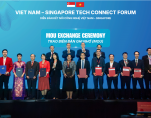
On the afternoon of May 29th, in Singapore, partnership signed at the Vietnam–Singapore Tech Connect Forum, witnessed by the highest-level government delegations from both nations, combining QuantumTX’s breakthrough MitoCharge technology with Kaopiz’s end-to-end software, AI, and IoT engineering capabilities
SINGAPORE – Media OutReach Newswire – 12 June 2026 – Kaopiz Holdings and QuantumTX announced a strategic Memorandum of Understanding (MOU) to co-develop next-generation preventive healthcare solutions powered by Artificial Intelligence, IoT engineering, and advanced health data platforms.
Kaopiz × QuantumTX sign MOU at Vietnam–Singapore Tech Connect Forum to co-develop next-generation healthcare solutions
The agreement was signed at the Vietnam–Singapore Tech Connect Forum held at Raffles City Convention Centre, Singapore, in the presence of Mr. To Lam, General Secretary and President of Vietnam, and Dr. Tan See Leng, Minister for Manpower and Minister-in-Charge of Energy and Science & Technology (MTI), Singapore – underscoring the partnership’s significance at the highest levels of Vietnam-Singapore bilateral cooperation.
Combining Hardware Innovation with Full-Stack Software & AI Engineering
QuantumTX contributes its proprietary MitoCharge technology – a clinically researched muscle-mitochondria activation system that delivers the physiological benefits of exercise without physical stress – purpose-built for the world’s rapidly aging population.
Kaopiz Holdings brings a 1,000-strong team of software engineers and IoT specialists with a proven delivery track record across healthcare, medical technology, and enterprise digital transformation. The combined capability spans:
End-to-end IoT device control software and embedded systems integration
AI-driven health data collection, processing, and analytics platforms
Cross-platform mobile applications for personalized health companion experiences
Cloud-based remote device management and real-time monitoring systems
Healthcare data security compliance aligned with applicable international standards
“Partnering with Kaopiz accelerates our next-generation product development while opening the door for MitoCharge technology to reach users across Vietnam and Southeast Asia.” – Mr. Ivan Goh, CEO, QuantumTX
Three Strategic Pillars of Collaboration
1. IoT Device & Software Development
Kaopiz will research, design, develop, and maintain software solutions deeply integrated with QuantumTX’s IoT medical devices, targeting the healthcare and rehabilitation sector.
2. Technical Support & Information Exchange
Kaopiz will embed advanced AI, Cloud Computing, and Data Analytics capabilities into QuantumTX’s medical device ecosystem, enabling predictive health insights, personalized rehabilitation guidance, and remote patient monitoring at scale.
3. Joint Market Development
Both companies will co-promote combined solutions to partners and customers across Vietnam, Singapore, and international markets, and will co-participate in healthcare technology projects, conferences, and exhibitions in the region.
“Population aging is a shared challenge that both Vietnam and Singapore must solve, and we believe technology is the key. Kaopiz is committed to leveraging our full expertise in software, AI, and IoT to co-develop next-generation healthcare solutions with QuantumTX, serving millions of people worldwide.” – Mr. Le Van Hoang, CEO, Kaopiz Holdings
A Milestone in Vietnam – Singapore Technology Cooperation
The MOU signing took place as part of the State Visit to the Republic of Singapore, at a forum co-organized by Vietnam’s Ministry of Foreign Affairs, Ministry of Science & Technology, Ministry of Finance, VSIP, and Enterprise Singapore. The forum brought together government leaders, research institutions, and enterprises from both nations to advance cooperation in science, technology, innovation, and sustainable development.
This partnership marks a tangible step in translating government-level bilateral commitment into commercial technology co-development, with a direct focus on healthcare innovation that addresses one of the most pressing demographic challenges shared by both Vietnam and Singapore.
The issuer is solely responsible for the content of this announcement.
About QuantumTX Pte. Ltd.
QuantumTX is a Singapore-based health technology company specializing in stress-free muscle activation devices backed by rigorous scientific R&D and clinical research. Its flagship MitoCharge technology activates muscle-mitochondria pathways to deliver physiological benefits equivalent to exercise, without physical exertion – designed specifically for aging populations, rehabilitation patients, and preventive health consumers. QuantumTX is committed to making healthy aging accessible and scalable across global markets.
About Kaopiz Holdings
Kaopiz is a global IT outsourcing and software development company with 12 years of experience and a core development center in Vietnam. With 1,000+ highly skilled engineers across software development, IoT solutions, AI integration, Cloud computing, Data engineering, and digital transformation, Kaopiz serves major enterprises in Japan, Singapore, and international markets across healthcare, finance, education, logistics, and manufacturing sectors, and more.
Kaopiz’s Singapore office is located at 1 Raffles Place, One Raffles Place Tower 2.
Launches VocSageX Agent Development Platform to Accelerate Commercial Adoption of Trustworthy AI
HONG KONG SAR – Media OutReach Newswire – 12 June 2026 – Voicecomm Technology Co., Ltd. (“Voicecomm Technology” or the “Company“, Stock Code: 2495.HK), a core technology provider and ecosystem operator of trustworthy conversational AI in China, announces that it has officially signed an ecosystem cooperation agreement with Huawei Cloud during the 2026 Huawei Cloud INSPIRE. The two parties will engage in in-depth collaboration across trustworthy artificial intelligence, industry AI agents, cloud computing infrastructure, and ecosystem development, with the shared goal of accelerating the large-scale deployment of enterprise AI applications.
At the conference, Voicecomm Technology also officially unveiled its next-generation enterprise AI product, the VocSageX Agent Development Platform, further strengthening the Company’s product portfolio in the trustworthy interactive intelligence sector.
Deepening Collaboration with Huawei Cloud to Build a Trustworthy AI Ecosystem Under the agreement, both parties will leverage their respective strengths in artificial intelligence technologies, industry applications, and cloud infrastructure to jointly drive innovation in enterprise AI solutions. Together, they will explore integrated solutions centered on large language models (LLMs), the VocSageX Agent Platform, and the Company’s proprietary “Intelligent Graph” system across both domestic and international markets.
Going forward, the two companies will continue to deepen cooperation in technology, computing power, market expansion, and ecosystem development. The partnership will accelerate the nationwide rollout and overseas deployment of mature solutions in areas such as smart cities and digital government, while fostering business growth for both organizations.
This collaboration marks a natural progression of an already established relationship built on long-term mutual trust. In January 2026, Voicecomm’s self-developed “Intelligent Graph” system officially passed the technical certification of Huawei’s Ascend AI basic software and hardware platform, completing preliminary validation in platform compatibility and algorithm integration.
Launch of VocSageX: A Trustworthy Foundation for Enterprise AI Speaking at the conference, Mr. Zheng Bo, Vice General Manager of Voicecomm Technology, noted that enterprises commonly face several challenges when deploying AI, including insufficient trustworthiness, high deployment costs, fragmented systems, and hallucination issues associated with large language models.
To address these challenges, Voicecomm launched the VocSageX Agent Development Platform, a comprehensive lifecycle management system covering agent design, training, deployment, orchestration, operations, maintenance, and asset management. The platform is built around five core capabilities: Trustworthy, Dedicated, Controllable, Collaborative, and Evolvable. It enables enterprises to rapidly develop customized industry-specific AI agents and realize multi-agent collaboration at scale.
Mr. Zheng added: “VocSageX is more than a development tool—it is a comprehensive AI agent operations platform designed for medium and large enterprises. Trustworthy AI that everyone can use is the true driver of productivity.”
Demonstrating Industry AI Applications Across Multiple Sectors In addition to the platform launch, Voicecomm showcased a range of industry AI agent applications at the conference, covering smart government services, smart elderly care, intelligent manufacturing, customer service, and enterprise digital transformation.
To date, the Company’s trustworthy AI agents have been widely deployed across sectors including city management and administration, automotive and transportation, telecommunications, finance, healthcare, and energy management.
Dr. Tang Jinghua, Chairman of Voicecomm Technology, said: “The AI industry is transitioning from the era of large language models to the era of AI agents. Enterprise demand for trustworthy, secure, and sustainable AI capabilities will continue to grow. Leveraging our proprietary trustworthy intelligence technology framework and strategic partnerships with leading ecosystem players such as Huawei Cloud, Voicecomm Technology is well positioned to capture the opportunities emerging in the enterprise AI market and accelerate the commercialization and value creation of AI technologies across a broader range of industries.”Hashtag: #VoicecommTechnology
The issuer is solely responsible for the content of this announcement.
About Voicecomm Technology Co., Ltd.
Founded in 2005 and headquartered in Wuhan, Voicecomm Technology is one of the leading core technology providers and ecosystem operators of trustworthy conversational AI listed on the Main Board of the Hong Kong Stock Exchange, and obtained the qualification as National-level SRDI, Technology Little Giant and High-Tech Enterprise. Leveraging its proprietary trustworthy Agent,the Company overcomes pain points in the commercialization of large language models, such as hallucinations and compliance issues, ensuring AI is usable, manageable, and controllable in enterprise environments. For enterprise-level customers, the Company provides AI services covering the entire process of “communication –decision – execution”. Its trustworthy Agent solutions have been widely deployed across multiple scenarios, including City management and administration, Automotive and transportation, Telecommunications, Finance, Healthcare, and Energy management, and it is dedicated to empowering the intelligent transformation of diverse industries.
SINGAPORE – Media OutReach Newswire – 12 June 2026 – Enterprise AI spending is climbing rapidly, with boards racing to deploy the technology faster than they can measure whether it works. According to the latest IDC InfoBrief, commissioned by Expereo*, around 70% of organizations are investing in AI, motivated by its potential or by the fear of falling behind the competition, but they lag in disciplined ROI evaluation, and one in five (20%) admit they are investing aggressively in AI with little evaluation, driven by the fear of being left behind.
In Asia Pacific (APAC), that pressure is even more pronounced as 37% of organizations admit investing aggressively with little evaluation – nearly double the global average, and well ahead of the US (10%) and Europe (13%). The pressure is most acute in Australia (45%) and Vietnam (44%), while in Singapore, more than one in three organizations admit the same.
The IDC InfoBrief, based on a survey of 800 technology leaders across APAC, Europe, and the US, found that AI has become one of the most prioritized technology investments globally, with 51% of organizations planning to prioritize AI or machine learning investment over the next 12 months – rising to 61% across APAC. However, returns are failing to keep pace with the hype. Just 19% of global organizations surveyed say their AI implementations have exceeded expectations, and only 5% report they have significantly exceeded them1.
Across APAC, 40% say implementations have exceeded or significantly exceeded expectations – ahead of the global average but still leaving the majority falling short. Globally, the most-cited reasons for underperformance are inadequate or poor-quality training data (51%), higher-than-expected costs or ROI not achieved (47%), and AI not performing as well as expected (46%). For APAC specifically, the picture is broadly similar – though costs bite harder: 49% cite poor-quality training data, 54% cite cost overruns or ROI not achieved (rising to 80% in Malaysia), and 46% say AI has simply not performed as expected.
Where organizations have the right foundations in place, the results speak for themselves. Across APAC, 87% report productivity improvements in the business units most affected by AI, and 82% say quality of work has improved.
Underpinning many of these challenges is also a network and infrastructure readiness gap. Globally, 26% of organizations whose AI implementations have failed to meet expectations cite inadequate network or connectivity performance as a contributing factor. Looking ahead, 54% of organizations say they need more flexible and scalable networks to thrive in an AI-driven environment, and 51% need greater resilience and reliability to maximize uptime2. In APAC, the gap is acute as only 9% of organizations describe their network infrastructure as fully ready to support new AI, cloud, and digital initiatives, and 37% say it will need upgrading or replacing soon. The need is most acute in Thailand (74%) and Singapore (58%), both of which rank above the regional average on demand for flexible, scalable networks. In Indonesia, nearly half of all organizations (48%) say their infrastructure will need upgrading or replacing soon.
Ben Elms, CEO, Expereo, says: “Every enterprise we speak to is investing in AI, yet the data shows a clear gap opening up between AI ambition and AI outcomes. More often than not, that gap comes down to the network underneath. AI only delivers on its promise when the infrastructure carrying it is built to support it.
Without resilient, scalable, cloud-optimized networks, even the most well-funded AI programs will struggle to deliver ROI. Getting the network right is no longer an IT decision; it is one of the most important conversations happening in the boardroom today to help fulfill AI ambition.”
APAC is also leading on adoption, with 35% of organizations reporting extensive AI use across the business, against a global average of 25%3. Yet adoption alone is not enough without the right foundations beneath it.
Eric Wong, President, APAC, Expereo, says: “Asia Pacific is moving aggressively on AI adoption, but many organizations are discovering that scaling AI successfully requires more than just investment in applications and models. The underlying network, cloud connectivity, and operational readiness matter just as much. Across the region, we are seeing enterprises reassess whether their infrastructure is truly ready to support AI at scale, particularly around performance, resilience, governance, and visibility. Organizations that address those foundations early are generally seeing stronger outcomes and faster operational impact from their AI initiatives.”
Boardrooms are also waking up to the longer-term risks of unchecked AI investment. According to the survey, 54% of global tech leaders cite the creation of new security risks as a significant potential future threat for their organization’s use of AI, while 39% globally are concerned about losing track of AI-related costs and ROI once the technology is embedded across the business4. In APAC, that concern is sharper still as 41% of technology leaders in the region are worried about losing oversight of AI-related costs and ROI as adoption deepens – a figure that rises to 54% in Malaysia. Digital sovereignty is also moving up the strategic agenda, with 38% of APAC organizations rating it a high or top priority as they look to retain control over data and navigate an increasingly complex regulatory landscape.
For the full IDC InfoBrief, commissioned by Expereo, “Enterprise Horizons 2026: Where Innovation Meets Reality“ (doc #EUR154457526-IB, May 2026) please visit: [LINK]
The issuer is solely responsible for the content of this announcement.
Expereo
Expereo is a world-leading Managed Network as a Service provider that connects people, places, and things anywhere. Solutions include Global Internet, SD-WAN/SASE, and Enhanced Internet. With an extensive global reach, Expereo is the trusted partner of 60% of Fortune 500 companies. It powers enterprise and government sites in more than 190 countries, with the ability to connect to any location worldwide, working with over 2,300 partners to help customers improve productivity and empowering their networks and cloud services with the agility, flexibility, and value of the Internet, with optimal network performance.
Expereo was acquired in Feb 2021, by Vitruvian Partners which acquired a majority shareholding from Seven2.
Wall Street’s AI trade came under pressure as investors reassessed stretched technology valuations before SpaceX’s planned market debut, with Alphabet, Microsoft, Meta Platforms and Oracle losing more than $200 billion in combined market value during the session. The sell-off hit some of the largest companies tied to artificial intelligence spending, cloud infrastructure and data-centre expansion. Alphabet fell about 2.5 per cent, Microsoft lost nearly 2.7 per cent, […]
A UAE-focused tourism session in Moscow drew one of the largest audiences at the Let’s Travel International Tourism Forum, underscoring the expanding role of travel in the broader economic relationship between the Emirates and Russia. The panel, titled “UAE-Russia Tourism Dialogue: Successful Stories”, was organised by the Russia-UAE Business Council in cooperation with the Embassy of the United Arab Emirates in the Russian Federation. Held during the […]
Cybercriminals are using counterfeit AI learning material and developer guides to lure professionals into opening files that trigger a multi-stage malware chain ending in AsyncRAT, a remote access trojan capable of surveillance, data theft and covert system control. The campaign targets Windows users with archives and documents framed as useful resources for artificial intelligence adoption, coding and marketing. One lure was presented as a developer guide for […]
General Motors has moved deeper into the power business by enabling vehicle-to-grid functions for some electric-vehicle customers, positioning its bidirectional EV fleet as a distributed energy resource while pursuing sodium-ion batteries for grid-scale storage. The announcement, made at GM Empower 2026 in San Francisco, centres on a software update that expands the capability of GM’s vehicle-to-home energy system. The update allows eligible users to send electricity from […]
Advanced Micro Devices is extending its x86 challenge beyond data centres and personal computers, using its Ryzen AI Embedded processor portfolio to target cars, robots, medical systems and industrial machines as edge devices demand more local artificial intelligence computing. The move puts AMD more directly against Arm-based suppliers that have built strong positions in embedded and automotive systems through power-efficient designs, licensing flexibility and broad developer ecosystems. […]
Shin-Etsu Chemical plans to build a new rare-earth refining facility in Fukui Prefecture as Japan accelerates efforts to protect critical mineral supply chains from disruption caused by China’s export controls.
The project marks the company’s first new rare-earth refining facility since 2008 and comes as demand for high-performance magnets rises across electric vehicles, hard disk drives, robotics, wind power systems, defence equipment and advanced electronics. The investment is expected to exceed ¥35 billion, with ¥17.5 billion to be covered by government subsidy support, although the final cost and production schedule have not yet been fixed.
The new facility is intended to reinforce supplies for Shin-Etsu’s rare-earth magnet business and strengthen access to raw materials used in neodymium-based magnets. Heavy rare earths such as dysprosium, terbium and yttrium are particularly important because they improve magnet performance in high-temperature and high-stress applications, including vehicle motors and precision industrial systems.
Shin-Etsu already operates rare-earth refining facilities in Japan and has long been one of the country’s most important producers in the sector. Its rare-earth operations are centred in Fukui Prefecture, where it smelts materials and manufactures magnets at its plant in Echizen. The company says it works from raw materials through production to provide stable quality and supply, while also pursuing recycling and resource diversification.
The planned expansion reflects a broader shift in Japan’s industrial policy after months of tightening access to critical minerals. Chinese shipments of several heavy rare earths and gallium to Japan have been severely restricted since late 2025, heightening concerns among manufacturers that depend on these materials for magnets, semiconductors and other precision components. China continues to dominate mining, separation and refining capacity across the rare-earth value chain, giving Beijing considerable leverage over downstream industries.
Japan remains the largest rare-earth magnet producer outside China, but its manufacturers are still exposed to bottlenecks in the supply of heavy rare earths. The country has built stockpiles, backed overseas projects and encouraged recycling since the 2010 rare-earth shock, when diplomatic tensions with China exposed the risk of overdependence on one supplier. Those measures have improved resilience, but they have not removed the vulnerability.
The latest project is significant because it targets refining and processing rather than simply raw-material procurement. Mining deposits alone do not solve the supply challenge; rare earths require complex separation, purification and alloy processing before they can be turned into magnets. China’s advantage lies not only in reserves but also in decades of accumulated processing capacity, cost efficiency and industrial integration.
Shin-Etsu’s move also fits into a wider network of partnerships being pursued by Japan with Australia, France and the United States. Tokyo has backed alternative producers, supported offtake arrangements and encouraged private-sector investment in midstream processing. Australia-based Lynas has become a key non-China supplier, but output of heavy rare earths remains far below the volumes needed to replace Chinese supply in full.
The pressure is not limited to Japan. Manufacturers in the United States and Europe have faced similar supply uncertainty as export licensing delays affect rare earths used in aerospace, defence, clean energy and electronics. Companies exposed to the restrictions are searching for alternative suppliers, but industry executives warn that rebuilding a fully independent supply chain will take years.
For Shin-Etsu, the business case rests on both security and demand. Permanent magnets are central to electrification and digital infrastructure. Electric vehicles require compact, powerful motors; data centres and hard disk drives depend on precision magnetic components; wind turbines need high-strength magnets to improve efficiency. Demand growth has made the magnet supply chain a strategic concern for governments as well as manufacturers.
The company’s project is unlikely to eliminate Japan’s reliance on imported feedstock, especially for heavy rare earths where global non-China supply remains thin. It could, however, give domestic manufacturers greater control over processing, quality assurance and emergency production planning. That matters for customers in sectors where delivery delays can disrupt production lines and where material specifications are tightly controlled.
The government subsidy underscores how rare earths have moved from a specialist materials issue to a national industrial priority. Public support reduces the financial burden on companies undertaking technically demanding projects with long payback periods. It also signals that Tokyo is prepared to use industrial policy to keep strategic capabilities onshore.
By T N Ashok By the time Narendra Modi crossed Jawaharlal Nehru’s record as India’s longest-serving elected Prime Minister in continuous office, the country’s political landscape had already begun to resemble a battlefield after a great storm. The old certainties have vanished. Alliances that appeared permanent are fraying. Regional satraps are calculating survival. Political parties […]
BEIJING, CHINA – Media OutReach Newswire – 11 June 2026 – AIVA, an AI-native mobility brand, was officially unveiled in Beijing on 9 June 2026.
AIVA will collaborate with Volcano Engine, ByteDance’s cloud and AI platform, to jointly define, design, and develop a new generation of AI vehicles. Volcano Engine will provide AIVA with advanced capabilities, including the Doubao AI Foundation Model and intelligent cockpit, enabling smarter in-vehicle interactions.
At the launch event, AIVA unveiled its brand name and logo, introducing a development philosophy centered on “AI-first vehicle creation”—where AI comes before the car itself. It is believed that AI-native vehicles will fundamentally redefine the relationship between people and automobiles. AIVA also showcased the AIVA Origin Concept, while AIVA ME7, its first mass-production model, is scheduled to debut in 2026. The AIVA lineup will target the mainstream market segment priced above RMB 200,000.
AIVA, short for Artificial Intelligence Voyage Ahead, reflects the brand’s vision of AI accompanying users on every journey toward the future. Built around AI-native mobility, AIVA aims to create embodied AI companions powered by advanced intelligence, transforming vehicles from mere transportation tools into trusted partners that understand, accompany, and serve their users.
When AI is deeply integrated into the vehicle, users no longer need to navigate complex menus. Instead, AI operates around human intent, making the interaction intuitive and direct. By understanding real-time context and user preferences, it can proactively anticipate needs and coordinate vehicle capabilities, delivering a more natural, personalized mobility experience.
As an independently operated company backed by a powerful alliance of strategic shareholders, AIVA will oversee brand development, product strategy, and business operations. SERES Group, as a key shareholder and industrial partner, will provide expertise in vehicle manufacturing and supply chain management. CATL will contribute comprehensive battery solutions. Shaci Zhiyuan, a strategic institutional investor, will provide industrial resource support.
Looking ahead, AIVA will broaden its product lineup through rapid innovation and iteration. By focusing on AI-powered interaction, intelligent experiences, emotional companionship, and safety-centered care, AIVA is committed to creating vehicles that not only move people, but understand them, unlocking a new era of intelligent mobility. Hashtag: #AIVA
The issuer is solely responsible for the content of this announcement.
Abu Dhabi’s L’IMAD Holding has deepened its grip on TAQA after its subsidiary Abu Dhabi Power Corporation bought a further 8.09 per cent stake in the listed power and water utility, lifting its holding to 98.12 per cent. The transaction, disclosed on Wednesday, involved the acquisition of 9.1 billion TAQA shares from Two Point Zero Group. Based on TAQA’s closing share price that day, the stake was […]
Arabian Post Staff -Dubai Industrial and Commercial Bank of China Limited’s Dubai branch is marketing dual-currency green bonds, offering investors a dollar floating-rate tranche and a renminbi fixed-rate tranche as sustainable debt issuance continues to gain traction across Gulf capital markets. The proposed three-year dollar notes carry initial price guidance at the Secured Overnight Financing Rate plus 90 basis points, while the three-year offshore renminbi tranche is […]
SpaceX plans to begin testing artificial intelligence data centres in orbit by late 2027, accelerating Elon Musk’s push to turn the company’s satellite and launch network into a new layer of global computing infrastructure. The programme would move part of the AI computing race beyond land-based data centres, where power shortages, grid constraints, cooling costs and local opposition have become major obstacles for technology companies. The first […]
Somali football supporters have reacted with fury after World Cup referee Omar Abdulkadir Artan was denied entry to the United States despite holding a valid visa, turning what had been celebrated as a landmark moment for Somali sport into a wider dispute over immigration policy and football’s global reach. Artan, regarded as one of Africa’s leading match officials, had been due to take part in the 2026 […]
Autonomous email agents are emerging as a fresh enterprise security risk after a laboratory test showed an OpenClaw-based assistant forwarding cloud credentials and business records in response to ordinary phishing-style messages. The controlled exercise centred on an AI agent named Pinchy, configured on the OpenClaw platform to monitor a Gmail inbox, process messages and perform tasks through connected workplace tools. The test environment used synthetic corporate material, […]
Japan recorded a sharp rise in arrivals from GCC states in 2025, as affluent Gulf travellers turned increasingly to long-haul holidays built around luxury stays, food, culture, snow escapes and nature-led itineraries.
Visitor arrivals from the six GCC countries reached 55,924 in 2025, up 25.2 per cent from the previous year, outpacing Japan’s wider inbound tourism growth. The increase came as total international arrivals hit 42.683 million, a record annual figure and a 15.8 per cent rise from 2024, when Japan had already surpassed its pre-pandemic high.
The Gulf performance remains small in absolute numbers compared with Japan’s biggest source markets in East Asia, North America and Europe, but the pace of growth has drawn attention from travel operators because GCC visitors tend to favour premium hotels, private tours, family travel, shopping, wellness experiences and multi-city itineraries. Demand has been supported by stronger aviation links through Dubai, Abu Dhabi and Doha, easier visa processes for several categories of travellers, and sustained interest in Japan’s seasonal attractions.
The rise also reflects a broader shift in Gulf outbound travel. Travellers from the UAE, Saudi Arabia, Qatar, Kuwait, Bahrain and Oman are looking beyond traditional European summer destinations, especially as Japan promotes cooler regions, countryside routes and immersive cultural experiences. Hokkaido has gained visibility among Gulf families seeking milder summer weather, scenic drives and nature resorts, while Tokyo, Kyoto and Osaka continue to dominate first-time travel plans.
Japan’s appeal has been reinforced by the weak yen, which has made shopping, dining and accommodation more attractive for visitors with dollar-linked Gulf currencies. Luxury retail, department stores, theme parks, Michelin-listed restaurants, ryokan stays and private guides have benefited from the spending power of long-haul visitors. Travel agencies across the Gulf have also reported growing demand for tailor-made trips covering cherry blossom viewing, autumn foliage, ski resorts and Japanese pop culture.
Tourism spending has become a major pillar of Japan’s post-pandemic services economy. International visitor expenditure rose to about ¥9.5 trillion in 2025, up 16.4 per cent from the previous year, while average spending per visitor was roughly ¥229,000. The figures underline why Japan is targeting higher-value tourism rather than only volume growth, especially as pressure mounts on crowded destinations such as Kyoto, Mount Fuji viewing spots and central Tokyo districts.
Japan’s national tourism strategy aims to draw 60 million visitors annually by 2030, but policymakers and local authorities are increasingly balancing that target with concerns over overtourism. Measures have included crowd controls, higher accommodation taxes in some areas, visitor-management rules at popular sites and campaigns encouraging travellers to explore regional destinations. For GCC visitors, that strategy fits with demand for quieter, curated experiences outside the standard Golden Route of Tokyo, Kyoto and Osaka.
JNTO’s Dubai office has intensified destination marketing across the Gulf, with campaigns highlighting Hokkaido, Setouchi and other regions suited to repeat visitors. Promotional activity has focused on travel trade partners, digital media, luxury travel networks and family-oriented itineraries, reflecting the region’s preference for planned holidays with strong service standards. Japan’s participation in major Gulf travel events has also helped place the country more firmly in tour operators’ premium Asia portfolios.
Air connectivity remains a decisive factor. Gulf hubs provide one-stop access to several Japanese gateways for travellers from across the region, while Emirates, Etihad Airways and Qatar Airways have helped keep Japan visible in high-yield leisure and business travel channels. Doha, Dubai and Abu Dhabi also act as connecting points for travellers from wider Middle East markets, strengthening Japan’s ability to attract visitors beyond its traditional Asian feeder markets.
Visa facilitation has added momentum. UAE nationals continue to benefit from visa-free short stays, while Qatari citizens have access to similar arrangements after completing required registration. Travellers from Saudi Arabia and other GCC states have increasingly been able to use electronic visa channels for tourism, reducing friction for families and first-time visitors. Expatriate residents in Gulf countries remain subject to nationality-based rules, but online processing has improved access for many applicants.
Hackers are turning TikTok and Instagram Reels into malware delivery channels, using polished tutorial-style clips that promise free premium software and then steer users towards malicious downloads or command-line instructions that compromise their devices. The campaign marks a shift in social engineering from email inboxes and fake websites to short-form video feeds, where attackers mimic creator culture, use casual language and rely on platform algorithms to amplify […]
Intel has used Computex 2026 to present a broader artificial intelligence strategy built around rack-scale systems, new Xeon data-centre processors and industry partnerships aimed at the fast-expanding market for inference and agentic AI workloads. The announcements in Taipei marked a deliberate shift in emphasis for the company, from selling individual chips to supplying integrated platforms that combine processors, accelerators, networking and software. Intel’s pitch rests on the […]
ADNOC is exploring investment opportunities in Canada’s upstream oil and liquefied natural gas sectors through XRG, its international energy investment arm, as Abu Dhabi intensifies its search for overseas assets aligned with long-term energy security and gas demand. Musabbeh Al Kaabi, ADNOC’s chief executive for upstream, said at the Global Energy Show in Calgary on Tuesday that the company was encouraged by Canada’s renewed emphasis on energy […]
Crescent Petroleum Chief Executive Officer Majid Jafar has warned that the Gulf conflict has moved beyond an energy-market disruption into a whole-economy shock, exposing the vulnerability of global trade, industry and food systems to a narrow set of strategic maritime chokepoints. Speaking in Washington, DC, at the Arab Gulf States Institute’s Petro Diplomacy 2026 conference, Jafar said disruption to flows through the Strait of Hormuz had shown […]
Red Bull Malaysia announces Red Bull Next Generation, a new athlete development platform focused on emerging talent across Southeast Asia
Applications open for Malaysian athletes aged 18–25 across all sports and disciplines
Selected athletes will receive support including mentorship, workshops, media visibility and tailored development opportunities
The programme focuses on identifying athletes before mainstream recognition, spotlighting the journey behind progression and performance
Red Bull Next Generation forms part of a long-term commitment to supporting the future of youth sport and athlete storytelling in the region
KUALA LUMPUR, MALAYSIA – Media OutReach Newswire – 10 June 2026 – Red Bull Malaysia, the No.1 energy drink brand in the nation, today announced Red Bull Next Generation, a regional athlete development platform under TCP Group, committed to supporting emerging young athletes in Southeast Asia.
Red Bull Next Generation empowers aspiring athletes with the platform, visibility and opportunities to take their next step in sport.
Launching first in Malaysia and Indonesia, Red Bull Next Generation’s mission is to spotlight athletes on the rise across all sports and disciplines. From established competitive sports to emerging disciplines and growing sporting communities, the programme is open to athletes aged 18-25 who are actively progressing and ready to take the next step in their journey.
Part of TCP Group’s long-term commitment to supporting the future of sporting talents, Red Bull Next Generation is more than a traditional sponsorship programme. Designed as a long-term platform focused on athlete development, visibility and progression, it supports athletes at a stage where the right backing can change their trajectory.
“At TCP Group, we believe Southeast Asia has an incredible future generation of athletes, creators and communities shaping the future of sport and culture,” said Supasita Kraisri, Chief Global Marketing Officer, TCP Group.
“Red Bull Next Generation reflects our long-term commitment to supporting that future by creating opportunities, building visibility and giving emerging athletes access to the kind of support that can help accelerate their journey,” she said.
“We want this programme to become more than an athlete initiative. We want it to become a platform that inspires ambition, progression and belief across the region.”
Selection goes beyond results and influences – athletes are evaluated based on mindset, potential, level of support and commitment to their sport. The Red Bull Next Generation programme combines performance support, expert guidance and athlete storytelling, helping selected athletes develop both competitively and personally. Athletes chosen for the programme will receive tailored support that includes workshops, mentorship, media training, financial assistance and content visibility across Red Bull channels.
Adelene Tay, Head of Marketing, TCP Red Bull Malaysia, shared, “Red Bull Malaysia has always been committed to energising the local sporting community, from supporting grassroots motorsports talent to providing platforms that inspire ambition, growth, and belief among the next generation of Malaysian athletes.”
“With Malaysia being one of the first markets to lead Red Bull Next Generation, we see this as an important opportunity to shine a spotlight on promising athletes and provide them with greater visibility and opportunities. At Red Bull Malaysia, we remain committed to building a stronger sporting community for the future, and we are excited to play a role in helping more Malaysian athletes realise their potential.”
The programme will also include guidance from Martin Pfeifenberger, a Performance Expert specialising in athlete training, recovery and human performance. With more than 20 years of experience, Martin has worked with elite athletes across over 100 sports disciplines, ranging from Formula 1 drivers and Olympic champions to top-performing teams in football, triathlon, and endurance sports.
“Across Southeast Asia, there are young athletes putting in the work every day, often before anyone is paying attention,” said Sigurd Meiche, Program Director for Red Bull Next Generation, who has extensive experience developing athlete-focused sports initiatives globally.
“Some athletes may already be competing at a high level, while others are building momentum within their local scenes, communities or cities. What matters to us is not whether someone is already famous or fully professional, it is their mindset, ambition and commitment to progressing in their sport,” he said.
“Red Bull Next Generation is about finding those athletes early, supporting them at the moment it matters most, and helping them unlock what’s possible both in sport and beyond it.”
Unlike many traditional, one-size-fits-all athlete programmes, Red Bull Next Generation is intentionally designed to be inclusive across all sports and disciplines, including esports, and welcomes both individual and team athletes. Whether competing nationally, building recognition within a city or hometown, or becoming influential figures within local sports communities, the programme is focused on identifying athletes with the ambition and potential to progress.
Centred around the belief that the next generation of athletes already exists, they just have not been seen yet, Red Bull Next Generation aims to spotlight the training, progression, setbacks and breakthroughs that happen long before mainstream recognition.
Applications are now officially open to Malaysian athletes aged 18–25 across all sports and disciplines from June 2026 via the Red Bull Next Generation website here: https://www.redbullsport.com/my/next-generation/2026. The first group of Red Bull Next Generation athletes is slated to be announced from August 2026 onwards.
To learn more about Red Bull Next Generation, visit and follow us on:
The issuer is solely responsible for the content of this announcement.
About Red Bull Malaysia
Energising Malaysians since 1993, Red Bull Malaysia is the No.1 energy drink brand in the nation, fuelling individuals of all lifestyles to live their purpose through a range of effective and delicious energy drinks. A firm believer in the special combination of “Energy” and “Passion”, the brand aims to give drinkers a boost they need to overcome everything and anything.
About TCP Group TCP Group is a leading beverage and food company in Thailand and the owner of the world’s most iconic energy drink brand “Red Bull” with the Yoovidhya family. Also known as the “House of Great Brands,” the company has a diverse product portfolio and is active in 15 markets in Asia, employing more than 5,000 people globally. In Thailand, the company also enjoys success from its distribution, OEM, vending machine business and market activation service.



 https://kaopiz.com/en/
 https://www.linkedin.com/company/kaopiz/
 https://x.com/KaopizGlobal
 https://www.facebook.com/com.kaopiz






 https://www.instagram.com/redbullsport_my/
 https://www.tiktok.com/@redbullsports




