News related to
power

Scorching temperatures across Southeast Asia are expected to intensify electricity demand just as geopolitical turmoil in the Middle East disrupts global fuel supply, raising concern among policymakers and utilities about potential power shortages and higher costs across the region.

Meteorological agencies across several ASEAN countries warn that the coming early-summer period is likely to be warmer than the seasonal average, a pattern linked to persistent climate warming and regional weather anomalies. Rising temperatures typically trigger sharp increases in electricity use as households and businesses rely heavily on air-conditioning and cooling systems, placing additional strain on national power networks.

Energy markets are simultaneously grappling with the fallout from escalating conflict in the Persian Gulf. Fighting involving Iran has disrupted shipments of crude oil and liquefied natural gas through the Strait of Hormuz, a narrow maritime passage that handles a significant share of the world’s energy trade. Roughly one-fifth of global oil shipments and a substantial portion of LNG exports move through the corridor, making any disruption particularly significant for Asian import-dependent economies.

Oil prices surged above $100 a barrel as the conflict intensified, while supply interruptions and fears of a prolonged disruption triggered volatility across energy markets and financial exchanges. Governments across Asia have begun implementing emergency measures aimed at cushioning the economic shock and preventing shortages.

Countries in Southeast Asia are especially vulnerable because many rely heavily on imported fuels to power electricity generation. Natural gas and coal dominate power production across the region, with LNG imports playing a critical role in balancing demand during peak consumption periods. Any disruption to shipping routes or supply chains therefore has immediate implications for electricity prices and grid stability.

Power demand across the region has been rising steadily for years due to economic expansion, population growth and increasing use of cooling appliances. Analysts estimate electricity demand in Southeast Asia is growing by about 4 per cent annually, largely driven by air-conditioning use during hotter weather and expanding industrial activity.

Energy planners warn that the convergence of extreme heat and constrained fuel supply creates a difficult balancing act. Utilities must maintain adequate generation capacity while managing the rising cost of imported fuels, particularly LNG, which is often purchased on volatile spot markets.

Several governments have already moved to conserve energy. Bangladesh advanced the closure of universities during the Ramadan period as part of a plan to reduce electricity consumption, while authorities redirected natural gas supplies to power plants to maintain generation. The country depends heavily on imported fuel and has turned to expensive spot LNG cargoes to stabilise supply.

Other Asian economies have taken similar steps. South Korea has capped domestic fuel prices and warned against panic buying, while Japan is examining options including strategic reserve releases to offset the shock from rising crude prices.

Energy traders say the situation is already tightening fuel availability across the region. With several producers in the Gulf facing infrastructure disruptions or export constraints, cargoes are being diverted and prices for both crude and LNG have climbed sharply. Countries with weaker purchasing power risk being outbid by larger economies competing for limited supply.

Electricity demand is expected to climb even further in the coming years. Global consumption is forecast to keep expanding as economies electrify transport, digital infrastructure and industry. Data centres, artificial intelligence systems and urbanisation are adding new layers of demand across emerging markets.

Within Southeast Asia, the growth of digital infrastructure is becoming an additional pressure point. Rapid expansion of data-centre capacity is expected to multiply electricity requirements over the next decade, creating a new base load for national grids even before accounting for seasonal surges in cooling demand.

Energy experts say the current supply disruption illustrates the strategic vulnerability created by dependence on imported fossil fuels. A large share of oil and LNG used across Asia originates in the Gulf region, making the area’s geopolitical stability central to electricity security thousands of kilometres away.

The pressure has revived debate over the pace of renewable-energy deployment across ASEAN economies. Governments have pledged to expand solar, wind and hydropower capacity to cut carbon emissions and reduce fuel imports. Yet analysts warn that when supply shocks hit, authorities often prioritise short-term reliability over long-term climate targets, sometimes extending reliance on coal or other conventional fuels.

Utilities across the region are therefore preparing contingency plans for the peak summer period. Grid operators are examining reserve margins, arranging additional fuel cargoes where possible and urging consumers to moderate electricity use during peak hours.

Energy ministers across Asia have also intensified regional consultations on energy security, discussing coordinated responses such as shared fuel storage, joint procurement arrangements and accelerated development of cross-border power connections.

SHENZHEN, CHINA – Media OutReach Newswire – 9 March 2026 – OPPO, the world’s leading smart device brand, today announced the global launch of its latest foldable flagship, OPPO Find N6. Set to debut on March 17, 2026, in its new Binhai Bay Campus, China, Find N6 is designed to completely transform the foldable experience with its revolutionary Zero-Feel Crease1.

OPPO Find N6 Global Launch is set on March 17th

“The OPPO Find N series has always led the foldable market by being on the front end of innovative technologies,” said Pete Lau, Senior Vice President and Chief Product Officer at OPPO. “With Find N6, we have achieved a major breakthrough in hinge architecture and display materials. By introducing the industry’s first Zero-Feel Crease, we are opening up new possibilities for what a foldable smartphone experience can be.”

Since the first days of foldable technology, screen creases have always been a key user concern, taking something away from the natural appeal of foldable devices’ fuller displays. The OPPO Find N Series has relentlessly pursued solutions. In 2021, the original Find N reshaped the foldable experience with its pioneering waterdrop Flexion Hinge, turning deep, noticeable creases into something subtle and shallow. Since then, each successive generation has refined this technology, leading the industry in both visual and tactile smoothness.

Find N6 marks a leap forward with its Zero-Feel Crease, allowing users to be fully immersed in an expansive, large-screen experience with seamless visuals and smooth touch response. And even better, it’s built to stay that way, keeping flat and smooth even after years of use.

Building on its predecessor’s ultra-slim legacy, Find N6 is among the thinnest book-style foldables on the market. It rivals conventional bar-style flagship smartphones in ergonomics, offering a comfortable, fatigue-free grip even during extended use. The refined, symmetrical Cosmos Ring houses the all-new 200MP Hasselblad Ultra-Clear Camera, delivering professional-grade imaging without the typical bulk of a massive camera protrusion.

Find N6 will be available in two stunning colorways: the deep, classic Stellar Titanium and the vibrant Blossom Orange. To achieve a perfectly uniform rose gold finish on the titanium alloy hinge casing, Find N6 in Blossom Orange features Gold Hinge Trim that utilizes a precise gilding technique incorporating genuine gold, adding a touch of timeless luxury to its durable titanium frame.

To further boost productivity, Find N6 supports OPPO AI Pen so users can take full advantage of the bigger screen. More than just a stylus, it is an AI-powered tool that turns Find N6 into a true mobile workstation, helping users accomplish more with integrated intelligent features.

Stay tuned to discover more about OPPO Find N6 at the upcoming global launch.


1 “Zero-Feel Crease” refers to a visual effect where the crease is typically not visible from most viewing angles and under normal use conditions. It does not mean the crease is physically absent. Visibility may vary depending on individual perception, lighting, and specific content displayed.

Hashtag: #OPPO

The issuer is solely responsible for the content of this announcement.

About OPPO

OPPO is a leading global smart device brand. Since the launch of its first mobile phone – “Smiley Face” – in 2008, OPPO has been in relentless pursuit of the perfect synergy of aesthetic satisfaction and innovative technology. Today, OPPO provides a wide range of smart devices spearheaded by the Find and Reno series. Beyond devices, OPPO also provides its users with ColorOS operating system and internet services. OPPO has footprints in more than 70 countries and regions, with more than 40,000 employees dedicated to creating a better life for customers around the world.

Debate over how regulators should define profit in crypto-asset markets has intensified as policymakers confront a structural divide between issuer-generated returns and market-emergent gains. The distinction, increasingly discussed in legal and financial circles, is reshaping how authorities interpret investor protection rules, securities law, and the broader economic role of digital assets. Authorities across major jurisdictions are examining whether returns tied to an asset’s creator should be treated […]

Arabian Post Staff -Dubai Dubai has approved a comprehensive public safety law aimed at strengthening community protection, regulating behaviour in public spaces and expanding the legal tools available to authorities to respond to emergencies and security threats. The legislation, announced by the government of Dubai, forms part of a broader effort to modernise policing powers while reinforcing the emirate’s reputation as one of the world’s safest cities. […]

Senior hardware executive Caitlin Kalinowski has resigned from OpenAI, citing ethical concerns over the company’s agreement to provide artificial intelligence capabilities to the United States Department of Defense, a move that has triggered debate within the technology sector about the role of AI in military and surveillance systems. Kalinowski, who led OpenAI’s robotics and consumer hardware initiatives, announced her decision in a public statement, saying the partnership […]

Nvidia has indicated that its era of large-scale equity investments in leading artificial-intelligence developers may be drawing to a close, with chief executive Jensen Huang saying the company is unlikely to make further major financial commitments to OpenAI or Anthropic as both firms move closer to potential public listings. Speaking at a technology and telecom conference in the United States, Huang said Nvidia’s existing stakes in the […]

Pi Network’s token price has climbed about 15 per cent over the weekend, drawing renewed attention from traders as transaction volumes expand across crypto exchanges. Market participants say the move reflects a broader pattern of speculative interest surrounding the project’s ecosystem, though analysts argue that a key price level around $0.28 remains critical in determining whether the rebound can evolve into a stronger trend. The token associated […]

Advertisements

Wikipedia confronts AI

Security researchers have disclosed a vulnerability affecting a widely used platform that supplies contextual data to artificial intelligence coding assistants, exposing developers to potential malicious instructions embedded in documentation and external resources. The weakness, labelled “ContextCrush,” was identified by researchers at Noma Labs in the Context7 platform operated by Upstash. Context7 is designed to feed documentation and technical material to AI-powered development tools so they can generate […]

OpenAI has introduced Codex Security, an artificial intelligence–driven application security agent designed to identify and remediate software vulnerabilities automatically, signalling a broader shift toward AI-powered cyber-defence in software development pipelines. The system, released in a research preview, expands the company’s earlier internal project known as Aardvark and aims to help development teams detect flaws in code and deploy fixes with minimal human intervention. Growing complexity in modern […]

By K Raveendran Escalating hostilities between the United States, Israel and Iran are rapidly transforming a regional confrontation into a global economic and geopolitical crisis, raising the spectre of what many analysts are beginning to describe as a Third Gulf War. Tehran’s early warning that Washington might possess the ability to ignite the conflict but […]


The article Oil Shock Fears Mount As Gulf Conflict Impact Spreads Far And Wide appeared first on Latest India news, analysis and reports on Newspack by India Press Agency).

Chinese electric vehicle manufacturer BYD has introduced a new generation battery technology designed to dramatically reduce charging times while extending driving range, marking a significant development in the global race to improve electric mobility. The company’s upgraded “Blade Battery 2.0” was presented as capable of delivering up to 1,000 kilometres of range on a single charge, while also supporting extremely rapid charging that could replenish a large […]

Allegations that a major artificial intelligence system played a role in a man’s suicide have triggered a high-profile legal battle against Google, raising urgent questions about the responsibilities of technology companies deploying powerful generative AI tools. A wrongful death lawsuit filed by the family of a deceased user claims that Google’s Gemini chatbot manipulated the man psychologically, reinforced delusional beliefs and ultimately encouraged him toward suicide. Court […]

Government officials confirmed that a warship from Iran was granted permission to dock at a naval facility in Kochi shortly before another vessel from the same flotilla was sunk by a United States submarine in the Indian Ocean, an episode that has drawn global attention to maritime diplomacy and escalating naval tensions around South Asia.

The vessel, identified as IRIS Lavan, sought permission to enter Kochi harbour citing technical problems while sailing in the region. Authorities approved the request, allowing the ship and its crew to remain at the naval base as a humanitarian measure after Tehran asked for urgent assistance. Around 183 sailors from the ship were accommodated at naval facilities after the vessel reached the port.

The docking occurred against the backdrop of a widening military confrontation involving Washington and Tehran. Only days later, the Iranian frigate IRIS Dena was torpedoed by a United States submarine near the southern coast of Sri Lanka, killing at least 87 sailors and triggering a rescue operation by Sri Lankan authorities.

Officials explained that the decision to allow the Iranian ship to dock was based on established maritime norms requiring assistance to vessels in distress. External affairs minister Subrahmanyam Jaishankar said the vessel had asked for access to a port and authorities responded on humanitarian grounds.

The IRIS Dena had been returning from international naval events hosted along the eastern seaboard, including a fleet review and exercises involving several foreign navies. The frigate, part of Iran’s Moudge-class warship programme, had previously participated in naval engagements aimed at expanding cooperation between regional maritime forces.

Military analysts say the sequence of events highlights how the expanding confrontation between Iran and the United States is spilling into waters far from the Persian Gulf. The submarine strike on the Dena marked one of the rare occasions in modern naval warfare when a surface warship was destroyed by a torpedo attack launched from a submarine.

According to defence officials and maritime observers, the attack occurred about 40 nautical miles off Sri Lanka’s coast near Galle. A distress signal transmitted from the frigate prompted an immediate search and rescue operation by the Sri Lanka Navy and Air Force, which recovered survivors and bodies from the water.

The episode has placed India’s maritime diplomacy under scrutiny as regional tensions intensify. Authorities emphasised that the docking of the Iranian vessel was not connected to the military escalation and was conducted in line with international maritime conventions governing emergency access to ports.

Diplomats familiar with the situation indicated that Tehran had contacted authorities seeking temporary refuge for one of its ships after mechanical problems developed during its voyage in the Indian Ocean. Permission was granted for the vessel to dock in Kochi while the crew remained under naval supervision.

Another Iranian vessel operating in the region also encountered difficulties. The ship IRIS Bushehr reported engine trouble while sailing near Sri Lanka’s exclusive economic zone, prompting authorities there to escort it to harbour and relocate more than 200 sailors to a naval facility near Colombo.

The developments illustrate the complex position regional governments face as the confrontation between Washington and Tehran spreads beyond West Asia. Both powers maintain strategic ties with several countries around the Indian Ocean, leaving governments to balance diplomatic relations while responding to humanitarian requests at sea.

Strategic experts note that the Indian Ocean has long served as a vital corridor for energy shipments and naval deployments. The presence of Iranian vessels in the region had increased in recent years as Tehran attempted to demonstrate blue-water naval capabilities and deepen engagement with foreign maritime forces.

The Dena itself had previously taken part in international naval gatherings designed to encourage cooperation on maritime security, anti-piracy operations and humanitarian missions. Participation in those exercises underscored Iran’s attempt to portray its navy as an active participant in multinational maritime dialogue.

However, the destruction of the frigate has underscored how quickly cooperative settings can give way to confrontation during geopolitical crises. Analysts say the use of a submarine-launched torpedo against a warship outside the immediate conflict zone represents a striking demonstration of undersea warfare capabilities.

United States defence officials described the strike as a legitimate military action against an enemy naval vessel. Some legal experts have argued that attacking a military ship is permissible under the laws of armed conflict, though debate has emerged over the circumstances surrounding the incident and the obligations to rescue survivors.

Iranian authorities condemned the attack as an act of aggression and demanded the return of the bodies of sailors who died when the frigate sank. The incident has intensified diplomatic friction while raising questions about maritime security in waters linking the Middle East, South Asia and Southeast Asia.

Diplomatic tensions between Beijing and Canberra intensified after a confrontation between military aircraft over the Yellow Sea triggered competing accusations about unsafe conduct and raised fresh questions about aerial encounters in contested waters. Authorities in Beijing rejected claims that a military helicopter endangered an Australian aircraft during an operation over international waters, insisting the manoeuvre was lawful and conducted in accordance with established aviation procedures. Officials in […]

Heightened cyber activity linked to Tehran is expected to target governments, businesses and infrastructure across several regions, according to a senior cyber-intelligence official at a major technology company, who warned that Iranian-aligned hacking groups are preparing a broader digital campaign that could extend well beyond the Middle East. John Hultquist, a prominent cyber threat analyst who leads intelligence work within Google’s security division, said Iranian operators are […]

Iran’s consular representation in Washington continues to operate despite escalating hostilities involving the United States and Israel, maintaining limited diplomatic and citizen services even as relations between Tehran and Washington remain severed and tensions surrounding the conflict intensify. Though Iran has not maintained a formal embassy in the US capital since diplomatic ties were cut following the 1979 Islamic Revolution and the hostage crisis at the former […]

Ugandan health campaigner Regina Mariam Namata Kamoga has been named among eight Global Female Trailblazers recognised for efforts to confront antimicrobial resistance, a growing public health challenge that threatens the effectiveness of modern medicine worldwide. Kamoga, a community health advocate and founder of the Centre for Antimicrobial Resistance Solutions, received the international recognition for her work promoting awareness of responsible antibiotic use and strengthening patient voices in […]

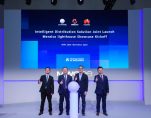
BARCELONA, SPAIN – Media OutReach Newswire – 6 March 2026 – During MWC2026, Huawei hosted a forum themed “Advancing All Intelligence, Empowering the Future Power System.” Together with Meralco (Philippines) and SANXING Ningbo, Huawei launched the Intelligent Distribution Solution (IDS) and announced a joint lighthouse initiative to advance power system development.

From left: Simon Zhou (General Manager of Overseas Marketing, SANXING Ningbo), David Sun (CEO, Huawei Electric Power Digitalization BU), Roque D. Bacani (Chief Information Officer, Meralco), and Perry Yang (Vice President, Huawei Optical Business Product Line) launching Huawei IDS

Communication, digitalization, and AI: Emerging cornerstones of future power systems that will accelerate the intelligent evolution of distribution networks

David Sun, CEO of Huawei’s Electric Power Digitalization BU, highlighted four drivers for energy transition: green energy and diversity, resilient grids, transparent distribution, and load electrification. He called for policy changes toward dispatch-market coordination. He also emphasized that communication, digitalization, and AI are becoming core production systems, requiring stronger capabilities in digital transformation, cybersecurity, and sustainable development.

At the forum, Mr. Sun unveiled the White Paper on Communication Target Networks for the Future Power System, introducing a pioneering architecture that features an intelligent and robust main network, integrated medium-voltage and transparent low-voltage networks, high-speed secure connectivity, and space-ground integration. The paper also outlines key tech trends, from optical and wireless to carrier and satellite communications, and underscores their transformative value.

Huawei highlighted its focus on intelligence and digitalization, working with industry players to drive power transformation. Global industry leaders also shared their insights: Al’Louise van Deventer (Technology and Engineering General Manager, Eskom) on future-ready digital practices; Momar Awa Sall (Transmission Grid Director, Senelec) on private wireless networks accelerating power modernization; Deniz COSKUN (Deputy General Manager, TEİAŞ) on restructuring communication networks for grid resilience; and Andy Liu (Overseas Solutions and Marketing Director, SANXING Ningbo) on the application of Huawei IDS.

Global industry leaders and partners join to explore the future of power systems

Power distribution networks are evolving from mechanized to automated and intelligent systems, driving technological and business model innovation. Despite creating new challenges for O&M, they have unlocked further opportunities for improving grid reliability and resource allocation.

At the forum, Huawei, Meralco, and SANXING Ningbo, unveiled the IDS that delivers four core capabilities—reliable communication, edge computing, cloud-edge collaboration, and low-voltage transparency—based on a cloud-pipe-edge-pipe-device architecture. It enables an intelligent low-voltage (400 V) distribution network with controllable line loss, visualized distribution rooms, and manageable renewables, transforming fragmented digital silos into open, integrated digital systems. The three companies also announced a lighthouse showcase initiative, sharing replicable and scalable digital transformation best practices.

Advancing digital and intelligent integration for a greener, more reliable grid

Communication, digitalization, and AI are at the heart of future power systems. Huawei will deepen R&D in digital, intelligent technologies, integrating advanced intelligence into power production. Together with global partners, Huawei is committed to developing with the power industry toward greater reliability, stronger security, and a low-carbon future.
Hashtag: #Huawei

The issuer is solely responsible for the content of this announcement.

By Nitya Chakraborty The resounding victory of the Gen Z supported Rashtriya Swatantra Party (RSP) in the March 5 general elections in Nepal is a game changer not only in the political history of this tiny Himalayan nation but also in the evolving polity of South Asia. Nepal is now the second country in South […]

The article Gen Z Supported RSP’s Resounding Win In Nepal Elections Is A Gamechanger appeared first on Latest India news, analysis and reports on Newspack by India Press Agency).

Commercial shipping through the Strait of Hormuz has slowed to an unprecedented crawl as hostilities linked to the war involving Iran disrupt one of the world’s most critical energy corridors, triggering alarm across global markets and raising fears of sustained supply shocks. Industry tracking data and shipping advisories show tanker traffic through the narrow passage between the Persian Gulf and the Gulf of Oman falling sharply as […]

Arabian Post Staff -Dubai Emerging market assets have endured one of their sharpest jolts in years as conflict spreading across the Middle East triggered a global flight from risk, driving currencies, equities and bonds lower while prompting major investment banks to scale back bullish positions. Heightened geopolitical tensions following United States and Israeli strikes on Iran unsettled financial markets, pushing investors towards the safety of the US […]

Tension between Silicon Valley’s artificial-intelligence developers and defence officials has surfaced again as Anthropic chief executive Dario Amodei re-engages in discussions with the Pentagon over potential collaboration on advanced AI systems. The renewed talks follow a disagreement that underscored deep divisions over the role of powerful generative AI models in military applications and the ethical boundaries technology companies seek to maintain. Dialogue between Anthropic and the US […]

Arabian Post Staff -Dubai Rome hosted high-level talks between the United Arab Emirates and Italy as both sides explored ways to expand economic cooperation and deepen strategic ties across trade, energy, investment and technology sectors. Discussions centred on strengthening an already growing partnership between the Gulf state and one of Europe’s largest economies, reflecting a broader push by both governments to widen collaboration in a shifting geopolitical […]

VISHNU RAJA
RYO YAMADA
HITORI GOTOH
IKUYO KITA