Funding initiatives under the Forest Conservation Certificate to support sustainable forestry and biodiversity protection
SINGAPORE & MALAYSIA – Media OutReach Newswire – 30 March 2026 – Vantage Data Centers, a leading global provider of hyperscale data center campuses, today announced a partnership with the Malaysia Forest Fund (MFF), an agency under the Ministry of Natural Resources and Environmental Sustainability of Malaysia (NRES), to strengthen the efforts to protect and conserve Malaysia’s forests while delivering tangible benefits to local communities in Selangor. Through this collaboration, Vantage will contribute to the Penjaga Gunung (Mountain Guardian) project, one of the key initiatives under the Forest Conservation Certificate (FCC) protocol managed by the Malaysia Forest Fund.
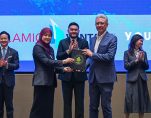
Fitri Abdullah, Country Managing Director, Malaysia of Vantage Data Centers (second from the right) receives the conservation agreement from Malaysia Forest Fund, reflecting the joint commitment towards forest conservation and environmental sustainability.
His Highness Crown Prince of Selangor Tengku Amir Shah Ibni Sultan Sharafuddin Idris Shah Alhaj and YB Dato’ Sri Arthur Joseph Kurup, Minister of Natural Resources and Environmental Sustainability, witnessed the conservation agreement exchange between Vantage Data Centers, Malaysia Forest Fund and Your Idea Maker for the implementation of the Penjaga Gunung project in Selangor. The initiative covers approximately 108,000 hectares of the Selangor Royal Heritage Forest area and engages villages from the Orang Asli community.
The Penjaga Gunung project aims to foster environmental stewardship among the youth of the Orang Asli, the Indigenous peoples of Peninsular Malaysia, while preserving their cultural heritage and creating sustainable livelihoods for the community. Through structured program and certified skills development, participants will be trained to become nature guides and community rangers, enabling them to develop village-based eco-tourism and conservation services that generate long-term income streams. This new generation of forest guardians will be equipped with essential knowledge to enhance protection of Selangor’s forest reserves and biodiversity while supporting habitat restoration to strengthen ecosystem resilience.
The Conservation Agreement Exchange Ceremony for the Penjaga Gunung Project was witnessed by His Highness Crown Prince of Selangor Tengku Amir Shah Ibni Sultan Sharafuddin Idris Shah Alhaj (middle) and YB Dato’ Sri Arthur Joseph Kurup, Minister of Natural Resources and Environmental Sustainability (third from the left). Fitri Abdullah, Country Managing Director, Malaysia was the representative of Vantage Data Centers (far right).
“Our support for Penjaga Gunung turns conservation into high-caliber, meaningful career opportunities. We are shaping a future where sustainable livelihoods and professional skills development go hand in hand with protecting the planet, ensuring that environmental sustainability is guided by the wisdom of protecting indigenous cultural heritage”, said Fitri Abdullah, country managing director, Malaysia of Vantage Data Centers. “Vantage is committed to building and operating our hyperscale digital infrastructure responsibly. We will continue to strengthen the community by investing in workforce development programs and aligning our efforts with local priorities and the Malaysian government’s digital vision.”
Vantage has established a strong presence in Malaysia with two hyperscale campuses in Cyberjaya, Selangor, in addition to one of the region’s largest campuses in Johor, all of which support cloud and AI transformation across the Southeast Asia region. For more information on Vantage’s APAC platform, please visit https://vantage-dc.com/data-center-locations/apac/.
The issuer is solely responsible for the content of this announcement.
About Vantage Data Centers
Vantage Data Centers is a global leader in digital infrastructure serving the world’s most influential AI and cloud providers. With operations spanning North America, EMEA and Asia Pacific, Vantage delivers capacity at unrivaled speed and scale, driven by a relentless commitment to operational excellence and customer success. Vantage is empowering transformative companies to shape the future.
South Korea is weighing whether to extend car-use restrictions beyond the public sector as oil prices climb sharply, a step that would amount to the country’s first nationwide driving curbs since the 1991 Gulf War if it is applied broadly to the public. Finance Minister Koo Yun-cheol said wider restrictions could come into play if crude prices rise into a $120-$130 a barrel range, up from about $100-$110 now, as Seoul tries to contain fuel demand and cushion the economic shock from turmoil in the Middle East.
The discussion marks an escalation from measures already in force. Public institutions are operating under a five-day vehicle rotation system, while large companies including Samsung Electronics and SK Group have begun urging staff to cut private car use, reduce parking demand and adopt other energy-saving practices. Officials have also left open the possibility of further fuel-tax relief to soften the burden on households and businesses, though no final decision has been announced on compulsory curbs for private motorists.
At the centre of Seoul’s concern is its exposure to imported energy. About 70% of South Korea’s oil imports come from the Middle East, leaving the country highly sensitive to any disruption in supplies or shipping routes. The government raised its crude oil supply disruption alert to Level 2 on March 18 as tensions mounted, signalling a more serious official assessment of the risks facing one of Asia’s largest energy importers.
The external shock has been severe. Reuters reported that Brent crude climbed to nearly $115 a barrel over the weekend and above $116 on Monday, putting it on course for its biggest monthly jump on record, while US crude also surged past $100. The rally has been driven by a widening conflict linked to Iran and growing anxiety over disruptions around the Strait of Hormuz, a vital artery for global oil flows. That backdrop has sharpened pressure on Asian economies that rely heavily on imported fuel, with South Korea among the most exposed.
For policymakers in Seoul, the issue is no longer only about fuel bills. Higher oil prices threaten to spill into inflation, transport costs, industrial input prices and consumer sentiment. A Reuters poll published on Monday projected that South Korea’s imports rose 18% in March, the fastest pace since September 2022, largely because of elevated oil prices, even as exports remained buoyant on strong semiconductor demand. That split picture captures the dilemma facing the government: trade performance is being helped by chips and artificial intelligence-linked demand, but the economy’s dependence on imported energy is pushing up costs and widening vulnerability.
President Lee Jae Myung has responded by urging a nationwide energy-saving drive, while Energy Minister Kim Sung-whan has pushed demand management and warned against panic behaviour. The government has promoted 12 power-saving practices, from shorter showers to shifting electricity use away from peak hours, and has also moved to restart several nuclear reactors, loosen coal plant restrictions and expand renewable energy to offset pressure on gas imports. The mix underlines how Seoul is trying to balance short-term crisis management with longer-term energy security, even as those goals can pull in different directions.
That tension is visible in the broader regional response. Across Asia, governments are looking again at emergency stock releases, fuel-saving directives and, in some cases, greater coal use to bridge supply gaps. Analysts say such measures may shield economies from the immediate shock, but they also expose how quickly climate and transition goals can be tested when energy security comes under strain. In South Korea’s case, the administration’s public emphasis on renewables sits alongside plans to lean harder on nuclear and coal generation if needed.
The market fallout has already been visible in financial assets. South Korean equities were hit as investors fled Asian markets on fears of a prolonged oil shock, though some analysts argue the sell-off has reflected panic rather than a collapse in fundamentals. Technology and industrial names remain central to the country’s earnings outlook, but energy-intensive sectors face a tougher operating environment if high crude prices persist or if physical shortages emerge.
Hong Kong Institute of Vocational Education (Shatin), St. Paul’s College, Tai Po Old Market Public School Crowned Champions with St. Paul’s Convent School Named Most Active Participant
HONG KONG SAR – Media OutReach Newswire – 30 March 2026 – Samsung ‘Solve for Tomorrow,’ a global inter-school technology competition operating in 68 countries, has been held in Hong Kong since 2013, empowering youth to address social and global challenges through innovation. This year, two core themes guided participants: Topic 1: Environmental Sustainability via Technology — Create sustainable solutions to protect our planet via AI, and Topic 2: Social Change through Sport & Tech: For Better Futures — Harness the power of AI technology and sports to open new opportunities. Both themes rigorously challenged students to innovate beyond traditional boundaries, leveraging AI and cutting-edge technologies to develop creative, practical solutions to complex societal issues and actively shape a better future.
Samsung Solve for Tomorrow 2025-26 concludes, as Samsung and the next generation unite to forge a brighter, tech-powered future.
Running from September 2025 to March 2026, the competition, co-organized by AiTLE and fully backed by the HKSAR Education Bureau’s ‘Business-School Partnership Programme’ and Hong Kong Education City, attracted over 250 teams from 100 tertiary, secondary and primary schools. Each team demonstrated unique technological approaches to tackle pressing social issues.
Yiyin Zhao, Managing Director, Samsung Electronics H.K. Company, Limited, aims for the competition to shape future technology leaders and drive new vitality and innovation in Hong Kong’s tech sectors.
Yiyin Zhao, Managing Director, Samsung Electronics H.K. Company, Limited, stated: ‘Samsung has always believed technology is not merely a tool for changing lives, but a vital force driving social progress. ‘Solve for Tomorrow’ empowers young people to leverage creative thinking and technology to address real-world needs and challenges. It’s more than a competition; it’s a journey of innovative exploration that nurtures and empowers the younger generation. The widespread adoption of AI, in particular, presents unprecedented opportunities for innovation. This year, we were delighted to see students actively using AI and diverse technological solutions across the community, environment, sports, and sustainability, submitting outstanding, inspiring, and practical work. This truly demonstrates the remarkable creativity, keen observation, and effective problem-solving skills of Hong Kong’s youth.”
Samsung Nurtures Tomorrow’s Tech & Innovation Leaders She also hopes the competition will encourage more students to step out of their comfort zones: “Beyond stimulating creativity and developing innovative solutions, we aim to cultivate critical skills: problem-solving, critical thinking, teamwork, and communication. This equips students to navigate the challenges of our rapidly evolving intelligent era confidently. We believe this competition will discover and cultivate the next generation of innovation and technology talent, contributing significantly to both Hong Kong’s and global innovation.
Samsung Solve for Tomorrow extends beyond monetary rewards, actively aligning with the Education Bureau’s ‘Business-School Partnership Programme’ to provide invaluable hands-on experience. Tertiary champions secure corporate internships, while secondary champions and first runners-up gain critical work experience, preparing them for future careers. The competition ignites students’ passion for technology and STEM, building a robust foundation for their innovation journeys and continually inspiring alumni to pursue pioneering solutions.
Final Awards Reveal Extraordinary Creativity After the initial judging round, 95 outstanding projects advanced. They then refined their innovative solutions in Design Thinking workshops and through expert guidance. The judging panel then selected the nine finalists—the top three teams from each category, who will present their detailed project concepts and results, vying for the ultimate recognition.
Tertiary Category Champion “AquaPulse” – Developed by the Hong Kong Institute of Vocational Education (Shatin), AquaPulse is an AI coastal protection system powered by continuous 24/7 tidal and solar energy with integrated storage. It reliably detects abnormalities such as falling into the sea, even at night or in adverse weather, using millimeter-wave radar and AI vision. Upon detection, it instantly notifies rescue teams via lamppost positioning, significantly shortening response times. AquaPulse also monitors environmental data, aiming to create safer, more sustainable waterfronts for Hong Kong.
Secondary Category Champion “Plastine” – Developed by St. Paul’s College, Plastine is a solar-powered microplastic removal system for freshwater environments. It utilizes advanced electrocoagulation with aluminum electrodes to aggregate microplastics for efficient filtration and collection. Combining IoT sensors and AI algorithms, Plastine intelligently identifies optimal deployment locations. Focused on Hong Kong’s microplastic-rich rivers, it purifies water, safeguards public health, and restores aquatic ecosystems.
Primary Category Champion “Yoga 24 Go!” Wellness Exercise App – Developed by Tai Po Old Market Public School, “Yoga 24 Go!” is an innovative wellness application. It intelligently integrates the health wisdom of Traditional Chinese Medicine’s 24 solar terms with the body’s 12 meridians. Guiding users through specific yoga poses for each solar term, the app promotes “seasonal wellness” by targeting health goals such as nourishing the liver in spring, the heart in summer, the lungs in autumn, and the kidneys in winter
Award List (for details, please refer to the appendix):
Tertiary Category
Champion
Hong Kong Institute of Vocational Education (Shatin)
1st Runner-up
Hong Kong Institute of Vocational Education (Shatin)
2nd Runner-up
Youth College (Kowloon Bay)
Merit Award (3 teams)
The University of Hong Kong
Hong Kong Institute of Vocational Education (Shatin)
Hong Kong Baptist University
Secondary Category
Champion
St. Paul’s College
1st Runner-up
St. Stephen’s Girls’ College
2nd Runner-up
ESF Island School
Merit Award (3 teams)
Fung Kai No.1 Secondary School
Christian Alliance SW Chan Memorial College
Diocesan Girls’ School
Primary Category
Champion
Tai Po Old Market Public School
1st Runner-up
Ying Wa Primary School
2nd Runner-up
Cumberland Presbyterian Church Yao Dao Primary School
Merit Award (3 teams)
Yaumati Catholic Primary School (Hoi Wang Road)
Marymount Primary School
TWGHs Tsoi Wing Sing Primary School
The Most Active Participating School Award
St. Paul’s Convent School
Hashtag: #Samsung #SolveforTomorrow
The issuer is solely responsible for the content of this announcement.
About Samsung Solve for Tomorrow
Samsung Solve for Tomorrow is an annual competition that brings together the creativity and passion for new technologies of young people around the world to solve social problems in local communities. In 2013, Samsung introduced this meaningful event to Hong Kong, inspiring tens of thousands of students to develop innovative solutions to address social issues in the City. Samsung is promoting the new educational philosophy of STEM. Besides encouraging Hong Kong students to deepen their knowledge of STEM – Science, Technology, Engineering and Mathematics – Samsung hopes that they can develop empathy and a sense of responsibility and apply their STEM knowledge to contribute to society. Through the competition, Samsung hopes to cultivate tomorrow’s thought leaders, equipping them with both technological knowledge and a sense of responsibility as global citizens. To learn more about Samsung Solve for Tomorrow, please visit: https://hkclubs.samsung.com/hk/offer/solvefortomorrow2025/
About Samsung Electronics Co., Ltd.
Samsung inspires the world and shapes the future with transformative ideas and technologies. The company is redefining the worlds of TVs, smartphones, wearable devices, tablets, home appliances, network systems, memory, system LSI, foundry and LED solutions, consistently elevating their performance and innovation to new heights. For the latest news, please visit the Samsung Newsroom at http://news.samsung.com/.
Omniyat Holdings has said it has enough liquidity to handle its debt obligations after Fitch placed the Dubai ultra-luxury developer on Rating Watch Negative, citing geopolitical risk linked to the Iran war and the potential for weaker buyer demand in Dubai and across the Gulf. The company said it held more than AED 5.3 billion in cash, cash equivalents and other financial assets at the end of […]
North Korea has carried out a ground test of a newly upgraded high-thrust solid-fuel engine, with leader Kim Jong-un saying the development would strengthen the country’s strategic strike capability and advance its military modernisation drive. State media said Kim observed the test and described it as an important step in the ruling party’s five-year defence plan, a programme that has centred on building faster-launching missiles and a […]
Mubadala Energy has tightened its grip on one of Southeast Asia’s most closely watched offshore gas provinces after winning the Southwest Andaman exploration Production Sharing Contract in Indonesia, a move that extends the Abu Dhabi-based company’s push to build scale in the country’s Andaman basin. The block was awarded by Indonesia’s oil and gas regulator, Direktorat Jenderal Minyak dan Gas Bumi, under the second bid round for […]
Arabian Post Staff -Dubai Rosatom has agreed to form a logistics joint venture with DP World in a deal that would place Russia’s state nuclear corporation in majority control while bringing one of Dubai’s biggest global trade operators deeper into a strategically sensitive transport network centred on FESCO and Arctic shipping lanes. Under the proposed structure, Rosatom will hold 51% and DP World 49%, with Rosatom contributing […]
HONG KONG SAR and SHANGHAI, CHINA – Media OutReach Newswire – 30 March 2026 – Hang Lung Properties Limited (“Hang Lung” or the “Company”; stock code: 00101) today announced that Westlake 66 in Hangzhou, the Company’s 11th mixed-use commercial development in Chinese Mainland, will commence its soft opening on April 28, 2026.
Westlake 66 in Hangzhou will commence its soft opening on April 28, 2026
Opening in stages with a planned ramp-up, following the phased launch of its office towers since late 2025, Westlake 66 marks a major milestone in the Hang Lung’s Mainland portfolio and represents the latest embodiment of its “Pulse of the City” positioning. It will set a new benchmark for regional mixed-use development and redefine sophisticated lifestyle experiences in a top-tier Chinese city, leading the experiential retail trend and establishing a curated destination where culture, commerce, and community converge.
Situated in the Wulin CBD of Hangzhou in Zhejiang Province — one of China’s wealthiest provinces by GDP and purchasing power — Westlake 66 spans a gross floor area of approximately 390,200 square meters, bringing together a world-class shopping mall, five Grade A office towers, and the 194-key Mandarin Oriental Hangzhou — the first Mandarin Oriental in Zhejiang — to serve the discerning tastes of Hangzhou’s affluent and growing population. Hashtag: #HangLungProperties
The issuer is solely responsible for the content of this announcement.
About Hang Lung Properties
Hang Lung Properties Limited (SEHK stock code: 00101) creates compelling spaces that enrich lives. Headquartered in Hong Kong and Shanghai, the Company manages a portfolio of over 3.5 million square meters of retail, office, residential, and hotel properties across Hong Kong and Chinese Mainland.
The Company’s diverse portfolio in Hong Kong includes office towers and malls in prime districts, as well as luxury residential developments in prestigious areas. In Chinese Mainland, under the signature “66” brand, the Company’s mixed-use and retail developments are regarded as premium landmarks, strategically located in the hearts of key cities of Shanghai, Shenyang, Jinan, Wuxi, Tianjin, Dalian, Kunming, Wuhan, and Hangzhou.
The Company is recognized for pioneering sustainability in the real estate industry, with an MSCI ESG rating of AA and inclusion on CDP “A List” for Climate Change. The Company powers 90% of its operating properties in the Mainland with renewable energy, with a net zero commitment by 2050.
Arabian Post Staff -Dubai Donald Trump has triggered fresh controversy after using crude language about Saudi Crown Prince Mohammed bin Salman at the Future Investment Initiative Institute summit in Miami Beach, telling the audience the Saudi leader had not expected to “be kissing my a” and adding that “now he has to be nice to me.” The remarks, delivered on 27 March at the Saudi-backed forum, drew […]
A China-Singapore youth dialogue in Singapore has closed with artificial intelligence, innovation and cross-border cooperation at the centre of discussions, as both countries seek to deepen people-to-people links alongside a broader push into advanced technology and digital governance. The two-day event was held on 24 and 25 March and brought together 12 young representatives from the two countries under the theme “Building Tomorrow: Youth Voices United”.
The gathering was co-organised by People’s Daily and Lianhe Zaobao, giving it a media-diplomacy character as well as a youth engagement role. Participants discussed how their generation is navigating technological change, cultural renewal and sustainable development, with one panel focused specifically on how young professionals in robotics, flying cars and data verification see the opportunities and risks of the AI era.
That emphasis matters beyond the symbolism of a youth exchange. Singapore has been working to position itself as a regional hub for trusted AI deployment, regulation and commercialisation, while China continues to expand its technological reach across sectors from advanced manufacturing to data-driven consumer platforms. Against that backdrop, a dialogue framed around youth voices and innovation also functions as a signal that bilateral engagement is moving beyond trade and official diplomacy into talent, technology and narrative influence.
Organisers said the technology segment featured participants working in frontier and emerging fields, including robotics, air mobility and digital verification. Those subjects reflect a wider regional agenda in which governments, universities and companies are trying to balance investment enthusiasm with concerns over safety, labour disruption, misinformation and the standards needed for responsible AI adoption. The inclusion of data verification in the discussion is especially notable at a time when synthetic media, manipulated content and trust in online information have become strategic concerns across Asia.
The event also extended beyond technology. Another strand of the dialogue focused on culture and identity, with participants in wood sculpture, paper arts, jewellery design and cultural reporting arguing that heritage does not have to be sidelined by digital change. That framing aligns with a broader trend in both China and Singapore, where policymakers and institutions increasingly present innovation and cultural continuity not as competing ideas but as parallel pillars of national development and soft power.
For Singapore, the dialogue fits neatly into its longer-standing strategy of maintaining practical, multi-layered ties with China while preserving its distinct regulatory and economic model. Youth exchanges, especially those tied to technology and entrepreneurship, can help widen those ties at a time when regional competition for skilled workers, capital and research partnerships is intensifying. Singapore’s universities and public institutions have also hosted multiple youth-oriented dialogues on China-related themes this year, pointing to a sustained effort to cultivate a new generation conversant in both policy and commercial realities.
For China, the event offered another platform to project openness and collaborative intent through younger voices rather than official communiqués. That matters at a moment when Beijing is trying to reassure partners in Southeast Asia that technological cooperation can advance without crowding out local priorities. Using youth representatives, entrepreneurs and cultural figures helps soften what might otherwise appear as a purely state-led message, while also reinforcing the idea that future bilateral ties will be shaped as much by personal networks and innovation ecosystems as by government ministries.
Still, such forums come with limits. Dialogues can build familiarity and create useful connections, but they do not by themselves resolve harder policy questions around data governance, platform regulation, research openness or strategic competition. Singapore has been careful to develop AI frameworks that stress accountability and trust, while China’s model is backed by a far larger domestic market and a different regulatory environment. That means cooperation may expand fastest in applied innovation, education, mobility and selected commercial fields rather than in fully harmonised digital rules.
Arabian Post Staff -Dubai Nabil Fahmy is set to become the next secretary-general of the Arab League after Arab foreign ministers unanimously backed Egypt’s nominee in a virtual meeting on 29 March, clearing the way for the veteran diplomat to take over in July when Ahmed Aboul Gheit’s second term ends. The ministers’ decision still requires formal endorsement at the next Arab summit in Saudi Arabia, but […]
India has cut special excise duties on petrol and diesel after a sharp rise in global crude prices, seeking to shield consumers from a broader inflation shock as the Iran war and disruption around the Strait of Hormuz continue to unsettle energy markets. A government order issued late on Thursday reduced the special excise duty on petrol to Rs 3 a litre from Rs 13, while the levy on diesel was removed entirely from Rs 10 a litre. At the same time, New Delhi imposed fresh windfall taxes on diesel and aviation turbine fuel exports to recover part of the revenue loss and manage the fiscal hit.
The move underlines the pressure facing policymakers as oil prices remain volatile and the rupee weakens, raising the cost of imports for one of the world’s biggest crude buyers. Brent crude climbed above $112 a barrel on Friday, extending a rally driven by doubts over any near-term ceasefire and persistent fears that supply disruptions in the Gulf could deepen. Traders and analysts have said the risk premium now reflects not only lost barrels but also the strategic importance of Hormuz, through which a large share of global oil and liquefied natural gas flows.
For India, the tax cut is as much about inflation management as political optics. Retail prices at state-run fuel retailers have been largely held steady even as global crude costs have climbed, forcing public-sector oil marketing companies to absorb losses on every litre sold. Reuters reported that those losses were running at about Rs 24 a litre on petrol and Rs 30 on diesel at the time of the duty cut, a burden that had begun to raise concerns about the financial strain on the country’s dominant fuel retailers. By lowering excise duties, the government creates room for those companies to keep pump prices stable without taking the full blow on their balance sheets.
That relief, however, comes with a cost. The excise reduction is expected to trim government revenue by roughly Rs 70 billion every fortnight, with the net impact estimated at about Rs 55 billion after accounting for the new export levies on diesel and jet fuel. Those numbers matter because New Delhi is already balancing slower growth risks, higher import costs and sensitivity in bond markets. India’s 10-year government bond yield rose as investors weighed the inflationary impact of oil and the possibility that fiscal targets may come under pressure if energy turbulence persists.
Currency markets have been sending a similar warning. The rupee slipped beyond 94 to the US dollar, marking a record low and capping its weakest fiscal-year performance in more than a decade. Higher oil prices have compounded external pressures by widening import costs and fuelling worries over inflation, while signs of reduced support from the Reserve Bank of India have added to volatility in both the currency and government debt markets. The combination of a softer rupee and expensive crude intensifies the urgency for measures that can prevent fuel inflation from feeding into transport, food and manufacturing costs.
The government has paired the tax changes with broader supply assurances. Officials have said retail fuel prices will remain stable and that supplies of fuel, fertiliser and coal are adequate. India has also increased the availability of liquefied petroleum gas for industrial use, an indication that authorities are trying to prevent energy stress from spilling into factories and power demand. That broader messaging is aimed at containing panic in a market already on edge over whether the Middle East conflict could trigger a more prolonged energy shock.
The burden of holding down prices has not been distributed evenly across the sector. State-run retailers, which control more than 90 per cent of the country’s fuel stations, have largely refrained from raising pump prices, while private players have begun adjusting. Nayara Energy, for example, increased gasoline and gasoil prices this week, citing the combined impact of a weaker rupee and surging global crude prices. The divergence highlights the structural challenge for the government: keeping inflation contained without unduly damaging the finances of state-backed refiners and marketers.
Artificial intelligence is redrawing the economics of data centres at a speed that is forcing developers, utilities and investors to rethink where digital infrastructure can be built and how it can be financed. A new 2026 marketplace report from Colliers says global investment in data centres topped $580 billion in 2025, up 27 per cent from a year earlier, as hyperscalers and infrastructure groups poured money into […]
Distributed denial-of-service attacks gathered dangerous momentum in the second half of 2025, with a new industry report showing incidents rising 150 per cent year on year as both volume and velocity increased, underscoring how quickly cyber disruption is moving from episodic nuisance to board-level operational risk. The findings point to a sharp escalation in late 2025, when total attacks climbed to about 1.3 million in the fourth […]
Digital Realty has begun providing colocation infrastructure to Samsung Electronics at its ICN10 facility in Seoul, a deal that highlights how large corporate users in South Korea are seeking more resilient, high-density digital infrastructure as artificial intelligence, cloud services and mission-critical enterprise workloads put heavier demands on power, cooling and connectivity. The announcement was made on March 25 by Digital Realty, which said the arrangement would support Samsung Electronics’ enterprise IT operations from its Seoul site.
The ICN10 facility, located in Sangam-dong in Mapo-gu, has been operating since 2022 and is described by the company as South Korea’s first carrier-neutral data centre. Digital Realty says the building has a maximum IT load of 12 megawatts and around 132,000 square feet of space, with high-density power architecture, network connectivity and the resilience needed for large-scale computing environments. Those specifications matter because enterprise clients are no longer looking only for secure rack space; they increasingly want facilities that can handle denser compute loads without compromising uptime.
For Samsung Electronics, the move points to a practical shift in how even large technology groups manage parts of their own internal infrastructure. Rather than relying exclusively on self-operated facilities, major companies are turning to specialist operators for colocation capacity that can be scaled more quickly and managed to global standards. Digital Realty framed the arrangement as support for a large-scale customer environment in Korea, while emphasising stable, high-performance infrastructure for global enterprises. That wording suggests the deal is less about consumer-facing products and more about the backbone systems that keep a multinational company running across data-intensive operations.
The timing is notable because Seoul’s data-centre market is expanding while facing mounting strain over where future capacity can be built and how it will be powered. Cushman & Wakefield said the Greater Seoul Area reached 533 megawatts of capacity in the first half of 2025, with a further 715 megawatts in the development pipeline, alongside land secured for another 250 megawatts. Its later market update said the second half of 2025 saw double-digit year-on-year growth, while AI demand and tighter power-related rules were reshaping development patterns. That combination of growth and constraint is pushing operators and customers alike to value operational certainty.
South Korea’s broader technology push adds another layer to that demand story. Reuters reported this week that Seoul approved a 250 billion won investment in AI chip startup Rebellions, part of a wider effort to strengthen domestic semiconductor and advanced computing capabilities. Reuters also reported that SK Hynix is pursuing a US listing partly to fund major chipmaking investments tied to rising AI demand. Those moves sit outside the colocation market itself, but they reinforce the same structural point: processing power, data movement and digital infrastructure are becoming more strategically important across the economy.
Digital Realty’s position in Seoul also reflects a larger contest among global and regional operators seeking to capture Asia’s enterprise and cloud demand. Market research and adviser reports point to South Korea as one of the faster-growing data-centre markets in the region, driven by digital-first consumers, cloud adoption and increased enterprise modernisation. JLL’s 2026 outlook said the global data-centre sector could nearly double between 2025 and 2030, while other market estimates show South Korea’s colocation and broader data-centre segments expanding strongly through the decade. Forecasts from commercial research firms should be treated cautiously, but taken together with operator activity and land acquisition trends, they show why Seoul has become a closely watched infrastructure market.
The Samsung agreement may not be transformative in size on its own, yet it carries signalling value. When one of the country’s largest technology groups places enterprise workloads with an external colocation provider, it gives weight to the argument that carrier-neutral, high-density facilities are becoming integral to mainstream corporate IT strategy rather than serving only cloud giants and telecom operators. It also strengthens Digital Realty’s credentials in a market where network diversity, reliability and location all matter.
Questions remain over how quickly South Korea can add capacity in and around Seoul without worsening power bottlenecks or pushing new builds further from the capital’s main concentration of corporate demand. Legal and advisory analyses have pointed to the mismatch between the location of generation capacity and the heavy concentration of data centres around metropolitan Seoul. That tension is likely to shape the next phase of expansion, forcing operators to balance geography, power access and customer proximity more carefully than before.
Arabian Post Staff -Dubai Telda has moved beyond payments and cards to add stock and fund investing to its app, opening a new front in Egypt’s fast-growing race to attract first-time retail investors. The Cairo-based fintech said on Sunday that users can now buy and sell shares on the Egyptian Exchange and subscribe to investment funds from within the same platform, without relying on a traditional broker […]
Expansion strengthens access to fast, reliable device repair services across Jurong, Yishun, Tampines and Chinatown as demand for urgent technical support rises
SINGAPORE – Media OutReach Newswire – 29 March 2026 – Citri Mobile has expanded its Singapore repair network with stronger support in Jurong and Yishun, responding to rising demand for faster and more accessible device repair as device failures become increasingly disruptive to daily life.
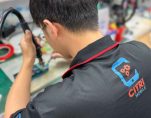
A Citri Mobile technician performing internal diagnostics at a fully equipped repair station in Singapore.
What often begins as a minor inconvenience can quickly escalate. A phone may take longer to charge, a screen may flicker briefly before stabilising, or a laptop may run hotter than usual during routine use. These early signs are often ignored until the device stops functioning at a critical moment.
In recent months, technicians have observed a noticeable increase in cases involving sudden power loss, charging instability, motherboard-related faults and water damage. These issues often appear gradually before escalating into complete device failure, reflecting a broader shift in how modern devices behave under long-term usage.
Across Singapore, users are increasingly facing device failures at moments where immediate access is essential. A phone may stop responding during a payment, a transport app may fail to load before a journey, or a laptop may refuse to power on just before an important task. In such situations, the priority shifts quickly from convenience to restoring access in order to regain control of payments, communication and daily responsibilities.
Against this backdrop, Citri Mobile and its C3 Smart Repair by Citri Mobile outlets are strengthening support for customers dealing with urgent issues across smartphones, foldable devices, tablets, MacBooks and laptops.
In Jurong, these situations are often experienced during working hours and daily commutes. A phone that powers off unexpectedly mid-transaction or loses signal during navigation can create immediate disruption. In these moments, users searching for phone repair in Jurong often prioritise providers that are nearby, responsive and able to diagnose issues clearly without unnecessary delay.
In Yishun, the pattern frequently unfolds in residential settings. Devices that appear functional the night before may fail completely the next morning. A phone may not power on, a screen may remain black despite vibration, or a device may show signs of internal failure after minor exposure to moisture or accidental spills. When access to essential services is affected, the need for immediate local support becomes more urgent.
Water damage continues to be one of the more unpredictable causes of device failure. Even small amounts of moisture can lead to corrosion within internal components, affecting charging circuits, display connections or motherboard stability. In some cases, devices may continue to function temporarily before deteriorating rapidly over time.
At the same time, laptop and MacBook issues remain a significant concern, particularly for users who rely on their devices for work, study and communication. A MacBook that fails to power on, shuts down under load or shows inconsistent charging behaviour often indicates deeper issues such as logic board faults, battery degradation or power management instability.
For iPhone-related repairs, some users also look for providers that participate in Apple’s Independent Repair Provider programme, where applicable. Those seeking specialised support may explore iPhone repair in Singapore when reliability, diagnostics and parts compatibility are key considerations.
These issues are no longer isolated to one category of device. Similar underlying problems — including power IC faults, charging circuit instability and motherboard-level failures — can affect both smartphones and laptops. In many cases, users turn to providers offering broader device repair services in Singapore to address multiple concerns within a single visit.
In more complex cases, symptoms may appear inconsistent at first. A device may turn on intermittently, charge irregularly, or shut down without warning before failing entirely. These patterns often require careful diagnosis rather than immediate part replacement, particularly when internal board-level issues are involved.
Across Singapore, from Jurong and Yishun to Tampines and Chinatown, users increasingly choose repair providers that are close by, familiar and capable of handling both straightforward and complex faults with dependable turnaround. Customers in the northern region may also rely on nearby options such as mobile repair in Yishun for quicker access.
Citri Mobile said its recent expansion reflects a broader shift in customer expectations, where speed, clarity and reliability play a more significant role in decision-making.
“People usually start searching seriously when the problem stops them from doing something important,” a Citri Mobile spokesperson said. “Once payments, work access or communication are affected, the decision becomes immediate. They want a nearby solution they can trust.”
Citri Mobile operates across multiple Singapore locations under both Citri Mobile and C3 Smart Repair by Citri Mobile, supporting a wide range of repair needs from screen and battery replacements to charging issues, water damage recovery and motherboard-level repairs.
The company’s recent milestones include recognition as a Carousell Preferred Partner, receipt of the Carousell Best Service Award 2025, CaseTrust accreditation, and participation in Apple’s Independent Repair Provider programme for iPhone-related repair support.
With stronger coverage in Jurong and Yishun, alongside continued support in Chinatown and Tampines, Citri Mobile aims to improve access to timely and reliable device repair services for customers across the wider Singapore market.
The issuer is solely responsible for the content of this announcement.
C3 Smart Repair By Citri Mobile
Citri Mobile is a Singapore-based device repair provider serving customers across multiple locations, including Jurong, Yishun, Chinatown and Tampines. The company operates outlets under both Citri Mobile and C3 Smart Repair by Citri Mobile, supporting smartphones, foldable devices, tablets, MacBooks and laptops.
Its services cover a wide range of issues, including screen and battery replacements, charging faults, water damage recovery and motherboard-related repairs, with a focus on accurate diagnostics and reliable turnaround.
Citri Mobile is a Carousell Preferred Partner, recipient of the Carousell Best Service Award 2025, CaseTrust-accredited, and part of Apple’s Independent Repair Provider programme for iPhone repairs.
Anger over the war with Iran has widened the scope of the anti-Trump “No Kings” protests across the United States, turning what began as a broad movement against executive overreach into a sharper rebuke of the White House’s foreign and domestic agenda. Demonstrations on Saturday spread through more than 3,100 locations across all 50 states, with organisers and news reports describing one of the largest coordinated days […]
U. S. spot Bitcoin exchange-traded funds recorded their heaviest one-day net withdrawals in three weeks on Thursday, with investors pulling about $171.2 million as Bitcoin slid below the $70,000 mark and broader market nerves rose over the risk of a fresh flare-up in the conflict involving the United States, Israel and Iran. The outflow, based on market data compiled by SoSoValue and widely tracked across the crypto […]
Anthropic’s accidental exposure of internal material about an unreleased AI system dubbed Claude Mythos has jolted investors, sending cybersecurity shares sharply lower and adding to pressure across risk assets, while reviving a deeper debate over whether frontier AI is moving faster than the safeguards meant to contain it. The leaked material, first reported by Fortune on March 26 and 27, described Mythos as Anthropic’s most powerful model […]
Google has set 2029 as the target date to migrate its authentication systems to post-quantum cryptography, sharpening the timetable for a technology shift that security agencies and standards bodies had already said could take years. The move gives fresh weight to a deadline that parts of the Ethereum ecosystem have been preparing for since 2022, while Bitcoin still lacks a settled network-wide plan despite a growing body […]
By K Raveendran US President Donald Trump’s attempt to jawbone oil lower has run into the hard edge of market reality. At the start, the strategy appeared to work. When he signalled that peace talks with Iran were possible and suggested a diplomatic opening, crude quickly gave back a large share of its war premium. […]
Komodo dragons use a brutal combination of flesh-ripping teeth and venom-laced oral secretions to overpower prey, with newer anatomical work reinforcing a scientific view that has steadily displaced the old claim that their bite kills mainly through toxic bacteria. Researchers say the world’s largest lizard is built to inflict catastrophic blood loss, while venom compounds appear to amplify shock and prevent clotting. That matters because the “dirty […]
African Development Bank Group is set to launch the 2026 edition of its Africa’s Macroeconomic Performance and Outlook report on 30 March at its headquarters in Abidjan, Côte d’Ivoire, placing the continent’s growth prospects, debt strains and inflation risks under fresh scrutiny at a time of heightened global uncertainty. The event is expected to draw policymakers, investors and development specialists looking for updated guidance on how African […]











 https://x.com/CitriMobile
 https://www.facebook.com/CitriSG/
 https://www.instagram.com/citrimobilesg




