ADNOC is exploring investment opportunities in Canada’s upstream oil and liquefied natural gas sectors through XRG, its international energy investment arm, as Abu Dhabi intensifies its search for overseas assets aligned with long-term energy security and gas demand. Musabbeh Al Kaabi, ADNOC’s chief executive for upstream, said at the Global Energy Show in Calgary on Tuesday that the company was encouraged by Canada’s renewed emphasis on energy […]
Crescent Petroleum Chief Executive Officer Majid Jafar has warned that the Gulf conflict has moved beyond an energy-market disruption into a whole-economy shock, exposing the vulnerability of global trade, industry and food systems to a narrow set of strategic maritime chokepoints. Speaking in Washington, DC, at the Arab Gulf States Institute’s Petro Diplomacy 2026 conference, Jafar said disruption to flows through the Strait of Hormuz had shown […]
Red Bull Malaysia announces Red Bull Next Generation, a new athlete development platform focused on emerging talent across Southeast Asia
Applications open for Malaysian athletes aged 18–25 across all sports and disciplines
Selected athletes will receive support including mentorship, workshops, media visibility and tailored development opportunities
The programme focuses on identifying athletes before mainstream recognition, spotlighting the journey behind progression and performance
Red Bull Next Generation forms part of a long-term commitment to supporting the future of youth sport and athlete storytelling in the region
KUALA LUMPUR, MALAYSIA – Media OutReach Newswire – 10 June 2026 – Red Bull Malaysia, the No.1 energy drink brand in the nation, today announced Red Bull Next Generation, a regional athlete development platform under TCP Group, committed to supporting emerging young athletes in Southeast Asia.
Red Bull Next Generation empowers aspiring athletes with the platform, visibility and opportunities to take their next step in sport.
Launching first in Malaysia and Indonesia, Red Bull Next Generation’s mission is to spotlight athletes on the rise across all sports and disciplines. From established competitive sports to emerging disciplines and growing sporting communities, the programme is open to athletes aged 18-25 who are actively progressing and ready to take the next step in their journey.
Part of TCP Group’s long-term commitment to supporting the future of sporting talents, Red Bull Next Generation is more than a traditional sponsorship programme. Designed as a long-term platform focused on athlete development, visibility and progression, it supports athletes at a stage where the right backing can change their trajectory.
“At TCP Group, we believe Southeast Asia has an incredible future generation of athletes, creators and communities shaping the future of sport and culture,” said Supasita Kraisri, Chief Global Marketing Officer, TCP Group.
“Red Bull Next Generation reflects our long-term commitment to supporting that future by creating opportunities, building visibility and giving emerging athletes access to the kind of support that can help accelerate their journey,” she said.
“We want this programme to become more than an athlete initiative. We want it to become a platform that inspires ambition, progression and belief across the region.”
Selection goes beyond results and influences – athletes are evaluated based on mindset, potential, level of support and commitment to their sport. The Red Bull Next Generation programme combines performance support, expert guidance and athlete storytelling, helping selected athletes develop both competitively and personally. Athletes chosen for the programme will receive tailored support that includes workshops, mentorship, media training, financial assistance and content visibility across Red Bull channels.
Adelene Tay, Head of Marketing, TCP Red Bull Malaysia, shared, “Red Bull Malaysia has always been committed to energising the local sporting community, from supporting grassroots motorsports talent to providing platforms that inspire ambition, growth, and belief among the next generation of Malaysian athletes.”
“With Malaysia being one of the first markets to lead Red Bull Next Generation, we see this as an important opportunity to shine a spotlight on promising athletes and provide them with greater visibility and opportunities. At Red Bull Malaysia, we remain committed to building a stronger sporting community for the future, and we are excited to play a role in helping more Malaysian athletes realise their potential.”
The programme will also include guidance from Martin Pfeifenberger, a Performance Expert specialising in athlete training, recovery and human performance. With more than 20 years of experience, Martin has worked with elite athletes across over 100 sports disciplines, ranging from Formula 1 drivers and Olympic champions to top-performing teams in football, triathlon, and endurance sports.
“Across Southeast Asia, there are young athletes putting in the work every day, often before anyone is paying attention,” said Sigurd Meiche, Program Director for Red Bull Next Generation, who has extensive experience developing athlete-focused sports initiatives globally.
“Some athletes may already be competing at a high level, while others are building momentum within their local scenes, communities or cities. What matters to us is not whether someone is already famous or fully professional, it is their mindset, ambition and commitment to progressing in their sport,” he said.
“Red Bull Next Generation is about finding those athletes early, supporting them at the moment it matters most, and helping them unlock what’s possible both in sport and beyond it.”
Unlike many traditional, one-size-fits-all athlete programmes, Red Bull Next Generation is intentionally designed to be inclusive across all sports and disciplines, including esports, and welcomes both individual and team athletes. Whether competing nationally, building recognition within a city or hometown, or becoming influential figures within local sports communities, the programme is focused on identifying athletes with the ambition and potential to progress.
Centred around the belief that the next generation of athletes already exists, they just have not been seen yet, Red Bull Next Generation aims to spotlight the training, progression, setbacks and breakthroughs that happen long before mainstream recognition.
Applications are now officially open to Malaysian athletes aged 18–25 across all sports and disciplines from June 2026 via the Red Bull Next Generation website here: https://www.redbullsport.com/my/next-generation/2026. The first group of Red Bull Next Generation athletes is slated to be announced from August 2026 onwards.
To learn more about Red Bull Next Generation, visit and follow us on:
The issuer is solely responsible for the content of this announcement.
About Red Bull Malaysia
Energising Malaysians since 1993, Red Bull Malaysia is the No.1 energy drink brand in the nation, fuelling individuals of all lifestyles to live their purpose through a range of effective and delicious energy drinks. A firm believer in the special combination of “Energy” and “Passion”, the brand aims to give drinkers a boost they need to overcome everything and anything.
About TCP Group TCP Group is a leading beverage and food company in Thailand and the owner of the world’s most iconic energy drink brand “Red Bull” with the Yoovidhya family. Also known as the “House of Great Brands,” the company has a diverse product portfolio and is active in 15 markets in Asia, employing more than 5,000 people globally. In Thailand, the company also enjoys success from its distribution, OEM, vending machine business and market activation service.
By Dr. Gyan Pathak The INDIA bloc’s meet on June 8, 2026 in New Delhi has reset a broader consensus on national politics to take on the BJP despite its regional conflicts that surfaced with DMK keeping away from and AAP declaring that it was not part of it. Nevertheless, as many as 25 political […]
Anthropic has released Claude Fable 5, its most powerful AI model made broadly available, opening public access to a safeguarded version of the company’s Mythos-class technology after months of controlled testing among selected partners. The launch marks a significant shift for the San Francisco-based AI company, which had previously limited Mythos-class capabilities because of concerns over advanced cybersecurity and biological-risk use cases. Claude Fable 5 is being […]
Matein Khalid Only after I tried to read the 277-page SpaceX IPO filing did I grasp the truth of Winston Churchill’s observation that his sceptred isle and America were two countries separated by a common language. For my Brit friends and editors, SpaceX is a rocket launch, satellite and AI business. In the legal gobbledygook of SEC/Wall Street, American lingo, SpaceX is history’s first “orbital infrastructure conglomerate”. […]
SINGAPORE – Media OutReach Newswire – 9 June 2026 – Credit Bureau (Singapore) Pte Ltd (CBS) and Experian Information Services (Malaysia) Sdn. Bhd. (Experian Malaysia) have signed a Memorandum of Understanding (MOU) to develop a two-way cross-border credit reporting service between Singapore and Malaysia.
From left to right: Ms. Dawn Lai, Chief Executive Officer of Experian Information Services Malaysia and Mr. William Lim, Executive Director of Credit Bureau Singapore
The MOU establishes a framework for collaboration to facilitate consented cross-border credit report applications for individuals with financial footprints in either country. The initiative aims to enhance financial inclusion, strengthen credit risk assessment, and support the growing economic integration between the two neighbouring markets.
Singapore and Malaysia share one of ASEAN’s most dynamic economic relationships, with bilateral trade regularly exceeding SGD 100 billion annually. Both countries maintain deep labour, education and business linkages, supported by strong digital infrastructure and rapidly growing digital financial services ecosystems.
The collaboration is strategically aligned with the Johor-Singapore Special Economic Zone (JS-SEZ), which places strong emphasis on digital industries, data-driven enterprises and technology-enabled services. As the digital economy accelerates cross-border business models, including fintech, e-commerce, digital banking and platform-based SMEs, trusted cross-border credit infrastructure will be critical to enabling secure digital onboarding, responsible lending and seamless access to capital across both markets.
Under the MOU, CBS and Experian Malaysia intend to collaborate on a cross-border initiative that enables the structured and secure exchange of individual credit information between the two markets.
The proposed framework will define:
The operational roles of the “Source Bureau” and “Processing Bureau” in generating and facilitating cross-border credit data applications
Secure mechanisms for obtaining and managing consumer consent for a one-time release of the credit report
Personal data protection and compliance safeguards in accordance with applicable laws
Commercial and governance models to support sustainable implementation
For consumers, the initiative is expected to improve access to financial products by enabling lenders to consider verified credit histories of individuals from across the border. This may particularly benefit digital-native workers, entrepreneurs and professionals whose financial footprints span both jurisdictions. As more individuals build financial footprints on both sides of the Causeway, the ability to securely and responsibly reflect their credit history across borders becomes increasingly important. A structured cross-border credit reporting framework can help ensure that consumers are assessed more fairly and comprehensively, rather than being treated as “new-to-credit” applicants when they move between Singapore and Malaysia.
For financial institutions, access to cross-border credit data can provide a more holistic view of an applicant’s financial obligations, supporting stronger digital underwriting, reduced cross-border fraud risk and more confident expansion into adjacent markets. Improved cross-border data transparency may also enhance operational efficiency and portfolio resilience in increasingly digital lending environments.
CBS and Experian Malaysia emphasised that data protection, regulatory compliance, and consumer consent are foundational to the initiative. Both parties are committed to working within their respective legal and regulatory frameworks and engaging relevant authorities to facilitate responsible implementation. The MOU also contains confidentiality provisions governing information exchanged in the course of collaboration.
Mr. William Lim, Executive Director of Credit Bureau Singapore, said:
“As individuals and businesses operate more seamlessly across Singapore and Malaysia, credit information systems must evolve to reflect cross-border realities. This collaboration represents an important step towards enabling more seamless and responsible access to credit for consumers.”
Ms. Dawn Lai, Chief Executive Officer of Experian Information Services Malaysia, added: “Trusted data collaboration is key to strengthening digital financial ecosystems. By working together, we aim to enhance financial inclusion, improve risk transparency and support sustainable growth across both markets.”
Mr. Vincent Yap, CBS Board Chairman & Group Chief Credit Officer, Consumer Credit Risk Management of Oversea-Chinese Banking Corporation, said “The access to cross-border credit data can provide a more comprehensive view of an individual applicant’s financial obligations, supporting more accurate risk assessment outcomes, reduced cross-border fraud risk and promote seamless access to capital across both markets.”
Hashtag: #Experian
The issuer is solely responsible for the content of this announcement.
About Credit Bureau (Singapore) Pte Ltd (www.creditbureau.com.sg)
Credit Bureau (Singapore) Pte Ltd (CBS), a subsidiary of Credit Bureau Asia Limited (CBA), is Singapore’s most comprehensive consumer credit bureau that has full-industry uploads from financial institutions such as retail banks, merchant banks, finance companies and credit card issuers licensed by the Monetary Authority of Singapore (MAS). CBS is a joint venture between The Association of Banks in Singapore (ABS) and Infocredit Holdings Pte Ltd.
The setting up of a consumer credit bureau in Singapore is a significant addition to enhance the Republic’s risk management capability. Since 2002, the Banking Act, administered by the Monetary Authority of Singapore, has allowed CBS members to disclose and obtain credit-related information to mitigate consumer credit risk through information pooling from CBS. From 2021, credit bureaus that conduct consumer credit reporting businesses in Singapore, such as CBS, are regulated under the Credit Bureau Act 2016.
As part of consumer credit reporting business, CBS aggregates credit-related information amongst participating members and presents a more complete risk profile of a customer to credit providers. This helps credit providers to determine the likelihood of the customer repaying, thus enhancing their risk assessment capabilities. Our goal is to also educate and reach out to the wider community on the importance of credit reputation.
CBS has also been designated by the Ministry of Law as the operator of the Moneylenders Credit Bureau (MLCB) under Section 56 of the Moneylenders Act.
MLCB is a central repository of data on borrowers’ loans and repayment records with all licensed moneylenders (LMLs) in Singapore. It will allow LMLs to assess the creditworthiness of borrowers and make informed decisions when granting loan applications. MLCB will also help borrowers to understand their loan information report so as to work towards achieving better financial health.
About Credit Bureau Asia Limited (www.creditbureauasia.com) Credit Bureau Asia Limited (CBA) is a leading player in the credit and risk information solutions market in Southeast Asia. CBA provides credit and risk information solutions to an extensive client base of financial institutions (“FI”), multinational corporations, telecommunication companies, government bodies and public agencies, local enterprises and individuals across Singapore, Malaysia, Cambodia and Myanmar. CBA’s business has two core segments, the FI Data Business and the Non-FI Data Business, covering both consumer and commercial credit risk information.
As at 31 December 2024, the Group has more than 255 financial institution members across Singapore, Cambodia and Myanmar, including banks, microfinance institutions, leasing companies and rural credit operators.
For its Non-FI Data Business, the Group has more than 6,000 enterprise customers, ranging from multinational corporations to small and medium-sized enterprises. CBA’s Non-FI Data Business operates in Singapore and Malaysia, where enterprise customers can access a wide range of business information and risk management services, sales and marketing solutions, and commercial insights. CBA combines data sourced from a variety of publicly accessible registries, Dun & Bradstreet’s extensive international network, as well as information contributed by businesses which subscribe to CBA’s payment bureau services. The Group has access to a database of more than 580 million business records globally.
CBA was named in Forbes Asia’s 2025 “Best Under A Billion” list, marking the second consecutive year that CBA has been named among the top 200 top-performing publicly listed small and mid-sized companies across the Asia-Pacific region.
About Experian (www.experianplc.com)
Experian is a global data and technology company, powering opportunities for people and businesses around the world. We help to redefine lending practices, uncover and prevent fraud, simplify healthcare, deliver digital marketing solutions, and gain deeper insights into the automotive market, all using our unique combination of data, analytics and platforms. We also assist millions of people to realise their financial goals and help them to save time and money.
We operate across a range of markets, from financial services to healthcare, automotive, agrifinance, insurance, and many more industry segments.
We invest in talented people and new advanced technologies to unlock the power of data and to innovate. A FTSE 100 Index company listed on the London Stock Exchange (EXPN), we have a team of 25,200 people across 33 countries. Our corporate headquarters are in Dublin, Ireland. Learn more at experianplc.com.
Focus on Data Governance to Help Hong Kong Enterprises Build Trusted AI Decision-Making Capabilities
HONG KONG SAR – Media OutReach Newswire – 9 June 2026 – FanRuan Software, a leading business intelligence (BI) software brand in the Asia-Pacific region, today held the “FANRUAN DATA & AI SUMMIT 2026” at the Kowloon Shangri-La Hotel. Themed “Data Shapes AI, AI Redefines Decisions,” the summit brought together enterprise representatives and technology experts from industries including finance, construction, retail, and manufacturing to explore practical pathways for enterprise data governance, BI applications, and intelligent decision-making in the AI era.
FANRUAN DATA & AI SUMMIT 2026 Data Shapes Al, Al Redefines Decisions
At the event, FanRuan highlighted that as generative AI and intelligent analytics tools accelerate their entry into enterprise scenarios, the focus of Hong Kong businesses has shifted from “whether to adopt AI” to “whether AI can truly support business judgment and management decisions.” In an environment characterized by multiple coexisting systems, complex cross-departmental collaboration, and heightened compliance and access control requirements, enterprises lacking a consistent, accurate, and traceable data foundation will find it difficult for AI to produce analytical results trusted by management.
Therefore, FanRuan proposed an enterprise AI implementation pathway of “Governance First, Intelligence Second,” emphasizing that AI’s value stems not only from model capabilities but also depends on whether enterprises possess a governable, verifiable, and sustainably usable data foundation.
AI Applications Enter Deep Waters: Data Governance Becomes a Critical Prerequisite
In recent years, Hong Kong enterprises have actively explored AI applications in operational management, financial analysis, procurement decisions, customer engagement, and risk control. However, in actual implementation, many companies still face challenges such as data fragmentation, inconsistent metrics, system silos, and complex access controls.
For enterprises, the true value of AI lies not merely in generating answers, but in its ability to help managers faster understand business changes, diagnose problems, and take action based on trusted data. If underlying data sources are untraceable, metric definitions are inconsistent, or different departments maintain separate versions of data for the same business issues, even advanced AI tools will struggle to form analytical bases credible to decision-makers.
FanRuan believes that enterprise AI applications are moving from tool experimentation into the deep waters of business operations. In the future, the key to successful AI adoption within enterprises hinges on whether they can first establish a clear, stable, and manageable data governance foundation.
From Standardization to Intelligent Analytics: FanRuan Presents an Enterprise AI Implementation Pathway
Addressing enterprise needs to progress from data governance to intelligent decision-making, FanRuan showcased its “Governance First, Intelligence Second” implementation approach at the summit, helping enterprises sequentially build comprehensive capabilities from data standardization and BI applications to AI analytics.
First, at the data standardization level, FanRuan provides standardized analytics templates across multiple industries through Fine Gallery (App Marketplace), assisting enterprises in rapidly establishing consistent metric definitions and analytical frameworks. For companies whose data architectures still require refinement, standardized analytics scenarios serve as a starting point for building a Single Source of Truth (SSOT), reducing cross-departmental communication costs and enhancing the reusability of data applications.
Second, at the BI application level, FanRuan helps enterprises transform data scattered across ERP, finance, procurement, project management, CRM, and other systems into reports, dashboards, and analytical charts usable by both management and business teams. Through consistent data presentation and access control management, enterprises can more effectively grasp operational conditions, transforming data from backend records into daily management tools.
Building on this foundation, FanRuan further demonstrated Dora Data Agent, an AI-powered data analytics assistant designed for enterprise management and business analysis scenarios. Based on governed enterprise business data, Dora assists users in conducting multi-dimensional root-cause analysis, anomaly interpretation, and issue diagnosis. When enterprises face performance fluctuations, cost variations, procurement anomalies, or deviations in operational metrics, Dora helps managers shorten the time from “problem discovery” to “cause diagnosis,” making AI analytics more aligned with actual business objectives and decision-making contexts.
Deepening Presence in Hong Kong Market to Drive AI Data Analytics Adoption
FanRuan stated that for AI applications to deliver long-term value within enterprises, reliance on single tools is insufficient; supporting data governance methodologies, talent training, and localized service support are equally essential. For the Hong Kong market, FanRuan will continue to advance its digital talent certification system, helping enterprises reduce dependence on individual technical staff experience, enabling more business and management personnel to acquire data analytics capabilities, and gradually fostering an organizational culture where “everyone can understand data and use data for decision-making.”
As Hong Kong enterprises accelerate their digital transformation, the key to successful AI adoption will be how to transform data scattered across different systems, departments, and processes into decision-making assets trusted by management and routinely used by frontline business operations. Moving forward, FanRuan will continue to center on the “Governance First, Intelligence Second” core pathway, helping Hong Kong enterprises lay a solid data foundation for the AI era and establish more robust decision-making advantages. Hashtag: #FanRuan #DataGovernance #ArtificialIntelligence #BusinessIntelligence #DoraDataAgent #DigitalTransformation #HongKongTech #TrustedAI #DataAnalytics
The issuer is solely responsible for the content of this announcement.
About FanRuan Software
As the leading all-in-one Data Analytics & BI platform, FanRuan empowers enterprises worldwide to bridge the gap between raw data and strategic action. Founded in 2006, FanRuan serves over 43,000 clients globally through 50 strategic branches, combining international leadership with localized expertise to help organizations transform information into lasting business value. With over 5 million daily users across industries including finance, construction, manufacturing and retail, FanRuan provides the future-ready foundation for sustainable growth. For more information, please visit https://www.fanruan.com/en
Arabian Post Staff -Dubai Emirates Global Aluminium has built new STEM laboratories in schools and universities across the UAE, expanding an education-industry programme aimed at preparing students for technical careers in manufacturing, engineering and advanced industrial sectors. The facilities have been developed with Al Samha School, Al Rahba School, Al Falahiya School, Dubai National School, Zayed University and the Higher Colleges of Technology. More than 2,600 students […]
Nvidia has signed a wide set of artificial intelligence and data centre agreements with major South Korean companies, placing the country at the centre of its next phase of AI infrastructure expansion across Asia.
The agreements involve SK Telecom, SK Hynix, Naver, Doosan Group, LG Group, Hyundai Motor Group and continued discussions with Samsung Electronics, linking Nvidia’s graphics processors, AI factory architecture and robotics platforms with South Korea’s strengths in memory chips, telecoms, manufacturing, cloud services and industrial automation.
The deals were unveiled during Nvidia chief executive Jensen Huang’s Seoul visit, which has underlined how South Korea is moving from being a supplier of critical memory chips to a broader AI infrastructure hub. The push comes as governments and large companies seek sovereign computing capacity, tighter control over data, and dedicated facilities capable of training and running advanced AI models.
SK Telecom plans to build a gigawatt-scale AI cloud in South Korea using Nvidia’s DSX platform, with the first AI factory expected to come online in 2027. The infrastructure is designed to support enterprise AI, robotics, industrial automation and agentic AI services, using SK Telecom’s network, data centre and corporate technology base.
Naver, one of South Korea’s leading internet and cloud companies, is expanding its sovereign AI infrastructure with Nvidia, starting with 55 megawatts of capacity and a plan to move towards gigawatt scale. The collaboration is aimed at serving businesses, public-sector users and industries seeking locally controlled AI platforms.
SK Hynix, already a key supplier of high-bandwidth memory for Nvidia’s AI accelerators, has entered a multi-year technology partnership to develop next-generation memory for global AI data centres. The agreement strengthens the role of high-bandwidth memory as one of the most important bottlenecks in the AI hardware supply chain, with demand rising sharply as large models require faster data movement between processors and memory.
Samsung Electronics remains part of the wider conversation around next-generation foundry and memory cooperation. Its semiconductor leadership held talks with Nvidia on advanced chip manufacturing and future high-bandwidth memory, including technologies beyond the current HBM4 generation. Samsung is also involved in manufacturing AI accelerator chips for other customers, keeping it central to Nvidia’s broader supply chain calculations even as SK Hynix maintains a strong position in premium memory.
Doosan Group’s cooperation with Nvidia extends the agreements beyond data centres into physical AI. Doosan Robotics is working with Nvidia’s simulation, robotics and on-device AI platforms to develop an agentic robot operating system, while Doosan Enerbility is expected to support power infrastructure for AI factories. Doosan Corporation’s electronics materials unit is also positioned to support next-generation data centre hardware through advanced materials used in AI accelerators.
LG Group is working with Nvidia on an AI factory focused on physical AI, mobility and data centre technologies. The partnership is expected to support LG’s work in robotics, autonomous driving, smart manufacturing and GPU cloud services, giving the conglomerate a platform for applying AI across consumer electronics, industrial systems and vehicle technologies.
Hyundai Motor Group’s cooperation with Nvidia is centred on mobility, manufacturing and robotics, including support for Hyundai’s AI Valley project in Saemangeum. The group’s ownership of Boston Dynamics gives it a strong position in humanoid and industrial robotics, while Nvidia’s platforms can support simulation, model training and factory deployment.
South Korea’s national AI strategy gives the corporate agreements wider significance. The country had already announced plans to secure more than 260,000 Nvidia GPUs, with more than 50,000 intended for public AI infrastructure and the rest allocated to major companies including Samsung, SK Group, Hyundai Motor Group and Naver. The latest agreements suggest that those commitments are moving into more defined industrial projects.
The expansion also reflects a shift in Nvidia’s business model. The company is no longer selling chips only as components; it is promoting full-stack AI factories that combine processors, networking, software, reference architecture and operations. That approach gives Nvidia deeper influence over how data centres are designed and operated, while offering partners faster deployment at a time when AI capacity remains constrained.
South Korea’s Science and ICT Ministry is also seeking priority access to Nvidia’s Vera Rubin GPUs, amid expectations that next-generation chip supply could face delays. The effort shows how advanced AI processors have become strategic assets for countries competing in model development, cloud infrastructure and industrial automation.
The agreements carry risks as well as opportunity. AI factories require vast power supplies, expensive cooling systems and long-term commitments from corporate customers. Heavy dependence on one US chip supplier may also raise questions over supply security and bargaining power, even for a country with world-class semiconductor companies.
For Nvidia, the South Korean partnerships strengthen memory access, broaden its AI factory customer base and create new demand in robotics, cloud services and industrial AI. For South Korean companies, the deals offer a faster route into high-value AI infrastructure at a time when global competition is shifting from model development to the computing systems needed to run them at scale.
Apple Maps is preparing a major upgrade to its three-dimensional city experience, with 3D Gaussian splatting set to give users cleaner, sharper and more realistic urban scenes built from oblique aerial imagery. The shift marks a technical break from conventional mesh-based photogrammetry, the approach that has long powered digital city models but often produced warped tree canopies, distorted cables, softened building edges and streetscapes that appeared convincing […]
Dubai has launched a new phase of its Content Creators Programme to train emerging talent in cultural storytelling, digital production and responsible online communication, placing the initiative at the centre of the emirate’s push to expand its creative economy. The programme, led by Dubai Press Club in partnership with Dubai Culture and Arts Authority, focuses on helping creators produce cultural and creative content that reflects Dubai’s identity, […]
Michael Saylor’s attempt to frame bitcoin’s sharp fall as a rotation of capital into artificial intelligence has drawn a blunt challenge from Arca, which argues that the more immediate trigger was Strategy’s sale of 32 bitcoin to meet preferred stock dividend obligations. The dispute has turned a small transaction into a larger test of confidence in one of the market’s most influential bitcoin treasury companies. Strategy sold […]
Arabian Post Staff -Dubai Wizz Air will introduce Starlink-powered internet across its fleet from 2027, making one of Europe’s most cost-focused airlines the first ultra-low-cost carrier on the continent to commit to satellite connectivity at scale and raising fresh questions over how far budget aviation can stretch beyond its bare-fare model. The Hungary-based airline plans to install the SpaceX service on its next-generation aircraft, offering passengers high-speed, […]
China’s aluminium exports accelerated in May as overseas buyers turned to the world’s biggest producer to offset supply disruption triggered by the Middle East war, while crude oil imports dropped to their lowest level in eight years in a sign of strain across the country’s commodity flows.
Customs figures showed a sharp rise in outbound shipments of unwrought aluminium and aluminium products, extending the strong performance seen in April, when exports reached 598,000 metric tonnes. The increase underlined China’s role as the main buffer for a global market unsettled by production cuts, shipping delays and higher insurance costs linked to the conflict around the Gulf and the Strait of Hormuz.
The aluminium surge came as China’s wider trade machine gathered pace. Total exports rose 19.4 per cent from a year earlier in May, beating forecasts and widening the trade surplus to more than $105 billion. Imports also grew 27.4 per cent, but the headline gain masked a sharp fall in crude purchases, with volumes down about 29 per cent as refiners leaned more heavily on inventories and cut some buying amid elevated freight and geopolitical risks.
Aluminium has become one of the clearest channels through which the Middle East war is reshaping industrial supply chains. Producers in Gulf states account for a meaningful share of non-Chinese primary aluminium supply, and disruption to power-intensive smelting, port activity and shipping routes has tightened availability for consumers in Europe, Asia and North America. Prices in London climbed to a four-year high this month as traders priced in the risk of prolonged supply constraints.
Chinese exporters have benefited from the opening. Producers and traders have increased shipments of semi-finished products and other aluminium categories where overseas premiums have risen faster than domestic prices. The price gap has improved margins for exporters, even as Beijing continues to manage capacity growth in a sector long associated with heavy energy use and emissions.
The market shift is particularly important for manufacturers in transport, construction, packaging, power infrastructure and renewable energy. Aluminium is widely used in electric vehicles, aircraft parts, solar frames, building systems and high-voltage transmission equipment. A sustained shortage outside China could raise input costs for industries already dealing with expensive financing, disrupted shipping schedules and volatile energy markets.
China’s advantage rests on scale. The country dominates global aluminium production and has built deep processing capacity across provinces such as Shandong, Henan, Guangxi and Yunnan. Its producers can move quickly when export margins improve, though output remains constrained by power costs, environmental controls and the national ceiling on smelting capacity.
The export rise also carries political sensitivity. Western governments have long argued that China’s industrial policies create excess capacity and depress global prices. A fresh wave of metal exports, even if driven by war-related shortages, could sharpen trade friction at a time when the United States, Europe and other economies are expanding scrutiny of Chinese goods in sectors ranging from steel and batteries to solar components and electric vehicles.
Crude oil tells a different story. China remains the world’s largest crude importer, but May’s decline showed how refiners are adjusting to uncertainty in Gulf shipping. The Middle East supplied a large share of China’s crude last year, with Saudi Arabia, Iraq, the United Arab Emirates, Oman, Kuwait and Qatar among key reported suppliers, while Iranian barrels have continued to reach Chinese buyers through opaque trading channels.
Refiners have drawn on commercial and strategic inventories built during earlier periods of lower prices and heavy discounted buying. Weak domestic fuel margins have also reduced the incentive to import aggressively. Independent refiners in Shandong and state-run plants have faced pressure from high crude costs, capped fuel prices and softer demand growth as electric vehicles erode petrol consumption.
The fall in crude imports may help ease immediate pressure on global oil markets, but it also reflects the vulnerability of China’s energy security to maritime disruption. The Strait of Hormuz remains central to crude and liquefied natural gas flows, and any prolonged interruption would force Beijing to rely more on stockpiles, pipeline supplies from Russia and Central Asia, and alternative seaborne routes.
For commodity markets, May’s trade data showed a split picture. Metals exports are expanding where China can monetise overseas shortages, while energy imports are being managed more cautiously to reduce exposure to war-driven price spikes. Copper imports slipped from April, suggesting that parts of the manufacturing supply chain remain uneven despite the strong headline export performance.
Apple has unveiled a major overhaul of Siri and a broad set of child safety tools at its Worldwide Developers Conference, placing artificial intelligence and family controls at the centre of its next software cycle. The new Siri AI is available immediately for developer testing across iOS 27, iPadOS 27, macOS 27 and visionOS 27, with support for watchOS 27 due in a later developer beta. A […]
The competition drew over 40 global submissions to decarbonise beef and dairy supply chains, with winning solution set to scale across one of Asia’s leading retail networks
HONG KONG SAR- Media OutReach Newswire – 9 June 2026 – DFI Retail Group (DFI or the Group), a leading Asian retailer, and The Mills Fabrica, a global collaborative hub propelling sustainability-focused innovations in the techstyle and agrifood sectors, named Number 8 Bio as the winner of the DFI Sustainability Innovation Challenge 2026. This announcement follows the Final Pitching event, which was held on 5 June, World Environment Day. The Australia-based innovator was recognised for BetterFeed™, a range of proprietary feed additives that cut enteric methane from grazing cattle and sheep while improving the productivity of every animal that uses it. The team takes home a HK$120,000 grant and the opportunity to partner with DFI to scale its solution across the Group’s regional beef and dairy supply chains.
Representatives of DFI Retail Group, The Mills Fabrica, and the judging panel jointly presented the award to Thomas Williams, CEO and Co-Founder of Number 8 Bio, who was named the winner of the Challenge.
Scott Price, Group Chief Executive, DFI Retail Group said: “Tackling Scope 3 emissions requires collaboration across the value chain, and we are pleased that the Challenge has created opportunities for innovators to test and scale practical solutions within real operating environments. We look forward to seeing how they support our progress towards more sustainable and resilient food systems.”
Meet the Winner: From Pitch to Pilot Across Asia’s Supply Chains
Number 8 Bio has built a feed additive that does two jobs at once. BetterFeed™, a family of proprietary organic small molecules, free of bromoform, reduces enteric methane from grazing cattle and sheep, which is responsible for both the majority of livestock emissions and a 12% loss of nutritional energy from every pasture. By stopping that methane from forming, BetterFeed™ redirects the recovered energy straight back into animal growth and production, a genuine win for farmers’ bottom lines as much as for the climate. Winning the DFI Sustainability Innovation Challenge opens a pilot pathway across DFI’s beef and dairy supply chains, including with Mengniu Dairy and Charoen Pokphand Foods Public Company Limited (CPF).
Thomas Williams, CEO and Co-Founder of Number 8 Bio said, “We are grateful for the exposure to such a high-calibre ecosystem, from fellow innovators addressing the same problem from different angles to the investors and industry players. The conversations alone have accelerated our thinking in ways that months of independent work could not.”
A Global Search Anchored in Asia: Addressing the Region’s Beef and Dairy Decarbonisation Challenge
Across Asia, rising incomes and urbanisation continue to drive demand for meat and dairy products. Supporting the transition to lower-emission production will be key to ensuring the long-term resilience of food systems while meeting evolving consumer expectations.
Launched in December 2025, the DFI Sustainability Innovation Challenge was designed to bridge innovation and implementation by connecting global innovators directly with DFI’s extensive supply-chain network.
Through The Mills Fabrica’s global scouting network across 30 countries, including university research institutions, venture capital and startup-incubator networks, the Challenge attracted over 40 submissions from five continents. These solutions ranged from novel feed, feed additives and biomanufacturing to AI and SaaS data platforms, processing innovations and energy management systems. Nearly half were at commercial-ready maturity, reflecting a strong pipeline of scalable solutions rather than early-stage concepts.
Cintia Nunes, General Manager, Head of Asia, The Mills Fabrica said, “The next phase of climate innovation is not just about discovering new technologies but helping them scale in ways that create tangible change. DFI is an industry leader willing to put real supply-chain access and pilot pathways behind climate-tech innovators. We are committed to deepening this partnership with DFI and to working with more forward-looking partners, so that the most promising innovators get the partnerships, capital and pilots they need to translate their work to commercial impact.”
The Finalists: A Global Cohort Tackling Beef and Dairy’s Hardest Climate Problems
The finalists represent leading approaches to reducing ruminant emissions, including novel feed additives, synthetic biology, AI-enabled monitoring, genetic optimisation, and waste-to-renewable resources:
Provectus Algae (Australia): Creator of Surf’N’Turf®, a scalable seaweed-based feed supplement designed to reduce ruminant livestock methane emissions. Powered by Provectus Algae’s proprietary Precision Photosynthesis® and AI-enabled biomanufacturing platform, Surf’N’Turf® has demonstrated enteric methane reductions of up to 98% while improving feed efficiency and supporting lower-emission livestock systems.
AbacusBio (New Zealand): A genetics consultancy working in over 30 countries. Its Methane Sire Selection Tool is an app that generates a selection index to help select breeding sires for genetic methane reduction, balancing total and intensity emissions cuts with on-farm profitability metrics.
eVerse.AI (India): Their dual-track platform is revolutionising dairy sustainability and productivity, leveraging cutting-edge innovation. GreenCow harnesses methane measurement tech and eco-friendly interventions to generate verified carbon credits, empowering farmers to monetise their sustainable practices. ConnectedCow, a SaaS platform, integrates biometric ID with AI-driven insights to optimise milk yield, fertility, and herd health, providing a unified dashboard for monitoring productivity, breeding, and methane.
Kinava (South Korea): G2E Company (Green Waste to Energy) applies Hybrid Hydrothermal Carbonization to convert organic waste — livestock manure, food waste, wood waste, and sewage sludge — into odorless biofertilizer, biocoal, biocokes, biochar, and biogas in under three hours, using 70% less energy than conventional drying. Kinava’s first commercial plant has processed 100T/d pig manure since 2024, with a cassava-to-biocoal pilot plant also installed in Thailand in 2025.
Finalists pitched to a panel of leading academics and industry experts in ruminant nutrition, environmental science, agri-food sustainability, and corporate decarbonisation strategy. The pitching day brought together the DFI Management Committee, leading regional beef and dairy suppliers, academic experts, and ecosystem partners, enabling direct engagement between solution innovators and industry stakeholders.
In addition to formal pitches, all finalists presented their solutions through a dedicated Product and Technology Showcase, facilitating deeper discussions on pilot and deployment opportunities.
Erica Chan, Group Chief Legal, Sustainability and Corporate Affairs Officer, DFI Retail Group added: “We are pleased that this partnership with The Mills Fabrica has identified technologies with real commercial potential. Their global network and deep expertise in sustainability innovation helped us connect with a very strong cohort of climate-tech innovators. What impressed us most was the commercial readiness of the solutions. These are practical technologies with the potential to reduce emissions, strengthen supply chain resilience, and support more sustainable food systems.”
DFI Retail Group and The Mills Fabrica will continue to provide ongoing mentorship, ecosystem connections, and access to its global network, both to the winner and to the wider finalist cohort.
The issuer is solely responsible for the content of this announcement.
DFI Retail Group
DFI Retail Group is a leading Asian retailer driven by its purpose to “Sustainably Serve Asia for Generations with Everyday Moments”. At 31 December 2025, the Group and Maxim’s operated 7,580 outlets and employed more than 79,000 people across 12 markets. The Group is committed to delivering quality, value and service to consumers across the region through trusted brands, strong local market positions, and a broad retail ecosystem supported by extensive store networks, digital capabilities and efficient supply chains. The Group operates a portfolio of well-known brands across five key divisions: health and beauty, convenience, food, home furnishings and restaurants under Maxim’s.
Europe’s largest airline groups have warned Brussels that extending carbon charges to long-haul international flights would lift fares, raise cargo costs and deepen a dispute over how aviation should pay for its climate impact. Chief executives from major carriers including Air France-KLM, IAG, Lufthansa, Ryanair, easyJet, TUI and AirBaltic have urged European Commission President Ursula von der Leyen not to widen the European Union’s Emissions Trading System […]
Oil markets lurched higher on Monday as renewed Israeli strikes on Iran and attacks on Lebanon revived fears that the Middle East conflict could threaten energy flows through one of the world’s most critical crude corridors. Brent crude rose by more than $4 a barrel at one stage, climbing above $98 before paring gains, while West Texas Intermediate also advanced sharply as traders priced in a higher […]
Dubai’s premium fitness market has gained a new large-format health club with the opening of FITCODE Q-East in Al Quoz, bringing a performance-led training, recovery and wellness model to one of the city’s emerging lifestyle districts. The flagship mixed health club spans nearly 24,000 sq ft at Q-East, a luxury destination positioned around creative, retail, food, entertainment and wellness concepts. The opening marks FITCODE’s third Dubai location […]
Spearheads Cross-border Tech Collaboration Leveraging Hong Kong’s Role as Superconnector
HONG KONG SAR – Media OutReach Newswire – 8 June 2026 – The Hong Kong Polytechnic University (PolyU) is set to make its debut at Paris-based Viva Technology 2026 (VivaTech), Europe’s flagship premier event dedicated to technological innovation and startup collaboration. PolyU’s first-ever participation at the prestigious tech summit which is composed of a startup exhibition and two insight-packed seminars, will be led by Prof. Christopher CHAO, PolyU’s Senior Vice President (Research and Innovation), and Prof. Zijian ZHENG, Vice President (Knowledge Transfer). This milestone underscores the University’s expanded global outreach and strengthened engagement with European markets.
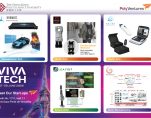
The Hong Kong Polytechnic University will showcase five promising PolyU startups at Paris-based VivaTech 2026. Visitors are welcome to interact with these innovative ventures and join its insight-packed seminars.
During this year’s event scheduled from 17 to 20 June 2026 at Paris Expo Porte de Versailles, PolyU will showcase its achievements at the Hong Kong Tech Pavilion organised by the Hong Kong Trade Development Council (HKTDC). Located at Booth 1C11, Hall 7.1, the University will present five outstanding PolyU-nurtured startups across high-growth tech domains, including AI and Robotics, Health Tech, Sustainable and Climate Tech, and FinTech. For more information about these innovative ventures, please check out the event’s online leaflet.
As Europe’s most influential innovation gathering, VivaTech brings together global visionaries, startup founders, industry leaders, investors and corporate innovators, providing as a pivotal platform for cross-border collaboration and technological knowledge exchange. PolyU’s participation at VivaTech further extends its global innovation footprint into Europe, and connects the University and its startups with international investment and market resources.
In addition to the exhibition, PolyU will host an exclusive thematic session on-site and engage in high-level industry dialogues to deepen collaboration between Europe and Hong Kong. On 18 June, PolyU will stage a dedicated seminar titled “Breaking Barriers with Autonomous Systems: Transforming Industries with AI Innovation”, where Prof. Chao will deliver the opening remarks, and Prof. Zheng will share his insight on how Hong Kong is scaling innovation as a leading AI hub, driving technological advancement and fostering global collaboration. Meanwhile, the five PolyU startups will share about their journeys in innovation and entrepreneurial endeavours.
On 19 June, Prof. Chao will participate as a distinguished speaker in the Executive Dialogue during the HKTDC-hosted Hong Kong Seminar-cum-Networking Reception. Centred on the theme “Talent & Infrastructure Powering the Hong Kong Tech Leadership and Global Collaboration”, the high-level seminar also features distinguished leaders representing the forefront of Hong Kong’s innovation and technology ecosystem. Prof. Chao will engage in in-depth topics such as how to attract and nurture global talent, and how academia-driven initiatives can drive technological synergies between Hong Kong and Europe.
For full details of PolyU’s participation at VivaTech 2026, please visit the webpage of PolyU’s Knowledge Transfer and Entrepreneurship Office.
Hashtag: #PolyU
The issuer is solely responsible for the content of this announcement.
Capital. com has enabled a Model Context Protocol server plugin that allows traders to connect their accounts directly with compatible AI assistant environments, marking a step towards more integrated use of artificial intelligence in retail trading and market research. The free, open-source tool links a trader’s Capital. com account to an AI assistant running on a desktop environment, giving users the ability to view market data, analyse […]
CPX Holding has unveiled a refreshed brand identity in Abu Dhabi, positioning the G42 company for its next phase of growth as demand rises for AI-led cybersecurity, sovereign digital capability and stronger protection of critical infrastructure across the UAE. The new identity, built around the promise “Secure what’s next”, marks a shift in CPX’s public positioning from conventional cyber defence towards enablement, resilience and intelligence-led security. The […]
Facebook’s creator payment system has become entangled in Alberta’s separatist politics after an investigation identified overseas-run accounts impersonating local activists and publishing content that promoted breaking away from Canada. The accounts presented themselves as voices from inside Alberta’s independence movement, using names, profile images and language designed to appear local. Several were linked to operators outside Canada who appeared to be using divisive political material to attract […]




 https://www.redbullsport.com/my/next-generation/2026
 https://www.facebook.com/redbullsportmy/
 https://www.instagram.com/redbullsport_my/
 https://www.tiktok.com/@redbullsports




 https://www.linkedin.com/company/fanruan/